
By J. Bruce Parker
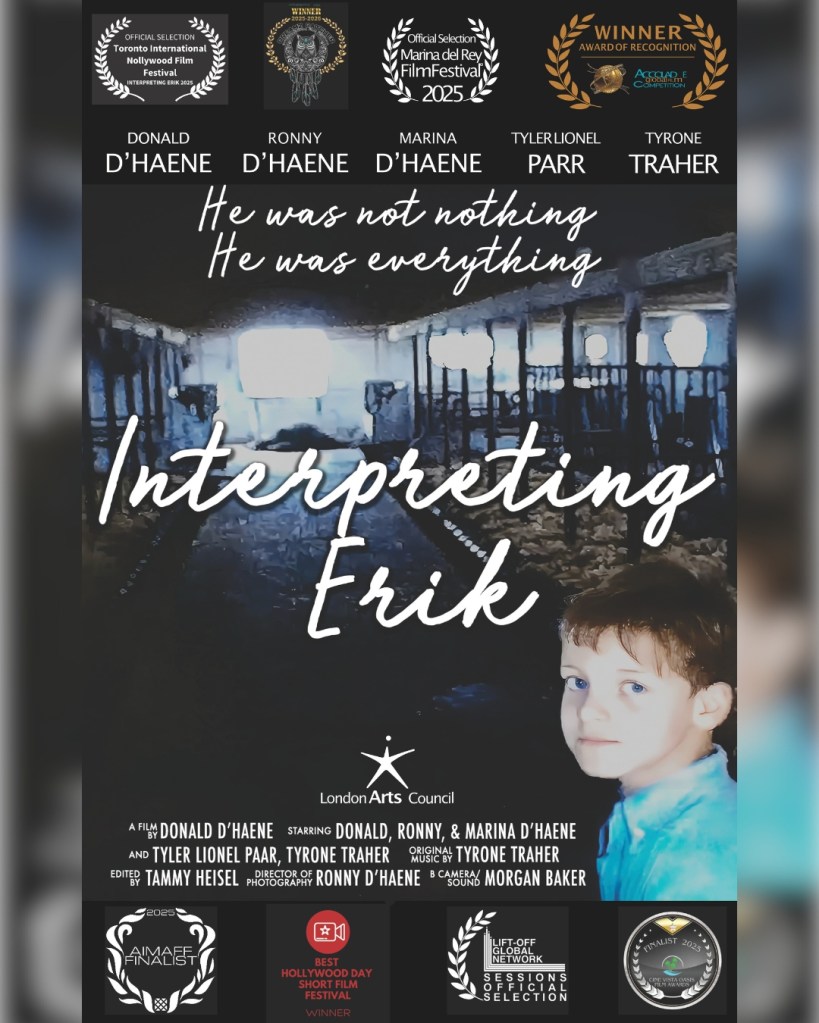
Well-known London creative, Donald D’Haene, is riding the crest of a wave.
His documentary, Interpreting Erik, being screened at this year’s Forest City Film Festival, is getting noticed; everywhere. It has garnered just under three hundred awards and accolades worldwide. But like all waves, there is a trough, which is the content of the documentary. Interpreting Erik follows the tragic life of Donald’s brother, who died on the streets of Vancouver in 2020. Erik, like Donald, brother Ronny, and sister Marina, was sexually abused by their father, not just once but repeatedly.
The documentary is not just Erik’s story, but the story of Donald and his two siblings’ survival throughout this ordeal. For Donald, it was through therapy, outlined in his two books Father’s Touch and Nobody Wants To Read You Are Happy. For Ronny, it was photography, and he became an award-winning nature photographer. When the family unit broke up, Marina found solace, guidance, and hope in various group homes in London. The D’Haene children survived and grew beyond the horrible abuse of their past, but not Erik.
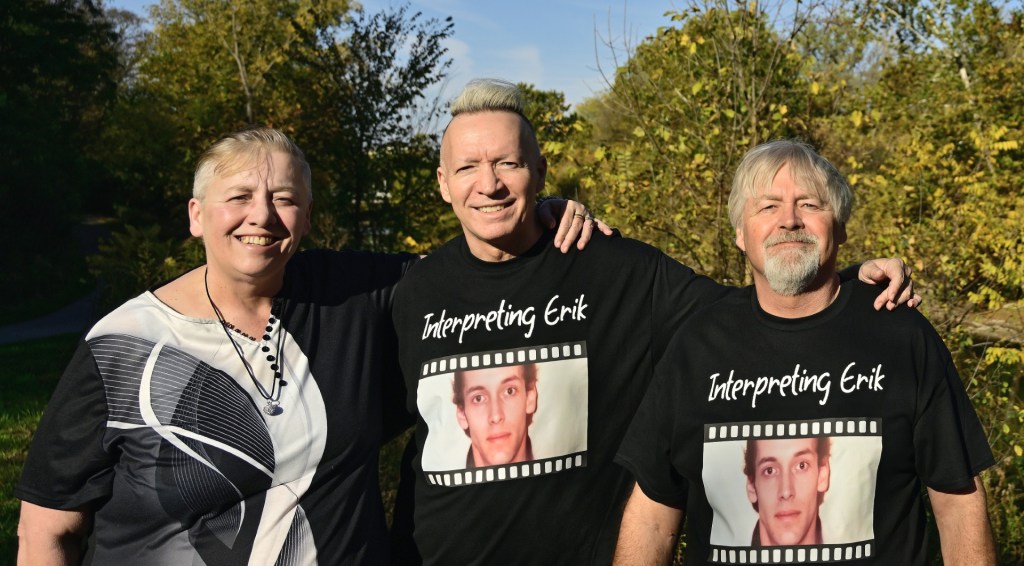
(Pictured: The D’Haene siblings, Marina, Donald, and Ronny.)
Donald’s documentary explores Erik’s life through his art, his diaries, and his letters. Erik is portrayed by actors Tyler Lionel Parr and Tyrone Traher, reading Erik’s words and characterizing his image on the street. At the film’s end, there is a sense of understanding his struggle.
“You see, we have no videos of our brother, but I found over one thousand letters, some with prose or poems, and over one hundred art pieces and drawings. I never knew I had them. I took care of my mom until she passed, and we had our own ‘Grey Gardens’ (a 1975 film) going,” says Donald. “Thank goodness I never listened to anyone as I never de-hoarded. While I was writing my memoir, I picked up what I thought was a date book my mother kept in an old box. Lo and behold it was a diary and there were more than twenty of them. I never knew she kept a diary.”
“Then I went through scores of bags and found Erik’s letters and art. Erik’s life had meaning; he had incredible talent. More importantly, he had hopes and dreams like any other displaced member of our society. He could never escape the past, although he tried with drugs and other forms of self-abuse. My guilt was suffocating me. My depression consumed me until I decided to tell Erik’s story, first through my book and then through sharing his works and art. I have been reborn telling my Erik’s story. I feel I’m alive again, but I have to be, for him”.
Erik’s life and death on the streets of Vancouver echoes the plight of all marginalized people who end up without a home and little hope. Erik becomes the ‘everyman’ on the street, but he has a name, and he had a life.
“He was not nothing, he was everything,” as Donald reminds us.
Erik stated, “I need an interpreter in my own skin”. Brother Donald has been successfully able to do that.
Interpreting Erik will be shown at the Forest City Film Festival at Wolf Performance Hall, October 26th at 12:00 p.m. and November 2nd at 2:30 p.m.
For more information about the Forest City Film Festival, visit https://fcff.ca/
Written by The Beat Magazine’s J. Bruce Parker


 The Beat Magazine 2025