Dysfunction Done Right in The Family Creetin

Reviewed by Jo-Anne Bishop.

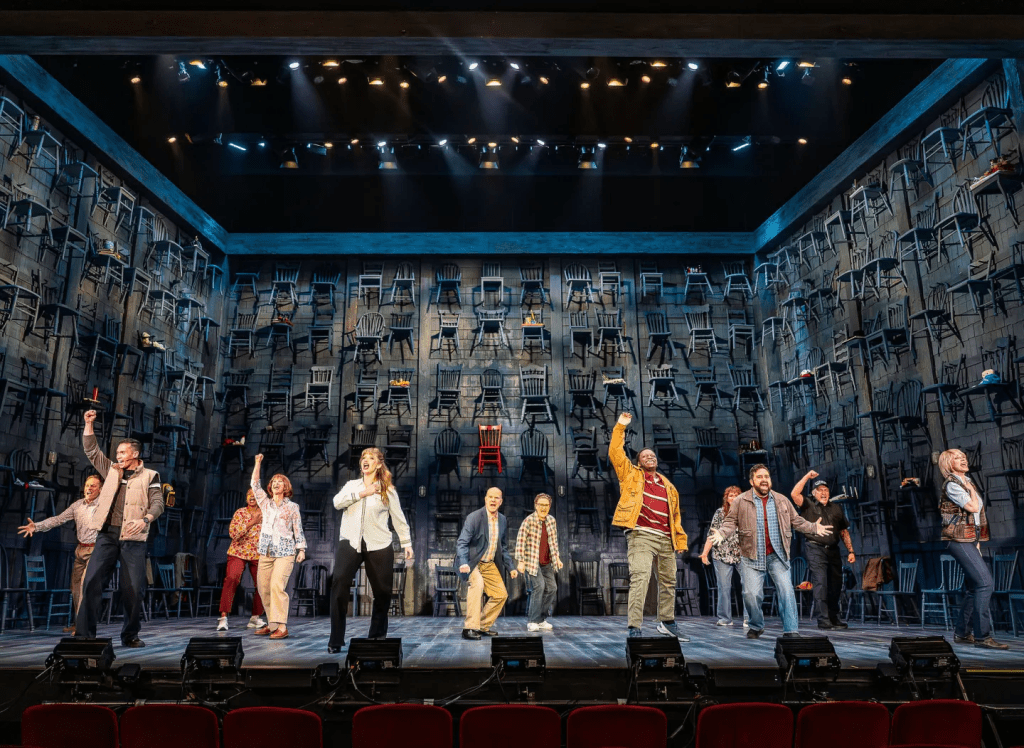
(Pictured: Cast & Crew of The Family Creetin. Photo by Ross Davidson)

Every so often, a local production comes along that makes you rethink your expectations entirely. The Family Creetin, presented by Banished by the King Productions, is one of them.

I’ll admit it, I went in cautiously. Locally written shows can be hit or miss, and sometimes the humour leans too heavily on inside jokes. Not here. Patrick Brennan has written something that feels bigger than that—and funnier, too.

The setup is classic: a group of siblings gathered in an English country house, all carrying a ton of baggage and very little patience for one another. From there, things unravel quickly (in the best way). The comedy comes from character, not gimmicks, and it lands because it feels familiar. If you’ve ever survived a tense family gathering, you are in on the joke.

It’s not without its bumps. A lot is going on, and at times the play can feel like a ping-pong match, your head constantly turning to keep up with the action. A bit of tightening would sharpen some of the bigger moments. That said, Brennan’s direction keeps things impressively controlled. The pacing is tight where it needs to be, and even when the script edges toward chaos (which it does – a lot!), the staging keeps it from tipping over. There’s a clear sense that this is a play that has evolved over time, and if this is the result of that evolution, it’s very much in the right direction.

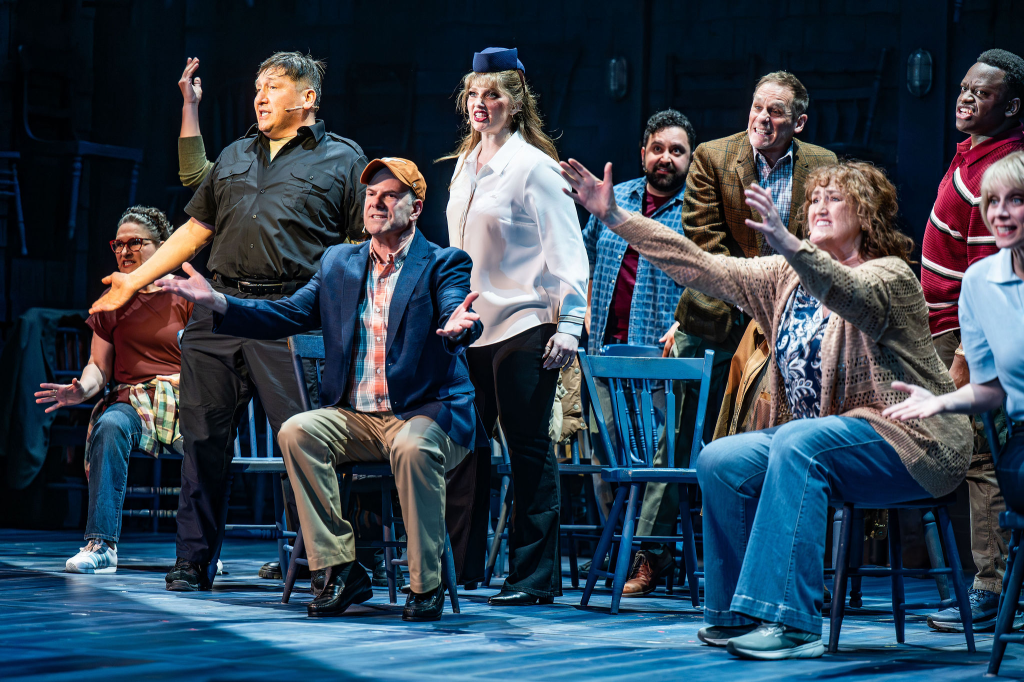
(Photo by Ross Davidson)

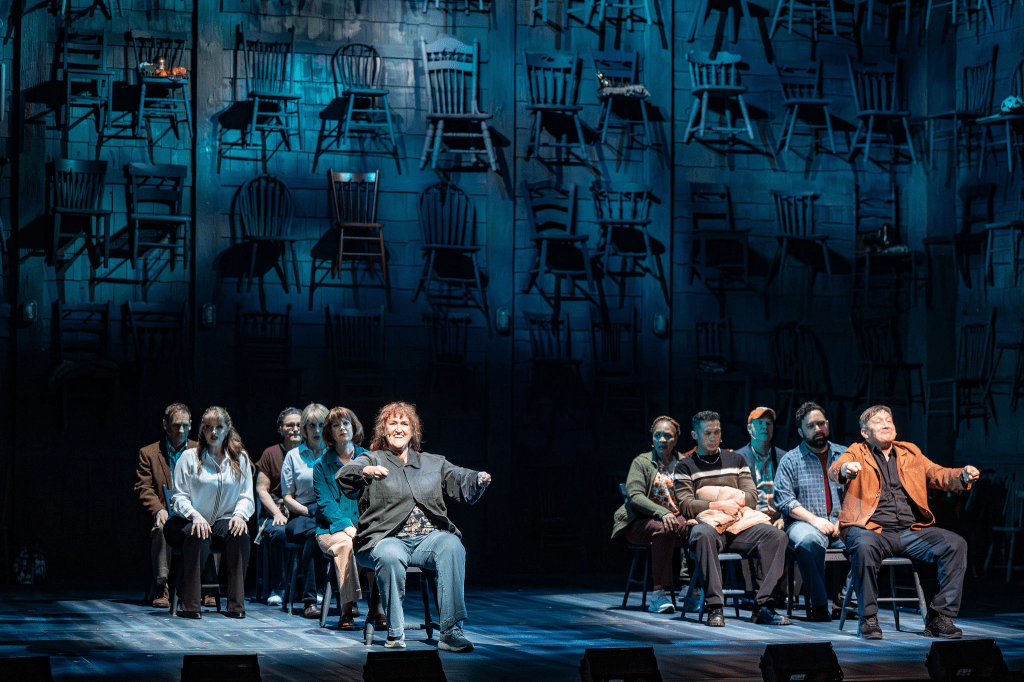
The production makes smart use of the black box space in Procunier Hall at the Palace Theatre. The set is simple, tasteful, and exactly what it needs to be, no more, no less. It fits the space beautifully while leaving plenty of room for the performances to breathe. But if I’m to be honest, this is a show that feels ready for a larger stage; it has the legs for it.

And it’s the performances that really carry it. This is a strong cast across the board, and more importantly, they work as a true ensemble—feeding off each other, building momentum, and clearly enjoying the ride. That sense of connection translates directly to the audience.

A big part of what elevates the production is the physicality and facial work. Reactions are sharp, expressions are doing just as much work as the dialogue, and it adds an extra layer of comedy that keeps scenes lively even in quieter moments. The casting feels particularly well matched—these actors fit their roles in a way that makes the dynamics feel natural and fully lived-in.

(Photo by Ross Davidson.)

Dylan Rock as Frederic is a standout, with a strong physical presence and consistently engaging reactions. Ben Kennes’s Reginald is equally memorable, bringing excellent timing and expression that make every moment count. And Kevin Avram nearly walks away with the show as Bertrand. His portrayal of the perpetually drunk brother is fully committed and genuinely hilarious, especially with his repeated, perfectly timed “Oh mother” lines, which somehow get funnier every time. His final moment ties everything together beautifully.

The sisters—Sophie Thompson (Victoria) and Sue Harrington (Gloria)—land some big laughs with their sharp back-and-forth, while Jennifer Groulx’s Sybil provides a sweet, grounding counterbalance to the chaos. Rachel Sherret’s prim, all-knowing Mary (who has a quote for everything) is crisply timed and consistently funny, and Nicole McTeer nails the Hollywood starlet as Ginger.

(Photo by Ross Davidson.)

Luis Marin turns up the heat as Latin lover Raul, while Dustin Didham’s Nigel—a sooty, slightly suspect chimney sweep—adds another comic layer. Ryan Starkweather’s Roger, the curious banker, doubles as narrator, punctuating the action with a clicker that freezes the stage in well-executed tableaux—timing the cast delivers to hilarious effect. Rounding out the ensemble is Patrick Hoffer as Archibald, the family patriarch with a watchful eye.

Costumes by Tanis Daoust suit the period nicely, and the technical team—stage manager Jeremy Hewitson, assistant stage manager Eric Curtis, sound by Doug Deschenes, and lighting by Mark Mooney—keep everything running smoothly behind the scenes.

(Photo by Ross Davidson.)

What’s most impressive is how easily this play connects. It doesn’t feel small or niche. It feels like something with real staying power. You could see it on a bigger stage, in a longer run, or picked up by other companies around the globe—without missing a beat.

Bottom line:

A sharp, funny, and well-played ensemble comedy that proves local theatre can punch well above its weight. It is busy at times, but consistently entertaining, and the kind of show that makes you hope someone is already planning the encore.

IF YOU GO:

What: The Family Creetin, written by Patrick Brennan and presented by Banished by the King Productions

When: April 16th to 25th, 2026

Where: Procunier Hall, Palace Theatre, 710 Dundas Street, London, Ontario

Tickets:  Adults: $33 * Students/Seniors (55+): $30 * Youth (under 18): $20 Tickets | The Family Creetin | The Palace Theatre Arts Commons

*This is a wheelchair accessible facility.

Check out The Beat Magazine’s Q&A Interview with the play’s author and director, Patrick Brennan, at: Q&A Interview with Patrick Brennan, Author and Director of The Family Creetin. – The Beat Magazine 2025

Reviewed by Jo-Anne Bishop.

Q&A Interview with Patrick Brennan, Author and Director of The Family Creetin.

What follows is a Q&A Interview with Patrick Brennan, author and director of The Family Creetin, playing at the Procunier Hall at the Palace Theatre from April 16 to 25. The Interview was conducted by The Beat Magazine’s Publisher & Content Manager, Richard Young.

Q. Tell me about The Family Creetin – backstory, author, and performance history.

The Family Creetin was born out of a few places and ideas. I was always enamoured with the golden age of British detective fiction, particularly Lord Peter Whimsey in Dorothy Sayers string of novels and the ridiculousness of self-seriousness. I’ve been writing shows since 2012 for Banished by the King and have always skewed to the less serious, more character-driven work. I like finding the fun in how characters interact. For our theatre group, we were always looking for large, gender balanced shows and the prospect of a single set, big cast, whodunnit-type show was such a natural fit. I loved giving every character the spotlight through the show, and the range of the roles was a lot of fun to play with. Just a mass of ridiculous and self-important people that played on some tropes with some hopeful plot twists, and this show is a good, fun night out.

Q. Could you provide a brief plot synopsis?

In The Family Creetin, a group of six siblings and their significant others are called home by their father, a Duke that owns a massive food canning empire, for a mysterious reason. They fight, bicker, and snipe at each other before the Duke makes known his plans, and a frantic search for a thief begins!

(Pictured: Patrick Brennan, author and director of The Family Creetin.)

Q. Does the Family Creetin have any real-life counterpart?

I have heard it said that it is Downton Abbey-meets-Arrested Development, and that’s high praise! I began watching Downton Abbey weeks before the show originally opened in 2015, having written it a year before and was shocked by how many character names they stole from me!

Q. How would you best describe the play?

The play is a comedy, though I’ll leave that up to the audience. If there’s a message, I hope it is that a bit more kindness and empathy are never misplaced.

Q. I see that the play was performed at TAP back in 2015. Why are you reviving it in 2026? Any major revisions to the script?

We originally ran the show back in April of 2015 and thought eleven years was the perfect amount of time for people to forget the story and pay for another ticket to come see it again! This script is more polished and, as with the first, improved with rehearsals. We have had the advantage of two exceptionally creative, funny, and inventive casts running through this script, and, with complete control over the material, we have always encouraged and applied suggestions and adlibbing – if it’s funny, it stays! I couldn’t be more grateful to all of the moments, small and large, that these actors have put into making the show better, rehearsal after rehearsal.

Q. Why have you chosen Procunier Hall for this run?

The space is ideal for the single room, tight quarters, crucible of the show! And it was available.

(Pictured: Rachel Sherret, Luis Marin, Sophie Thompson, and Ben Kennes.)

Q. How would you describe the sets, props and costumes of the play?

The Palace Theatre has been exceptionally generous with its set pieces, props, and costumes to make a very immersive sitting/drawing room environment for interwar England. We also have incredibly talented cast members who stitch, sew, bring props, and put a full effort into making their characters look as good as they perform them.

Q. What can audiences expect?

I would hope audiences take away some laughs, a bit of an escape, and maybe a line or two that sticks with them! Our performers, whether in the spotlight or awaiting their next line, make it a veritable Where’s Waldo of moments, faces, and bits that make multiple viewings a must.

Q. Is there anything else you think readers should know about The Family Creetin?

The Family Creetin has been so incredibly special to me personally. Not only was it my second script for Banished by the King, allowing me to work with my brother, Sean, and so many others in the group, but it was also where I met my would-be wife, Amanda. I was a self-absorbed, wannabe industrialist with an embarrassing secret, and she was a strong-willed, opinionated, in-your-face American dancer from the silent film era. A match made in heaven, and one for which I absolutely love this show. Also, there’s a sequel!

(Pictured: The Family Creetin set in Procunier Hall.)

Cast and Crew of The Family Creetin:

Cast:
Patrick Hoffer – Archibald
Sophie Thompson – Victoria
Ben Kennes – Reginald
Sue Harrington – Gloria
Dylan Rock – Frederic
Kevin Avram – Bertrand
Jennifer Groulx – Sybil
Ryan Starkweather – Roger
Luis Marin – Raul
Rachel Sherret – Mary
Nicole McTeer – Ginger
Dustin Didham – Nigel

Crew:

Directed By: Patrick Brennan
Produced By: Dan Curtis
Stage Manager: Jeremy Hewitson
Lighting Design By: Mark Mooney
Sound Design By: Doug Deschenes
Costume Design By: Tannis Daoust.

IF YOU GO:

What: Banished By The King Productions presents The Family Creetin.

When: April 16 to 25, 2026.

Where: Procunier Hall at the Palace Theatre, 710 Dundas Street, London, ON.

Tickets: https://mytickets.palacetheatre.ca/eventperformances.asp?evt=527

About Banished By The King Productions:

Banished By The King Productions has been creating original and unique theatre in London, Ontario, since 2009. Since the initial banishment, Banished has produced eighteen original works, all written by local London, Ontario, playwrights.

It all started as a dream to continue to produce, write, and act in shows after graduating from university. Many of our original and founding members attended King’s University College, and thus, once our studies were over, we became Banished By The King. Over the years, the group has morphed and grown to include the talents of many members of London’s thriving community theatre scene.

In 2024, we became the Theatre Company in Residence at the Palace Theatre Arts Commons to continue to create new theatrical productions and promote original London-based work.

Website – www.banishedproductions.ca

Q&A Interview Conducted by Richard Young, Publisher & Content Manager of The Beat Magazine 2025.

Community Art Groups: Camaraderie, Education, and Exposure

By Beth Stewart

London has a richness of community art groups, including the Brush and Palette Club, the Gallery Painting Group, the Lambeth Art Association, and the London Community Artists.

While each occupies a unique niche, all provide camaraderie, education, and exposure.

The Brush and Palette Club (B & P), formed in 1972, grew out of painting sessions organized by artist and teacher Dorthy Heaven. By 1989, the small group had grown to 50; current membership is capped at 110 for practical reasons, and it has a healthy wait list.

B & P Publicity Convenor Marilyn Kidd says many artists join the club because art making can be an isolating activity. Membership allows them to be “stimulated, motivated and inspired.” She says members enjoy participating in art-related activities with the group and “growing together as they learn about new painting techniques.”

The club meets monthly, except for July and August, at Riverside United Church. Members enjoy presentations by invited speakers, trips, and seven hands-on workshops in a variety of media per year.

(Pictured: Brush and Palette artist Linda Deckert’s “High on a Windy Hill”, acrylic, 24 by 28 inches.)

The club strives to provide a supportive environment for members, to provide opportunities to broaden artistic skills, and to promote visual art in the community at large.

What differentiates the B & P Club from other art groups is the nature and quantity of its activities. Each meeting has an invited guest who speaks on a wide variety of topics relating to art. The meetings are also social occasions with time for friendly conversation and interaction during a coffee break. As well, there are two club luncheons each year.

An annual show and sale gives members a specific event to work toward. Working together at the show creates a deep bond as members all pull together to make the event a big success.

The Brush and Palette Club’s next Art Show and Sale is April 9 to 11 at Riverside United Church.

(Pictured: Brush & Palette artist Alice Price-Vermeulen’s “Palimpsest”, mixed media, 12 by 12 inches.)

Kidd joined the group in 2012. She says, “Being a member has encouraged me to persevere and to grow as an artist, and I have benefitted from the friendship and support of other members.” She is also a long-time member of the Gallery Painting Group, where she enjoys “plein air” work. She says, “Each group offers various advantages, and I would not give up either of them!”

For additional information, visit: https://brushandpaletteclub.com/

The Gallery Painting Group (GPG) was formed in 1953 at the recommendation of the president of the Western Art League, which was founded in 1876 to promote art in London, Ontario

It includes 70 local artists who enjoy the plein air painting experience, which is the act of painting outdoors. From May to October, members of the group paint on location on Tuesday and Saturday mornings at various locations in and around the London area.

(Pictured: Gallery Painting Group artist Wendy Reid’s “Off the Trail”, oil pastel on black paper, 9 by 12 inches. From a plein air day at Springbank Park.)

As members interact frequently, official meetings are limited to two per year.

Marily Kidd says, while the group has fewer meetings, members interact frequently from May to October while painting together outdoors in and around London in “fascinating and diverse locations.” Because it’s a smaller group, the sense of community is strong.

(Pictured: On location sketches by GPG artist Len Hughes showing members at work.)

Each fall, the GPG holds a show and sale of the paintings produced by its members throughout the summer. Their next show will take place at First Street. Andrews United Church, October 22nd to 25th, 2026.

For additional information, visit: https://www.gallerypaintinggroup.com/ or interact with the GPG on Facebook: https://www.facebook.com/londonpleinair/

The Lambeth Art Association (LAA) provides support for established and emerging artists in the practice and appreciation of art. It fosters relationships, delivers educational opportunities, and offers exhibition opportunities.

Begun in 1972, with just five members, the Lambeth Art Association now boasts a membership of over 130 artists. LAA members work in oil, acrylic, watercolour, pastel, pencil, fibre, and mixed media. Members meet monthly, from September to May at Riverside United Church. All meetings feature a guest speaker or a hands-on activity. Each year, members enjoy six art-based workshops and community events. Members exhibit their artwork at the association’s popular Art Show and Sale held in the spring of each year.

The next show is April 30 to May 2, 2026, at Lambeth United Church, 4268 Colonel Talbot Road at Main Street. The show will include framed and unframed work in a variety of media. Styles range from traditional to abstract.

Sold work is taken home immediately by its lucky owners and the resulting vacant space is quickly filled with art that has been held in reserve. Savvy visitors come more than once to avoid missing that special piece.

(Pictured: Lambeth Art Association artist Margret Bullock’s “Field of Dreams”, mixed media collage of an imaginary garden scene, 20 by 20 inches.)

Patricia Walker joined the LAA in 2025. She says, “I feel very lucky to be part of the Lambeth group.” When she moved back to southwestern Ontario in 1980, she enquired about joining, but the wait list at that time was years long, so she continued to work in isolation with not a whole lot of excitement about art. This, recalls Walker, resulted in a “period of non-productivity.”

(Pictured: LAA artist Lisa Chiborak’s “Really Big Shoes”, acrylic, 20 by 20 inches.)

Walker says, “The group is friendly and willing to share their techniques, their journey and their frustrations with different mediums. It makes me want to keep creating.” In addition to the LAA, Walker belongs to the London Community Artists, the St. Thomas Art Guild, the Port Stanley Art Guild and the Creative Nomads.

For additional information, visit: https://www.lambethart.com/ or interact with the LAA on Facebook: https://www.facebook.com/lambethartassociation/

The London Community Artists (LCA) is the new kid on the block. It was formed by Wendy Jennings in 2018 in response to the lengthy wait lists to join other clubs.

Membership was initially limited to 50 members, but this was increased to 75 in 2023. Even with the expansion in membership, LCA maintains a wait list of approximately 100 hopefuls. New members are accepted in January to fill any vacancies that have come about throughout the year.

(Pictured: 09 London Community Artists’ Heather Peel, “Autumn Calm”, acrylic (mostly palette knife work), 11 by 14 inches.)

Members’ meetings feature speakers, and there are frequent “Paint Days” at Western Research Park, where members get together to paint and share some special times. The club also offers monthly art challenges in which members submit their best work in response to a specific topic. Entries are reviewed by their peers, and the first and second-place winners receive a gift card for art supplies.

In 2024, they began hosting workshops led by both internal and external experts.

The LCA has established long-term partnerships with Cherryhill Village Mall, Western Research Parks and the Children’s Hospital at London Health Sciences’ Victoria Campus. Members have art on display at each of these locations throughout the year. Their longest-running and most successful display is at the Cherryhill location, where member artists have sold over 140 pieces of art.

(Pictured: “Old Post Office (Cambridge)”, watercolour and ink, 16 by 20 inches, by LCA artist Bill Stephens.)

LCA hosts two major Art Shows each year: one in April and another in November. This year’s Spring Show is scheduled for April 16 to 19, 2026, at The Collider, located in the Western Research Park off Veterans’ Memorial Drive and Bradley Avenue.

Current president Bill Stephens joined in 2019. It is the only club he belongs to, and he has been involved in all the club’s activities.

Membership has served him well in his personal art journey. Stephens says, “I have learned so much from our talented members.”

For additional information, visit: https://londoncommunityartists.ca/

Written by Beth Stewart

Beth Stewart is a writer, educator, and visual artist. She has a B.A. and a B.Ed. from the University of Windsor and a Diploma in Art Therapy from Western University. Beth has worked as an Art Therapist with Canadian war veterans and as a Secondary School Teacher of art and English for the TVDSB. She retired in 2024.

Beth was the arts editor at Scene Magazine from 2004 to 2006. She founded Artscape Magazine in 2006 and served as its editor until 2008. In addition, Beth wrote on the arts for Lifestyle Magazine from 2006 to 2017 and served as the copy editor for The Beat (in print) from 2009 to 2013.

As a visual artist, Beth works mainly in dry media and favours coloured pencil. Over the past decade, Beth’s focus has been on wild and domestic birds. Beth is a member of the Coloured Pencil Society of America, the Gallery Painting Group, the Eclectic Collage Collective, the Lambeth Art Association, and a founding member of the Coloured Pencil Artists of Canada group.

Web: https://bethstewart.ca/

Facebook: https://www.facebook.com/profile.php?id=100009620916363

The Importance of Being Earnest: A Riot of Colour and Wit – If You Can Keep Up!

Reviewed by Jo-Anne Bishop

There’s a reason Oscar Wilde’s The Importance of Being Earnest has endured for well over a century. Premiering on Valentine’s Day in 1895 at London’s St. James Theatre, the play is a razor-sharp satire of Victorian society, skewering everything from marriage and class to the absurdity of social expectations. Wilde’s signature style—fast-paced, highly stylized, and dripping with irony—remains both its greatest strength and, at times, its greatest challenge.

As quoted in the director’s note, “rarely has the stiletto of dissident humour been driven so smilingly between the ribs of bourgeois convention.”  This line from Neil Bartlett perfectly captures Wilde’s enduring bite.

Now playing at the Grand Theatre, this production, directed by Alistair Newton, leans boldly into theatricality, delivering a visually striking and energetically performed interpretation that feels surprisingly modern and relevant in 2026. Wilde’s themes of performative identity, social façades, and the tension between authenticity and expectation still resonate today, perhaps even more in an age of social masking, highly curated personas and digital selves.

That said, this is not a production you can passively absorb.

(Photo by Dahlia Katz.)

I found myself needing time to sit with the show afterwards. The rapid-fire dialogue and heightened language, true to Wilde, can be difficult to follow, especially if you’re not already familiar with the story. There were moments where I lost the thread entirely, only to piece things together in retrospect. For audiences new to the play, a bit of homework beforehand will go a long way. If you have a short attention span or struggle with dense, fast-paced English dialogue, this is one where preparation really matters.

Visually, the production makes a striking and very bold statement. Set designer Michelle Tracey creates three distinct worlds across the acts: a lush, all-green opening (down to the piano and cigarette case), a fully yellow second act, and a vivid red-and-yellow third. The only figure fully in red is the formidable Aunt, commanding attention in a room that mirrors her dominance. It’s an ambitious and cohesive design, though at times, its intensity borders on overwhelming.

(Photo by Dahlia Katz.)

The costumes, designed by Judith Bowden, are pitch-perfect: bright, bold, and beautifully in sync with the set’s colour story. One exception is Cecily, whose costume felt slightly muted by comparison, causing her to fade visually in moments where she might otherwise shine. At the same time, it perfectly separated her character from the others, showing the contrast between the city’s pomp and the country’s quiet reserve.

(Photo by Dahlia Katz.)

The dialect work, coached by Phyllis Cohen, is strong throughout, helping anchor the heightened language in both clarity and rhythm.

Performance-wise, the cast is superb across the board. Deena Aziz brings warmth and precision to Miss Prism, while James Daly’s Algernon Moncrieff is delightfully playful. Julien Galipeau grounds John Worthing with charm, and Kaylee Harwood delivers a sharp, engaging Gwendolen Fairfax. As Lady Bracknell, Claire Jullien commands the stage with authority and wit, while Ben Sanders capably fills multiple roles, including Reverend Canon Chasuble and Lane.

Standout performances for me came from Billy Lake as Lady Stella Clinton and the Merriman—whose drag performance drew some of the biggest laughs of the evening—and Mirabella Sundar Singh as Cecily Cardew, who brought a delightful presence and nuance to the role.

Ultimately, The Importance of Being Earnest isn’t going to be for everyone, and this production doesn’t try to soften its edges. It’s fast, it’s dense, and it demands your attention. But if you’re willing to meet it on its level, it offers a rewarding, visually dazzling, and often very funny experience. And while there may not be a distinct message or lesson to learn, it makes a bold statement.

Overall, this is a vibrant, well-directed production with exceptional performances, inventive design, and a distinctly modern pulse. Just be prepared to keep up.

IF YOU GO:

What: Oscar Wilde’s The Importance of Being Earnest, Directed by Alistair Newton

Where: The Grand Theatre, 471 Richmond St, London, Ontario

When: March 24th to April 12th, 2026.

Tickets: $25-97, available at the Box Office or online at The Importance of Being Earnest | The Grand Theatre

Reviewed by Jo-Anne Bishop

Background and Experience in the Arts

My background in the Arts started with an early love for music and dance. I attended my first concert at 10 years old (Helix at the Sarnia Arena in 1983!) and began tap and modern jazz dance lessons around the same time. My love for live theatre was built through school trips to the Stratford Festival to see plays like Romeo and Juliet, The Merchant of Venice, and Macbeth, and a trip to Toronto for The Phantom of the Opera, which quickly became my all-time favourite.

I dreamed of performing for many years, but being too self-conscious to audition in high school, I sat on the sidelines and instead reviewed music and theatre for our school newspaper. In 2013, I finally pushed my fears aside and was cast in my first play, Laughter on the 23rd Floor, as Carol Wyman, the only female writer on the Max Prince show. I have since performed in productions of Birth (Jillian, 2016), Hamish (Annette, 2023) and The Curious Incident of the Dog in the Nighttime (Mrs. Alexander, 2024).

Previous Reviewing Activities

SCITS, Sarnia, Ontario – High school newspaper reviewer for Music and the Arts

London Fringe Festival, London, Ontario, 2012-2015

Independent Reviewer and Blogger (Theatre in London and The Pollyanna Papers), 2015-2016?

Why am I jumping back into the fray now?

After performing for a few years, I’ve decided to take a break from the grind of auditioning, rehearsing and performing. While I love it immensely, it’s a lot of work. Performing has given me a whole new perspective and appreciation of what goes into a production and the ability to look at reviewing with a fresh set of eyes.

Thoughts about the London arts and culture scene, especially local theatre

Hoo wee! London has such a wealth of talent, from youth to adults. Every time I see a play, I am amazed at how talented our actors, directors, producers, set/prop/costume/light/, and sound designers are. I don’t think causal observers realize just how much goes into making a production from the audition to the curtain call. It is a huge undertaking, and to think our theatres produce such world-class productions on some very tight budgets is astounding, especially at the community theatre level, where volunteers do everything.

Sadly, since COVID, I have witnessed a huge decline in attendance at performances, and it breaks my heart. I have also noticed a sad lack of reviews lately, which I find are necessary to give people an idea of what to expect and a reason to go to the theatre.

So, before I can put my feet on the stage again, I want to help put bodies in the seats. We need to reignite a love for theatre and the arts in this city.

A Killer Performance Anchors a Sharp “Prescription: Murder”

Reviewed by Jo-Anne Bishop

(Pictured: Cast of Prescription: Murder, Tameka Brown, Eve Cohen, Andre Cormier, David Pasquino, Sam Didi, and Makayla Ashenden. Photo Credit: Ross Davidson.)

Murder is rarely this polished – or this fun to watch.

On the Auburn Stage at the Grand Theatre in London, Ontario, Prescription: Murder wastes no time pulling its audience into a sleek, slow-burning game of cat and mouse. Running March 19–29 and directed by Stephen Mitchell, this black box production leans into intimacy and largely thrives because of it.

Originally written by William Link and Richard Levinson, the play serves as the foundation for the iconic television detective Columbo. The story centres on a brilliant and calculating psychiatrist who believes he has devised the perfect crime, only to find himself gradually entangled in a battle of wits with the seemingly unassuming Lieutenant Columbo. What unfolds is less a traditional whodunit and more a tense psychological chess match, where the outcome feels inevitable, but the journey is where all the intrigue lies.

(Pictured: David Pasquino as Lieutenant Columbo. Photo Credit: Ross Davdson.)

The ensemble is tight and reliable across the board. Makayla Ashenden brings a grounded vulnerability to Susan Hudson, while Tameka Brown and Eve Cohen offer strong, steady support as Miss Petrie and Claire Flemming. Sam Didi moves seamlessly through dual roles, and David Pasquino’s Lieutenant Columbo is understated, patient, and quietly probing—exactly what the role demands.

But let’s be honest: this is André Cormier’s show.

(Pictured: Andre Cormier as Dr. Roy Flemming. Photo Credit: Ross Davidson.)

As Dr. Roy Flemming, Cormier delivers a performance that is sharp, controlled, and magnetic. He walks a perfect line between charm and menace, with only the slightest of line slips in an otherwise near-flawless turn. What stands out most is his precision. Every look and every pause feels intentional. His seething, barely contained irritation with Columbo simmers just beneath the surface, and it’s riveting to watch. You don’t just see the character unravel; you feel it.

The staging makes smart use of the black box space, carving out distinct environments—the doctor’s office, reception area, apartment, and Columbo’s workspace—without overcomplicating things. A few of the scene changes occasionally drag a beat too long, but they’re supported by effective lighting and sound that keep the tension alive.

(Pictured: Tameka Brown as Miss Petrie, Andre Cormier as Dr. Roy Flemming, and Eve Cohen as Claire Flemming. Photo Credit: Ross Davdson.)

Costuming and attention to detail further ground the production in authenticity. Each character is clearly defined through wardrobe, but it’s Lieutenant Columbo who benefits most from these thoughtful choices. David Pasquino appears perfectly dishevelled with mussed hair, a slightly rumpled coat, and even an untied shoe that subtly reinforces the character’s offbeat, absent-minded persona. It’s a small but effective touch, and one that adds texture and believability without feeling trite or overstated.

(Pictured: Andre Cormier as Dr. Roy Flemming and David Pasquino as Lt. Columbo. Photo Credit: Ross Davdson.)

There are a few minor cracks in the illusion. Some set pieces wobble when doors are slammed, which briefly pulls focus. But these moments are small and quickly forgotten. Overall, this Prescription: Murder is lean, engaging, and anchored by a standout central performance. It’s a confident piece of theatre that knows exactly what it’s doing—and for fans of classic detective drama, it absolutely delivers.

IF YOU GO:

What: DJP Productions presents Prescription: Murder by William Link and Richard Levinson

When: March 19-29, 2026

Where: Auburn Stage, Grand Theatre, 471 Richmond St, London Ontario.

Tickets: $31.70-$36.70  Prescription: Murder | The Grand Theatre

Reviewed by Jo-Anne Bishop.

Background and Experience in the Arts

My background in the Arts started with an early love for music and dance. I attended my first concert at 10 years old (Helix at the Sarnia Arena in 1983!) and began tap and modern jazz dance lessons around the same time. My love for live theatre was built through school trips to the Stratford Festival to see plays like Romeo and Juliet, The Merchant of Venice, and Macbeth, and a trip to Toronto for The Phantom of the Opera, which quickly became my all-time favourite.

I dreamed of performing for many years, but being too self-conscious to audition in high school, I sat on the sidelines and instead reviewed music and theatre for our school newspaper. In 2013, I finally pushed my fears aside and was cast in my first play, Laughter on the 23rd Floor, as Carol Wyman, the only female writer on the Max Prince show. I have since performed in productions of Birth (Jillian, 2016), Hamish (Annette, 2023) and The Curious Incident of the Dog in the Nighttime (Mrs. Alexander, 2024).

Previous Reviewing Activities

SCITS, Sarnia, Ontario – High school newspaper reviewer for Music and the Arts

London Fringe Festival, London, Ontario, 2012-2015

Independent Reviewer and Blogger (Theatre in London and The Pollyanna Papers), 2015-2016?

Why am I jumping back into the fray now?

After performing for a few years, I’ve decided to take a break from the grind of auditioning, rehearsing and performing. While I love it immensely, it’s a lot of work. Performing has given me a whole new perspective and appreciation of what goes into a production and the ability to look at reviewing with a fresh set of eyes.

Thoughts about the London arts and culture scene, especially local theatre

Hoo wee! London has such a wealth of talent, from youth to adults. Every time I see a play, I am amazed at how talented our actors, directors, producers, set/prop/costume/light/sound designers are. I don’t think causal observers realize just how much goes into making a production from the audition to the curtain call. It is a huge undertaking, and to think our theatres produce such world-class productions on some very tight budgets is astounding, especially at the community theatre level, where volunteers do everything.

Sadly, since COVID, I have witnessed a huge decline in attendance at performances, and it breaks my heart. I have also noticed a sad lack of reviews lately, which I find are necessary to give people an idea of what to expect and a reason to go to the theatre.

So, before I can put my feet on the stage again, I want to help put bodies in the seats. We need to reignite a love for theatre and the arts in this city.

David Long – A Life In Apples, Advocacy and Community Theatre

By J. Bruce Parker

(Pictured: The Palace Theatre’s David Long.)

The Palace Theatre, constructed in 1929 as a venue for silent movies and designated by the City of London in 1991 for its historic or architectural value or interest, remains a focal point in London’s Old East Village for quality theatre. It is the home of London Community Players, London Youth Theatre Education & London Fringe.

This historic venue is divided into two stages, the 75-seat Procunier Hall and the 350-seat David Long Stage.

Often, a stage is named after a beloved but deceased benefactor, actor, producer, or director. However, David Long is still with us, with a 47-year history associated with the London Community Players.

I recently met up with David at his home in East London. Over coffee and banana bread and surrounded by a lifetime’s collection of artwork and plates, we discussed the trajectory of his life.

(Pictured: David Long.)

The Long family’s ancestry in London dates back to 1850. At some point, according to David, family members “dispersed around the city.” David’s great-grandparents purchased land in the vicinity of Commissioners Road and Andover Drive. His father established Wood Lynn Farm Market, with various venues in the city. The Longs owned 300 acres of apples alone.

Wood Lynn Farms would become the first ‘pick your own’ orchard in Ontario. A pre-teen David was conscripted to wait at the gate and hand out a flyer to incoming customers, offering smiles as well as both prices and the ‘rules’ of the orchard. No overfilling, and there were trunk checks. At the time, a bushel of apples cost $1.50. This was long before ‘controlled atmosphere storage’ of apples, and so three generations of the Long family were involved during the narrow apple picking season, which would run from September into the Thanksgiving weekend of October. David proudly adds, “They were lined up on Oxford Street.”

David Long stayed true to his original neighbourhood, where his family home was established in 1935, just three houses from the Brick Cemetery. In 2010, ‘Friends of Brick Street Cemetery’ was established to provide guardianship to the eternal home of over 750 souls, and David Long got on board. The first burial occurred in 1813, 13 years before the City of London was established.

The organization researched the names of those under the soil and began repairing and re-erecting tombstones. According to David, “one third of the stones were on the ground, one third were leaning, and one third were still standing.” David was dubbed with the nickname ‘Jigsaw’ as it was his task to reassemble broken tombstones with both cement and epoxy. There was also the painstaking effort to clean the fronts of the stones without diminishing the lettering.

It was at York University in the 1970’s that David enrolled in a theatre program. . His desire to study theatre was built upon his drama experience in high school, which included a role in a production of the classic “Arsenic and Old Lace.”

But a year in university was enough, and he eventually returned to London after a bit of a tenure working in a paint store in Stratford.

It may or may not have been a synchronistic moment, but David’s return coincided with the beginnings of the London Community Players. He had invested a year’s worth of training in drama, and now a new theatre back home was opening.

The genesis of the London Community Players began with former members of ‘London Little Theatre’ as well as some passionate and earnest local actors. Productions began at the Gallery Theatre established at 36 York St. Their focus was Canadian-written plays, and 35 were performed between 1974 and 1978.

David leapt in and was cast in “Norman, Is That You?’ London’s first ‘gay’ play, a work David regards as a “bit of fluff,” but an important piece of theatre in recognizing and accepting London’s gay community. This was 1977, and London Free Press theatrical reviewer, Doug Bale, who could run roughshod over a local production, answered the question “Is London ready for gay plays?” with a resounding “Yes”.

David’s talents were also recognized in his ability to design and create sets. “My one grandfather built houses, and my other grandfather painted houses. I think I get my building skills from one and my painting skills from the other. The theatre discovered that I could build sets, and so that was the end of my acting career.”

As David was settling back into the theatre in his hometown, ‘HALO,’ the Homophile Association of London, Ontario, was establishing itself as a community club at Colbourne and Pall Mall streets. When David came out as a gay man in the late 70s, he had the support of his family, specifically from one of his grandfathers, who stated, “I knew people like that at Beal in the 1920s, and it didn’t bother me then, and it doesn’t bother me now”.

(Pictured: HALO Building, Colborne and Pall Mall Streets, London, ON.)

David eventually became president of the HALO club at a time of social intolerance of homosexuality. He was often the subject of homophobic slurs as he entered the front door, as well as dealing with vandalism in the form of broken windows, which were eventually boarded up. He recalls, “The music didn’t stop, and the dancing didn’t stop, so the club persevered and survived.”

This was a time when the former mayor of London, Diane Haskett, refused to proclaim ‘Gay Pride’ at City Hall as it was against her Christian values. She was eventually overruled by the Ontario Human Rights Tribunal, and the gay pride flag was flown over city hall. The HALO centre was the hub of the largest gay community in Canada, struggling yet surviving.

David recalls, “There were always lineups to get in. We had double-door security to protect our patrons. We always had Western (referring to the University of Western Ontario). The thing with the gay community at UWO was that everyone was here for four years. They would arrive, they came out, came to HALO, and they left when they graduated. There was always this kind of turnover.”

By the early 90s, within the gay community of London, HIV/AIDSwas creeping in. This disease was largely ignored by the media as well as American President Ronald Reagan. made its impact in London.

John Gordon was the first man in London to come out about his diagnosis of AIDS in South Western Ontario, and his death and legacy were the cornerstone of the creation in 1992 of the `John Gordon Home’, a Victorian-style residence on Dufferin Ave, which became a hospice. Tenants were cared for by a team of 30 volunteers (myself being one). The bedrooms of the building were remodelled, offering an individual design to each of the eight. David Long coordinated the renovation. He eventually found himself on the board of the John Gordon Home and was the representative of JGH to the Aids Committee of London. David knew the first residents, the first to arrive and the first to go to spirit.

During the same period, the London Community Players were growing. With his long-standing work with the theatre, David became part of the Board of Directors. There was this notion to physically expand the theatre as it grew, but it was David Long who noticed the ‘For Sale’ sign at the Park Theatre in East London. There was an existing stage as well as seating for up to 400 people, and in short order, the deal was closed, and the Park Theatre was purchased in December of 1990.

Renovations happened quickly, with backstage areas including dressing rooms being constructed, with the first play opening in July of 1991.

David reflects. “Looking back over the years, some of the plays we have done there have been mind-boggling.’ He adds, “It is community theatre, but you balance the events. You have people who want the light entertainment, and you have people who want to be entertained, challenged, and educated.”

Now in its 51st season, The Palace Theatre continues to present engaging theatre to the London public. But community theatre has always had its challenges.

There is the issue of operating on tight budgets and high production costs. There is a reliance on volunteers, who may come and go. Casting actors has its own issues of scheduling conflicts as well as finding actors with the right skills. You also have to find a balance to produce safe and popular shows which guarantee the sale of tickets up against bringing in challenging and thought-provoking work. Every town and city which has a community theatre is always under this threat.

The Palace Theatre has had its share of added challenges. London has a homeless population of over 2000, and the 700 block of Dundas Steet as David Long calls it is ‘ground zero’ for the problem of homelessness. The plight of vagrancy in London carries the issues of addiction, mental health problems and vandalism, which directly affects the Palace Theatre.

Windows have been broken, as well as break-ins and theft. There is open drug use on the block, which is a deterrent to potential theatre goers.

Providing security is expensive, as hundreds of dollars are required to secure each production, protecting the building as well as safely ushering patrons in and out.

David adds, “The social services provided here are overwhelmed, and the foot patrol can only do so much,” adding, “Theatre used to be in the parks and on the streets, and we just can’t do that now.”

(Pictured: The Palace Theatre’s David Long.)

What is the future for Community Theatre?

“The future is challenging. There are theatre companies always closing down as they cannot adapt, change and survive. We need young people to get involved in theatre in multiple layers,” says David. He adds, “We used to sit and talk on breaks during rehearsals. Now everyone is on their phones. Cell phones are the worst invention which creates distractions from real communication.”

“There is this perception that we are an elite group of people. No, we are just trying to pay the rent and are open to any and all ideas for the stage. Give us something challenging, and we would love to do it. Let’s use Procunier Hall to do create something very ambitious.”

And what would be the ideal piece of theatre?

“Something in Procunier Hall, about 90 minutes long with no intermissions, no breaks, and no lapses with the actors and their connection to the audience”.

He slyly adds, “We shut the door for 90 minutes, and you can’t get out.”

David’s lifelong commitment to Community Theatre is reflected not only in the productions selected for the stage but also in the sets he thoughtfully designed and created. The David Long Stage that proudly bears his name stands as a fitting and enduring tribute to his dedication, creativity, and lasting impact.

To learn more about the Palace Theatre Arts Commons and its productions, visit Palace Theatre Arts Commons | London ON Community Theatre

By J. Bruce Parker

J. Bruce Parker is a retired oncology nurse. As an avid cyclist, he crossed the country by bicycle in 1991 and still explores Ontario’s north via canoe trips. He has published a short story based on his camping experiences.

For over 20 years, as a citizen scientist, he was involved with Monarch Watch, an organization that monitors the annual migration of the Monarch butterfly. He has written about this species and other articles on nature for The Cardinal, Nature London’s quarterly magazine.

For more information about Nature London and The Cardinal, visit https://www.naturelondon.com/the-cardinal/

He is documenting his ongoing friendship with Canadian poet bill bissett, which he hopes to eventually publish. 

Bruce has been writing articles for Villager Publications since 2022. To read samples of Bruce’s writing, visit https://www.villagerpublications.com/

Piaf/Dietrich Brings Two Icons Back to Life at The Grand

Reviewed by Charlotte MacDonald

(Pictured: Deborah Hay as Edith Piaf and Terra C. MacLeod as Marlene Dietrich. Photo: Dahlia Katz.)

Two singers born fifteen years and 1,000 kilometres apart walk into the same dressing room in New York. The result? A friendship that transcends history.  

Set in 1948, in the glittering post-war world of New York’s international stage, The Grand Theatre’s Production of Piaf/Dietrich follows the unlikely and enduring friendship that formed between French chanteuse Édith Piaf and German screen legend Marlene Dietrich.

While the glamour and star power of Hollywood’s golden era tend to fascinate many, Piaf/Dietrich pulls back the velvet curtain and invites the audience backstage to discover who these legendary women were when the spotlight faded. 

The performance opens with Marlene Dietrich, played by Terra C. MacLeod, back in Germany for the first time in 30 years after resisting Hitler and his regime, preparing for a show in her dressing room. Sixty kilometres away, Édith Piaf, played by Deborah Hay, is also preparing for a performance of her own. When each woman’s name is mentioned to the other, it quickly becomes clear that something between them has gone sour as both wince at the mere sound of the other’s name.

As they step onto their respective stages, only a few towns apart, they both begin to sing La Vie en Rose. Édith performs drunkenly while Marlene faces hecklers, and both begin to falter. This parallel performance signals a palpable link connecting the two women’s lives, leaving the audience to wonder: what happened?

(Pictured: Deborah Hay as Edith Piaf. Photo: Dahlia Katz.)

Before we find out, the story takes us back to the beginning.

Originally titled Spatz und Engel (The Angel and the Sparrow), the show was co-written by German author and director Daniel Große Boymann and Austrian playwright Thomas Kahry. It premiered in Vienna in 2013, where it ran for six seasons before touring Germany, Switzerland, and Czechoslovakia. The production was later translated by Sam Madwar and adapted by Canadian playwright Erin Shields. 

After the story jumped back in time through a seamless transition, the stark contrast in Hay’s performance as Piaf is immediately striking. The fragile, exhausted singer struggling through her performance transforms into a youthful, giddy young woman, still untouched by fame. This younger Edith feels worlds away from the woman we saw only moments earlier, demonstrating Hay’s range and setting the stage for the story that will eventually bring us back to that moment.

When Marlene returns to the stage, singing “Boys in the Backroom,” Edith remains in the background, starstruck, listening to the song on the radio. MacLeod’s portrayal of Marlene is strong, confident and charming, moving through her numbers with a kind of grace and ease that only a seasoned entertainer could. This layered approach to staging and dialogue continues throughout the production, creating a sense of immersion that felt almost cinematic.

(Pictured: Terra C. MacLeod as Marlene Dietrich. Photo: Dahlia Katz.)

The atmosphere throughout the show was further supported by lines of marquee lights framing the set and a live band in suits positioned on either side of the stage, reminiscent of a vintage cabaret. This constant presence on stage suggested that even in moments away from performing, that world lingered in the background, inseparable from who these women were.

One of the most naturally compelling elements of this story is the instant and profound bond that is formed between the two protagonists, despite how differently they appear in the world. Marlene is glamorous, poised and relentlessly professional, carrying a quiet sadness she would never let anyone see, whereas Édith is unapologetically emotional, sometimes volatile and blessed with a fiery passion capable of setting any stage ablaze. 

“Often, we are drawn by our own admiration of that which we ourselves are not. It is in this mix that our story emerges,” says the show’s director and The Grand’s artistic director, Rachel Peake. 

(Pictured: Rachel Peake, director of Piaf/Dietrich, and Grand Theatre Artistic Director.)

Beneath the glamour of show business that surrounds this production is a story unafraid to confront the difficult moments that shaped these women’s lives. Exploring real themes of substance abuse, regret, fear, and loss, the narrative moves beyond entertainment into something unmistakably intimate.

For any theatre lover, and sometimes even for those who are not, finding yourself suddenly brimming with emotion at the simplest of moments is hardly unfamiliar. A twinkle in a chanteuse’s eye as she looks out at a devoted audience, or an actor’s moment of complete surrender to their character, can be enough to crack open even the most tightly guarded heart.

In Piaf/Dietrich, the performers did more than simply act with raw intensity; they seemed to fully embody their characters, connecting with the untouchable age of days gone by, dazzling the audience into misty-eyed awe as the performance unfolded before them.

(Pictured: Deborah Hay as Edith Piaf and Terra C. MacLeod as Marlene Dietrich. Photo: Dahlia Katz.)

At one point in the performance, as Hay was singing Mon Dieu, I closed my eyes and pretended Édith Piaf herself had been reincarnated and was serenading me. As it turns out, the man sitting beside me had done the same thing. While Édith Piaf may live only in old vinyl records and Spotify playlists, it felt like a privilege to come as close as this to hearing her alive again.

So, if you’re still wondering how I felt about going to see Piaf/Dietrich at The Grand Theatre, in the words of French chanteuse Édith Piaf — Non, je ne regrette rien.

IF YOU GO:

What: The Grand Theatre presents Piaf/Dietrich: A Legendary Affair.

When: February 17 – March 7, 2026.

March 4, 2026 | 1:00pm

March 4, 2026 | 7:30pm

March 5, 2026 | 7:30pm

March 6, 2026 | 8:00pm

March 7, 2026 | 2:00pm

March 7, 2026 | 8:00pm

Where: Grand Theatre, 471 Richmond Street, London, ON.

Tickets: Tickets can be purchased online at grandtheatre.com, by phoning the Box Office at 519.672.8800, or by visiting the Box Office in person at 471 Richmond Street (weekdays from 9:00 a.m. to 5:00 p.m., and Saturdays from 11:00 a.m. to 3:00 p.m.).

Reviewed by Charlotte MacDonald

Charlotte MacDonald is a Creative Writing and History student at Western University. She currently writes about theatre, pop culture, and campus life for The Western Gazette, works as a Digital Intern at The Walrus, and hosts a radio show at Radio Western. Growing up in Toronto, theatre has always been a staple part of Charlotte’s life, and she has come to greatly enjoy engaging and contributing to the theatre community through her writing.

Laura Gagnon – Still a Road Warrior.

In a 2023 profile I prepared of well-known London area singer-songwriter and Forest City London Music Awards recipient, Laura Gagnon, she told me, “I’m a road warrior at heart.” Since that story was published, the Port Stanley resident has kept up her busy schedule of live performances in and around London, throughout Canada, and abroad.

I caught up with Laura as she was in the throes of organizing and preparing for The International Women’s Day – Women In Music Showcase, being held at London’s Palasad Social Bowl on Sunday, March 8th.

What follows is an updated Q&A Interview with Laura about her career and the March 8th event. (The Interview has been edited for length and clarity.)

Q. Tell me a little bit about your upbringing. Was yours a musical home?

Very much a musical home! My parents are both professional musicians, and once a week, they’d have band rehearsals at our home in the garage when I was very young. The garage was connected to our kitchen, so you can imagine me singing all the tunes in the kitchen at the top of my lungs while they’re practising. Ha-ha!

Q. Do you remember the moment when you made the decision that music was going to be a big part of your life?

In our previous interview, I talked about Grade 10, but the more I reflect on my life and career, I realize it was much earlier than that. Recently, I discovered old VHS tapes of me singing and playing piano, and I could see how much I loved it. I was shy but determined! My first TV appearance was on “Rogers TV” for the Salvation Army. You can actually watch these on my Instagram account. The glimmer in my eyes really says it all.

Q. Has the piano always been your primary instrument? Do you play any other instruments?

I definitely started with piano, and then singing came not too long afterwards. It gave me the foundation for pitch and how notes worked together. The sound was beautiful to me. I then tried to learn the sax and trumpet, but that didn’t stick. Ha-ha. Then I picked up the drums. I can jam pretty well with musicians but not well enough to play a big show. I’ve recently picked up the flute, so we’ll see how that goes!

Q. What have your musical influences been over the years?

Going way back to when I was eight years old, it started with the Wizard of Oz and “Somewhere Over The Rainbow.” I was enchanted by Judy Garland. It grew into a love for Disney songs. My favourites were Snow White, The Little Mermaid and Beauty and the Beast. Then along came Alicia Keys, who introduced me to soul and a female artist who could play and sing piano. The sassiness of Britney Spears and Christina Aguilera followed, and then the range and sensitive tone of Mariah Carey really started to shape my musical world.

Q. Tell me about the various groups and musicians you have played with since you started playing professionally.

I’ve had the privilege of playing with some pretty exceptional musicians, but also some really amazing groups like the Extreme Tour, based on guiding the lost out of the dark with music. I’ve written with Guess Who Guitarist, Dale Russell (may he rest in peace). An incredible producer, songwriter and human. Gary Martin of the Touring Funk Brothers is another exceptional musician who taught me how to better connect with an audience through just one single note. These three stick out to me because they’ve had an incredible impact on my career.

Q. What types of gigs have you played over the years?

Oh wow! I’ve played festivals like CMW, VENUEXVENUE, World Fest, Ribfest and conferences. I sang the Canadian and American national anthems in France for a tree planting ceremony for the 100th Anniversary of Vimy Ridge. At MMA events, London, ON City Council, Ottawa, ON City Council, baseball games, hockey games, soccer games. Performed in Nashville at Rocket Town for an industry showcase and many songwriter showcases around Canada.

Q. Tell me a little bit about any recordings you have made in your career.

It all started with writing a song for Remembrance Day, “In Our Hearts”. I wrote it based on many veteran ceremonies I’ve sung at. I wanted to give something back to the community that had supported me for so long. Two days before their ceremony, I asked if I could perform “In Our Hearts,” and they said yes, absolutely.

Now, at this point in time, the song hadn’t been recorded yet, and I wanted to see if it was worth diving into, and it was. There was an overwhelming need and feeling to get this song professionally done. I recorded the song at Prevail Media Group, and they brought it to life! Fast forward a year, and I get a message in my Facebook inbox from a woman asking if I have sheet music for the song. I didn’t at that moment, but I quickly wrote a lead sheet for her and sent it off.

I asked her if she could send me clips of her singing group practising and performing it. I also wanted to come see the performance and hear them in person. I asked where they were based, and she said Australia!! Darn, that’s a bit far! Ha-ha!. But I was so honoured that they picked my song to sing for their Remembrance Day ceremony. They found it on YouTube! Thank you, Moss Vale High!

Q. Other than the March 8th International Women’s Day – Women In Music Showcase, what projects are you currently pursuing?

Right now, I’m working on a couple of singles, one to be released in about five weeks called “Blue Eyes”. It’s a soft, stripped-down, cuddle vibes kinda song. The song feels like a warm hug, chicken soup for the soul and the feeling of getting tucked into bed as a kid. I remember that feeling well. I’m really excited for this one and honoured to be working with a really amazing producer, Randy Mead, out of London. After that single, I’ll be releasing another single, then an album.

Q. Is there anything else you think our readers should know about Laura Gagnon, the musician and Laura Gagnon the individual?

Since we last chatted, a lot has changed, and it’s been an amazing adventure and gift. 2025 was a big year for me. I was signed to an indie label, Big Records World (Canadian label), signed to a Management/Booking label, Grace Musicians Management Group (NYC Label), and toured the United States performing and helping the homeless with a group called The Extreme Tour, as I mentioned earlier. I’d like to expand on “The Extreme Tour” because it was the pivotal point of my career. It took me out of business mode and reminded me that I’m an artist and I have a bigger mission than just playing show to show, hoping to increase my followers.

I forgot to connect with my audience and be warm for them, be gentle with myself. I forgot that silliness is okay and actually inspires humans to be themselves. That tour reminded me why I started this career in the first place. I think it’s our job as musicians to help, heal and be kind to those who aren’t kind to themselves. To give them permission to be themselves. When lost, you help them find their way. The amazing part about that is that, in turn, sometimes in helping them, they help you. Selflessness is the key to success. Being YOU and no one else and just showing up. TRUST. I will be going back on tour with this amazing team, but also be touring a string of shows in New York City soon.

The Doll House Showcase Presents International Women’s Day – Women IN Music Showcase

Q. The Facebook post for the event suggests that it has been 10 years since you have done one of these showcases. Why is that? What has motivated you to revive the showcase in 2026?

I organized and ran The Doll House, a showcase for female musicians from 2016 to 2018, which allowed me to play with many amazing female musicians like Sarah Smith, Nikki James, Carly Thomas, and many others. It was all about empowering female musicians and working as a team to accomplish our goals and being there for one another when things got tough.

The past couple of years, I’ve been asked if I’m going to be bringing this showcase back to the city by multiple musicians and showcase goers from the previous years. I thought, as it has been ten years, this would be the perfect time to bring it back.

Q. Do you have any other partners in organizing and staging this event?

I have been doing all the organizing and staging. I’ve done all the marketing, posters, video and picture promo, radio interviews, TV interviews, including setting up the flow of the artists and booking the venue.

Q. Are similar events taking place in other communities?

Yes! It’s quite amazing! Ottawa has two of them, “Girls To The Front” and “Vox Femme”, and Burlington has “Harmonia”. I know of many others, but those are the ones that stick out in my mind. I’ve performed at two of them.

(Watch Laura in this segment from Roger’s TV What’s Up London https://www.facebook.com/share/v/18MR5Ubrsv/)

Q. Where are the proceeds from the event going?

Most of the proceeds are going towards My Sisters Place – a vital London, Ontario charity operated by CMHA Thames Valley that provides a safe, welcoming centre and essential services for women experiencing trauma, mental health challenges, addiction, and homelessness – and the participating musicians. In true Doll House Tradition, there will be a tip jar for all musicians to share. “It’s A Doll House Tradition To Tip The Musician!”

My Sisters Place has the same mission as the Doll House, which is to protect and create awareness of the dangers of one’s surroundings. It advocates for women to speak out and be heard. To work together and heal through music and community. When we first started this event, that was the main purpose, so women in the music scene weren’t alone and could call on each other. It was created as a safe space, like My Sisters Place.

Q. Tell me about the artists who will be performing on March 8th. What genres of music will be represented?

The artists are women who have been busting their butts in the music scene worldwide. They aren’t just local heroes but international inspirations. They come from all walks of life. Some have been with the Showcase from the beginning, and some I have met in the past year. They come from Quebec, Guelph, Port Dover, London, Kincardine, Port Stanley and Toronto.  Each musician is pushing boundaries every day to create that safe space for the young musicians coming up. Easy to talk to, open to tell you anything and help you where it’s needed. Sometimes an in confidence ear.

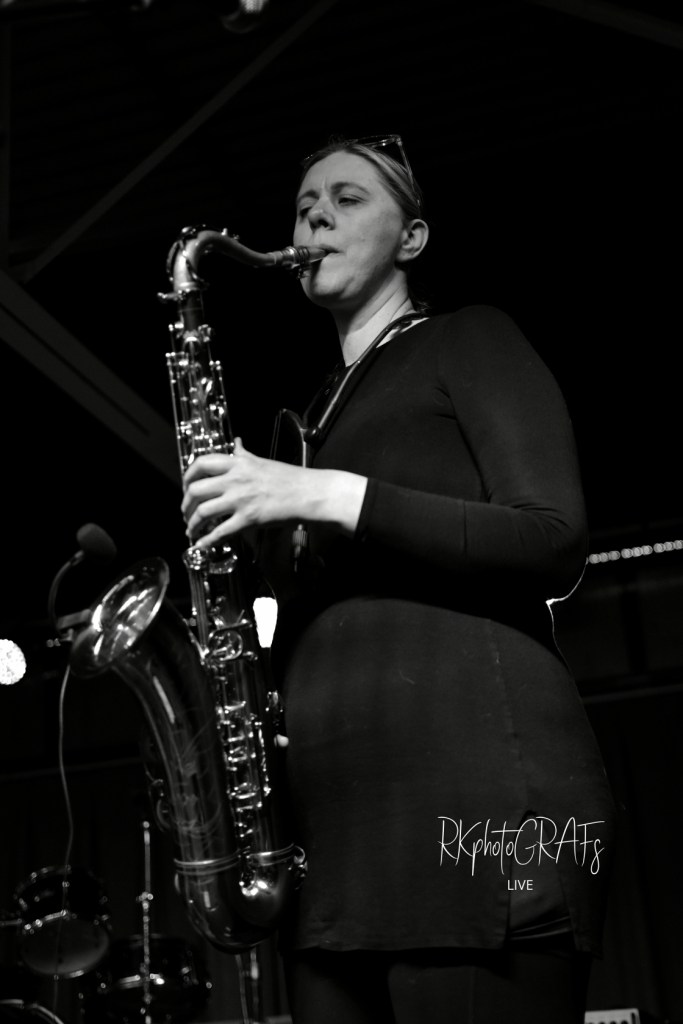
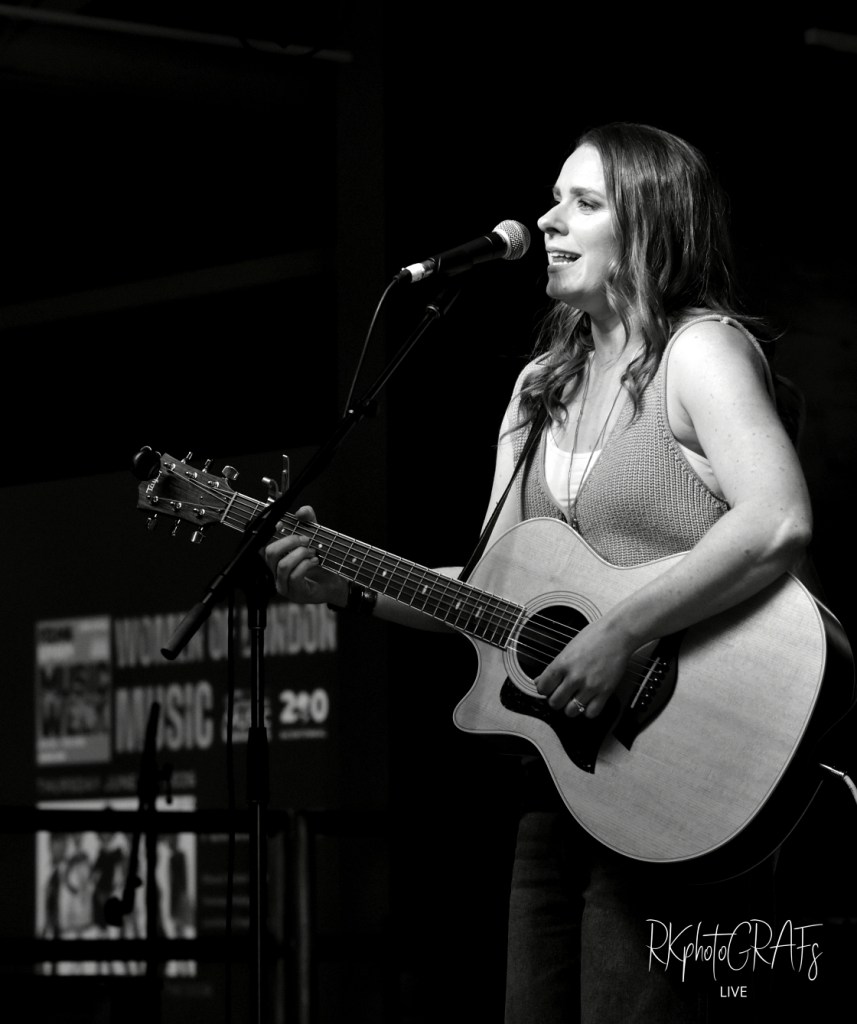
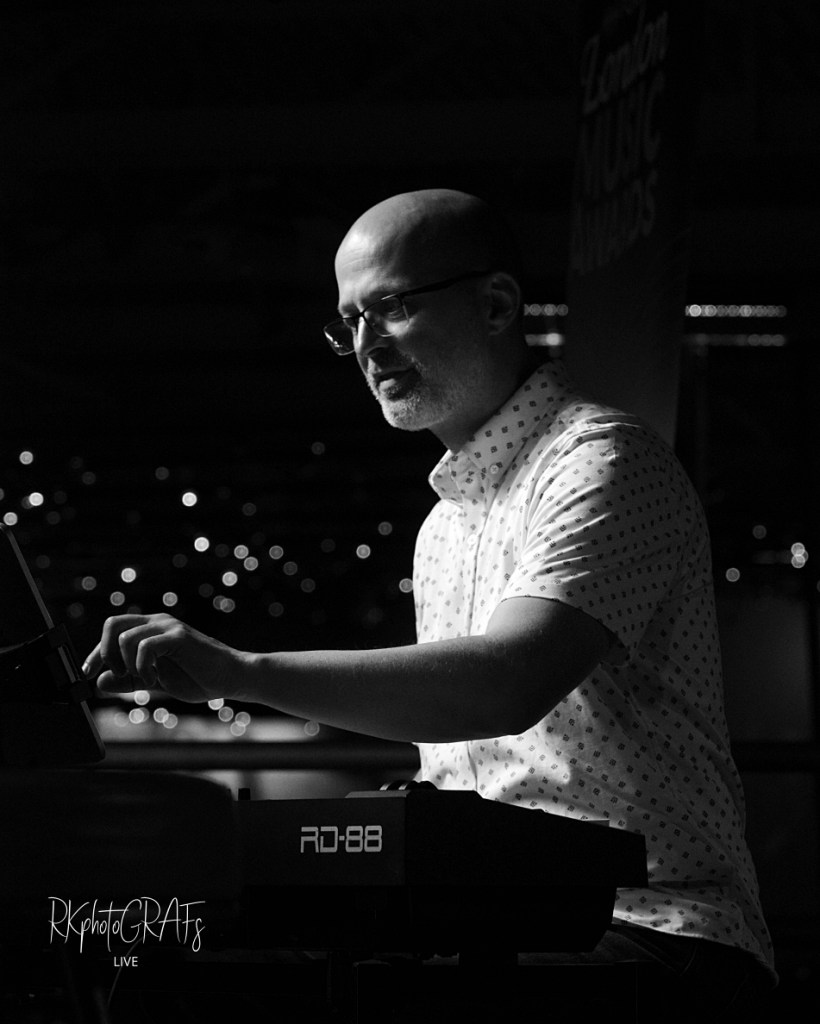
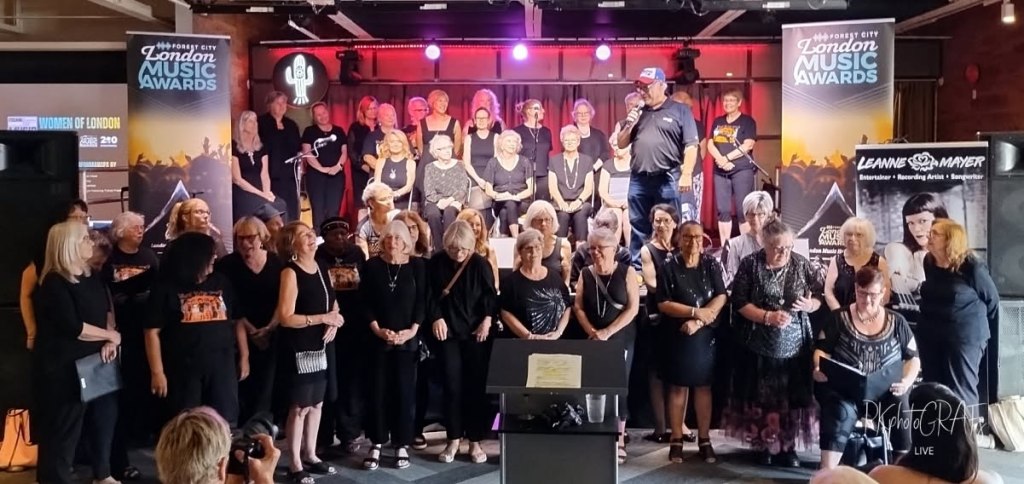
The lineup includes myself, Anne Moniz, Cinzia and the Eclipse, D’eve Archer, Gillian Davies, Angelina MacKinnon, Felicia McMinn, Rachel Dara, Andrea Matchett, and Kate Channer. Musical genres presented will include Pop, Folk, R&B, and Rock. (Editor’s Note: Photos of the participating musicians appear below.)

Q. Where can readers get more information about the individual artists?

Each artist has an Instagram account and a website. They’re all on social media, so they’re easy to find. I urge you to follow them, comment on their pages and tell them what inspired you when you saw them perform.

Q. Do you plan on making this an annual event again?

That’s a great question. I haven’t decided yet. But I think this is a great idea.

Q. Is there anything else you think our readers should know about the March 8th event?

This isn’t just a showcase. These events have always been about networking and connection, storytelling, and just making sure we all get a little bit of love. There will be merch for sale, so please bring cash. That goes directly to the artists. We have an amazing host named TIA G, who is a champion of women owning their energy, advocating for being yourself, and is a bright light in our sometimes very dark community. We are so excited to have her!

IF YOU GO:

What: The Doll House Showcase Presents: International Women’s Day – Women in Music.

When: Sunday, March 8th at 6:00pm.

Where: Palasad Socialbowl, 777 Adelaide Street N., London, ON.

Tickets: $10 cover charge at the Door. An All Ages Event.

For more information, visit https://www.facebook.com/events/1920189272180409/

PARTICIPATING ARTISTS:

(Tia G.)

(Anne Moniz.)

(D’eve Archer.)

(Gillian Davies.)

(Rachel Dara.)

(Kate Channer.) 

(Angelina Mackinnon.)

(Felicia McMinn.)

(Andrea Matchett.)

(Cinzia And The Eclipse.)

Q&A Interview with Laura Gagnon conducted by Richard Young, Publisher & Content Manager of The Beat Magazine 2025.

If you have a story idea or would like to become a Volunteer Writer for The Beat Magazine 2025, you can reach Richard at richardyoung@thebeatmagazine2025.ca

Jason Rip – London’s Man for all Seasons

by J. Bruce Parker

Jason Rip is very much aware that his name will also be his epitaph. Mention this to him, and his eyes narrow slightly, accompanied by a nefarious smile. This is understandable as the poet, author, actor, director, comedian, and cartoonist has incorporated a sense of the macabre into much of his work.

With all these titles before his name, I ask, “Who is Jason Rip”?

He diffuses it down to “I’m a storyteller.”

I met up with Jason at one of his favorite haunts, the Landon Library in South London. He was deep into Charles Dickens’ heavy-handed tome, Bleak House, and also researching the Boer War for an upcoming book.

Jason’s stories, many evolving into plays, exactly 100 of them with 74 being produced, also tell the story of Jason Rip in some way or another. Two of his plays were written about London luminaries, Marc Emery and Roy MacDonald.  

With the finality of his theatrical work ending at 100, he adds, “I stopped writing plays after my 100th as I felt no one needs to write more than 100 plays”. His notion of practicality certainly hasn’t diminished his restless creative spirit.

Jason Rip was born in Guelph, migrated to Indiana due to his father’s work as a biochemist, and ended up in London when he was six.

He was formally educated at the University of Western Ontario and, as a teacher, taught in Tillsonburg as well as at South Secondary School in London.

At six foot six, Jason Rip is an imposing figure.

“A lot of people have told me that I am intimidating when they first meet me. I can’t help being six foot six.”

His love of theatre inspired him to seek out roles, but in his own words, “If you are the dimensions that I am, there are limits on roles that you will get.”                                                    

In a 2018 documentary, directed by Matthew Downs and produced by Faith Clark, appropriately titled A Tombstone Epitaph, Jason is described as “a big man with strong opinions.”

In the film, Jason tells us, “I didn’t really choose theatre, it chose me, but I know I am passionate about it to the exclusion of almost everything else; relationships, jobs, money, or whether I eat or not. I do what I want. I don’t think I am influenced by whether it is going to sell or if anybody is going to want to see it. I am doomed to a low budget, but I do what I want. In terms of a guy who writes in this town, I am the last man standing”.

He slyly adds, “I have never written anything that shouldn’t be burned in a fire.”

As an aspiring actor, Jason began writing plays to create parts for himself. “The playwriting came as I wasn’t satisfied with the parts I was getting.”

Reflecting on his own life, he took to writing plays about the downcast, the vulnerable, the destitute, and marginalized; those who are swept aside or misunderstood by society.

This could be defined in a work he co-created with Rachel Ganz and performed at Manor Park Theatre in 2024. Man Up is a definitive and somewhat uncomfortable look at the issue of male suicide. All five performances were sold out. He expressed on his Facebook page that the play was for “the precious few who prefer their theatre to be hard-hitting social commentary instead of song and dance, and for all who have lost loved ones to the ‘unspeakable’ but everyday tragedy.” Jason cast seven local actors to perform the eighteen scenes/vignettes.

The play demonstrated the role of masculinity in our society; the perceived image of what a man is about and the myths of machismo. To make it timely, consider the highest point of office in the U.S. by an individual who has proven himself as an example of the worst kind of toxic masculinity.

His previous theatrical works explored the lives of artist Andy Warhol, poets Arthur Rimbaud and Edgar Allen Poe, and jazz musician Chet Baker; all highly creative but troubled souls. 

Jason tells me, “I started out my life feeling like an outcast, and in some ways, I still feel like one, with what separates me from others is quite extreme, but it is also a source of strength. I write about the poor and destitute because I can’t stand the problems of the rich. I work with people who don’t have anything, and that is where my sympathy lies.”

And Jason would know, as he recently retired from a ten-year career working the night shift at Unity, a homeless shelter which he proudly states has no religious affiliation.

He defines himself as ‘nocturnal’ and, despite working the night shift, which he admits “makes me a little crazy”, he continues to write. 

“I can knock off a short story in one fevered session or a page in a day,” adding, “I write obliquely about everyday stuff, always turning a bit of a twist to the story. I like my little niche.”

Thirty years of writing have evolved into Jason’s most recent works. My Gehenna, published in 2024, was quickly followed up by The Goblin and Other Tales, released in 2025. Both volumes delve into the world of horror. He introduces the reader to the dark side of humanity; to those misfits who live beyond the fringes of scruples and sanity. The troubled and invective characters he creates transport the reader along a journey of both humor and horror. There are those defined with a “fondness for acts of indecency,” and Mr. Rip boils it all down to “people being nasty to each other.”

My Gehenna and The Goblin and Other Tales can be purchased through Amazon.

A copy of his first book was given to a homeless man who dubbed Jason Rip as “the Dostoevsky of Goof Town”, a title which he relishes.

The stuff of Jason Rip comes from both the likes of Edgar Allen Poe and William Shakespeare, whose entire theatrical work Jason has read. And there is American author Norman Mailer, whom Jason decrees is America’s Tolstoy.

Musically, in his writing, there is an inspiration from both the likes of musicians Tom Waits and Warren Zevon, who documented his terminal diagnosis of cancer over three albums. It is this dark and unexploited channel of human life that seems to propel his desire to continue writing.

(Pictured: Anne Moniz, Jason Rip, and Daniel Oniszecko.)

His life’s work, which he decrees, “One of the happiest things of my life is that I feel that I have written everything that I need to write,” has also recognized by our community. Jason was awarded the 2018 Chris Doty Lifetime Achievement award, as well as being recognized as a “Distinguished Londoner”. He is grateful for both accolades.

You can often find Jason Rip at the Landon Library in Wortley Village, possibly inspired by the solace and solitude that a library offers.

Leaving the theatre behind, trust that something dark, sinister, but highly compelling will come out of London’s premier storyteller.

This April 15 to 19, AlvegoRoot Theatre is producing a brand new version of Jason Rip’s darkly hilarious play Luce. Mark the date in your Calendar now.

by J. Bruce Parker

Out of the Woods and Into the Spotlight: How London’s Literary Community Built Its First Anthology

by Dawn Lyons

When members of the London Writers’ Society first tossed around the idea of creating an anthology, it felt more like a someday dream than a concrete project. But in 2023, with a growing membership, a renewed energy, and a core of volunteers ready to say yes, “someday” shifted into “now.” The result, Out of the Woods: Voices from the Forest City, has since become more than a book. It’s a celebration of London’s writers, its literary identity, and the collaborative spirit that fuels creative communities.

A vision years in the making

The goal for the anthology was simple but ambitious: to create a showcase of the Society’s members that reflected the full breadth of London’s talent. The committee envisioned a collection with creative nonfiction, fiction, and poetry that allowed room for multiple genres and voices, all reviewed through a tiered judging process and curated by a local prominent literary figure.

While the vision stayed largely intact, one thing surprised them – the sheer amount of work involved. From funnelling anonymous submissions to first readers, to coordinating edits, to choosing the final layout, the process became a true community effort. Society members were invited to submit up to five pieces each, and the response was overwhelming. Most submitted at least one piece, with many sending in the maximum. The first-round judges produced a longlist; then came the question of who would choose the finalists.

Because the anthology was rooted in London, the team wanted a local literary presence. Someone suggested novelist Emma Donoghue. They assumed it was a long shot.

It wasn’t.

“She responded immediately with ‘Sure!’” recalls

“We were shocked and thrilled.”

(Pictured: Emma Donoghue. Photo Credit: Woodgate Photography.)

Donoghue selected a beautifully varied set of finalists that included stories of all tones, genres, and moods. Behind the scenes, editor Heather Godden played a crucial role, offering thoughtful feedback even to writers being edited for the first time. She also crafted the order of pieces, creating what the committee describes as a “gentle wave-like vibe, allowing emotions to ebb and flow throughout the book.”

A mix of writers, a mix of worlds

The anthology gathers work from writers at every stage: brand new voices, emerging writers building momentum, and established authors adding another credit to their growing list. Many were published for the first time; others were thrilled to contribute alongside peers they admire.

What stands out most is the depth of diversity, not only of the authors themselves but of the stories they tell. The membership of the London Writers’ Society spans ages, backgrounds, identities, and experiences, and the anthology reflects that richness. Within its pages, readers will find memoir, political reflection, gender-identity-focused nonfiction, supernatural tales, science fiction, romantasy, historical narratives, and poetry, both light and deeply moving. Like London itself, where one turn reveals affluence and another reveals hardship, the anthology refuses categorization.

(Pictured: Martha Morrison, London Writers Society Anthology Chair.)

“There is no ‘one’ London,” Morrison explains. “This city, like its authors, cannot be defined.”

Because the book is titled Out of the Woods, writers were encouraged to interpret the theme literally or figuratively. The result is a tapestry of forested settings, metaphors of struggle and emergence, stories of being “out of the woods” — or very much not.

Most Londoners will recognize that the title also plays with London’s nickname, the Forest City, which brings to mind the idea of voices emerging from woods, fields, and farmland to step into the light.

Beyond the theme, Morrison and the committee see the book as something that fills a much larger gap: recognition of London’s vibrant literary culture. “It is a hotbed of innovation and creativity,” she says. “We’d like to proclaim it ‘the City of the Arts.’”

Watch Martha Morrison and Donna Costa discuss Out of the Woods on a recent episode of Rogers TV’s show, What’s Up London: https://www.facebook.com/share/r/17qacRK3Bq/

Lines that linger

Several pieces in the anthology stand out for their resonance. A few of the committee’s favourite lines (although Morrison indicates there are many) include:

From Discovery by Laurie Browne:
“…My heart lies among the discarded shells and stones and my edges have softened like blue beach glass…”

From Alignment by Laura Wythe:
“…They were peering into the windows of the van… dressed in hide or bark with woven stuff sticking out, and masks—or were they faces?… It was difficult to say if they were human, animal or, weirdly, tree?”

From Not Just Lonely by Bruce Lord:
“You were those petals, I those thorns / and when you held me for the very last time, I fear I made your fingers bleed.”

From Wear a Denim Shirt for Me by Diane Kirby:
“I have lived a life steeped in denim.”

From Dust – An Ode by E. Jeffrey Orchard:
“Dust is like laundry / there’s always more.”

If this book had a soundtrack…

Music lovers will appreciate the anthology’s unofficial playlist curated by the committee — a mix of Canadian, local, and Irish artists (a nod to the anthology’s curator):

  • “Out of the Woods” – Nickel Creek
  • “Nightingale” – Leonard Cohen
  • “Everything I Call Home” – The Pairs
  • “Lonely” – Lost in Japan
  • “Redwood Tree” – Van Morrison
  • “Lost Forest Medley” – Paul Mills
  • “A Case of You” – Joni Mitchell
  • “Take It on Home” – Genevieve Fisher
  • “A Forest” – The Cure
  • “Meet Me in the Woods” – Lord Huron
  • “In the Woods Somewhere” – Hozier
  • “Shadows and Tall Trees” – U2
  • “Go Back to Your Woods” – Robbie Robertson

(And yes, for the Swifties: Taylor Swift’s Out of the Woods also fits!)

A community-powered national spotlight success story

One of the defining features of Out of the Woods is how many hands helped shape it. From grants and sponsorships to support from the wider publishing world, including Terry Fallis writing the foreword and Douglas Gibson providing a blurb, the team felt as if the whole literary community rallied behind them. Local independent bookstores embraced the anthology, as did surprising partners like Tuckey Home Hardware in Wortley Village, which now keeps shelves dedicated to local writers.

Reader response has also been overwhelmingly positive, with people praising its readability, emotional range, and resonance. Live readings have brought packed rooms, tears, laughter, and countless conversations.

Perhaps the biggest surprise came when the anthology was named one of The Globe and Mail’s “35 Hot New Reads” for August and September. Physical copies of the paper were immediately purchased for safekeeping when the committee heard about the recognition from a friend. 

“It’s a stamp of approval that reminds many of our members they are indeed writers,” says Morrison. 

What’s next?

The idea of a second anthology is already on the table, and the early signs are promising — volunteers are stepping forward, and energy is building.

In the meantime, the London Writers’ Society continues its year-round work: monthly craft workshops, critique groups, author spotlights, Book Fair booths, a developing podcast, and a growing presence across southwestern Ontario. With more than 150 members writing poetry, fiction, creative nonfiction, and scripts, the Society remains a cornerstone of London’s literary landscape.

Where to Buy Out of the Woods: Voices from the Forest City

Readers can find the anthology at independent booksellers across London and surrounding communities (Windsor, Port Stanley, St. Thomas, Strathroy, Sarnia, St Marys, Stratford), at Indigo, and online through Amazon and Barnes & Noble. A full list of retailers is available under the “Anthology Project” tab at: https://www.londonwriterssociety.ca

Follow the London Writers Society on Facebook: https://www.facebook.com/LondonOntWriters

Follow the London Writers Society on Instagram: https://www.instagram.com/londonwriterssocietyontario/

By Dawn Lyons.

(Pictured: The Beat Magazine Contributor, Dawn Lyons.)