
Previewed by Daina Janitis
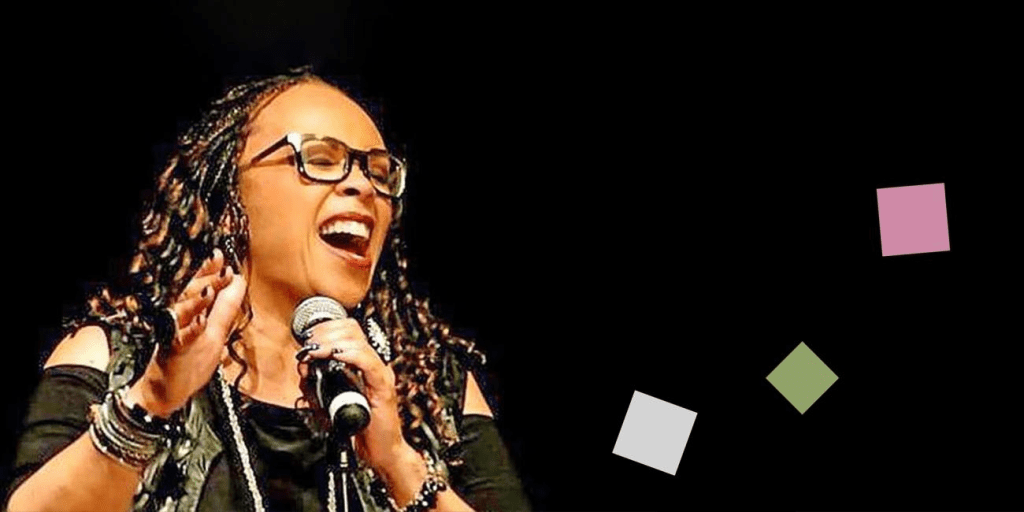
My first problem is the fabulous team that works for, loves, and supports London Symphonia. Look at their website – https://www.londonsymphonia.ca/event/love-and-romance-denise-pelley, where you’ll find everything you wanted to know – and more – about the creator of the program and the soloists.
And then it’s Black History Month, and here we are in Canada creating a musical program featuring two black soloists. Haven’t we heard that our more powerful neighbour has done away with DEI – and isn’t it embarrassing that we still toe the line for that acronym? And is it pointless virtue signalling that seems to praise London for being aware of our People of Colour?
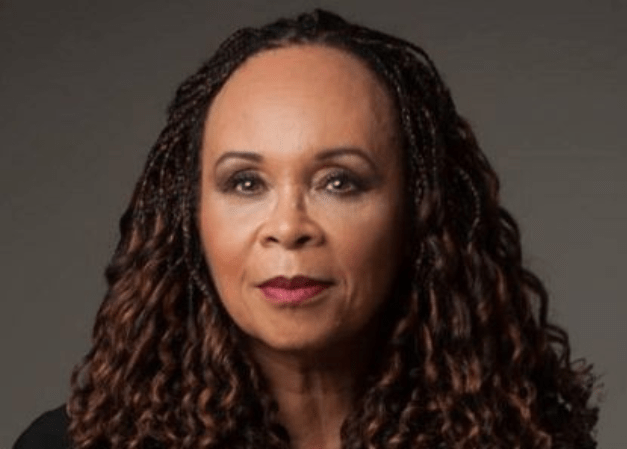
(Pictured: London vocalist Denise Pelley.)
And, finally, am I being condescending to point out the achievements of our program originator and soloists as though Londoners needed educating about them? We know about Scott Good’s composing career, we know about Denise Pelley’s medals and her opening for Aretha Franklin, and her YM-YWCA Woman of Distinction award. If we’ve been to Stratford in the last 16 years, we know that Roy Lewis is a 16-year veteran of the Festival stage.
But here’s the thing, and it’s raw right now. I admit to everyone that I have too much time, doubt and fear on my hands right now to ignore the horrors of authoritarianism, ignorance, and greed that are happening in our neighbourhood. At 80, I’m not going to run for office, but I want to reveal that London’s live art music scene has been my harbour of hope.
Sitting in those Met pews – no cushion, I get the cheaper seats – and watching the faces of our Symphonia musicians and their featured guests renews hope. The evidence of their work and commitment, and the joy they show in bringing them to us in live performance, is something that no recording can do. I multiply the effect by chatting to strangers beside me, to students at the reception (who can attend for FREE, for God’s sake) and hugging the performers afterwards (very few have pushed me off). Those are gifts I never expected to receive in life.
Because we are in the presence of souls who have battled racism and every kind of insidious discrimination, have given up lucrative jobs for their art, and have honed their talents to the utmost just for US. Bearing witness to their courage as well as their art makes US better!
(Conductor Scott Good and guest artist Denise Pelley share their insights into the upcoming February 14th performance.)
Do you know that Denise Pelley has inspired young people in Junior Achievement for 19 years, has performed at the Grand in musicals, and has travelled to Sudan twelve times to establish a music and arts camp for 400 kids? Did you know that her son, Jason Edmonds, was killed in a road rage accident, and she created a Foundation to tell young people about that rage as one of the many dangers facing them?
Did you know that Roy Lewis is from the UK, came to Canada, and founded the Obsidian Theatre (focusing on Black Canadian stories) – as well as painting, sculpting, teaching Elizabethan Literature at several universities, and co-founding “Shakespeare in the Rough”? His poetry tackles the death of love, the struggle for understanding, and redemption in the face of grief.
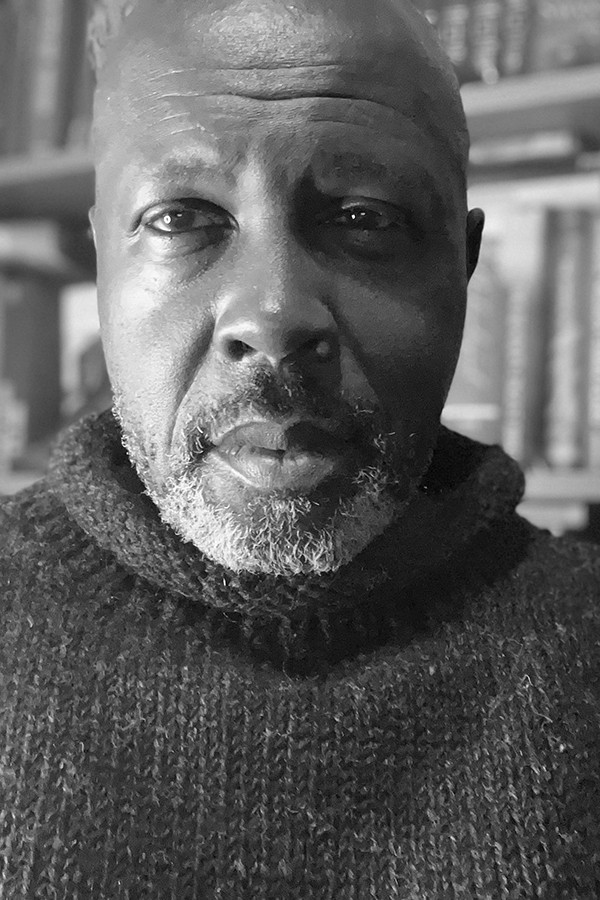
(Pictured: Roy Lewis, Poet and Narrator)
Conductor Scott Good is not Black, but he’s a genius of music with a soul that encompasses the rhythms, aspirations, and hopes of all humanity. I can only hope that London hears more of his oratorios, symphonies, jazz masterpieces and chamber music. He is a creator of music and of bridges that support our shared humanity.
Being in the very presence of artists like this is a privilege and a healing.
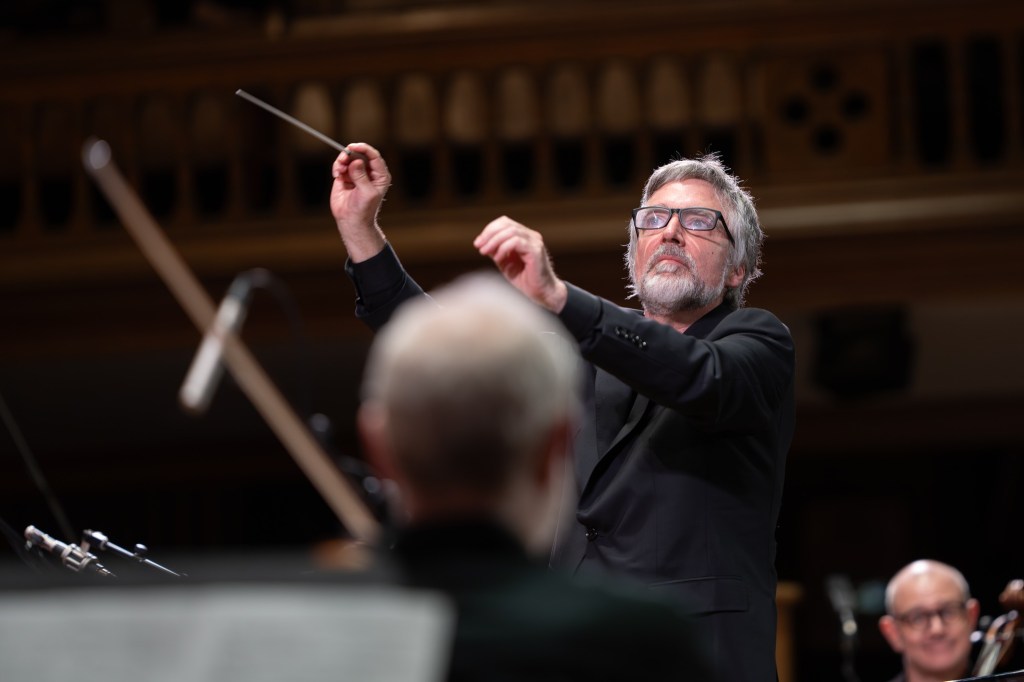
(Pictured: London Symphonia Conductor, Scott Good.)
I can only ask you to read, before you attend the concert, the words of an American poet, Joseph Fasano, whose word-compositions are as powerful as the music of our London performers this weekend:
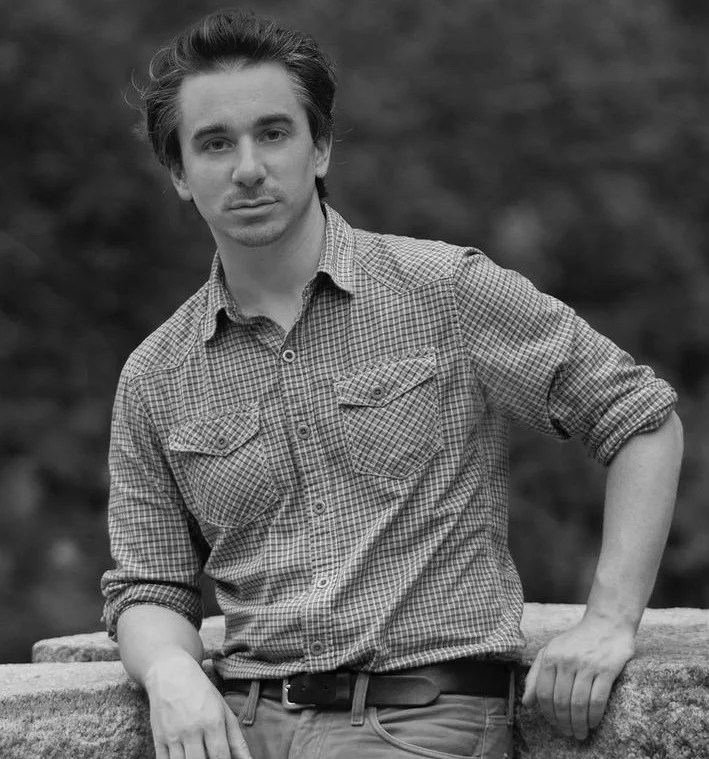
(Pictured: American poet and novelist, Joseph Fasano.)
“How does Authoritarianism happen? It starts slowly, in slogans and small acts. It starts in the eroding of decency and empathy.
It starts with a “Leader” undermining faith in any “Truth,” the deliberate disorientation of the citizen’s mind.
And then? It stirs in the heart of the common man, whose world has become too complex for him. He looks around and finds a world that is frightful, complicated, new. He sees his falling bank account. He loses his job. New media bombards him with changes he cannot understand. He despairs. He is filled with an unnameable terror.
When he can take the fear no longer, he abandons his reason. He hands his mind over to a Leader—a Fü*rer, a Chairman, a Figure He Never Had—who promises to simplify his thoughts, his feelings, his life; to tell him the one, concocted, state-sponsored Truth he wants to hear. And that Leader will do exactly that.
Authoritarianism, therefore, thrives on the one-sided mind: the individual, and ultimately the group, that has become alienated from, or has repressed, a part of itself, usually in an attempt to avoid feeling what it is terrified to feel. The one-sided person seeks to control the ways in which others express themselves, and he does so for precisely this reason: he unconsciously envies those who can feel what he cannot feel.
Authoritarianism always begins with a reductive philosophy that despises empathy, that views tenderness as a weakness, that seeks to police how others love. Dostoevsky once wrote that hell is nothing other than the state of being unable to love. Authoritarianism is nothing but the small mind’s fear of the myriad beauties of this world. Even as its rulers acquire material wealth, they wish to deprive the world of the spiritual riches they cannot have.
Thus, as a movement, the ultimate unconscious wish of Authoritarianism is always destruction, self-destruction, s*icide. It longs for stillness, not growth; its nationalistic fervor is a not-so-hidden desire to be alienated, to sever its bonds with other nations and peoples. It ends as H*tler did in Berlin: alone, isolated, taking everyone with it into the dark.
It is predicated, always, on a false nostalgia: a longing for an ideal, imagined past. Its slogans are vague enough to inflame the fantasies of the one-sided mind be great again, blame others, your life is hard because of Someone Else. Most catastrophically, then, the one-sided mind projects its repressed half (its shadow or its tenderness, its darkness or its heart) into this Other, and seeks to oppress it, then ultimately to destroy it. Genocide, tyranny, oppression: these are acts of the fractured, one-sided mind, afraid of encountering and experiencing the other side, the other opinion, the Great Other, in whose presence it would be challenged to face the whole of what it means to be human.
Art, mystery, poetry, education: these things reconnect us to our wholeness, to the varied voices within us. When we act from that grace, that state of openness, of listening, of synthesis and integration, we practice the lost arts, the arts that all power structures inherently desire to devalue and repress empathy, compassion, creativity, love.
Where is the wise way between societal extremes? Where is the movement that supports the worker, the common citizen, without stoking his deepest fears and using them to divide society and conquer it? Where is the form of government that wishes for its citizen to be whole?
A fractured, one-sided mind is a mind that can be controlled, sold reductive narratives, induced to want and to purchase any artificial fulfillment. A whole mind, even a mind that strives for impossible wholeness, is free. And that is why real, radical wholeness is a threat to the status quo, to tyranny, to propaganda.
As is art. As is grace. As is empathy. And that is why love, radical love, common love, even in the darkness between two bodies, is a revolution that can bring kings to their knees.”
— Joseph Fasano
IF YOU GO:
What: London Symphonia presents Love and Romance with Denise Pelley.
When: Saturday, February 14, at 7:30pm.
Where: Metropolitan United Church, 468 Wellington Street, London, ON.
Tickets: Online at https://ci.ovationtix.com/36746/production/1248187?performanceId=11679476
For more information about this concert and London Symphonia, visit https://www.londonsymphonia.ca/
Follow London Symphonia on Facebook https://www.facebook.com/londonsymphonia and Instagram https://www.instagram.com/london_symphonia/
Here’s a recent Facebook post about the concert by conductor Scott Good, shared with his permission:
“Dear friends,
On February 14 at 7:30 PM at Metropolitan United (London, ON), I’ll be joined by my colleagues at London Symphonia, R&B/Jazz vocalist Denise Pelley, and poet/actor Roy Lewis to present Love and Romance.
Yes — it’s Valentine’s Day, and we are going deep!
The seed for this concert was planted almost two years ago when I noticed Valentine’s Day landing on a Saturday evening. As a concert designer, I love an occasion — a focal point that shapes an evening’s arc. Valentine’s Day is ideal: music across all styles is saturated with romantic passion, longing, joy, and vulnerability. It’s an excuse for genres to mix and make sense together, and for audiences to encounter both the familiar and the unexpected. I like to think of occasion concerts as community-oriented — something many can enjoy.
I knew early on the program had to include Mahler’s Adagietto from his Fifth Symphony. I remember the first time I heard it; I’ve never known a piece of music to evoke the sensation of a loving, gentle touch quite like it. Later, I learned it was written as a love letter to his wife. It had to be here.
Around that time, I had recently worked with Denise at the Forest City London Music Awards, where we presented Stevie Wonder’s You and I. It went beautifully. Denise brings such generosity and depth to performance, and the song – with its tender, yet vulnerable lyric – aligns perfectly with this theme. The following year we returned with You Don’t Know Me, this time with horns, strings, and rhythm section. That collaboration allowed me to shape the orchestration around her expressive vocal language, and it became clear we had the beginnings of something larger.
Roy’s role in guiding the evening through poetry and poetic prose became unexpectedly profound. After a remarkable performance with Symphonia last year, he joined us with poems written specifically for Valentine’s Day — fourteen of them. As I read through his work, I realized something deeper was at play: these poems weren’t only about love found, but love lost. With great love comes great grief, and the concert gradually reshaped itself around that truth.
Nine of Roy’s poems ultimately frame the program, each leading into a song or instrumental work — the pain of Cupid’s arrows illustrated by Ellington’s Good Morning Heartache, a thrilling glance explored in Bacharach’s The Look of Love, the electricity of being with the one you adore caressed by Carmichael’s The Nearness of You. Instrumental moments include Ravel’s sensuously flirty “Pantomime” from Daphnis et Chloé, featuring Laura Chambers on flute, and the king of romance, Barry White’s orchestral hit Love’s Theme.
As the concert turns toward loss and reflection, we arrive at Autumn Leaves, performed without rhythm section, just orchestra and voice – followed by an up-tempo moment of melancholy in an orchestral rendering of Radiohead’s Weird Fishes I created for the concert, a song that aptly describes, through driving rhythm, evocative chords, and a spacious yet unrelenting melody, a feeling of loss and the difficulty of moving on.
We close with Here’s to Life, in the Shirley Horn arrangement — a true bucket-list piece for Denise, and the perfect sentiment to end the evening:
“May all your storms be weathered.
And all that’s good gets better.
Here’s to life, here’s to love, here’s to you.”
With solos from Nevin Campbell, Joe Phillips, Rob Stone, and Shawn Spicer, and an orchestra navigating classical lyricism, jazz harmony, and blues grit, + original arrangements alongside renditions made classic by Ella Fitzgerald, Dianna Krall, and Matt Monro, this promises to be a rich, emotionally charged night of music. Join us if you can!”
Previewed by Daina Janitis

 The Beat Magazine 2025