This is the twelfth in an ongoing series in which The Beat Magazine 2025 takes readers “Behind The Scenes” to meet the talented creative individuals who make the London area such a vibrant arts and culture community.
In this segment, Bob Klanac profiles Tami Kegley and Page Graham, co-founders of the popular Inside Outside recurring “salons” that bring together the music and visual art communities in a common setting.
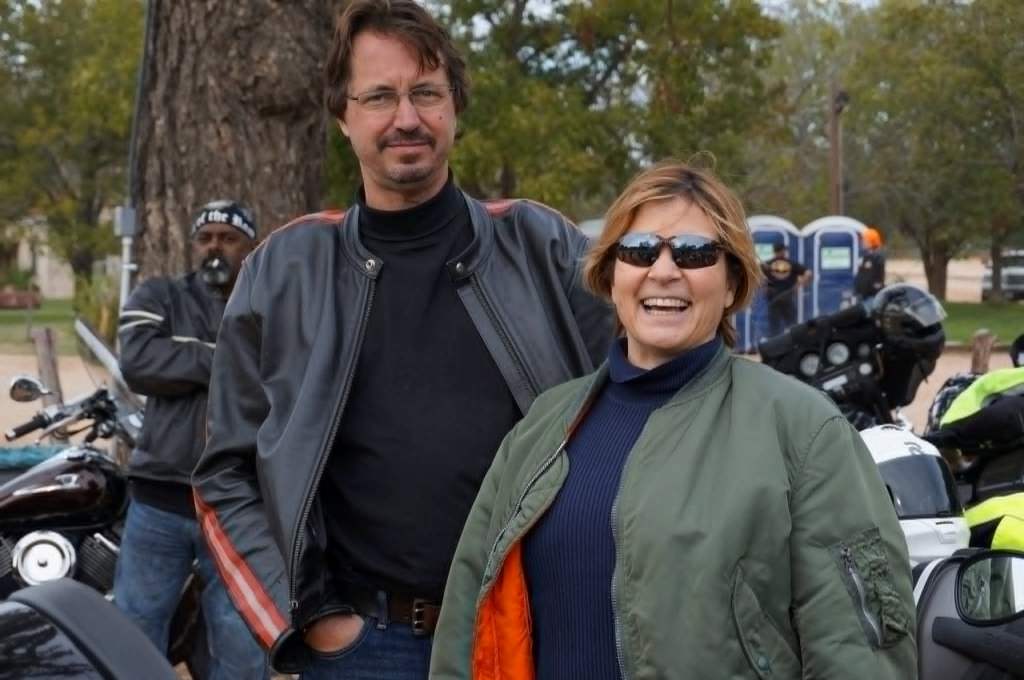
(Pictured: Page Graham and Tami Kegley. Photo provided by Page Graham.)
It took a couple of Texas-based outsiders to spot a need in London’s cultural landscape.
Tami Kegley and Page Graham, expats 40 years living in San Antonio, Texas made their home in London a few years ago and knew they wanted to be involved in London’s growing arts and music scenes.
“When I came back, it felt like the visual arts were playing a secondary role in our community” says Kegley “and there is so much emphasis being placed upon music.
“It seemed like there was no intermingling between the visual arts and the music communities in the city.”
Graham observed in San Antonio a very vibrant arts scene intertwined with the music community.
“I really missed those wonderful artist talks. I would go to a show, and invariably there would be an artist panel discussion.”
Both Kegley and Graham came by their various passions honestly. Kegley is an acclaimed jewelry artist and Graham, a onetime CHRW 80s-era radio host had a long career in television production in San Antonio. Both were very involved in their San Antonio community and came to London looking to do the same.
“Page and I moved to London and became enchanted with the community,” Kegley explains. “We volunteered for the Close to the Edge Festival and things like that and just found ourselves wanting to be more involved.
“My career is as an artist. Page and I have both done arts journalism. That was in our tool kit, and we were looking at how we can make a positive impact on London. It occurred to us that real life conversations were important and had been left by the wayside because of COVID.
“It seems like people are more in their silos here. There are efforts that are facilitated by the city and other groups to try to break out of that but we really wanted to have an arts conversation.”
So Kegley and Graham batted some ideas around their dining room table and decided on something they would call the Inside Outside.
Kegley would be the host of the event interviewing the artists and Graham the producer, ensuring the music and staging goes according to plan.
It would meld music with discussions on the arts in a kind of colloquium setting with one crucial difference from other events of that type.
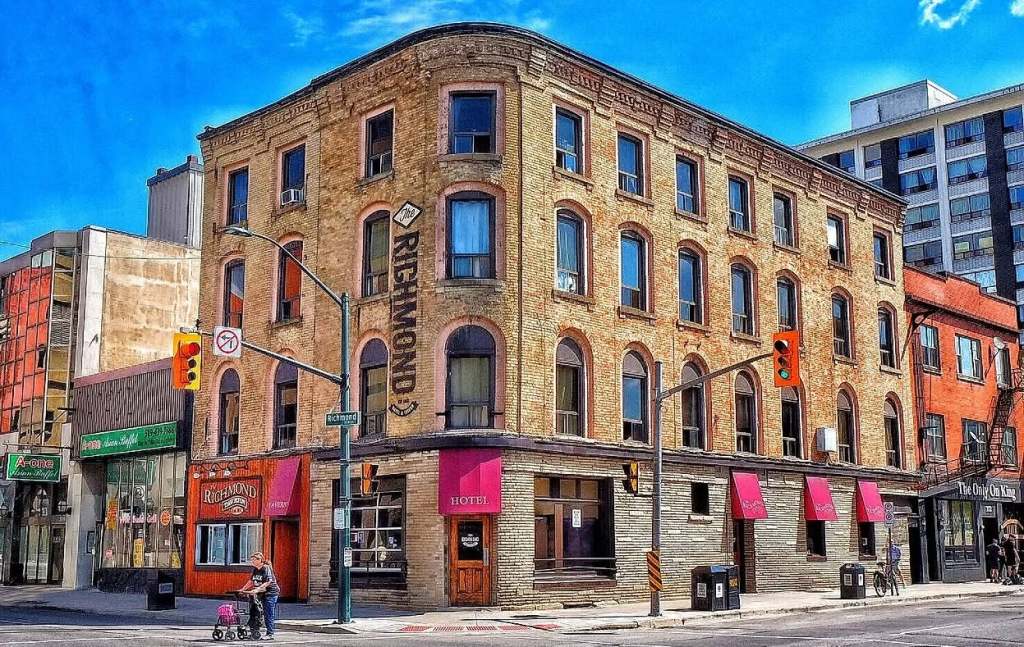
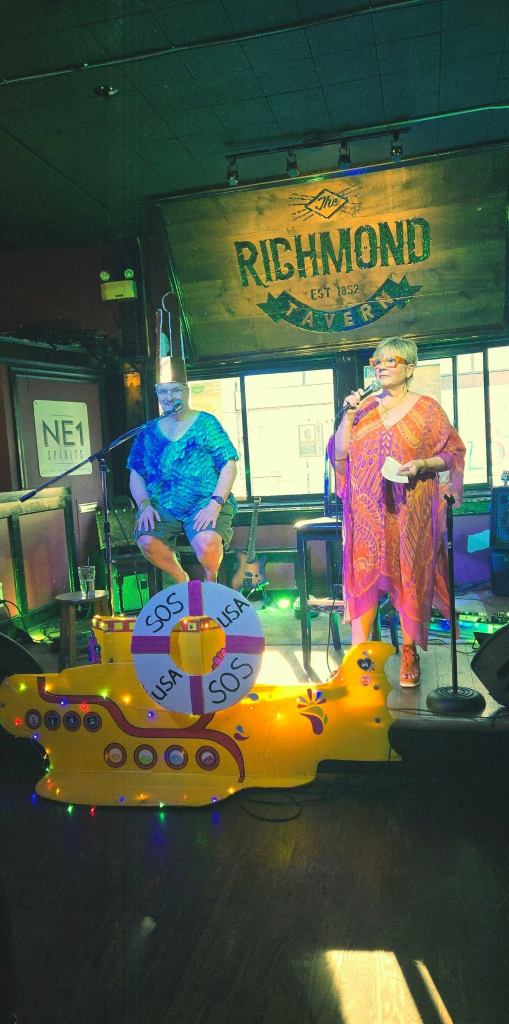
Key to the concept of the event is that it would take place in a bar, London’s legendary Richmond Tavern.
Why the gritty Richmond Tavern? To listen to Graham the answer is a resounding ‘why not’.
“It’s so cool and so real,” he says with a chuckle. “It’s like our version of the Horseshoe Tavern and that’s what makes it so special. You got the regulars in the back room around the round table, so to speak. It’s not exactly the Algonquin Hotel.
“The authenticity of that place makes it special. And that’s why, for us, it’s the venue of choice. It’s intimate. And intimacy is part of the basis of our concept.”
Kegley agrees, adding “It’s a non-intimidating space. It’s not a rarified space.”
Since it bowed in on May of 2025, Inside Outside has hosted talks by Jamie Fenton of Museum London, Graham Henderson, CEO of the London Chamber of Commerce, gallerist Jonathan Bancroft-Snell, local raconteur / legendary dancer Bev Camp, Jim Capel the former co-owner of City Lights Bookstore, artist Jim Telfer, as well as readings by Pete Tangredi and Howie Kittleson.
(Pictured: Tami Kegley with local performance artist John Erb at a recent Inside Outside. Photo by Vera Kittleson.)
Musicians featured have included Steve Sinclair, Jaron Camp, Galea and the Galvanizers, Anne Moniz with Daniel Oniszeczko, Brent Jones, Adam McNeill, Carol MacQuarrie with Chris Mittleholz, Jeffrey DP and Jordan Buck.
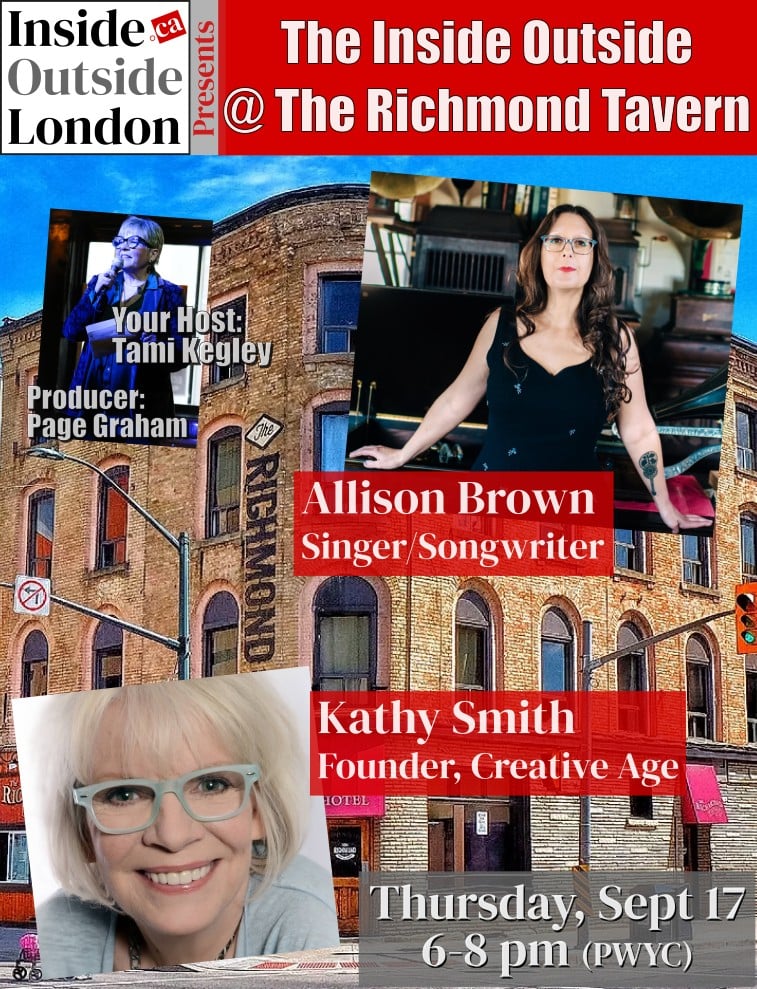
For the next edition taking place Thursday, September 17, Kegley will be interviewing Kathy Smith, the creator of an Over 55 visual arts, dance and writing program called Creative Aging executed in conjunction with the London Public Library.
Allison Brown will also take the stage celebrating her return to London after stints in other Ontario locales.
“Allison Brown is a fantastic singer songwriter,” Graham says excitedly, “she’s just recently come back to London, and we thought she’d be a fantastic choice.”
Kegley beams as she describes the sight of “a crowd of people sitting in there listening and taking it in and focusing.
“And sometimes the best part of the show is after it’s over, because people hang around and chat, and they’re energized intellectually.
“The Inside Outside is an attempt to bring the two scenes together, which is really something new. Absolutely, one feeds the other. It’s really kind of a nice symbiosis I think we’ve landed on. And people seem to like it.
“And so, we keep doing it!”
By Bob Klanac
Bob Klanac is a London-based music journalist who has penned hundreds of reviews and interviews. He was a juror for the Polaris Music Prize, a member of the Slaight Family Polaris Heritage Prize Jury and a Juno Awards juror. Bob has also penned two books, Promo Man about London’s late music legend Nick Panaseiko and Shooting Stars, Telling Tales, about photographer to the stars photo-journalist John Rowlands.
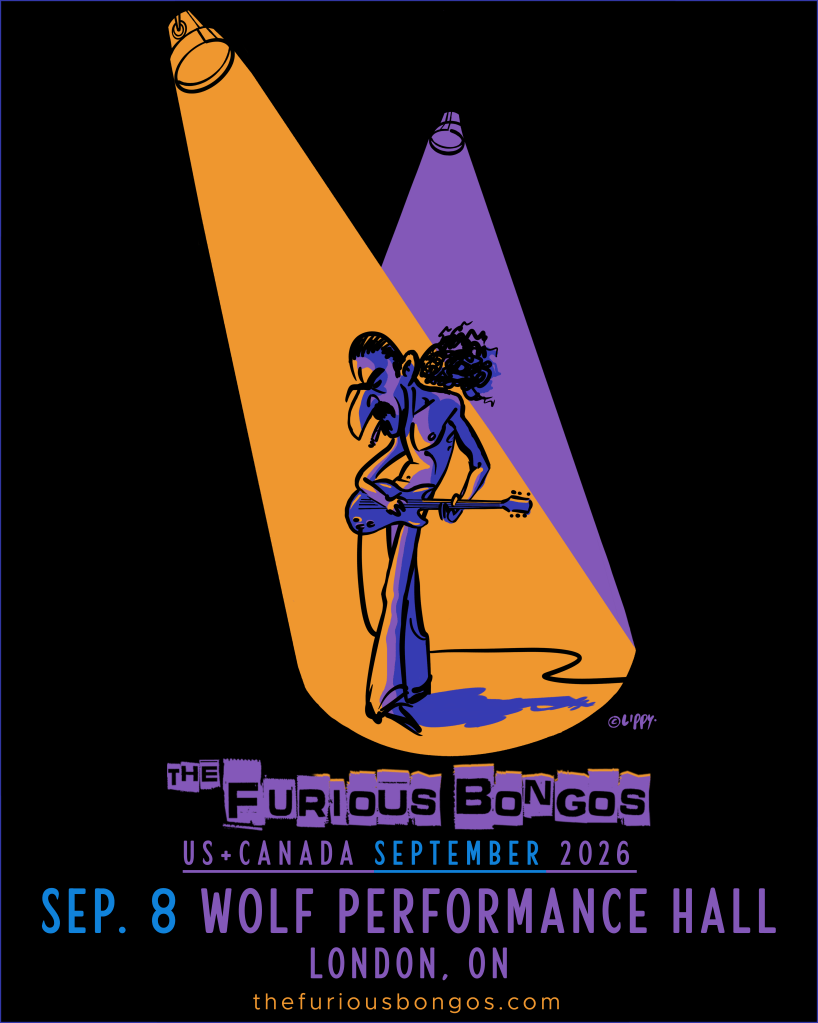
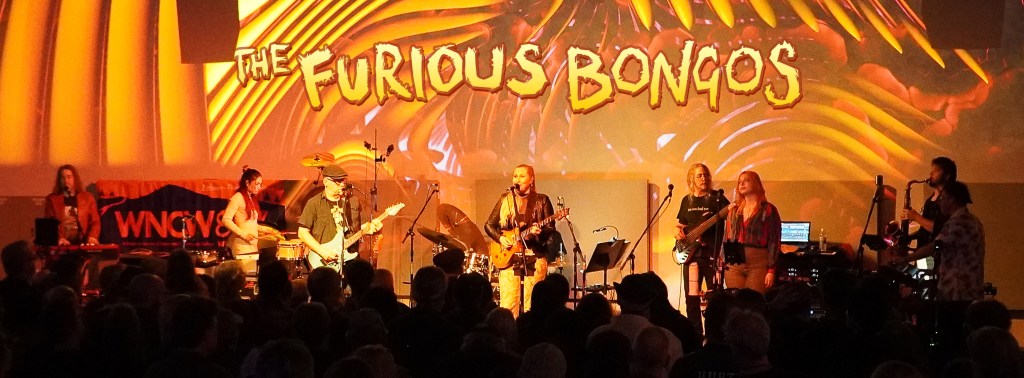
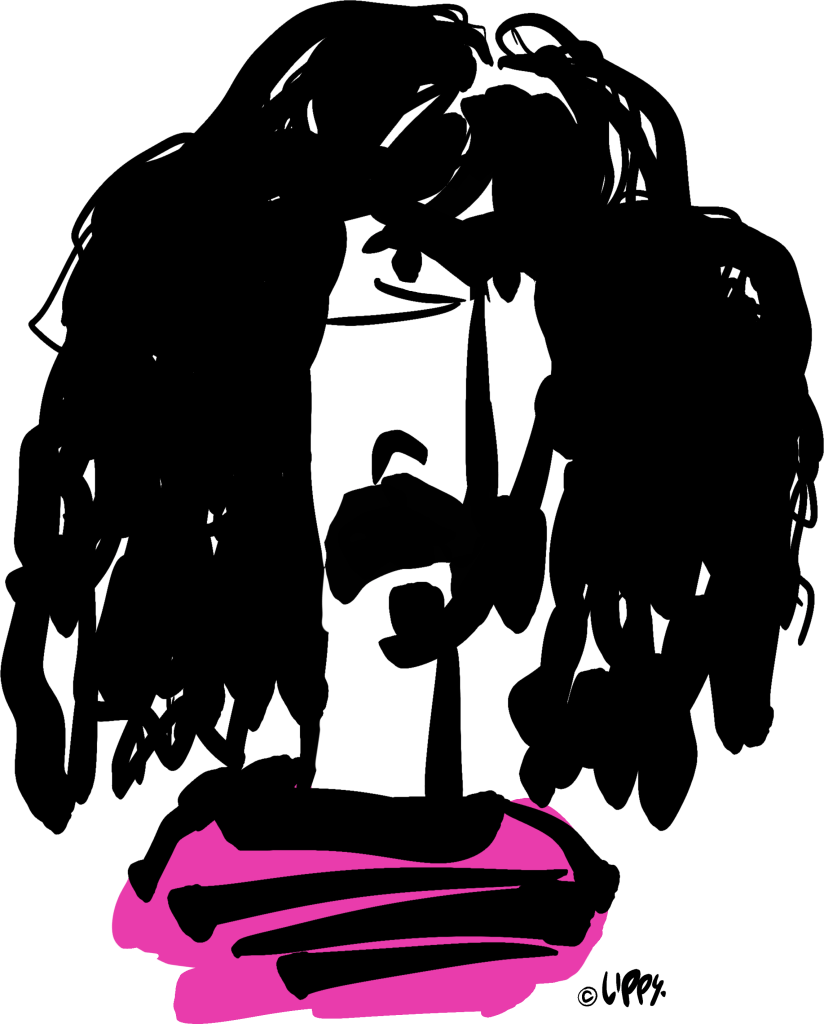
The Furious Bongos bring their Get on the Bus Tour, featuring the music of Frank Zappa, to London’s Wolf Performance Hall on Tuesday. September 8.
Join them for an evening of musical plooking, rhythmic gymnastics, and musical mischief. No prior knowledge of Frank’s catalog is required. Ponchos are optional.
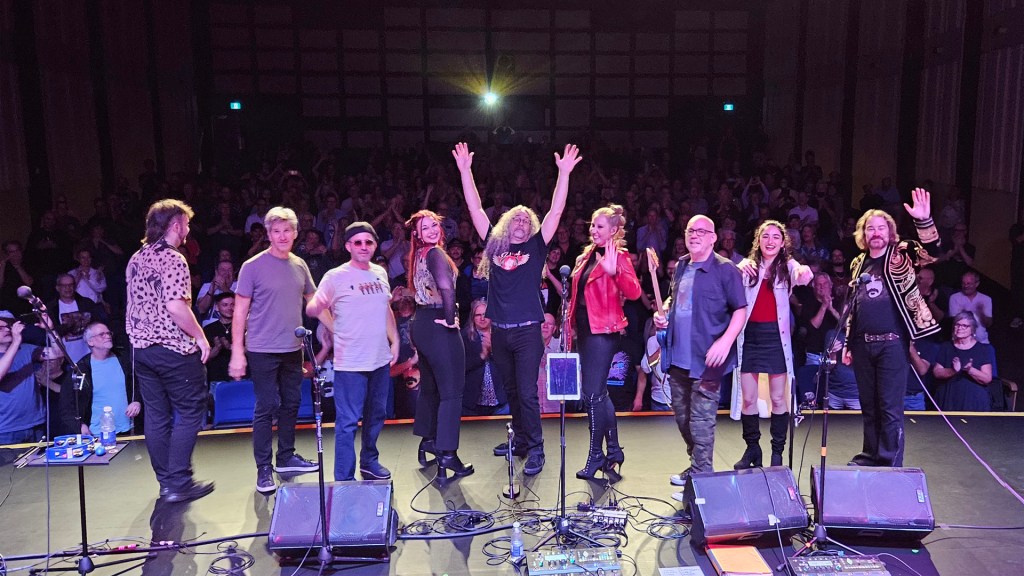
The Furious Bongos are a bunch of professional musicians with pretty diverse backgrounds who decided to take on a pretty big challenge and have some fun in the process.
Now, you might ask, “Oh yeah? ‘Professional’ musicians, eh? What makes you think they can play Frank’s music as well as Terry Bozio?”
Well, maybe you haven’t heard of them individually, but they’re pretty good musicians and you probably have heard of the folks on their resumes.
People like BB King, Mick Fleetwood, Jacob Collier, James Taylor, Yo Yo Ma, Barbara Streisand, Arthur Barrow, Munich Philharmonic, Bryan Beller, Andy Summers, and others. Well, you get the idea.
As for Frank’s music, he was constantly changing things, both for his own creative choices and to adapt to the different musicians he had over the years. He also understood that his live performances were entertainment. It’s supposed to be a rock show, not a piano recital.
With all that in mind, The Furious Bongos don’t think playing Song X from Album Y note-for-note while staring at their shoes is the proper way to go about it.
The result of that approach, combined with a lot of homework, is a show that pays respect to Zappa’s legacy, but is also new and different and dangerous and fun, with lots of eyebrows.
Kinda like Frank.
IF YOU GO:
What: The Furious Bongos Play Zappa
When: Tuesday, September 8 at 7:30 pm.
Where: Wolf Performance Hall, 251 Dundas St., London, ON.
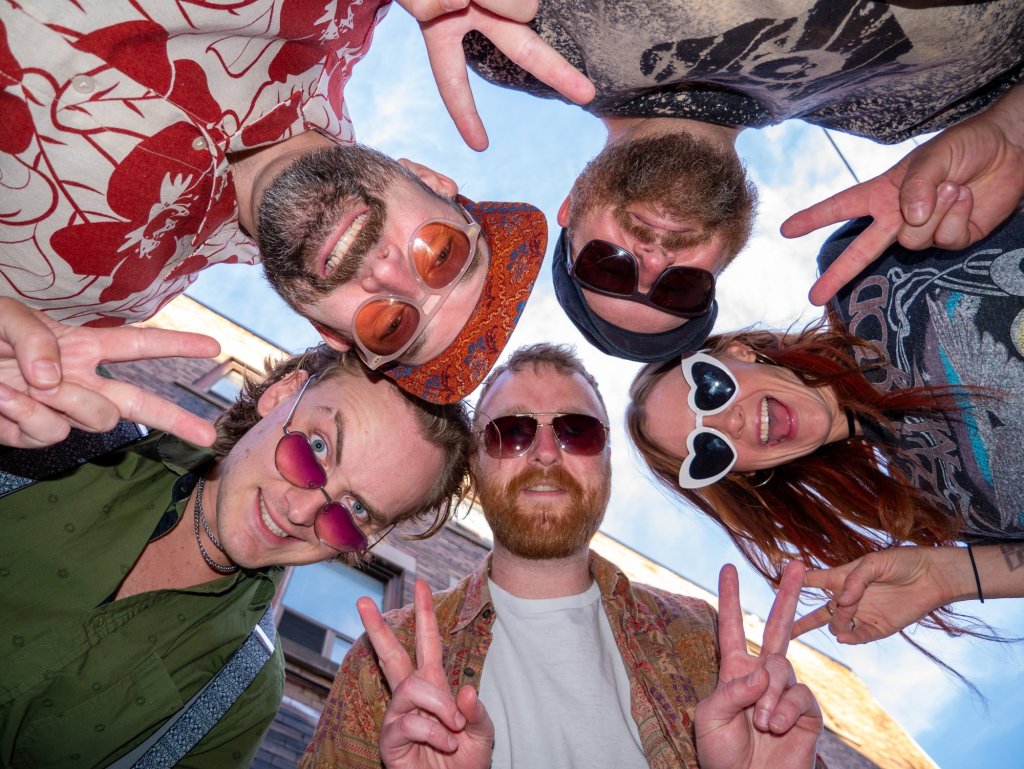
London’s own, Sunshine Makers, return with their new single, The Love We Give, out via Lovetown Records. This marks their first new music since returning from Hollywood this past spring where they recorded at Killion Sound with producer Sergio Rios (Orgone, Say She She, Neal Francis). The track is drenched in lush harmonies and fuzzed bass guitar that drives with a rockin’ groove, drawing from R&B, jazz, funk and 70s West Coast soul influence which contributes to the group’s signature warm vintage sound. At the root of their music, and this single in particular, there is also the clear message of choosing unity and love and projecting those feelings and vibes back into the world. Listen to it here.
Accompanying the single is a music video from the band. Every single from the upcoming album will have its own video and once they are all released, will together create a short film. It serves as an opportunity to showcase each band member and the joy they experience performing for their listeners. Directed by Sean Stanley and Sunshine Makers, each video will promote a message of peace, love, and unity while highlighting a specific band member’s journey to a show, whether that be driving, running, cycling, skateboarding, or otherwise. It’s a fast moving time-lapse from morning until performance on a rooftop in the downtown core in full sunshine. Watch it here.
“The Love We Give promotes the act of giving to recognize the love we have within ourselves, and to project that love back into the world,” share Sunshine Makers. “It is a message for us all to hold hope and keep believing in life. Though the world can feel out of control, we must not forget that we have the control within to choose how we wish to be. If we believe that love will prevail, then it will.”
The single was recorded in April 2026 in North Hollywood with producer Sergio Rios (Orgone, Say She She, Neal Francis) at Killion Sound. The band tracked and played live to analog tape to capture their warm vintage sound while also masterfully capturing the energy of the room which brought the band an incredible amount of joy, as Sergio was the perfect wizard to catch and craft their magic. They used the same recording room, instruments and gear that were used to record Say She She albums Silver and Cut & Rewind, as well as Neal Francis’ Return to Zero, adding to the band’s warm, vintage sound.
“The song and its message bring us joy. As musicians, we are in an intimate relationship with our listeners. The joy imbued in the songs’ message of reciprocity and our performance is our heartfelt contribution to this relationship,” adds the band. “The song is written for the listener. Its intention is to empower, and to encourage people to lead with love in order to manifest a positive outcome in life, overcome self-doubt, and live our fullest potential. Shine a light from within.”
In addition to the new music, Sunshine Makers will also be playing a slew of shows this month and season across Ontario. For a full show listening, see below and for more information, visit sunshinemakersmusic.com, and read more in their BIO.
Stay tuned for more new music as the Sunshine Makers adventure unfolds in the coming months. Adds the band: “The love we give back is what we get back my friends.”
TOUR DATES:
September 9 – Toronto, ON – Dance Cave (with Jembaa Groove)
September 18 – London, ON – London Brewing Co-operative (Peace, Love & Sunshine Festival)
September 24 – Windsor, ON – Meteor (with Dark Dazey)
September 25 & 26 – Toronto, ON – Second Summer Festival
London has a rich musical heritage with an abundance of musical venues hosting live bands as well as a variety of annual music events. Sunfest, now in its thirty-second year, and the Home County Music & Art Festival in its fiftieth year, helped put us on the musical map, as has the Aeolian Hall, an historic music venue which presents both national and international talent. In 2021, London was designated as Canada’s first UNESCO City of Music.
In the late 1980s, a musical genre dubbed Celtic punk crept into London bars. It was a blend of Irish traditional music, beefed up by electric guitars, bass and drums. Nationally, we had Great Big Sea and in London, we had Uisce Beatha, fronted by brothers John and Alan Glen. Back in the 1990s, I was thirty-something and faithfully followed them about town, always getting a front seat when they performed at places like the Electric Banana and the Brunswick. The band would cover the likes of the Irish band, The Pogues, as well as their own compositions, which honored their Irish heritage. Paul Meadows, fiddler for this band, still performs locally.
There was an indelible stamp of Irish heritage and culture in the music of bands such as Uisce Beatha, as well as The Gurriers and many others but you had to seek it out.
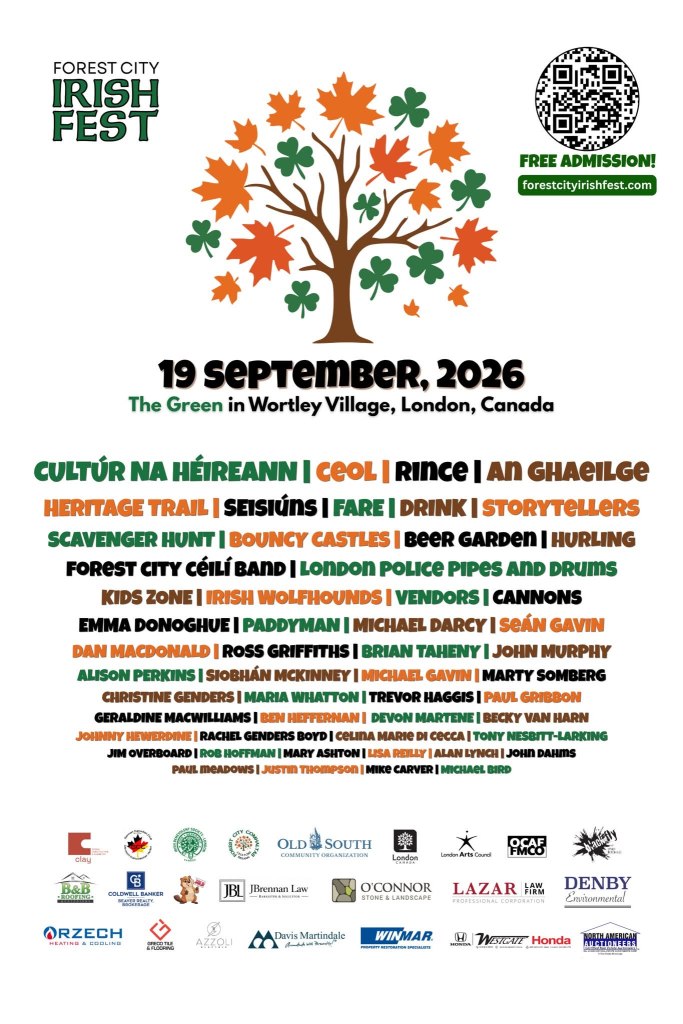
The inaugural Forest City Irish Fest, inspired by the 90,000 Londoners claiming Irish ethnic or cultural ancestry, takes place on Friday, September 18 and Saturday, September 19 on the Village Green in Wortley Village, as well as other local venues.
I had the opportunity to talk with Rachel Genders Boyd, co-artistic director of the event.
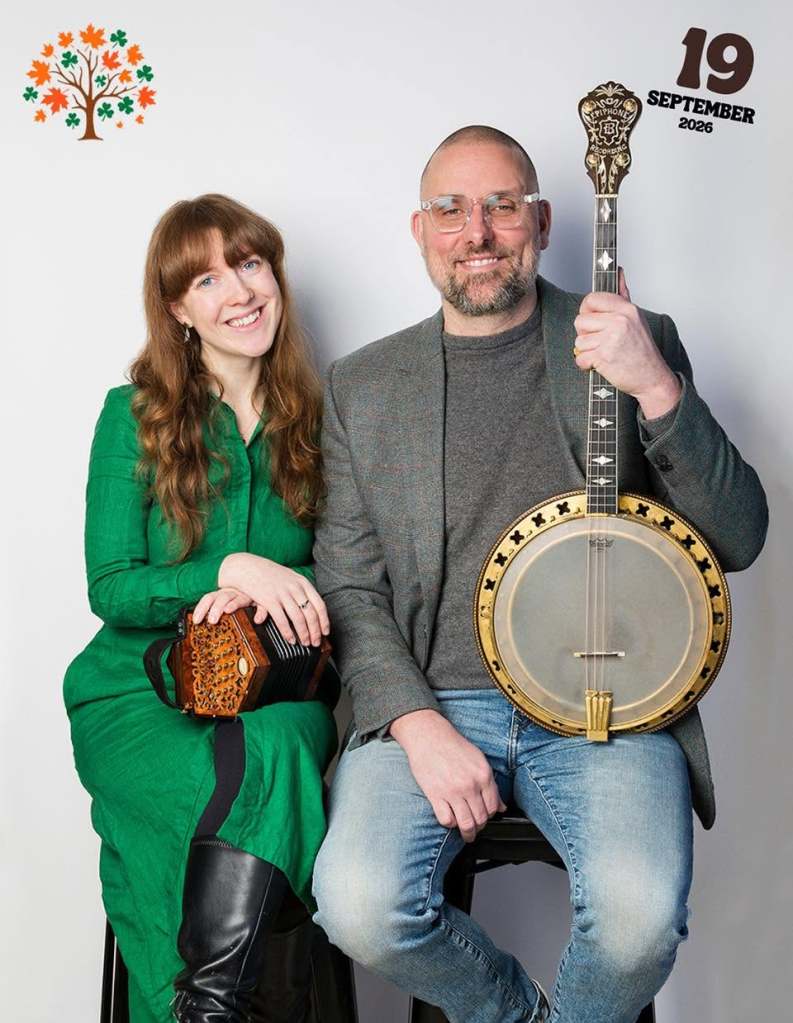
(Pictured: Forest City Irish Fest co-artistic directors Rachel Genders Boyd and Johnny Hewerdine.)
Q. Can you tell me a bit about yourself?
I’m actually from England but my father is Irish, so as a kid I went to Ireland every single summer. I have a great love of Ireland and Irish culture. I am also an Irish traditional musician. I am a singer and play the concertina. We have a regular Irish seisiun in London which I attend most weeks. We are starting an Irish comhaltas (pronounced cultus) which is a community coming together to nurture Irish culture.
Q. Did the idea of an Irish festival come from that?
Yes, definitely. This festival is part of that. It fits into the overall puzzle of us trying to promote Irish culture in London and the surrounding area of Southwestern Ontario.
Q. The music of our East Coast has a strong influence from Ireland. Will that be included?
At the festival, we will have East Coast style music and Ontario style which has been very influenced by the music of Ireland.
Q. How difficult was it to put the event together?
We have a small committee, so I wear many hats. Getting the bands together took about an afternoon but everything else took much longer in the organizing.
Q. Why is an Irish festival important for London right now?
There is already a lot of Irish culture here in London, but not out in the open. The seisiuns happen every Tuesday at Scott’s Corners and have been going on for decades. There is so much Irish music and dance in London, but much of it is under the radar, so we thought it was time to get it out in the open and get people excited about it. London and the local region has had a major influence from the culture of Ireland. This includes the Lucan Area Heritage and Donnelly Museum as well as London’s Irish Benevolent Society.
Q. Can you tell me about the various venues incorporated for the event?
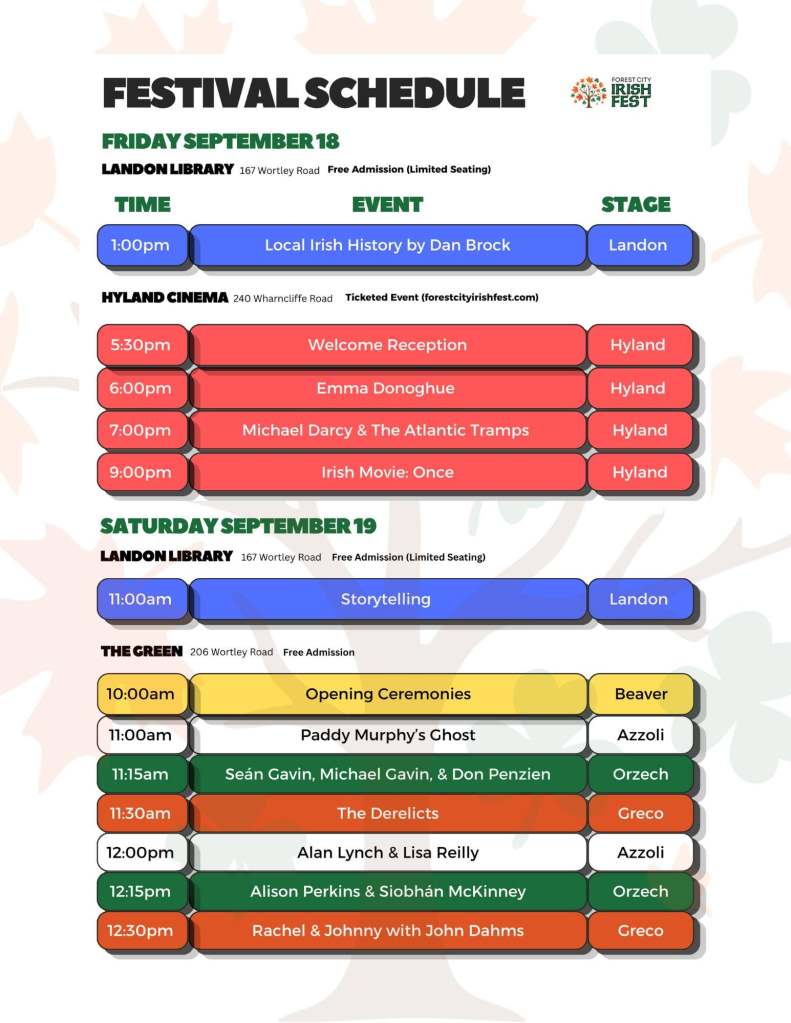
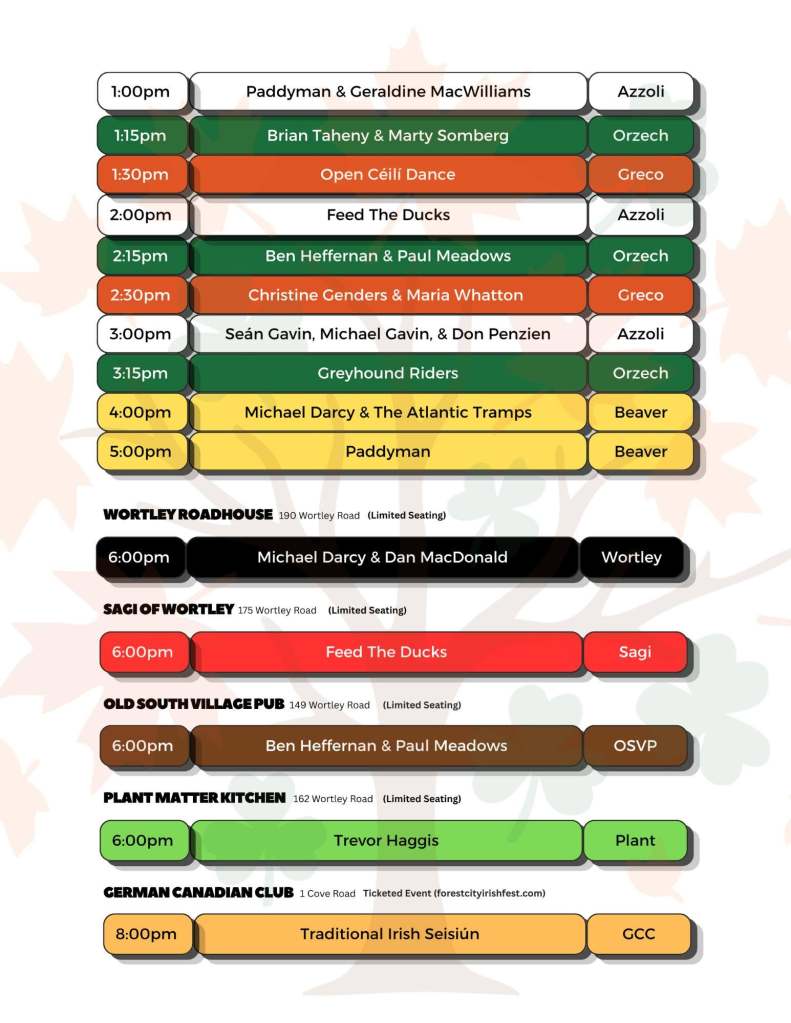
The festival itself is taking place on the Village Green in Wortley Village. That is the main event but there are lots of performances happening elsewhere in the village. On Friday, September 18, we will have a local history talk about the Irish at Landon Public Library. In the evening, we will have a ticketed event at the Hyland Cinema featuring a Q&A with well-known London author, Emma Donoghue. On Saturday, the opening ceremonies begin on the green at 10:00 am, with a variety of bands performing throughout the day. This will be a licensed event. From 6:00 to 8:00 pm, various bands will perform at four of the local pubs. In the evening, there is an event which I am excited about as a musician. It is a traditional Irish seisiun, which is a jam or sort of improvisational event, combining many of the musicians from the day’s performances. It will be held at the German Canadian Club.
Q. So, it is not just a musical event?
Definitely. Along with the music, there will be storytelling and dance, demonstrations of the Irish sports of hurling and Gaelic football as well as a Kids Zone. We will even have Irish Wolfhounds demonstrating their talents. We are very ambitious with our ideas and hopefully the Forest City Irish Festival will become an annual event.
More information can be found on the Forest City Irish Fest website www.forestcityirishfest.com Check out their Facebook and Instagram pages for updates.
Be ready when Wortley Village’s Village Green becomes Kelly green on September 18 and 19.
Slainte!
By J Bruce Parker
J Bruce Parker is a retired oncology nurse. As an avid cyclist, he crossed the country by bicycle in 1991 and still explores Ontario’s north via canoe trips. He has published a short story based on his camping experiences.
For over 20 years, as a citizen scientist, he was involved with Monarch Watch, an organization that monitors the annual migration of the Monarch butterfly. He has written about this species and other articles on nature for The Cardinal, Nature London’s quarterly magazine.
An Interview with Tommy Solo. Recorded July 23rd from his home in Val-David, Quebec.
Alan Gerber is most famous for his tenure as lead singer and multi-instrumentalist with the classic psychedelic rock and blues band, Rhinoceros. He has released multiple solo albums, both as a signed and independent artist since then. Having shared stages with Bob Dylan, B.B. King, Van Morrison, Lou Reed, and Janis Joplin, among others, he is a well-respected legacy artist for the ages.
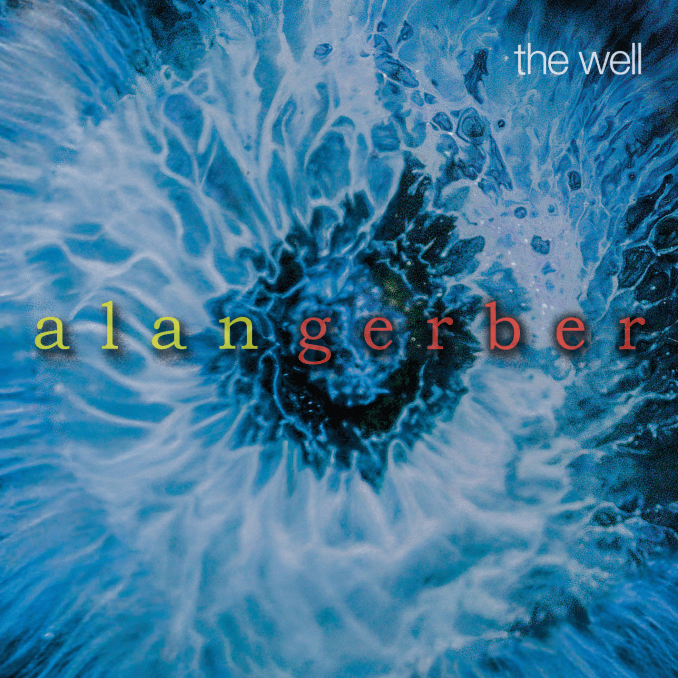
And now, he has a brand new album out called The Well and a new single called Put Back My Heart. On this release, he is reunited with Rhinoceros guitarist Danny Weis, along with the late Michael Fonfara, who recorded his Hammond B3 organ parts for this album prior to his passing.
And this time, it’s also a family affair featuring his daughter Hannah on vocals and his son Eli co-producing and playing some guitar on the album.
So, you have a brand new album out. And I kind of lost track of how many solo albums you’ve released. I believe there are over 10 right to date?
“We’re 13, 14, 15, or something like that, right? “
Yeah. And was one of those in French?
“Well, some of the songs were in French. Okay, okay, I had a single, you know, I had some songs done in French, but most of my stuff is in English, although I’ve lived in Quebec, I believe, like 37 years.”
So, it’s quite the transition from living in Chicago and LA to being in a small town in Quebec, and from what I understand, you’ve become a big part of the community as well.
“Yeah, I love this community, you know? Like I said, I’m from Chicago. I lived in LA, and I lived in New York. I lived in Vermont. We had a house in the south of France. But this little town of Val-David is where I’ve lived for the longest, for like, 30, 37 years. It’s my longest home.”
There must be some magic in the air that keeps you there.
“It’s a wonderful town. It’s a small village of between five and six thousand people. There’s so many artists. It’s unbelievable here.”
You know, there are some hotbeds of talent in small towns. I grew up in North Bay, Ontario, and I’ve lost count of how many top-shelf players we had there, and uh, a good friend who I went to school with was John McGale.
“I’ve played with John”
You played with him?
“You know, just a little bit. Yeah, I know, John. Yeah, he was a great player.”
He was a great guy, but he’s just one example of some of the awesome talent you can find in a small place. Like where you are in Val-David, and there’s nothing like tapping into some of that talent on occasion.
“Well, you know, in this town, there’s The Potters. It’s the biggest Pottery Fest. My wife is a ceramic artist. She’s a potter. In fact, if you look at the cover of the album, The Well, the well is actually the interior of one of her pots photographed, you know? It’s pretty cool, and there are so many ceramic artists here. There are writers. There are poets and painters. It’s an amazing town.”
No kidding. So, let’s talk about the songs on this album, The Well. There’s some interesting slide guitar on that. So, where did that song come from?
“I have a writing partner who’s unfortunately deceased now, Rolf Kempf. He wrote Hello Hooray, which was a big hit for Alice Cooper.
And you know we were running together for 50 years? And we co-wrote most of the songs on this album together. And he sent me the lyrics, and then I wrote the music, and we juggled the lyrics back and forth and changed a few things.
And that’s how the song came to be. And then, it’s such an appropriate title for the album because this is an album I dug deep to get to all these places. Yeah, and it’s about growing deep into your creativity.”
Yeah, and listening to the album, you certainly did that. I imagine this one took a while. Are you really quick with this stuff, or did it take some time?
“It took a long time because of Covid, and because actually I was waiting for my son, you know, my son, Eli Gerber, who I co-produced it with.
And he’s playing guitar on the track Over Again. That real shredding, you know? He’s quite a guitarist. He was supposed to do all the guitars on the album, but he’s a physicist. And he’s really been so busy with his research. And he just never could get around to doing it. He wanted to, but he couldn’t. And I waited for him for years.
And then I finally said, listen, I want to finish this album, and I got Danny Weiss from Rhinoceros, who’s also an amazing guitar player, and Danny played on eight songs. He is an absolutely amazing player, you know?”
Had you been in contact with Danny over the years, or did you reconnect for this album?
“Yeah, you know, we did a Rhinoceros reunion. I don’t know, well, I think maybe it was 2013 or 2014. We played the Kitchener Blues Festival in Ontario. It was very cool. Yeah, there are some partnerships, you know, and there are some connections that you have that are just so strong. It was, like, Michael Fonfara. Right, he’s played with me on my last six CDs. Unfortunately, he’s gone. We’re losing too many. He was a great Hammond B3 player. Great, you know, just amazing. A great friend.”
I know that you’re in the Montreal area, but Michael Fonfara was hugely popular in the Toronto area, in that circuit as well. Yeah, uh, so On a Roll. What inspired that song?
“I got the idea. I wrote the music. And I had On A Roll, and then I started fitting some things in, and I wasn’t happy with where it was going. So, I ran it by Rolf. Okay, and I have another friend whom I write with, Patrick Wiggins, who lives in Florida.
He’s out of Tallahassee, Florida. I ran it by both of them, and we came up with it between the three of us. We came up with all these really cool lyrics. It’s a great song. It’s a great positive song, and there’s a lot of darkness on this album, too.
You know, Subjects? It has something to do possibly with the world we’re living in. And this is a beacon of light on a roll.”
(Photo Credit: Luc Robitaille.)
I really like the harmonica playing on that. Are you playing the harmonica?
“That’s the amazing Jim Zeller. We were musical partners for a while. We were a duo here in Quebec.”
I am familiar with that name. Yeah, absolutely. There’s a great sax on Mysterious from the new album.
“Yeah, that’s Dan Martell. He’s incredible. He did all the horn sections, just him with different saxophones, and the parts are just killer. He’s a great player. He’s a great soloist. He’s a brilliant composer of horn sections. He’s just wonderful, you know?”
I find that good sax players are often some of the more melodic players, really. You know, you can generally hum or sing a sax part, and I find that some of the best guitarists actually emulate the sax.
“Yeah. Yeah, me too. Amen, Sax! The saxophone has to be vocal. It’s really like a voice. Saxophone is like a voice that’s like singing.”
Yeah, it certainly is, and, and uh. You know, the really talented players certainly do emulate that, that’s for sure.
“Right from the opening of Put Back My Heart, it grabs you immediately. It’s so super funky and right on.”
Makes you stand up and pay attention, that’s for sure. Right? What about the track from this album called Ghosts?
“Ghosts is my Covid song. Okay, everything was shut down. You drive down the Main Street of your town. All the shops and everything were closed because of Covid. It was like a ghost town. People became like ghosts. No interacting together you know, because they weren’t supposed to. We became like ghosts.
You know, I’m that typical guy. Um, I was a lifelong musician, and during Covid, I thought, what am I going to do? You can’t go outside, you know, you can’t do anything outside of the house. And over the years, I shared the stage with and met a lot of our Legacy artists here in Canada, so I thought I’ll bet you if I called David Henman from April Wine, he’d be home. You know if I called Ronnie King from the Stampeders, he’d be home. We’re all home, so I started this podcast with the idea of trying to give people something to smile about in such a dark time because it was just? Man, it was hard. You know?
I mean, you couldn’t even go to the grocery store. I was almost having panic attacks. You know when somebody stood six inches too close to me. I was, like…”
Oh man, oh yeah, because they didn’t understand it. And so, when you don’t understand something, it’s dangerous. Big fear comes in, absolutely.
“Yeah, yeah, my wife and I were the first COVID cases in the Laurentian Mountains. We’d been visiting our daughter, Hannah, who’s singing with me on this album. We were visiting her. She was doing her Master’s Degree in Paris. And we were visiting there in March. That’s just when the global pandemic hit.
Just when I was starting, we knew there were cases of COVID, but it’s, they said there were only like 10 cases of COVID in all of France, so we figured, you know, we were going to go visit our daughter, and we went, and everybody was sick. And we ended up getting it.
We ended up booking tickets and leaving two days earlier because they were going to close down the country. We just wanted to get home, and as soon as we got home, I started getting symptoms. And then my wife, Robin, started getting symptoms. We were the first victims of COVID here in the Laurentians. And people, you know, were afraid. People didn’t want to see us out on the street. The police would come and make sure you stayed inside. It was, it was very scary.
This album, The Well, you know, I was really needing something to do. I needed my creative outlet, so I was writing all these songs, and I started recording the album.”
If there was a silver lining from Covid, it was all the artistic productivity that came from it. You know, I mean, so many good things came out of it musically. Um, and I know that the first time I played live after they said it was safe, it was something else. We played at this Rib Fest in London, and there were, I think, 14,000 people on site. I don’t know how many were paying attention to me, but man, it was like just being born again, you know, and just having. Like, ah, it was such a breath of fresh air to actually be able to sing and play for people again.
“Oh yeah, I know, I know.”
Yeah, but that said, back to you. There’s some really great stuff on this album, you know. Yeah, it is something else. I know you’re starting to get some spin on the radio, which is always nice. And are you gonna tour to promote this album?
“I have a show coming up at the beginning of August, just right in my town. Beautiful! A beautiful place outside, the Pottery Festival site outside, it’s just an incredible, beautiful place. I’m going to do a show. August 5th. But mostly, I’m working on publicity with Eric Alper. I have lots of interviews. And you know, I figure this is what I’m doing at this moment.”
Yeah, and you’ve got the hardest-working PR guy on the planet on your side.
“Yeah, he’s wonderful. I don’t think he sleeps. You know, I think he just goes 24-7.”
Um, with all that said. Your new single Put Back My Heart is an awesome, awesome tune. I know that a lot of this came from COVID, but was there something specific that inspired you with the idea for this? There’s one line that really got me, uh, ‘like a baby grand from a tower I fell for you, like a baby.’ That’s a great one. I don’t think anybody else would have ever come up with that lyric. You know, that’s. That’s brilliant.
“I wrote most of the lyrics myself. But, but some of the lyrics were with my son Eli, who was too busy to do other guitars, but he was still co-producing with me, and he said he had some great ideas, and like he has a few great lines.
That’s a cool song. Yes, absolutely. Let me tell you how I wrote this. Okay, fortunately, it was not inspired by my own personal experiences. It’s just a situation, isn’t it? It wasn’t my situation, but I just got the idea. This was the end of the Pottery Festival, the big Pottery Festival 2001, pots in God.
I was helping my wife, Robin, take down her pots and bring them to the van, and I was doing wheelbarrow trips, you know, from her table to the van? And I just started getting this song in my head, heard the music, and I started getting all I had lines like I fell for you, like a painter, and I would stop and write some of these lyrics down.
And then I went home, and I finished it really quickly. But it started with a wheelbarrow full of ceramic pots. It’s funny how that can happen.”
I want to go back to Rhinoceros if we can. Yeah, there were three albums, with Elektra, right? How did the band come together in the first place?
“I can tell you my story. I had a girlfriend. The first love of my life. And I was still in Chicago. And I was going to the Chicago Musical College at Roosevelt University. And she was at NYU in New York studying film photography. And when I went to visit her, I always brought an acoustic guitar with me.
She had a friend who works for Variety magazine. And he knew Paul Rothschild, the producer. He produced Janice Joplin’s Pearl, and he produced the Doors. He produced Paul Butterfield’s East Meets West, for example.
And she told him that I was just great. I had great songs. I was a great singer. And the guy from Variety told Paul Rothschild that he heard me play and that I was incredible. I had great songs. I was a great thing. And then he told Katie, and I had an interview that morning.
(Pictured: Paul Rothchild.)
I wasn’t a big Doors fan. Okay. I wasn’t that familiar with Paul Rothchild. I went to the Elektra Records office in New York for an interview with him, and I met Paul, and he was this guy that had long hair, you know? You know, hippie, dippy, like me, where I came from in Chicago, who was my whole clan, you know, all my friends. I came from a very 1960s. Hippy dippy environment, and there was Paul, and he was right on.
He could have been my buddy there at least the way he looked. And he was really nice. Before he even heard a song, a single note, we sat and talked for almost an hour, and then he said, let’s hear some songs. And we went into a room.
There’s a piano, and I had my guitar, and I started playing songs, and he loved them, and he kept telling me boy we got to play that again, and he’d call somebody in, and he kept calling people in at the end of this. And we were smoking this blonde Lebanese hash that was like from outer space.
And, and by the end of this thing, I was on the moon to imagine, you know, it was, it was just really nuts, and he said to me, Alan, I want to produce you either as a solo artist or with this super group that we’re putting together at Elektra Records.
And he told me about the super group; they were picking people, and it sounded really cool. I said, well okay, let’s try this super group. And he said, okay, that’s how we’ll do it. And sure enough, afterwards, you know, I was so stoned from the hash, I could barely find my way out of the building.
After that, he called me at home in Chicago, and he was, you know, he had my airplane tickets. And I had to make the decision to give up my 2s deferment in college, you know, it was the Vietnam War, and I had to confirm.
So, I made the decision, and I said, well, I’m going to just do what I want to do. I’m going to follow my dream instead of acting out of fear. I’m going to follow what I want to do, and I did. And I went to LA, and Paul had 14 musicians in his living room. We were passing around the guitar, playing tunes. To make a long story short, it was divided into two groups of, like, seven people. And out of all those people, only three of us remained in the group. Doug Hastings, John Finley, and me.
That was it. Nobody was told to leave. It was cool and casual. Nobody said, you’re done. Get out of here. Everybody just felt everybody left on their own accord, and they found this isn’t for me. So, it was organic in that way. You went in every other way. It was, you know, really put together, but it was organic.
I mean, the people left. And there were three of us left, and we met Danny Weis. He just knocked our socks off, and he was from the Iron Butterfly. It just went from the Iron Butterfly and then Jerry Penrod, a bass player. He was also with the Iron Butterfly.
And he became our bass player. Danny was one of the guitar players. And then we needed a drummer. And we tried Buddy Miles. And we tried Billy Mundi. He was from the Mothers of Invention. You know, Buddy Miles was from the Electric Flag. Yeah. And Michael Fonfara was also from the Electric Flag, and John Finley knew Michael from Jon & Lee and The Checkmates in Toronto.
And, uh, anyway, we got Michael, and we took Billy Mundi, and there it was. And then we were rehearsing. And Elektra Records was calling it Super Group. And finally, I said, listen, you know, I’m talking to Jac Holzman and to Paul Rothchild and I said we can’t call this band Super Group you know. We’re not going to want to walk out on the stage calling ourselves Super Group. I had then and still have to this day a collection of Rhinoceroses. You know, I always loved Rhinos. And I said call it anything else but Super Group.
I said, let’s call this band Rhinoceros. “
(Pictured: Rhinoceros.)
That’s funny. I thought all along, I thought you were just alluding to the fact that they were going to advertise Rhinoceros as a supergroup. But they were actually going to call the band Supergroup? Really? I never really got along with the guys in suits. You know, I was offered a record deal when I was 23. And I turned it down because I never got along with the guys in suits. Things might have happened for me if I had been a little bit more open to what they were offering, but I just felt like they’re always trying to rip me off.
“Well, I got ripped off big time when I was 20 years old, man. Yeah, right, I signed away most of my publishing.”
So, that’s all very interesting, you know, this whole they were going to call it Supergroup and all that. And then, you just kind of blurt it out. Let’s call it Rhinoceros. So, what happened after Rhinoceros?
“I was really disillusioned as you were, with the music business, you know, music and creation and doing shows; it’s been my life. But I was really disillusioned with the music business. I refused all kinds of stuff. I was offered to do all kinds of stuff. I was offered to work with all kinds of people. When people say, how come Alan’s not a big megastar, Robin, my wife, says, because if you saw the list of people he said no to, you would understand.
I was disillusioned with that. And then, before too long, my wife and I moved to Mendocino, California, way up North. It’s like 3 hours north of San Francisco. We lived in the country.
I was shell-shocked after Rhinoceros, and then I started playing gigs.
We moved up to the country, and I was playing again, and then I met somebody in LA who loved my music and wanted to manage me. And he was a wonderful guy, and he was pretty well connected to the music business, and he took me to all the record companies.
These were the days when you could go into the president of the company’s office and play a few tunes. And I played for everybody. I eventually signed with Shelter Records with Danny Cordell and Leon Russell; that was their company.
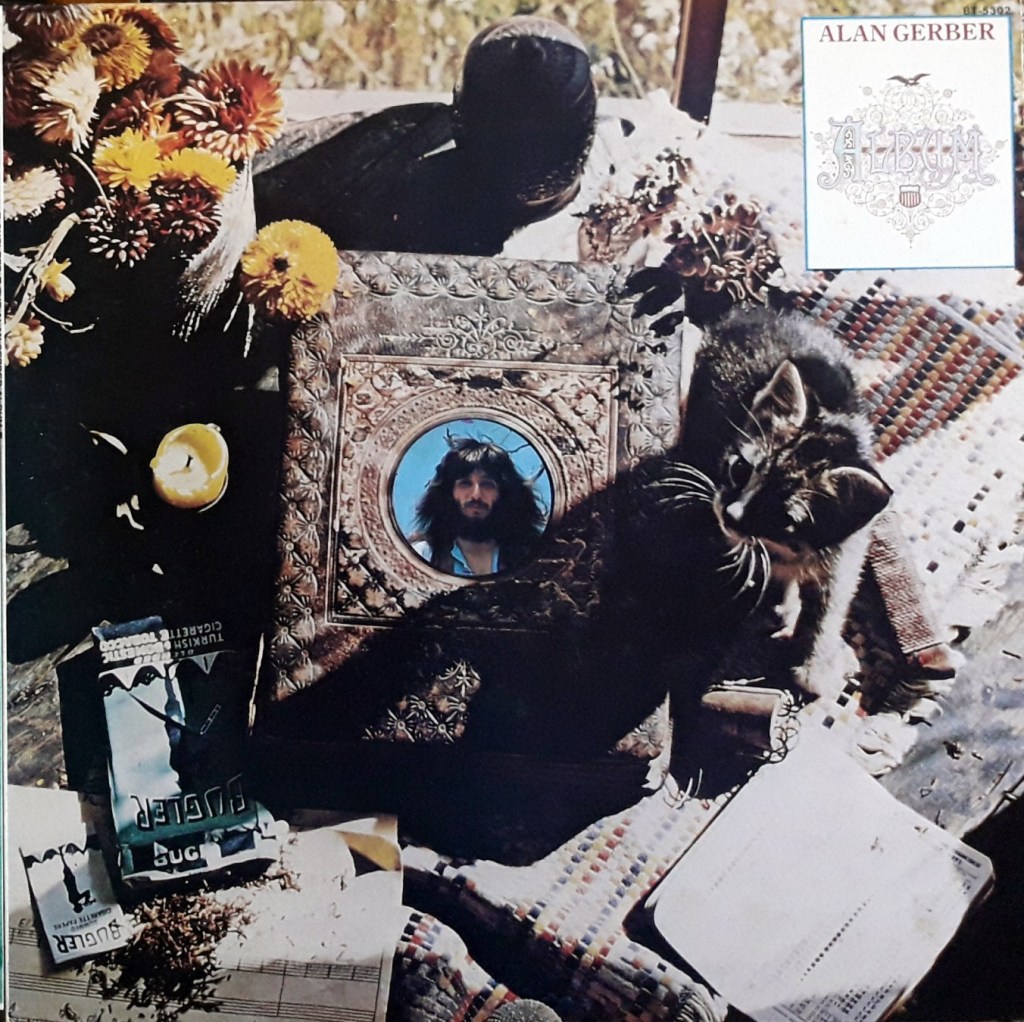
I signed with him, and I made my Shelter album. It was called Alan Gerber’sAlbum, and it looked like a photo album with a beautiful cover. Beautiful stuff!
And I did it in Memphis, Tennessee. My band for this project was like Booker T & the MGs band. I had Duck Dunn on bass and Al Jackson on drums. Steve Cropper was engineering. It was incredible. I had the Memphis horns. I had Gloria Jones and the old Raylettes singing with me. I don’t know if you’ve heard any of this. But check it out when you get the chance.
It’s Alan Gerber’s Album on Shelter Records. Very funky, so I did that and then lo and behold, I had business troubles with them.
My single from that album was a big hit on Billboard, Cashbox, and Record World. My album was getting played like crazy on all the FM stations all over the United States and in England.
Anyway, there was no distribution. You couldn’t buy my album anymore. Shelter Records was distributed by Capitol. And they had some disagreements because Danny Cordell was Joe Cocker’s producer. And they thought when they got Leon Russell and Daniel Shelter. They were gonna get Joe Cocker, too. And lo and behold, Joe Cocker signed with A&M.
I believe it was A&M. Anyway, he signed with somebody else other than Capitol Records. And they were pissed, and so the distribution was not very good, and my album wasn’t in the stores. And so, how long are they going to keep playing it on the radio if the album isn’t in the stores?
I was doing live shows with a great group. I had Danny Weis, Michael Fonfara, a great drummer and bass player, and we were doing shows with Leon Russell.
I was doing shows in New York. We were playing at the Bitter End on Bleecker Street in Greenwich Village, and we were held over for an extra week, you know, and everything, but you couldn’t buy the album in New York.
And so finally, I was really pissed, and I told Shelter Records I’m done. I found a lawyer to help me. And they wanted me to make another album for them, and I refused. And we went to court; it was just really unpleasant. You know, and so after that, I really got turned off by the music business, and I started doing my own thing.”
When it becomes a job. Instead of a passion, there has to be a line drawn somewhere. Uh, 13 odd albums, solo albums later. We’re here with The Well, here we are. Yeah, and the track Over Again. That’s the one that your son played guitar on?
“Yeah, he actually- I’ll tell you a story, you know- he wanted to do all the guitars. He had a little window of time, and he started putting together ideas for the song. He put together the idea. And he recorded it at really high quality at 96 kHz using Reaper. It was really well recorded on Reaper.
And, uh. He sent me the idea. He didn’t get to finish it, according to him, but I took what he sent me, and I stuck it in the track. And I said this ain’t no demo. This is not an idea. This is the guitar track, and you listen to it, and there’s no doubt about it.”
It’s brilliant. Yeah, and he comes by it. Honestly, you know, I’m curious now, because you have a son and a daughter who are both top-shelf musicians. Did you encourage that, or did they just kind of find it on their own?
“Well, you know, they grew up with me. And they discovered their love of music on their own. There was a lot of music in the house. We homeschooled the kids. Okay, their schooling would be done in a few hours in the morning, and then they had the rest of the day to discover what it was that turned them on.
And they just started doing music and singing. And my wife, Robin, who I told you is a ceramic artist? She also was a piano teacher, and she taught them a little piano when they were little kids. And they both just really got into music, and they came on the road with me.
For the most part, I was on the road. My wife did most of the homeschooling. She did a brilliant job with our kids, you know? Our son is a physicist now, and our daughter was working for the United Nations, and now she works for the OECD. You know, they’re quite accomplished, and they’re also great musicians, and so they came on the road with me.
It was wonderful because, like I said, Robin did most of the homeschooling. So, this was my chance of being with my kids and sharing something big with them.”
You know, that’s some kind of special magic, I’m sure.
“Well, I’ll tell you, we were playing the Montreal Jazz Festival once. And I had Eli on my right shredding and Hannah on my left singing with me.
And we were playing for like 14,000 people; they were going nuts. People were good, and Eli was doing a guitar solo, and he started playing with his teeth. He got so he turned the guitar; I mean he’s quite a showman. And what a thing to share with your kids!”
There’s some really interesting stuff on this album now, Diablo Square. I imagine being in a gondola in Venice. Yeah, you know?
“I have a 150-year-old button accordion, and that’s what I’m playing on that song, you know? And the clarinet player, Michel Dubeau, gets that sound from outer space.”
Yeah, it’s a really unique song
“Yeah, I’d like to make a video for that song.”
Nice. Money Can’t Save You? I enjoyed that a lot.
“Yeah, well, that was when Michael Fonfara was really ill, and it didn’t look like he was going to be around too much longer. I went to Toronto. I was going there for a wedding, and one night we went out. I went out to supper with Michael and his wife, Adele. And I was asking Michael, what would you like, man? What if I could do something? Let’s do something really cool. And he said he wanted to make another Rhinoceros album.
I said, yeah, we could do that. Everybody throw in a few songs, and we’ll have a great time, and I ran the idea by everybody. And at first, everybody was, yeah, let’s do it. Yeah, and then one by one people backed out. So, I ended up booking the studio myself.
The studio where we recorded all the organ tracks is a little home studio owned by a guy named John Pickering. It’s called the Rhythm Ranch. And I got in touch with John because I used to go there and use Michael for my albums. And John had two Hammond B3s.
One upstairs in his living room and one downstairs in the basement studio. Anyway, I said to the guys, well, listen, let’s just go and record two of my songs.
I said I’ll pay for it. I want to do this with Michael. And so, we got Michael, Danny, John, and me together to do this. We had a really lovely drummer and bass player from Toronto. They’ve played on it. And we recorded it. And that’s Money Can’t Save You.
That was a whole different session. It was the last time I got to record with Michael. And Danny Weis and I really connected during that also.“
It’s, you know, interesting, you know, Michael may have left this mortal plane, but his legacy lives on through the spirit of his music, for sure. And this is a really good example of that, you know, and you can hear the passion, and we’ll never lose that.
“About Michael. I was visiting my aunt in Manhattan. She lives on the 52nd floor of this building in Lincoln Center, you know, I mean, it’s really fancy, and I was coming down in the elevator. We’re staying with her in New York.
And in the elevator, there was Paul Schaefer. And we were talking, and I told him who I was and about Rhinoceros. And he said that Michael Fonfara is his all-time favorite! Paul Schaefer told me that.
And you know when I was recording my Shelter album in Memphis? I had Duck Dunn and Al Jackson, and Steve Cropper. I didn’t use Booker T. I flew Michael Fonfara in for those sessions.”
You know, you had that magical connection, right?
And with that, I ended a wonderful conversation with an amazing musician with a legacy next to none.
Look for his songs on YouTube, as well, and subscribe to his channel.
Interview Conducted By Tommy Solo
London, Ontario-based singer-songwriter & guitarist Tommy Solo has roots as a long-time SW Ont musician, having traveled across Canada & into the USA as a full-time musician.
In recent years, he has been focused on writing, recording & performing his original brand of classic rock, & sharing experiences with other legacy artists via his podcast, Tommy Solo’s Famous Friends, and on his YouTube channel.
The London area is blessed with numerous live music venues that offer all genres of music from classic rock to country, and everything in between. Some venues are large concert halls, while many are smaller nightclubs and bars. Some are strictly 18 and over, while some offer All Ages shows. Some have Cover Charges, while many offer free entertainment.
The Beat Magazine 2025 wants to recognize these fine establishments by publishing short profiles of each in a recurring series called “Profiles of Local Music Venues.”
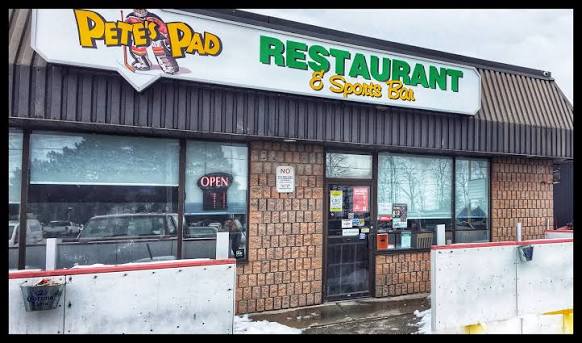
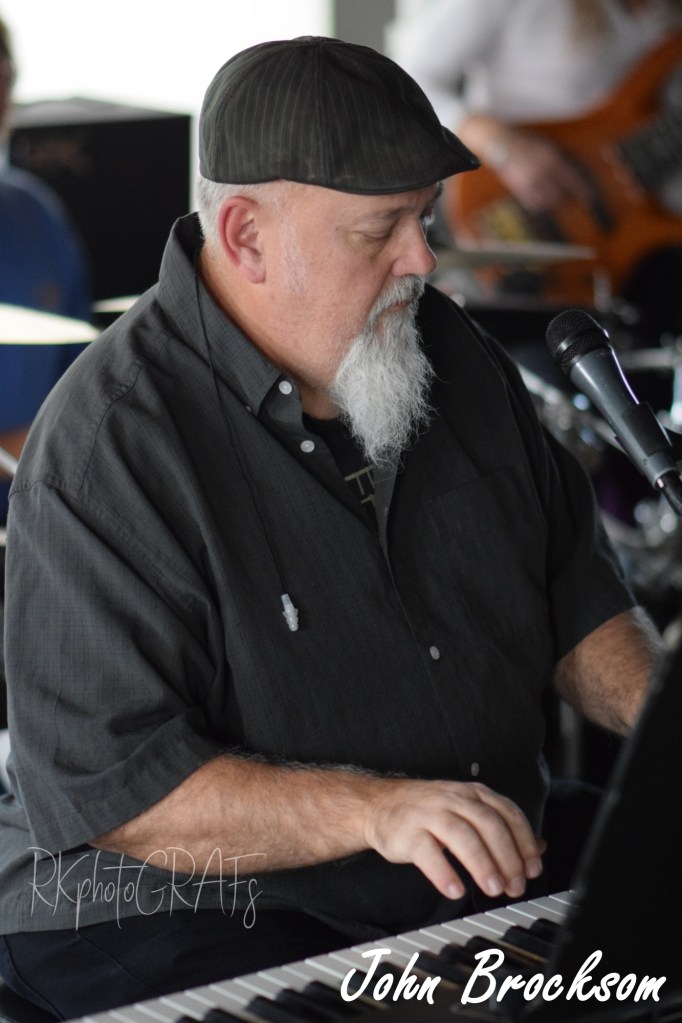
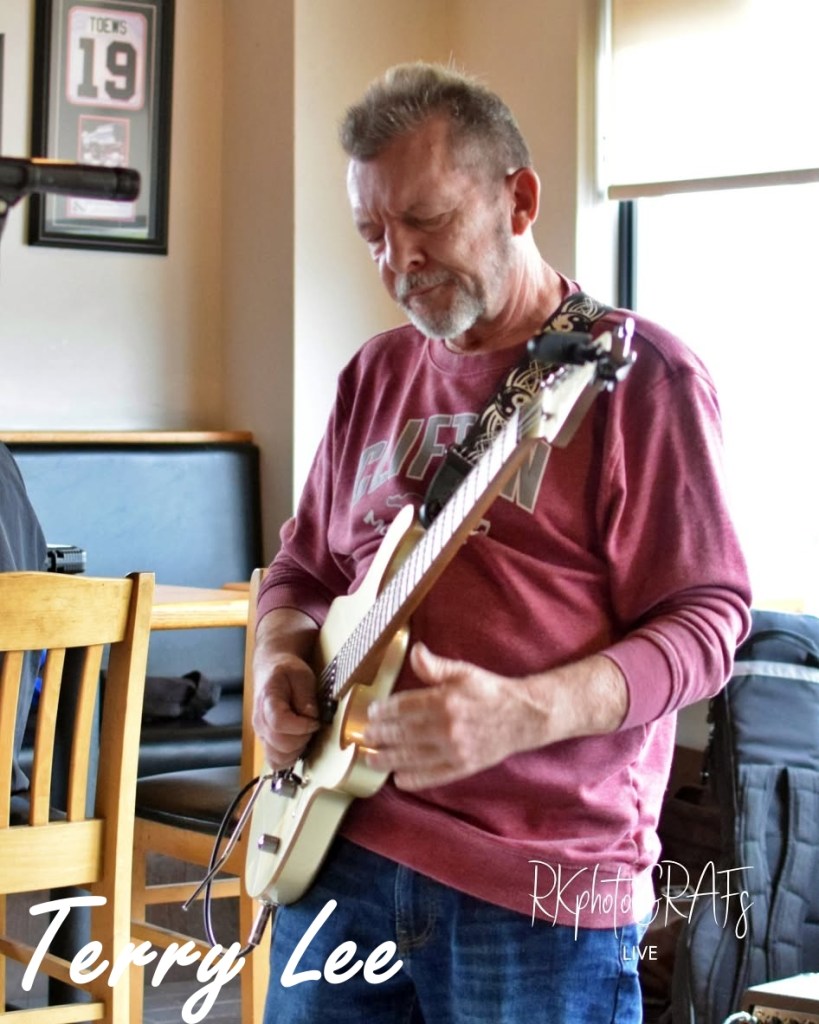
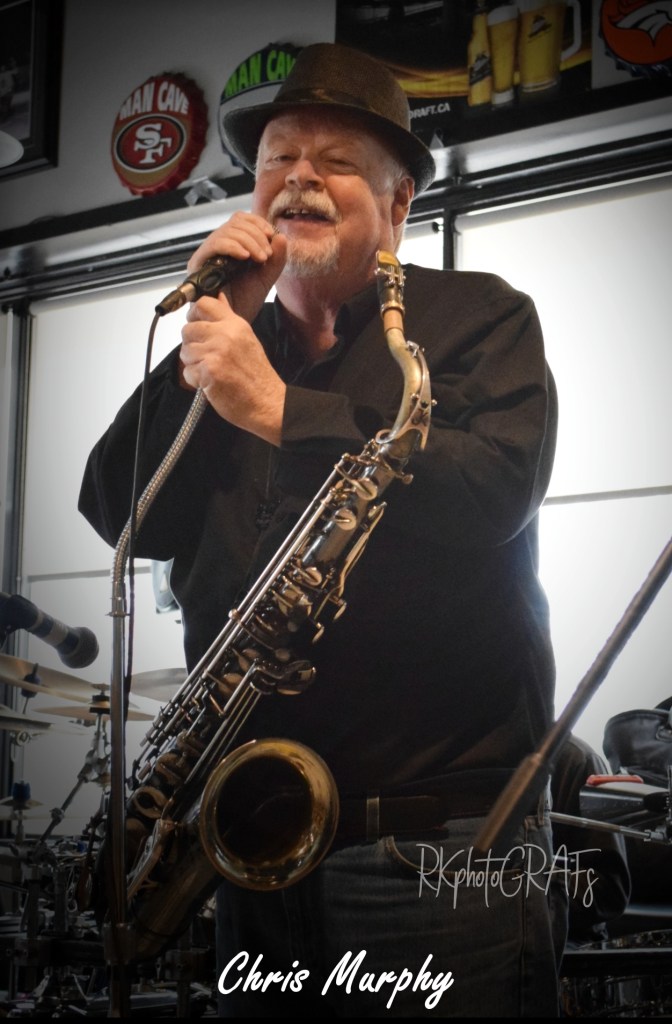
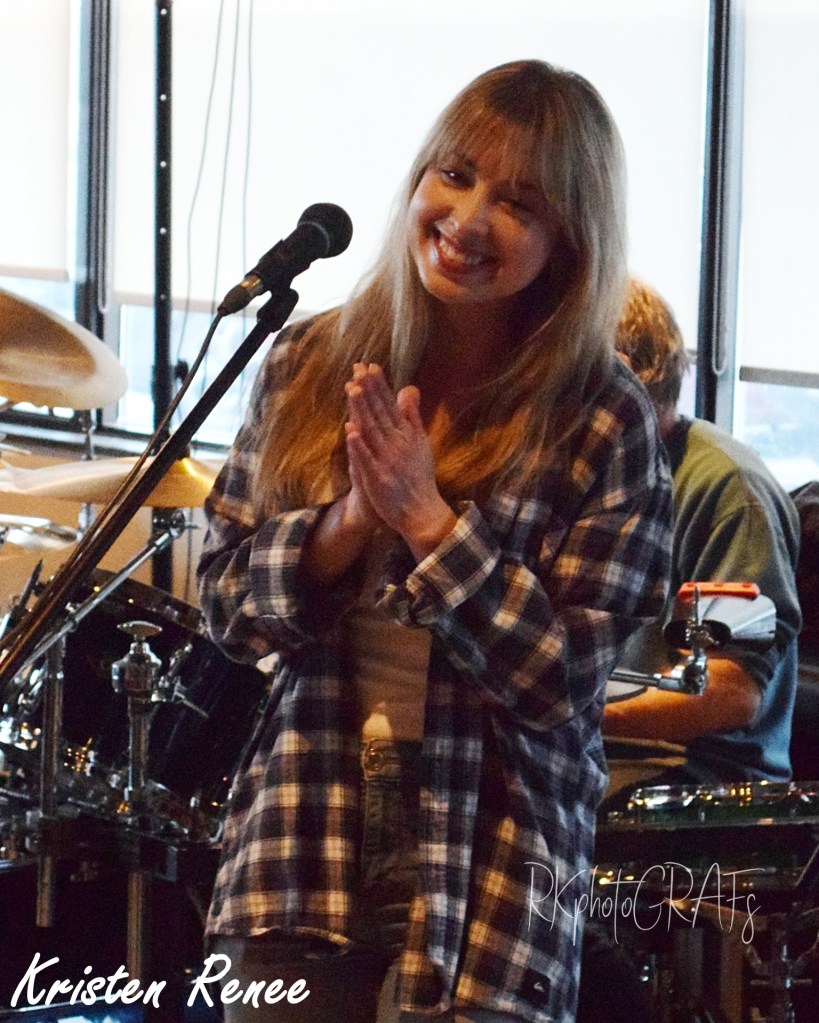
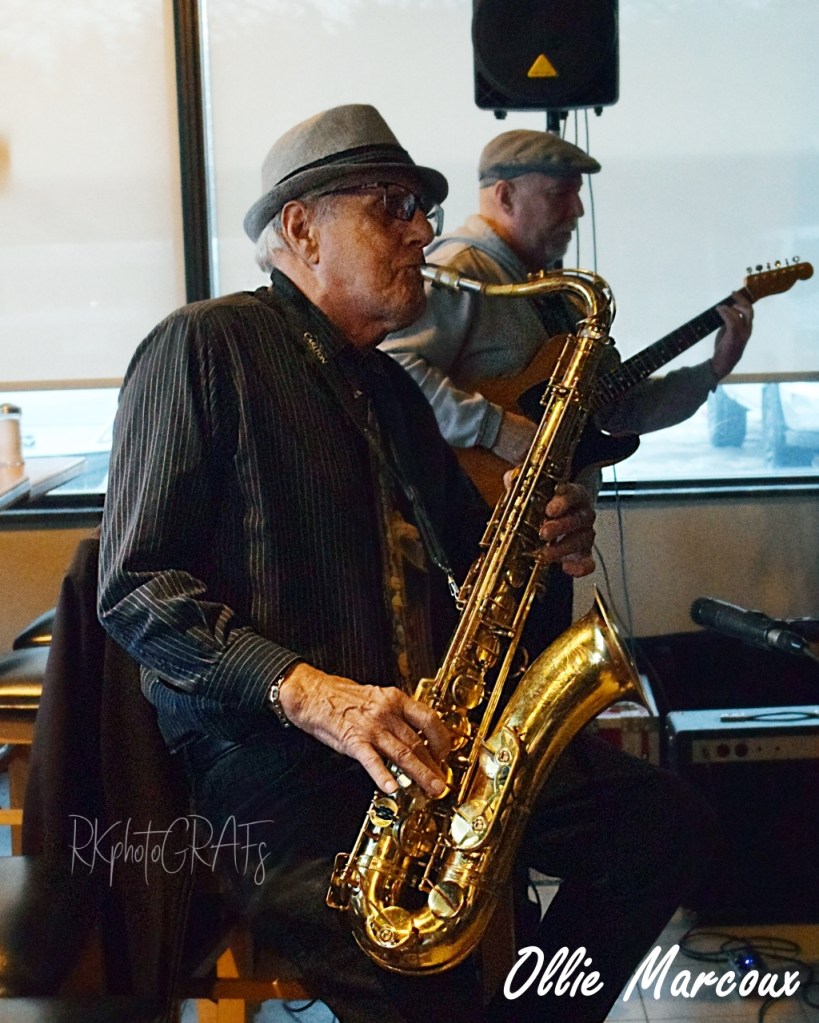
In this first segment, Rudy Graf of RK photo Graf s, profiles Pete’s Pad Restaurant & Sports Bar.
Pete’s Pad Restaurant & Bar is a small bar on the east side of town with a big sound.
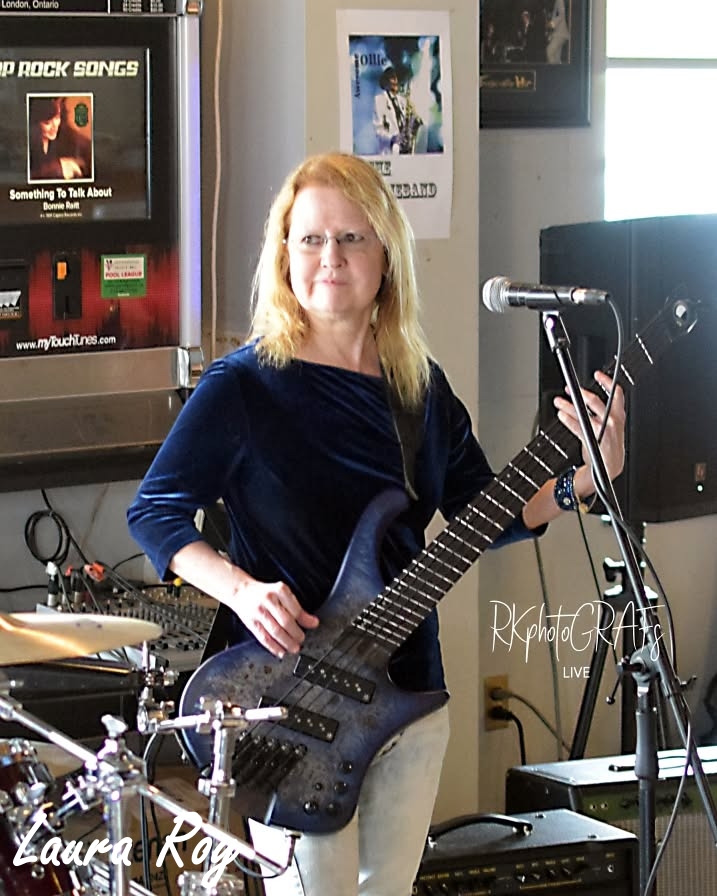
Every Sunday afternoon there is a Blues Jam at Pete’s Pad. The jam band consists of Ray, Steve, Richard, and Laura. What a great combination.
Some of the musicians who have come in and sung a few songs include John Brocksom, Terry Lee, Kristen Renee, Chris Murphy, Robbie Antone, Ollie Marcoux, and Randy Carville, just to name a few.
You never know who is going to drop by on a Sunday afternoon.
In addition to the Sunday Blues Jam, Pete’s Pad holds a Karaoke Night on Wednesdays and an Open Mic on Friday. Local bands often play on Thursdays.
The staff is friendly, and the food is fantastic, so check it out at 609 Clarke Road. London.
Check out their Facebook page for more information and news of upcoming events (11) Facebook
All Musicians’ Photos by Rudy Graf.
Check out samples of Rudy’s work at RK photo Graf s on Facebook
If you know of a local music venue you think The Beat Magazine 2025 should profile, contact Richard Young at richardyoung@thebeatmagazine2025.ca
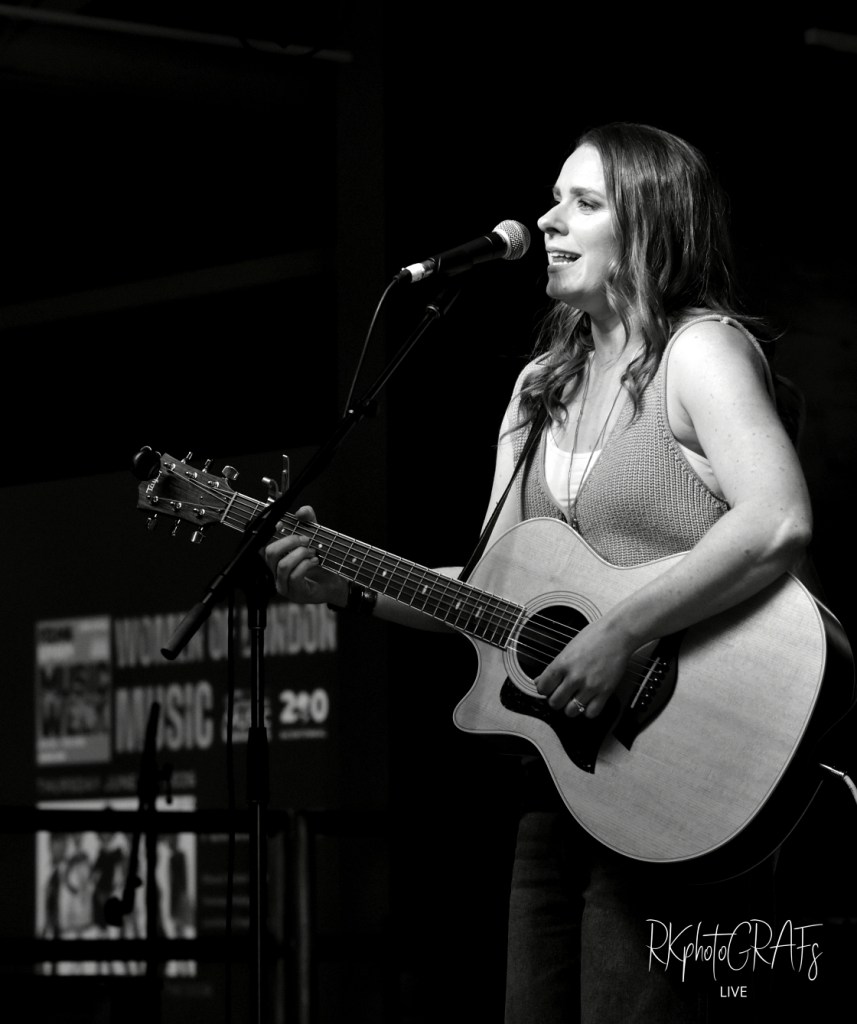
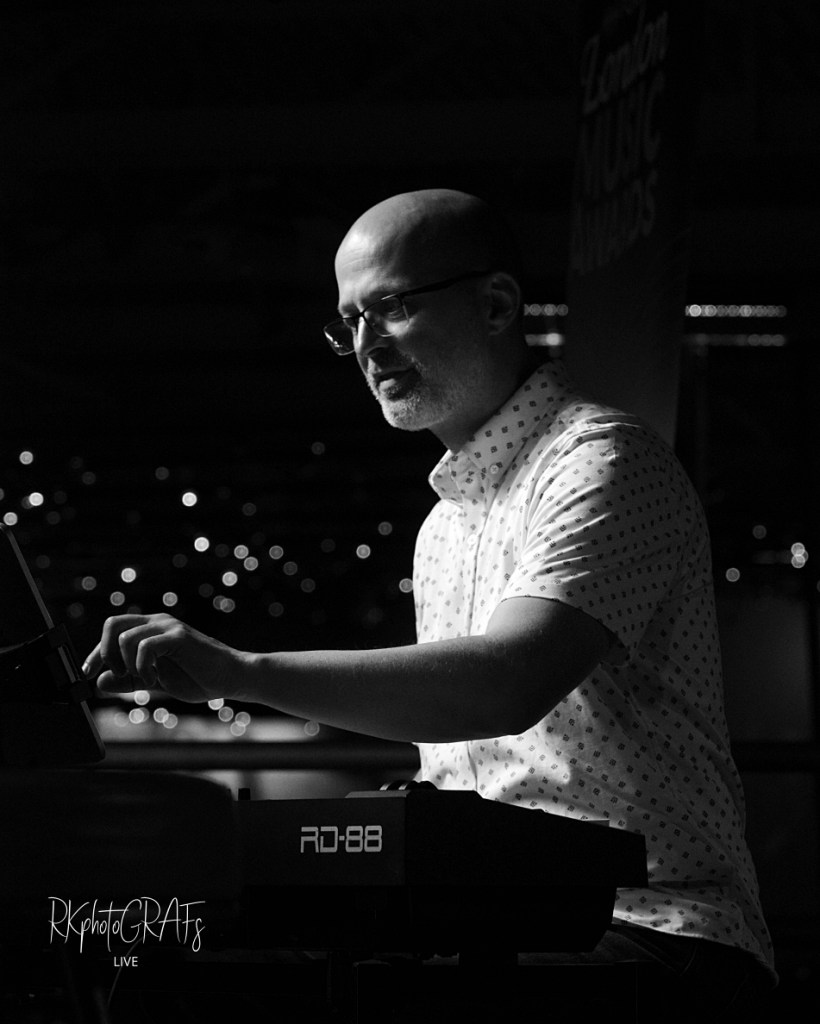
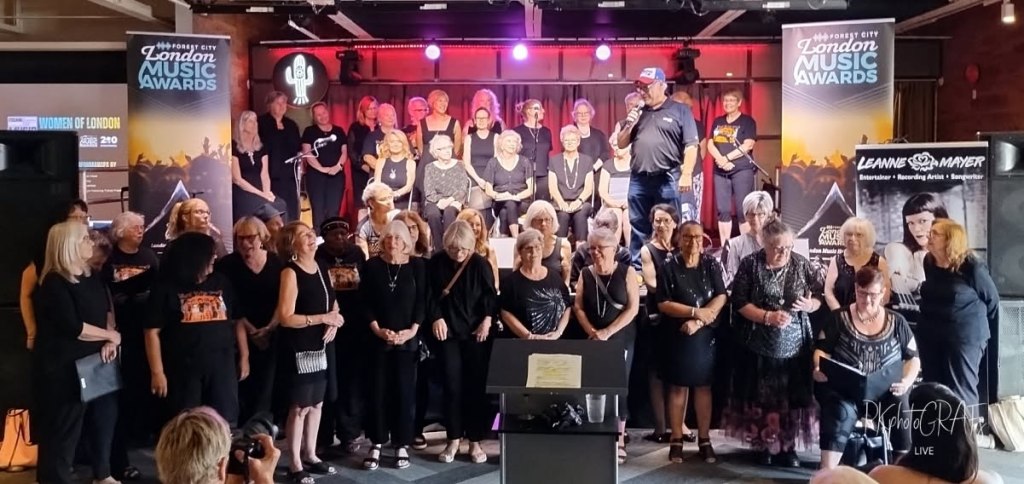
This is the first in a series of recurring photo features on The Beat Magazine 2025 website, which we are calling “The Local Music Scene Through the Lens of Rudy Graf.”
Each photo dump will feature photos Rudy has taken at London-area bars and music events..
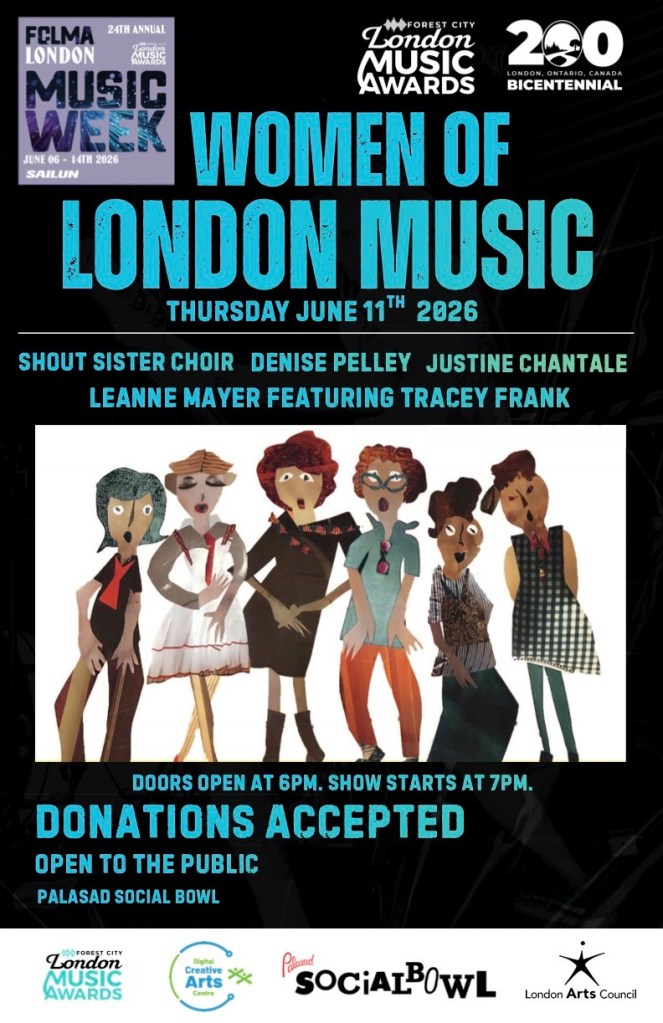
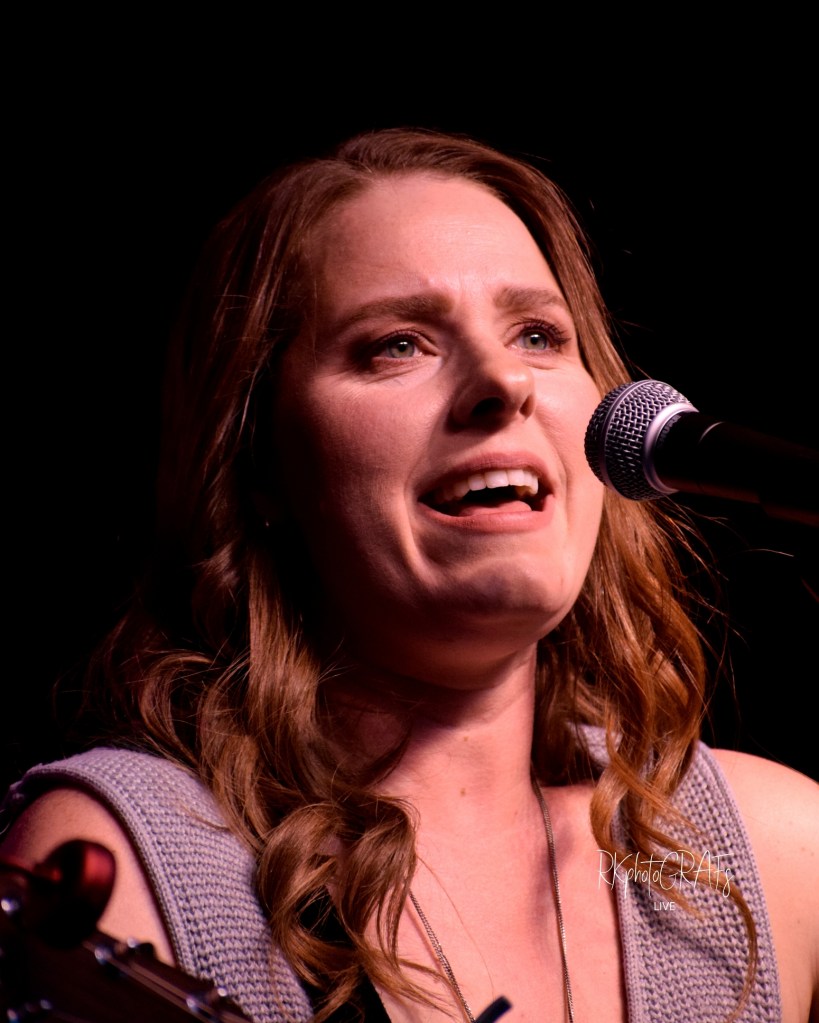
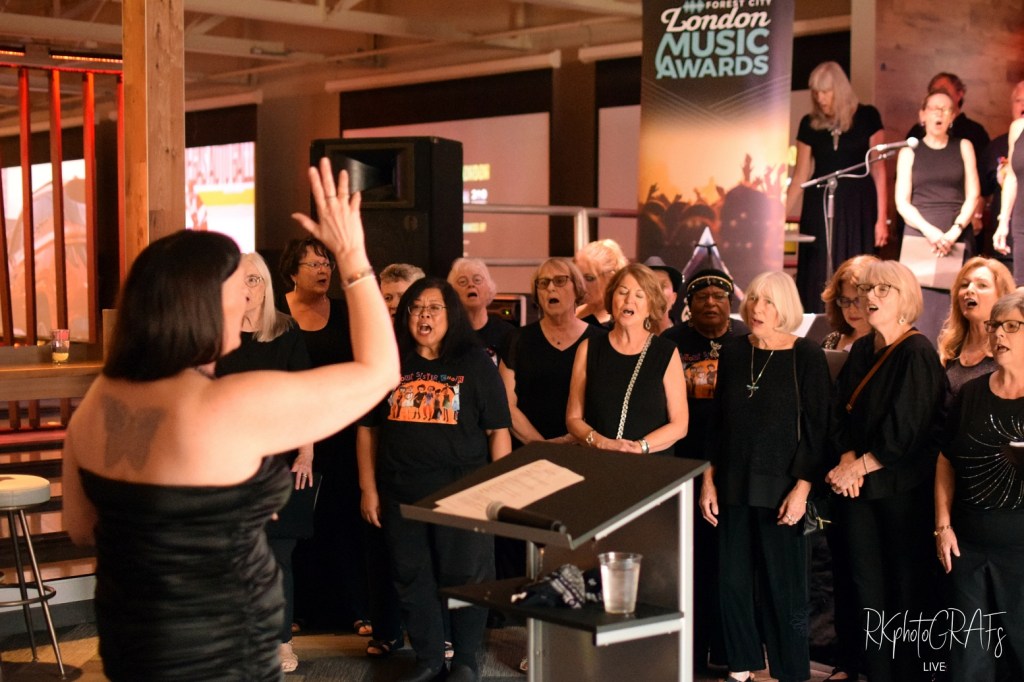
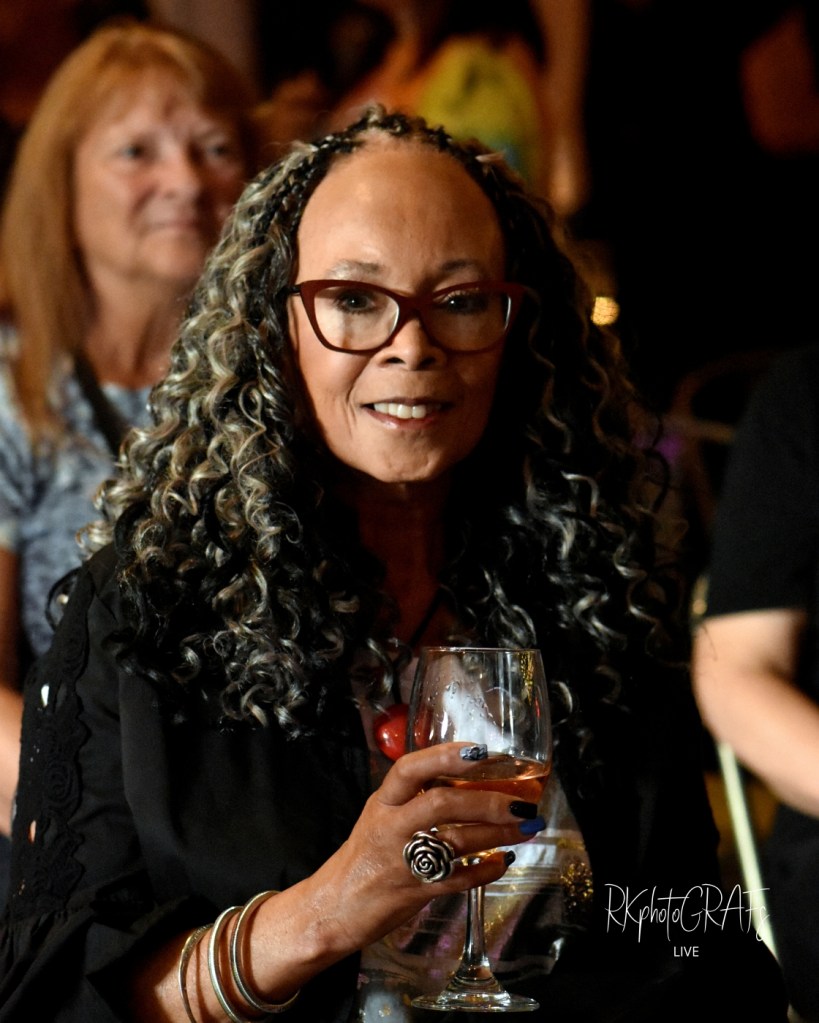
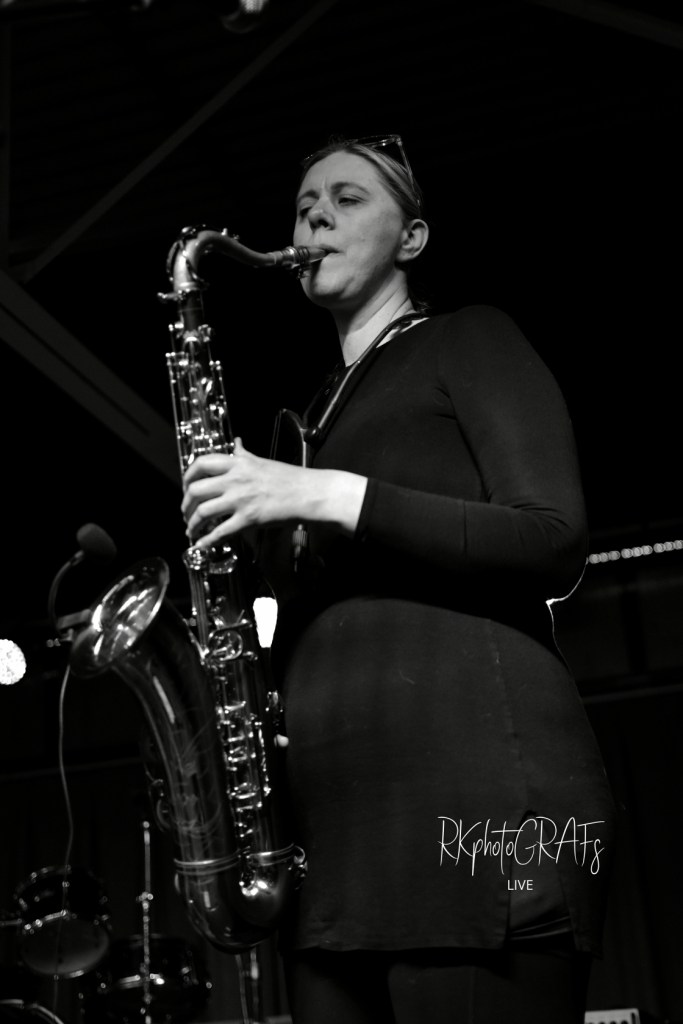
Rudy’s first feature includes pics he took at the Forest City London Music Awards Women Of London Music event on Thursday, June 11, 2026.
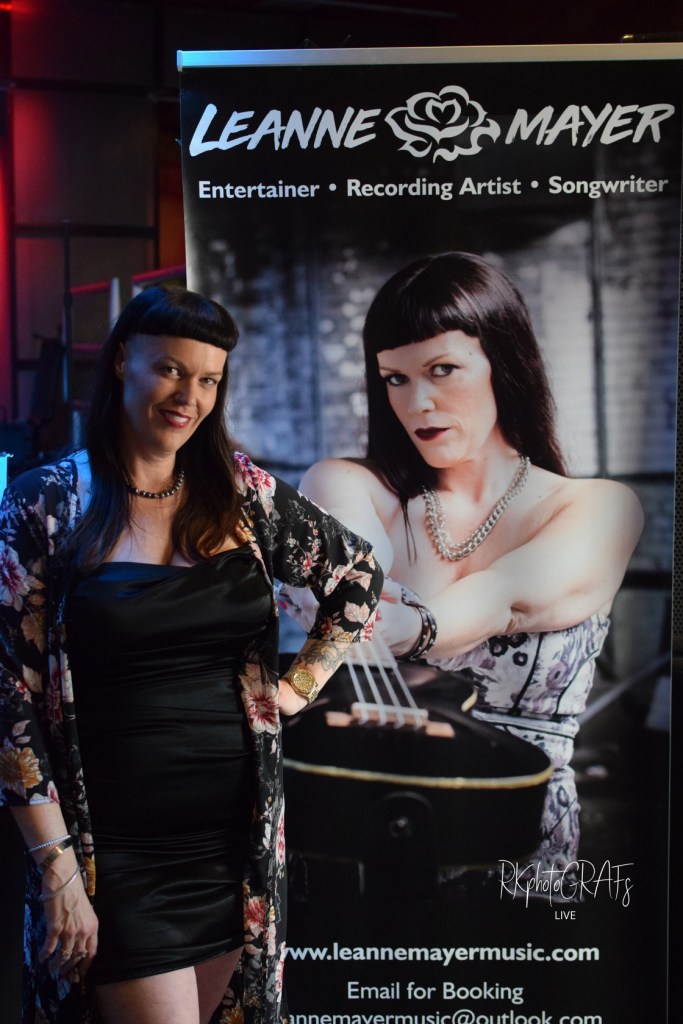
You should recognize many of the artists in the photos, including Denise Pelley, Leanne Mayer, Justine Chantale, Tracey Frank, Nevin Campbell, and the Shout Sister Choir.
All Photos By Rudy Graf.
Rudy Graf is an up-and-coming London photographer who is very involved in the London and area music scene. He previously focused on wildlife pictures, and these photos can be seen at RKphotoGRAFs Nature on Facebook.
Rudy’s first experience taking concert pictures was for the Nashville-based Christian rock band Petra in Toronto and Sarnia in 2024. That same year, he volunteered to take pictures at the Good for the Soll festival in Ingersoll with Helix and Sarah Smith included in the lineup. Brian Vollmer of Helix asked Rudy to photograph the band at Capitol 33 in Delhi and to design the Helix 50th Anniversary Christmas Card.
In 2025-26, Rudy took promotional pictures for Toronto-based bands Always Abba and Toronto the Legacy.
For the past six months, Rudy has been a fixture at London area bars snapping pictures of bands and performers at jam nights and concerts. You can also find him at festivals and other outdoor events. He’s taken pictures for the local Ren Festival for the past several years. Keep an eye out for Rudy at your next event!
Check out samples of Rudy’s work at his Facebook page RK photo Graf s (1) Facebook
Let us know if you would like Rudy to photograph your band or music event. Contact Richard Young, The Beat Magazine 2025 Publisher & Content Manager, at richardyoung@thebeatmagazine2025.ca.
Rose Cora Perry, frontwoman of the award-winning rock band, The Truth Untold, is no stranger to the road.
Touring Canada and the US since she was a teenager, she’s rocked audiences of over 500,000 and opened for such names as Big Sugar, SmashMouth, Saliva, Platinum Blonde and The Killjoys.
This year, when planning her band’s touring circuit, she wanted to think beyond the music. Throughout her years of performing, she’s had the privilege of sharing the stage with many fellow musicians, particularly other women performers.
(Pictured: Warrior Women organizer, Rose Cora Perry. Photo Credit: Mystery Man Photo.)
In chatting with her peers, variations of the same story frequently emerged: experiences of discrimination on stage and all too often, more insidiously, incidents of domestic abuse behind closed doors, including her very own story.
Data supports what Perry has seen firsthand, as per Believe/TuneCore Be the Change’s 2024 “Gender Equality Study” suggests that “three in five women in the music industry have experienced sexual harassment,” and according to a 2021 study by Statistics Canada, “one in two Canadian women experience intimate partner violence in their lifetime.”
In sharing stories, Perry is honoured to have created unshakeable bonds of sisterhood with so many other female talents. But relegating these stories to the music scene alone isn’t enough to impact change. That’s why this year, in her heart, she knew she needed to do something different and the idea for Warrior Women was born.
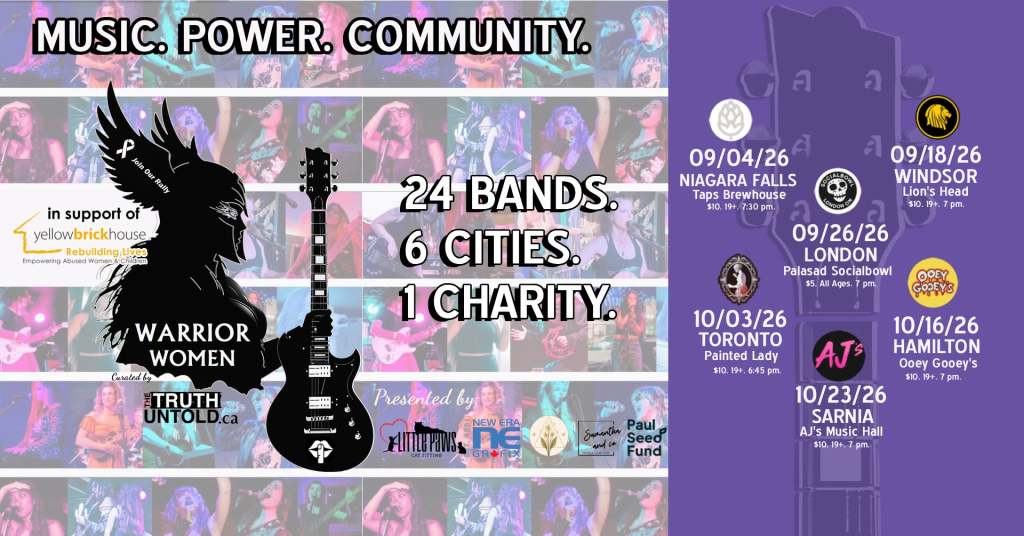
Warrior Women is a ground-breaking six-city concert and empowerment series designed to amplify women’s voices by creating a powerful intersection of music, community building, and social impact.
The core objective is to unite women from diverse backgrounds to share stories of resilience and create meaningful connections across professional and personal spheres, transforming local music venues into spaces of solidarity.
(Pictured: Rose Cory Perry & The Truth Untold. Photo Credit: Mystery Man Photo.)
Throughout Niagara Falls, Windsor, London, Toronto, Hamilton, and Sarnia, 24 female-fronted bands, six empowering female guest speakers and 21 female-owned and operated business partners will be showcased.
Proceeds are being raised for Yellow Brick House, one of Ontario’s largest providers of services to women and children escaping domestic violence and abuse. Since 1978, Yellow Brick House has been providing life-saving services and prevention programs to meet the diverse needs of individuals, families, and communities impacted by violence. Their core services include emergency shelters, a 24/7 crisis and support line, public education, community counselling and support services for women and children.
Why does this matter now? According to the latest Statistics Canada’s 2024 Homicide Survey, “in Canada, a woman is killed by her intimate partner approximately every five days”. Further, “intimate partner violence has increased by 18.1% in Ontario” (Ontario Provincial Police 2025 Data).
By showcasing and supporting female talent across several major Southwestern Ontario cities, Perry aims to build a template for future empowerment initiatives while making an immediate, measurable difference in survivors’ lives.
Warrior Women London is scheduled for Saturday, September 26, at the Palasad Socialbowl (777 Adelaide St N, London, ON N5Y 2L8).
Kicking things off are Western University professors Sonia & Monda Halpern. The band lineup includes bluegazers Blue Herring, post-grunge rockers My Artifice, hooky alt-rockers Nostalgic Brightlights and alt-country quartet Lindsey & The Lonelies in addition to Perry’s band, The Truth Untold.
Admission is $5, and the event is all ages with doors opening at 7:00 pm. Advanced tickets are available at: https://square.link/u/CBkebBDw
Warrior Women London is proudly presented by New Era Grafix and the Paul Seed Fund with partners BFitness and Tia Bakery.
What follows is a Q&A Interview with Page Graham, co-founder of The Inside Outside, a popular recurring series of “salons” that brings together the music and visual art communities in a common setting.
The Interview was conducted by The Beat Magazine’s Publisher & Content Manager, Richard Young.
(Pictured: Page Graham and Tami Kegley, co-founders of The Inside Outside.)
Q. When was The Inside Outside founded, by whom, and why?
The Inside Outside was formed in 2025 by husband-and-wife team Page Graham and Tami Kegley. We saw a need to bring the music and visual art communities together in a common setting. A “salon,” if you will. Our shows consist of live music performances and arts discussion (interviews)
Q. What do each of you bring to the project?
Page takes care of the technical and production aspects. Since she is an artist herself, Tami acts as host and interviewer. Both collaborate to develop ideas and people to invite to participate in the show.
Q. What demographic does The Inside Outside serve?
Although unintentional, our events tend to attract a more mature audience, and all ages are certainly welcome. Not only do music and art find themselves siloed in terms of disciplines, age also plays a factor. For example, there are old-school punk bands in London as well as younger acts, and they aren’t at all integrated.
Q. In what venues do you hold your events?
Our events are held at the Richmond Tavern, London’s finest dive bar. People who would like to come to our events should be aware that it’s clean, well-run, and safe. Oh, and the drink prices are quite fair! We don’t charge a cover, but we do pass the hat. Pay What You Can (PWYC).
Q. How often do you hold events?
We are currently holding our events quarterly, on the 3rd Thursday of March, June, September, and December. I guess we’re roughly tracking the solstices.
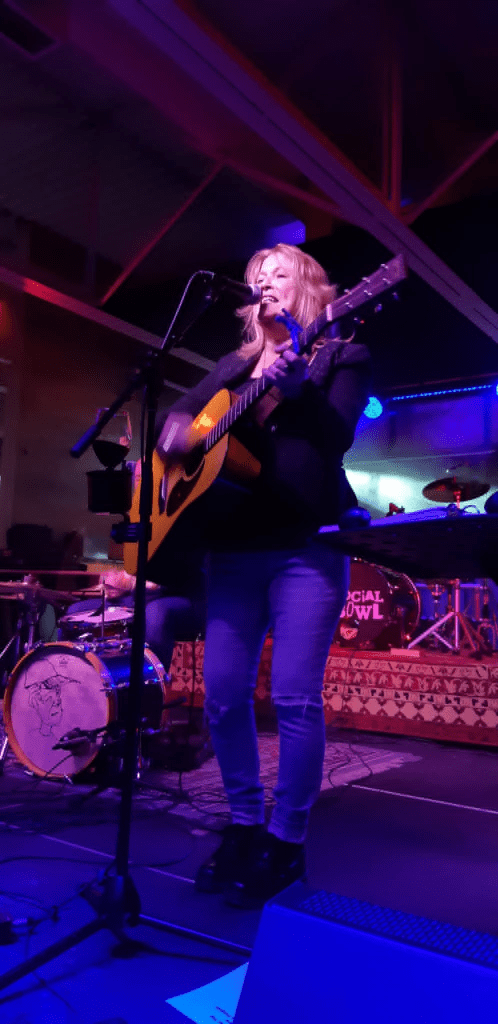
(Pictured: Carol MacQuarrie. Photo by Jim Capel.)
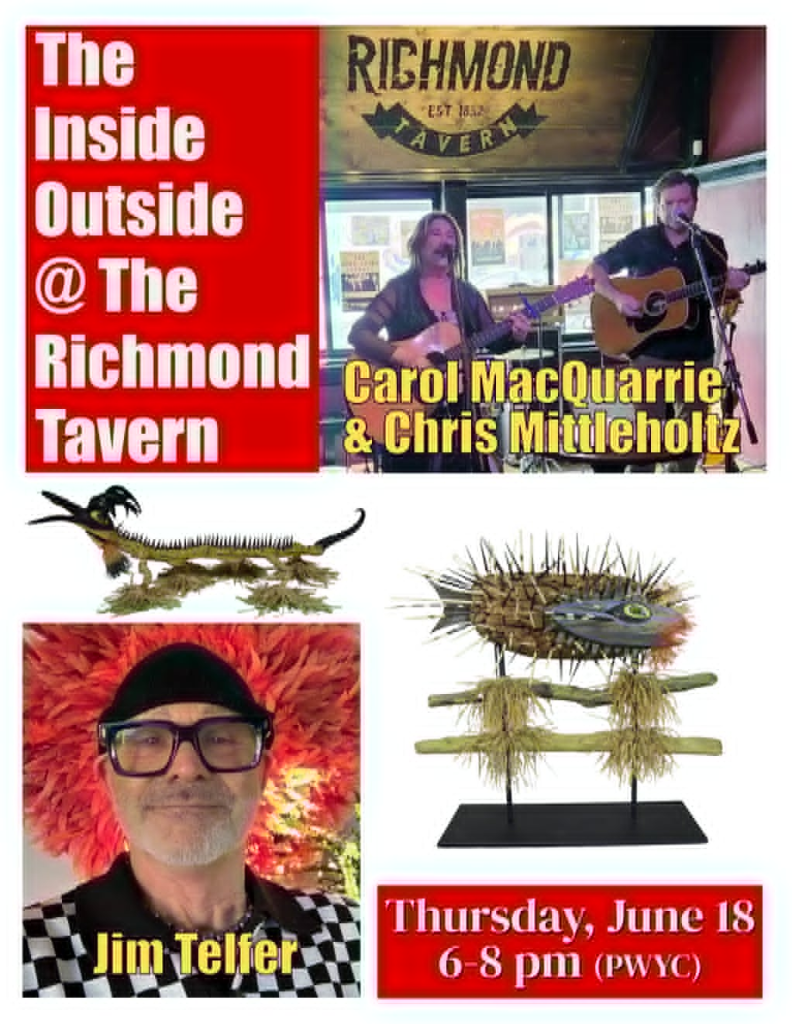
Q. What can attendees expect from your Thursday, June 18th event at the Richmond Tavern?
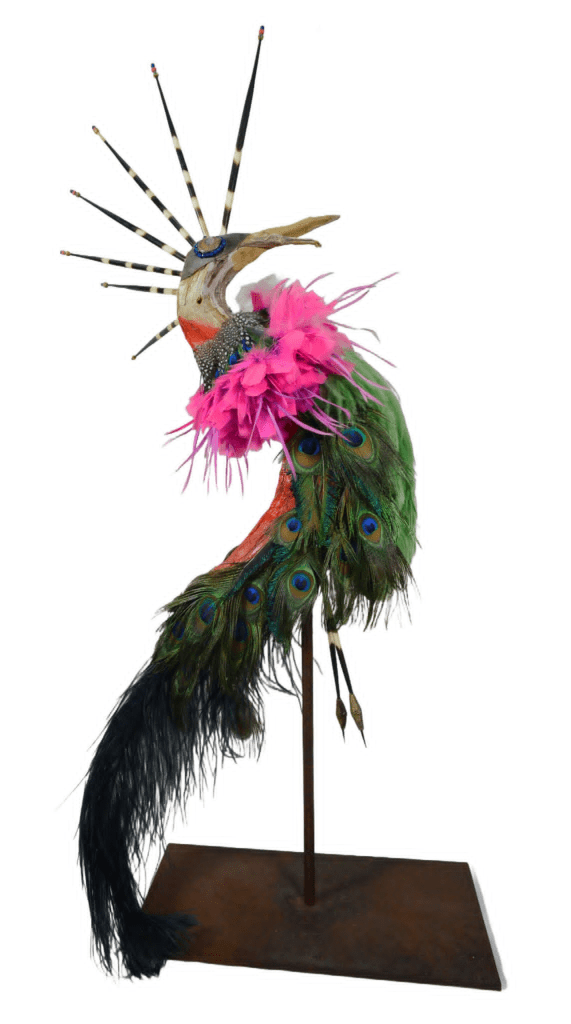
Our musical guests are Carol MacQuarrie and Chris Mittleholtz, who represent one half of folk group Myrtle Earle. Chris is also a renowned punk guitarist, but this will be an acoustic show. Local artist and gallery owner Jim Telfer will be our interview guest. He runs Splash Fine Art and Jewelry Gallery on Richmond Street, just south of the CN railroad tracks. There will be a visual display of his artworks; he specializes in larger-format abstract representations of animals, primarily sea creatures, and he uses mostly found objects such as driftwood. In September, our musical guest will be Allison Brown, who will likely bring another performer to join her. Our arts guest is still TBA.
(Pictured: Jim Telfer’s “Toulouse Peacock”. Photo by Page Graham.)
Q. How can our readers learn more about The Inside Outside?
Currently, the best option is to follow our Facebook page (insideoutsidelondon.ca). We have a website of the same name, but it is currently dormant.
Q. Do you have any general thoughts about London’s arts and culture scene/community you would like to share?
That’s an easy and difficult question to answer all at the same time. Since I’m a Western grad from decades ago and then went abroad for many years before returning, I find that Londoners tend to be overly negative about our city, and that includes the arts.
That simply isn’t true. This is a fine city. People should take pride in it. How many other cities have a Music Week with awards shows, for example? On the other hand, the music community gets much more attention than the visual arts because it’s out of balance. Our music situation is just fine, but instead of continuing to focus on it constantly, the spotlight needs to be shared with the visual arts and literature. In addition to being known as a “City of Music”, we should also be known as a “City of Arts”.
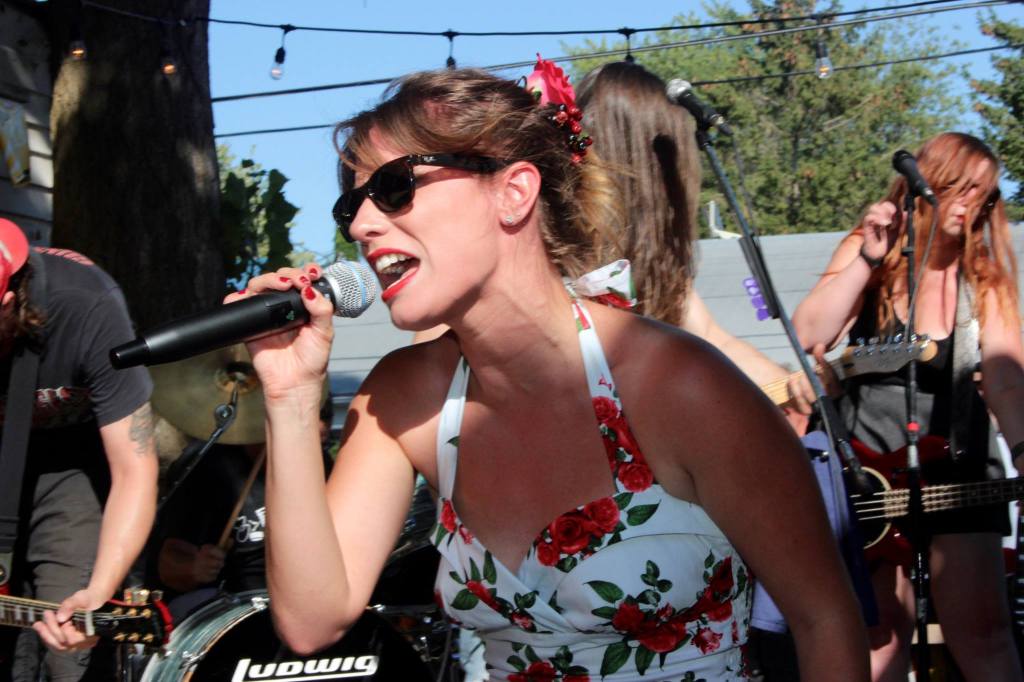
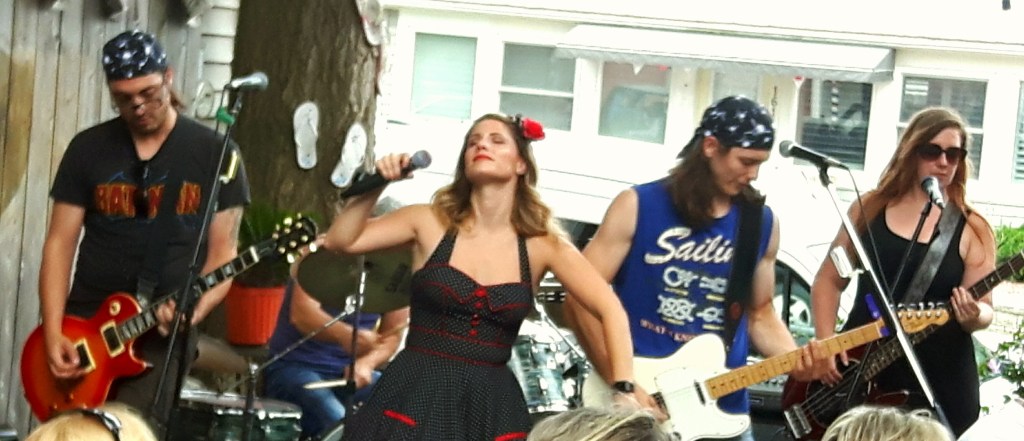
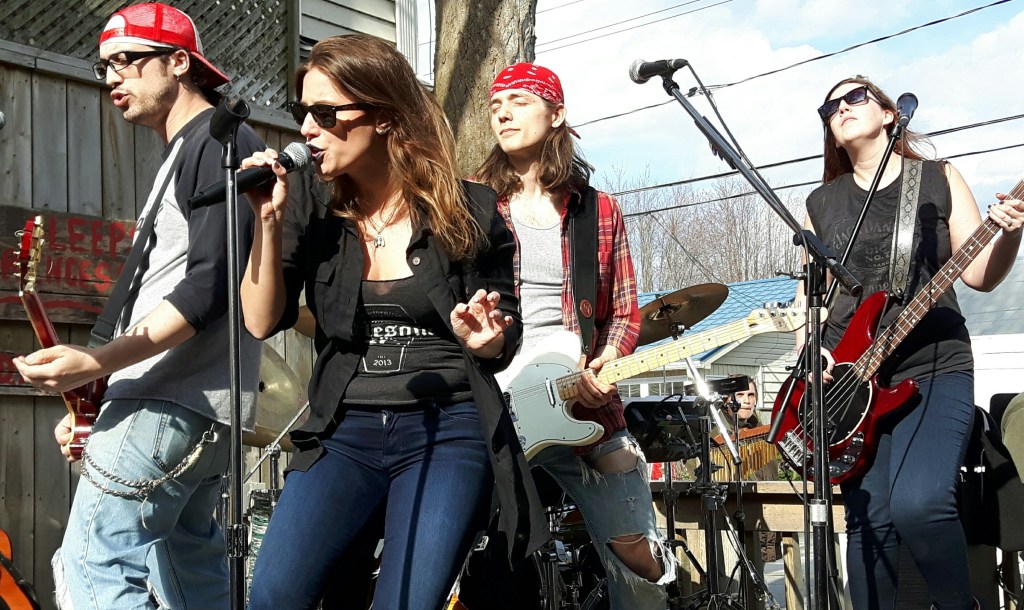
In one world, a band was looking for a new lead singer. In the other, a singer was looking for somewhere to sing.
Specifically, ten years ago, a band called Backline Revival was hosting a YouTube series to audition a new singer. Behind it was Rickie-Lee Houle of Loveless, who organized the series and the search.
“We asked ladies to try out and had two or three rounds of auditions. Long story short, Megan was one of the contestants,” explains Houle.
“And I will not forget when she showed up because we were all searching for our singer and had similar but different ideas of what we were looking for. When Megan sang, we were all thinking ‘this is who we want’.”
In the other world, Megan Schroder was unsure of her abilities, confessing, “I wasn’t very hopeful because I had not sung in a rock and roll band before. The only singing I had really ever done was like in my room as a kid, a bit of musical theater, and karaoke. That was really it.”
“I never fronted a band before, and didn’t really have a lot of confidence in my own rock and roll front woman ability, but I thought, you know, why not give it a shot?”
In Houle’s world, she already knew who she wanted, but life threw both young women a curveball.
Despite having Schroder top of mind, Rickie Lee had to continue with the competition to be true to the goal of the contest. Meanwhile, Schroder got an offer to audition on Broadway.
“I made it through a couple rounds of the competition and then, funny enough, I got a call to audition on Broadway for the show Hedwig and the Angry Inch, which I had recently done as part of the London Fringe Festival”, she explains.
Schroder did get a call back about the play, so she called Houle and told him she had to drop out of the auditions.
“I told them all my focus was going into preparing for this Broadway audition, and in the off chance that I happened to get it, I didn’t want to leave them high and dry,” says Schroder.
“I was certain that they weren’t even really gonna care because I thought I was the weakest link,” Schroder says flatly. “Everyone else had experience. I didn’t know what I was really capable of and thought I was probably in last place anyway, and they’re not even really gonna care.”
As for Houle, “We were devastated” when she got the call from Schroder. But the competition continued, and a winner was chosen.”
“We took a couple of weeks off after we had finished the process, and then everyone got pregnant,” she laughs. “The winning singer got pregnant. The drummer’s girlfriend got pregnant, so we kind of went on hiatus.”
At the time, Houle’s guitar-slinging, soon-to-be husband Nick, was in a band with guitarist Ian Hebert called Bender. They put Backline Revival on the back burner but kept in touch with Megan.
Back in Schroder’s world, “Rickie Lee got in touch with me and asked to meet up. I didn’t end up getting that part on Broadway, so I was intrigued.”
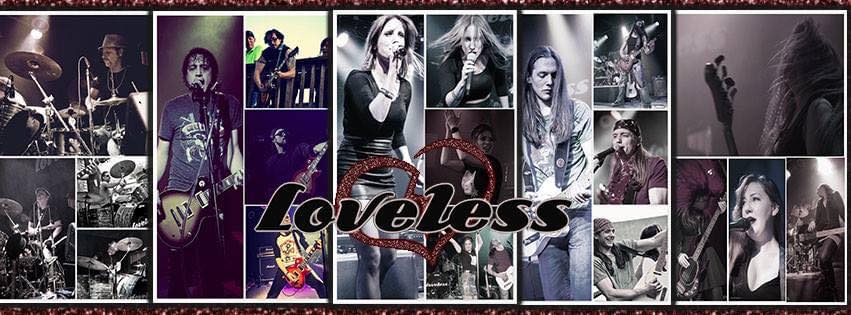
One meeting later, the core of Loveless was born.
Both Houle and Hebert were looking to leave Bender and wanted a lead singer.
“Ian is super talented, but one thing that he doesn’t love to do is front a band,” Schroder explains. “It’s just not really his thing. So, they wanted to create a band where Ian sings a little but not as the lead singer.”
After a skinsman shuffle, the newly named Loveless ended up with their forever drummer, Warren Stinson, and got down to work.
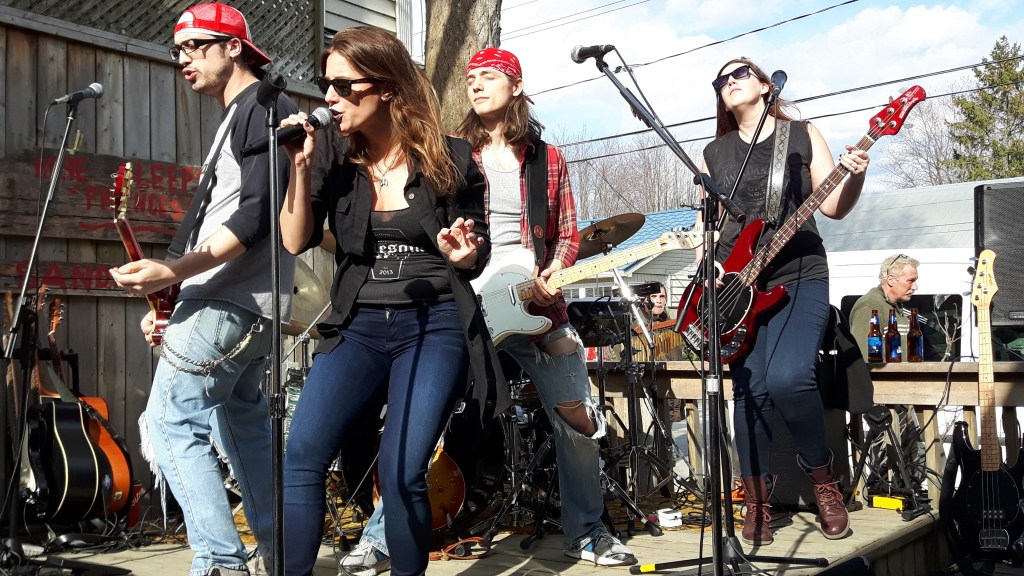
Having eschewed original material ala Backline Revival, the idea behind Loveless was basically 70s and 80s rock music. What made Loveless stand out among an endless list of similar-themed cover bands was their youth. They were young and played these songs not with a rote note-by-note recitation of de facto classics but rather with the raging wonder of young guns trying out these gems for the first time.
They sounded fresh, a rarity among cover bands. And they came by their freshness honestly. They all grew up with these songs.
“Much Music was always on when I was a kid,” recalls Schroder. “I remember being in kindergarten and my mom took out her old record player and 45s and as a super young kid, I would go through that box full of British Invasion stuff.”
“I was always really into the oldies, and then I just continued to really love it, you know.”
As the Schroder household went, also went the Houle abode.
“My dad always says he plays a mean radio,” chuckles Houle.
“We had sort of a thing where every weekend we would go up to the third floor, and I would get to pick out an album that I wanted to listen to, and he would tell me about it, and I’d hear about when it first came out, when he waited in line, to pick it up at Sam’s and just getting little mini music lessons.
“We would get into like a whole bunch of bands, even Loveless doesn’t play because they’re like a little more obscure, like The MC5 or Frigid Pink, Michael Jackson, the old Chess Records stuff, and Little Feat’s Waiting for Columbus album.”
As for what’s next for Loveless, it’s truly up to the band. They all have side projects and other musical outlets, and because of that, the band remains excited and vital.
“We all support each other,” says Houle. “It’s also good that we come back to the band with renewed energy, too. We are always so appreciative of what we have when we come back.”
“We’re all really good friends. Like, we all really genuinely like each other,” Schroder enthuses.
“So, like when we’re having fun and goofing off on stage, it’s all real. None of it is fake, because we’re just like five friends who are hanging out and having a good time together. And just, yeah, loving it.”
You can catch Loveless at the Pierside Pub in Port Stanley: Sunday, August 2 and September 6.
Bob Klanac is a London-based music journalist who has penned hundreds of reviews and interviews. He was a juror for the Polaris Music Prize, a member of the Slaight Family Polaris Heritage Prize Jury, and a Juno Awards juror. Bob has also penned two books, Promo Man about London’s late music legend Nick Panaseiko and Shooting Stars, Telling Tales, about photographer to the stars photo-journalist John Rowlands.





 The Beat Magazine 2025