
By Jo-Anne Bishop
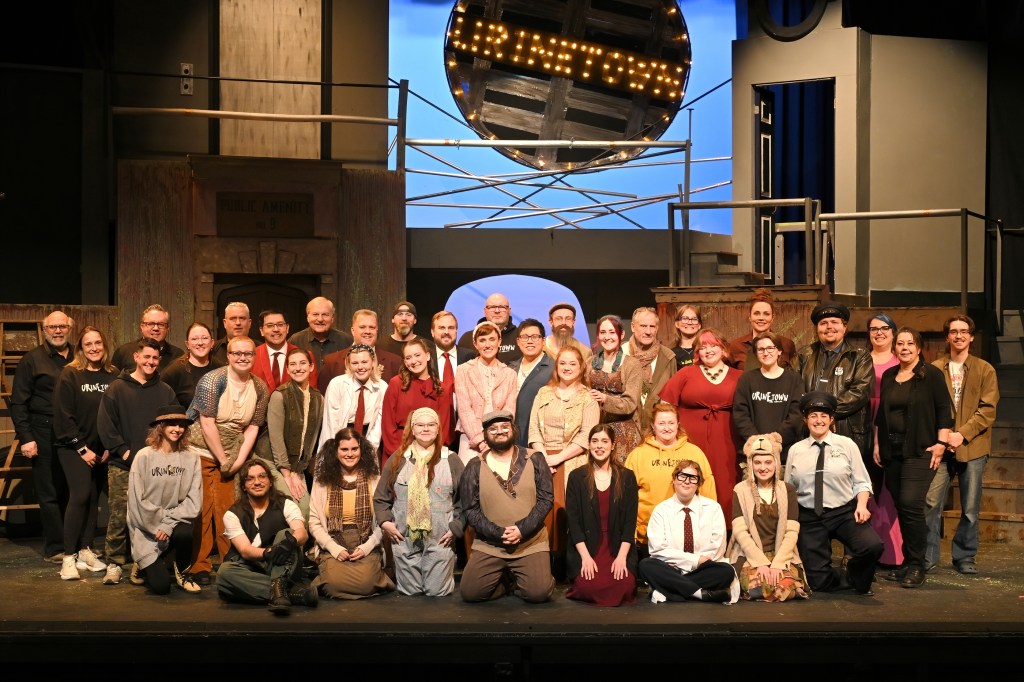
Community theatre can sometimes surprise you. Occasionally, it can even rival (or surpass!) professional productions in artistry, ambition, and execution. That was unquestionably the case with this remarkable staging of Urinetown: The Musical at the Palace Theatre.
Directed by Sydney Brockway, produced by Ceris Thomas, and featuring an orchestra under the leadership of Steven Morley, this production demonstrated a level of talent that felt genuinely world-class, and all the more impressive given its community theatre setting.
For those unfamiliar with the show, Urinetown is far more than its intentionally provocative title suggests. The musical is a sharp political satire that explores themes of corporate greed, environmental crisis, class inequality, and the consequences of unchecked capitalism. Set in a dystopian future where water scarcity has led to the privatization of public amenities — including toilets — the story examines power, resistance, and the moral ambiguities of revolution. At the same time, it quite cleverly parodies the conventions of musical theatre itself by breaking the fourth wall and inviting audiences to question not only the characters’ motives, but their own assumptions about justice and heroism.

(Pictured: Jesslyn Hodgson as Hope Cladwell, Sean Brennan as Caldwell B. Cladwell, and Ensemble members. Photo Credit: Ross Davidson.)
Balancing humour with social commentary is no easy task, yet this production navigated both with intelligence and confidence. Notably, the company also extended these themes beyond the stage through direct outreach to unhoused members of the surrounding community. An effort that meaningfully deepened the production’s social resonance.
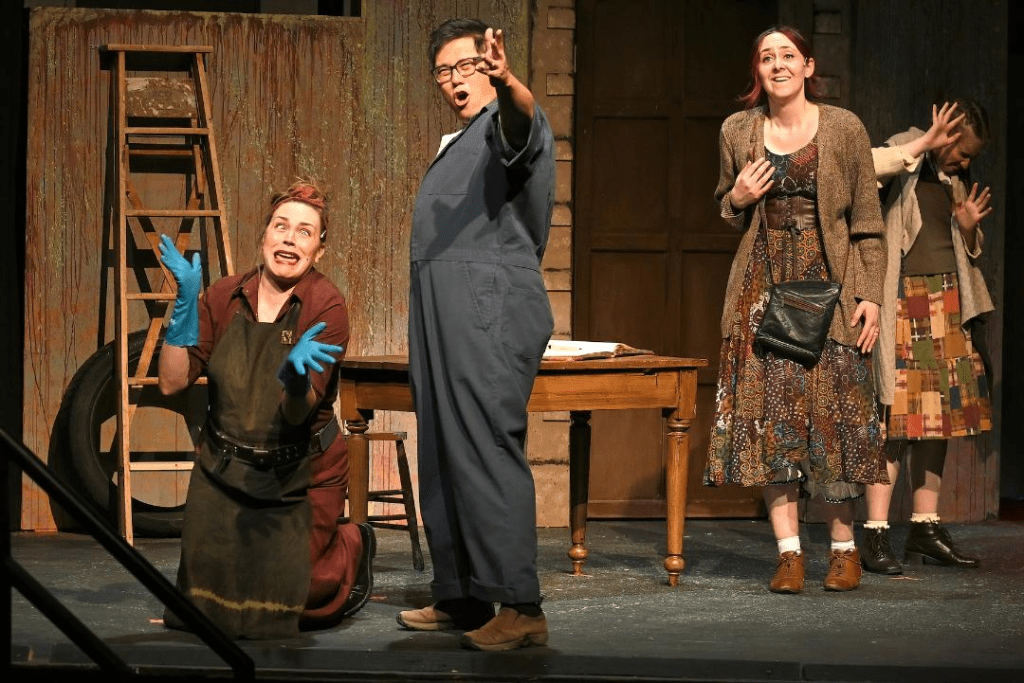
(Pictured: Laura Williams as Penelope Pennywise, Henry Truong as Bobby Strong, and Allison Gold as Ma Strong. Photo Credit: Ross Davidson.)
The performances were uniformly exceptional. Kate Sepi delivered a commanding and charismatic Officer Lockstock, serving as both narrator and participant with clarity, presence, and authority. Henry Truong, as Bobby Strong, brought both emotional sincerity and vocal strength to the role, grounding the story’s central conflict with authenticity. Jesslyn Hodgson as Hope Cladwell possessed a vocal quality that elevated every musical moment she touched. Sean Brennan delivered a captivating and hilarious Caldwell B. Cladwell, creating a villain whose presence was magnetic and layered. His performance (for me) stood comfortably alongside work seen on much larger and better-funded stages. Rae Ryder as Little Sally offered memorable nuance and charm, embodying the show’s self-aware humour with skill.
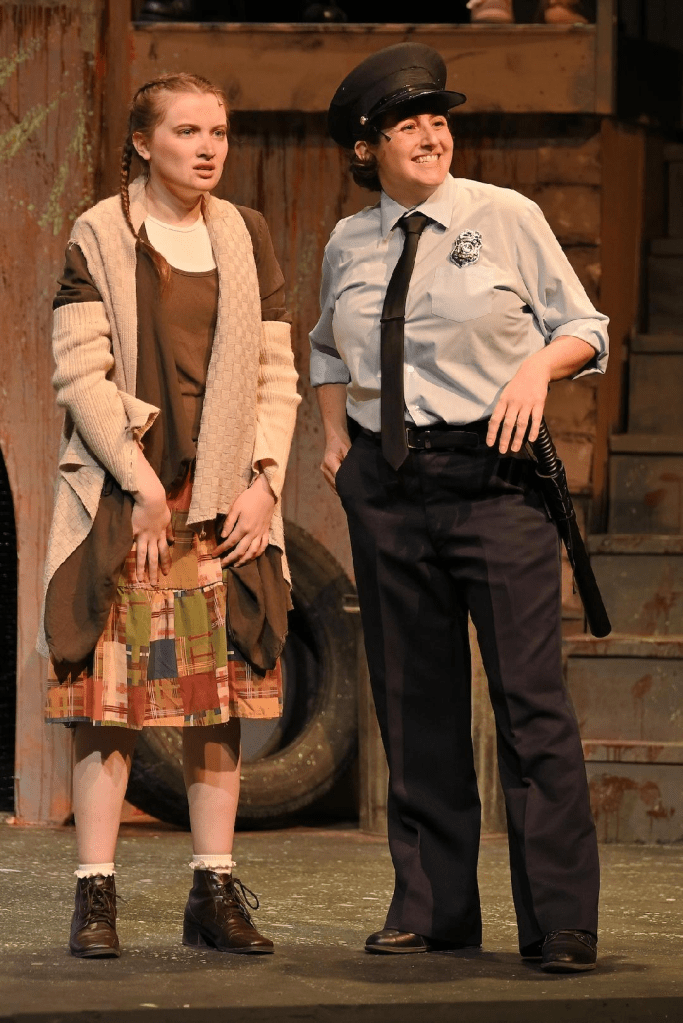
(Pictured: Rae Ryder as Little Sally and Kate Sepi as Officer Lockstock. Photo Credit: Ross Davidson.)
A particularly extraordinary moment behind the scenes became one of the evening’s most impressive achievements: Penelope Pennywise, normally played by Laura Williams, was unexpectedly performed on opening night by director Sydney Brockway herself due to illness. Had there not been a notice in the lobby advising of the opening night change, audiences would never have known. It was a nearly seamless, truly confident, and fully realized performance, and a testament to Brockway’s professionalism and depth of preparation. However, it is my understanding that, as commendable as Sydney’s performance was, Laura’s performance is one not to be missed, which is why I will be making a return trip to see Penelope Pennywise in her other form, once Laura is cleared to return.

(Pictured: Sydney Brockway, Urinetown Director/Choreographer. Photo Credit: Ross Davidson.)
Equally impressive was the ensemble. There was not a weak link in the company, and truly, there are no small roles in this production. Each cast member is to be commended for delivering an exceptional performance, owning every line and every beat. The choreography was executed with precision, energy, and commitment, and the cast functioned as a cohesive storytelling unit throughout. At various points in the evening, nearly every ensemble member captured attention, which is a hallmark of strong direction and engaged performers.
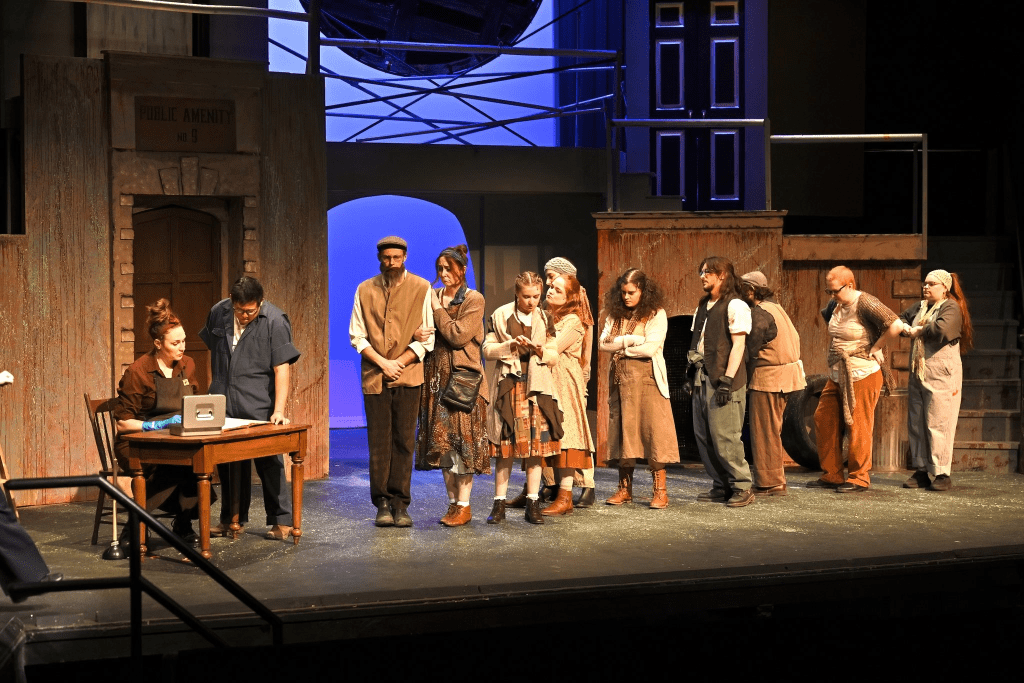
(Pictured: Urinetown Ensemble Members. Photo Credit: Ross Davidson.)
The design elements further strengthened the production. Costumes by the team of Tannis Daoust, Chloe Scripnick, and Chatham Vy were thoughtfully conceived, particularly in their use of colour to distinguish social groups: the impoverished citizens versus the corporate faction. The costume choices enhanced the visual storytelling clearly and effectively. Combined with the set, props, lighting, and musical direction, the overall aesthetic achieved a level of polish that elevated the entire production.
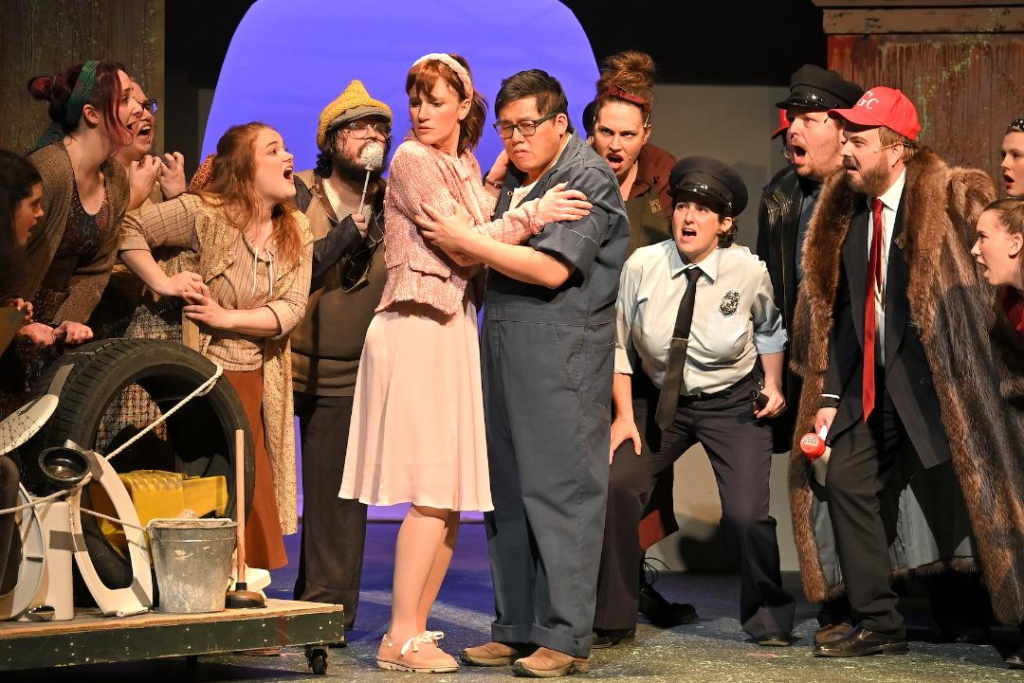
(Pictured: Foreground Jesslyn Hodgson as Hope Cladwell and Henry Truong as Bobby Strong. Photo Credit: Ross Davidson.)
What elevates this production even further is the company’s commitment to connecting the show’s themes with the lived realities of the surrounding community. Members of the cast shared that during the rehearsal process, they felt a responsibility to recognize and engage with unhoused individuals living in the neighbourhood around the theatre. They responded not only with awareness but with action, providing food and basic necessities during the rehearsals and the run of the production. This effort was also acknowledged in a cast note included in the program, which read:
“Urinetown the Musical is about access, power, and what happens when basic human needs are controlled by systems rather than compassion. Producing this show in a neighbourhood where these questions are not abstract, but lived, reminds us that theatre doesn’t exist in a vacuum. We acknowledge the people in our community who are navigating housing insecurity, poverty, and barriers to care, and we affirm their dignity and humanity. We invite audiences to laugh, think, and leave asking bigger questions about how communities choose to care for one another.”
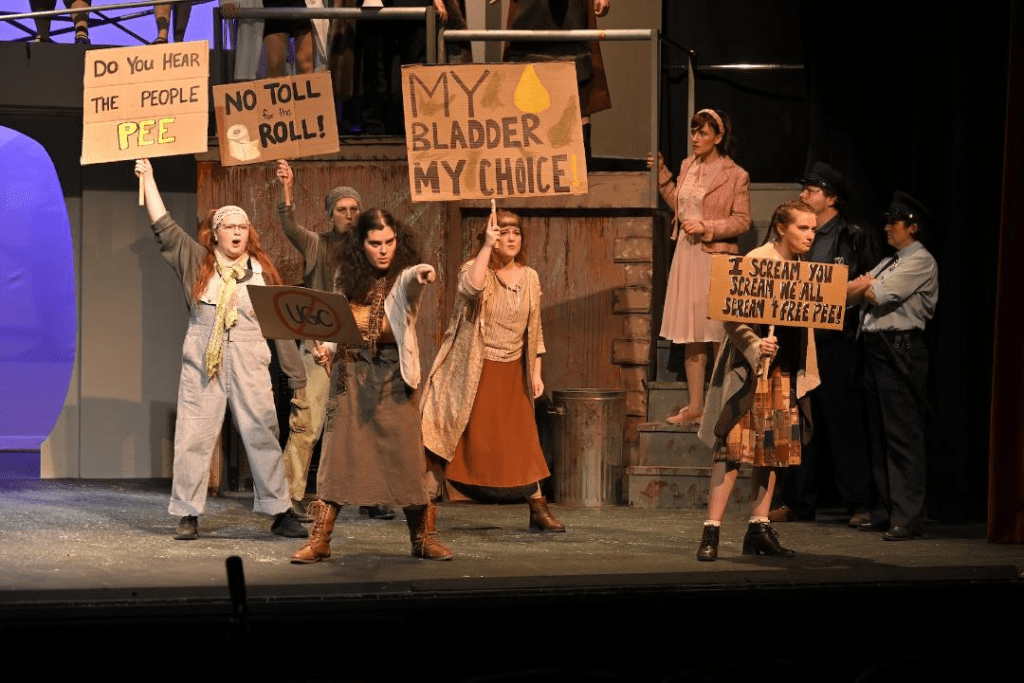
(Photo Credit: Ross Davidson.)
This initiative demonstrated a meaningful alignment between art and empathy, reinforcing the social relevance of the production beyond the stage itself. And this, for me, is the longstanding purpose of the arts. To merge art and real life, and to showcase the stories that make us human.
If there were any critique to be offered, it would be that the orchestra occasionally overpowered the vocals in certain moments. However, this was a relatively minor issue within an otherwise outstanding musical presentation.
Ultimately, this production of Urinetown exemplifies what community theatre can accomplish when passion, talent, and leadership align. It was bold, intelligent, and thoroughly entertaining. It is a production that not only delighted audience members but also invited them to reflect on timely social questions. Productions of this calibre are something any arts community should be proud to claim. This show deserves full audiences for the rest of its run. Please, plan to see this production and tell your friends.
As always, please support the arts. Keep storytelling alive.

IF YOU GO:
What: Urinetown: The Musical with Music and Lyrics by Mark Hollman, Book and Lyrics by Greg Kotis
When: February 19th to March 1st, 2026
Where: The David Long Stage at the Palace Theatre, 710 Dundas Street, London, Ontario.
Tickets: $23 (students) – $38 Tickets | Urinetown: The Musical | The Palace Theatre Arts Commons
Reviewed by Jo-Anne Bishop


 The Beat Magazine 2025