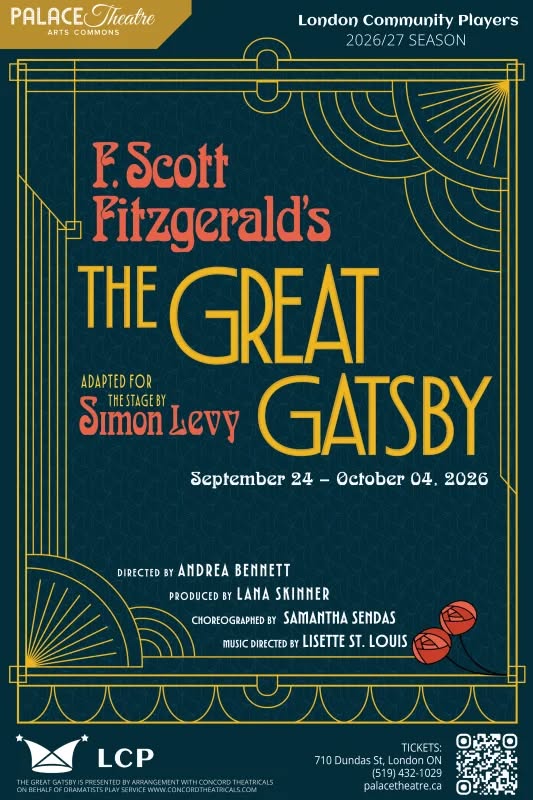
London Community Players’ production of The Great Gatsby plays on the Palace Theatre’s David Long Main Stage, September 24 to October 4. Director Andrea Bennett talks about the production in this Q&A Interview with Richard Young.
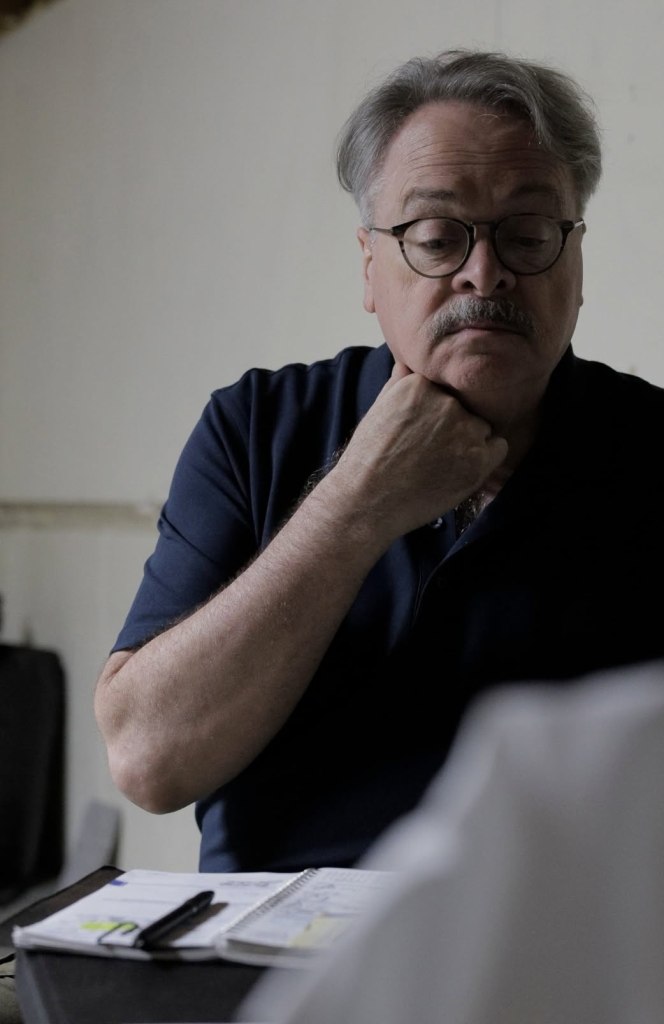
(Pictured: Andrea Bennett. Photo by Ross Davidson.)
Q.Tell me about The Great Gatsby – backstory, author, performance history, etc.
The Great Gatsby is a widely known, widely studied novel that has been adapted many times. Although I never studied it in school, there was always something about the story that has always drawn me. I saw a production of Gatsby in Scotland at the Pitlochry Festival theatre (made famous by Artistic Director Alan Cumming) and it struck a chord something fierce. It wasn’t long until I was incessantly in the ears of those who decide the season. A little over a year later and here we are.
Q.Why was The Great Gatsby chosen as LCP’s Season Opener?
Why not open with a Bang!
Q.Could you provide a brief plot synopsis?
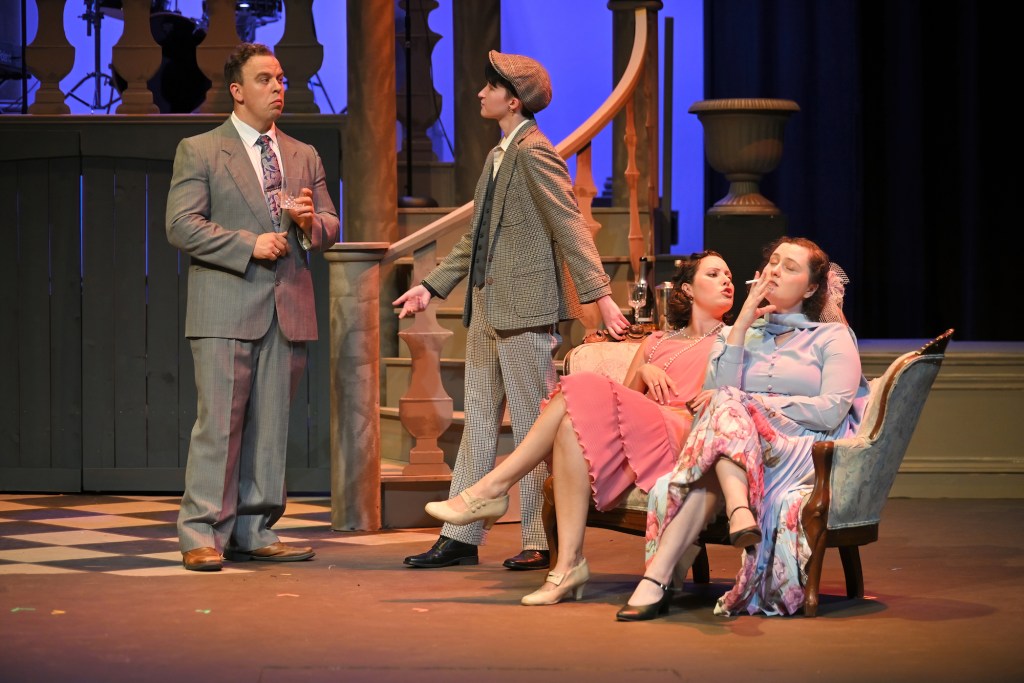
Set against the glittering excess of 1920s New York, The Great Gatsby follows Nick Carraway as he becomes drawn into the world of the mysterious Jay Gatsby. Beneath the parties and glamour lies a story of ambition, obsession, love, and the devastating consequences of chasing an impossible dream.
(Photo by Ross Davidson.)
Q. F. Scott Fitzgerald’s novel has remained in print since it was first published in 1925. It has been adapted for the stage and the silver screen numerous times. How do you account for its enduring popularity?
Who doesn’t love a good love story with suspense and intrigue? Its themes are universal.
Q. Do the themes of the story still speak to audiences in 2026?
Themes of privilege, pursuit of wealth and happiness, toxic relationships, and perhaps most relevant today is the notion of appearance versus reality.
Q. In his notes about this production, author Simon Levy states: “If possible, it would be exciting to have a live musician, A Jazz Man (sax, clarinet), to represent the passion and sound of the Jazz Age, since music is integral to the telling of this story. One should approach this play the way you would a musical.” Have you taken Levy’s suggestion to heart?
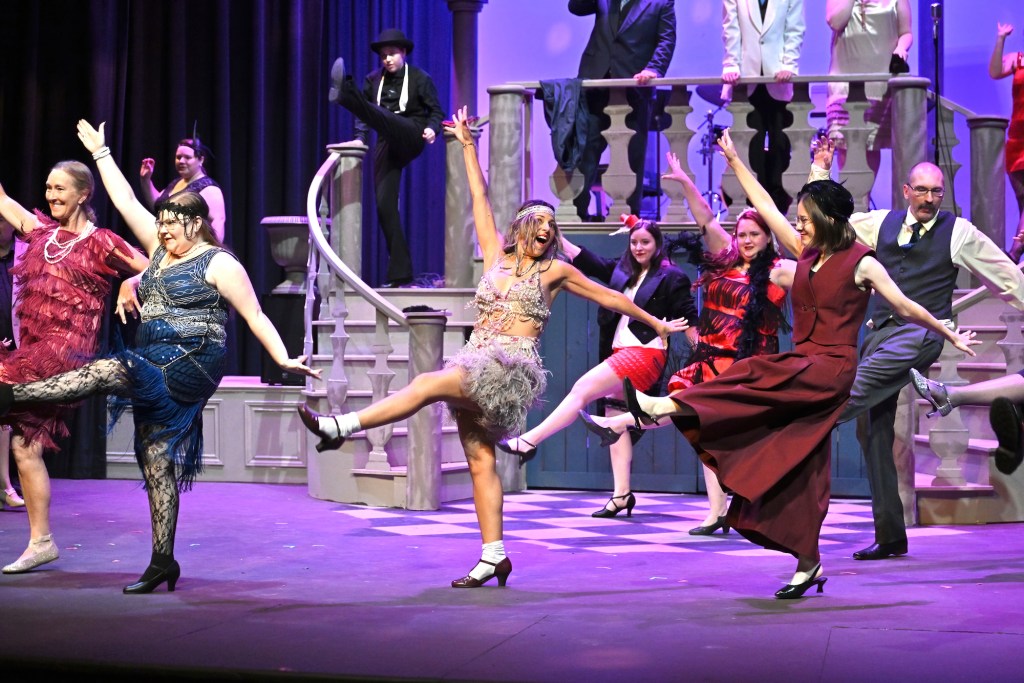
No shade to Levy, but man, would I like to sit down with the guy and clear up a few things. But yes, we have a band and dancers…get ready!
(Photo by Ross Davidson.)
Q. I see that your Artistic Team includes a Choreographer. Does this production include dance numbers?
Sure does! And in true community theatre form, I happen to have known the choreographer since she was tiny. I also had the privilege of teaching her in high school.
Q. Could you tell our readers about the Cast?
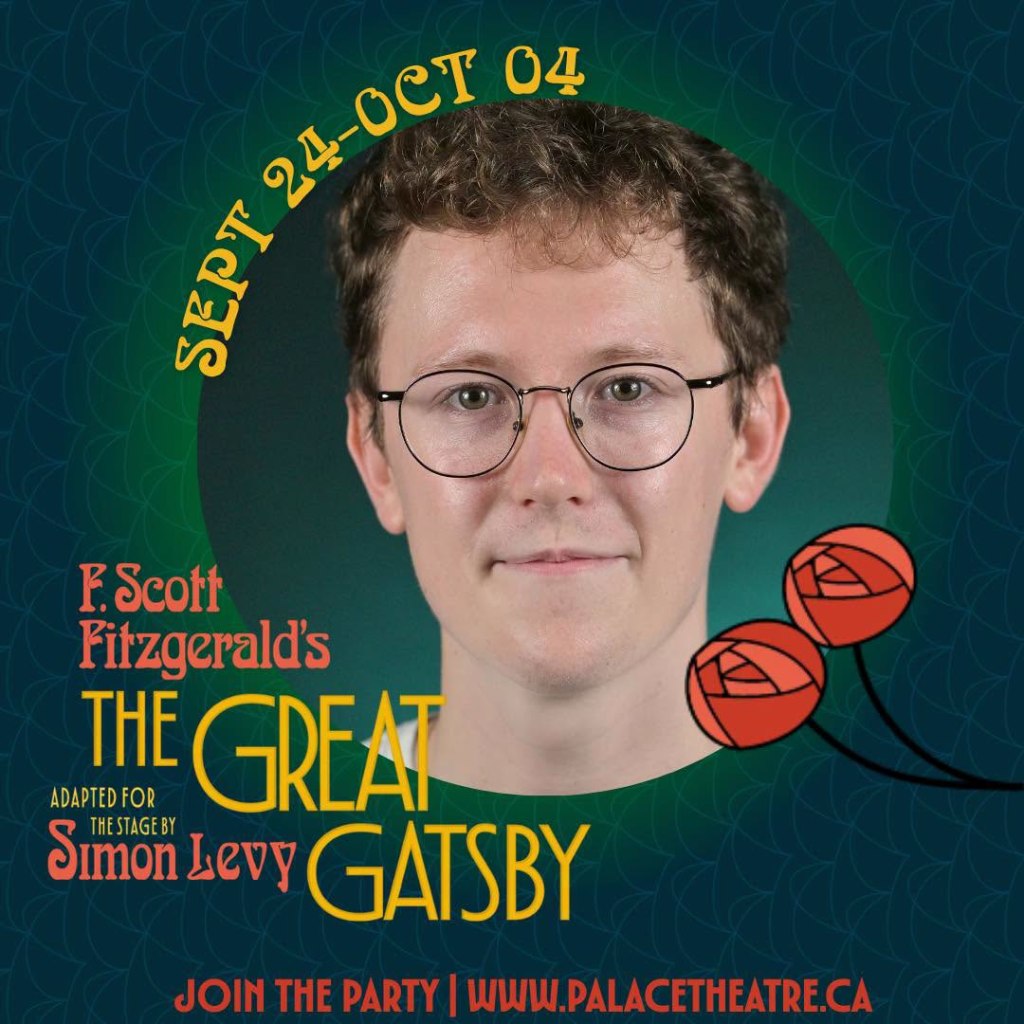
My Jay has far more charisma than that Leonardo DiCaprio fella, that’s for sure. We have an amazingly diverse bunch of beautiful people. There are a few that I have worked with before and some that I have never but can’t wait to work with again! I deliberately chose to add several ensemble members; it’s a party after all!
(Jacob Wilcox (Jay Gatsby). Photo by Ross Davidson.)
Q. How would you describe the sets, lighting, sound, props and costumes of the play?
Forgive me for going theatre nerd, but it’s the perfect juxtaposition of stripped down staging and outlandish additions. I have a vehicle designer, if you catch my drift.
I’ve known David and Rob for more than two decades and couldn’t imagine anybody else. I specifically chose my sound designer because he has a strong background in film and there is a bit of a cinematic vibe to my Gatsby.
Q. What can audiences expect from this production of The Great Gatsby?
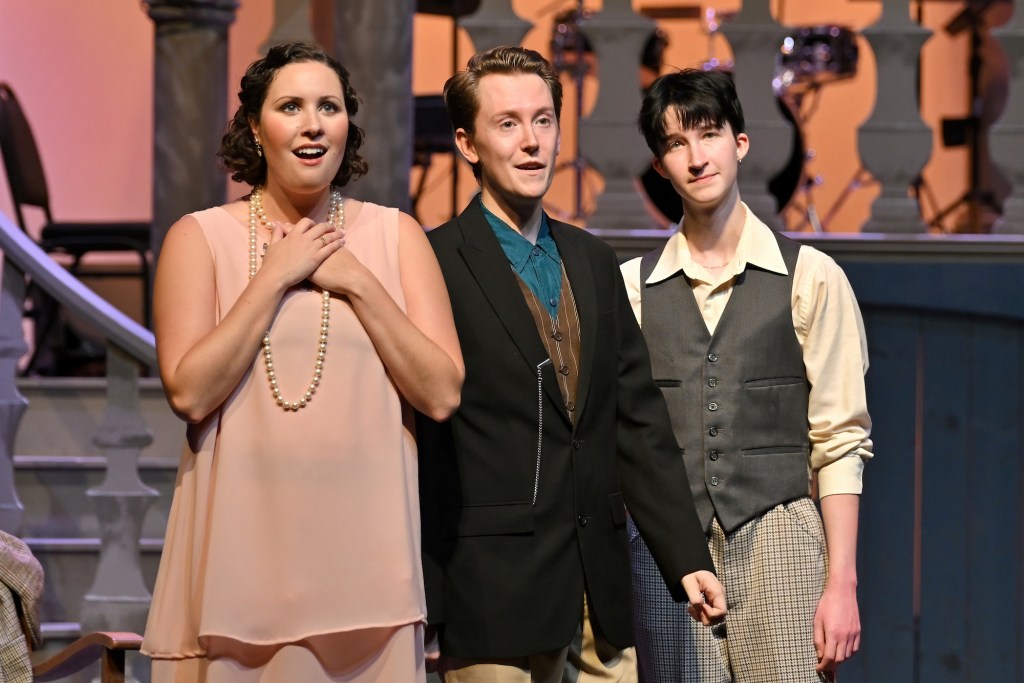
As I mention in my director’s notes, this production takes the glitz and glamour and peels it back to expose the raw, human emotion and relationship dynamics. It’s a more intimate look at the vulnerability that lies beneath.
(Photo by Ross Davidson.)
Q.Is there anything else you think readers should know about the show?
This is definitely not the novel you remember from high school. This is not a light evening of theatre. Expect to confront some difficult content, it’s as bold as it is intimate.
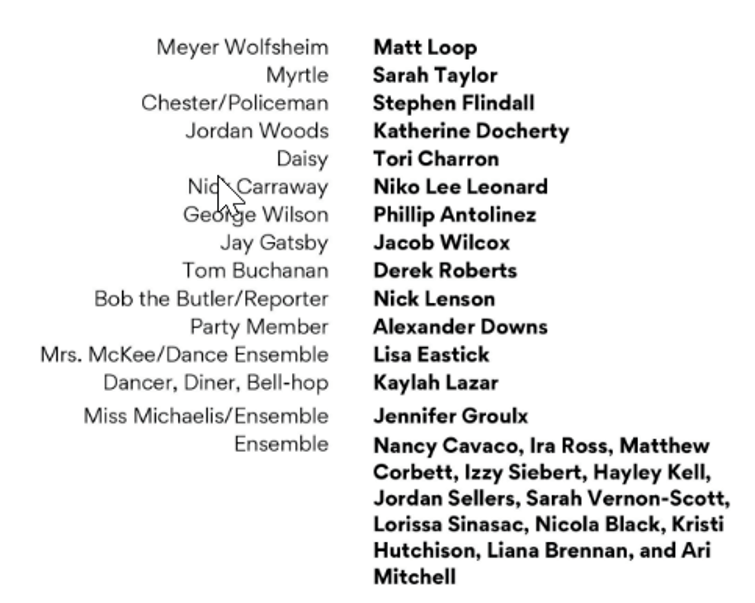
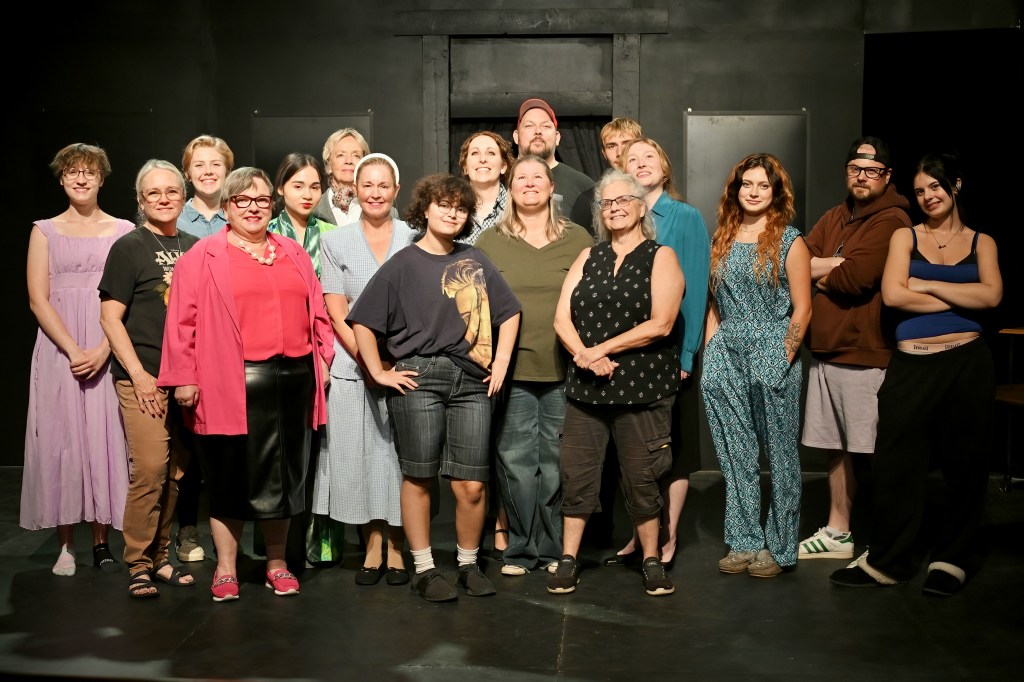
Cast of The Great Gatsby
IF YOU GO:
What: London Community Players present The Great Gatsby.
When: September 24 to October 4.
Where: David Long Main Stage, Palace Theatre, 710 Dundas St., London, ON,
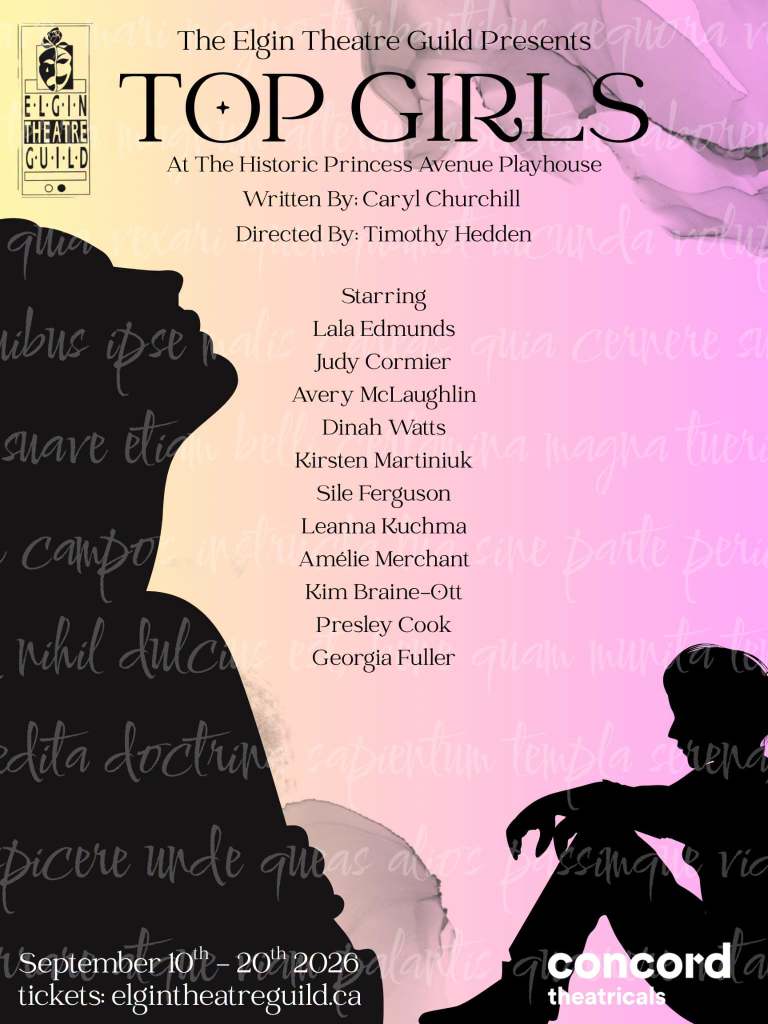
As I left the Princess Avenue Playhouse after seeing Top Girls, I overheard a few patrons trying to describe what they had just seen. The words I heard were “interesting,” “different,” and “heavy.” Honestly, I’m not sure I could have described it much better myself.
Caryl Churchill’s Top Girls, directed and produced by Timothy Hedden, is definitely not conventional theatre. It is subtle, unusual and, at times, deliberately confusing. It doesn’t simply hand you its themes and explain what you’re supposed to think. Instead, it asks you to piece together the connections between the women, their experiences, and the choices they have made. For some people, that will be exactly what makes it interesting. For others, it may make the play a little harder to connect with.
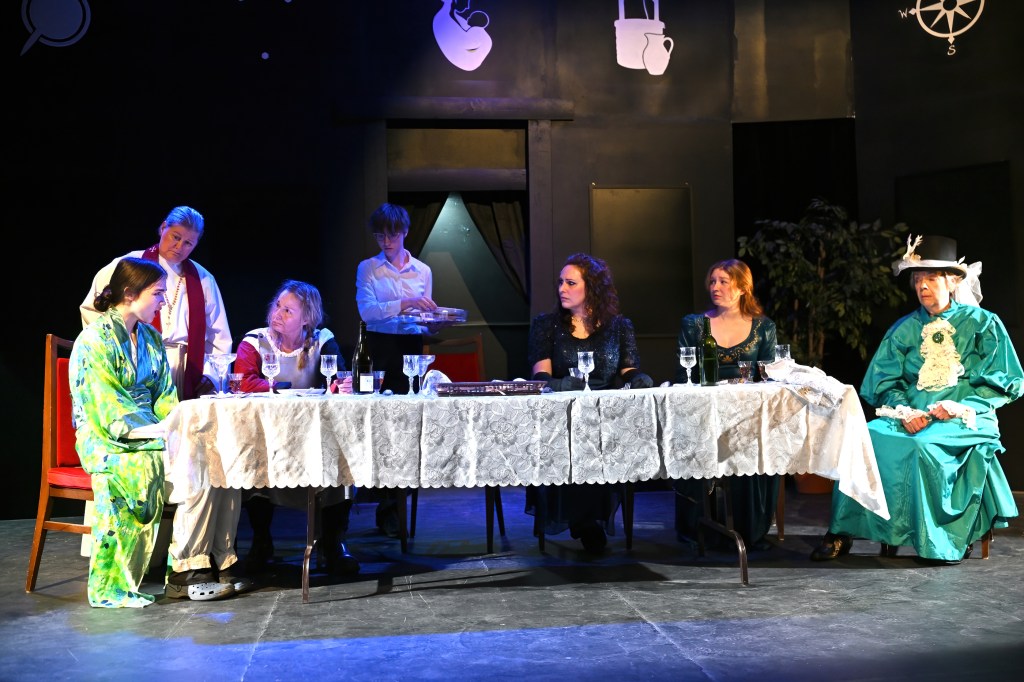
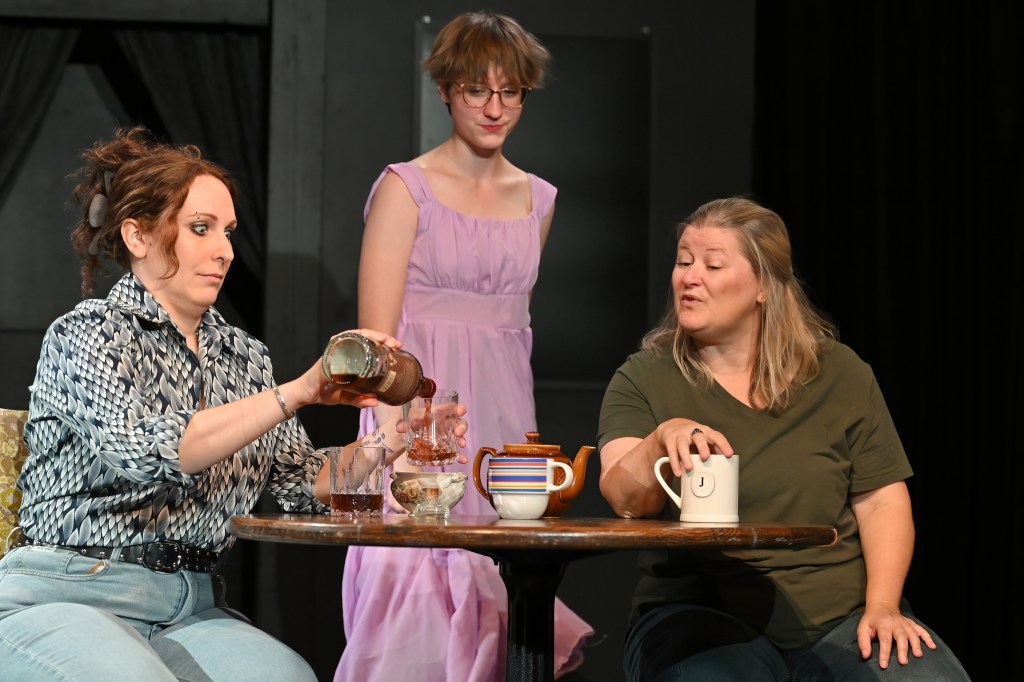
(Photo by Ross Davidson.)
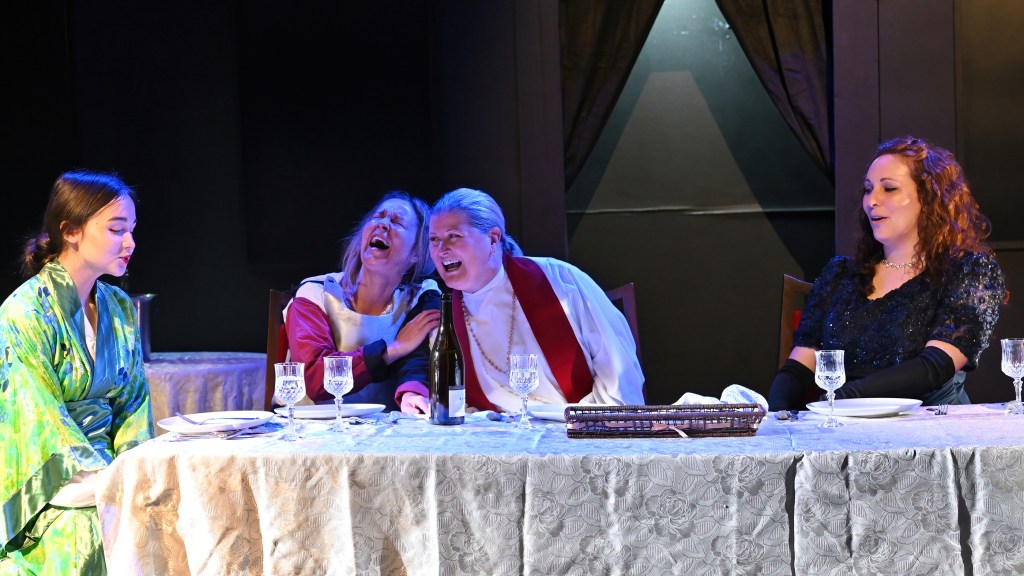
The opening dinner-party scene was particularly challenging for me. Without giving away the premise, Marlene’s guests come from very different times and worlds, and their stories are used to explore the experiences of women throughout history. There is clearly a bigger purpose behind bringing these women together. Their stories reveal some surprisingly common themes of sacrifice, oppression, motherhood, sexuality, ambition, and survival.
Lala Edmunds, who played Marlene, brought a strong presence to the production, and her performance established the confidence and ambition at the heart of the character. Dinah Watts also stood out as Isabella Bird/Louise, bringing a memorable energy and individuality to both roles.
(Photo by Ross Davidson.)
Unfortunately, I struggled to find my way into the opening scene.
The dialogue is intentionally written with characters interrupting and speaking over one another, creating a frantic, almost feverish rhythm. That is part of Churchill’s style and is meant to give the dinner conversation an overlapping, chaotic quality. But I found it difficult to follow in this production. Between the overlapping dialogue, the pace and differences in volume, there were times when I simply couldn’t hear or understand what was being said. One character in particular was difficult to hear, and with the other conversations continuing around her, I sometimes lost the thread completely.
The lighting in the first act also created some very heavy shadows in a few scenes. While I’m sure there was a reason behind the choices, I found some of them distracting and combined with the dialogue, they made those moments even harder to take in.
I don’t know whether these challenges were primarily the writing, the direction, the performances, the acoustics of the space, or some combination of all of them. But the result was that the opening section largely lost me. And that’s unfortunate, because I suspect there was much more meaning in that scene than I was able to take away from it.
The production became much more accessible for me once it moved into the contemporary story.
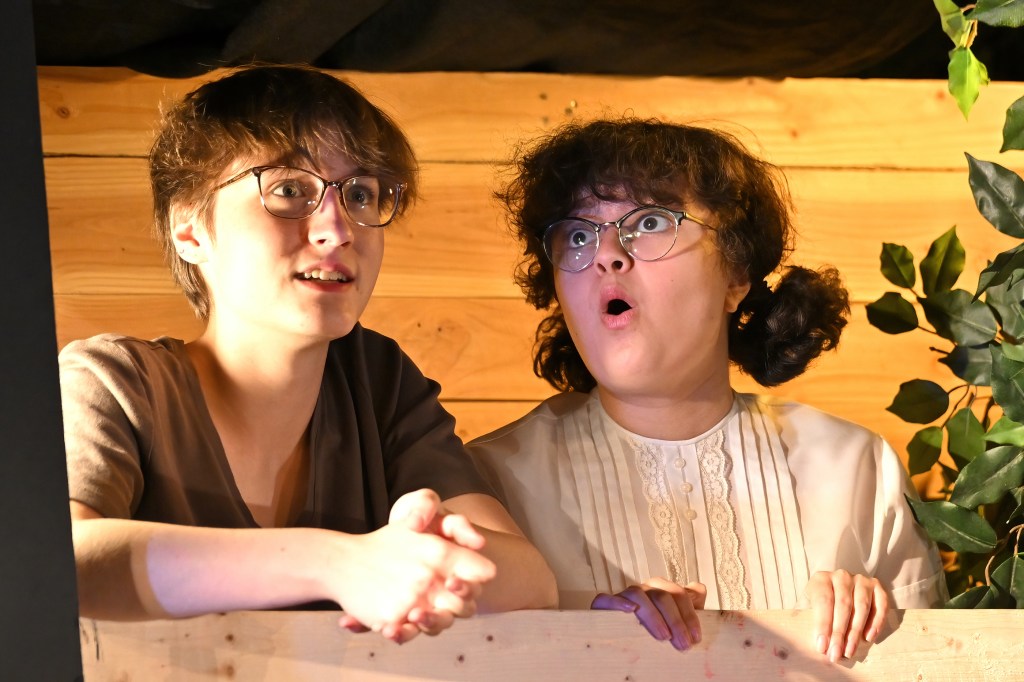
The scenes involving Angie and Kit were a particular highlight. Avery McLaughlin brought a wonderful naturalness to Angie, making her believable, endearing, and completely engaging. Amélie Merchant was equally strong as Kit, and together the two young actresses created a relationship that felt spontaneous and genuine. I found myself hanging on their every word.
(Photo by Ross Davidson.)
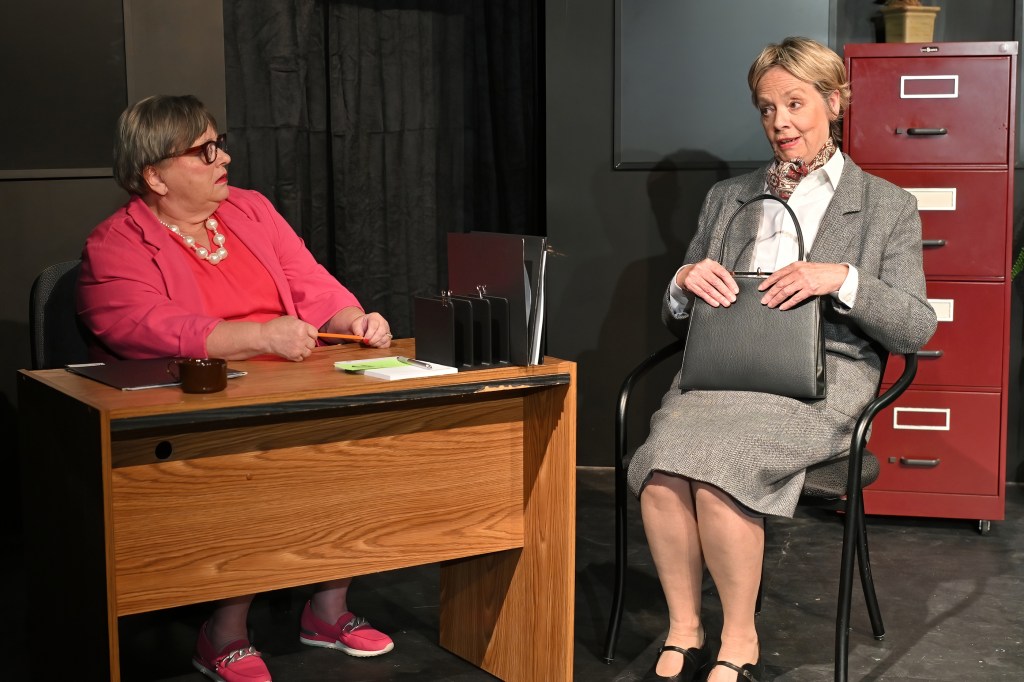
Judy Cormier, who played Pope Joan/Joyce, was another standout. She brought an emotional weight and groundedness to the production that drew me further into the family dynamics and made the more personal moments especially affecting.
From there, the play’s exploration of ambition, family, motherhood, class, and the sacrifices women make in pursuit of success became much clearer. Top Girls is ultimately asking some pretty heavy questions about what women are expected to give up in order to succeed, and whether reaching the top is necessarily the same thing as winning. Marlene embodies that conflict particularly well.
(Photo by Ross Davidson.)
Edmunds’ performance captured that tension effectively. Marlene is ambitious and self-assured, but the play gradually reveals the personal costs beneath that confidence. Her success is never presented as simple or uncomplicated, and Edmunds gave the character enough strength and complexity to make that conflict interesting.
I did, however, find the overall story difficult to connect with at times. The structure is deliberately non-linear, moving between different points in time and different aspects of Marlene’s life. It’s an interesting theatrical choice, but I sometimes found myself wondering where the story was going and what I was ultimately supposed to take from it.
And then there was the ending.
When I left the theatre, I’ll admit I wasn’t entirely sure what I had just watched. I understood the themes, but I felt like something was missing. Perhaps that was intentional. Perhaps the ending was meant to leave the audience sitting with it rather than neatly tying everything together.
It actually took me almost 24 hours to figure out what the ending meant to me.
I was driving today, thinking about this review, when suddenly I had my aha! moment. Something clicked, and I understood the ending in a completely different way. I actually found myself thinking that perhaps the ending would have landed sooner for me if the opening had been a little stronger and easier to follow. If I had been able to take more from those early conversations, maybe some of the connections would have been clearer by the time we reached the end.
And perhaps that is part of the point. The fact that I was still thinking about the play almost a day later says something. It certainly made me think, even if I didn’t always enjoy the process of getting there.
That doesn’t mean I regret seeing it. Quite the opposite.
There is something valuable about theatre that challenges an audience, even when it doesn’t completely work for every person in the room. Top Girls tackles some difficult realities women have faced—and continue to face—and it does so in a way that is thoughtful, unusual and, at times, uncomfortable.
(Photo by Ross Davidson.)
For me, the strongest parts of this production were the performances and the moments when the human relationships came into focus. McLaughlin and Merchant were especially engaging as Angie and Kit, while Cormier brought a strong emotional centre to the family scenes. Watts also made a memorable impression as Isabella Bird/Louise, and Edmunds gave Marlene the confidence and complexity the role demands.
The weaker moments were those where the experimental structure, overlapping dialogue, volume and, at times, lighting became barriers to understanding rather than helping draw me further into the story.
Would I tell someone not to see Top Girls? Absolutely not.
I think theatre is worth seeing even when it isn’t necessarily your cup of tea. Storytelling needs audiences who are willing to take a chance on something different, and Top Girls certainly gives you something different.
But I would say this: Top Girls is not going to be a show for everyone. It is dark, unconventional and, at times, difficult to follow. Go in expecting to work a little harder as an audience member, and don’t expect everything to make sense right away.
Because sometimes the meaning doesn’t arrive until you’re already on your way home.
Interesting. Different. Heavy.
And sometimes, I suppose, that’s exactly what theatre is supposed to be.
(Photo by Ross Davidson.)
IF YOU GO:
What: Top Girls by Caryl Churchill, Directed By Timothy Hedden
Where: Elgin Theatre Guild, Princess Ave Playhouse, 40 Princess Ave, St. Thomas
A Conversation with playwright and director Jacob Wiley-Borshell and producer Brittney-Lee Lowey, by Brian Speagle.
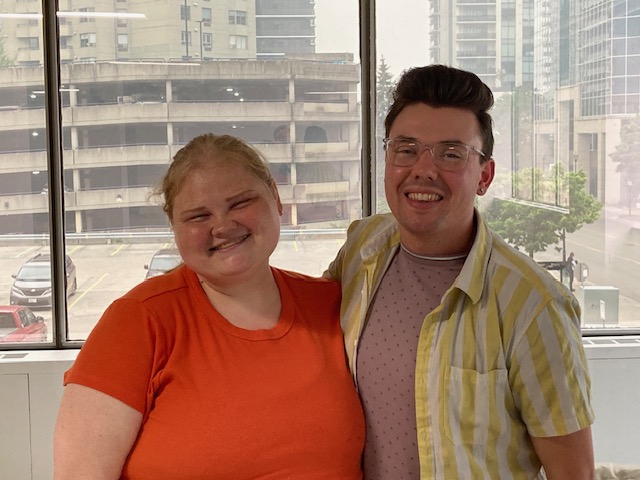
(Pictured: Brittney-Lee Lowey, producer, and Jacob Wiley-Borshell, director and playwright. Photo: Brian Speagle.)
Evolution of the Play
Jacob began writing this play in his first year of college, in 2018. He had made the decision to come out, and writing the play was a way he could express the feelings that accompanied his journey.
Fast forward to 2023, with an online reading of a draft entitled The Tale of Prince Austin, which tipped the scales at a generous 100-plus pages! He quickly realized that he needed to refine and rework this version to make his story leaner and clearer. The result is the script that Jacob and his colleagues are now rehearsing, The Forest Between Two Kingdoms, which comes in at a more manageable 60 pages!
Plot Summary
Prince Obsidian of the Crystal Kingdom has unfortunately come of age to take the same quest as every prince before him: to rescue a princess and take her for his bride. The issue? Obsidian isn’t sure that this path will bring him his happy ending.
With a forceful shove from his parents, Obsidian sets off on his quest and into a terrifying forest. Choosing to stray from the path, Obsidian finds himself on an unexpected adventure filled with magic, a hidden tavern, a runaway prince, and just maybe (if he ever finds her) a princess.
Will Obsidian find “happily ever after”… or stay trapped in a life he didn’t choose?
Directing Your Own Play
Jacob feels a very strong connection to the characters he has created in the play. As a playwright, his coming out parable has come to life through these people, and that has created a strong and powerful bond. A theatre director also must have a strong sense of who the people are who inhabit a script. So, to him, it seemed only natural that he would guide the premiere of his play to its fruition.
Points of Focus
The Forest Between Two Kingdoms is a play for the whole family. The cast and crew are hoping to draw a wide range of audiences, from first-timers to experienced theatre-goers. It is hoped that the themes of queer culture will encourage conversation and increase awareness of the importance of tolerance and inclusion. Also, it’s a London show! Written, directed, produced, acted, and crewed by Londoners.
The Producer’s Challenge
Brittney-Lee Lowey, the producer of The Forest Between Two Kingdoms, feels that this show will provide a unique experience for London audiences: an affirmation of queer culture within London community theatre.
She is up for the challenge of promoting an original play, using social media to provide background for the characters in the play, and the local actors who portray them. The cast is a wonderful mix of familiar faces that audiences will recognize immediately, and several welcome new talents.
Brittney-Lee also wishes to stress that this show is family-friendly, with a broad appeal to all ages.
The Play’s Cast
Prince Obsidian — Skylar Shelley Prince Sorrel — Matt Butler Simon — Coleton Dénommé Princess Daisy — Nicole Surette-Bourque Harriet — Anna Lee-Diemert Ezra — Greg George Queen Charlotte — Laura Williams King Jasper — Brent Smith
IF YOU GO:
Dates/Times: August 11-15th (Preview on August 8th). The 8th/15th are at 2:00 PM; the 11th-15th are all at 7:30 — the 15th is a double-show day.
Location: The Auburn Stage at the Grand Theatre — 471 Richmond Street, London, ON.
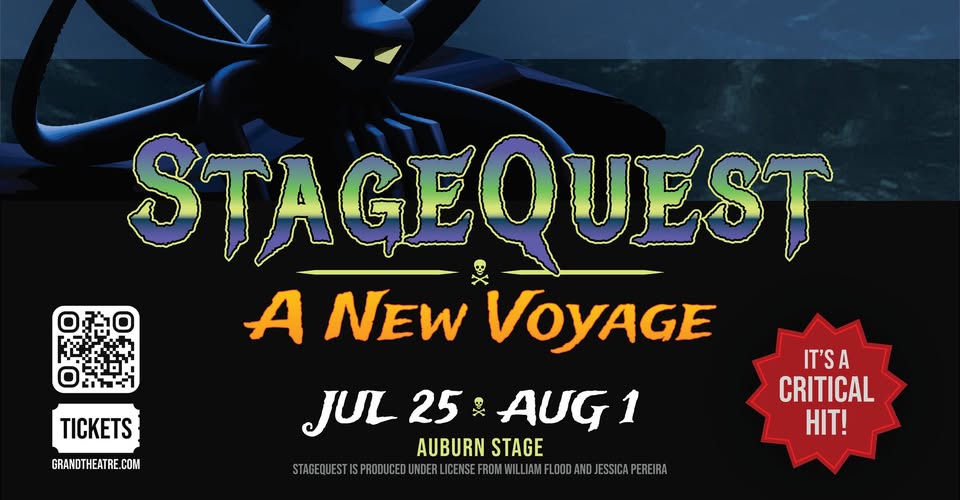
Odesa Company’s production of StageQuest: A New Voyage plays on the Auburn Stage at the Grand Theatre, July 25 to August 1. Co-Directors/Playwrights Jessica Pereira and William Flood talk about the production in this Q&A Interview with Richard Young.
Q. How many StageQuest productions has Odesa Company done to date?
StageQuest: A New Voyage is the second installment in the StageQuest anthology. The first production, StageQuest: Beyond the Veil, premiered at The Palace Theatre in 2024. There’s always more adventure awaiting, and we quickly got to work writing another script for Odesa.
Q. What’s the basic premise of the series?
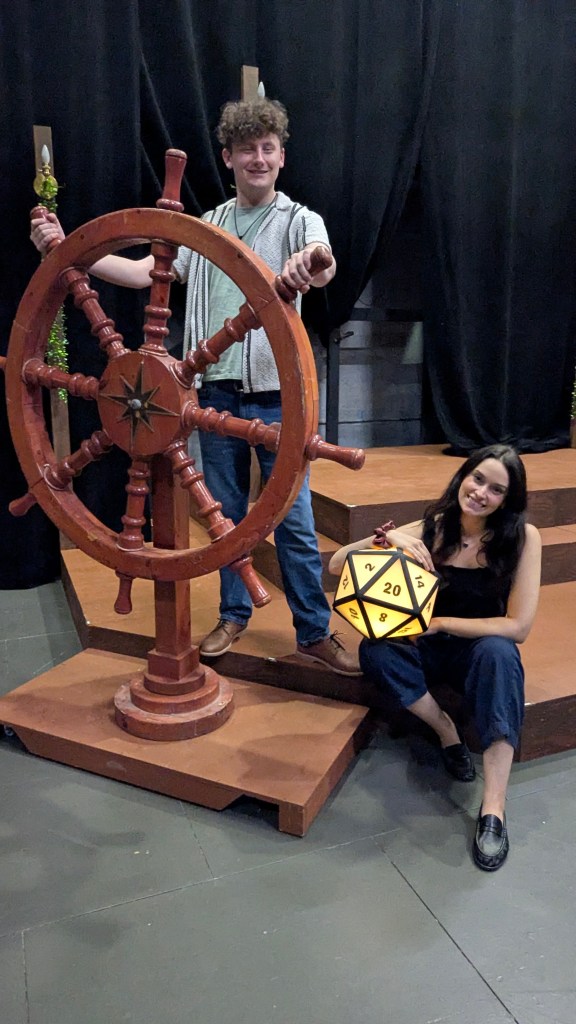
StageQuest is an original fantasy-comedy inspired by the collaborative storytelling, improvisation, and unpredictability of tabletop roleplaying games like Dungeons & Dragons. Each production combines epic fantasy adventures with live audience participation, creating an experience that feels like watching a campaign come to life on stage. We wanted to explore the magical mayhem, challenges, and triumphs of telling a story together.
Q. What is the plot of StageQuest: A New Voyage?
StageQuest: A New Voyage follows a mismatched party of new adventurers forced to work together as they discover they have accidentally kidnapped a baby princess. As the kingdom is thrown into a frenzy trying to catch our fugitive heroes, the group must navigate not only the fantastical dangers before them but also the complicated relationships within the party itself.
Q. What can audiences expect from the production?
Audiences can expect a fast-paced blend of fantasy, comedy, and heartfelt storytelling, filled with nods to tabletop RPGs while remaining welcoming to anyone who loves a great adventure. Throughout the show, audience members seated in designated Dice Roll Zones may even be called upon by fate to roll a giant d20, with the outcome helping shape key moments in the story. It’s a theatrical experience where every performance is unique, and the audience helps tell it.
This is the fourth in an ongoing series in which The Beat Magazine 2025 takes readers “Behind The Scenes” to meet the talented creative individuals who make the London area such a vibrant arts and culture community.
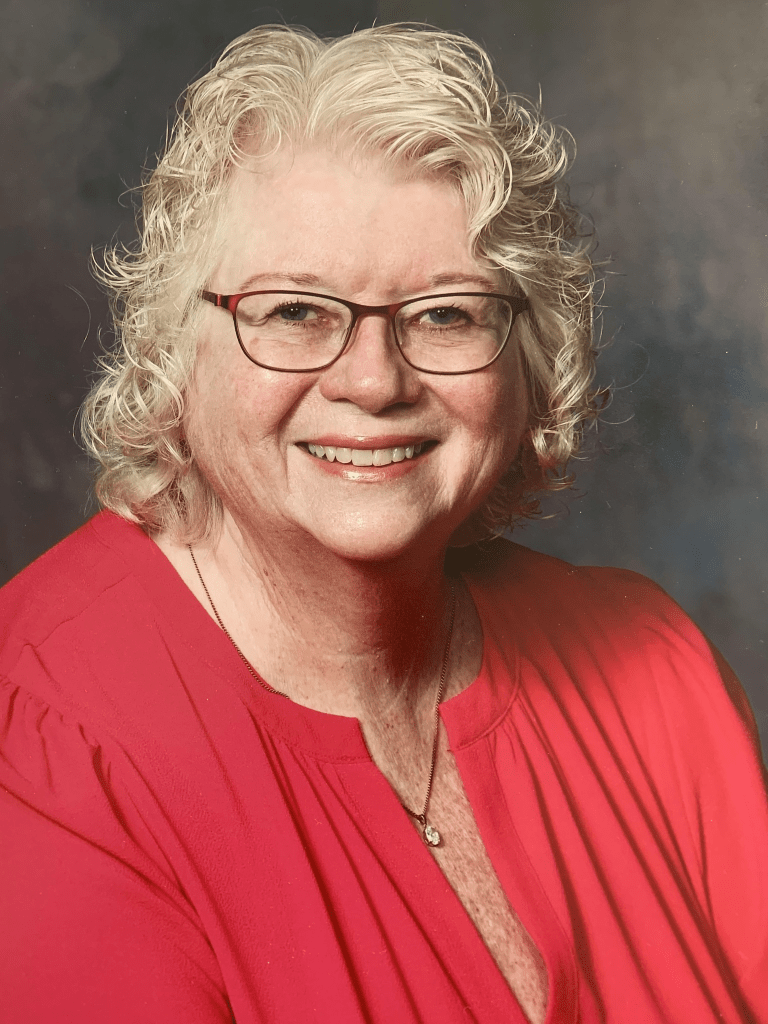
In this segment, Richard Young conducts a Q&A Interview with London freelance writer Izzy Siebert.
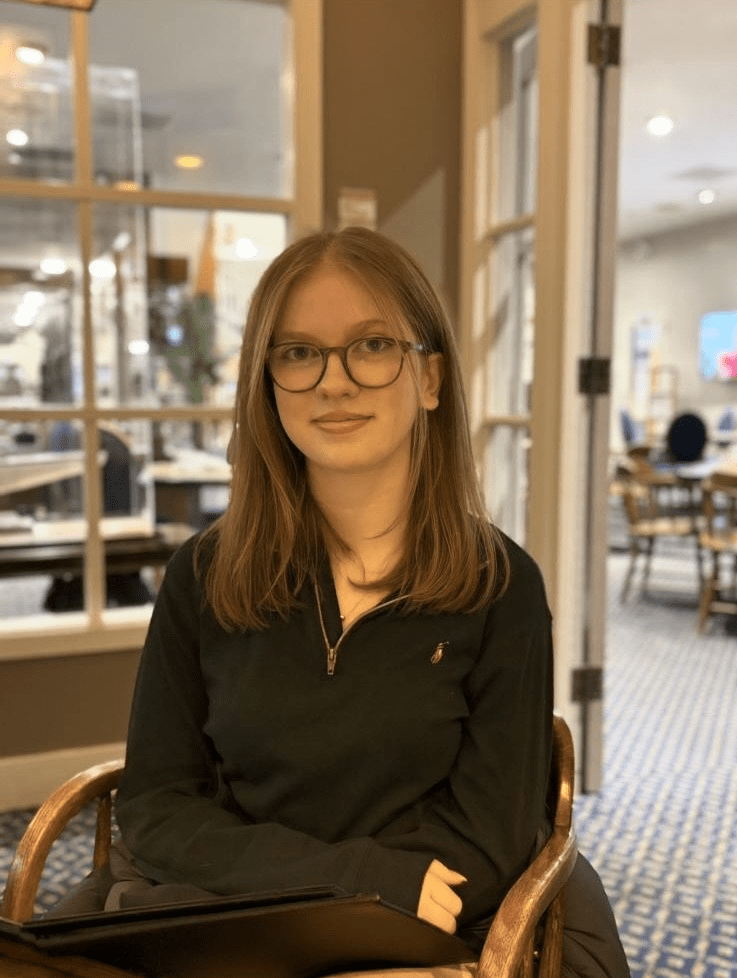
(Pictured: Izzy Siebert.)
Q. Could you provide me with some basic biographical information – Where were you born? Where did you go to school? Have you always resided in London?
I grew up north of London in the small town of Clinton. There isn’t a theatre scene in Clinton, but it’s close to Blyth and Goderich, so I was lucky enough to get involved in community theatre there, especially thanks to my Grandpa Siebert, who built sets, acted, and was my intro to the stage.
I came to London for university and got my undergrad in English and Psychology at Brescia University College (formerly a Western affiliate), plus a Marketing Diploma at Western Continuing Studies. I really liked London and had begun to take root in the creative community, so I decided to stay. Now, I work for Tourism London and promote the arts, culture, and events that I love about the city.
Q. What attracted you to a career in writing, especially as it relates to arts and culture?
I’ve been writing creatively for as long as I can remember, from short stories as a kid to longer works as a teenager and then poetry as my main creative form for the past several years. Capturing an experience or story and finding the best way to transmit that feeling to others is something that I don’t think will ever stop interesting me. In a way, I’ve always been a writer and an actor, so combining those passions by writing about art seems almost inevitable.
Q. What label best describes you – Part-time Freelance Writer, Full-time Freelance Writer or other?
I am a casual freelance writer, although my day jobs have always included lots of writing. I write creatively and about theatre on the side but wouldn’t be interested in pursuing it full-time since that feels like a recipe for burnout for me. Although I enjoy writing, I don’t always find it easy! It’s more enjoyable to keep it as something I do for fun, rather than something I have to do.
Q. What specific jobs have you held as a writer?
My first writing role was a co-op placement at Clinton’s little local newspaper. As high school co-op placements go, it was an exciting one. I spent my days writing stories about events and businesses in town and even a few features about local theatre productions. It was a thrill to see my writing published.
My first communications job was for the Municipality of Central Huron, where I continued submitting stories to Clinton’s newspaper about community projects. In London, I’ve worked for the Old East Village BIA, St. Joseph’s Health Care, and now Tourism London—all involving writing in various capacities. These days, it’s a lot of social media captions, email newsletters, and website blogs.
Q. Could you tell me about your role in ON Criticism: The 2025/2026 Theatre Critics Lab and Intermission Magazine?
Being part of Intermission Magazine’s ON Criticism 2025/2026 Theatre Critics Lab was such a neat opportunity. Led by Karen Fricker (Editorial Director) and Liam Donovan (Senior Editor), the cohort included emerging and established critics from throughout Ontario. For several months, we met to hear from guest speakers, gain insight into four feature productions, and discuss writing criticism. We had the opportunity to publish a few pieces on Intermission’s website, and these marked my first professional theatre coverage.
My participation encouraged me to become more serious about writing, since before that I sort of just fell into theatre writing. I decided to write a review blog after seeing The Game’s Afoot at the Palace in 2023, and that got me started on reviewing each of their seasons since, but I never had any formal criticism training or mentorship. Theatre writing had been a very solitary practice for me up until ON Criticism, so it was exciting to talk with others about their crafts. I especially appreciated our many discussions about the purpose and ethics of theatre criticism.
Q. I notice you write Reviews for professional and community theatre productions. Is there a difference in how you approach each review?
Reviewing professional productions is still very new to me. Experience, time, and budget give artists more room to play, so it’s important to engage with professional theatre as professional theatre and community theatre as community theatre, considering the capacity they have to create. Which isn’t to say I can’t be surprised by the quality and choices made at both levels!
In professional productions, I find that there can be rich material to dig into, especially on the design side of things, so I enjoy taking a more artistic and analytical perspective in those reviews. I also feel freer in being critical of professional productions since criticism can be valuable feedback as people seek to improve their creative craft.
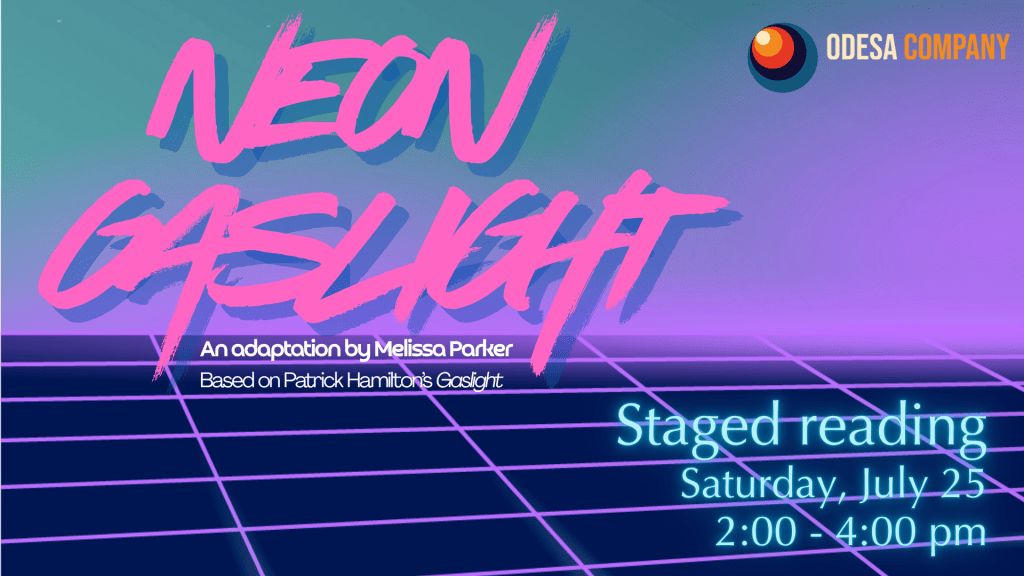
Q. In a recent Facebook post you revealed that in addition to your writing, you are currently involved with a staged reading of Odesa Company’s Neon Gaslight, this year’s Western Summer Shakespeare’s production of Love’s Labour Lost, and dancing in the ensemble of the Palace Theatre’s production of The Great Gatsby in the fall. Can you tell me about each of these endeavours?
My friend Melissa Parker is reimagining Patrick Hamilton’s 1938 play as Neon Gaslight, putting an 80s twist on the story where the term ‘gaslighting’ originated. I play Liz, the main character’s daughter, in a staged reading on July 25. It’s been exciting as both a writer and a performer to peek into the process of reworking a script. It’s unsettling how much of the domestic horror in the story still feels relevant. Watching the script develop over several months has been a really interesting process, and we’ve been encouraged to add our own notes. I need to dig into the latest draft ASAP!
This is my fourth year being involved with Western Summer Shakespeare and it’s one of my favourite summer traditions in London. I love the whimsy and challenges that come with performing outdoors in a garden on campus. This is the first year I get to play a character with a ton of agency and confidence. Often Shakespeare’s women end up silenced, so it’s very fun to speak my mind as Francesca (originally the Princess of France) in Love’s Labour’s Lost.
For The Great Gatsby at the Palace Theatre, I’m in the ensemble where we’ll be partying and dancing at Gatsby’s house. I’ve never been involved in a show where I haven’t had lines to memorize, so it’s a different kind of homework. I wouldn’t consider myself the most coordinated dancer, but I’m looking to learn and excited to be a part of things.
Q. Obviously, you like to stay busy. What do you do in your spare time for fun?
I love London’s poetry scene. Theatre reviews magically combine my passions for writing and performance, but spoken word perfectly blends those loves too. Acting is about telling someone else’s story, and poetry, for a lot of people, including myself, is about telling your own story, so it’s a fun pairing.
Q. Who is the most famous person you have interviewed and/or written about?
I recently interviewed Sara Farb about her play Love Us Most, which premiered at Here For Now Theatre in Stratford! I had previously seen her act onstage at Stratford, and when the Festival screened Shakespeare plays during the pandemic, which really ignited my love for Shakespeare. It was nerve-wracking but also incredibly neat to speak with Sara about a show she had written.
Q. What is the most memorable performance you have reviewed?
This year so far, I really loved TheImportance of Being Earnest at the Grand Theatre! It was just a phenomenally fun show. I was grinning the entire time, and as we left the theatre, all I could think of was how entirely fun the show was. But I can’t write a review just saying, “this was fun!!!” I have to dig into what exactly I liked about it. So, it was an enjoyable challenge to try to talk about a joyous feeling in a grounded way.
Q. Dog or Cat?
Dog!
Q. Beer, Wine, or Cocktail?
Cocktails, but I’m pretty picky with my drinks.
Q. How do you approach reviewing a show you disliked?
As someone personally involved in theatre, I have an immense amount of love for the people who create it and respect for the passion every artist has for their project. Sometimes this becomes a personal challenge when wanting to bring an authentic perspective to how I write about shows.
It’s something I wrestle with all the time, especially given how many theatres are struggling financially. It’s about finding balance and believing that there is something in every show worth celebrating. Then it’s about finding that thing and how to share it, while acknowledging aspects that might not have worked for you in the production. Sometimes what doesn’t work for me works for others.
Q. Are you a morning person or a nighthawk?
Night owl, which works well as a theatre reviewer. I can come home after the show and brain dump my initial thoughts before heading to bed and settling in to write the next day.
Q. Where do you see yourself ten years from now?
Even more deeply immersed in London’s theatre community! I’ve been publishing across various blogs for the past couple of years, but this summer I just started my own Substack (IzzaReview) so this coming theatre season I can dig even more seriously into review writing. It feels like a big step and one I’m excited about.
Q. How did you feel about answering these questions?
I’ve more often been the interviewer than the interviewee, so definitely a new experience!
Q. Is there anything else you think our readers should know about Izzy Siebert, the writer, and Izzy Siebert, the person?
Honestly, it can be hard to separate the two. I would say Izzy the writer ends up much more confident and eloquent than Izzy the person. I’m better with an editor… but aren’t we all!
Interview conducted by Richard Young, Publisher & Content Manager, The Beat Magazine 2025, July 8, 2026.
To Culbert’s eyes, it all started with a confluence of almost simultaneous changes in London’s theatre community.
“In the early 2000s the Drama Workshop at Western closed down, and if you wanted to do theatre, you either looked at established groups like London Community Players or you started doing your own run,” he explains.
“There weren’t a lot of companies that just picked up original writers, so producing your own do-it-yourself theatre became the way things got done.”
“One person inspires another person, so you had people like Jason Rip and Jayson McDonald writing new plays. Those were the two leading the charges.”
“They wrote like crazy. They just had it in them, and that inspired a lot of people. And one thing feeds on another.”
That was part of it, according to Culbert. The other was space for these new plays and productions.
(Pictured: Jeff Culbert.)
“Phil Arnold created the Old Factory Theatre over on Ann Street, and there were a lot of people who had their first plays put on there because it was relatively cheap and simple. When I started and did my first shows, the Forest City Gallery was in the basement of Aeolian Hall.”
“Then the Arts Project had a space, and the McManus at the Grand Theatre became available to rent and were fairly reasonable in their pricing.”
“There had to be space and plays, and there has to be writers and actors, and somehow it started. And once the ball was rolling, it was really rolling.”
Culbert knew that festivals were another linchpin to encourage and sustain the fledgling theatre writers and performers.
“Festivals started popping up. You had The Fringe Festival around 2000, the London One Act Festival and Purple Shorts, which was up at Western where students were writing original plays.”
“And then there was the Playwright’s Cabaret at the Grand, which encouraged people to write 10-minute pieces. All that happened in the space of a few years.”
As Culbert put it, one thing led to another and the energy of the new scene started to inspire others to jump into the fray.
“It was contagious. I remember Jonathan D’Souza coming back to London. He saw what was happening and said, ‘ Wow: theatre seems to be what this town is about right now,’ so even though he was a music guy, he just jumped in and started writing.”
“He did a piece at the Fringe Festival, and nobody knew him in my circles, and he just blew everybody away. They all said, ‘Who the hell is that guy?’ But again, he just saw what was happening and said this is an art form that is taking off in London. And one thing feeds another thing.”
It was an inspiring time in London’s long theatre history, and Culbert was not only a part of that, but he also documented it in a few local publications regularly.
“Theatre Boom Town consists of columns that I wrote in those times: the first one for The Londoner was in 2002, and the last one for the London Yodeller was in 2015.”
“The focus of the book is what was coming out at that time, but also I would do a historic look back to somebody every once in a while like Richard Barry Harrison, who came from London, became the toast of Broadway, and was on the cover of Time Magazine. But mostly I was covering what was happening in live theatre in London.”
It was a thriving scene, but it had a narrative arc. Some performers moved on to different cities and some of the venues went dark.
“Covid, of course, sent everybody scattering, and some never recovered. The Fringe as we knew it is gone, The Playwrights Cabaret at the Grand is gone, the London One Act Festival is gone.”
The July 16 event also celebrates 25 years of the Theatre in London website.
Started by Culbert in the early 2000s, it became more than he could handle with his other role in the burgeoning theatre scene, so he asked around for someone to take it over. Peter Janes put up his hand. An avid theatre fan and supporter, Janes had a solid tech background and saw a lot of potential in the site to support the growing theatre community in London.
“Jeff’s version of the site was entirely static. My idea was to put a database behind it so we’d have a record of the history of these things. But I also wanted to make it possible to do a calendar of upcoming things, so not just the past, but keeping the future stuff happening on it as well,” he explains.
“It’s been in the midst of an overhaul since 2008, but in the last six or seven years, I realized that it’s really outgrowing the platform that I got it on, and I want to put a proper database behind it.”
“None of that stuff should be visible to anybody who’s using the website, but if anything, it’ll get faster. Eventually, when I have to pass this on to somebody else, there will be a better basis for them to kind of continue working on it.”
Janes’ goals for the site overhaul were twofold.
Most importantly, it has to be a place to let people know what’s going on in London theatre. Janes himself uses it for that reason.
“It’s a site that I use to find out what things are going on. Otherwise, I wouldn’t know that Little Theatre Company is doing a production of something at the Wolf Performance Hall and Original Kids are doing something or AlvegoRoot Theatre has something coming up,” he admits.
“The secondary value of it is the continuum. It’s like the six degrees of Kevin Bacon. I don’t have all the stuff in yet, but eventually it will be able to tell you that, for example, Adam Holowitz adapted a play by James Reaney. One of his shows was on at Central, which was directed by this person who was in a show at London Community Players and through London Community Players back to the London Little Theatre, which goes back to Victor Garber or even Hume Cronyn at some point.”
“I want to have the entire casts and crews and everything, but it’s impossible to do all that, because a lot of that information doesn’t exist anymore.”
The site’s celebration at the July 16 event doesn’t mean Janes can rest anytime soon. “I’ve been updating it at least five days a week for 27 years!”
“I now have just shy of 3,000 productions on the website. Most of those are since about 2008. There’s so much research that remains. I even have events going back to the 1800s,” he says.
Reviewed by Mary Alderson Entertain This Thought. (Reprinted with the permission of the author.)
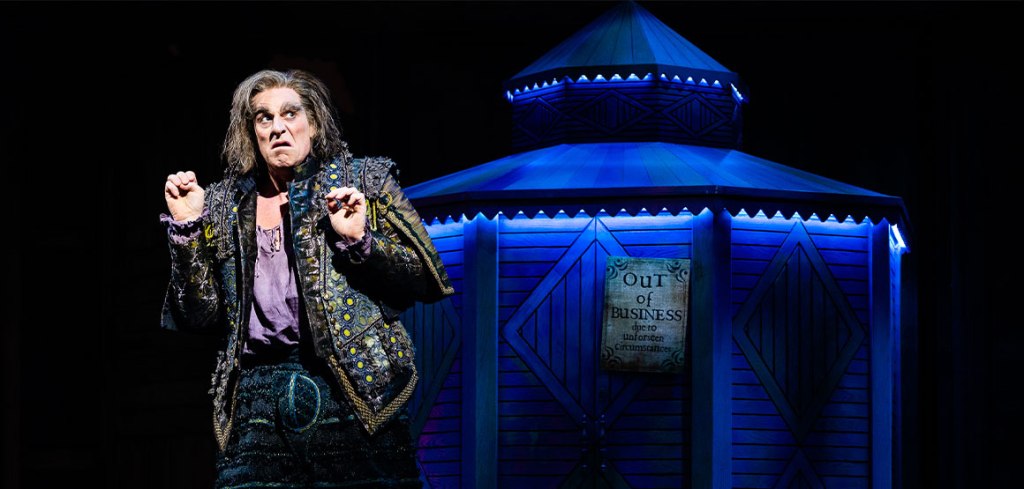
(Pictured: Mark Uhre as Nick Bottom. Photo Credit: Photo by Ann Baggley.)
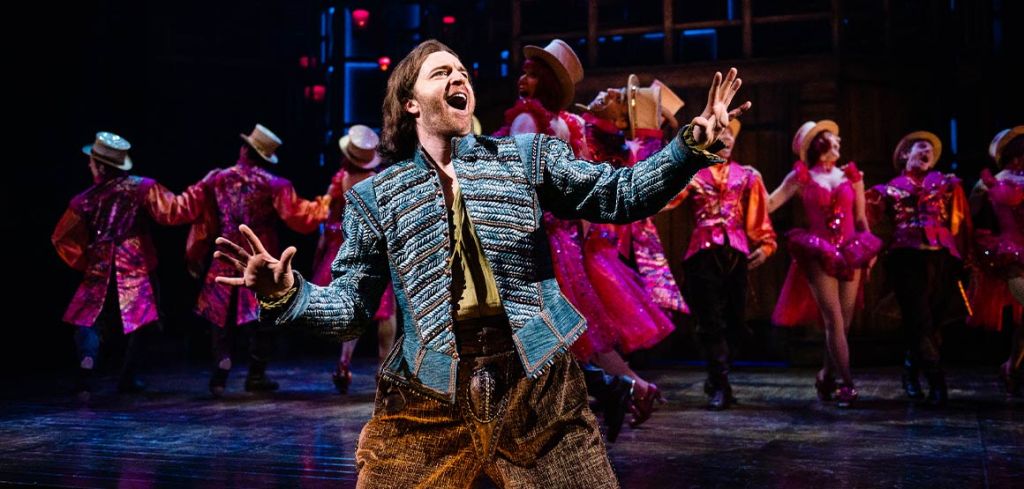
Something Rotten! is the perfect show for the Stratford Festival. It mocks Shakespeare and musicals, ridiculing them both equally, proving there’s something for everyone. Despite poking fun at musicals, the dancing and singing are amazing. This show is truly one you should not miss.
I can’t explain the plot here; I don’t want to spoil your fun. I’ll give you the Coles notes version: Brothers Nick and Nigel Bottom are playwrights, just like Shakespeare. But they haven’t quite reached his level, and he’s getting all the glory. So, Nick goes to Nostradamus, who foresees the future and tells Nick that Shakespeare’s next big hit will be about a – uh – an omelette. (Nostradamus has trouble seeing the future accurately. Sometimes words like Hamlet and Omelette can get a little mixed up.) But he was quite clear about the Danish part. Well, Nick wants to beat Shakespeare to the punch by producing a new show about breakfast – eggs and Danishes. And to really show up Shakespeare, he decides to make a musical, something Shakespeare’s never done!
(Pictured: Mark Uhre as Nick Bottom and Steve Ross as Shylock. Photo by Ann Baggley.)
The humour in Something Rotten! reminds me of our beloved Canadian comedians Wayne and Schuster, taking a familiar classic and making it just plain silly. Credit goes to the writing team of the two Kirkpatricks and O’Farrell. As well, credit goes to Donna Feore, director and choreographer of this wildly hilarious show with outstanding dance.
Mark Uhre is brilliantly hilarious as Nick Bottom. He is proof that Shakespeare never had an original thought – Shakespeare uses his name in Midsummer Night’s Dream! Urhe is wrought with frustration as everyone adores Shakespeare. As his brother Nigel Bottom, Henry Firmston is an adorable sidekick. He doesn’t quite share Nick’s hatred of Shakespeare.
Dan Chameroy plays Thomas Nostradamus, the soothsayer who is only halfway reliable. Chameroy, a long-time Stratford favourite, is unrecognizable as Nostradamus, but his comedic talent shines through. Jeff Lillico is perfect as the swaggering and conceited Shakespeare, stealing ideas left and right. I will never be able to call Shakespeare “The Bard” again, without stifling a laugh.
(Dan Chameroy as Thomas Nostredamus. Photography by Ann Baggley.)
Starr Domingue adds to the comedy as Nick Bottom’s wife, Bea, who has to pretend to be a man to get a job. Steve Ross is hilarious as Shylock, and Olivia Sinclair-Brisbane plays Portia, the Puritan girl in love with Nigel Bottom, much to her father’s dismay. Her father, Brother Jeremiah, played by Juan Chioran, has many lines of double entendre. His words belie his Puritan ways with risqué meanings, to the audience’s delight. Special shout-out goes to Jeremy Carver-James for his lute-playing ability. He opens the show as a minstrel, singing about what’s to come.
The real stars of this show are the singer/dancers in the big numbers. I can’t reveal the amazing costumes here; it would spoil your fun. Suffice to say, they dance their feet off and belt out the show tunes. Twice on opening night, there were showstopping numbers. The entire audience was on their feet, giving these dancers two standing ovations mid-show. The choreography and staging is truly remarkable. The entire cast got loud and long-standing ovations at the conclusion.
If you’re a lover of Shakespeare, you will get a kick out of this zany musical. If you’re also a lover of musicals, you will love this show. Through the course of the evening, there are funny references to every musical ever made.
If you haven’t seen Something Rotten, you must go. If you did see it two years ago, I know you will want to go again. Get your tickets now because they will sell out. Even if it’s extended, those seats will sell fast.
Something Rotten! continues in repertory until October 31 at the Festival Theatre, Stratford. Tickets are available at the Stratford Festival at 1-800-567-1600, or check www.stratfordfestival.ca
Something Rotten! Book and music by Karey Kirkpatrick, Music by Wayne Kirkpatrick, Book by John O’Farrell Directed and choreographed by Donna Feore Musical Direction by Laura Burton Performed by Mark Uhre, Henry Firmston, Jeff Lillico, Dan Chamroy, Olivia Sinclair-Brisbane, Jeremy Carver-James, Nehassaiu deGannes, Steve Ross, Starr Domingue, et al. Festival Theatre, Stratford May 29 to October 31, 2026
Reviewed by Mary Alderson Entertain This Thought. (Reprinted with the permission of the author.)
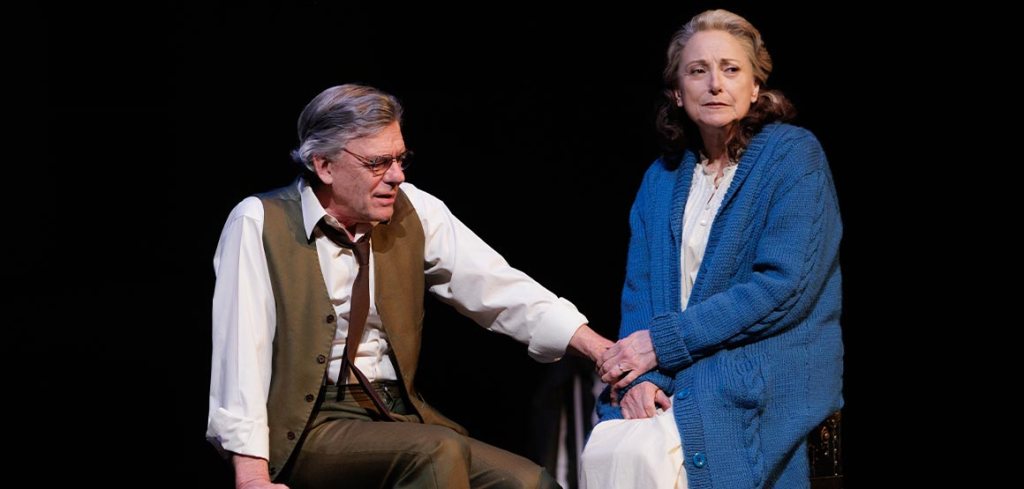
(Tom McCamus as Willy Loman and Lucy Peacock as Linda Loman, Death of a Salesman. Stratford Festival 2026. Photo by David Hou.)
Willy Loman always thought of himself as an excellent salesman. He was going to climb to the top, get a new territory, and make more money. Years go by, and nothing changes, but he continues to lie to himself and his family about how well he is doing. It’s the lack of reality, the lack of truth, and the fact that he isn’t reaching the American Dream that leads to his eventual but actually unavoidable death.
This gut-wrenching story, probably Arthur Miller’s best play, is now on stage at the Avon Theatre in Stratford. Written in 1948, the hissing sound of that American Dream deflating still resonates. In fact, it’s loudly disappearing in 2026, making it an apt choice for this season.
Death of a Salesman is the story of Willy Loman, a man who takes great pride in his sales abilities. He brags constantly that he is well-liked and has the largest territory, exaggerating his income. He also has great hopes for his son Biff, who was a high school football star, and could have gone to university on scholarship if he hadn’t failed math. He still believes that Biff and his brother, Hap, will do great things and come into their own.
(Tom McCamus as Willy Loman. Photo: David Hou.)
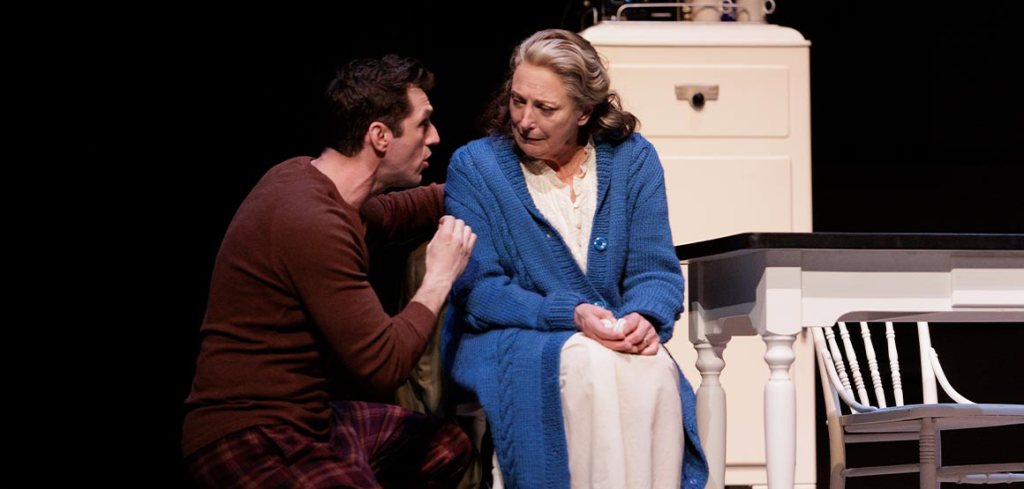
In reality, Willy is a failure at his job and gets fired, and both sons are ne’er-do-wells. Biff is a drifter who has spent time in jail for theft, and Hap is a philanderer who has a menial job. But Willy has bragged and fantasized for so long, he now believes his own glorified lies. Then aging takes its toll. As reality sets in, he hallucinates, talking out loud to his own brother about what could have been, reliving affairs he had with women on the road, and talking to his sons as if they were back in high school. He tells the boys to steal from the construction site next door and cheat on their school exams, then wonders where they went wrong. Sadly, his wife, Linda, goes along with his lies, yet he treats her badly.
The dialogue is brilliantly written; a condemnation of the so-called American Dream. One can’t help but think of Donald Trump, when he says, ‘Make American Great Again’, is this picture of life in 1949, where he wants to take America? The good old days just weren’t that good. One also thinks of Willy Loman as Trump: someone who has lied and embellished the truth so often that he actually believes his own B.S.
Tom McCamus is perfect as Willy Loman. Of course, McCamus is brilliant in any role he takes on. But he handles this role so well, moving from Willy’s fits of mania where he thinks he’s going to win over his boss to get a better territory, slamming down to the depths of depression when reality hits, and becoming suicidal. McCamus is so convincing when Willy spirals out of control, seeing events from his past and losing track of reality.
Lucy Peacock is also perfection as his wife, Linda Loman, putting up with his mood swings and protecting him when life slaps him in the face. There is some cheeky casting with McCamus’s real-life wife, Chick Reid, playing the other Woman, in a flashback scene when son Biff catches them together.
Biff is played flawlessly by Joe Perry, who wants so much to please his father and earn his father’s praise, yet he’s old enough to see the reality of their pointless lives. The younger son, Hap, is played very well by Josh Johnston. He makes us fear that he is going to become just like his father. The supporting cast members are impeccable, all adding to the futility of Willy’s life.
(Joe Perry as Biff Loman and Lucy Peacock as Linda Loman. Photo: David Hou.)
This is an excellent production of Death of a Salesman, designed to make you think. You leave the theatre feeling lost and discouraged. But this is tempered by the quality of the script, and you can marvel at how it has withstood the test of time. And of course, you can appreciate the intense, excellent quality acting you just saw on the stage.
Death of a Salesman continues in repertory until October 24 at the Avon Theatre, Stratford. Tickets are available at the Stratford Festival at 1-800-567-1600, or check www.stratfordfestival.ca
Death of a Salesman By Arthur Miller Directed by Dean Gabourie Composer and Music Curator Michael Louis Johnson Director of Music Franklin Brasz Performed by Tom McCamus, Lucy Peacock, Joe Perry, Josh Johnston, Raymond Strachan, Chick Reid, Matthew Kabwe, David W. Keeley, Irene Poole, Sean Arbuckle, Krystin Pellerin, Nadine Villasin, Devin MacKinnon. Avon Theatre, Stratford May 28 to October 24, 2026
Reviewed by Mary Alderson Entertain This Thought. (Reprinted with the permission of the author.)
(Pictured: Devon Michael Brown with members of the company. Photo: Ann Baggley.)
The Saints are the people of the Save-Our-Souls Mission, a Salvation-Army-like group, who parade the streets of New York with their meagre marching band, trying to bring lost souls back to their Mission, for a Bible-thumping soul-saving meeting.
The Sinners are the guys: gamblers, who roll the dice and try to find a location to hold their next craps game. As well, there is another group of sinners, the dolls: women who dance in skimpy clothes at the Hot Box Club.
We don’t doubt the sincerity of the Mission folks for a minute. But soon we learn that the sinners have a strong ethical code, too. The guys never welch on a marker, meaning they never try to sneak out of keeping a promise or repaying a debt. As well, the dolls want to live moral lives. Their leader, Miss Adelaide, wants nothing more than to end her 14-year engagement with Nathan Detroit, get married and have children.
This is a good old-fashioned musical with everything. There is a great plot with lots of laughs and even some romance, there are great songs and wonderful singing with rich, powerful voices, and there is the most amazing dancing you’ve ever seen. This well-cast production is now on stage at Stratford Festival Theatre, running until November 1, and if the opening night audience is any indication, it will be extended by repeat customers wanting more.
About 22 years ago, when I first started writing reviews, I was often asked to critique community theatre shows. I had just returned from a trip to Broadway when I wrote about a very good community theatre production, and I was quite kind to them. However, the starring amateur actor insisted that their production “could stand up to anything on Broadway.” When I inadvertently grinned at that comment, assuming he was joking, he took offence.
It’s a long way to New York City from Stratford in southwestern Ontario. But Guys and Dolls, now on stage at the Stratford Festival, has completely closed that gap. If you have never seen a big-time musical on Broadway, head over to Stratford to see Guys and Dolls. This is better than Broadway.
(Pictured: Members of the company. Photo: David Hou.)
As I tried to explain to the amateur star, Broadway shows have the whole package. The orchestrations are perfect, and the music surrounds and fills the audience. The lighting, costumes, and sets draw you in. And the talent – acting, singing and dancing – is perfect.
Director Donna Feore, as she did in 2017, has constructed the whole package, filling it with expertise and energy. And the audience on opening night was appreciative. The show was stopped with a long and loud standing ovation for the powerful dance number.
Among the saints and sinners are two couples — gambling organizer Nathan Detroit who’s had the long-term engagement to Hot Box Dancer Miss Adelaide, and Sky Masterson, a lucky gambler, who takes missionary Sarah to Cuba on a bet. The story unfolds as the two unlikely couples come together.
Jennifer Rider-Shaw leads a strong cast as Miss Adelaide. Her comedic talents, combined with her powerful singing voice, command the audience’s attention whenever she’s on the stage. She has the New York accent down pat. Her “Adelaide’s Lament” has the audience amused. Later, she sings “Take Back Your Mink” with the Hot Box girls. Mark Uhre as Nathan Detroit keeps the audience laughing as the loveable rogue. In some productions, one has the impression that Miss Adelaide only wants to get married for the sake of marriage. But with this couple, the audience is convinced that they really love each other.
(Pictured: Olivia Sinclair-Brisbane and Jennifer Ryder-Shaw. Photo: Dan Hou.)
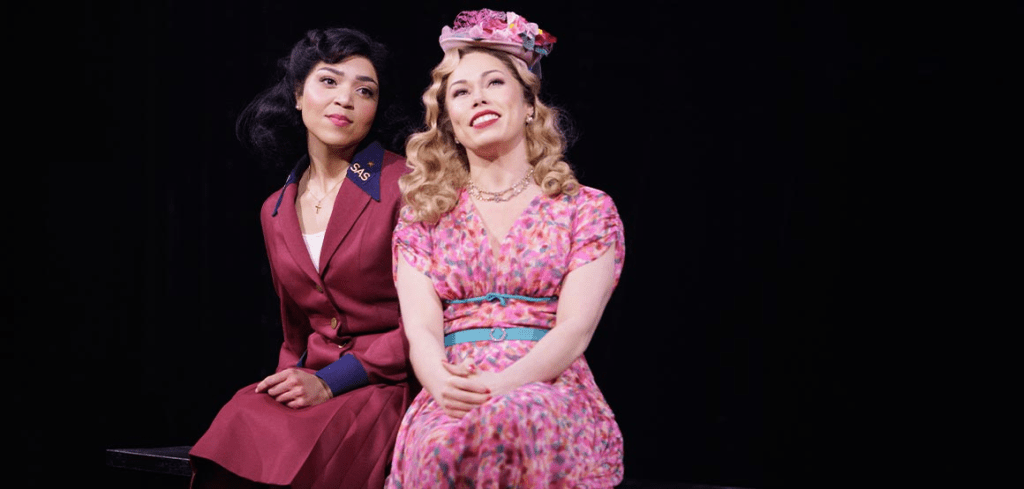
Olivia Sinclair-Brisbane as Sarah Brown looks the missionary very much with her innocent face and sweet smile. Dan Chameroy gives us a Sky Masterson who is equally charming and deceptive. He makes you believe that he reluctantly fell in love with Sarah. Chameroy sings “Luck Be a Lady”, reminiscent of Frank Sinatra.
Steve Ross as Nicely-Nicely Johnson and Gabriel Antonacci as Benny Southstreet are the hilarious sidekicks. Ross’s gospel solo at the Mission, “Sit Down, You’re Rockin’ the Boat” is rollicking good fun. Stephen Patterson as Brother Abernathy, the Mission leader, sings a beautiful rendition of “More I Cannot Wish for You” that brings tears to your eyes. Juan Chioran as Big Jule, the tough-guy gambler, adds to the urgency of finding a gambling hide-out.
Special shout-out to Nehassaiu deGannes as Lieutenant Brannigan, for her performance at the beginning of the show. She aims her weapon and fires a bullet straight into a ringing telephone, causing its demise. Her no-nonsense approach puts the fear in everyone. No one in the full-to-the-rafters theatre is going to let their phones ring during the show.
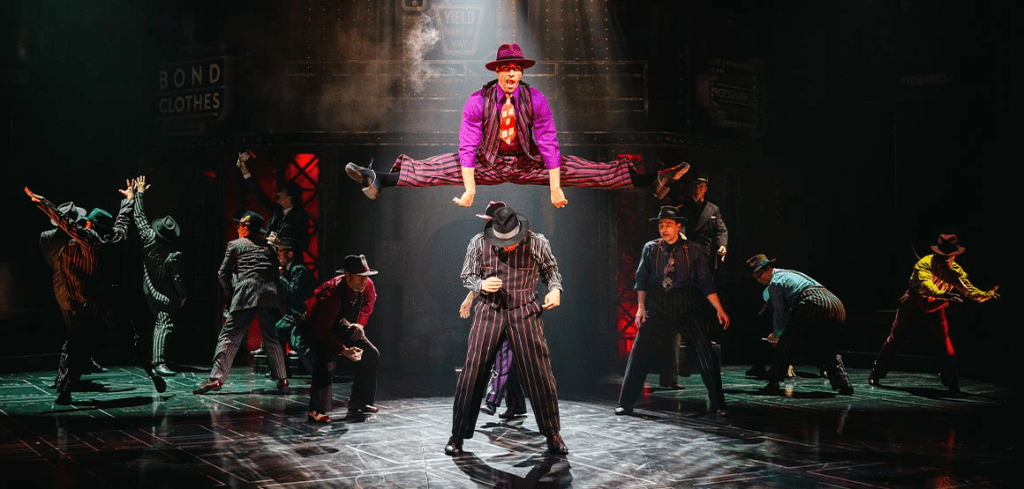
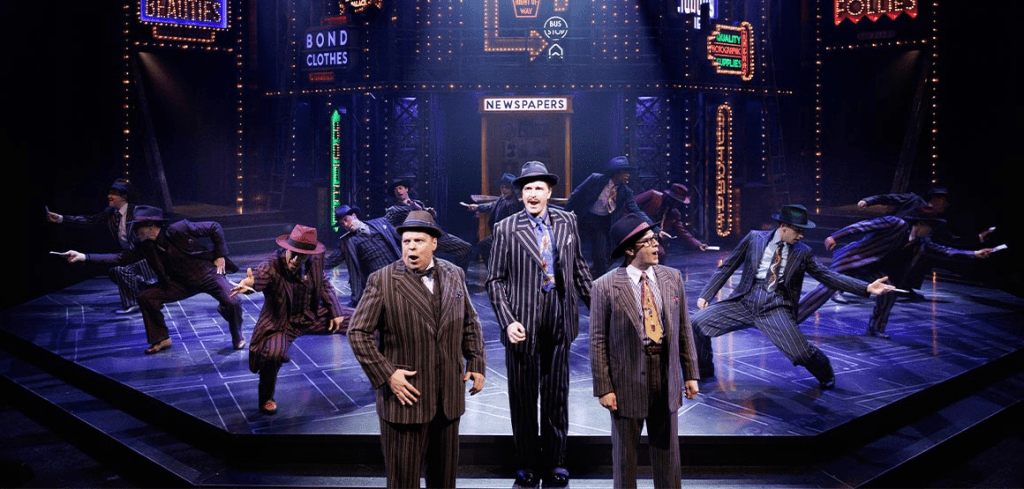
The high-energy dancing and intricate choreography with jumps, flips and spins is what you’ll remember from Guys and Dolls, especially when the guys roll the dice in “The Crapshooters Dance”. With these guys moving all over, one doesn’t know where to look! There is also amazing dancing in the exciting Havana scene, and the women shine as high-kicking Hot Box girls. In this Broadway-calibre production, you will actually see what a showstopper is.
So, what happens when the lives of saints and sinners collide? You need to hurry and buy your tickets for Guys and Dolls to learn the answer. It will sell out fast, even if it’s extended.
Guys and Dolls continues in repertory until November 1 at the Festival Theatre, Stratford. Tickets are available at the Stratford Festival at 1-800-567-1600, or check www.stratfordfestival.ca
Photo: Devon Michael Brown as Rusty Charlie with members of the company, Guys and Dolls. Stratford Festival 2026. Photo: Ann Baggley.
Guys and Dolls Story and Characters by Damon Runyon Music and Lyrics by Frank Loesser Book by Jo Swerling and Abe Burrows Directed and choreographed by Donna Feore Musical Direction by Franklin Brasz Performed by Jennifer Rider-Shaw, Mark Uhre, Olivia Sinclair-Brisbane, Dan Chameroy, Steve Ross, Stephen Patterosn, Nehassaiu deGannes, et al. Festival Theatre, Stratford May 26 to November 1, 2026
“You are here,” and I was somewhere between pride and applause.
Bringing to life a true story of Canadian kindness and resilience in the aftermath of the devastating tragedy of 9/11, The Grand Theatre’s non-replica production of the Tony and Olivier Award-winning musical Come From Away, reimagined by Canadian director Julie Tomaino, is sure to steal your heart and leave you with a renewed sense of what it means to be Canadian.
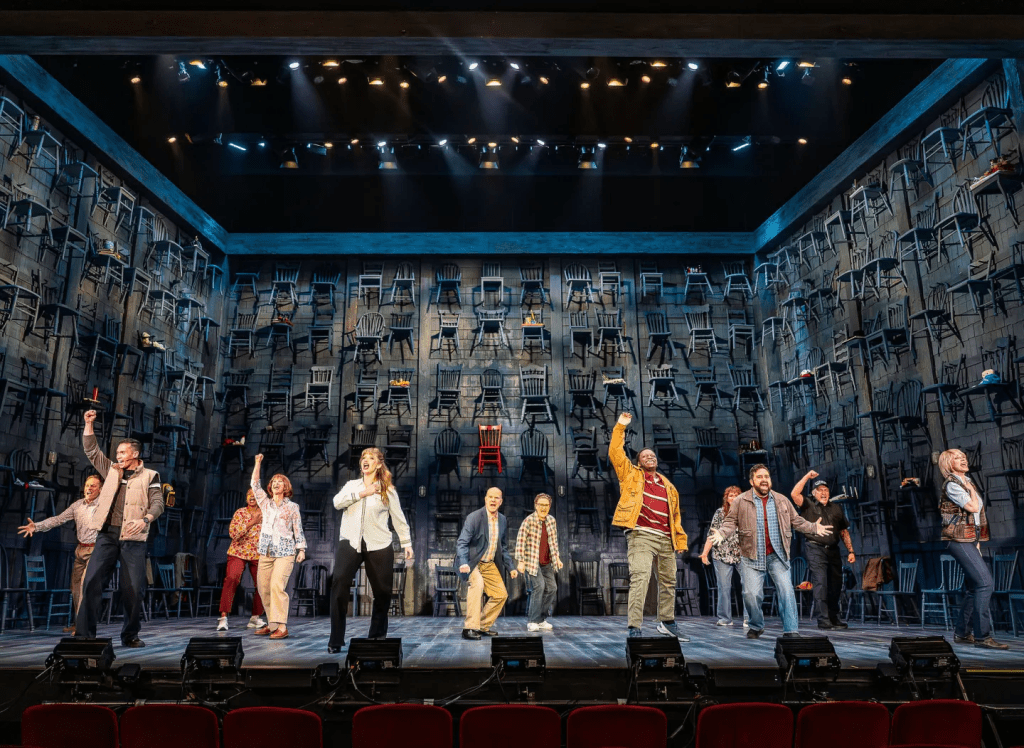
The play opens by introducing the audience to the calm, quaint town of Gander, Newfoundland, and its cast of dynamic, unmistakably Canadian characters. Though described through modest landmarks, including a two-person police department, a local TV station and a hockey rink, the town feels small on paper, yet rich with personality on stage. Claude, played by Darrin Baker, the outgoing mayor, Beulah, played by Darlene Spencer, a devoted Royal Canadian Legion volunteer, and Bonnie, played by Denise Oucharek, the local SPCA manager, help bring the community to life on stage. Through natural dialogue, warm banter, and (of course) Newfoundland accents, it becomes clear within moments that these characters are what make Gander far greater than its size.
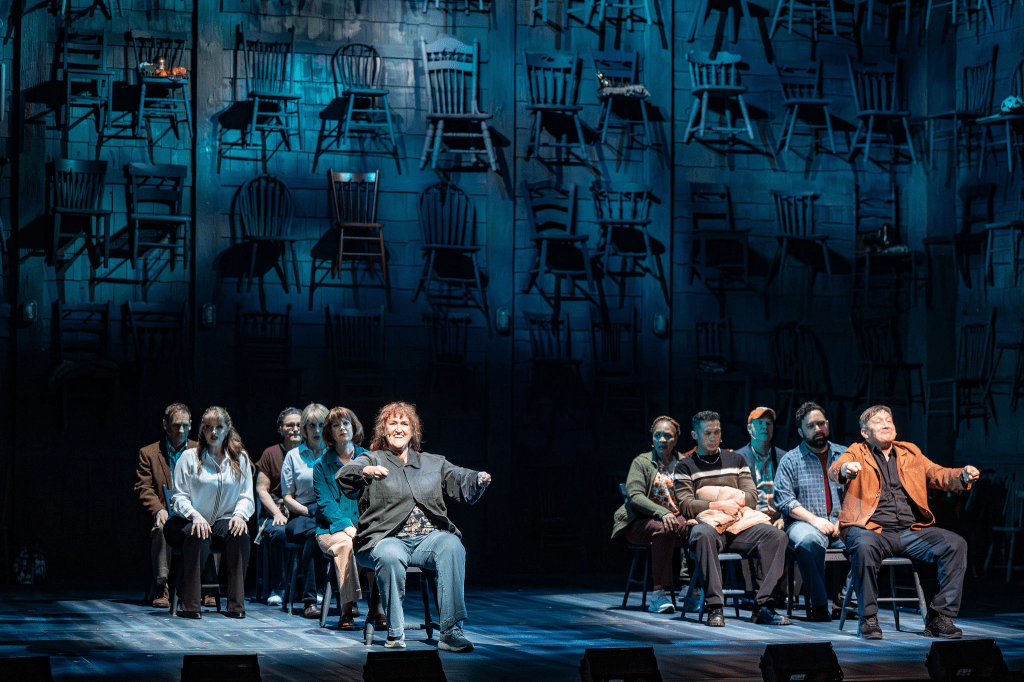
(Photo: Dahlia Katz.)
As the play enters into a rhythm, the characters move through their day, describing their routines as if reading from diary entries aloud. Everything unfolds as it always does, just another ordinary day in Gander. As an audience member, though, anticipation builds waiting for the moment the news breaks. There on the edge of the world in quiet Gander, it is clear nothing much seems to go on…queue one of the biggest catastrophes of the 21st century.
Suddenly, as news spreads of the attack on their neighbouring country, the locals are facing the order for thirty-eight planes to be diverted to their low-traffic airport. Overwhelmed by the prospect of thousands of people from around the world landing in their small town, with no word on how long they will be staying, the locals quickly spring into action to prepare for the fast-approaching and frenzied arrival ahead. In a flash of lightning, 7,000 displaced passengers begin to arrive on the doorstep of this small Canadian town, doubling its population overnight.
Filled with music and complex characters, Come From Away shows the world the power of kindness in times of tragedy. As a Canadian, you can’t help but feel pride for the glowing examples set for us by our own people, as they show more compassion than was ever asked of them and deeply alter the trajectory of thousands of people’s lives for the better, without ever expecting anything in return.
(Photo: Dahlia Katz.)
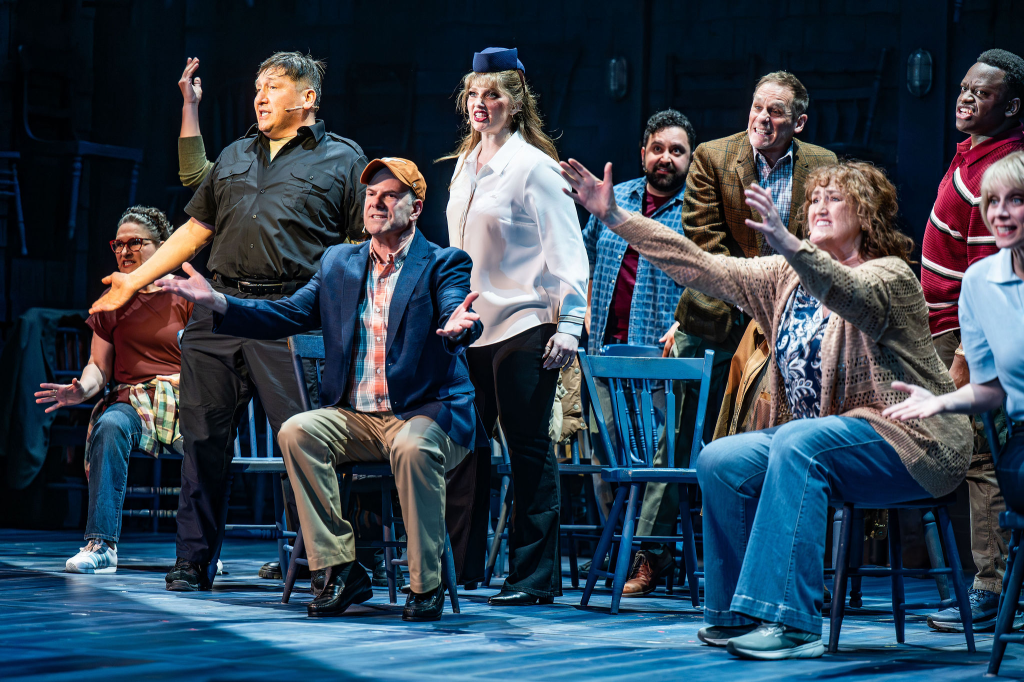
The cast remained fixed at 12 tightly knit actors, weaving in and out of each other’s stories as they played dozens of distinct characters, with many actors doubling or tripling their roles. Most frequently, the cast would switch back and forth between playing the locals of Gander and the “plane people” who have “come from away.” With the most minor costume changes, you would expect this back and forth to be confusing, and yet each actor’s rendition of their character was so distinct that following along felt completely intuitive. This was probably one of the most impressive aspects of the production to me, as the cast seamlessly transitioned between very distinct characters in a way that felt so natural and clear that you automatically knew who was who.
A standout in this regard to me was Izad Etemadi, a cast member who played two very distinct “plane people.” One of his characters was Kevin T., an eccentric and humorous gay man who had arrived in Gander with his partner Kevin J., played by Alex Wierzbicki (yes, they are both named Kevin). His other character was a quiet, serious, and aloof Muslim man who spent most of his time alone and distancing himself from the others. These two roles contrasted in performance so greatly that I did not even notice until a third of the way into the performance that the same actor played them. Etemadi’s performance as a Muslim man also brought forward serious topics of racial and religious discrimination, representing the realities many would have faced during this period.
(Photo: Dahlia Katz.)
Something I enjoyed about this performance was how it had constant contradictions. The play did not try to frame this as a perfectly happy and heroic story where kindness completely erased the horror and made it all okay. Instead, it allowed for nuance, showing that multiple experiences can be had at a single time. Rather than representing a linear story, it had a range of emotions where fear turned into gratitude and happiness bled to guilt as people grappled with the rawness of their emotions in the face of complex tragedy.
Touching on topics of loss, grief and identity, Come From Away’s message continues to ring through to today as people continue to grapple with these experiences. A beautifully true Canadian story, it reminds us that the only antidote to inhumanity is humanity itself.
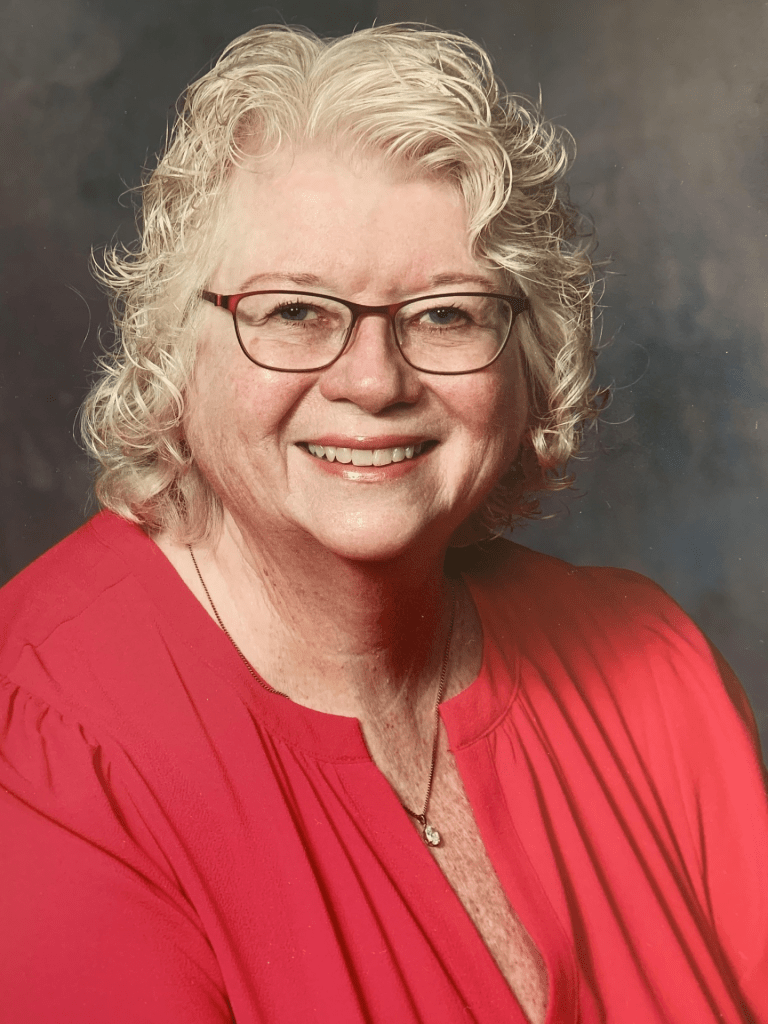
Reviewed by Charlotte MacDonald.
Charlotte MacDonald is a Creative Writing and History student at Western University. She currently writes about theatre, pop culture, and campus life for The Western Gazette, works as a Digital Intern at The Walrus, and hosts a radio show at Radio Western. Growing up in Toronto, theatre has always been a staple part of Charlotte’s life, and she has come to greatly enjoy engaging and contributing to the theatre community through her writing.














 The Beat Magazine 2025