
The Beat Magazine 2025 is thrilled to introduce its newest volunteer contributor, Renée Silberman, founder and director of London’s Serenata Music. Alongside Daina Janitis, who previews coming concerts, Renée will be reviewing selected Classical Music events. Renée offers a roundup of recent Classical Music concerts in her first story for The Beat Magazine.
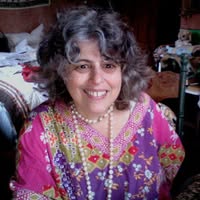
Dear music-loving friends and those who wish to join this august circle of the concert-going public. I offer you a report on the final three events of the 2025-26 season and hope it will give cause to rejoice in the kind of offerings now regularly available here in London.
In quick succession, London Symphonia presented a pair of concerts showcasing the artistry of their musicians, who performed cleverly curated programs.

On April 18, Graham Lord, principal clarinet and London Symphonia’s String Quartet, explored works from the clarinet repertoire that represent the gamut of expressive language and technical complexity inherent in the instrument’s nature. Without question, musician, raconteur, CBC broadcaster Tom Allen, enriched the experience, having first of all helped shape the evening’s format, and then enlarged upon the historical development of the clarinet in its many aspects – discussing many of its uses, as an orchestral voice, as a solo instrument in art music and jazz, and more.
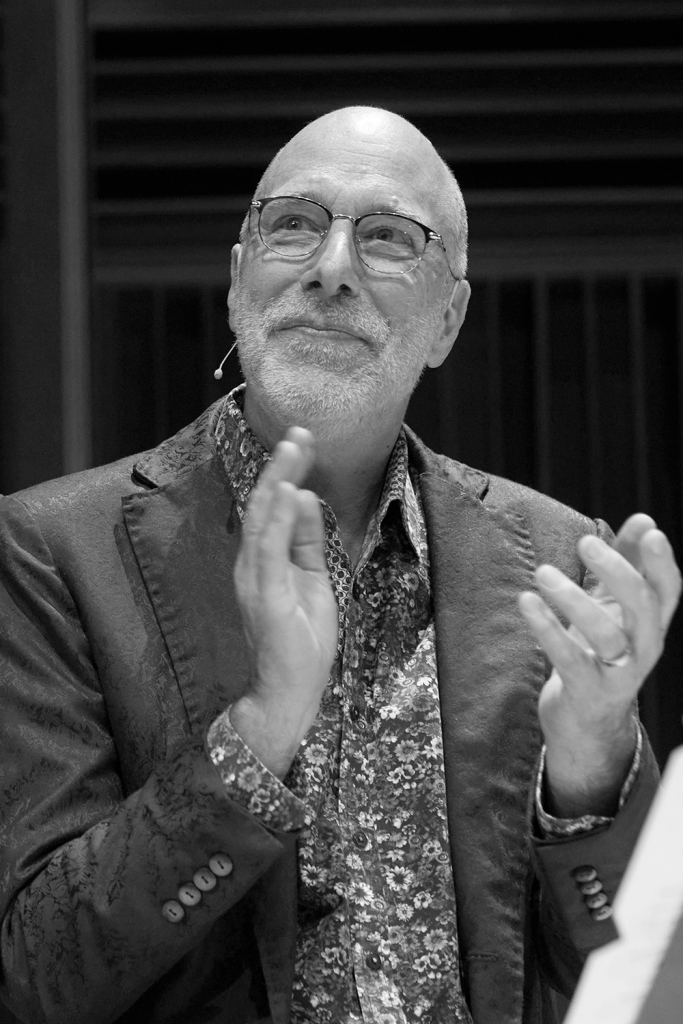
(Pictured: Tom Allen.)
The first half of the program took us on a tour of the musical magic the clarinet produces with samplings from works by four composers: Gerald Finzi (1901-1956), Samuel Coleridge-Taylor (1875-1912), Mozart (1756-1791), and Steve Reich (b. 1936). Tom Allen elucidated the characteristics of each piece with his unique combination of knowledge and storytelling skill, always engaging, never didactic. Graham Lord’s consummate musicianship drew the audience in – his sensitivity to style, especially in the tenderness of the second movement, Larghetto of Mozart’s Clarinet Quintet and in the exhilarating New York Counterpoint multi-voiced tape plus live line – prepared us for the emotional heart of the concert, the Brahms Quintet for Clarinet and Strings in B Minor Op. 115. The Quintet, Brahms’ valedictory work written for Richard Mühlfeld, in Brahms’ opinion, the most outstanding wind player he had ever heard, traverses a grand range of feeling, mood, tones and textures.
There is an elegiac quality, a sense of retrospection, and yet, in this remarkable gift to the generations, the artist’s creative drive evidently had lost none of its energy. On hearing the Quintet, Clara Schumann wrote to Brahms, “The joy that I had survives in my heart, and for that I am grateful.” And so it is that we, too, find renewal in this epic, Protean composition.
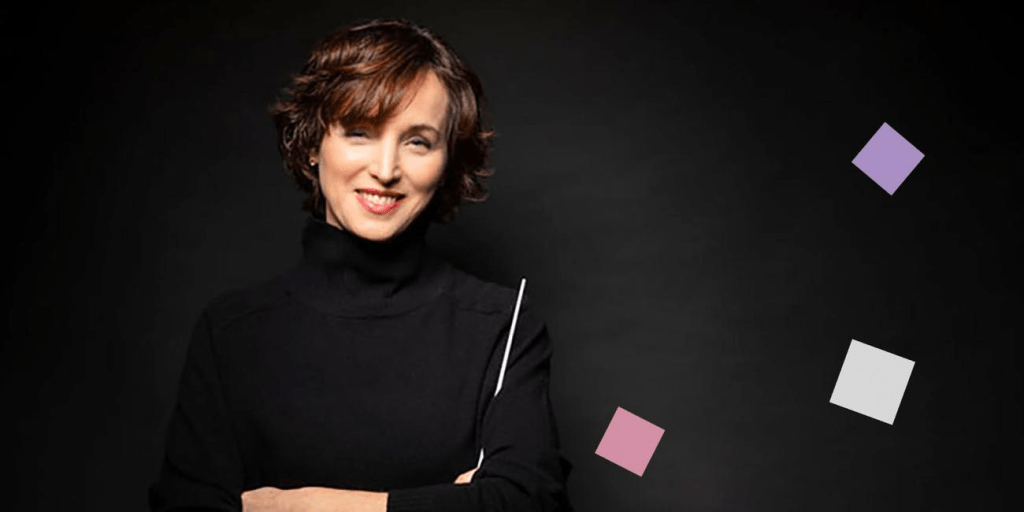
On May 2, London Symphonia wrapped up its season with “Beethoven, Shostakovich, and Marsh,” a program of disparate compositional traditions and voices.
Under the leadership of Conductor Tania Miller, the orchestra produced a stimulating journey through time and spirit, a reflection of the type of programming that presents a combination of the contemporary with the tried and true. Moreover, London Symphonia provides a generous opportunity for its members to savour the limelight. This was notable in singling out Laura Chambers, Principal Flute, to take a solo turn in a World Premiere commissioned by the orchestra, with funding support from SOCAN Foundation and the Ohio Arts Council. Composer Alexis Dyan Marsh and flautist Laura Chambers became colleagues at the University of California and have continued a working relationship over the years.
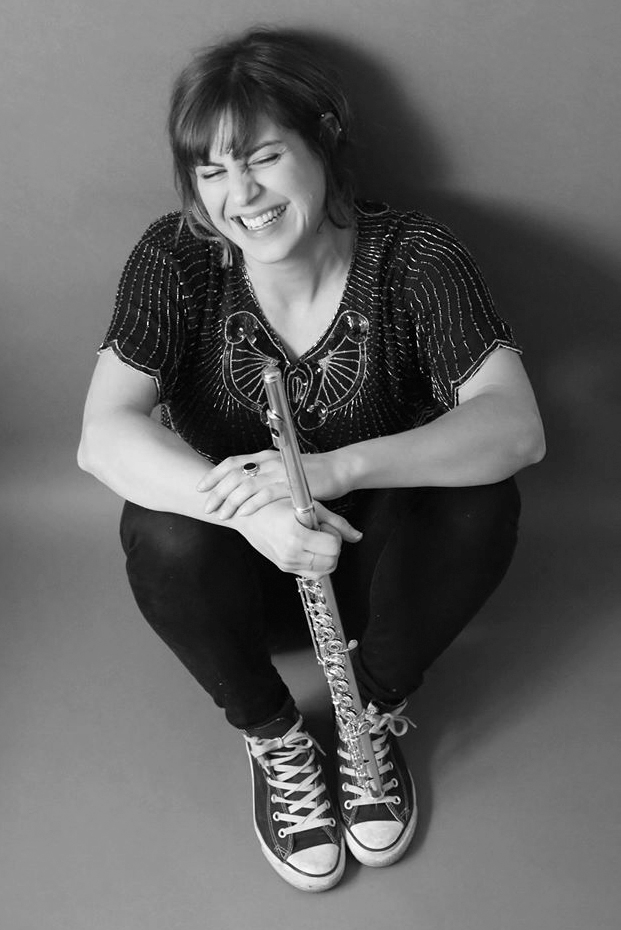
(Pictured: Laura Chambers.)
View of a Cartwheel From An Ascending Plane for Flute Solo and Orchestra is written in six parts, “as a collage of lived experience. The work is woven from three distinct threads: the vastness of the Canadian West grounded in the Manitoban landscape, the evolution of human connection, and the vertical trajectory of personal ambition.” The composition is atmospheric, depicting landscapes and human connections. The element of friendship sets humans in the vast landscape, and may describe the friendship between Marsh and Chambers, linking people to place; furthermore, Marsh acknowledges her personal motivation in developing her artistry as a composer. Laura Chambers plays with great warmth and vitality, a strong personality within the wind section and in the orchestra.
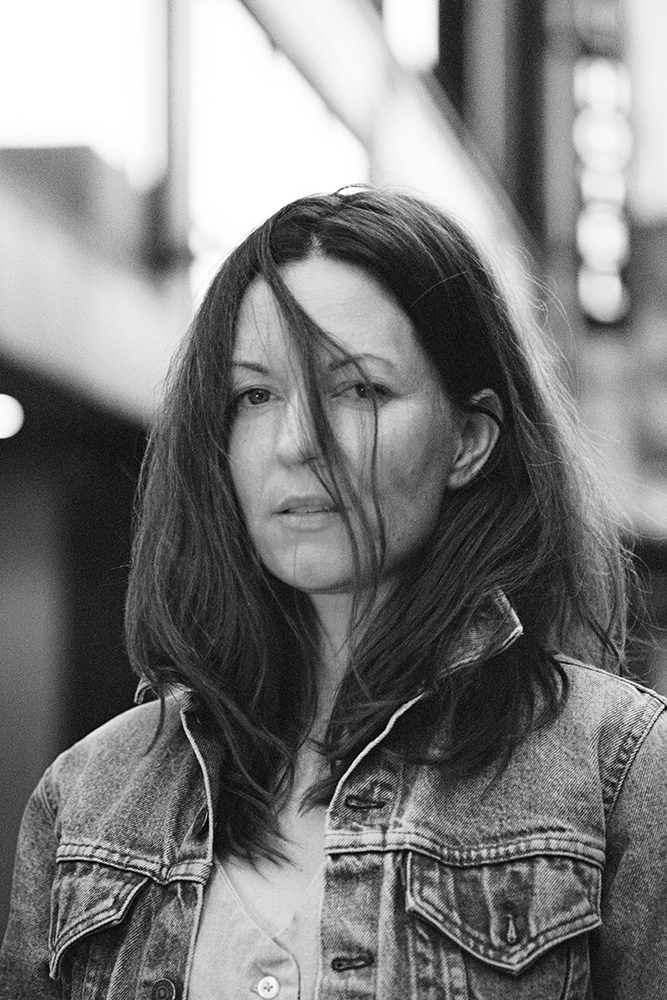
(Pictured: Alexis Marsh.)
The Chamber Symphony in C Minor, Op. 110a (after String Quartet No. 8), orchestrated by Rudolf Barshai, inevitably reminds citizens of the 21st century of the tragic circumstances in which Dmitri Shostakovich lived. The tale of Shostakovich, and indeed of Rudolf Barshai, who was eventually declared persona non grata in the Soviet Union, is a cautionary one – to endure the horrors of authoritarianism is a problem not strictly relegated to the past. Tania Miller fielded this powerful work with deep understanding – her intellectual energy is supported by kinetic energy which pulsated through her body, a driving force that animated the orchestra. Maestra Miller spoke of the composer’s view that the Eighth String Quartet, the point of departure for Barshai’s orchestration, was in fact a requiem for himself. 1960, the year of the Quartet’s publication, was a time of distress and depression for Shostakovich, for although he believed he had betrayed his principles in joining the Communist Party, he lived in continuing fear of arrest or execution, incessantly hounded by the director of cultural policy, Andrei Zhdanov. No amount of abasement was enough for the Soviet authorities. Shostakovich was trapped in the Soviet Union, and his music conveys his pain. But in the devoted hands of Tania Miller, the music becomes the instrument for vindicating Shostakovich’s suffering.
Every good performance of a work by Shostakovich is an almost sacred act that validates yet again all those who were or are caught in a vortex of evil. By contrast, a performance of Beethoven’s Seventh, which he referred to as “a grand symphony in A Major (one of my most excellent works),” is essential life affirmation! Rhythmic intensity is written into the score, but still, there is a requirement that the conductor will truly sustain the orchestra’s propulsive momentum. Wagner identified the symphony as “the apotheosis of the dance.” Tania Miller danced in joy as she partnered with the buoyant musicians of London Symphonia! The dynamic range, the sophisticated play of key signatures, and the studied wildness of the Finale animated the finale of the orchestra’s 2025-26 season!

On Monday, May 4, The Jeffery Concerts brought its season to a remarkable conclusion with a recital by James Ehnes and Andrew Armstrong.
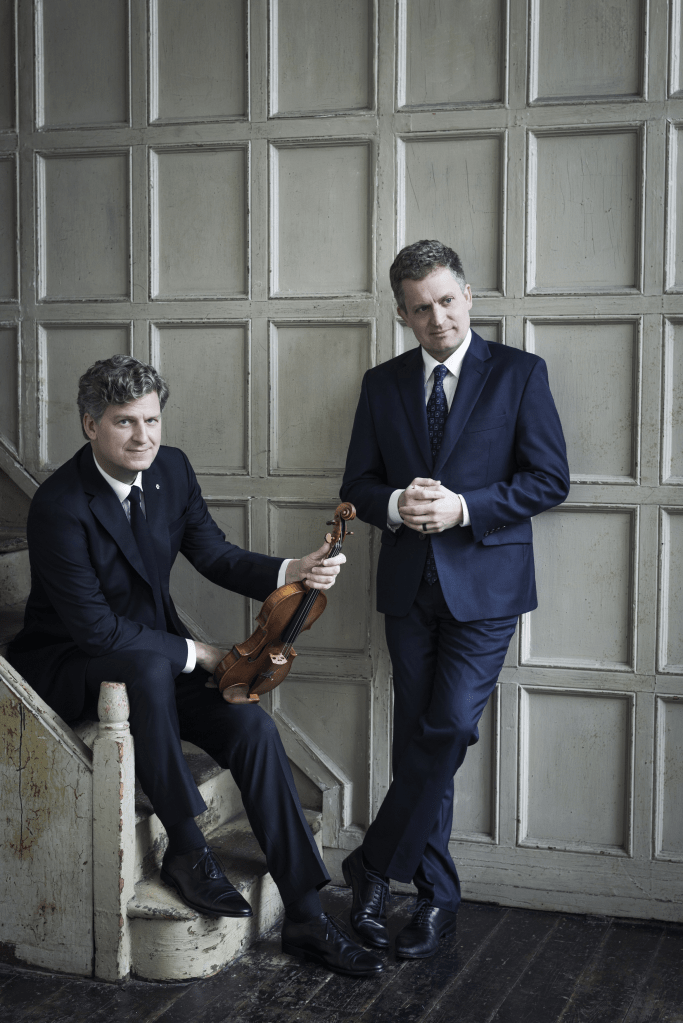
(Pictured: James Ehnes and Andrew Armstrong.)
Mr. Ehnes is billing the programs this year as a “50th Canada Birthday Tour,” and what a celebration it is! James Ehnes is Canada’s foremost violinist, a peerless artist, dedicated to his profession and a musical ambassador who is renowned for performing on major stages internationally and with a particular commitment to bringing music to communities across Canada.
Ehnes brought his wonderful vitality to a full house at the Wolf Performance Hall with works by Christian August Sinding (1856-1941), Johannes Brahms (1833-1897), Carmen Braden (b. 1985), and Bela Bartók (1881-1945). Each of these pieces is close to Ehnes’ heart, and each speaks in a distinctive voice.
The first movement of Sinding’s Suite for Violin in A Minor, op. 10, set the pace and tone for the recital, beginning as it did with a dizzyingly swiftly moving Presto. For an audience member who began studying the violin at an advanced age, it was both daunting and instructive to watch Ehnes’ bow glide efficiently across the strings. But there was more to the playing than mere technique – The Brahms Violin Sonata No. 3 in D Minor, op. 108, intense and dramatic, reveals a powerful side of Ehnes’ playing style. Two years ago, Mr. Ehnes performed the Brahms Violin Concerto with London Symphonia, and on that occasion, showed, as he did the other night, that these big works with significant content are well suited to his musical personality. The playing is both dazzling and refined.
And there is always an interest in the new, as evidenced in Carmen Braden’s Imaginal. Braden composed this piece in honour of James Ehnes’ fiftieth birthday, to celebrate “…anything that held us together in this crazy world, it’s music, friends, curiosity and caterpillars.” (“Imaginal” cells are the catalysts for the transformation of caterpillar cells into butterflies, according to Carmen Braden). And Bartók’s Rhapsody No. 1 for Violin and Piano, Sz. 86 makes full use of traditional Hungarian verbunkos dances, transforming folk music into high art.
Mssrs. Ehnes and Armstrong finished the program with three encores, which they announced from the stage. Scherzo-Tarentelle by Henryk Wieniawski; La Guitar by Moritz Moszkowski, arranged by Pablo de Sarasate; and La Ronde des Putins (The Dance of the Goblins) byAntonio Bazzini.
This scintillating, thrilling recital rounded out a remarkable season of music making!
I encourage one and all to discover the profound satisfaction of hearing extraordinary live performances here in London! There is first-class music to be enjoyed in our city! Come out to some of the wonderful concerts London offers! Support our city’s art scene!
Renée Silberman, May 2026
To learn more about London Symphonia, visit Concerts | London Symphonia
To learn more about The Jeffery Concerts, visit The Jeffery Concerts
To learn more about Serenata Music, visit Serenata Music – Home

 The Beat Magazine 2025