
Reviewed by Jo-Anne Bishop
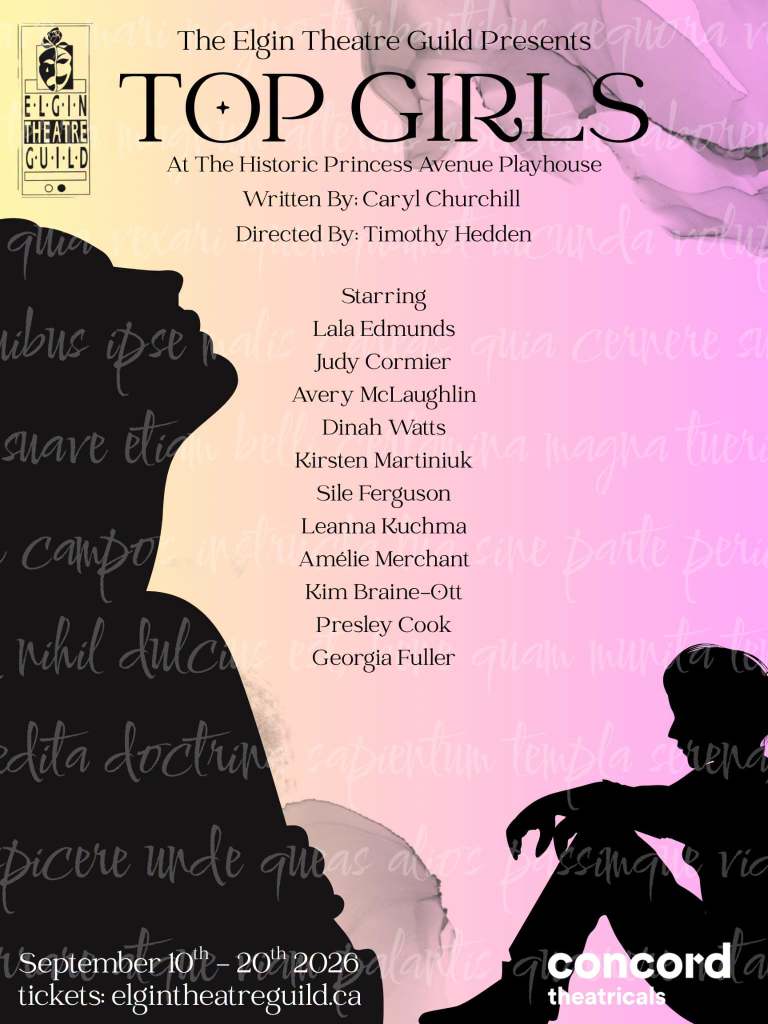
As I left the Princess Avenue Playhouse after seeing Top Girls, I overheard a few patrons trying to describe what they had just seen. The words I heard were “interesting,” “different,” and “heavy.” Honestly, I’m not sure I could have described it much better myself.
Caryl Churchill’s Top Girls, directed and produced by Timothy Hedden, is definitely not conventional theatre. It is subtle, unusual and, at times, deliberately confusing. It doesn’t simply hand you its themes and explain what you’re supposed to think. Instead, it asks you to piece together the connections between the women, their experiences, and the choices they have made. For some people, that will be exactly what makes it interesting. For others, it may make the play a little harder to connect with.
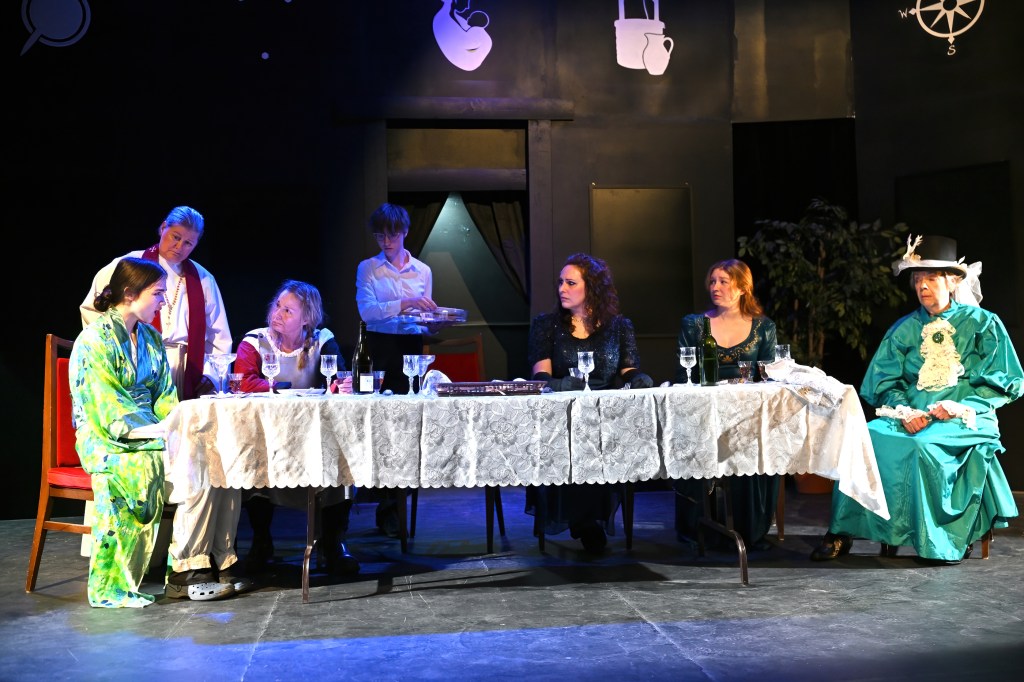
The opening dinner-party scene was particularly challenging for me. Without giving away the premise, Marlene’s guests come from very different times and worlds, and their stories are used to explore the experiences of women throughout history. There is clearly a bigger purpose behind bringing these women together. Their stories reveal some surprisingly common themes of sacrifice, oppression, motherhood, sexuality, ambition, and survival.
Lala Edmunds, who played Marlene, brought a strong presence to the production, and her performance established the confidence and ambition at the heart of the character. Dinah Watts also stood out as Isabella Bird/Louise, bringing a memorable energy and individuality to both roles.
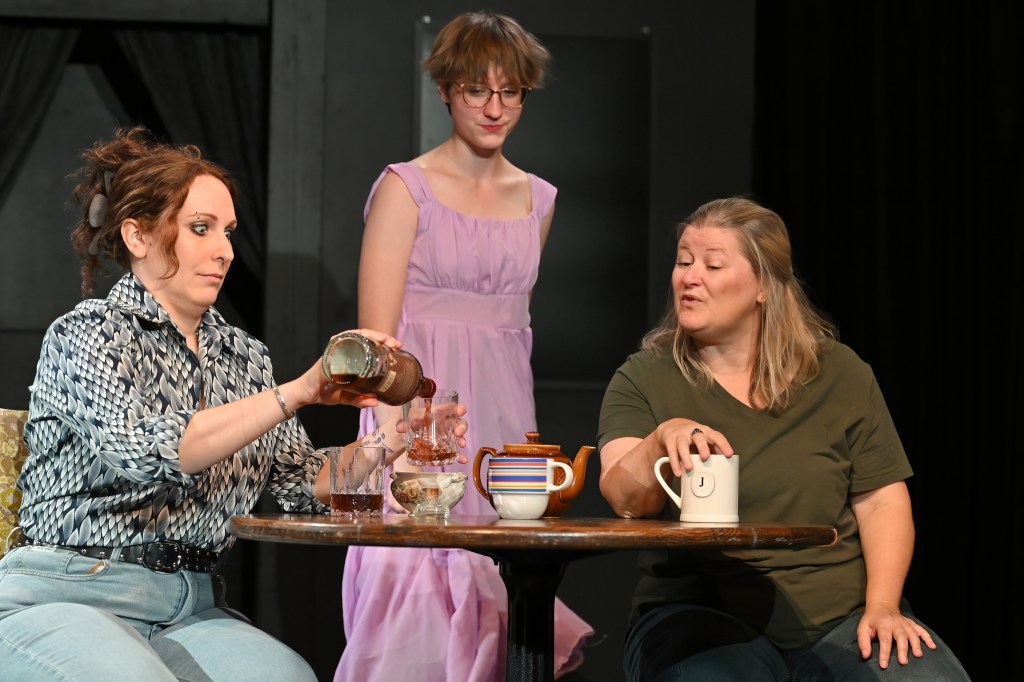
Unfortunately, I struggled to find my way into the opening scene.
The dialogue is intentionally written with characters interrupting and speaking over one another, creating a frantic, almost feverish rhythm. That is part of Churchill’s style and is meant to give the dinner conversation an overlapping, chaotic quality. But I found it difficult to follow in this production. Between the overlapping dialogue, the pace and differences in volume, there were times when I simply couldn’t hear or understand what was being said. One character in particular was difficult to hear, and with the other conversations continuing around her, I sometimes lost the thread completely.
The lighting in the first act also created some very heavy shadows in a few scenes. While I’m sure there was a reason behind the choices, I found some of them distracting and combined with the dialogue, they made those moments even harder to take in.
I don’t know whether these challenges were primarily the writing, the direction, the performances, the acoustics of the space, or some combination of all of them. But the result was that the opening section largely lost me. And that’s unfortunate, because I suspect there was much more meaning in that scene than I was able to take away from it.
The production became much more accessible for me once it moved into the contemporary story.
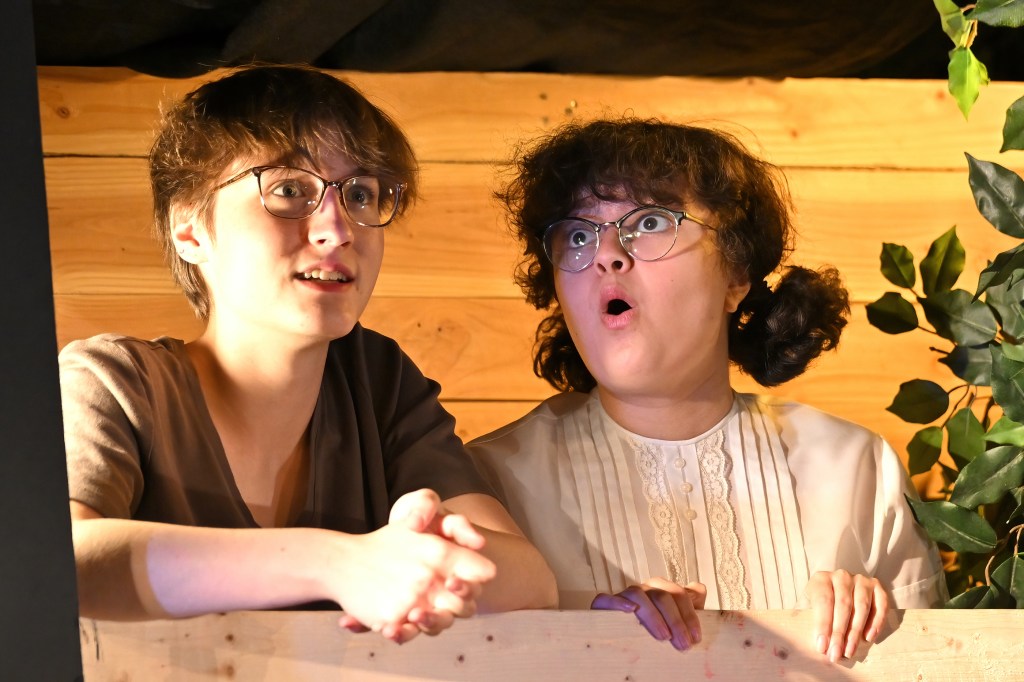
The scenes involving Angie and Kit were a particular highlight. Avery McLaughlin brought a wonderful naturalness to Angie, making her believable, endearing, and completely engaging. Amélie Merchant was equally strong as Kit, and together the two young actresses created a relationship that felt spontaneous and genuine. I found myself hanging on their every word.
Judy Cormier, who played Pope Joan/Joyce, was another standout. She brought an emotional weight and groundedness to the production that drew me further into the family dynamics and made the more personal moments especially affecting.
From there, the play’s exploration of ambition, family, motherhood, class, and the sacrifices women make in pursuit of success became much clearer. Top Girls is ultimately asking some pretty heavy questions about what women are expected to give up in order to succeed, and whether reaching the top is necessarily the same thing as winning. Marlene embodies that conflict particularly well.
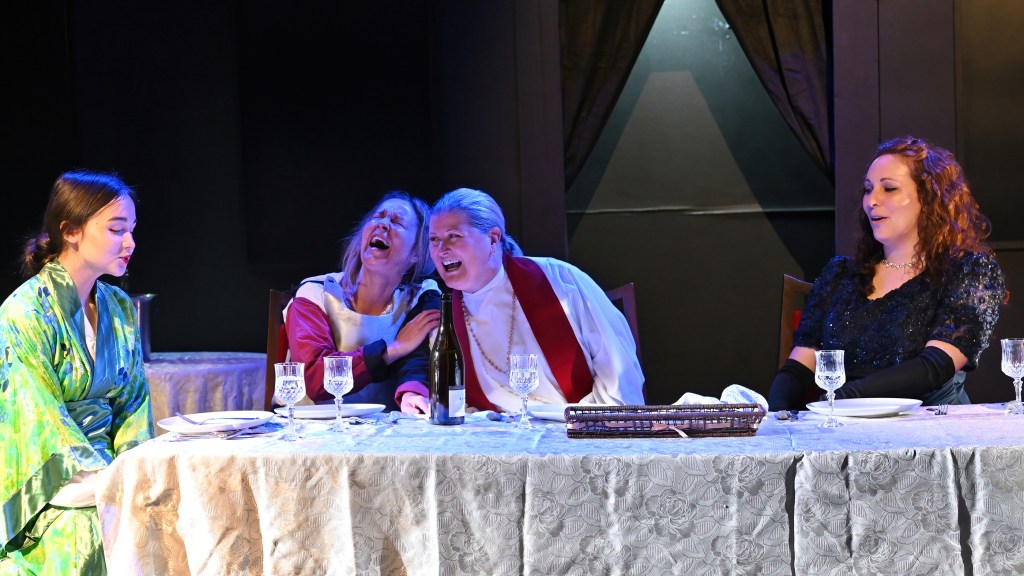
Edmunds’ performance captured that tension effectively. Marlene is ambitious and self-assured, but the play gradually reveals the personal costs beneath that confidence. Her success is never presented as simple or uncomplicated, and Edmunds gave the character enough strength and complexity to make that conflict interesting.
I did, however, find the overall story difficult to connect with at times. The structure is deliberately non-linear, moving between different points in time and different aspects of Marlene’s life. It’s an interesting theatrical choice, but I sometimes found myself wondering where the story was going and what I was ultimately supposed to take from it.
And then there was the ending.
When I left the theatre, I’ll admit I wasn’t entirely sure what I had just watched. I understood the themes, but I felt like something was missing. Perhaps that was intentional. Perhaps the ending was meant to leave the audience sitting with it rather than neatly tying everything together.
It actually took me almost 24 hours to figure out what the ending meant to me.
I was driving today, thinking about this review, when suddenly I had my aha! moment. Something clicked, and I understood the ending in a completely different way. I actually found myself thinking that perhaps the ending would have landed sooner for me if the opening had been a little stronger and easier to follow. If I had been able to take more from those early conversations, maybe some of the connections would have been clearer by the time we reached the end.
And perhaps that is part of the point. The fact that I was still thinking about the play almost a day later says something. It certainly made me think, even if I didn’t always enjoy the process of getting there.
That doesn’t mean I regret seeing it. Quite the opposite.
There is something valuable about theatre that challenges an audience, even when it doesn’t completely work for every person in the room. Top Girls tackles some difficult realities women have faced—and continue to face—and it does so in a way that is thoughtful, unusual and, at times, uncomfortable.
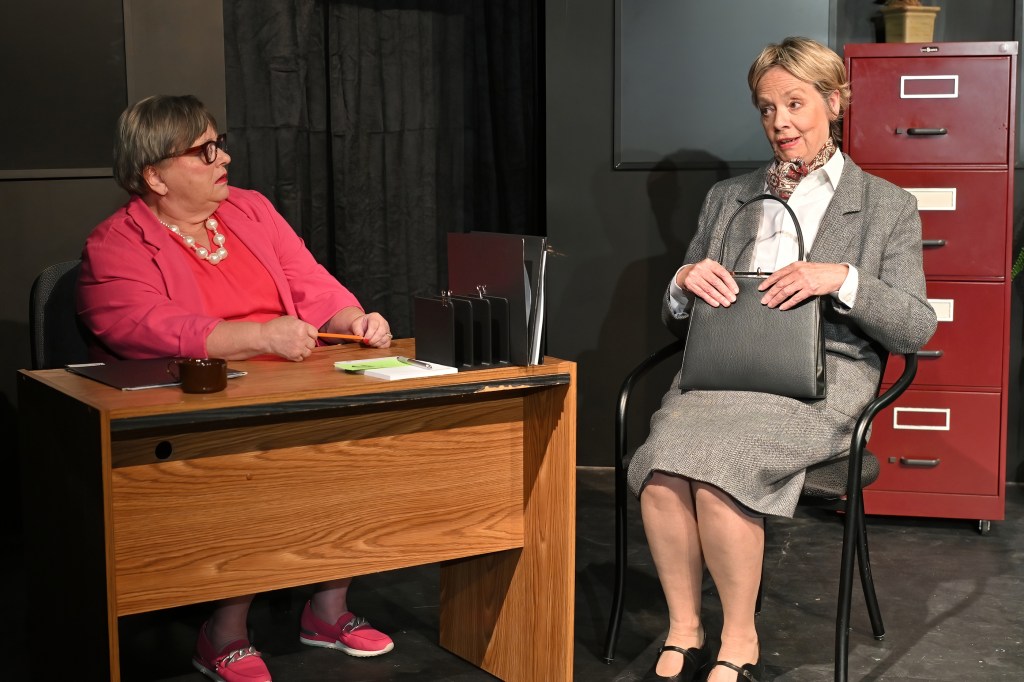
For me, the strongest parts of this production were the performances and the moments when the human relationships came into focus. McLaughlin and Merchant were especially engaging as Angie and Kit, while Cormier brought a strong emotional centre to the family scenes. Watts also made a memorable impression as Isabella Bird/Louise, and Edmunds gave Marlene the confidence and complexity the role demands.
The weaker moments were those where the experimental structure, overlapping dialogue, volume and, at times, lighting became barriers to understanding rather than helping draw me further into the story.
Would I tell someone not to see Top Girls? Absolutely not.
I think theatre is worth seeing even when it isn’t necessarily your cup of tea. Storytelling needs audiences who are willing to take a chance on something different, and Top Girls certainly gives you something different.
But I would say this: Top Girls is not going to be a show for everyone. It is dark, unconventional and, at times, difficult to follow. Go in expecting to work a little harder as an audience member, and don’t expect everything to make sense right away.
Because sometimes the meaning doesn’t arrive until you’re already on your way home.
Interesting. Different. Heavy.
And sometimes, I suppose, that’s exactly what theatre is supposed to be.

IF YOU GO:
What: Top Girls by Caryl Churchill, Directed By Timothy Hedden
Where: Elgin Theatre Guild, Princess Ave Playhouse, 40 Princess Ave, St. Thomas
When: September 10th – 20th, 2026
Tickets: $25 + fees, ELGIN THEATRE GUILD – Home
Reviewed by Jo-Anne Bishop


 The Beat Magazine 2025