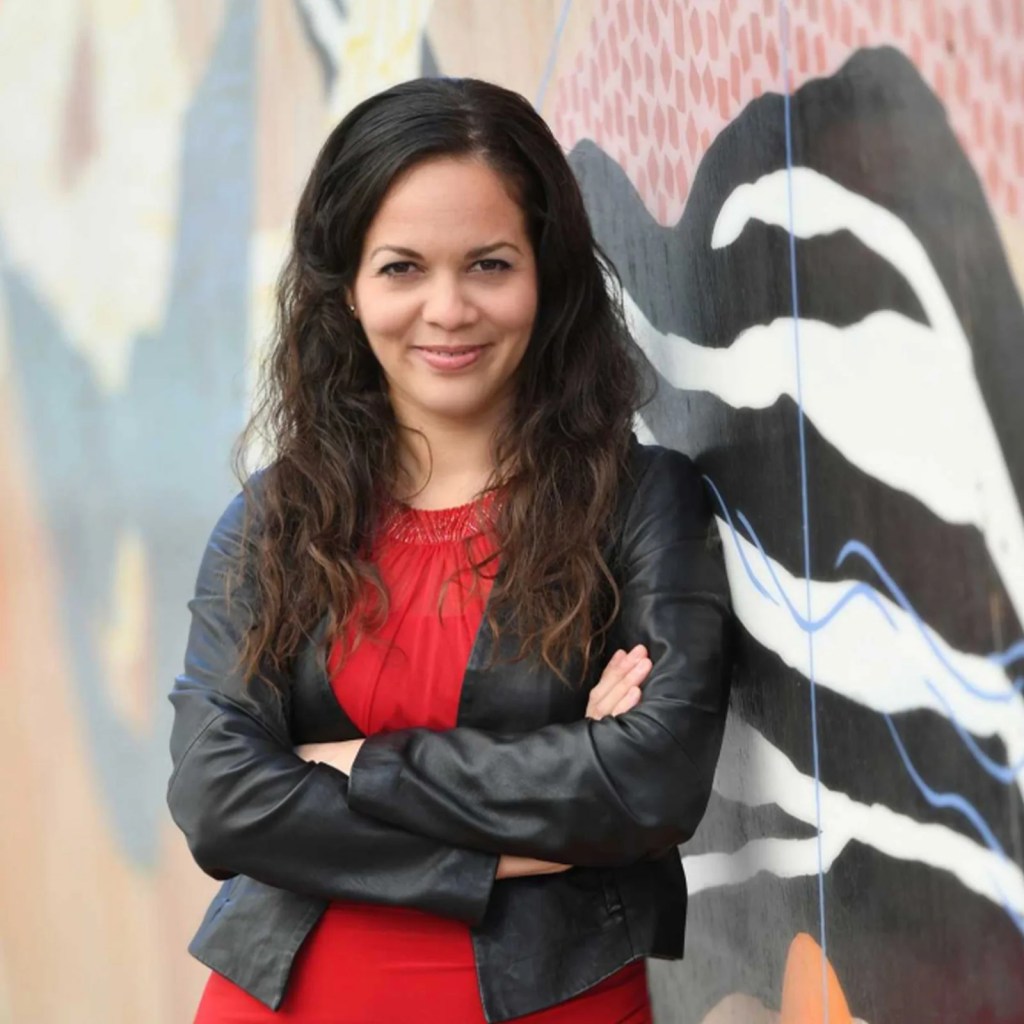
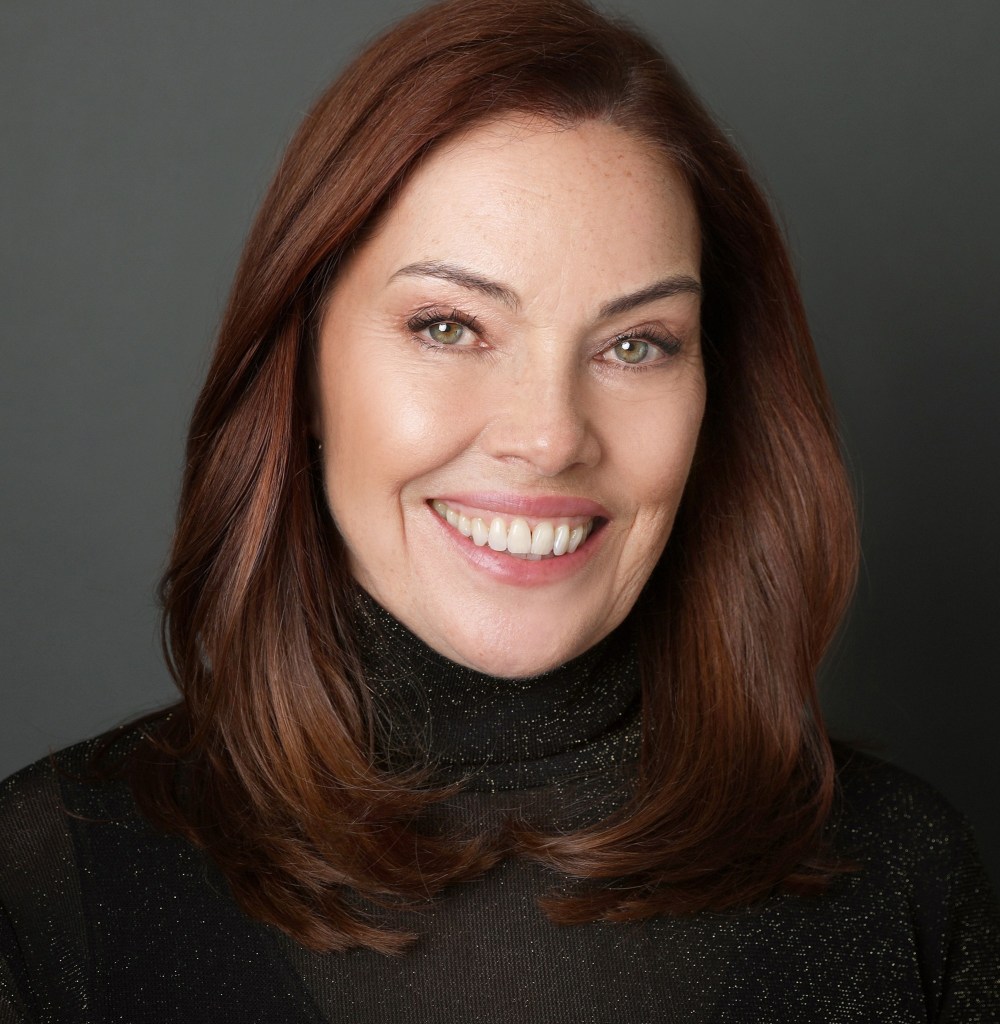
Bows Up, Canada! When have you been called upon to protect Canadian unity? And when have you been able to do it by attending a concert?

Previewed by Daina Janitis
On the eve of the 1980 referendum, (PET) Pierre Eliott Trudeau (not PP, that’s for sure) reminded Canadians that they were facing a tipping point:  “We must now establish the basic principles, the basic values and beliefs which hold us together as Canadians so that beyond our regional loyalties there is a way of life and a system of values which make us proud of the country that has given us such freedom and such immeasurable joy.”

A quarter-century later, it’s not Quebec making secession noises- it’s Alberta. But if you seize the opportunity to be in the presence of some Alberta talent – certain to bring you immeasurable joy – maybe you can be part of some Canadian culture that keeps Canada together for another twenty-five years.

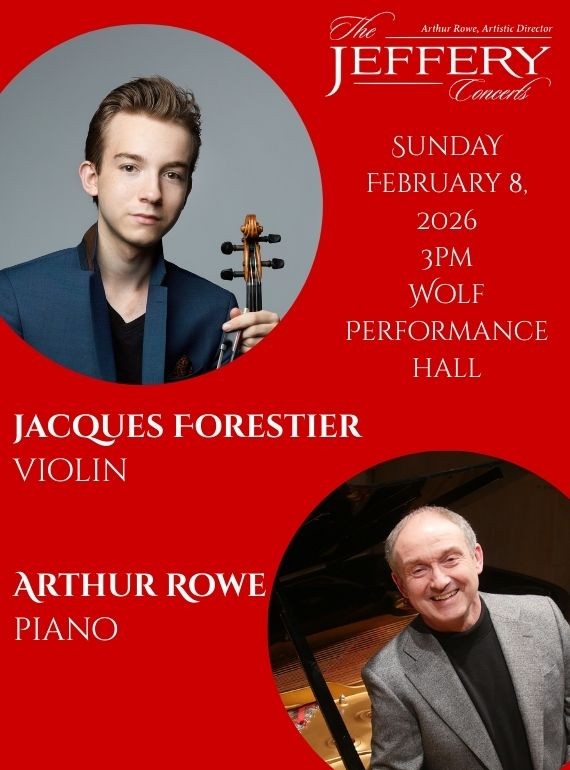
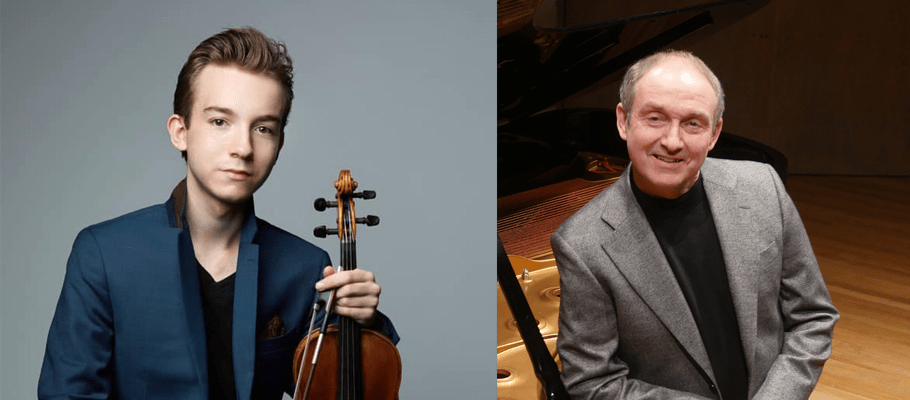
The Jeffery Concerts on Sunday, February 8, at the Wolf Performance Hall, at a comfortable 3:00 in the afternoon, features two icons of Canadian music – the young violinist Jacques Forestier and seasoned pianist Arthur Rowe. The CBC has already included Jacques in its “Top 30 Hot Canadian Classical Musicians under 30” – and Arthur is …uh …slightly older and already loved by London audiences.

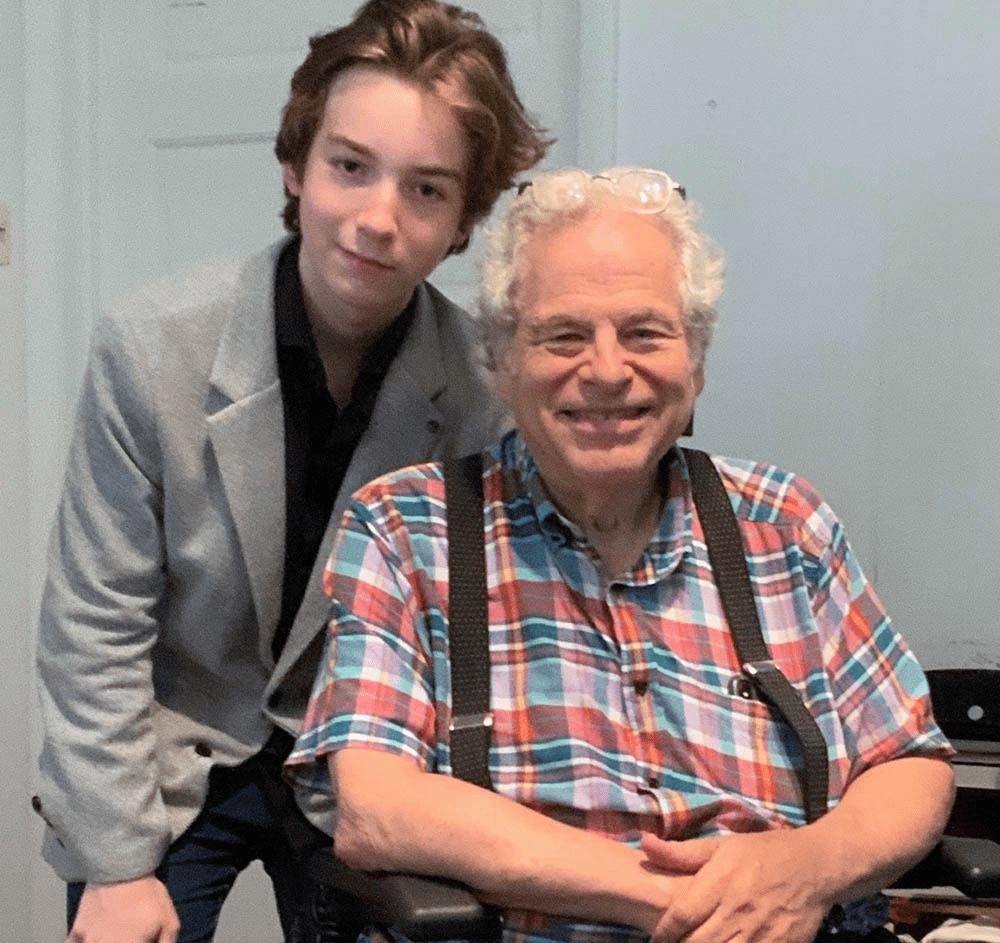
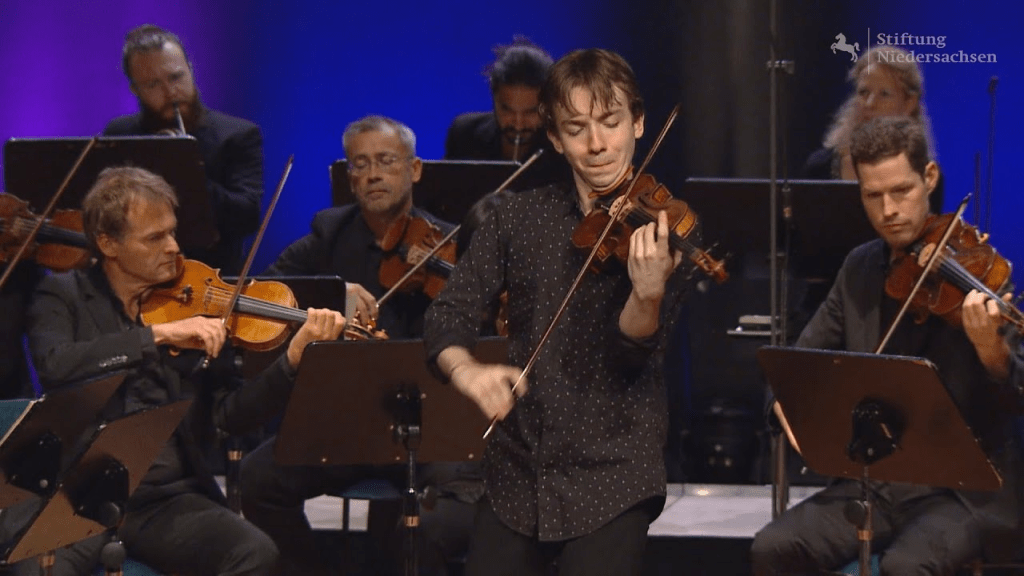
So, who is this Forestier chap? I was about to credit his musical vibe to Montreal – but he’s an Alberta kid, born in Edmonton in 2004 and already starting to learn the violin at age TWO. By the age of 11, he made his debut with the Edmonton Symphony at the Winspear Centre – and remains one of their favourite soloists. I’ll place-name-drop a bit:  He’s been at the Curtis Institute on full scholarship since 2022, picked up some pointers at the Mount Royal Conservatory, and been a student-artist at Juilliard.

(Pictured: Jacques Forestier with violinist Itzhak Perlman.)

His parents’ home in Edmonton must be bursting with prizes ~

  • From the “Olympics” of violinists, the 2018 Yehudi Menuhin International in Geneva (the only Canadian to qualify)
  • A multitude of medals from major competitions in Canada
  • Winner of the Joseph Joachim Violin Competition in Germany

And Arthur? He’s my age.

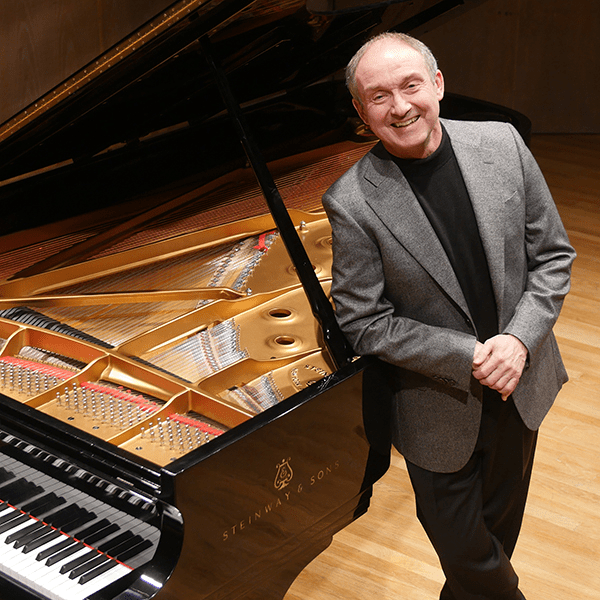
Just kidding. He’s also a world-class talent, Professor and Inspiration Manager at The University of Victoria. But BC is not seceding, so you can be nice to him after the concert- no need to go overboard.

(Pictured: Pianist Arthur Rowe.)

And if you’re new to this classical music thing – and you don’t want to appear like a thickie-thickie dumb-dumb in front of the mates on either side of you – here are a few elitist phrases you can share about the program.

When the Dvorak Sonata in G Major begins, you can ask, “That sounds familiar. Didn’t that performance win Jacques the Joachim competition?” or “I can hear the influence of Dvorak’s American sojourn, can’t you?” Or, “It’s all I can do to keep from humming along with those Bohemian folk melodies.” Don’t forget to mention it’s “intimate and dazzling – I’m going to hold my breath for all 18 minutes of it”

As for the Brahms Sonata in A Major, try this: “Isn’t it amazing- that young man received the Joachim prize – and Brahms actually wrote this sonata for his FRIEND, Joseph Joachim.” (Chuckle warmly at this point). Or involve your seatmate with “I can hardly wait for the Allegro Grazioso of the finale- those Hungarian dance rhythms make me want to kick my red leather boots while holding a perfect squat.”

If you’re not confident in the Strauss Sonata in E-flat Major, you can express relief that Strauss was in his post-Wagnerian phase. You can say, “This is going to be a thrilling capstone for this recital” and poke him or her in the ribs when you hear the “stormy passion” of the Allegro molto appassionato. Or you can just sigh deeply when the final Allegro begins, recognizing aloud the “dazzling runs and double-stops.” Don’t ask me what double-stops are. Google it.

Each of the sonatas Jacques and Arthur are performing is considered a gem of late nineteenth-century Romanticism. Perhaps you can only play them brilliantly when you are young and brilliant.

Don’t miss this opportunity to bear witness to the early career of a Canadian phenomenon. And tell him after the concert that you don’t want a Canada without Jacques Forestier – and Alberta- in it.

IF YOU GO:

What: The Jeffery Concerts presents violinist Jacques Forestier and pianist Arthur Rowe.

When: Sunday, February 8, 3:00pm.

Where: Wolf Performance Hall, 251 Dundas Street, London, ON.

Tickets: Online: https://www.grandtheatre.com/event/jacques-forestier-and-arthur-rowe

By phone: 519-672-8800

In person: 471 Richmond Street, London, ON

At the Door: Credit Card, Debit Card, or Cash.

For more information, visit https://www.jefferyconcerts.com/season2526/index.html

Previewed by Daina Janitis

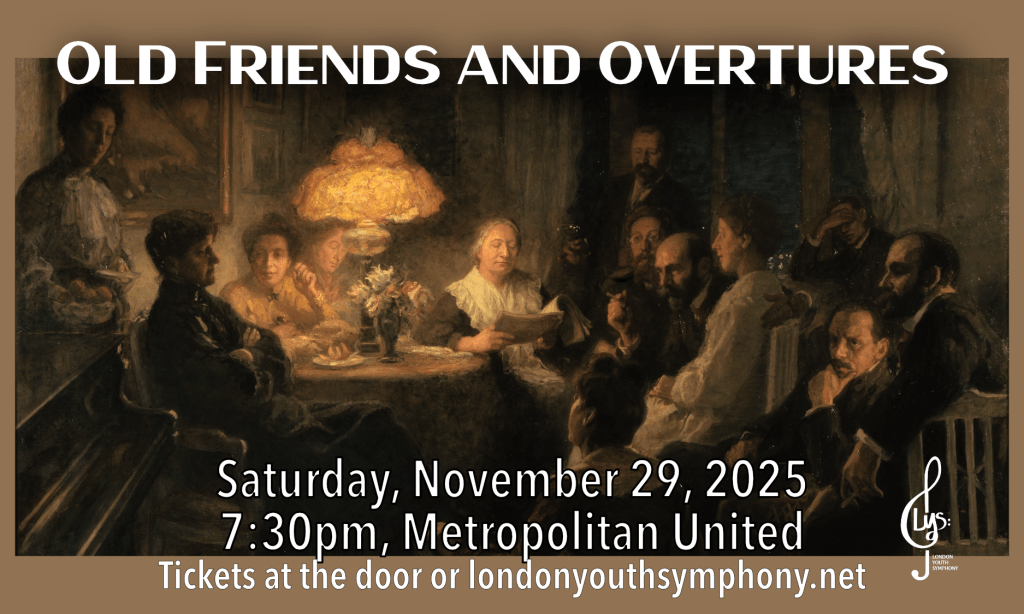
Daina Janitis previews the London Youth Symphony’s Old Friends and Overtures, November 29.

Previewed by Daina Janitis

“In an orchestra, the whole is greater than the sum of its parts. Together, we can create something truly extraordinary.” – Yo-Yo Ma

And looking at this recent photo of the London Youth Symphony on that beautiful stage at The Met below, these words resonate.

(Pictured: London Youth Symphony.)

They bring back sweet memories: Taking my stoic 12-year-old son and his bassoon to an audition with conductor Jerry Summers over 30 years ago. Wondering how he’d get through the chosen piece, some scales on that gigantic piece of pipe, and then a piece of sight-reading. When he was accepted, there were cheers from his nerdy parents and a chocolate cake at Sebastian’s on Richmond.

And then his mom started over 30 years of volunteering for London’s youth orchestra, thankful for what orchestra playing provided for her own kids.

Oh, the Londoners in LYS whose performances continued to enrich our lives ~

String players like Alex, who went on to Montreal’s Symphony.

Andrea, who is now part of the Montreal ensemble she created:  collectif9.

Susan, who left London to study at Oberlin and was principal cello in Louisiana before returning to London to teach and inspire.

Becky, who played in a Polish salt mine- and the Krakow Cathedral – but now delights audiences in Kitchener-Waterloo.

But equally inspiring- the LYS musicians who used their talents in other fields ~

Steve, who adds fire to the local community orchestra while completing his epidemiology degree.

Sharon, who started her own Suzuki school to help generations of little ones flourish.

Ana, a dedicated therapist who also plays her violin in LCO.

Mary, the oboist- member of the first LYS over 60 years ago, still sets that tuning A for the community orchestra.

So why am I indulging in personal memories as the first LYS concert of Season 2025-26 begins?

Because I find the power of the music these young people rehearse, the energy that their conductors and mentors provide their efforts, and the willingness of the audience- even non-family members – to offer them applause, one of the most powerful beacons of hope in a world that is showing the distressing speed at which values can be lost.

Only this past weekend, some of you might have seen this demonstration by some gentlemen across the Wortley Road Bridge in London.

This group announces on its website that The Second Sons is a men-only, Canadian white nationalist group. The group operates chapters throughout Canada, using gyms as meet-up spots and to train their fitness via martial arts. The group appears publicly in white masks and sunglasses, similar to the Patriot Front, and has adopted a modified version of the Red Ensign as its logo.

 What would they and their “Remigration Now” banner make of the LYS kids (and their supportive families), whom you can hear this Saturday night? What would they learn from the Kims, Lees, Sanatanis, Wongs, and Smiths who create beautiful harmony and stirring rhythms with notes put together by composers around the world?

Overall, the discipline and collaboration required in classical music ensembles nurture well-rounded individuals who are socially aware, emotionally mature, and cognitively equipped, qualities that are invaluable for sustaining democracy and community life. This makes the London Youth Symphony’s first concert not only a musical event but a celebration of these deeper civic and personal benefits.

But as Daniel Barenboim reminded us, “An orchestra is not an orchestra without the musicians, but the musicians are not an orchestra without the audience.”

(Pictured: Argentine-Israeli classical pianist and conductor, Daniel Barenboim.)

Among a gazillion other accomplishments, Daniel Barenboim worked with the late Palestinian scholar to create a youth orchestra of young Israeli and Arab musicians. This ensemble was created to show that music can break down barriers once thought insurmountable. Their commitment is to showing that bridges can be built if we listen to each other’s narratives. You won’t be hearing the West-Eastern Divan Orchestra on Saturday night, but you WILL be part of building bridges and bearing witness to young people merging their right and obligation to create something exquisite for each other and for you.

(Pictured: LYS Conductor, Ben Bolt-Martin.)

And what scores will LYS Conductor Ben Bolt-Martin be bringing to life with his baton- and his dedication to London’s musicians? Some of them will be familiar to you – and I’ll even add some links to previous performances if you’d like to get your expectations ready:

There’s “Nimrod” from Enigma Variations — Elgar

Elgar’s “Enigma Variations” began almost as a private joke at the piano, when he started improvising little musical caricatures of his friends to amuse his wife after a long day of teaching and routine work. Each variation is a musical “portrait gallery,” where you can actually hear personalities, inside jokes, and even remembered conversations, yet the whole piece is wrapped around a secret hidden theme that Elgar claimed, “goes through and over the whole set, but is not played” and that he took to his grave without ever explaining. The “Nimrod” was written about a friend, but its slow, gentle start and rise to glorious sound have made it a favourite selection for funerals!

And what about Capriccio Italienne -Tchaikovsky?

Peter Ilyich’s love life was the pits at that time, but Tchaikovsky’s Capriccio Italienne was composed during that dark and turbulent time in his life, bursting with the vibrant energy of the Roman Carnival he witnessed firsthand. The piece captures the bright colours and lively folk tunes of Italy as Tchaikovsky absorbed local street music and dances, creating a joyful, almost theatrical celebration of a city that stirred something vital in his sensitive soul.

And are you ready for  Academic Festival Overture – Brahms?

Will you catch its irony? He offered it as a thank-you for a new degree – an honorary doctorate- and gave the bigwigs a rousing potpourri of boisterous student drinking songs rather than a solemn academic piece. He used four drinking songs and ended with “Gaudeamus igitur,” a centuries-old student anthem meaning “Let us rejoice, therefore, while we are young,” capturing the mischievous, playful spirit of youth amid a formal academic celebration.​

I‘m sure we’ve all heard this one, too – Overture to Der Freischütz – von Weber

Are you ready to take the risk of Weber’s overture to “Der Freischütz”? It stands out for how it dramatically sets the scene for the opera’s dark romantic tale of supernatural bargains and moral struggle, weaving together actual themes and motifs from the opera—especially the eerie diminished seventh chord associated with the devil figure Samiel and the lyrical hunting horn calls—into a vivid musical narrative.

Your openness of mind, your willingness to learn, and your celebration of some of London’s most inspiring young artists are gifts that you have the power to give and receive by your presence. An orchestral performance is a collaboration between the conductor, the musicians, and the audience. It is a shared experience where everyone involved becomes a part of something greater than themselves. It is a connection of souls, united by the power of music.

IF YOU GO:

What: London Youth Symphony presents Old Friends and Overtures.

When: Saturday, November 29, 7:30pm.

Where: Metropolitan United Church, 468 Wellington Street, London, ON.

Tickets: At the Door or https://lys.ticketspice.com/old-friends

Previewed by Daina Janitis
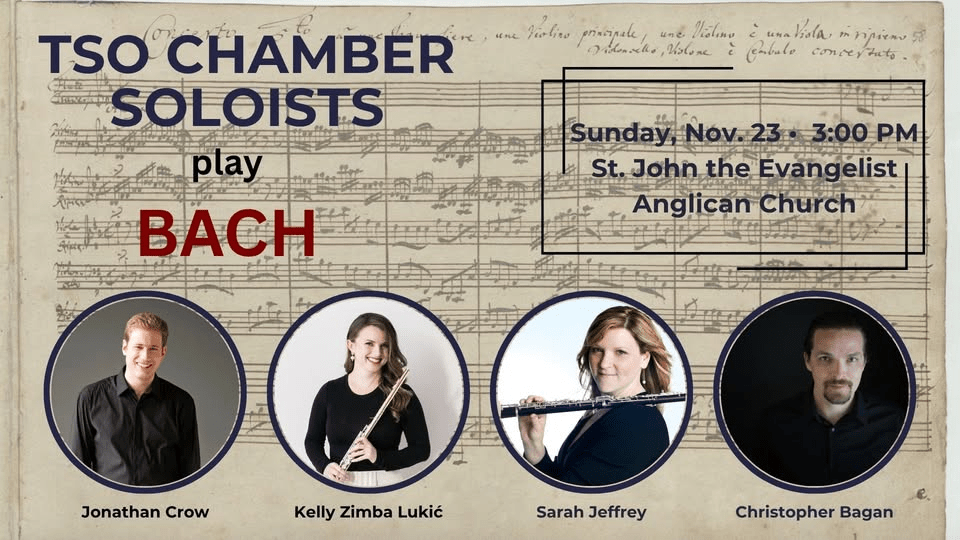
I Looked at all Those Smiling Faces all Members of the Toronto Symphony Orchestra …And They Looked So Excited to be Playing BACH!

Daina Janitis previews The Jeffery Concerts: TSO Chamber Soloists Play Bach, November 23.

Full disclosure, I took piano lessons without whimpering – but even if I put on a scruffy coat, hunched over, and had unravelling gloves on my hands – I never got into a Glenn Gould state of mind to understand the lure of JS Bach.

But then I found the confession of a man who stuck with music teaching and performance – and explained the appeal of Bach to people with souls!

Ethan Hein is a music technology and music education professor- somewhere – and his personal admission hits the right note. Here’s what he has to say about Bach and his music:

(Pictured: Ethan Hein, The Ethan Hein Blog)

“I’m not a big classical music guy for the most part, but I never get tired of Bach. This stodgy eighteenth-century Lutheran doesn’t seem a likely inspiration for a hipster electronica producer like me. There aren’t too many other wearers of powdered wigs in my record collection, and Bach is the only one in the regular rotation.

Why? When I studied jazz guitar, I was encouraged to learn some Bach violin and cello music. I learned a lot about music theory that way, but I had a surprising amount of fun, too.

Why is Bach’s music so much cooler than anything else of his time and place? There are plenty of beautiful melodies and interesting thematic developments in other Baroque music, but they’re usually buried under tweedly curlicues. I get exhausted from all the jumping up and down between adjacent scale tones.

You never get the sense that Bach is just throwing notes at you to fill the space between ideas. This spare, economic quality shows most clearly in his solo instrument stuff. The single lines spell out both the melodies and the chord progressions clearly, using the spaces between the melody notes to deploy fragments of basslines or arpeggios. Bach gives your imagination just enough data to easily fill in the rest. Leaving notes out is a great way to draw in the listener. It invites us to participate in our heads.

Bach has huge geek appeal. He favored puzzle-like musical forms, canons and fugues, where the melody gets repeated as its own accompaniment. Bach’s music is dense with references and quotations of other works, and of itself. Bach’s love of recursion inspired Douglas Hofstadter to write a whole computer science book about him (and Gödel and Escher.)

See: http://www.quora.com/Book-Summaries/What-are-the-main-ideas-and-highlights-of-G%C3%B6del-Escher-Bach/answer/Ethan-Hein

Bach was a great quoter of the popular music of his time and place: hymns and regional dances. Since most of the music he was paid to write was for church services, it’s no big surprise that Bach did so much reworking and embellishing of hymns.

You couldn’t ask for a better education in what it means to embellish a theme than to hear Bach’s lines superimposed on the simple hymns. No wonder jazz musicians love him so much; the effect is similar to the way Charlie Parker sounds improvising on a showtune. (Bach was known in his lifetime as an improviser, which adds to his jazz cred.)

There’s something very algorithmic about the rule-oriented forms he wrote in, the canons and fugues, all that complex counterpoint. Every note that Bach ever wrote is on the web in MIDI format. http://www.jsbach.net/midi/index.html His music sounds pretty decent when played by robots (though it’s livelier when it’s played by humans.)

Bach wasn’t very highly regarded in his lifetime outside of a small, devoted circle of groupies. He didn’t hit the cultural big time until a hundred years after his death. He’d probably be amazed now at his elevated stature.” (Ethan Hein)

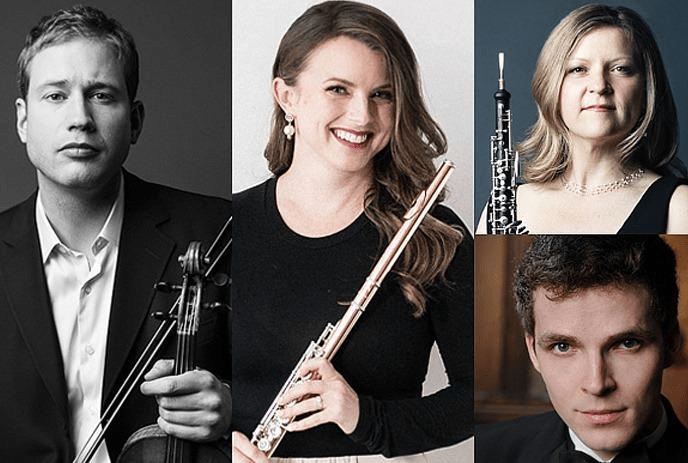
(Pictured: TSO Chamber Soloists)

And who are the musical powerhouses that will be playing Bach on Sunday afternoon?

Their bios with details of performances, awards, and recordings can be found on websites- but what do you NEED to know?

Jonathan Crow is their “curator.” He’s also been the concertmaster of the TSO since 2011, but travels the world concertmastering for other orchestras. He teaches violin at the University of Toronto and is an avid chamber musician – a founding member of the Orford String Quartet.

What is it with oboes and London, Ontario? Sarah Jeffrey is a London girl who plays that instrument superbly. You’ve heard the oboe jokes, haven’t you?

Oboist: Did you hear my last recital?

Friend: I hope so.

Oboe: “An ill wind that no one blows good.”

Sarah, however, has been praised for her “exquisite solo work,” her “luscious tone,” and her sensitive musicianship. She’s Principal Oboe of the TSO, a teacher at the Royal Conservatory, and mom of two kids.

Kelly Zimba Lukic joined the Toronto Symphony Orchestra as Principal Flute in 2017 – but leaves a trail of US orchestras in her debt. She’s celebrated as an innovative and inspiring teacher as well as a performer. Previously a flute fellow at the New World Symphony, she has performed with the Chicago, Pittsburgh, and Detroit Symphony Orchestras.

And Christopher Bagan? He’s another tough one to squeeze into an X (formerly Twitter) post. He’s a Doctor of Musical Arts (specialising in Schonberg) who performs baroque with equal fluency. If you’ve heard the tinkle of a harpsichord at the Canadian Opera Co., it was Christopher.

Is there anything else you should know before you get to the church, on time at 3:00 p.m.? Visit: https://youtu.be/IunEDER6Mws

Only that the Brandenburg Concerto #5 – the piece that will feature the whole ensemble – is incredibly beautiful. The link above leads to a Chicago Symphony chamber performance- but T-Rex Hand Position Up – our Canadian musicians will dazzle!

IF YOU GO:

What: The Jeffery Concerts: TSO Chamber Soloists Play Bach.

When: Sunday, November 23, 2025, at 3:00pm. 

Where: St John the Evangelist Church, 280 St James Street, London, ON

Tickets: Single Ticket Price: $40. Online at https://www.grandtheatre.com/event/toronto-symphony-orchestra-chamber-soloists? or at the door 

Student tickets: Available for free with a valid ID by emailing jefferyconcerts@gmail.com 

For more information about The Jeffery Concerts, visit https://www.jefferyconcerts.com/season2526/index.html

Follow on Facebook: https://www.facebook.com/thejefferyconcerts

Previewed by Daina Janitis
The Jeffery Concerts Bring Jewels of Chamber Music to London for Another Season

By Daina Janitis

Just so you know, I took notes at a recent London Health Coalition meeting on how to reach Gen Z to persuade them that privatization of Ontario health care will hurt THEM in the future. The guest speaker, Angie Cavallin, made several suggestions to us, aged relics on ZOOM screens who can’t even recognize when we’ve muted ourselves:

  • Use digital platforms they favour- TikTok, Instagram, Discord, and X.
  • Leverage relatable memes, short videos, and hashtag campaigns (???)
  • Frame messaging to create clear personal stakes.

SO, I watched TikTok for a few precious hours I’ll never get back … but don’t want to put this wrinkled mug on a video selfie. “Necessity is the MoFo”… you know … so imagine this:

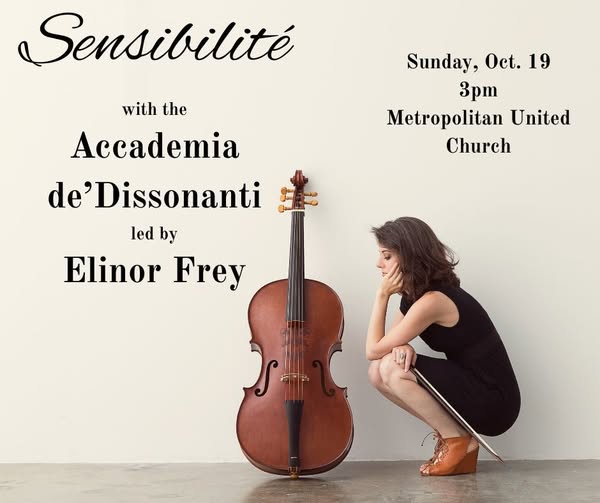
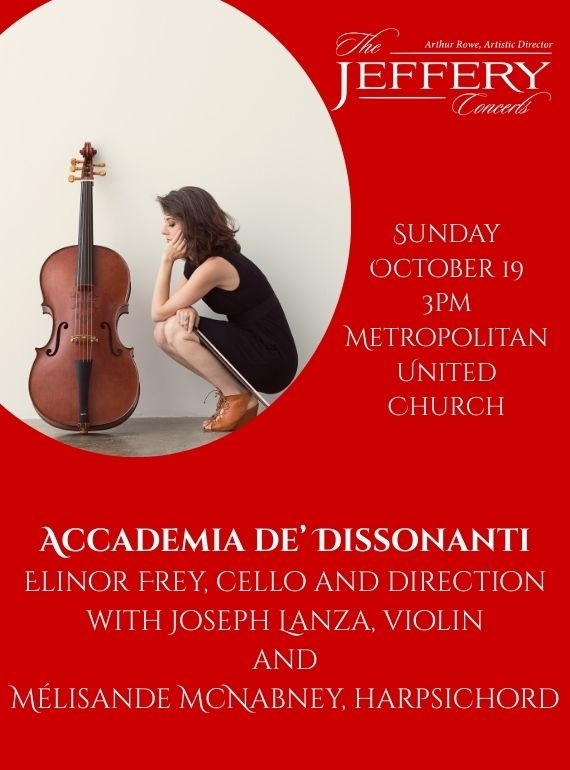
Baby Boomer Daina and Gen Z Madison (#2 favourite name of the generation) talking about the Jeffery Concert at Metropolitan United on Sunday, October 19th, 2025, at 3:00 p.m.

Daina: Madison, are you going to the second Jeffery concert of this season on Sunday afternoon? It’s a unique chance for Londoners to hear world-class chamber music – and if you’re still a student, your ID gets you in free at the door!

Maddie: Jeffery? What’s he play? I’m lowkey interested …

Daina: No, Maddie. He’s dead.

Maddie: Bummer.

Daina: Gordon Jeffery was one of those amazing “characters” of London. A lawyer who joined the family firm, but his heart was in music. He practised law but played the organ at St. Peter’s Cathedral. In 1947, he bought an abandoned church in East London – Beecher United – and renovated it into a concert hall and teaching studios. He even had a Gabriel Kney organ installed there. He had an orchestra, a choir, and started a Music School.

Maddie: If I WAS interested, could I see it?

Daina: Sorry, no – an arsonist set fire to it in 1968. Jeffery bought the old Town Hall further east on Dundas, renovated it as well, and called it The Aeolian Hall. He also purchased and donated countless music scores to Western, Wilfred Laurier, and Windsor. He scoured Europe for string instruments, too, now part of the Music Instrument Bank at Western.

Maddie: So, what are these Jeffery Concerts if he’s dead?

Daina: Well, as tough as it may be to understand what a “benefactor” is these days, Gordon Jeffery left a whacking sum of money to some old friends when he died – with the directive that they work to bring fine chamber music to London for the benefit of its citizens.

Maddie:  Music for a small room?

Daina: Not really. Chamber music is a type of classical music designed for a small group of musicians—usually two to eight players—who each play unique parts. Because of its small size and close communication between players, chamber music is often called “the music of friends,” resembling a musical conversation where each instrument takes turns sharing and responding to ideas. This intimacy allows listeners to feel more connected to the performers and the music itself.

Maddie: I’m shook. And these friends did that in London for FREE?

Daina: That’s the mission of not-for-profit organizations – and the board of today’s Jeffery Music Foundation continues to create an annual series of world-class chamber concerts at very low prices – and free for students.

Maddie- So if I show up on October 19th … what am I going to see? – a classical concert. Yeet!

Daina: Well, this one is officially called “Accademia de Dissonanti and Elinor Frey, cello with Joseph Lanza, violin and Mélisande McNabney, harpsichord.”

Maddie: “Dissonan …”  Did you mean they don’t sound good together? Big Yikes!

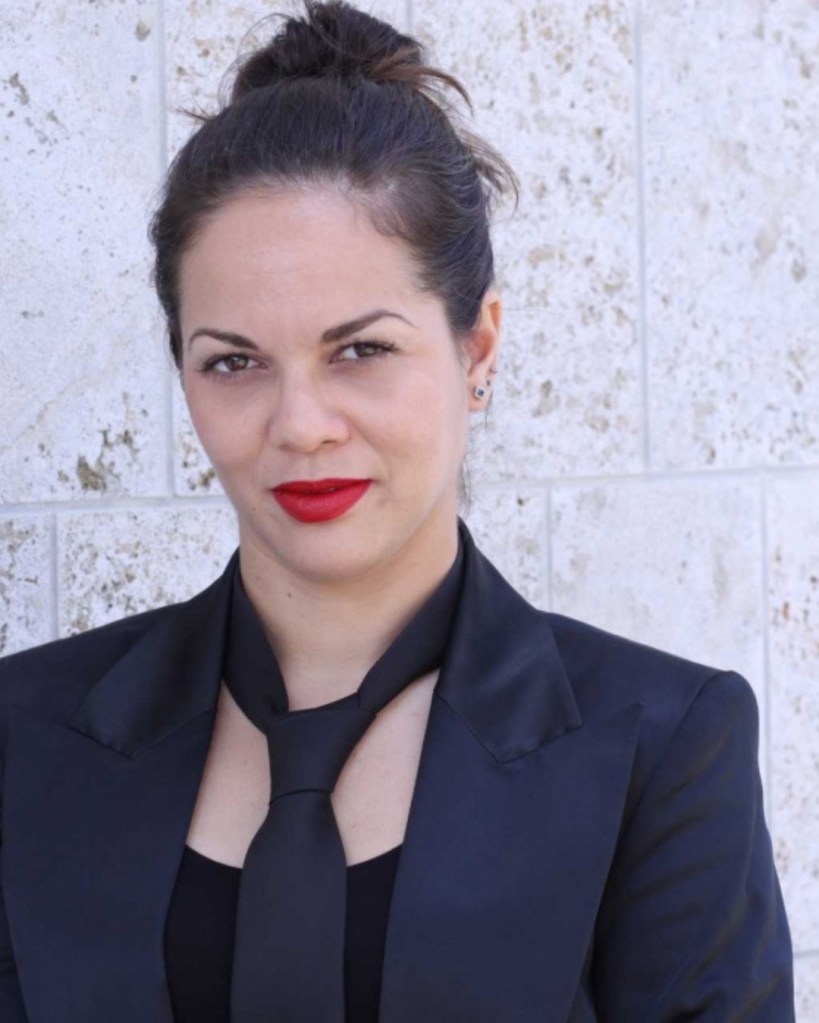
Daina: Not at all. Their brilliant co-ordinator, Elinor Frey, decided to call her group that because of a historic connection: Accademia de’ Dissonanti refers to the learned society of the same name founded in Modena, Italy, in the early 1680s. Its meetings stimulated discussions on music, poetry, and other subjects connected to the d’Este family.

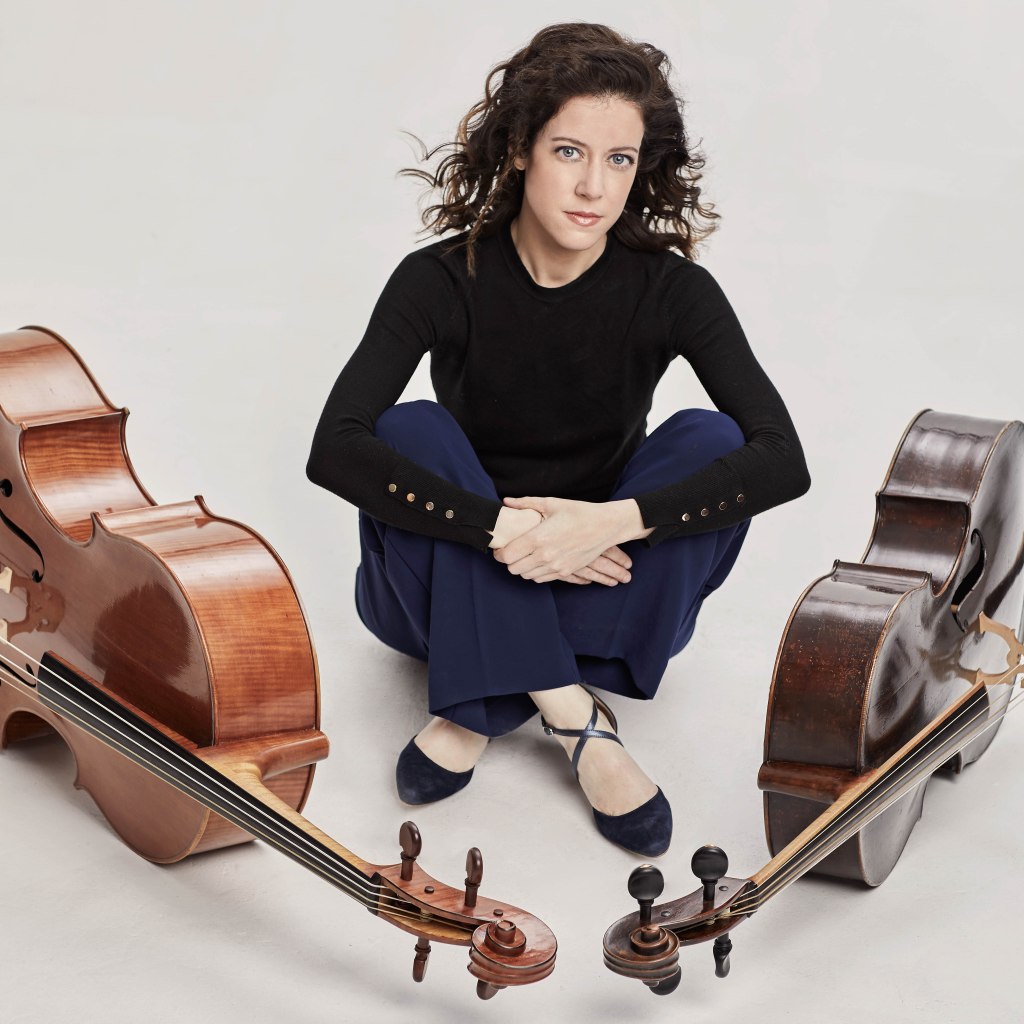
(Pictured: Elinor Frey)

Maddie: And this Frey lady? What’s her fire?

Daina: She’s a phenomenon! Or … she has RIZZ! She was born in Seattle but now makes Montreal her home base. She’s a cellist, does major research, and is a “gambist.” She’s performed all over America and Europe and received dozens of grants and prizes for her work- including a Fulbright. She’s got degrees from McGill, Mannes, and Juilliard.

And at THIS concert, she’s including a few beloved local guys – Joe Lanza on violin and Joe Phillips on double bass. Both are world-class musicians!

Maddie: But am I going to LIKE any of this Broke stuff? Any season from Vivaldi?

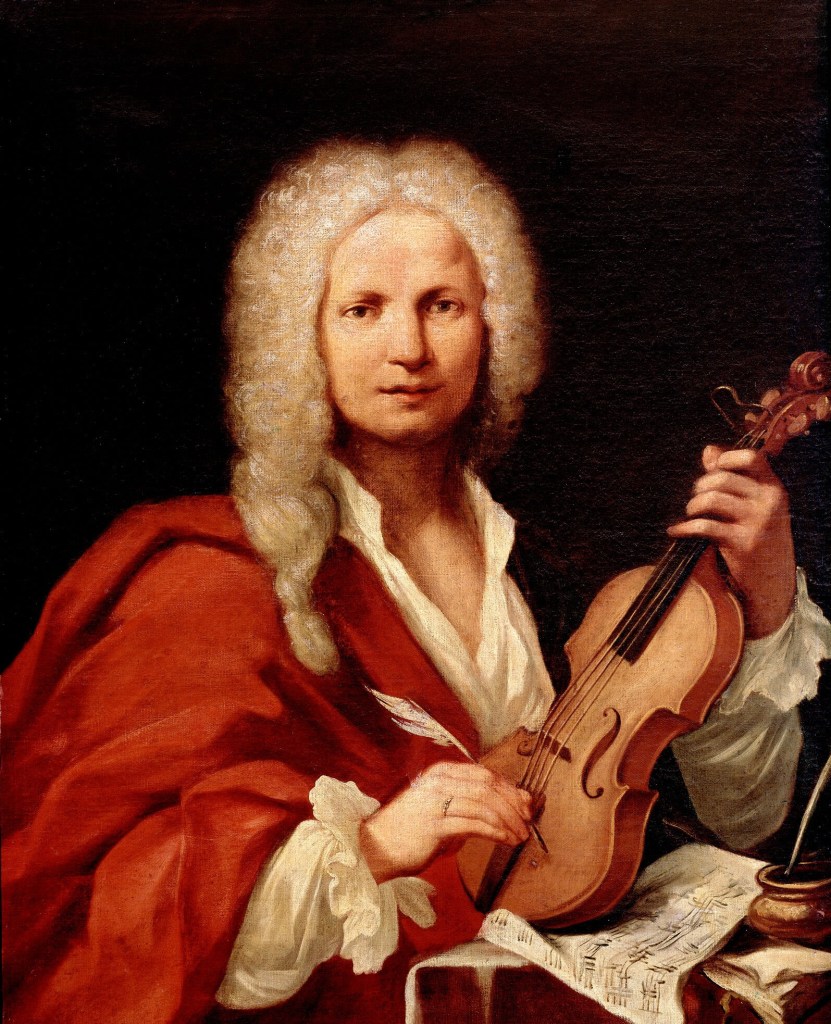
Daina: Yes- but no season. You’ll hear TWO concertos by Vivaldi – one in D Minor and the other in G Minor. The Big Viv taught music in Venice- and wrote those as delightful stuff for his students- full of in-jokes and amusements. There is also a harpsichord toccata- yes, the tinny piano – by JS Bach and a cello concerto by CPE.

(Pictured: Antonio Vivaldi, 1678–1741)

Maddie: And they’re not going to be boring?

Daina: How could CPE Bach be boring? That cello concerto … C.P.E. Bach’s Cello Concerto in A minor is a significant work characterized by its blend of Baroque and Classical styles, with an overall tone of emotional intensity and dramatic flair typical of the Sturm und Drang movement. It features a powerful, virtuosic first movement in 3/2 time, a deeply moving and introspective slow movement in C major (6/8 time) with a dramatic dialogue between solo and orchestra, and a finale that is a fast, energetic march. The concerto showcases the cello’s full range and expressive capabilities, with frequent shifts between turbulence and lyricism. Sorry … I got carried away …

Maddie: Touch grass, lady – I’m still not sure …

Daina: Hon, I’ll get back to what you are going to experience at The Met on Sunday – a close emotional relationship with amazing chamber musicians, some real stress relief. Some brain stimulation that is guaranteed to improve your memory, creativity, and problem-solving skills.

Just watch the musicians closely – they’re leading and following without a conductor and probably experimenting with phrasing, dynamics, and interpretation. They’re creating community- and during that concert, you’re part of it.

Maddie: SLAY – I’ll be there!

For more information about The Jeffery Concerts, visit https://www.jefferyconcerts.com/season2526/index.html

To purchase tickets for this concert, please contact the Grand Theatre online at https://tickets.grandtheatre.com/11649, by phone at 519-672-8800, or in person at 471 Richmond Street. Single tickets are also available at the door.

Students with a valid ID are welcome free of charge.

By Daina Janitis, The Beat Magazine 2025 Classical Music Writer

Daina Janitis Reflects On London Symphonia’s Opening Night: Mozart, Ravel, and Beyond.

by Daina Janitis

So, I warned you in my Bio, didn’t I – I’m not an academic musician – English Lang and Lit graduate – and I’m doddering past 80 years of age. And reviews of concerts seem sort of pointless to me. If you were there, you know what it sounded like- and if you weren’t, you don’t need any shade of schadenfreude thrown at you for having missed a unique experience (although I have high praise for the crew that videotapes the London Symphonia concerts-the experience is worth trying). So, “The Husband” and I huffed up the stairs to the balcony and positioned ourselves where we could see David Jalbert’s hands on the keyboard – all of us “Displaced Persons” kids took piano lessons when our families were let into Canada… we know where to sit.

Yes, the music was spectacular – but it was only part of the experience. With London Symphonia concerts at “The Met,” you get something unique on the concert evening- something that deserves thanks and acknowledgement, while empathy, respect for diversity, and liberal education are becoming crimes and vices in the elephantine country south of us.

You know those rooms set aside for “Big Givers” in theatres and performance halls where they can get a free glass of musty Chardonnay and schmooze with others of that generosity level? AT OUR Met, the London Symphonia musicians, guest artists, and the conductor are ready to chat with you and to answer any dumb question you might have.

After Saturday night’s concert, I was able to hug Ted and Renee of Serenata Music and thank them for their generosity in helping the Symphonia bring to London someone like Jalbert. I walked over to a gaggle of Western Music students who were still jumping up and down with the excitement of the music. I cornered two of them – a toque and hockey shirt on one, a BIG waxed mustache and sleeveless tee (no sombrero) on the other – to thank them for making the concert even better with their presence. I also told them I was grateful for being in Canada together- were we in Chicago or Memphis, ICE agents might have seized them both at the exit. I could tell Ben the Cello that, should I ever become deaf, I could enjoy concerts fully just by watching his face. And I could hug Cosette the Conductor, telling her how much I loved Kooba (I know, after showing the other half of my Spanish- “Ola!”). “The Husband” had to get all expert, shaking her hand and thanking her for “a wonderful master class in orchestral conducting.”

(Pictured: Cosette Justo Valdés. Photo Credit: Lia Crowe)

And the music – a totally shared experience, no matter what your level of “expertise.” Cosette the Conductor, dressed in traditional black, led the audience in singing along with “O Canada.” She had brought to the program two pieces by Cuban composers – and in the second, after she explained its inspiration – the double-bench horse-drawn carts in Cuba that haul farmers, water, crops, and appliances – every clack of Tim Fancom’s percussion brought that musical scene to life. And although Cosette said that “Canada is my home” after six years, those unmistakable Cuan dance moves enhanced her conducting of the piece.

(Pictured: David Jalbert. Photo Credit: Julien Faugère)

And David Jalbert’s performance of Ravel’s Concerto in G major? It left the audience breathless – not only for Jalbert’s genius and technical skill, but through, I believe, the musical “community” Ravel’s writing for orchestra and piano creates in the three-movement piece. The first begins with Jalbert’s hands posed in a criss-cross on the keys while a jazzy chorus of clarinet, trumpet, bassoon, and trombone joins him in some sensuous music- and that harp suddenly adds brushstrokes of mystery. Don’t even ASK about how perfect his rapid trills were! The second movement assured us that Jalbert can handle anything – a solo piano beginning that eventually is joined by the English horn and the other instruments in rising tension. And the final presto movement did what a French composer, Louis Fleury, said it should do: be “an unstoppable onslaught, spurred on by the shrieks of the clarinet and the piccolo, the donkey brays of the trombone and occasional fanfare flourishes in the brass.” How that wonderful Canadian pianist had the energy to play a Prokofiev rumble of pure delight as an encore – we OWE him!

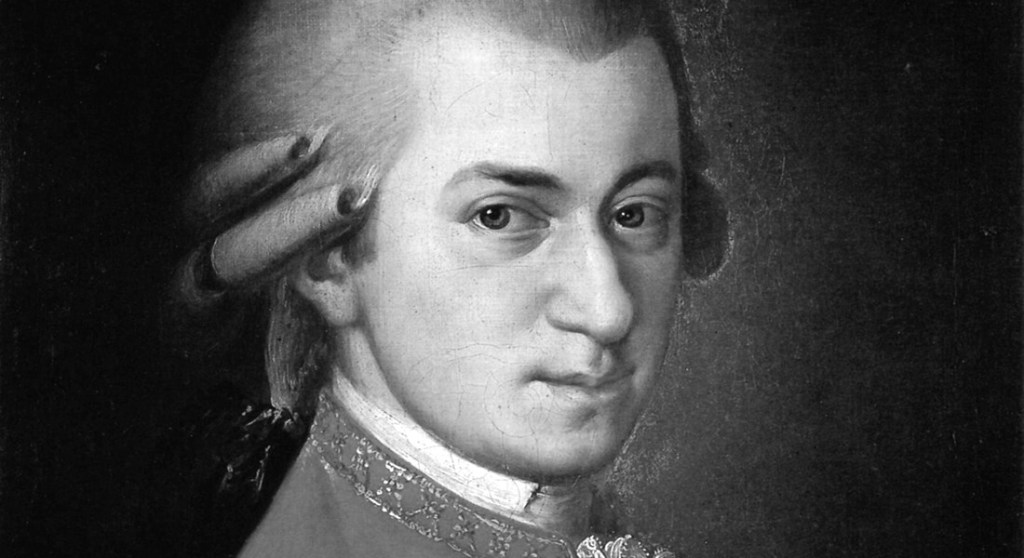
(Wolfgang Amadeus Mozart, 27 January 1756 – 5 December 1791)

Do you want to know about the Mozart Symphony #39 in E-flat Major? Brace yourself for more stories of musical heroes. Wolfgang died at the age of 35, and within two months of his final years, composed THREE symphonies- 39, 40, and 41. Number 39 was the introduction, so to speak, that culminates in his “Jupiter” (#41). But Wolfie- no oboes??? The London Symphonia clarinets took the limelight in the bold and heroic first movement. In the second, third, and fourth movements, the 18th-century composition took us through dialogues of instruments in our city’s brilliant small orchestra, ending in something that’s been called “the 18th-century equivalent of a hoedown”.

If you couldn’t make it- and are curious about how all of that anticipation and joy can be in one symphony – DO invest in the London Symphony “Video on Demand” concert purchase on their website. If you’re as cheap as I am, here’s a freebie from Frankfurt:

Okay for now, but don’t you dare miss the full experience of “Payadora” on November 15, 2025, in the London Symphonia 2025-2026 series.

For more information about London Symphonia and the 2025-2026 Season, visit https://www.londonsymphonia.ca/

Reviewed by Daina Janitis, The Beat Magazine 2025 Classical Music Writer

London Symphonia Opening Night – the ONLY Night – and I can hardly wait!

Previewed by Daina Janitis

This is one of many 2025-26 season first concerts- opportunities I hope to tell you more about soon – but this one is special. “Classical” music is my passion to hear live and to write about. Not because I’m a musician or an instructor, but because I’m committed more than ever to the shared experience of being at a concert played or sung by London’s formidable talent pool. The energy and emotion felt by the players are felt by everyone in the audience – it’s a shared experience that increases the pride and identity of our city.

Opening Night, London Symphonia

October 4, 2025, at 7:30, Metropolitan United Church

(But as Londoners, let’s call it “The Met” – The Met halfway between Toronto and Detroit)

(Pictured: Opening Night Guest Artist, Canadian pianist, David Jalbert.)

And on the program …

Augusta Holmès, La Nuit et l’Amour

Rodrigo Prats, Canta el Carretero Cuando Dan Las Seis
Ravel, Piano Concerto in G Major 
Mozart, Symphony No. 39

First, David Jalbert- the guest artist. The Canadian is ranked “among the best 15 pianists of all time” by the CBC. Critics have strived to explain what makes him unique: “In an age of knuckle-busting keyboard technicians fixated on a single era, composer or concerto, it is a great pleasure to encounter an artist of Jalbert’s stature for whom the piano is simply a transcendent means of human expression” (WholeNote)” His recordings are already legendary- Prokofiev, Faure, the Goldberg Variations, and on Saturday night, he’s performing Ravel.

In an interview with Andrew Chung, Jalbert admits that he’s like an actor, changing characters with every composer that he plays. Ravel, to him, is an “old friend” who “never ceases to amaze”. The concerto he’ll perform with London Symphonia is only twenty-two minutes long- but it’s “an astonishing piece” with French themes, touches of flamenco, and hints of American jazz.

And I can’t omit this detail about Jalbert. In the “dark times”, when Orchestra London musicians were regrouping through “We Play On” into the stunning ensemble we know today, Jalbert offered to perform with them – refusing to take a fee!

You can watch Andrew’s interview in its entirety here https://youtu.be/4BlZrRFSPAc?si=sz0R3wCFSwmfylD4

You know by now that London Symphonia has no permanent conductor. An exciting new conductor is invited for every program- and this opening night has an upcoming young Cuban-born maestra on the podium.

(Pictured: Opening Night Guest Conductor, Cosette Justo Valdés.)

Cosette Justo Valdés has conducted in a mind-boggling number of cities around the world. She is Honorary Director still of the symphony of Santiago, Cuba where she spent nine years, but her contributions to Canadian culture through music are particularly interesting: “Through her daring, innovative programming with the Vancouver Island Symphony Ms. Valdés has quickly ignited new passion in her audiences, inspiring them to engage personally not only with living, contemporary music but also with rarely heard historical works. As an ongoing part of her artistic agenda in Vancouver Island, Ms. Valdés proudly continues to give a powerful voice to the works of women composers and composers from Native Canadian and American heritage.”

I promised myself I would not drag current politics into notices about London’s rich classical music scene – but with every new announcement and curtailing of DEI, cutting of support for the arts and education, and ridicule of “wokeness’ – I’m breaking that promise. As Thom Hartmann reminds his fellow Americans, “[The old Democrats] knew that politics is not just about what laws are passed but about what stories a nation tells itself about who it is. They knew that culture is not an afterthought; it is the riverbed through which politics flows.”

London Symphonia is one of London’s most valuable forgers of our Canadian culture. This opening night concert will add to our cultural fabric – and level up your internal immunity to the noise pollution of social media and politics.

What: London Symphonia Opening Night

When: October 4th, 2025

Where: Metropolitan Church, 468 Wellington St, London, ON 

For more information and to purchase tickets, visit https://www.londonsymphonia.ca/

Previewed by Daina Janitis
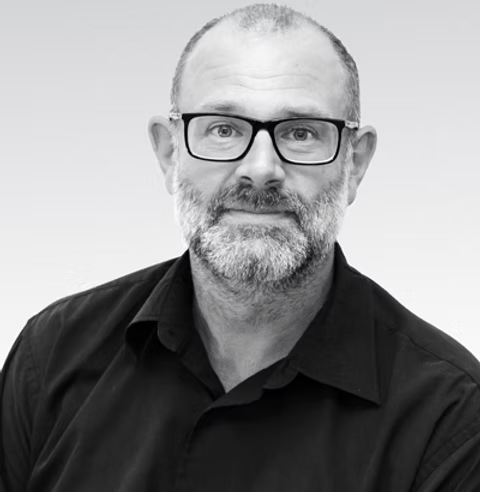
Meet London Chanteuse Laurraine Sigouin

Laurraine Sigouin, a bilingual jazz singer and Forest City London Music Award winner, has performed at top London venues like Aeolian Hall, the Home County Music and Arts Festival, and the popular Jazz for the People concert series. The following is an edited Q&A from The Beat Magazine 2009’s interview with Laurraine. 

Could you tell me about your upbringing and your early musical endeavours as a child and teenager? 

I grew up in Cochrane, Ontario, as the youngest in my family. I am proud of my French-Canadian roots. Surrounded by music from an early age, I began playing piano early and developed a lifelong passion for music. 

What brought you to London? 

At nineteen, I left home to study Music and French at the University of Western Ontario. This marked the beginning of my journey in both the arts and education. 

Could you tell me about your career in education? 

I had a fulfilling career teaching Music at Kensal Park French Immersion School in London. I am very grateful for the many years I spent sharing the joy of music with my students. 

Can you cite some highlights of your teaching career?

When I first started teaching music, I taught the entire program from Kindergarten through Grade 8. It was such a joy to guide students from their very first music lesson all the way to their final band concert. Watching each child develop their skills and grow in confidence — in their own unique way — was incredibly rewarding. Being part of that full journey was one of the true highlights of my teaching career.

I loved all our concerts, but one of the most meaningful traditions was taking my Junior Choir — often 100 to 120 children — to perform at Parkwood Hospital. The tradition began when my father was a resident there and continued long after he was gone, right up until my final year of teaching.

It was truly the highlight of the year for me and for many in the choir. When my father lived there, the kids were especially excited to go and sing for him. Jake Levesque accompanied those concerts as well, adding his warmth and musicianship to the experience.

How long have you been playing music professionally?

I’ve been performing since 1997, when I started working with Mosaic, a vocal trio alongside Catherine McInnes and Jake Levesque.

Do you consider yourself a full-time or part-time musician? 

Most of my days revolve around music in one way or another; it takes up a huge part of my life, whether I’m preparing for a concert, teaching my grandchildren, playing the piano, learning a new song, or just listening.

In addition to vocals and piano, do you play any other musical instruments? 

I didn’t pursue wind instruments as a performer, but during my music studies at Western, I gained enough of a foundation to teach them. I found immense joy in guiding students through their first notes, and helping them grow musically was a true privilege.

What have been your musical influences over the years? How would you describe your musical style? 

My musical tastes are quite diverse and eclectic, so it’s hard to pinpoint specific influences. I’m drawn to a wide range of styles, and I think that variety naturally shapes how I connect with music. I listen to a lot of Radio-Canada and love discovering artists or songs I haven’t heard before. That constant sense of discovery is what keeps music exciting for me.

My songbook draws inspiration from a wide variety of styles, including jazz, Latin, cabaret, bossa nova and samba, contemporary Québécois pop, French-Canadian traditional music, and Cajun music. It features artists and bands like Harmonium (Serge Fiori), Robert Charlebois, Charles Aznavour, Serge Gainsbourg, Édith Piaf, Henri Salvador, Pink Martini, Beausoleil, Zachary Richard, and Compagnie Créole. I also cover songs written by my very talented friends Steve Hardy and Jake Levesque — some of which are the result of collaborative songwriting projects.

Tell me about the various groups and musicians you have played with over the years. 

My performance career includes many years singing with London Pro Musica, as well as performing with the vocal trio Mosaic. Mosaic recorded two albums and appeared at major events, including the Montreal Jazz Festival and Home County Folk Festival. 

In 2004, Jake Levesque and I founded Enchanté to celebrate our Francophone and bilingual repertoire. The duo grew into a vibrant musical family featuring some of London’s finest jazz musicians. I am honoured that Enchanté received the 2025 Forest City London Music Award for Jazz Vocal (Solo/Group). Making music with this group remains one of the greatest joys and highlights of my life and musical career. 

Do you have any memories of the late Jake Levesque you would like to share?

There are so many special memories. I met Jake in 1997 when we formed Mosaic. We rehearsed two to three times a week, and we always had so much fun when we worked together. That same spirit carried into our time with Enchanté as well.

Jake also accompanied all my ensembles at Kensal Park. As school concerts approached, our weekly Enchanté rehearsal time was often dedicated to arranging and going over music for my school choirs. And he did all of that with joy.

My students could hardly contain themselves when Monsieur Levesque walked into the gym — it was like a rock star had arrived. He always spoke en français and never missed a chance to encourage and celebrate their talent.

A beloved school tradition was ending our Concert des Fêtes with Jake’s performance of Linus and Lucy. Former students still tell me that every time they hear it, they think of Monsieur Levesque — for many families, it became a holiday highlight.

He gave his time and talent with such generosity.

What are some of the musical venues where you have performed? 

I have performed at many of the city’s beloved venues, including Aeolian Hall and Ironwood Kitchen and Grill, and at events such as the London Jazz Festival, Jazz by the Bog, the Springbank Garden Concert Series, The Aeolian Jazz and Musical Arts Festival, and le CFA-Forum provincial. 

Are you working on any special projects or have any upcoming gigs you would like readers to know about? 

A special project that I’d like to mention is a recording of the compositions that Jake and I wrote together. We were thrilled to collaborate with Christoph Babin (sound engineer), Stephen Holowitz (piano), Paul Stevenson (trumpet), Jesse Grandmont (fiddle), and Leah Grandmont (fiddle). Their musicianship is truly extraordinary, and we were absolutely thrilled with the results. The recording is available on my Bandcamp page. if you search for my name on the Bandcamp site  https://bandcamp.com/, you’ll find our songs there.

I also have an upcoming porch concert on September 1 on Elmwood Ave in Old South. Stephen Holowitz will be joining me on piano, and Paul Stevenson on trumpet. It’s open to the public, so if anyone would like more information about that or future events, you can find me on Facebook by searching my name or Enchanté and follow me on Instagram at @Laurrainesigouin.

In addition to your musical endeavours, are you involved with any other arts organizations or activities in London? 

At the moment, I’m not involved with other arts organizations in London. Between my musical work, supply teaching, and family life, my days are pretty full. That said, I’m always open to new collaborations or opportunities within the arts community.

Is there anything else you think our readers should know about Laurraine Sigouin, the musician, and Laurraine Sigouin, the individual? 

Today, I find joy making music with my grandchildren, supporting my oldest as he learns violin and teaching piano to my younger ones, and continuing to share my love of music both in performance and at home. 

Piano Lessons With Clark Bryan

Now that I’ve retired from The Aeolian and have more time, I’ve decided to open up a few more spaces in my teaching studio. If you know of someone interested in piano lessons, please have them reach out or go through my personal website: clarkbryan.ca
I’ve always taught a few students during my tenure as Director of the Aeolian. Teaching is definitely one of my first loves! I haven’t advertised for decades, so please help spread the word:). Happy to do in-person or virtual lessons (I have a few students from other countries).

Biography:

Clark Bryan is an award-winning concert pianist, composer, recording artist, educator and activist. He has studied with some of the greatest pianists of our times. With fourteen albums to his credit, Clark has also recorded over two thousand piano works for his You Tube channel. As a teacher, Bryan has taught thousands of students, adjudicated more than 75 music festivals coast-to-coast in Canada, given dozens of workshops and written a book, “Gateways to Learning and Memory”. In 2004, he founded The Aeolian Performing Arts Centre and served as the Artistic and Executive Director until his decision to retire at the end of 2024.
Bryan believes that everyone should have universal access to music, art, education, and culture. Because of this belief, he launched El Sistema Aeolian in 2011. This free, UNESCO award-winning program has offered more than a thousand children and youth an opportunity to experience the joy of a rich musical education. “Music is one of the most powerful tools we have for social change,” he says. In all his work with the arts and education work, Clark displays a progressive, social-justice mindset.
Other innovations have included Aeolian Pride Choruses, Rebelheart Collective, Aeolian Talks, A National Song Writing Competition, an artist in residence program and The Aeolian Jazz and Musical Arts Festival.
Bryan was awarded Musical Personality of the Year (2005) and won a Jack Richardson Award for Community Contribution (2011). In 2017, Mr. Bryan was given the Western Alumni Award of Merit and inducted into the Don Wright Faculty of Music Wall of Fame. In 2018, Clark was recognized with a Queen Elizabeth Canada 150 Medal through the House of Commons for his contributions to community and the nation. In 2022 and 2025 Clark won Best Classical Instrumentalist at Forest City London Music Awards. In 2023, Bryan was featured in a book about London by renowned author Richard Bain. In 2023, Clark was awarded a Lifetime achievement award from the Forest City London Music Awards and inducted into the London Music Hall of Fame. In 2024, he was awarded The Mayor’s Honour List from The City of London. In 2025, Clark was awarded The King Charles III Medal for service to the nation. In the same year he was awarded the “Laudible” award from PHSS.
Bryan continues to extend his reach into the community. Whether speaking about the power and joy of music study in his TEDX talk or engaging in community activism, Clark is committed to building strong, culturally rich communities that celebrate the arts, culture and education. He speaks regularly at events, is featured on radio, in newsprint and television.