
by Beth Stewart.
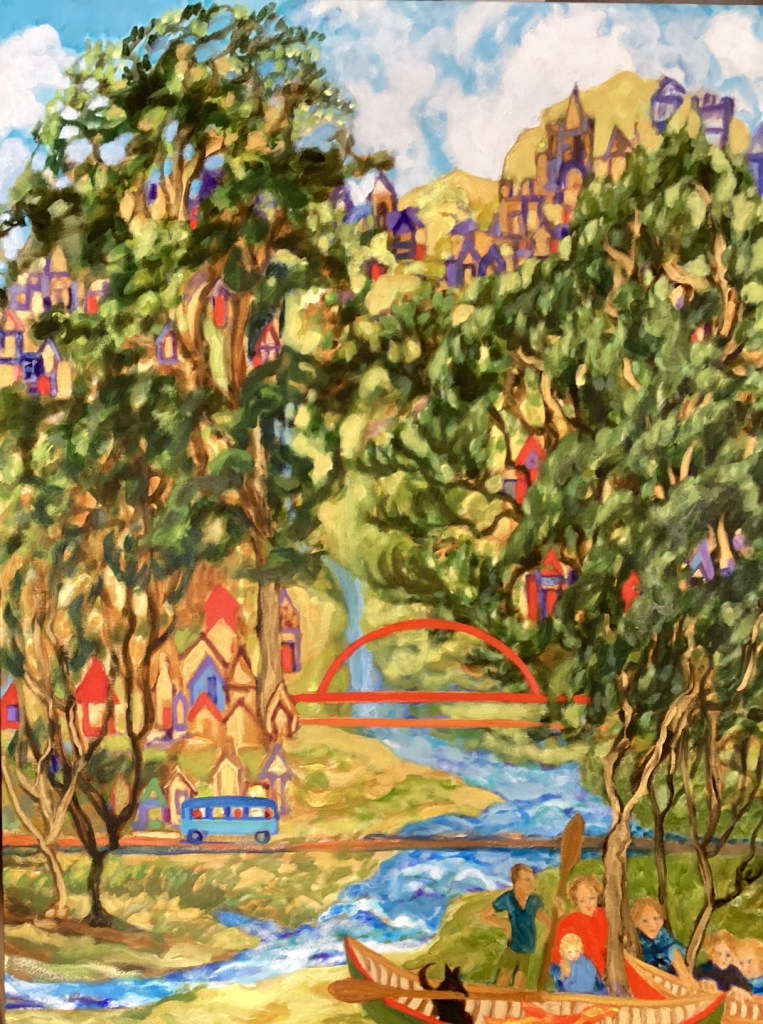
(Pictured: Catherine Morrisey, “We are going for an adventure”, oil on canvas, 36 by 48 inches, 2026.)
Rejection. It is an inevitable consequence of being an artist. To have your proposal or work rejected is disappointing but can spur redirection. To paraphrase a line from Chumbawamba’s 1997 hit “Tubthumping”, you get knocked down, and you get up again.
Yet, rejection may trigger feelings of anger and self-doubt.
This writer recently had a residency application rejected. In an email, I was thanked for my application but informed that “after careful review by the adjudicators,” the organization was not able to offer me a place in the program. It cited limited places and a high volume of quality applications as contributing factors. It ended with, “We understand this news is disappointing for you and hope that it does not discourage you from applying to future programs.”
Was I devastated? No. Will I quit doing art? No.
London artist Catherine Morrisey is no stranger to rejection. With a lengthy career as an artist and strong exhibition history, she is a seasoned veteran of the fickleness of the art world.
Earlier this year, Morrisey had enthusiastically entered a particular art competition and encouraged others to do the same. When their pieces were rejected en masse, she felt bad. Not for herself, but for others. She wondered how she could make it better for them, how she could make them feel “appreciated.”
She thought of how a group of French painters reacted to their rejection from the annual Paris Salon over 150 years ago. They revolted. Says Morrisey, “They had a big party. They celebrated each other’s art. It was a new beginning for art.”
The annual Paris Salon began in 1667; sponsored by the French government and the Academy of Fine Arts, it was an exhibition of the best academic art. Its jury was conservative; idealized realism was expected. When, in 1863, the Salon jury refused 4,000 paintings – approximately two-thirds of the paintings submitted – the rejected artists and their friends protested.
Among the “rejects” were Édouard Manet’s “Déjeuner sur l’herbe” and James McNeill Whistler’s “Symphony in White, No. 1: The White Girl”. Both paintings were thought to be scandalous. Also rejected were works by Camille Pissarro, Johan Jongkind, Henri Rousseau, and James McNeill Whistler.
With the blessing of Emperor Napoleon III, the refused works were displayed in another part of the Palace of Industry. The resulting 1863 Salon des Refusés welcomed more than a thousand visitors per day.
Morrisey went from reaction to action and became an instigator. Not being juried in herself and hurting for her friends sparked an idea, and she ran with it.
Sandra De Salvo, executive director of the TAP Centre for Creativity, says when Morrisey presented her with the idea of a Salon des Refusés, it just felt right for her venue.
The call went out: “While sometimes challenging to face, rejection is an inherent and important part of the artistic process and an artist’s career. At the suggestion of London artist Catherine Morrisey, TAP is hosting a Salon des Refusés. Inspired by the 1863 exhibition of the same name, this exhibition highlights the important role rejection plays in finding an audience, building resilience, and growing as an artist while also acknowledging that rejection can feel exclusionary, disheartening, and disappointing.”
Eligibility was loose: “Artists must be based in London or the surrounding area. Artwork must not have been exhibited before. Artwork must have been rejected from at least one exhibit application process.”
The acceptance process was simple: “In the spirit of this exhibition, we will include as many works as possible, but the submission form will close when we have reached our maximum capacity.”
TAP’s Salon des Refusés promises to be an exhibit with a broad reach. It presents the opportunity for people to come together to connect, share experiences, and to create dialogue. De Salvo’s philosophy on rejection: “Don’t hide from it – put it out there and talk about it.”
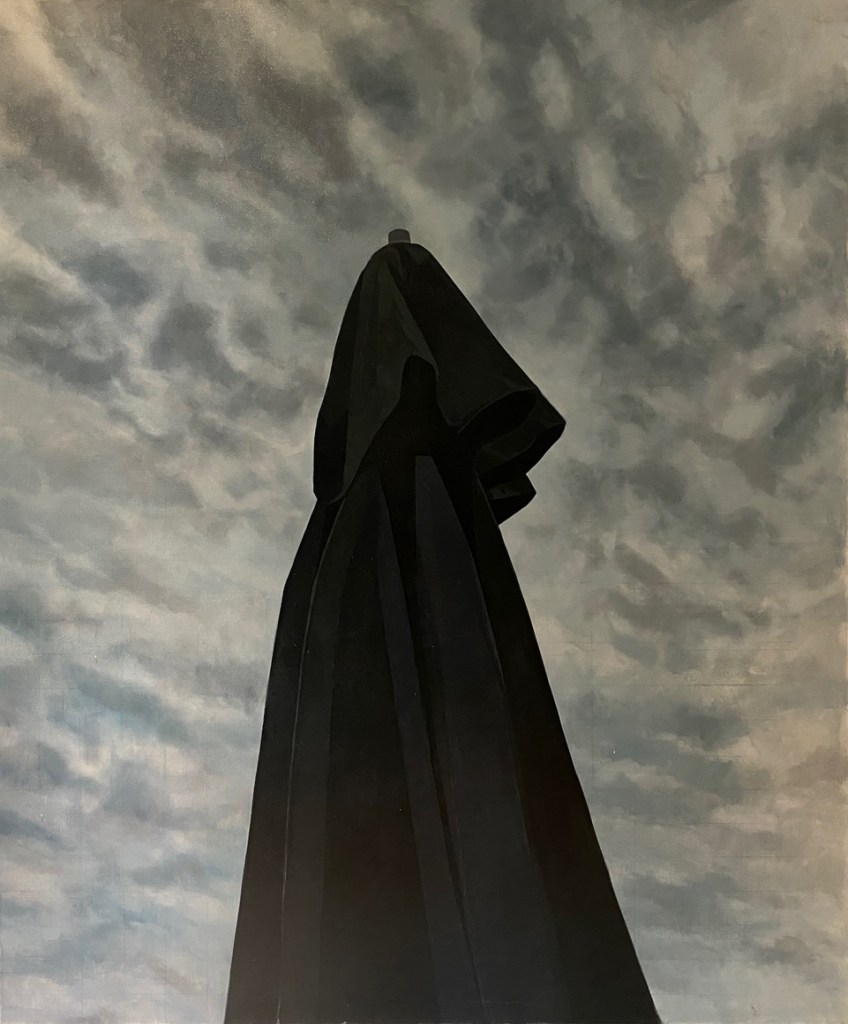
(Pictured: Nick Hall, “I will follow you into the dark”, acrylic on canvas, 60 by 48 inches, 2024.)
Participant artist Nick Hall says, “Rejection, resilience and growth could be called the holy trinity for any serious artist because they are a proven catalyst for progress.”
But, on the flip side, he muses that not all rejection is helpful or even warranted. Rejection made on personal biases is frustrating.
He is fond of the piece he entered in the Salon. The idea for “I will follow you into the dark” came to him rather abruptly, and he felt “compelled” to capture it on canvas. Of the piece, Hall says, “Not everyone will ‘get’ it, perhaps because they fail to really look at it. To those that do, I thank you in advance.”
“Obviously, it’s not everyone’s cup of tea, so attempts made to enter it into exhibits that are naturally interested in more standard fare have failed. Until now!”
As to what he expects to get out of the Salon … “a red dot would be nice. But really, just gauging people’s reactions to it will be a treat.”
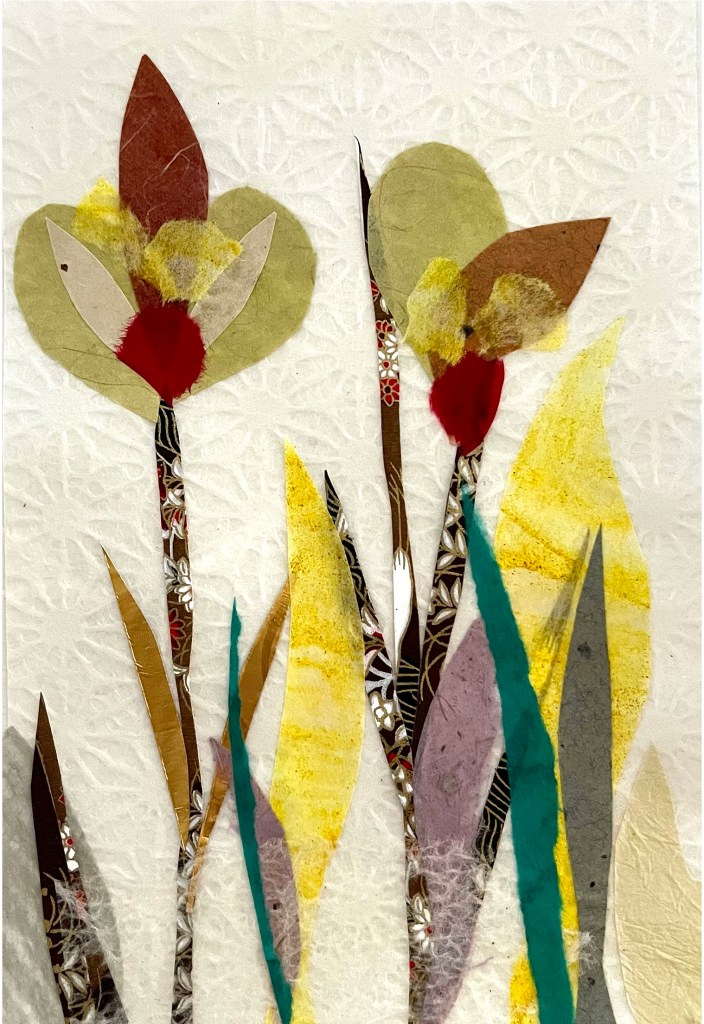
(Pictured: Gabriella Solti, “Collage I”, Japanese washi paper, 7 by 5 inches, 2026.)
Participating artist Gabriella Solti believes, while rejection is part of life, “Artists experience more of it than most because they repeatedly put themselves and their work forward – submitting to open calls, applying for grants and residencies, and pursuing professional opportunities (all very competitive arenas). Beyond making art, a good part of an artist’s practice is taking risks and putting their work and artistic practice up for scrutiny.”
She recognizes that many artists feel wounded when their artwork is rejected, and a Salon des Refusés can lighten the sting.
However, Solti’s own perspective is coloured by having been on both sides of the process. She says, “Twenty years ago, I worked as the gallery coordinator of a suburban municipal art gallery near Vancouver, where I organized open calls, coordinated jurying processes, and curated exhibitions. I know firsthand that there are far more strong artworks than any gallery has the space to exhibit thoughtfully. A rejection is rarely a definitive statement about the quality of a work. More often, it simply means that, within the specific context of a particular exhibition, the work did not align with the curator’s conceptual vision.”
Her motivation for submitting “Collage I” to TAP’s Salon des Refusés comes from her belief that “Every artwork has a receptive audience. The only way to find that audience is to continue showing the work.” Submission, then, is not only a risk – it is also an opportunity for a piece to find viewers with whom it resonates.
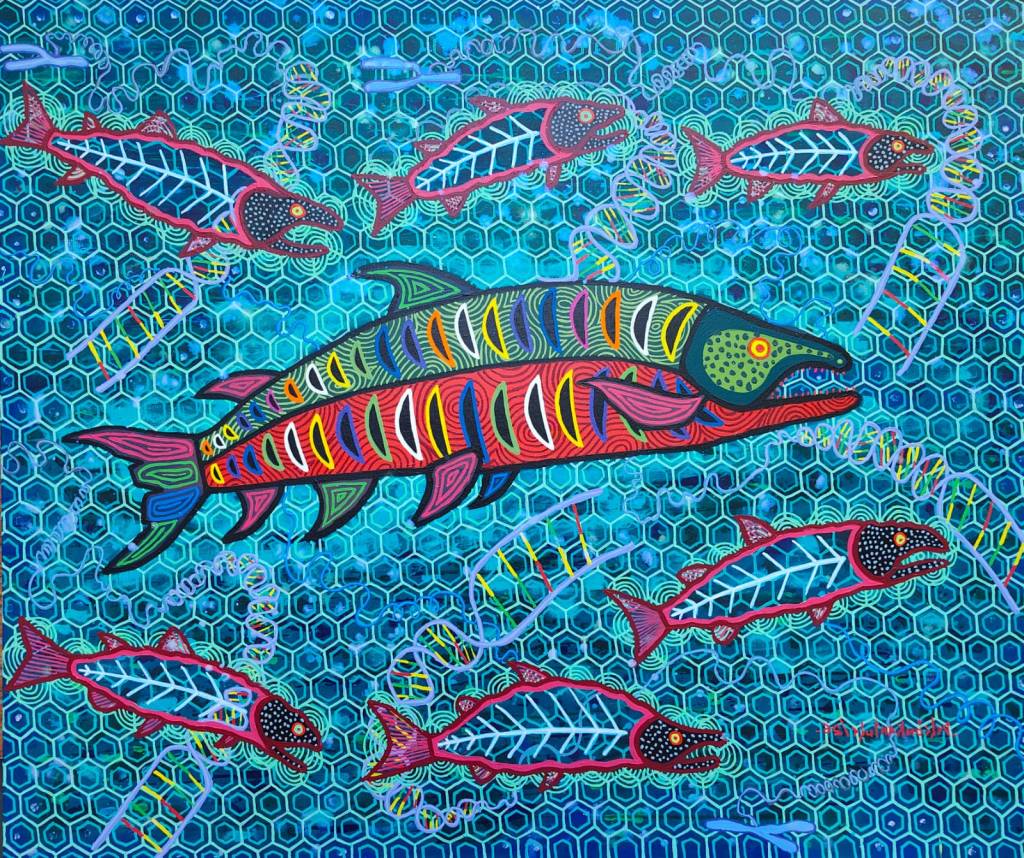
(Pictured: Oswaldo DeLeón Kantule, “Salmon Factory”, acrylic on canvas, 137 by 163 cm, 2026.)
Oswaldo DeLeón Kantule’s art is well recognized in his home country of Panama, but he has struggled to break into the Canadian market.
He says, “Though I was not born in Canada, it’s important for me to feel connected to the community where I live.”
Kantule has lived in London for almost 25 years. He painted “Salmon Factory” for a specific competition as a fusion of Canadian elements (the salmon) and elements from his culture (the mola textile pattern).
While he had submitted work to the same competition in the past and had been rejected, he thought he had a better chance this year after having been selected to participate in the 2024 Venice Biennial.
Again, he was not selected. Kantule says, “It has left me with questions.”
The Salon des Refusés allows Oswaldo DeLeón Kantule to continue cultivating a relationship with his community.
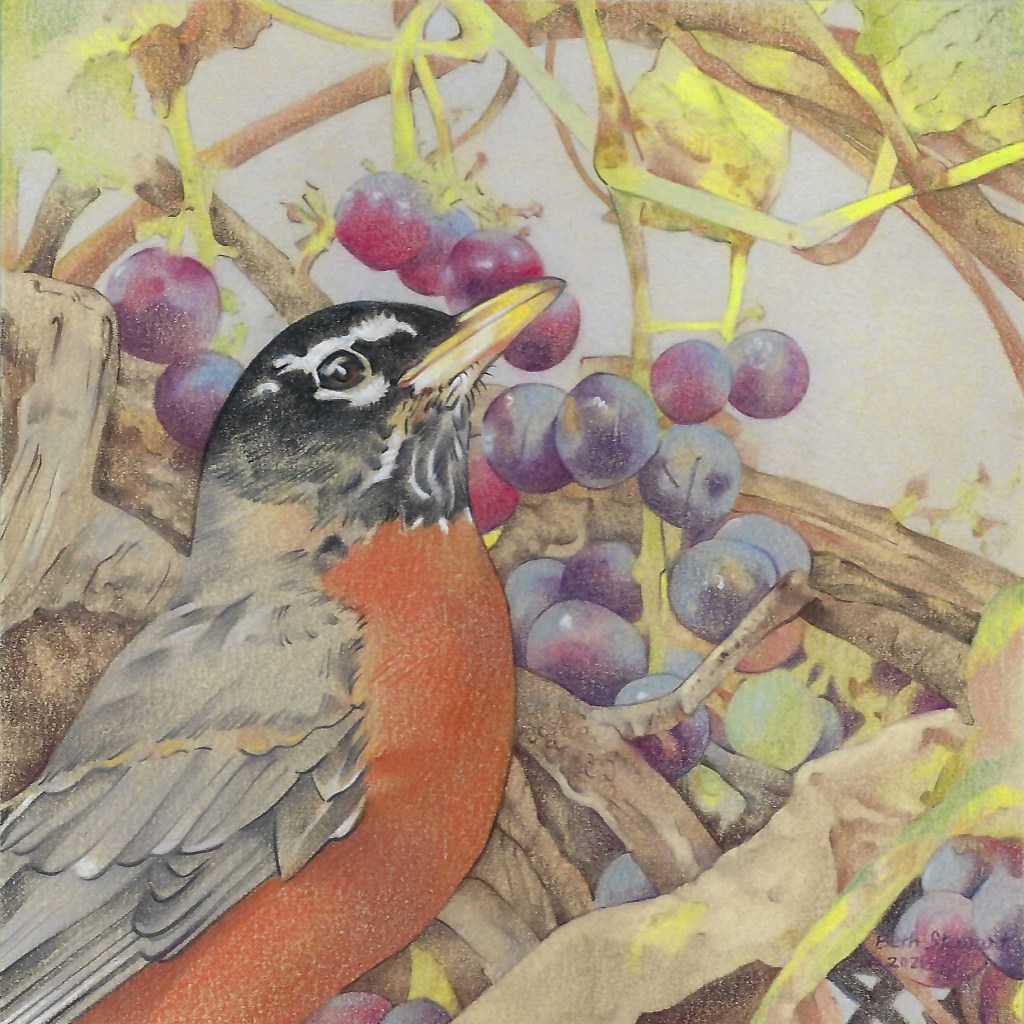
(Pictured: Beth Stewart, “Robin with Grapes, coloured pencil on Museum Board, 12 by 12 inches, 2026.)
TAP’s Salon des Refusés will be hung “salon style;” this means artwork will be hung from floor to ceiling. Thanks to visionaries like Catherine Morrisey and Sandra De Salvo, “We are going for an adventure”!
TAP’s Salon des Refusés runs from July 22 to August 15, 2026, at TAP Centre for Creativity, 203 Dundas Street. The opening reception is Saturday, July 25th, 2 to 4pm. Regular hours are Tuesday through Saturday from 12pm to 5pm. For more information, visit: https://www.tapcreativity.org/events/salon-des-refuses
By Beth Stewart
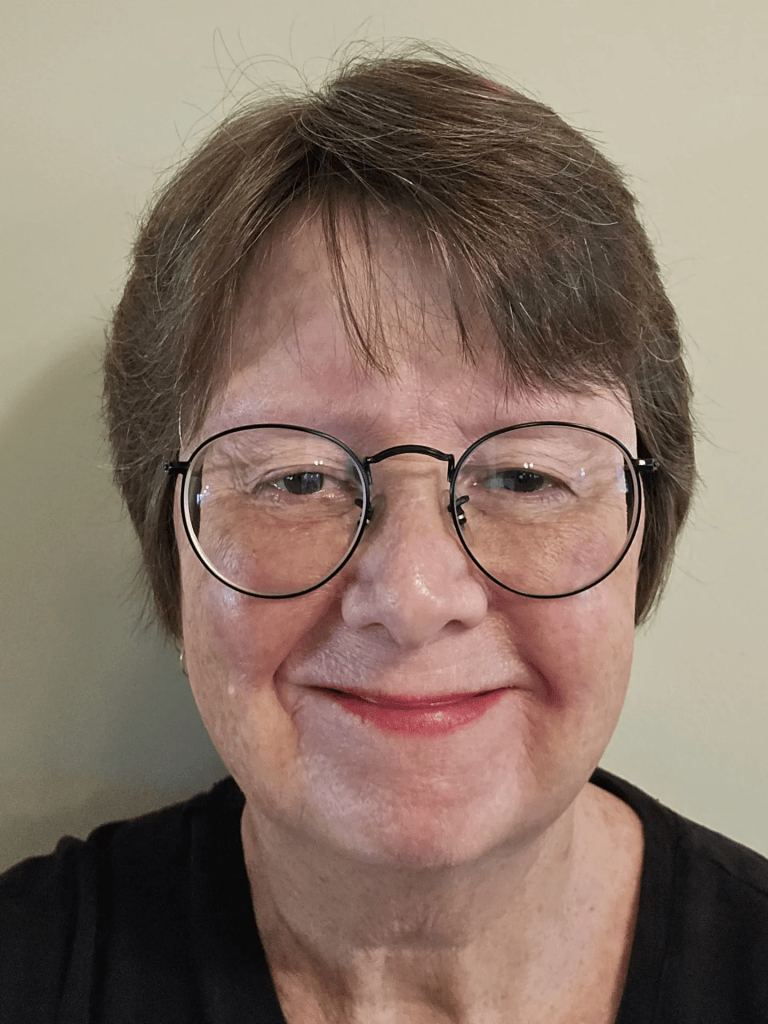
Beth Stewart is a writer, educator, and visual artist. She has a B.A. and a B.Ed. from the University of Windsor and a Diploma in Art Therapy from Western University. Beth has worked as an Art Therapist with Canadian war veterans and as a Secondary School Teacher of art and English for the TVDSB. She retired in 2024.
Beth was the arts editor at Scene Magazine from 2004 to 2006. She founded Artscape Magazine in 2006 and served as its editor until 2008. In addition, Beth wrote on the arts for Lifestyle Magazine from 2006 to 2017 and served as the copy editor for The Beat (in print) from 2009 to 2013.
As a visual artist, Beth works mainly in dry media and favours coloured pencil. Over the past decade, Beth’s focus has been on wild and domestic birds. Beth is a member of the Coloured Pencil Society of America, the Gallery Painting Group, the Eclectic Collage Collective, the Lambeth Art Association, and a founding member of the Coloured Pencil Artists of Canada group.
Facebook: https://www.facebook.com/profile.php?id=100009620916363


