This is the thirteenth in an ongoing series in which The Beat Magazine 2025 takes readers “Behind The Scenes” to meet the talented creative individuals who make the London area such a vibrant arts and culture community.
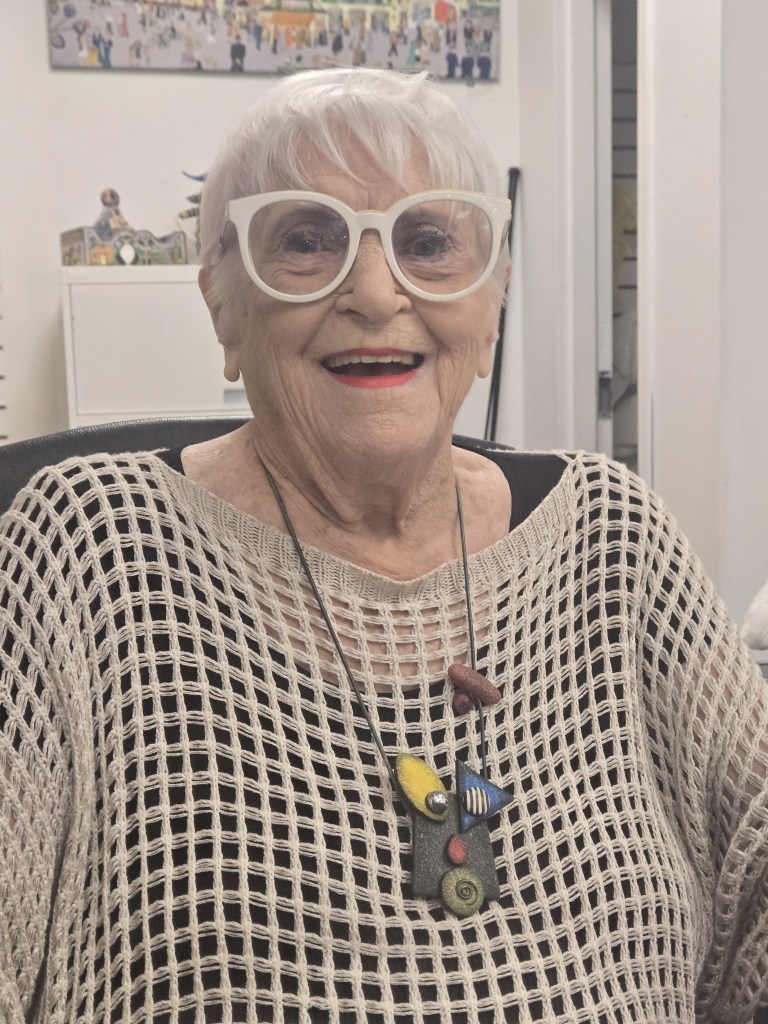
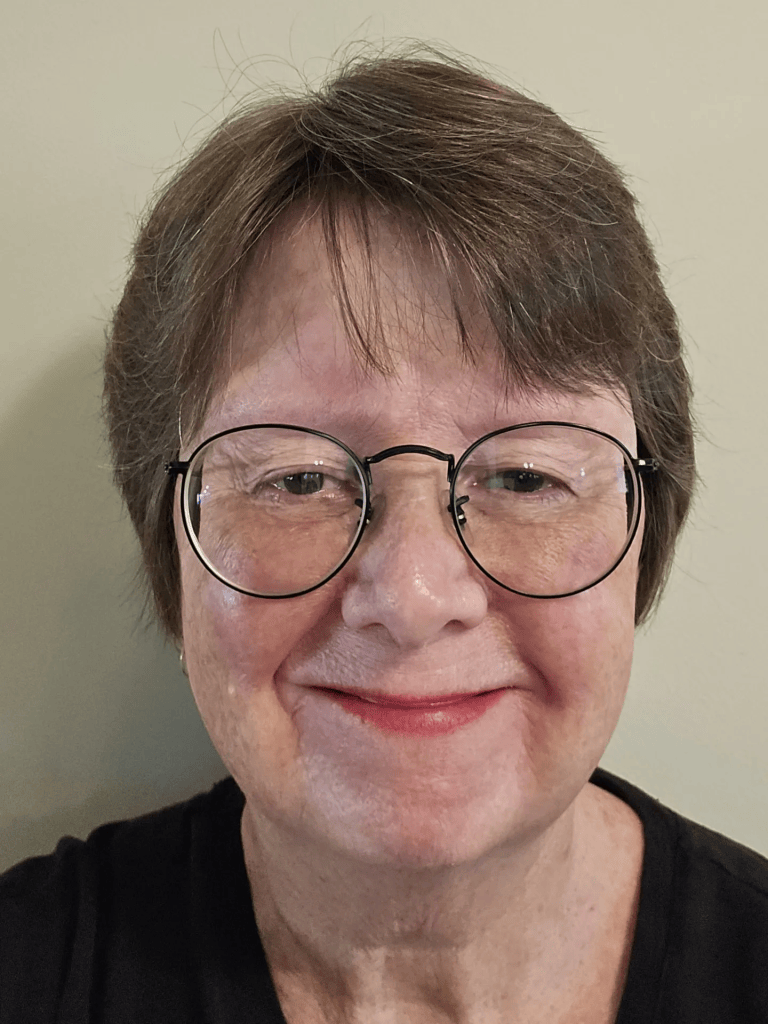
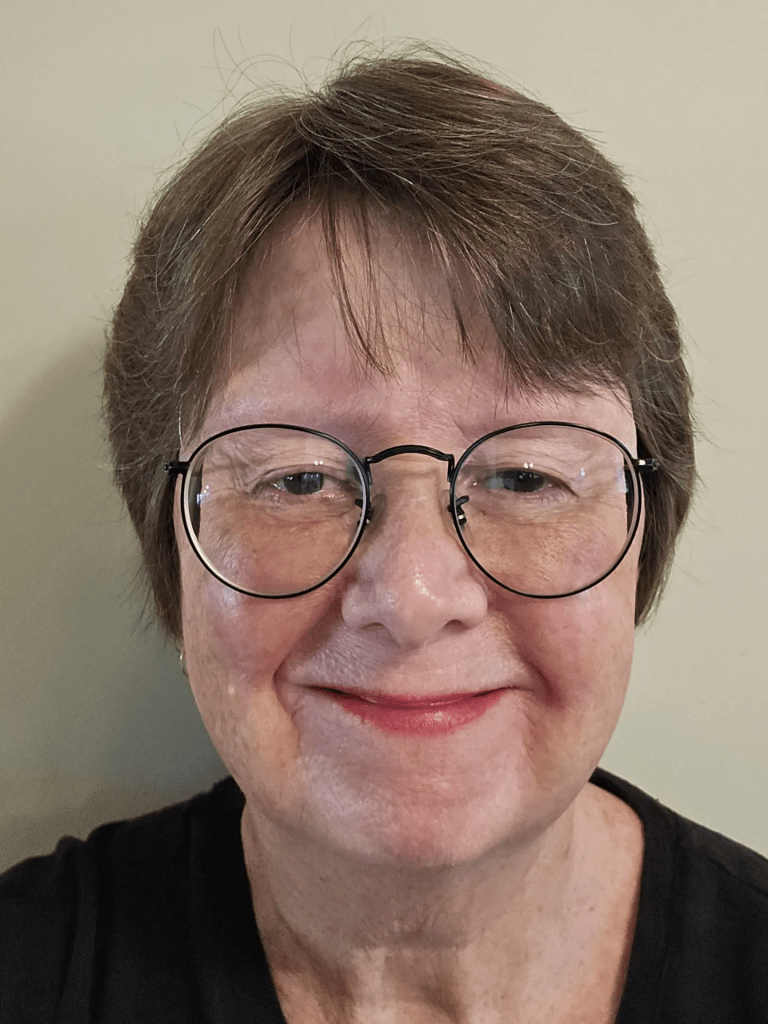
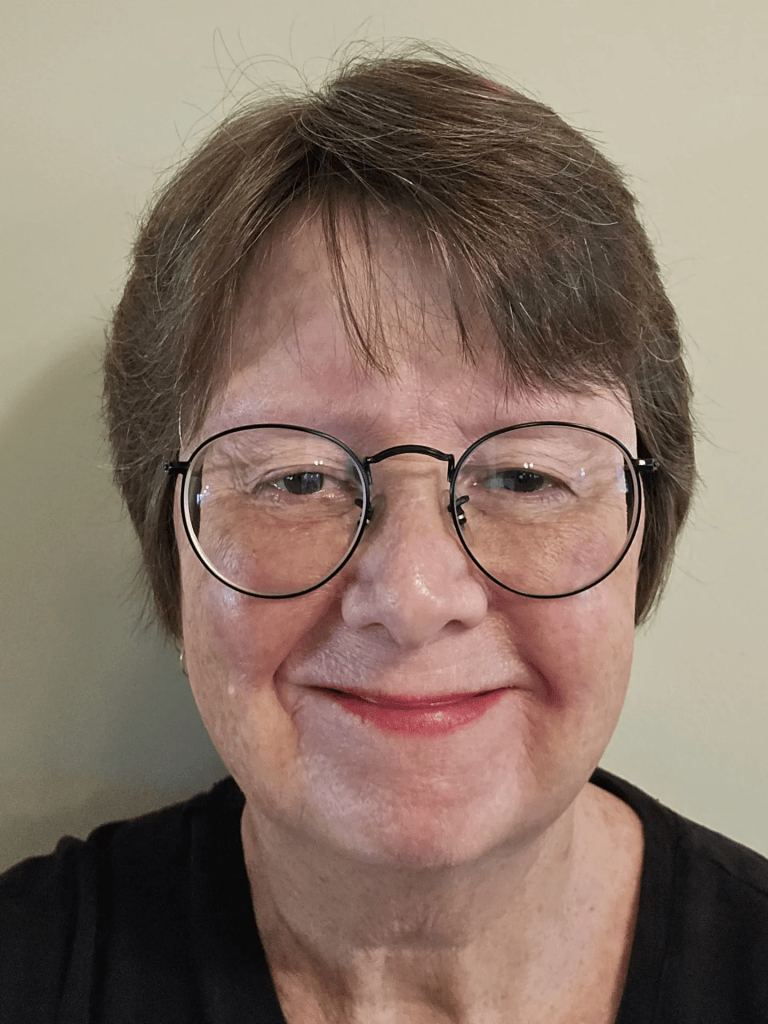
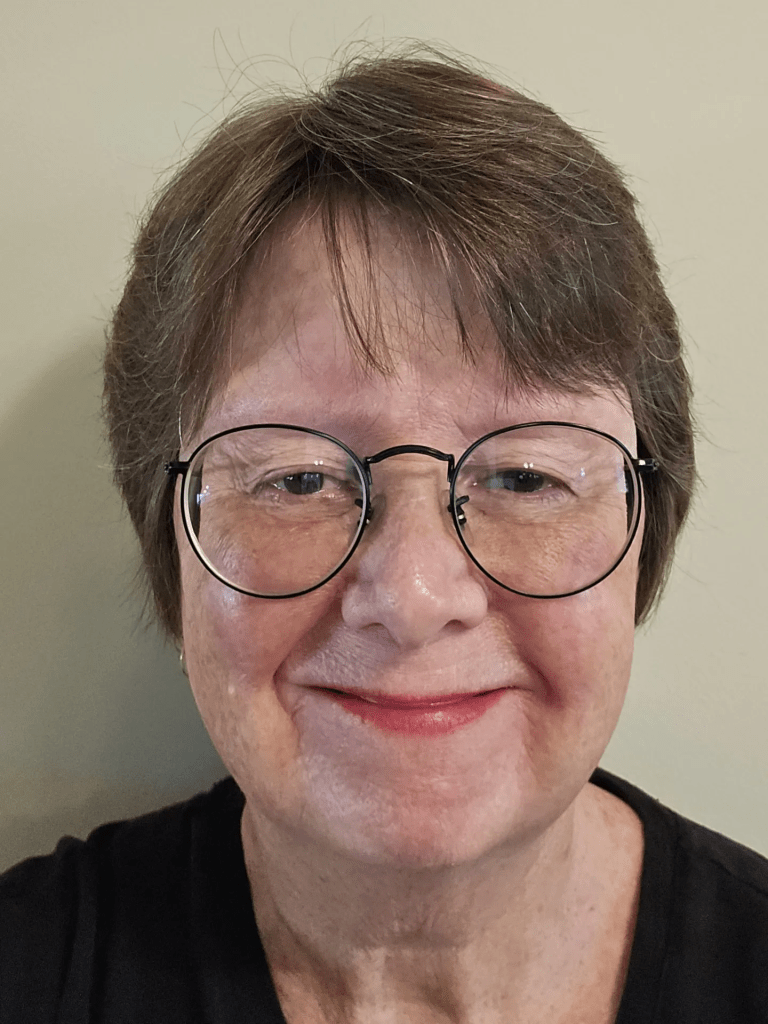
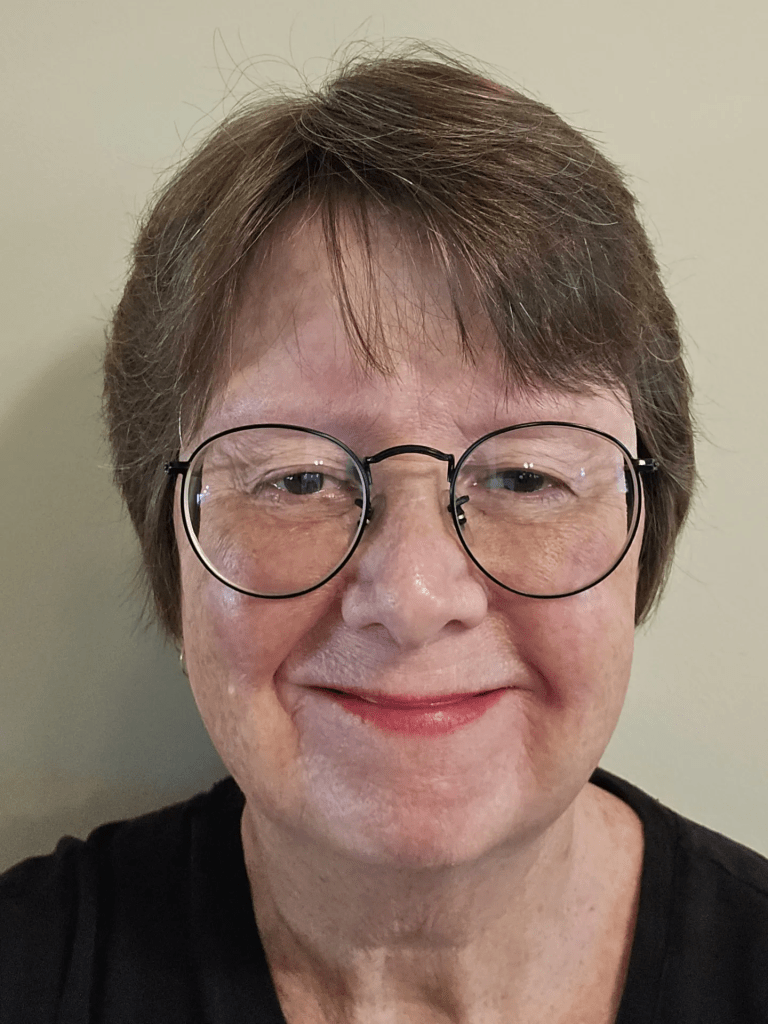
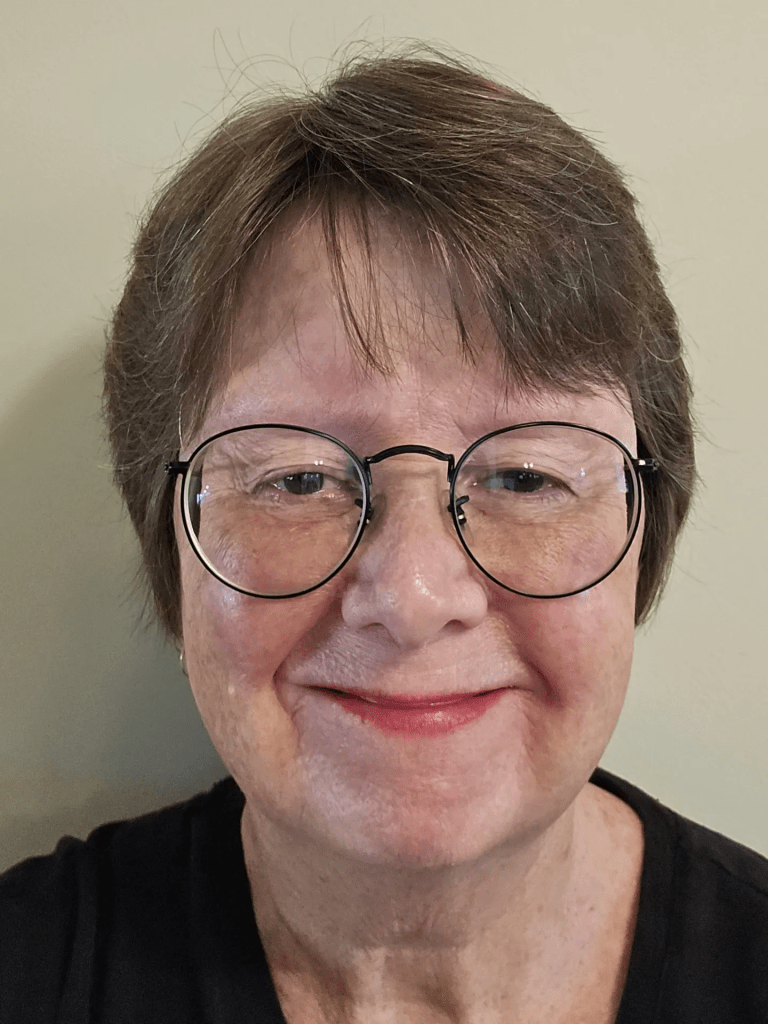
In this segment, Beth Stewart profiles Audrey Cooper, founder and owner of Art with Panache, on the eve of her 99th birthday.
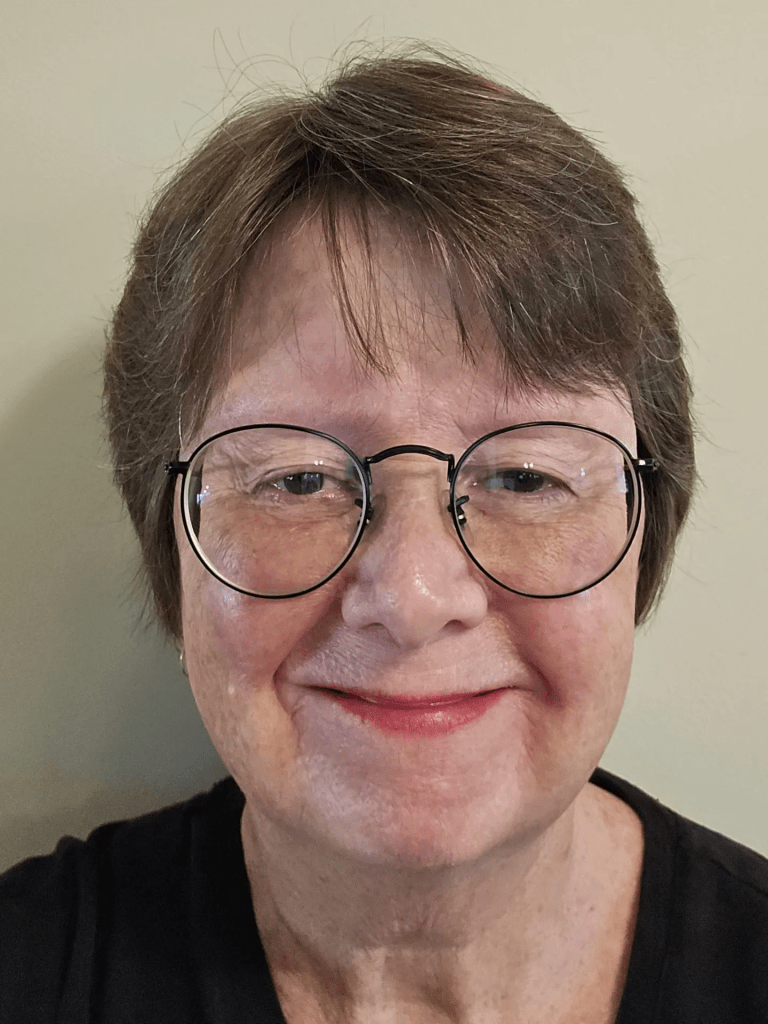
(Audrey Cooper. Photo by Beth Stewart.)
Audrey Cooper moved to London in 2003 to be closer to family and, in 2005, with little prior experience, she began painting.
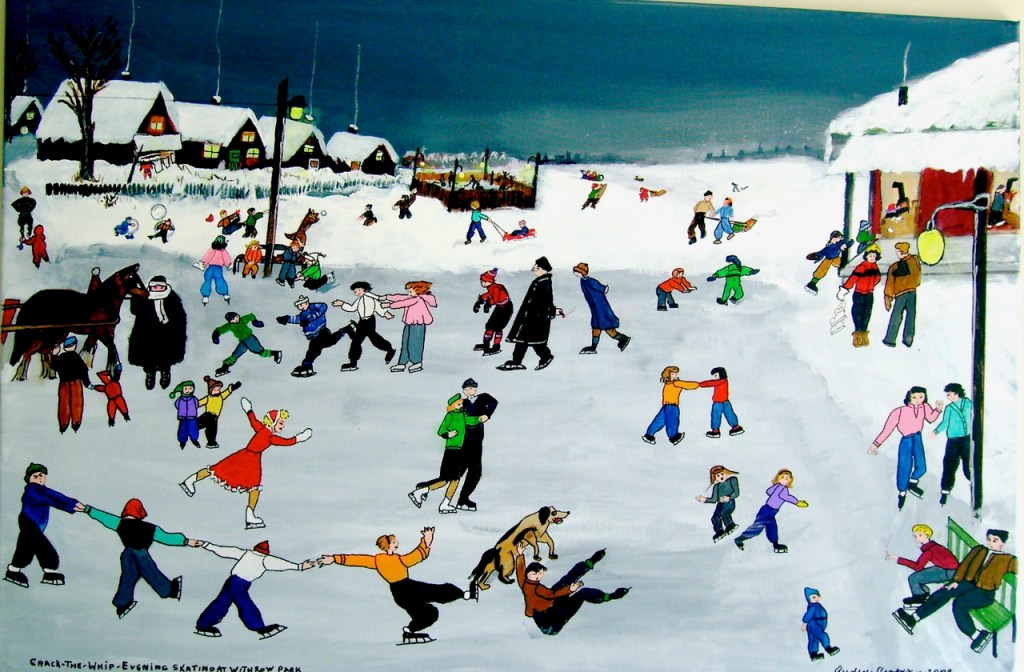
Cooper was inspired to capture in acrylic on canvas her experience of growing up in the Danforth area of Toronto in the 30s and 40s after seeing school children of this century idling during recess. She recalls, “They were standing in the school yard, on their phones, not playing games or even talking to each other.” She wanted to show how different it was when she was in school.
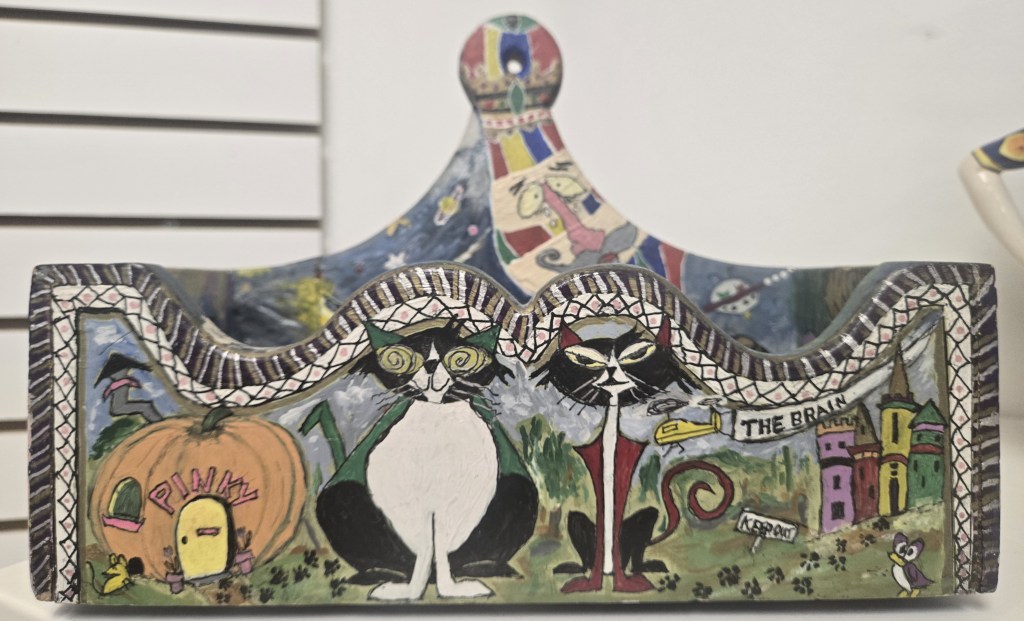
(One of Audrey Cooper’s earliest pieces. Acrylic on wood. NFS. Photo by Beth Stewart.)
“I didn’t want that time to be forgotten. We would skip double Dutch and play ball. We would play Red Rover, hopscotch, and have lots of fun,” says Cooper.
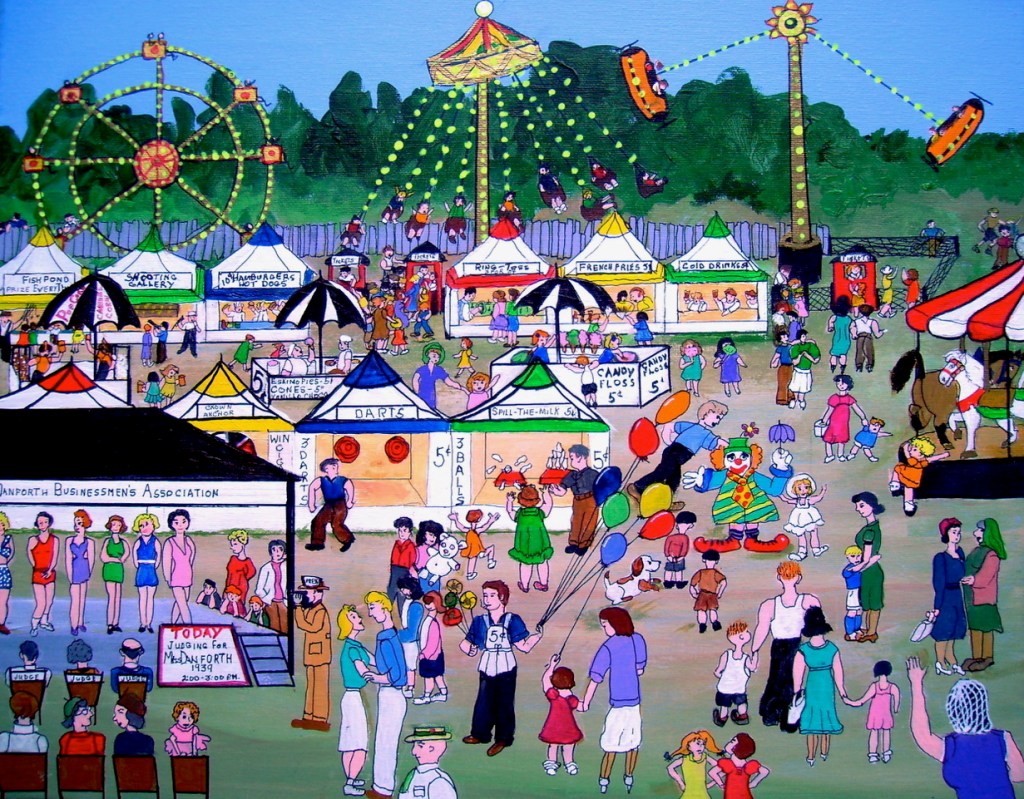
Then, she went further and showed her life from approximately nine years of age until age sixty. She captured carnivals, family outings, coffee klatches and Tupperware parties.
(Audrey Cooper’s acrylic painting “Crack the Whip (Evening Skating at Withrow Park)” depicts the park’s role as a vital winter gathering place for generations of families. Photo courtesy of Audrey Cooper.)
A self-described “city person”, Cooper classifies her own work as “Urban Folk Art”. Her vibrant cityscapes are chock-a-block with people and things. Her crowded canvases boast meticulous detail and spin rich narratives with their deeply personal mix of realism and nostalgia.
(Audrey Cooper’s acrylic painting “Carnival (Judging for Miss Danforth 1939)”, captures the excitement of small travelling carnivals that rotated through vacant east-end lots near her home. Photo courtesy of Audrey Cooper.)
Much to her surprise, Cooper discovered London did not have a gallery that would show the artworks of emerging artists such as herself.
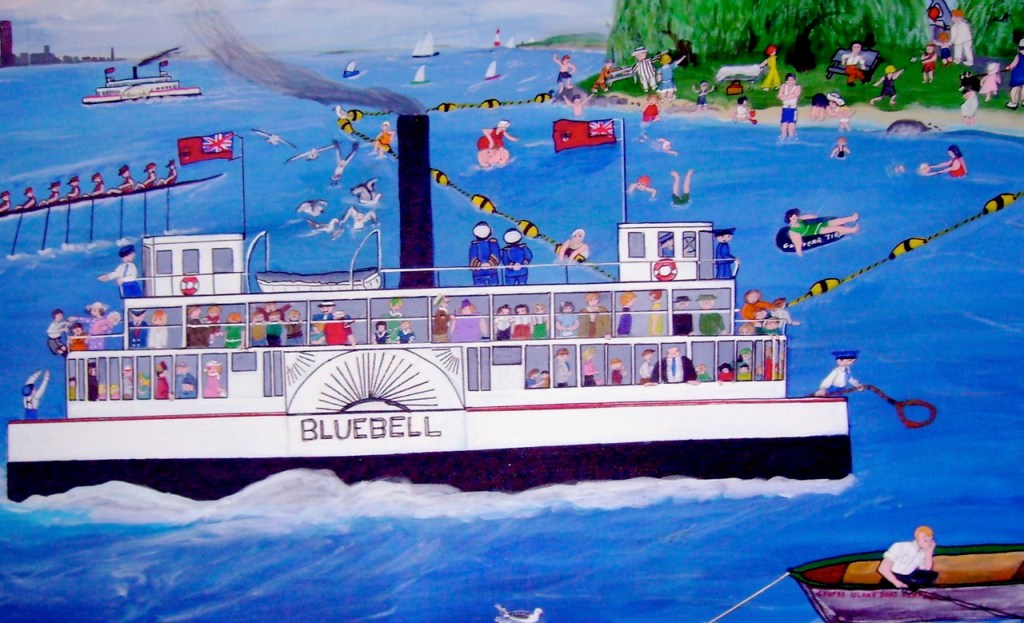
(Audrey Cooper’s 2008 acrylic painting “The Bluebell” shows the steam-powered sidewheel ferry that carried passengers between downtown Toronto and the Toronto Islands from 1906 until 1955. Photo courtesy of Audrey Cooper.)
Then, she happened upon an empty space in downtown London’s Talbot Centre and fell in love with its potential. “Its purpose was clear to me,” she says. “It was the perfect venue to show everyone what a talented and creative community of local artists we have in London”.
So, in 2013, at the age of 86, Cooper founded Art with Panache, and a dream was born.
People began to drop in, and Cooper soon recruited a roster of talented artists.
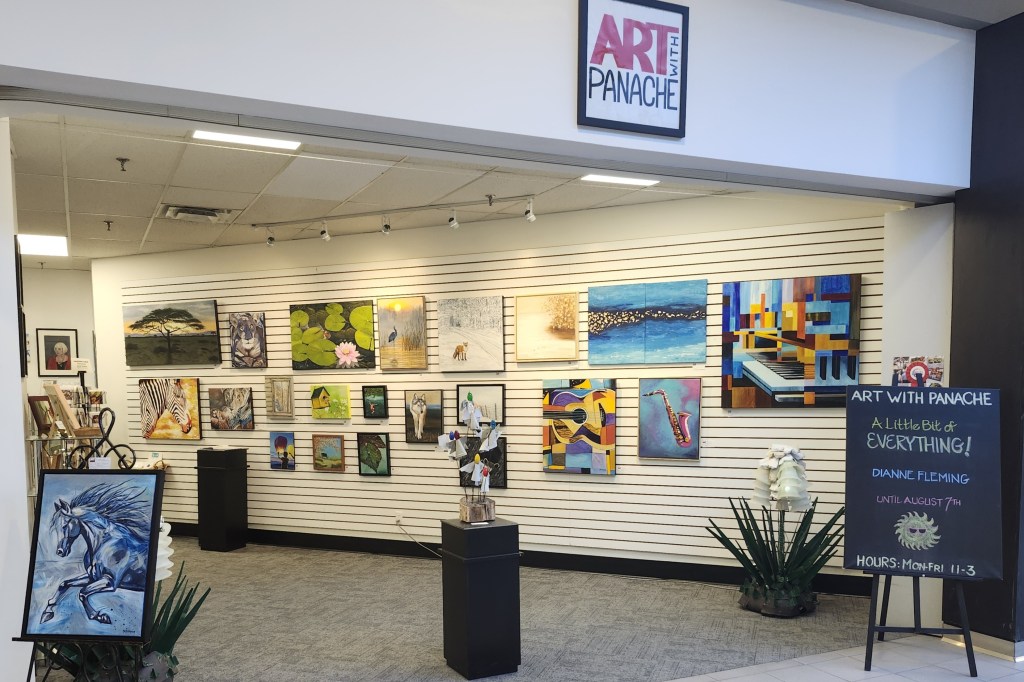
Art with Panachenow boasts 20 local artists, including owner Audrey Cooper. Member artists have input into what goes on in the gallery. They sit the gallery a minimum of two times per month. In return, they have the opportunity to show and sell their work at the venue.
(Member artists are featured on the main wall on a rotating basis. This is a selection of work by Diane Flemming. Photo courtesy of Diane Flemming.)
Member artist Dianne Fleming, who has been with the group for three years, calls the gallery “a hidden gem”.
Cooper concurs and gives kudos to all the artists who have worked in the gallery, who have brought in their collections, and who have waited patiently to be recognized by the London arts community.
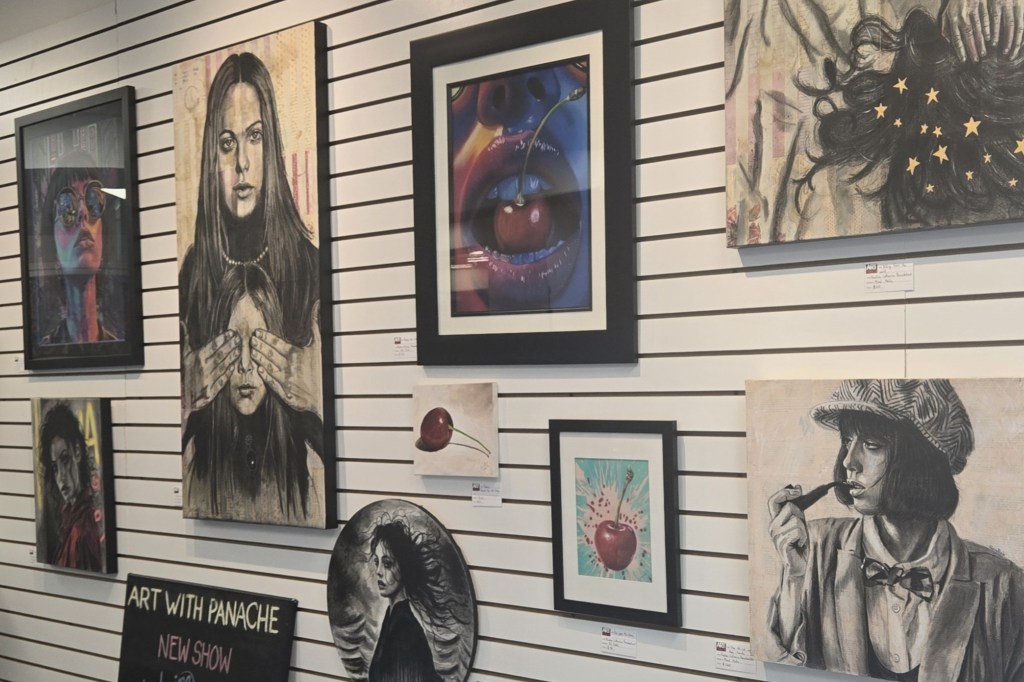
(A selection pf work by member artist Catarina Bezuidenhout. Photo by Beth Stewart.)
In 2024, Audrey was named to the City of London’s Mayor’s New Year’s Honour list in the category of arts. This list celebrates the diversity of philanthropic work taking place in the London community.
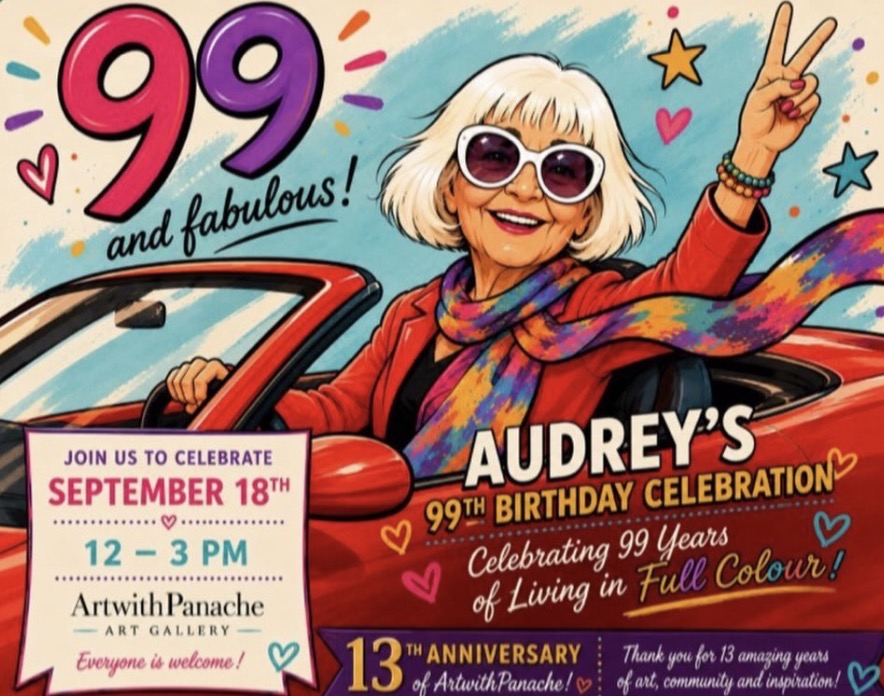
Audrey Cooper turns 99 years old on September 18, and still works in the gallery Monday through Friday. To celebrate, the gallery is planning a retrospective of Cooper’s work which will run September 14 to 18, 2026.
Cooper’s birthday coincides with the gallery’s 13th anniversary, and a party for both is planned on September 18 from 11 am to 3 pm.
Art withPanache will be putting out a Call for Artists in October. This is an opportunity for non-member artists to show their work and get a taste of what the gallery has to offer. The theme is still in flux.
This is the eleventh in an ongoing series in which The Beat Magazine 2025 takes readers “Behind The Scenes” to meet the talented creative individuals who make the London area such a vibrant arts and culture community.
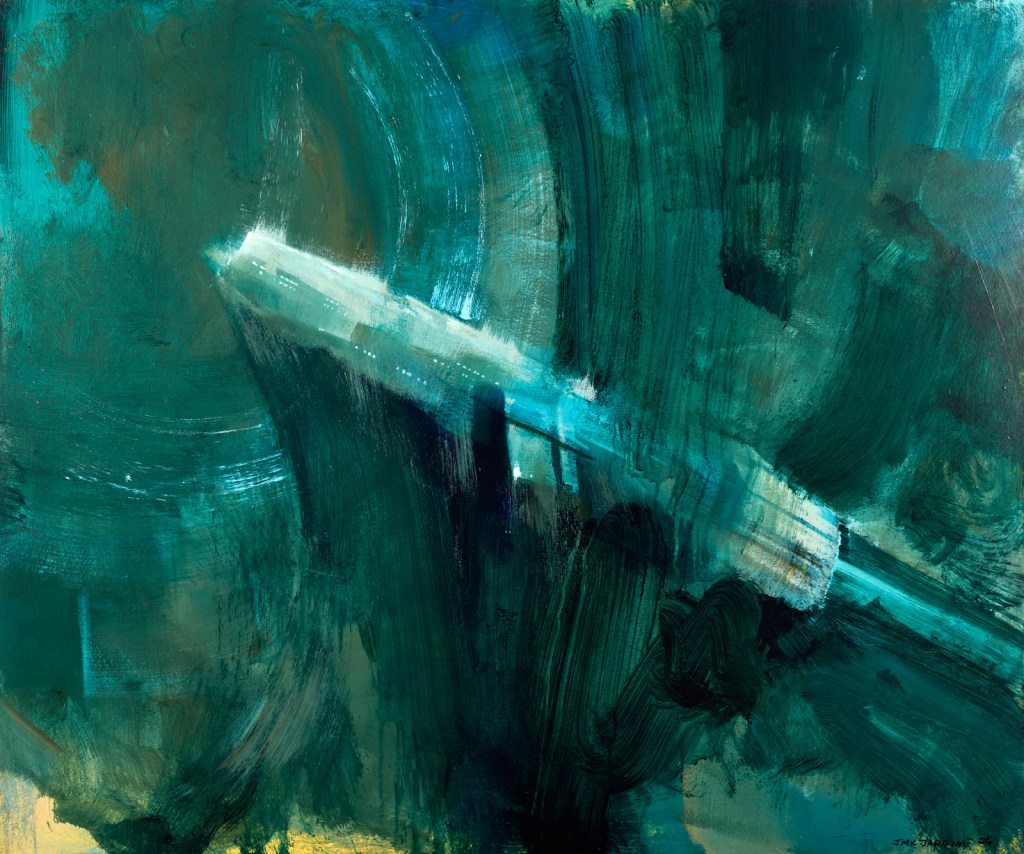
In this segment, Beth Stewart profiles London-based visual artist Jamie Jardine.
Jamie Jardine breaks his art down into three categories: landscape, abstraction and illustration. The reason for this spread is interesting.
When he enrolled in the Fine Art program at Fanshawe College in 1996, Jardine admits he didn’t know much about art history or the art world in general, and it was the Art History classes that had the biggest impact on him. So, when he started to paint, he was impressionable.
(Pictured: Jamie Jardine, “Departure”, acrylic, 24 by 20 inches. Image courtesy of Paul Lambert Photography.)
After a visit to the Dali museum in Florida during his first year at Fanshawe, he painted slightly surreal landscapes. After his first visit to the Art Gallery of Ontario, where he encountered work by members of the Group of Seven, he fell in love with the Canadian landscape. He began to exhibit his work and, when people responded positively to the landscapes, he did more.
Jardine says, “Throughout my early career I would take breaks from the landscapes, usually after an exhibition, and I’d play around with abstraction. The act of pushing paint around and playing with colours and textures really grabbed me. I began to bounce back and forth.” This became a bit of a “tug of war” for him, and he struggled to choose just one approach.
(Pictured: Jamie Jardine, “Emerging”, acrylic, 30 by 36 inches. Image courtesy of Paul Lambert Photography.)
In 2014, he left his first gallery with a lot of questions about himself, the gallery system, and the art world in general. He recalls, “In some way, I wanted to leave it all behind, but I was already pretty deep, and I was now raising two children.”
His departure from the gallery allowed him to step back and reexamine his love for art and what really interested him. He says, “I went back to my childhood interests and began painting robots on some of my discarded landscapes. The result was divisive, but for the first time in a very long while, I didn’t care what people thought.”
(Pictured: Jamie Jardine, “Heat”, acrylic, 10 by 8 inches. Image courtesy of Paul Lambert Photography. )
This was liberating for Jardine. It was also concerning; how could he continue to make a living painting, if what he painted was robots and spaceships?
Today, he paints in all three genres and enjoys each one, as does the art-loving public.
Asked what drives him to create, Jardine says, “It’s just what I do. I rarely take much pleasure from it. Satisfaction might be what I strive for.”
Art has helped him overcome periods of depression. Economic survival is another key motivator.
(Pictured: amie Jardine, “The Monster”, oil, 20 by 16 inches. Image courtesy of Paul Lambert Photography.)
Currently, Jardine has an exhibition of his sci-fi work at the St. Thomas Elgin Public Art Centre. It runs to August 22. It is his first public solo exhibition and includes preliminary work and sketches that offer insight into his process.
Jamie Jardine has been represented by local galleries since 2000 and exhibits his work through the Benz Gallery in London, Ontario.
This is the ninth in an ongoing series in which The Beat Magazine 2025 takes readers “Behind The Scenes” to meet the talented creative individuals who make the London area such a vibrant arts and culture community.
In this segment, Beth Stewart profiles Visual Artist Cathy Horvath Buchanan.
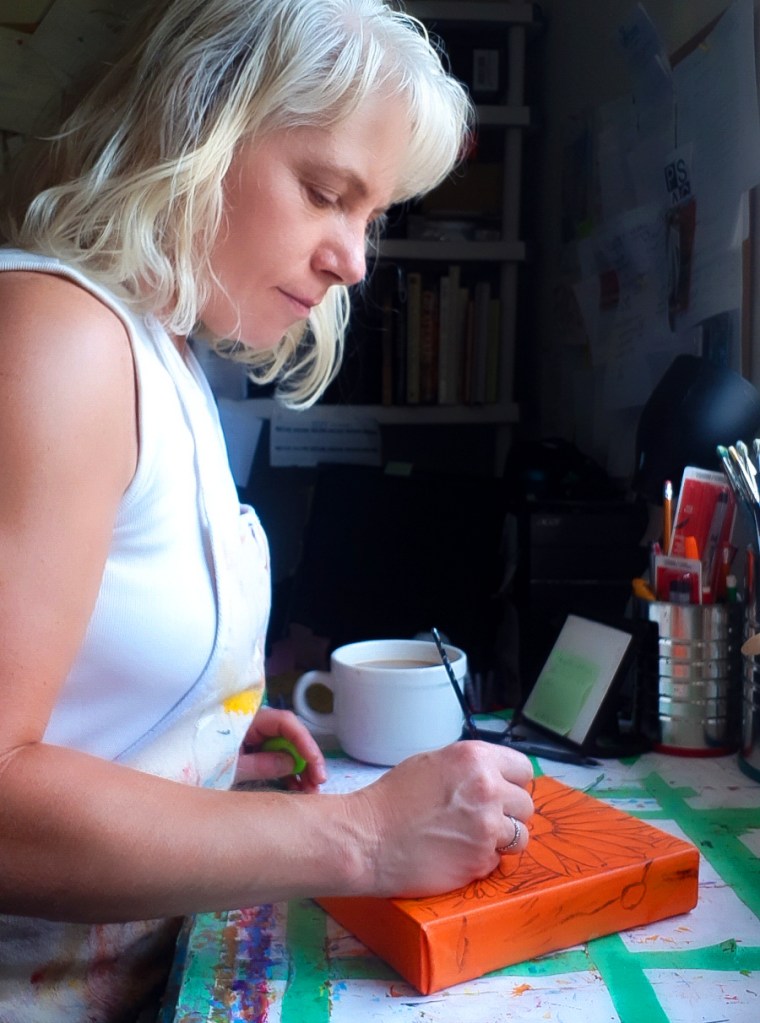
(Cathy Horvath Buchanan – the artist at work.)
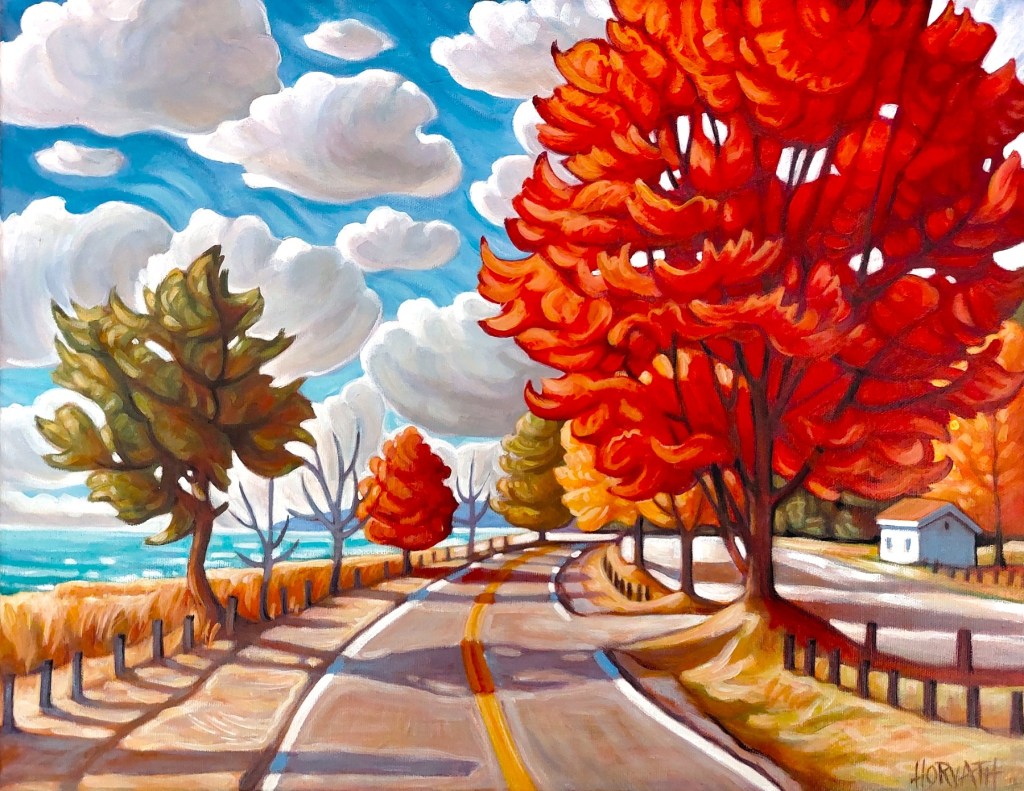
For many years, Cathy Horvath Buchanan’s paintings were constructed purely from imagination and they manifested as colourful landscapes with a folk-inspired sensibility.
(Cathy Horvath Buchanan, “Lake Road Red Tree”, 14 by 18 inches, acrylic on canvas.)
Her current work is rooted in real-world sources. In it, she combines imagery from her plein air studies with photos from her camera roll to construct paintings. A healthy dollop of artistic licence means she still honours the colorful characteristics of her earlier work.
Horvath Buchanan explains, “The external inspiration is the starting point, but during the creation process I mutate elements in the picture, looking for ways to add colours, cast shadows, interesting lines, and use mark-making to express the dynamic mood of the view. Imagination informs most of those changes, as I freely adlib to find rhythms within the painting to accentuate the vibe of the subject.”
Horvath Buchanan is driven to create by the desire to express what she sees so she can keep it close. To commit something to canvas, she examines every aspect of her chosen subject. She says, “Once I paint something, it will always be with me.”
She makes good use of this ability to cement memory: “In the winter I paint flowers and summer landscapes because I miss and want the joy they bring me.”
Horvath Buchanan has work in local galleries, including Museum London’s gift shop, Sparta’s Gathered, Main Street Gallery in Bayfield, St. Thomas Elgin Public Art Gallery, and in venues around Port Stanley including the Art & Soul Cafe, and the Windjammer.
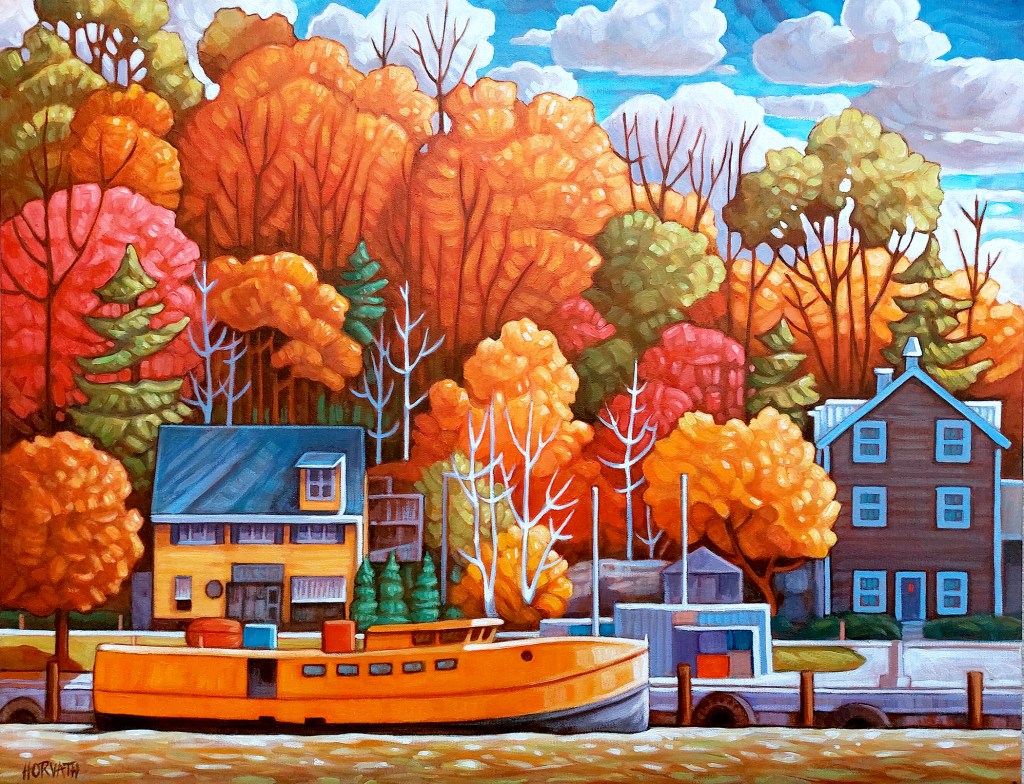
She is currently in the top 100 for the 2026 Kellogg’s Art Competition with “Golden Harbour Port”, a colourful acrylic on canvas painting of the Port Stanley harbour.
(Cathy Horvath Buchanan’s “Golden Harbour Port”, a 20-by-26-inch acrylic on canvas can be seen at the 2026 Kellogg’s Art Competition.)
She is looking forward to once again being in the Elgin County Studio Tour September 26 and 27. This is the perfect opportunity for art lovers to visit her Port Stanley studio.
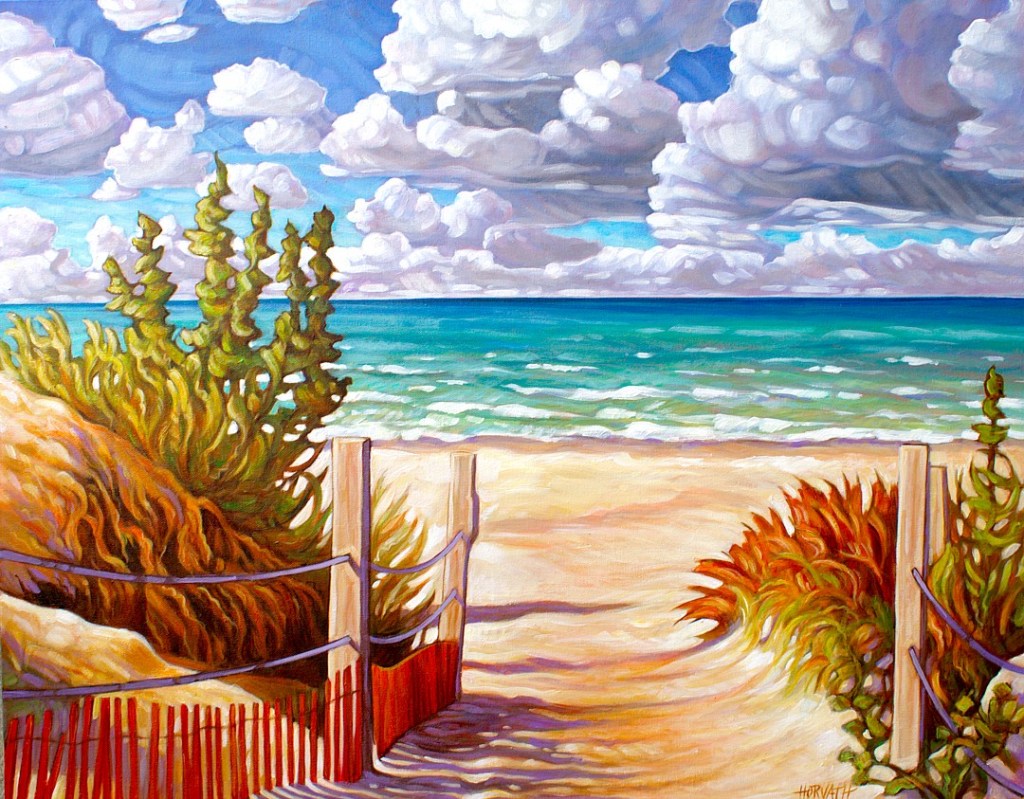
(Cathy Horvath Buchanan, “Beach Path Port Franks”, 22 by 28 inches, acrylic on canvas.)
For more information on Cathy Horvath Buchanan, and to see her online offerings of paintings, prints and more, visit her website at CathyHorvathBuchanan.com
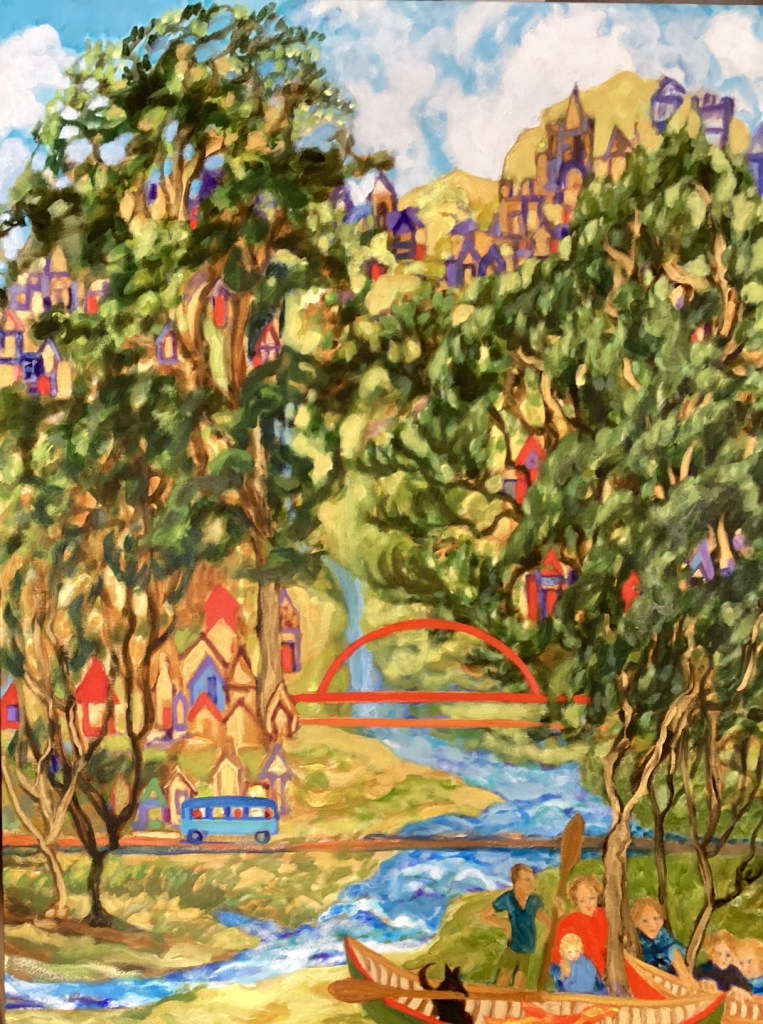
(Pictured: Catherine Morrisey, “We are going for an adventure”, oil on canvas, 36 by 48 inches, 2026.)
Rejection. It is an inevitable consequence of being an artist. To have your proposal or work rejected is disappointing but can spur redirection. To paraphrase a line from Chumbawamba’s 1997 hit “Tubthumping”, you get knocked down, and you get up again.
Yet, rejection may trigger feelings of anger and self-doubt.
This writer recently had a residency application rejected. In an email, I was thanked for my application but informed that “after careful review by the adjudicators,” the organization was not able to offer me a place in the program. It cited limited places and a high volume of quality applications as contributing factors. It ended with, “We understand this news is disappointing for you and hope that it does not discourage you from applying to future programs.”
Was I devastated? No. Will I quit doing art? No.
London artist Catherine Morrisey is no stranger to rejection. With a lengthy career as an artist and strong exhibition history, she is a seasoned veteran of the fickleness of the art world.
Earlier this year, Morrisey had enthusiastically entered a particular art competition and encouraged others to do the same. When their pieces were rejected en masse, she felt bad. Not for herself, but for others. She wondered how she could make it better for them, how she could make them feel “appreciated.”
She thought of how a group of French painters reacted to their rejection from the annual Paris Salon over 150 years ago. They revolted. Says Morrisey, “They had a big party. They celebrated each other’s art. It was a new beginning for art.”
The annual Paris Salon began in 1667; sponsored by the French government and the Academy of Fine Arts, it was an exhibition of the best academic art. Its jury was conservative; idealized realism was expected. When, in 1863, the Salon jury refused 4,000 paintings – approximately two-thirds of the paintings submitted – the rejected artists and their friends protested.
Among the “rejects” were Édouard Manet’s “Déjeuner sur l’herbe” and James McNeill Whistler’s “Symphony in White, No. 1: The White Girl”. Both paintings were thought to be scandalous. Also rejected were works by Camille Pissarro, Johan Jongkind, Henri Rousseau, and James McNeill Whistler.
With the blessing of Emperor Napoleon III, the refused works were displayed in another part of the Palace of Industry. The resulting 1863 Salon des Refusés welcomed more than a thousand visitors per day.
Morrisey went from reaction to action and became an instigator. Not being juried in herself and hurting for her friends sparked an idea, and she ran with it.
Sandra De Salvo, executive director of the TAP Centre for Creativity, says when Morrisey presented her with the idea of aSalon des Refusés,it just felt right for her venue.
The call went out: “While sometimes challenging to face, rejection is an inherent and important part of the artistic process and an artist’s career. At the suggestion of London artist Catherine Morrisey, TAP is hosting a Salon des Refusés. Inspired by the 1863 exhibition of the same name, this exhibition highlights the important role rejection plays in finding an audience, building resilience, and growing as an artist while also acknowledging that rejection can feel exclusionary, disheartening, and disappointing.”
Eligibility was loose: “Artists must be based in London or the surrounding area. Artwork must not have been exhibited before. Artwork must have been rejected from at least one exhibit application process.”
The acceptance process was simple: “In the spirit of this exhibition, we will include as many works as possible, but the submission form will close when we have reached our maximum capacity.”
TAP’s Salon des Refusés promises to be an exhibit with a broad reach. It presents the opportunity for people to come together to connect, share experiences, and to create dialogue. De Salvo’s philosophy on rejection: “Don’t hide from it – put it out there and talk about it.”
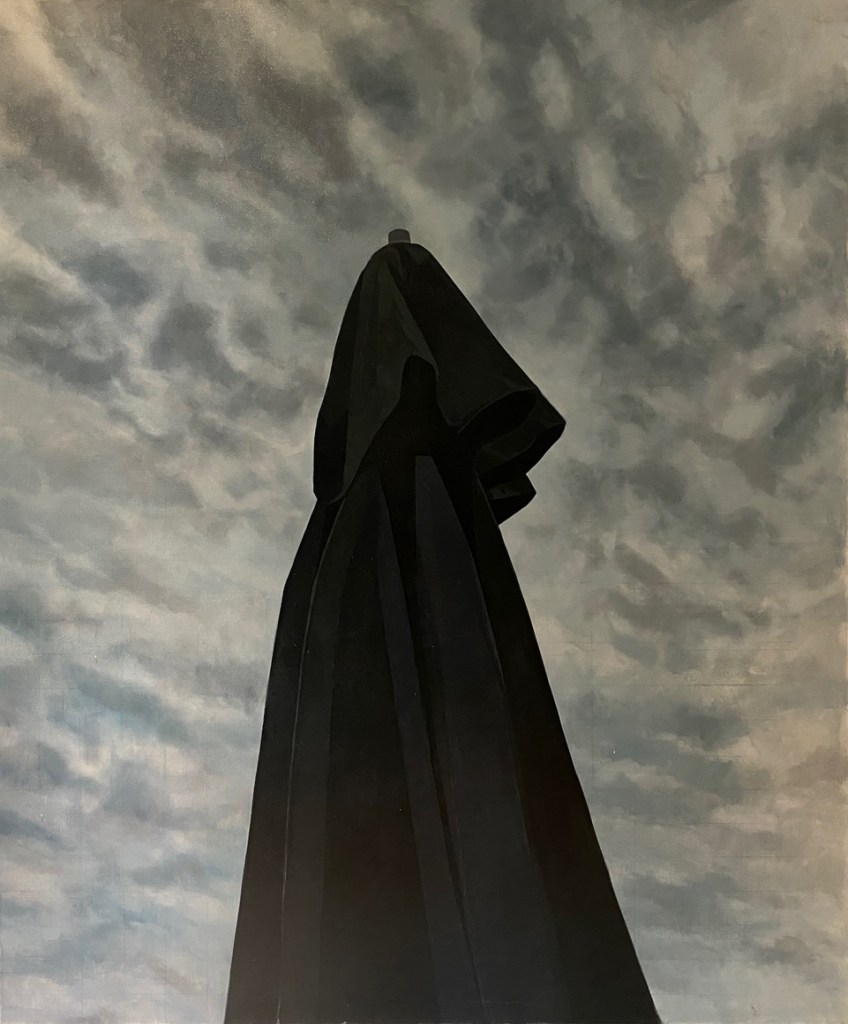
(Pictured: Nick Hall, “I will follow you into the dark”, acrylic on canvas, 60 by 48 inches, 2024.)
Participant artist Nick Hall says, “Rejection, resilience and growth could be called the holy trinity for any serious artist because they are a proven catalyst for progress.”
But, on the flip side, he muses that not all rejection is helpful or even warranted. Rejection made on personal biases is frustrating.
He is fond of the piece he entered in the Salon. The idea for “I will follow you into the dark” came to him rather abruptly, and he felt “compelled” to capture it on canvas. Of the piece, Hall says, “Not everyone will ‘get’ it, perhaps because they fail to really look at it. To those that do, I thank you in advance.”
“Obviously, it’s not everyone’s cup of tea, so attempts made to enter it into exhibits that are naturally interested in more standard fare have failed. Until now!”
As to what he expects to get out of the Salon … “a red dot would be nice. But really, just gauging people’s reactions to it will be a treat.”
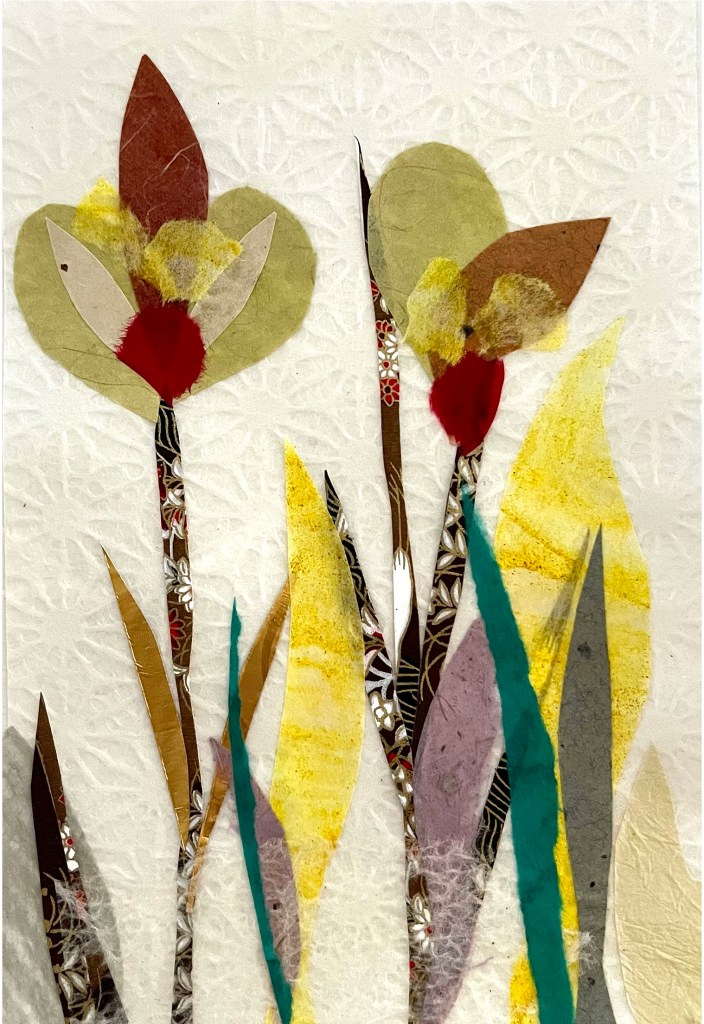
(Pictured: Gabriella Solti, “Collage I”, Japanese washi paper, 7 by 5 inches, 2026.)
Participating artist Gabriella Solti believes, while rejection is part of life, “Artists experience more of it than most because they repeatedly put themselves and their work forward – submitting to open calls, applying for grants and residencies, and pursuing professional opportunities (all very competitive arenas). Beyond making art, a good part of an artist’s practice is taking risks and putting their work and artistic practice up for scrutiny.”
She recognizes that many artists feel wounded when their artwork is rejected, and a Salon des Refusés can lighten the sting.
However, Solti’s own perspective is coloured by having been on both sides of the process. She says, “Twenty years ago, I worked as the gallery coordinator of a suburban municipal art gallery near Vancouver, where I organized open calls, coordinated jurying processes, and curated exhibitions. I know firsthand that there are far more strong artworks than any gallery has the space to exhibit thoughtfully. A rejection is rarely a definitive statement about the quality of a work. More often, it simply means that, within the specific context of a particular exhibition, the work did not align with the curator’s conceptual vision.”
Her motivation for submitting “Collage I” to TAP’s Salon des Refusés comes from her belief that “Every artwork has a receptive audience. The only way to find that audience is to continue showing the work.” Submission, then, is not only a risk – it is also an opportunity for a piece to find viewers with whom it resonates.
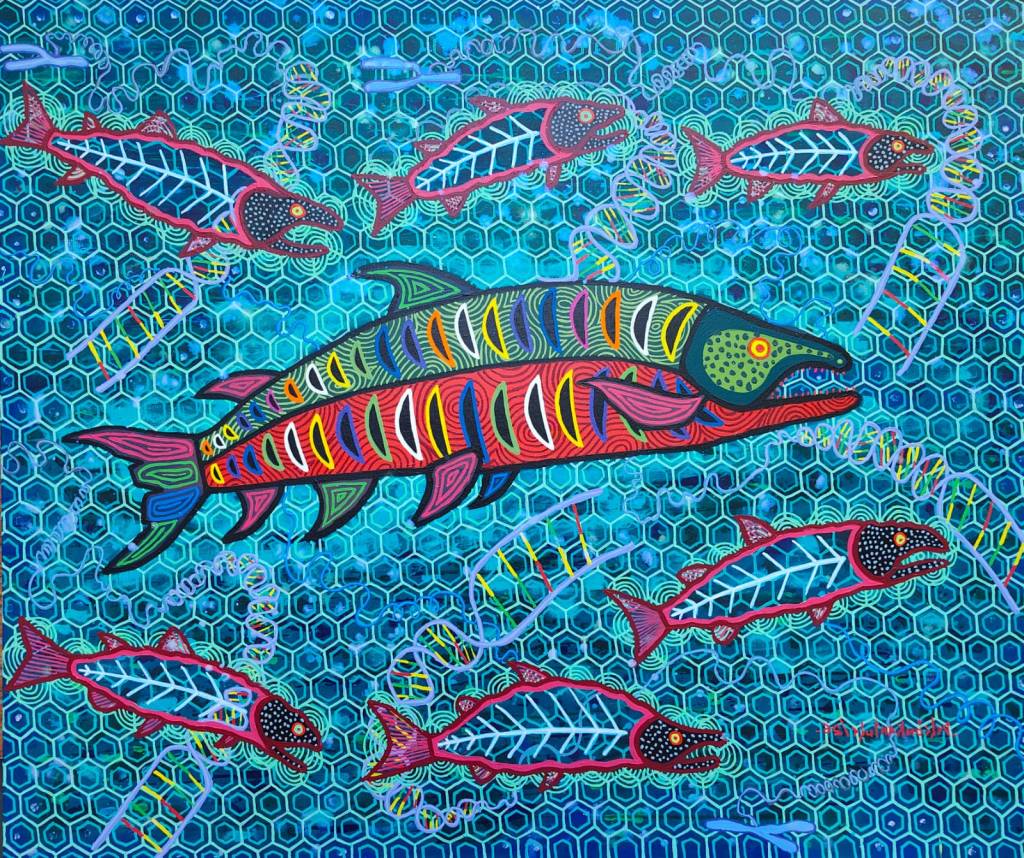
(Pictured: Oswaldo DeLeón Kantule, “Salmon Factory”, acrylic on canvas, 137 by 163 cm, 2026.)
Oswaldo DeLeón Kantule’s art is well recognized in his home country of Panama, but he has struggled to break into the Canadian market.
He says, “Though I was not born in Canada, it’s important for me to feel connected to the community where I live.”
Kantule has lived in London for almost 25 years. He painted “Salmon Factory” for a specific competition as a fusion of Canadian elements (the salmon) and elements from his culture (the mola textile pattern).
While he had submitted work to the same competition in the past and had been rejected, he thought he had a better chance this year after having been selected to participate in the 2024 Venice Biennial.
Again, he was not selected. Kantule says, “It has left me with questions.”
The Salon des Refusés allows Oswaldo DeLeón Kantule to continue cultivating a relationship with his community.
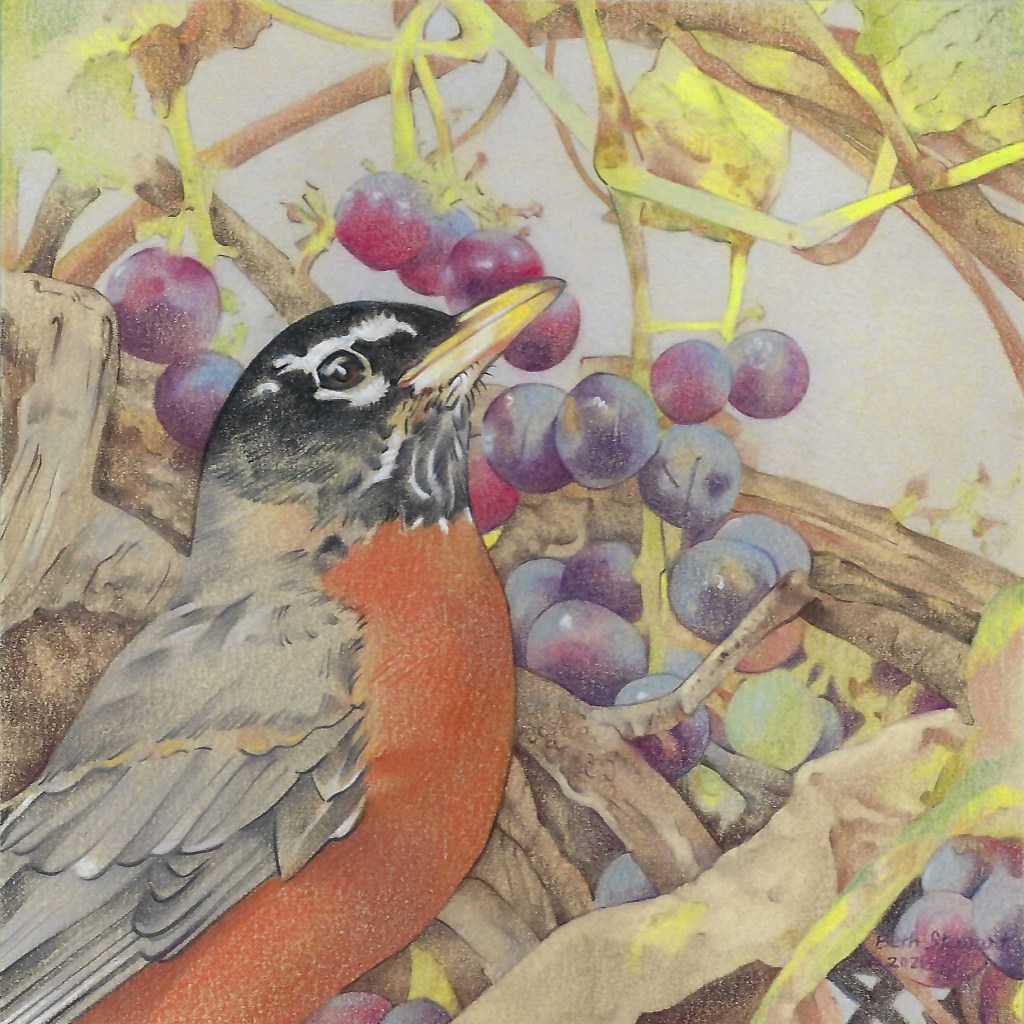
(Pictured: Beth Stewart, “Robin with Grapes, coloured pencil on Museum Board, 12 by 12 inches, 2026.)
TAP’s Salon des Refusés will be hung “salon style;” this means artwork will be hung from floor to ceiling. Thanks to visionaries like Catherine Morrisey and Sandra De Salvo, “We are going for an adventure”!
TAP’s Salon des Refusés runs from July 22 to August 15, 2026, at TAP Centre for Creativity, 203 Dundas Street. The opening reception is Saturday, July 25th, 2 to 4pm. Regular hours are Tuesday through Saturday from 12pm to 5pm. For more information, visit: https://www.tapcreativity.org/events/salon-des-refuses
By Beth Stewart
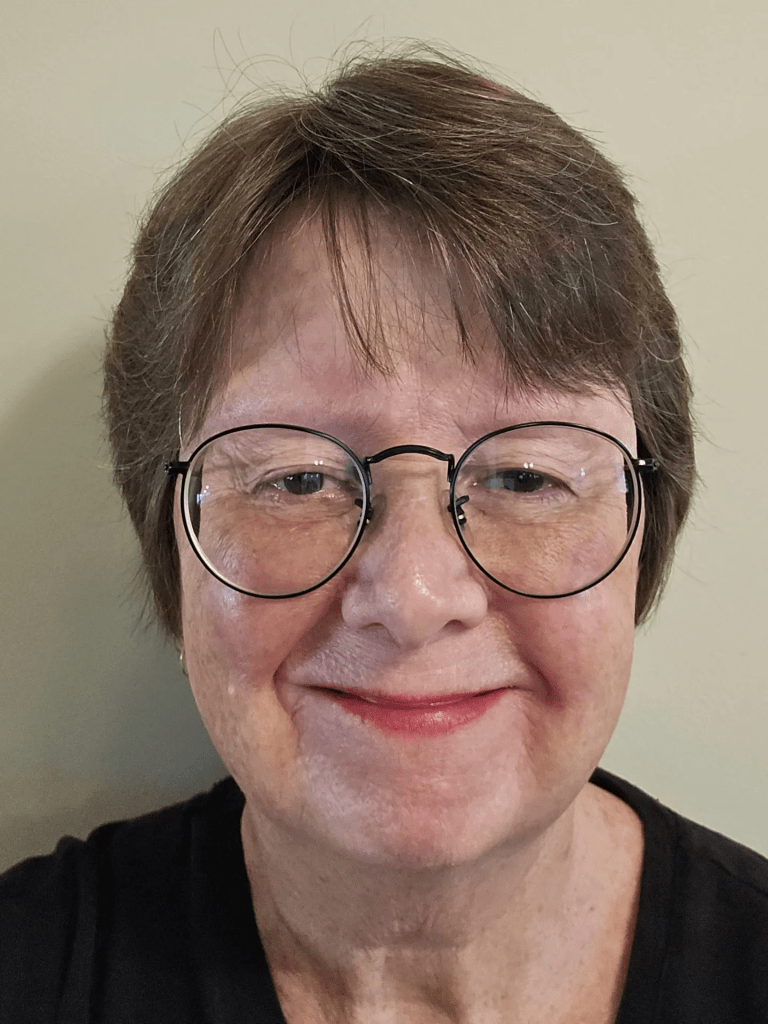
Beth Stewart is a writer, educator, and visual artist. She has a B.A. and a B.Ed. from the University of Windsor and a Diploma in Art Therapy from Western University. Beth has worked as an Art Therapist with Canadian war veterans and as a Secondary School Teacher of art and English for the TVDSB. She retired in 2024.
Beth was the arts editor at Scene Magazine from 2004 to 2006. She founded Artscape Magazine in 2006 and served as its editor until 2008. In addition, Beth wrote on the arts for Lifestyle Magazine from 2006 to 2017 and served as the copy editor for The Beat (in print) from 2009 to 2013.
As a visual artist, Beth works mainly in dry media and favours coloured pencil. Over the past decade, Beth’s focus has been on wild and domestic birds. Beth is a member of the Coloured Pencil Society of America, the Gallery Painting Group, the Eclectic Collage Collective, the Lambeth Art Association, and a founding member of the Coloured Pencil Artists of Canada group.
This is the seventh in an ongoing series in which The Beat Magazine 2025 takes readers “Behind The Scenes” to meet the talented creative individuals who make the London area such a vibrant arts and culture community.
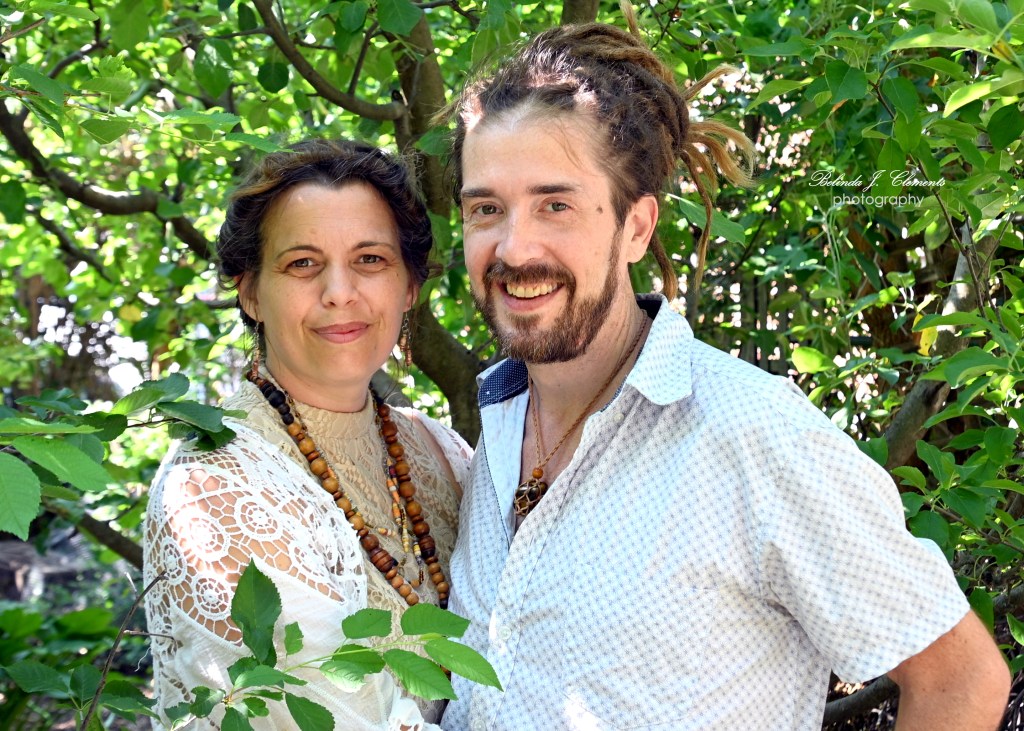
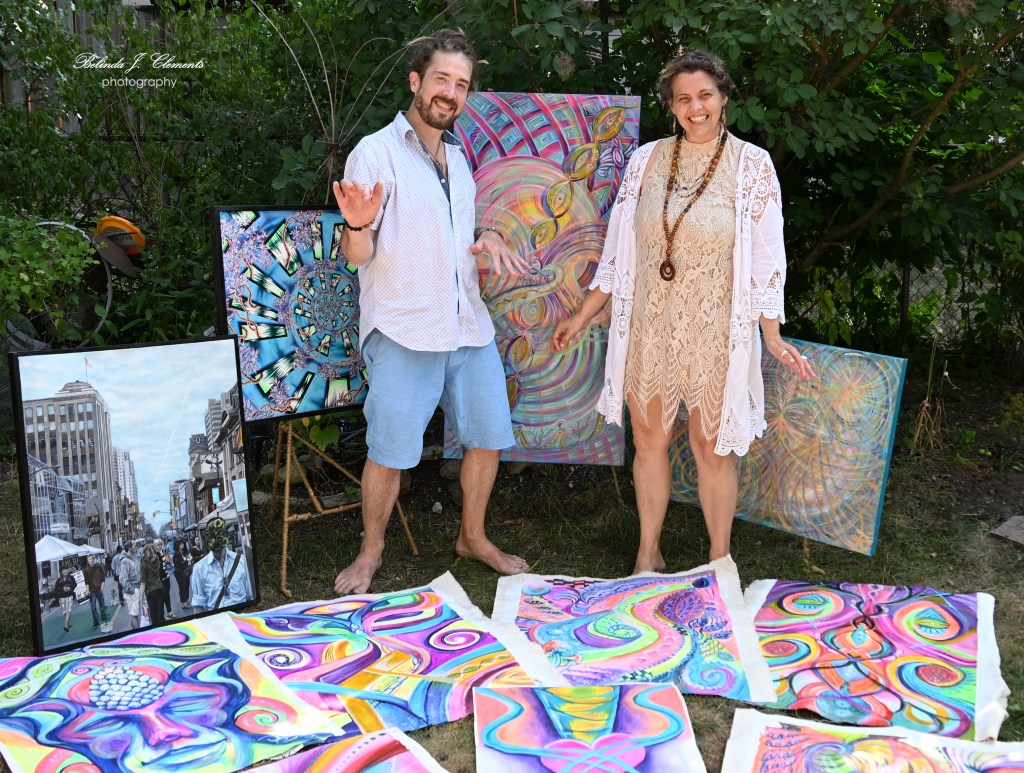
In this segment, Belinda J. Clements profiles life partners and award-winning creative collaborators Shane Wilcox and Kim Doerr, founders of Studio Shim.
(Pictured: Kim Doerr and Shane Wilcox. Photo by Belinda J. Clements.)
Who We Are
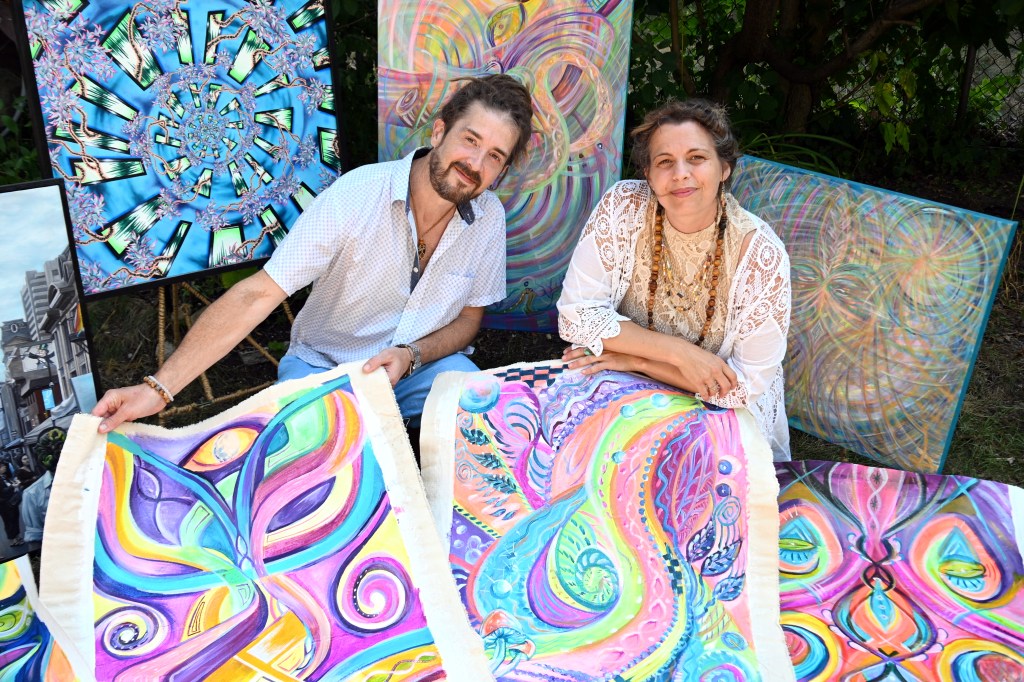
Shane & Kim: Life partners and award-winning creative collaborators for over 26 years. Together, we founded Studio SHIM in 2016 to bring intentional art directly to people and support us through one of many transitions in our lives.
Shane: Specializes in both physical and digital mediums, creating canvas paintings, highly detailed portraiture, custom murals, professional graphic design, and original music under the moniker TaToE.
Kim: A multidisciplinary artist and eco-jeweler who manages Studio http://studioshim.ca/ and all our socials. She paints live with commUnity, and ensures every experience feels welcoming and intentional.
A completely direct connection: No agents or automated bots in the middle. When a client or supporter sends a message to Studio SHIM, we are the ones reading and replying.
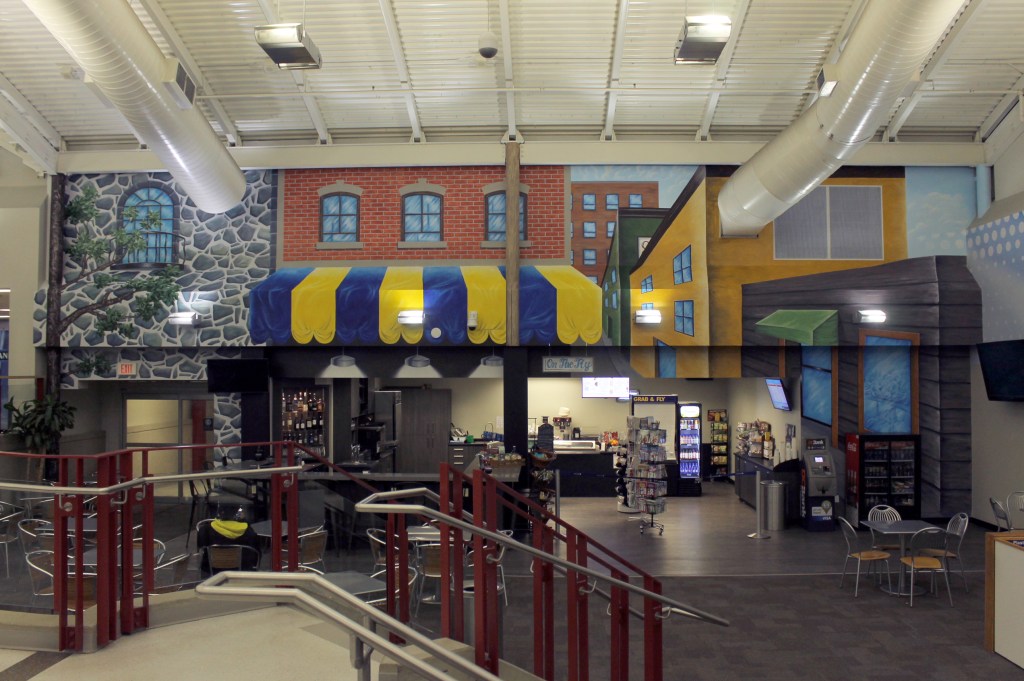
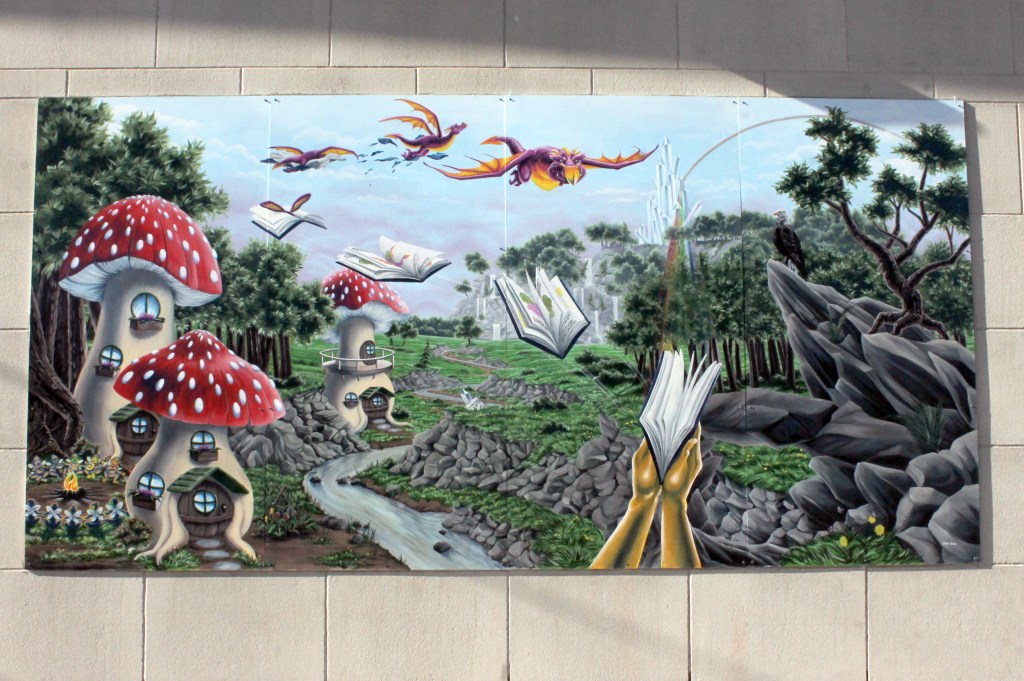
(Pictured: London International Airport. Supplied by Artists.)
2. Who We Are For
Conscious-minded people, businesses, & dreamers who care about how their environment and brand feel, and want visual art, portraits, design, and soundscapes that carry a meaningful, restorative energy.
Art lovers and collectors who crave a direct, tactile connection to real creators, not AI, and are looking to support ethical, slow-made art and independent Canadian music.
(Pictured: Shane Wilcox and Kim Doerr. Photo by Belinda J. Clements.)
3. What We Do
The Monthly Mail Club: The new creative release. Each month, we curate and ship exclusive, physical, first-edition art pieces directly to members’ mailboxes or, as requested, now digitally too. These pieces are only made available to the public on the website after Mail Club members receive their physical packages. Begins in August after the Earth Song Festival. The paintings captured by Belinda on unstretched canvas will be the first 6 months and have never been shared until now.
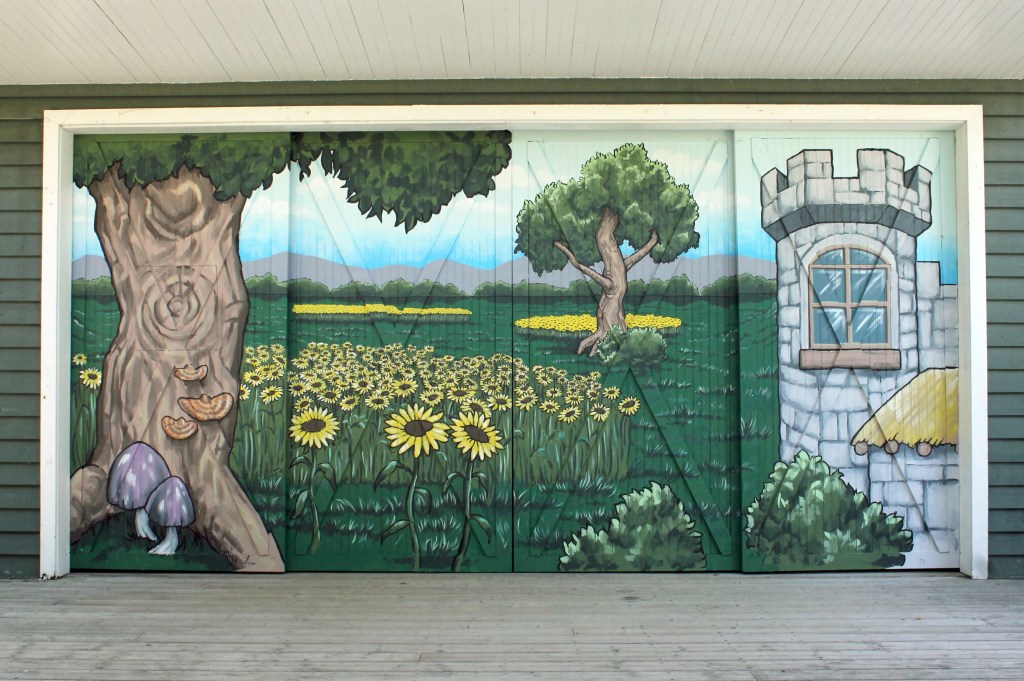
Custom Murals, Portraiture & Graphic Design: Transforming physical and digital spaces with our vibrant, large-scale custom murals, detailed portraiture, graphic design, and branding.
Original Music by TaToE: Ambient electronic soundscapes and live PA sets that serve as the sonic foundation for our entire creative universe.
Wearable Art & Eco-Fashion: Original paintings transformed into premium, slow-made apparel. Proudly manufactured in Montreal, QC (standing firmly in the 3% of apparel still made in Canada), our clothing is 100% sweatshop-free, chemical-free, and printed on fabrics with solvent-free inks.
Lunar Bliss Gatherings: Alcohol-free experiences that pair with live, improvised music by TaToE with Kim’s meditations, live creation, and intentional space-holding for offline connection. Showcases local co-creators and beyond.
( Spectrum of Imagination with Crouch Library/Crouch Neighbourhood Resource Centre, Supplied by Artists.)
4. The Heart of It (Why It Matters)
A living frequency: We believe art is energy. Well, everything is energy. From the positive vibes sewn into our Canadian-made garments to the grounding vibrations of TaToE’s music, everything we create is designed to help people feel lighter, calmer, and more present.
Sensory grounding in a loud world: In a screen-heavy, fast society, we offer something else. Through our visionary art, slow fashion, and ambient soundscapes and commUnity building, we create a space for people to breathe.
Community over commercialism: This is a decade-long, living connection. Whether wearing our art, listening to a synth bath, attending a Lunar Bliss gathering, or opening a monthly mail, you are joining a warm, supportive family built on slow creation and genuine connection.
(Pictured: Shane Wilcox and Kim Doerr. Photo by Belinda J. Clements.)
To learn more about Shane Wilcox & Kim Doerr and Studio Shim, visit:
This is the sixth in an ongoing series in which The Beat Magazine 2025 takes readers “Behind The Scenes” to meet the talented creative individuals who make the London area such a vibrant arts and culture community.
In this segment, Beth Stewart profiles Visual Artist Derek McLarty.
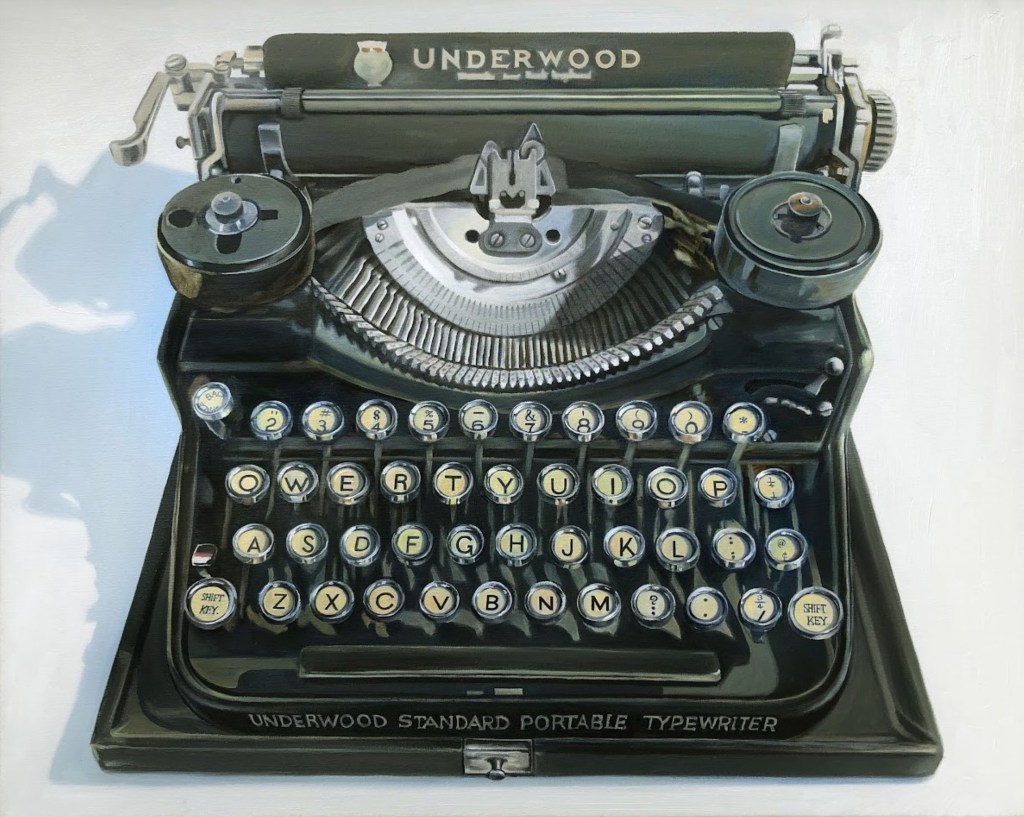
(Pictured: Derek McLarty, “Underwood”, oil on canvas, 24 by 30 inches. Image courtesy of the artist.)
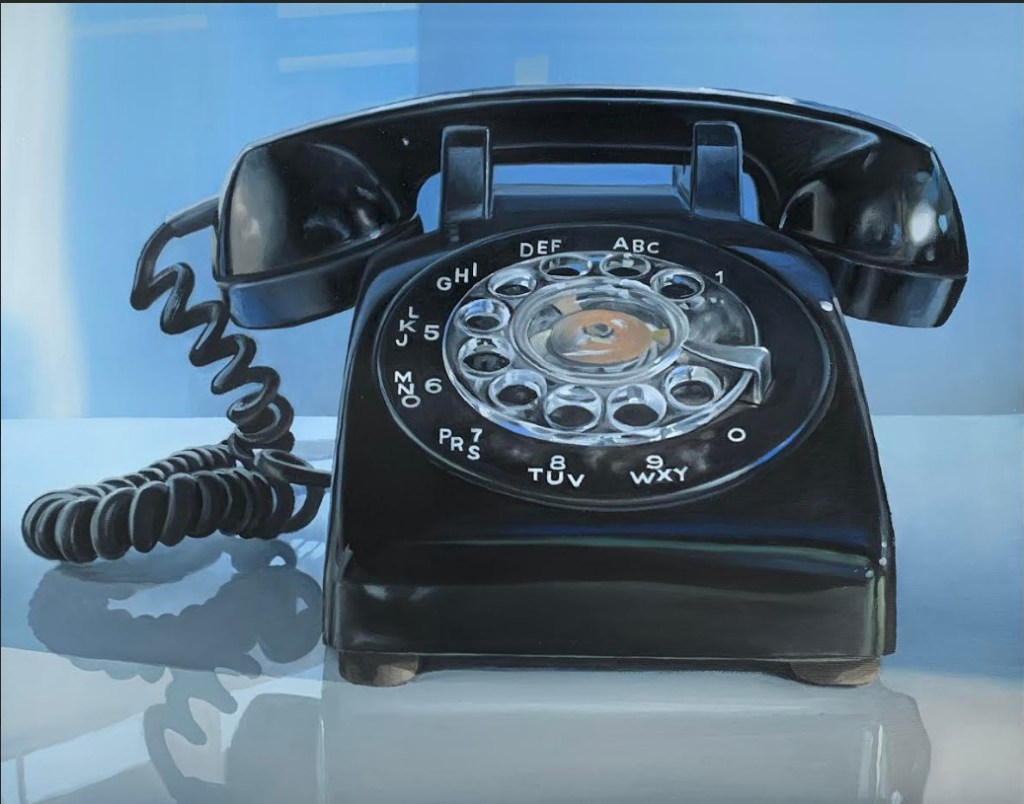
Derek McLarty paints everyday items that have acquired a certain patina as the result of their journey through time. He describes his art as a reaction to our disposable society. His subjects are often analogue objects from a time when we did not “gorge our landfills” with items whose only crime is to have fallen out of fashion. Examples are a black rotary dial phone and a quintessential Underwood typewriter.
His works evoke nostalgia as well as admonishment. He explains, “For viewers, there may be a certain nostalgia in seeing objects that they remember from childhood, but that is not my purpose. I aim to remind viewers of objects that have disappeared from everyday life to draw attention to society’s rampant consumerism.”
While he uses a representational style, he is not a slave to creating a photographic representation of his subjects. He purposely leaves visible brushstrokes and uses an “economy of marks”. He explains, “Leaving traces of the artist’s hand reminds the viewer [a painting is] human-made – rather like many of the objects represented”.
(Pictured: Derek McLarty, “Land Line version 2”, oil on canvas, 16 by 20 inches. Image courtesy of the artist.)
His drive to create is complicated. McLarty admits there is a certain satisfaction in mastering the formal aspects of painting – creating a pleasing composition, choosing colours effectively and even the craft of creating an effective illusion of reality. He also finds that painting is an effective method of communicating his dissatisfaction with society’s “addiction” to “the new, the shiny and the fashionable”.
McLarty is involved in the annual London Artists’ Studio Tour, and his work can be seen in Museum London’s shop as well as at Westland Gallery. In addition, he displays work at Marten Arts Gallery in Bayfield, in the annual Paint Ontario show, and more recently in the Summer and Grace Gallery in Oakville.
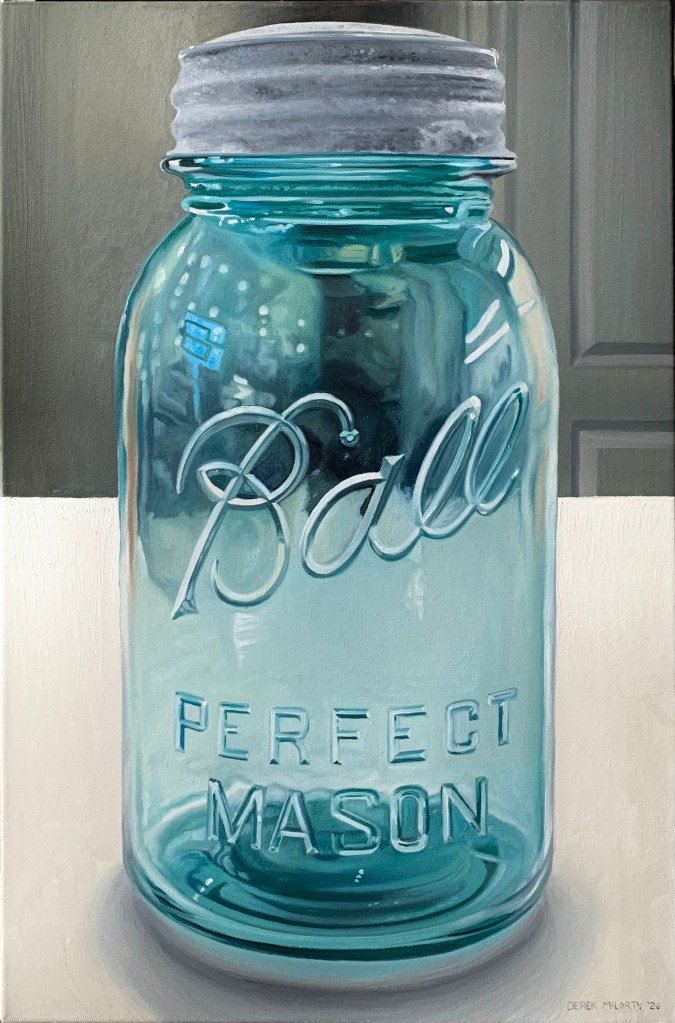
His work “Perfect Mason” is a finalist in the 2026 Kellogg’s Art Competition.
(Pictured: Derek McLarty, “Ball Mason Jar”, oil on canvas, 24 by 16 inches. Image courtesy of the artist.)
To learn more about Derek McLarty, visit www.derekmclartyart.com / Facebook: Derek McLarty / Instagram: @derekmclaryswork / Pinterest: DerekMcLartyArt
This is the fifth in an ongoing series in which The Beat Magazine 2025 takes readers “Behind The Scenes” to meet the talented creative individuals who make the London area such a vibrant arts and culture community.
In this segment, Beth Stewart profiles Visual Artist Ryan Boris Hamilton.
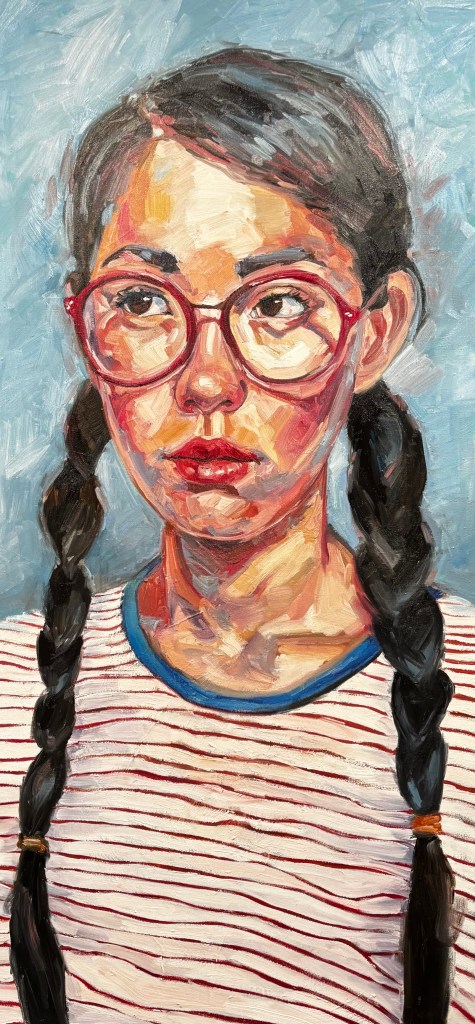
(Pictured: Ryan Boris Hamilton, “Woman in Glasses”, mixed media on birch wood panel, 40 by 30 inches. Image courtesy of the artist.)
Ryan Boris Hamilton is primarily a portrait and figure artist, but he explores other subjects as well. While his work varies in style, it typically starts with an acrylic base to which he adds mixed-media elements, such as drawing, wallpaper and fabric. Through layering colours and textures, he finds new ways of “framing” his subjects.
He has now worked as a professional artist for 25 years and has shown across Canada.
The BealArt graduate, who specialized in classical painting techniques, printmaking and sculpture, has lived in Toronto and Vancouver before returning to London. While in Vancouver, he wrote and illustrated a book of poetry. “The Lark, the Trees, the Stars and Me” (2012) is available on Amazon.
(Pictured: Ryan Boris Hamilton, “Woman in Hat”, acrylic on birch wood panel, 24 by 18 inches. Image courtesy of the artist.)
Hamilton has a natural urge to create. He pushes himself to the limit and strives to make each finished piece a “favourite” that must then be surpassed.
He says portraits are challenging as small mistakes have a huge impact. Consequently, it is rewarding when he nails it, and clients are thrilled with portraits of loved ones.
Hamilton was recently part of the London Artists’ Studio Tour. He is an Ontario Arts Council grant recipient and is presently working towards a solo show of his work from the last five years.
Ryan Boris Hamilton is currently in the top 100 for the 2026 Kellogg’s Art Competition. His mixed media on birchwood panel “Man on a Bench” invites viewers to engage with the subject. The figure looks off at something unseen that prompts him to smile, whilst the background is a busy and playful mix of patterns, textures, fabrics and shapes.
(Pictured: Ryan Boris Hamilton, “Man on a Bench”, mixed media on Russian birch wood panel, 36 by 24 inches. Image courtesy of the artist.)
Beth Stewart is a writer, educator, and visual artist. She has a B.A. and a B.Ed. from the University of Windsor and a Diploma in Art Therapy from Western University. Beth has worked as an Art Therapist with Canadian war veterans and as a Secondary School Teacher of art and English for the TVDSB. She retired in 2024.
Beth was the arts editor at Scene Magazine from 2004 to 2006. She founded Artscape Magazine in 2006 and served as its editor until 2008. In addition, Beth wrote on the arts for Lifestyle Magazine from 2006 to 2017 and served as the copy editor for The Beat (in print) from 2009 to 2013.
As a visual artist, Beth works mainly in dry media and favours coloured pencil. Over the past decade, Beth’s focus has been on wild and domestic birds. Beth is a member of the Coloured Pencil Society of America, the Gallery Painting Group, the Eclectic Collage Collective, the Lambeth Art Association, and a founding member of the Coloured Pencil Artists of Canada group.
This is the third in an ongoing series in which The Beat Magazine 2025 takes readers “Behind The Scenes” to meet the talented creative individuals who make the London area such a vibrant arts and culture community.
In this segment, Beth Stewart profiles visual artist Anna Wilson.
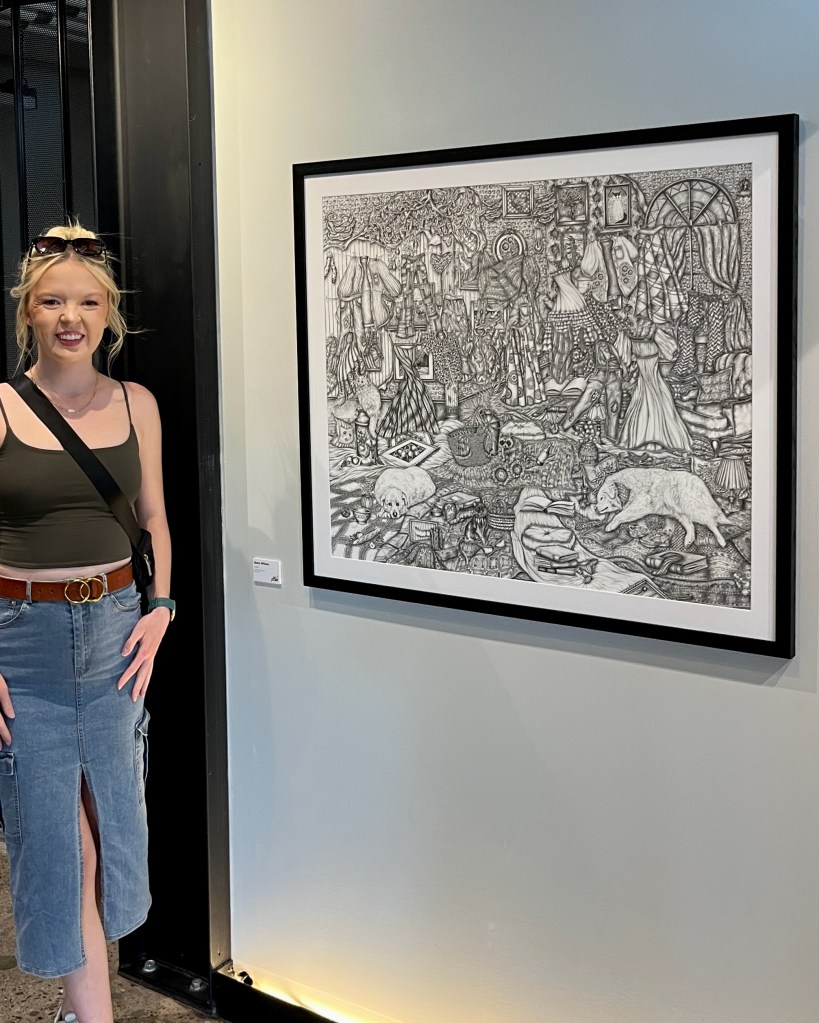
(Pictured: Anna Wilson and “Found” at 100 Kellogg. Image courtesy of the artist.)
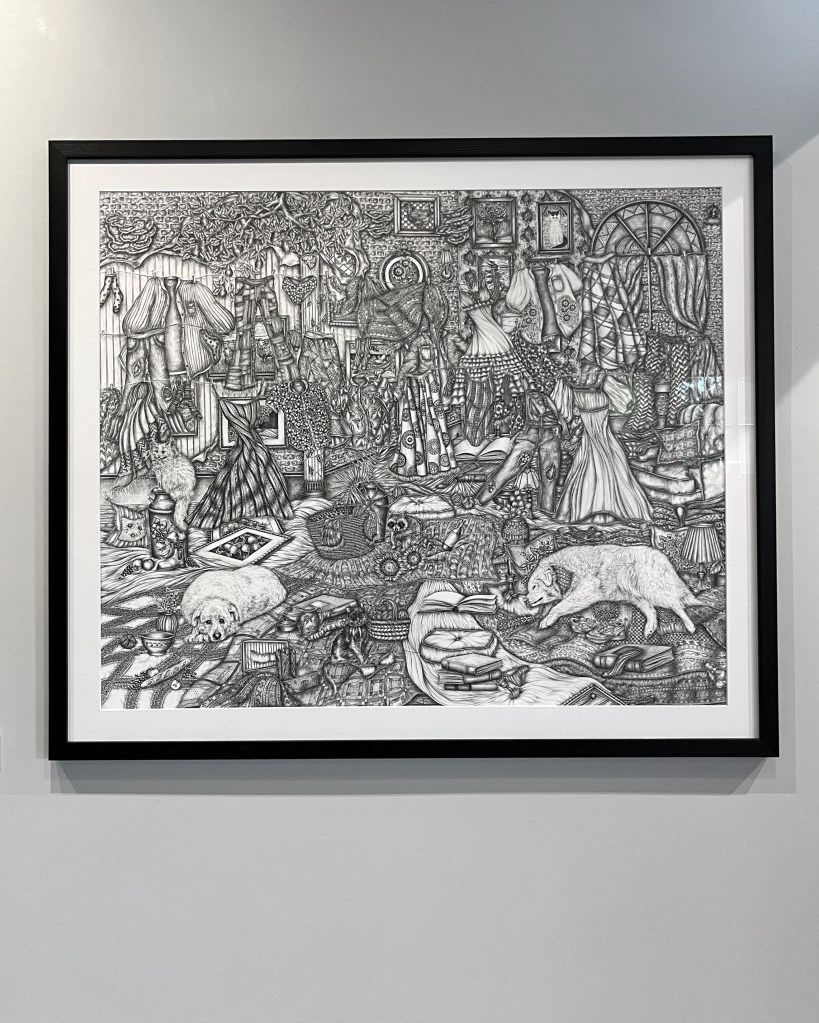
Anna Wilson is known for her intricately detailed fineliner drawings. She describes her subject as newly imagined places, inspired by real animals, architecture, furniture, and objects.
Wilson constantly takes photographs of places and things that she finds beautiful or interesting to use for reference in her drawings. She then plays with her references until they suit her vision. She explains, “I may change the pattern of a chair’s upholstery, add in flowers bursting from walls, or perspectives that have been manipulated in impossible ways.”
The sizes of her pieces run the gamut – some as small as 8 by 8 inches, others as large as 40 by 30 inches.
Wilson has always been passionate about art. Over time, her zeal has matured into commitment as she has discovered her medium and honed her style. She credits art teachers Erica Reshef of Artventure Art Studio and Leslie Putnam of Banting Secondary School, as well as her supportive family, with inspiring her to pursue a career as an artist. Wilson subsequently graduated from Western University in 2018, where she studied visual art and psychology.
Art lovers will see a lot of Wilson’s work in the months to come. Her drawing “Found” was chosen as one of the Top 100 pieces in the 2026 Kellogg’s Art Competition.
(Pictured: Anna Wilson “Found”, fineliner on paper, 30 x 36. Image courtesy of the artist.)
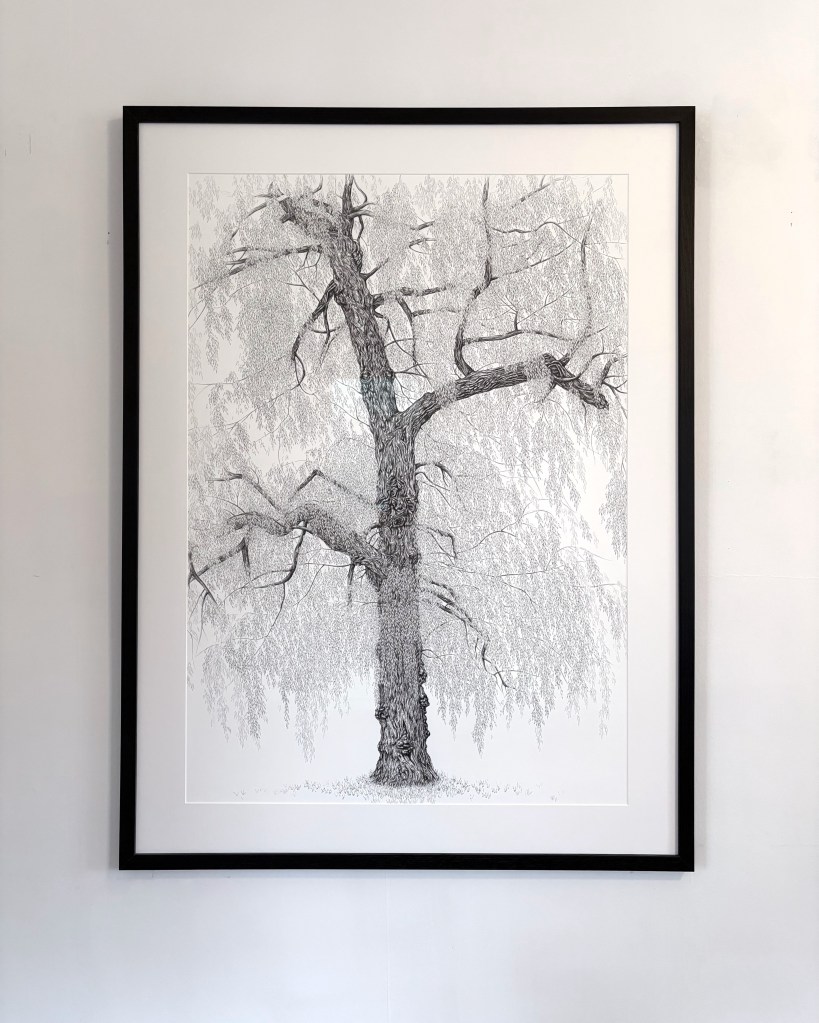
Her willow tree drawing, “Graceful,” will be in “Visual Elements 68” opening at Woodstock Art Gallery on July 11th. It’s Wilson’s first time showing in Woodstock.
(Pictured: Anna Wilson, “Graceful”, fineliner on paper, 40 x 30. Image courtesy of the artist.)
Anna is also preparing for a show at Westland Gallery, 247 Wortley Road, from August 25 to September 26. It will showcase her “Every Last Leaf” series, a new collection of highly detailed drawings of willow trees and birds, the result of her burgeoning passion for nature.
To learn more about Anna Wilson, visit www.annawilsonart.ca or check her out on Instagram/Facebook: @anna_wilson_art
This is the first in an ongoing series in which The Beat Magazine 2025 takes readers “Behind The Scenes” to meet the talented creative individuals who make the London area such a vibrant arts and culture community.
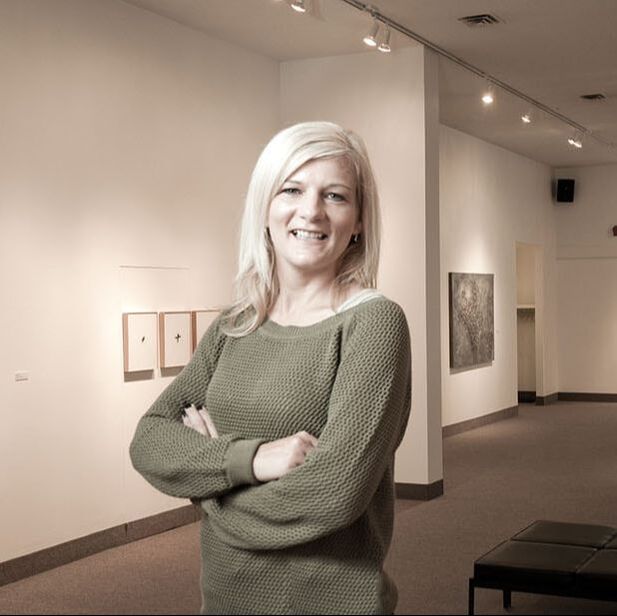
Beth Stewart profiles visual artist Laura Woermke.
(Pictured: Visual Artist Laura Woermke.)
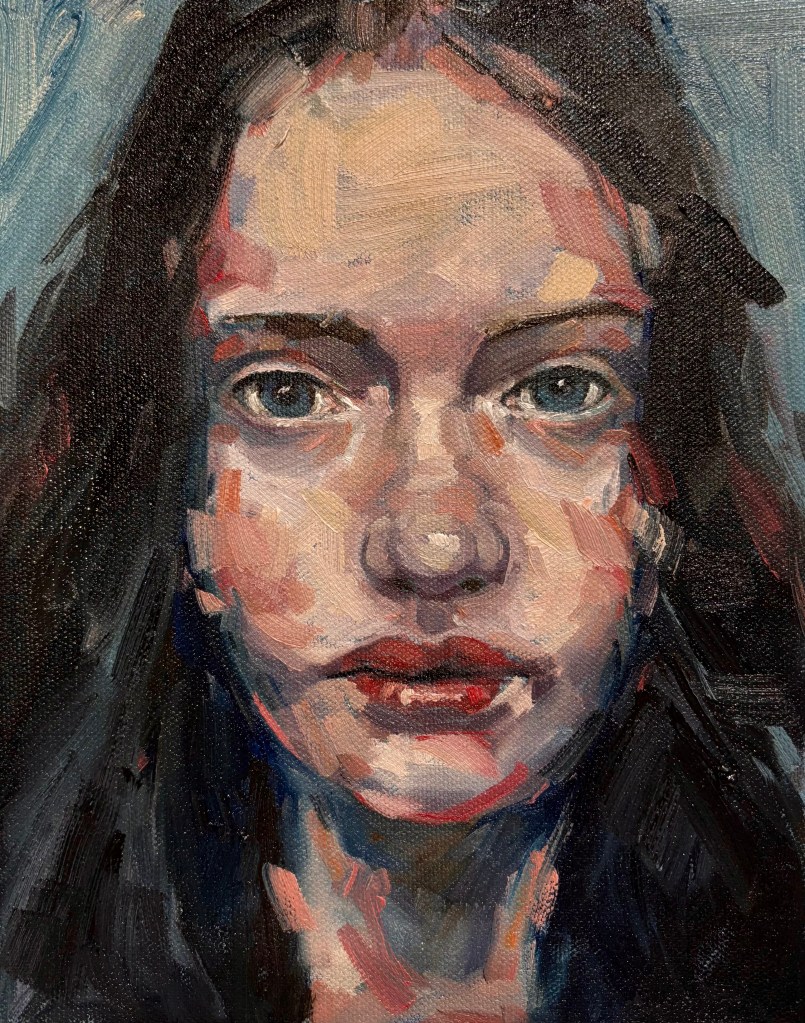
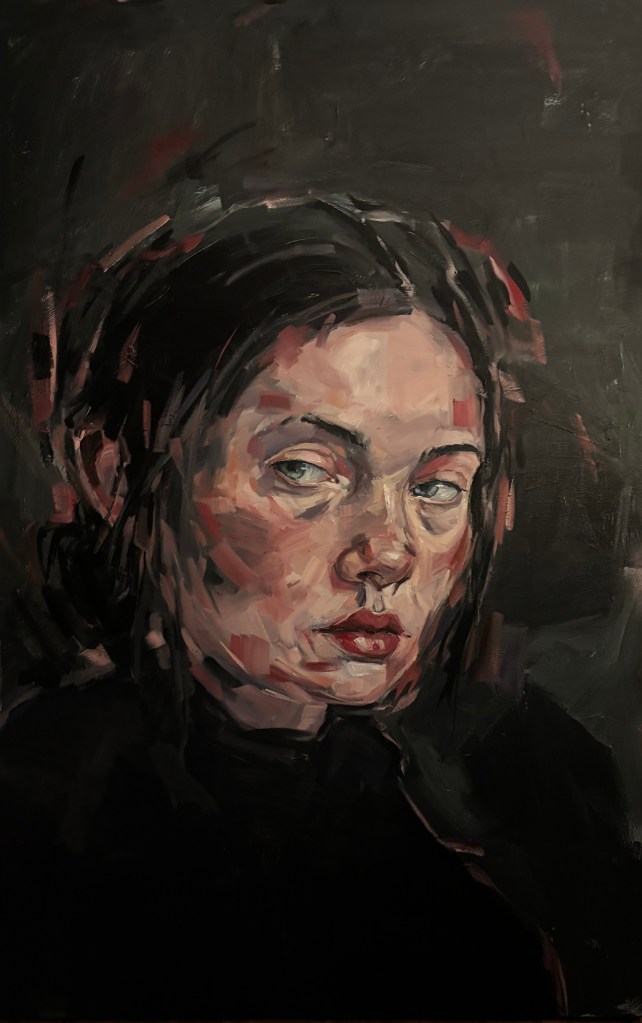
Laura Woermke is an artist who eschews traditional portraiture to capture on canvas what she describes as “moments of introspection, vulnerability, and resilience.” Her figurative works are immediately recognisable for their bold, expressive style.
(Laura Woermke, “Sarah”, oil on canvas, 10 by 8 inches, 2026.)
An intuitive painter, Woermke employs visible brushwork and layered colour to portray her subjects. It is an approach that solicits visceral connections from her viewing audience.
She says she is driven to create because painting is how she makes sense of the world. Woermke explains, “Every painting begins with a question rather than an answer, and the process itself becomes a form of discovery. Each painting is an opportunity to explore what it means to be human.”
(Pictured: Laura Woermke, “Trapped”, oil on canvas, 48 by 24 images, 2026.)
Woermke’s artistic journey began at Fanshawe College and led to the University of Windsor, where she earned her Honours Bachelor of Fine Arts in Printmaking. This background is important as it is through printmaking that she learned the expressive value of mark-making and layering that is so evident in her paintings.
Laura Woermke’s painting “Soft Armour” is currently on display in the 2026 Kellogg’s Art Competition.
(Visit the 2026 Kellogg’s Art Competition to see Laura Woermke’s 48-by-30-inch oil on canvas, “Soft Armour”.)
In addition to her studio practice, Woermke is the Executive Director and Curator of the St. Thomas-Elgin Public Art Centre. She sees her own work and her role in the arts community as deeply connected. Whether in the studio or the gallery, her goal is to create meaningful experiences that encourage conversation, reflection, and connection.
To learn more about Laura Woermke, visit her online at www.laurawoermke.art or on Instagram @woermke
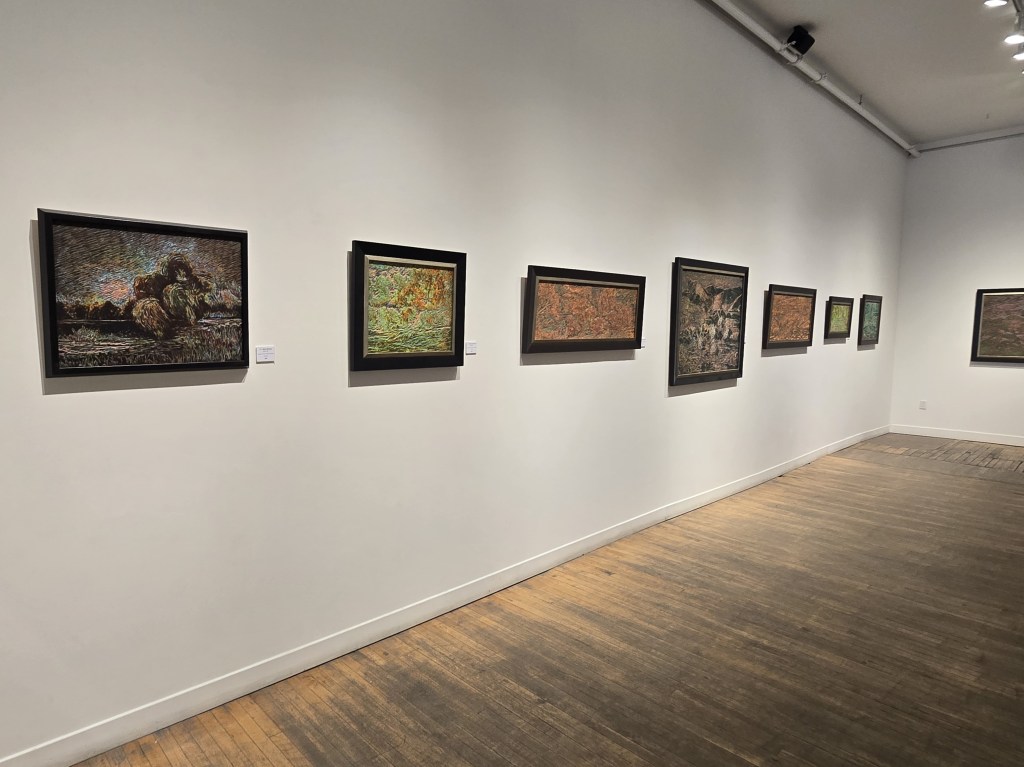
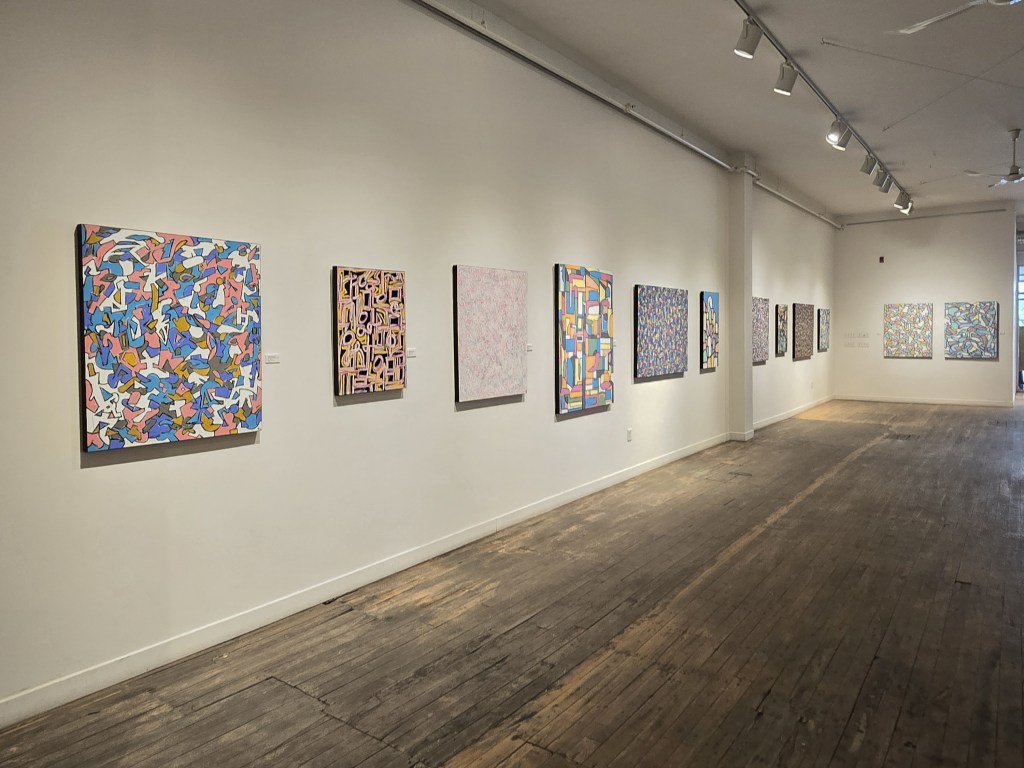
(Installation shot of the left side of the TAP Main Gallery. Photo by Beth Stewart.)
“Come As You Are” occupies the Main Gallery of TAP Centre for Creativity, 203 Dundas Street, from June 23 to July 4, 2026. An opening reception is planned on Thursday, June 25th, from 6 to 8pm with both artists in attendance.
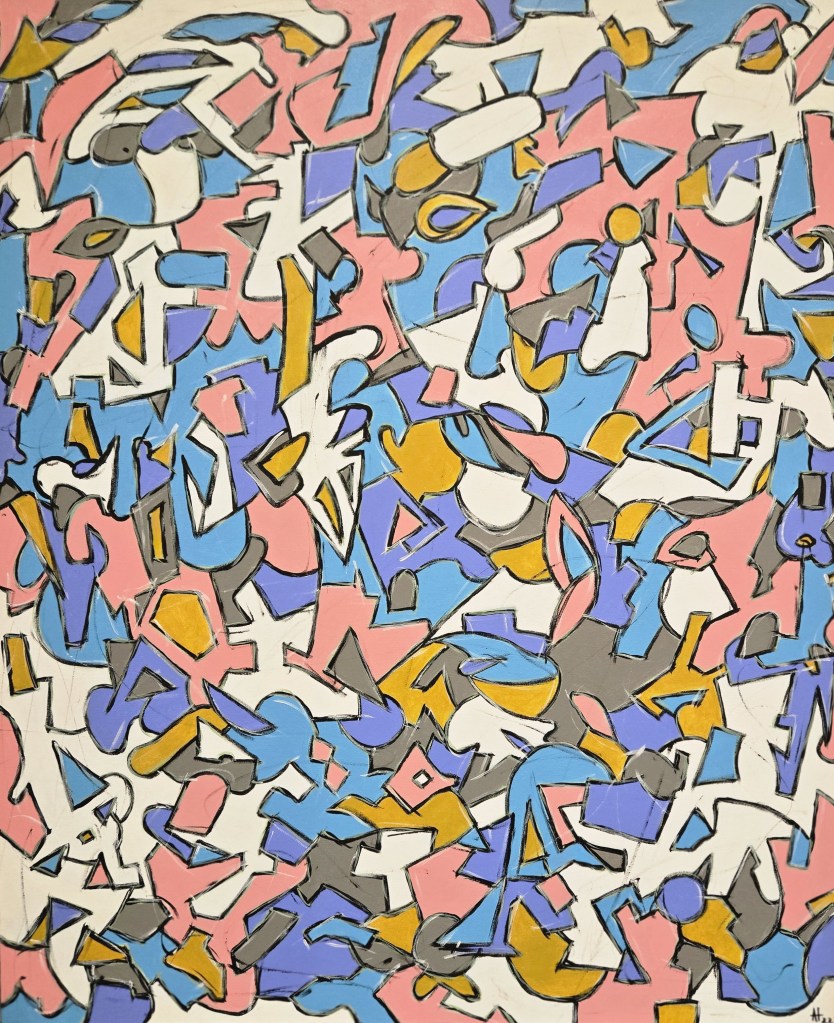
The show juxtaposes work by Bijan Ghalehpartdaz with work by August Theodore.
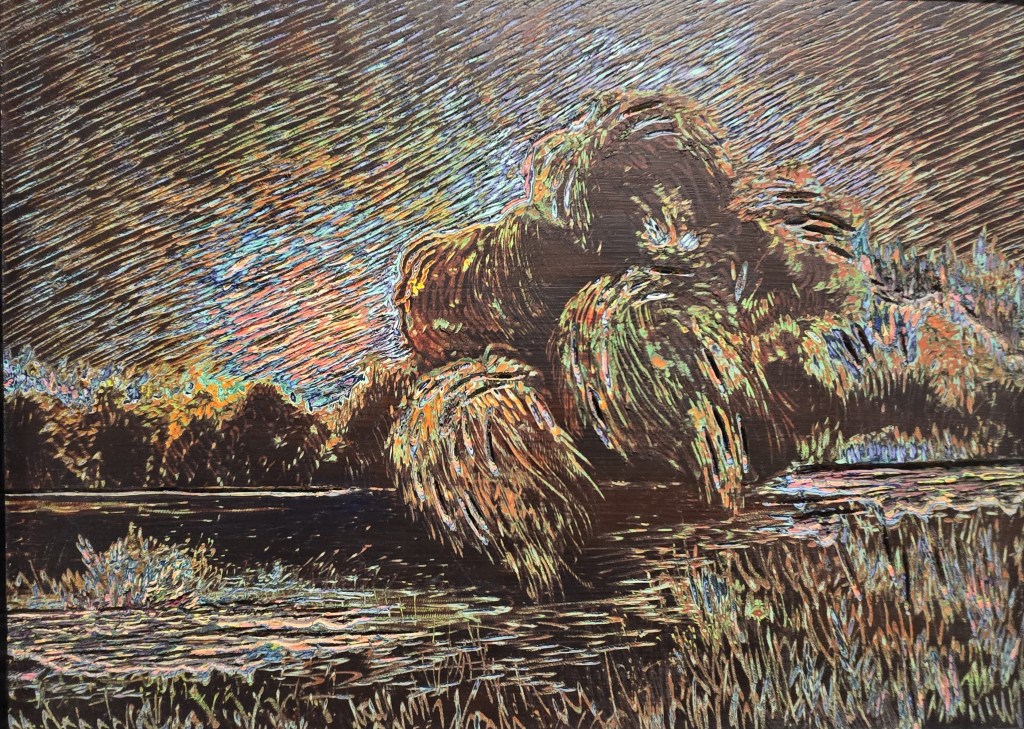
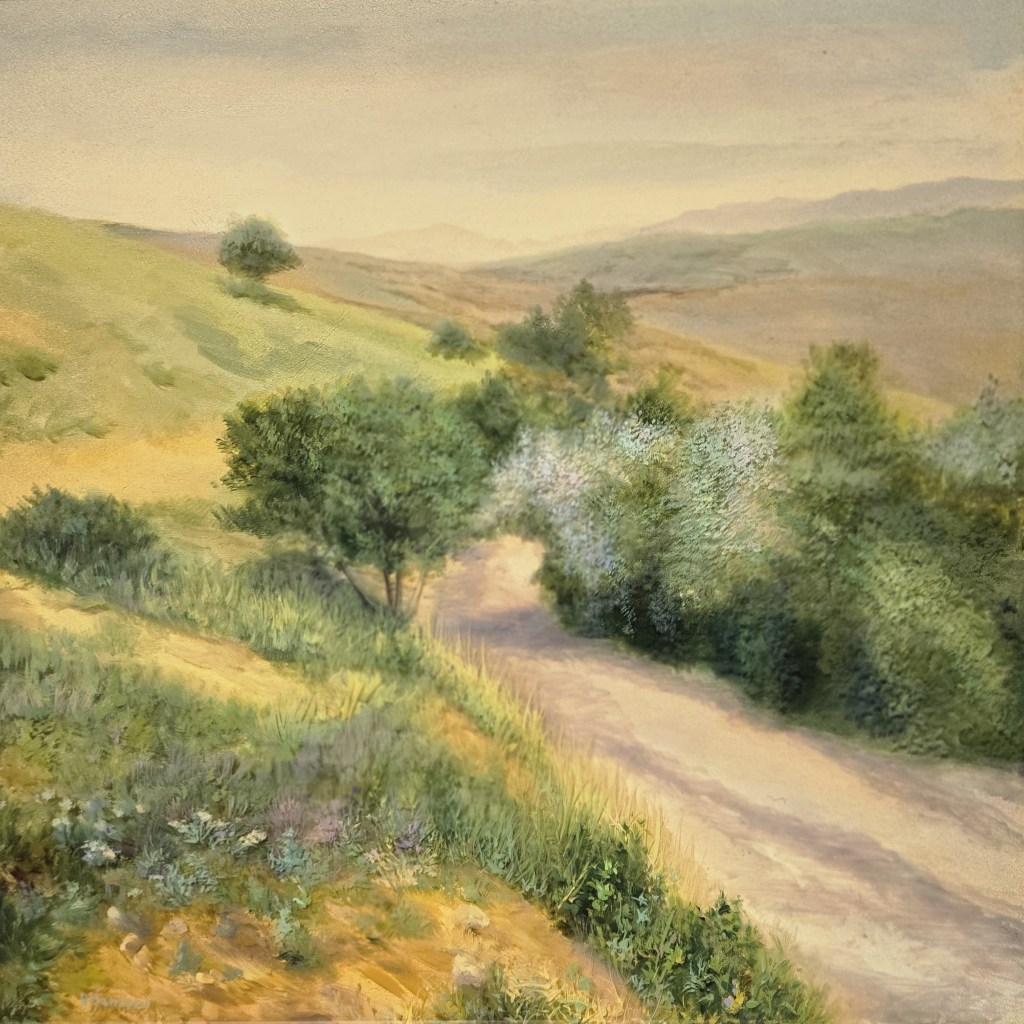
(Bijan Ghalehpartdaz, “Wild Willow” (plein air), engraved acrylic paint on board, 18 by 24 inches. Photo by Beth Stewart.)
Bijan Ghalehpartdaz needs no introduction to the local arts community. As the owner of Bijan’s Art Studio for over 30 years, a literal “candy store for artists”, he is familiar to all.
August Theodore, born in 1976 in the east end of Toronto, is a self-taught abstract painter. He relocated to the east end of London in 2016. A full-time artist, he works out of his home studio.
(August Theodore, “Eye Candy Modernist”, acrylic on canvas, 30 by 36 inches, 2021. Photo by Beth Stewart.)
The two met when Theodore became a customer at Ghalehpartdaz’s store.
Says Theodore, “Over the years, we had various conversations about art.” Through their mutual interest in art, the two became friends.
“About a year and a half ago, I invited Bijan to see my work. The next time I saw him, he said we should show together. I agreed, and here we are.”
Ghalehpartdaz recalls when he first visited Theodore’s studio, he was “blown away by his colours and intricate wallpaper pattern-like images.”
Ghalehpartdaz’s work follows two distinct paths. Along one, he uses layers of art resin and acrylic paint, a technique he describes as “super intense and time-consuming” but ultimately rewarding and which results in a realistic, three-dimensional painting.
(Bijan Ghalehpartdaz, “Memory of Home”, art resin and acrylic on board, 21 by 21 inches. Photo by Beth Stewart.)
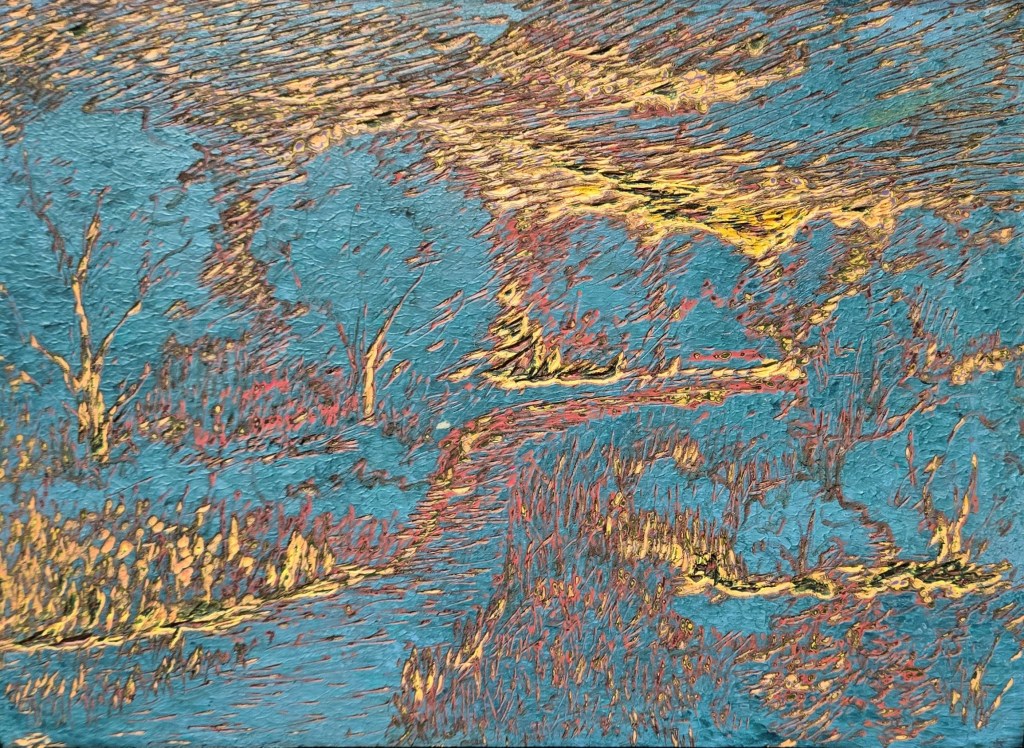
Along with the others, he explores acrylic paint carving. Bijan applies up to 70 layers of thick, high-quality acrylic paint on a hard wooden surface in a process that may take up to six months. When all the layers are bone-dry, he carves into them using a Dremel power tool. The result is a one-of-a-kind three-dimensional painting.
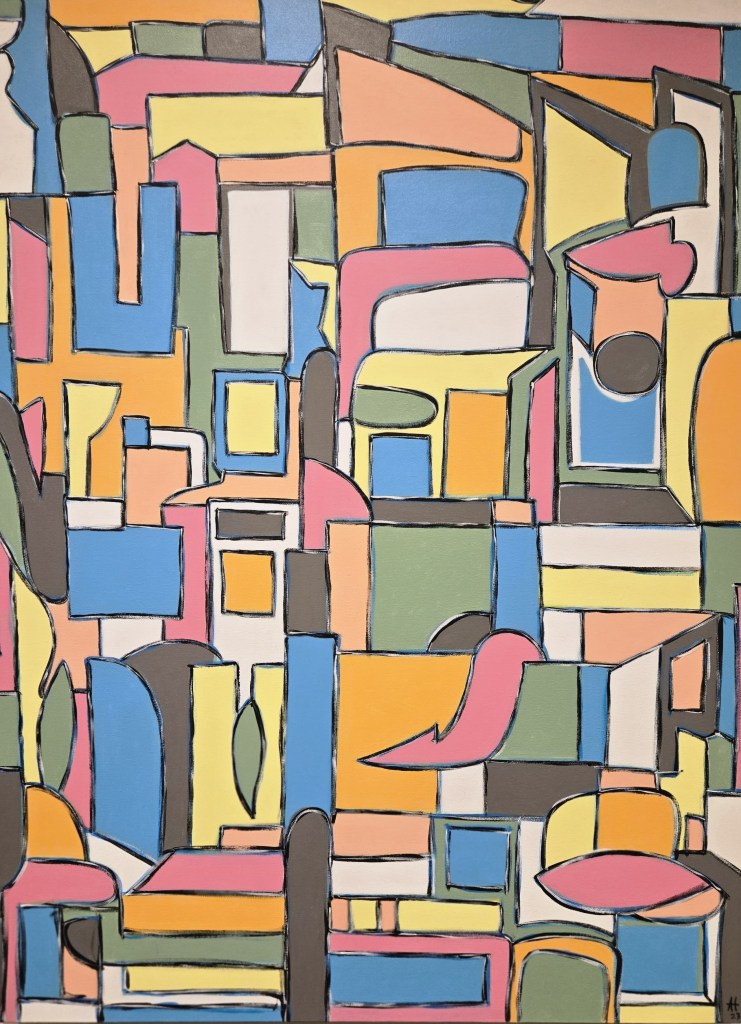
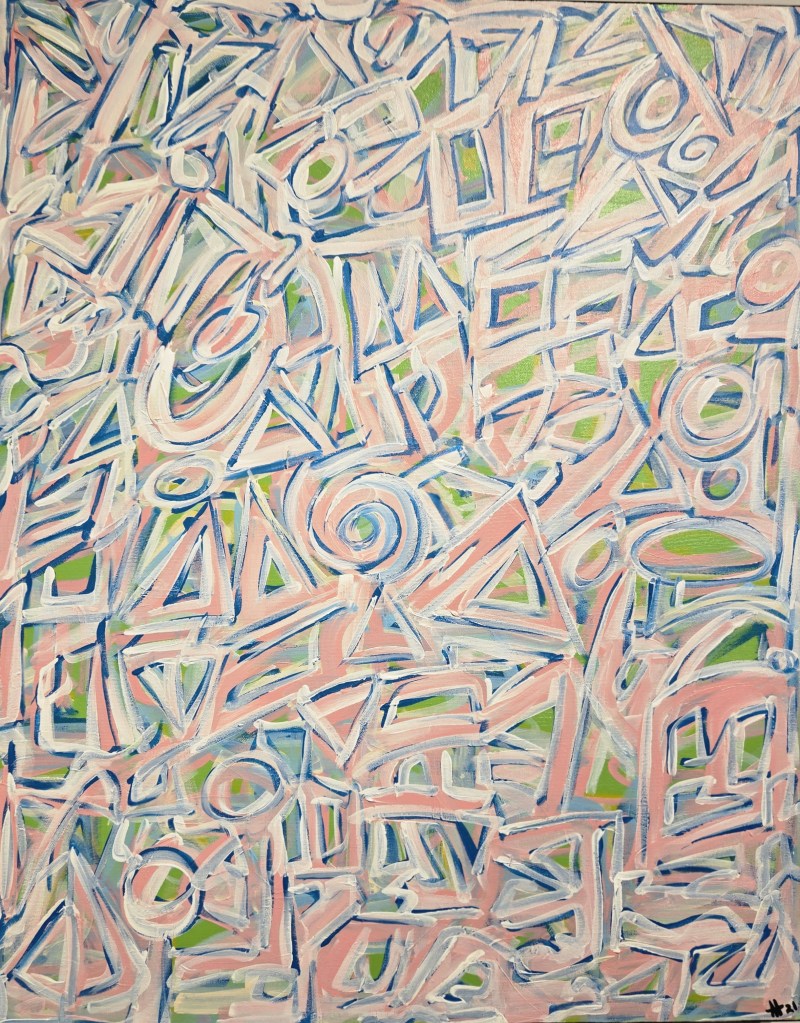
Theodore self-describes as an observer of things with roots in graffiti who draws inspiration from both nature and from urban life. Over the past three decades, his work has graced galleries, shows, markets and sidewalks across Canada and in parts of Europe.
A specific style is not his goal. Theodore says, “Mainly, I paint abstract mosaics. However, I paint different series. I’m always at play … I paint whatever I feel.”
(August Theodore, “Metropolis Stacked”, acrylic on canvas, 48 by 36 inches, 2023. Photo by Beth Stewart.)
What about the show’s title? Does it reference Nirvana’s “Come as You Are,” a song that writer Kurt Cobain purportedly said was about non-conformity and acceptance.
Does its meaning predate Cobain’s use and allude to those spontaneous gatherings popular in the 1940s to 70s, where the concept of no preparation is embraced? Or is it rooted in theology and the concept of unconditional acceptance (Whoa, Nelly. Did that just go full circle?)
Theodore says the title was indeed borrowed from Cobain. He explains, “The title refers to two artists, with different backgrounds, bringing what they do together.”
Upon entering the gallery, the dichotomy is evident and purposeful. The space is divided into two distinct exhibits; Ghalehpartdaz’s work occupies the left-hand walls, and Theodore’s the right.
(Installation shot of the right side of the TAP Gallery. Photo by Beth Stewart.)
The artists arrived at the gallery with the idea of the split, says TAP Team Member Connor Mackinnon.
When the two bodies of work are placed together, it serves to highlight their disparate physical and conceptual qualities. That, then, creates new meaning.
And it works, says Gallery attendant Bill Lee, who helped hang the show.
Ghalehpartdaz’s work is dark, moody and requires close examination. His sgraffito pieces burst with detail, texture and pattern. Their exposed underlayers glow like gold. This can be readily seen in “Harmony in Turquoise.”
(Bijan Ghalehpartdaz, “Harmony in Turquoise”, engraved acrylic paint on board, 11 by 14 inches. Photo by Beth Stewart.)
Ghalehpartdaz’s pieces have a timeless elegance and speak to an appreciation for history and quality. They sport frames that, while not ornate, are heavy and formal in appearance. His art resin pieces appear to be topped with glass (they’re not).
In contrast, Theodore’s work is bright and permits distance. He eschews representation to emphasize colour, composition and emotion. “Watermelon,” which graces the half-rotunda on the theatre level, is all about colour and form. It dazzles and then drags the viewer’s eye on a carousel-like journey.
(August Theodore, “Watermelon”, acrylic on canvas, 38 by 22 inches, 2021. Photo by Beth Stewart.)
Theodore’s pieces have a minimalist vibe and are appropriately left unframed.
Ghalehpartdaz’s pieces present the sublime power of nature. Theodore’s pieces are decidedly contemporary. Most of Ghalehpartdaz’s pieces are recent (Where does he find the time?); Theodore’s include a bevy of earlier pieces.
So, what connects their work? Theodore says it is the sheer passion they both have for what they do.
Beth Stewart is a writer, educator, and visual artist. She has a B.A. and a B.Ed. from the University of Windsor and a Diploma in Art Therapy from Western University. Beth has worked as an Art Therapist with Canadian war veterans and as a Secondary School Teacher of art and English for the TVDSB. She retired in 2024.
Beth was the arts editor at Scene Magazine from 2004 to 2006. She founded Artscape Magazine in 2006 and served as its editor until 2008. In addition, Beth wrote on the arts for Lifestyle Magazine from 2006 to 2017 and served as the copy editor for The Beat (in print) from 2009 to 2013.
As a visual artist, Beth works mainly in dry media and favours coloured pencil. Over the past decade, Beth’s focus has been on wild and domestic birds. Beth is a member of the Coloured Pencil Society of America, the Gallery Painting Group, the Eclectic Collage Collective, the Lambeth Art Association, and a founding member of the Coloured Pencil Artists of Canada group.