
An Interview with Tommy Solo. Recorded July 23rd from his home in Val-David, Quebec.

Alan Gerber is most famous for his tenure as lead singer and multi-instrumentalist with the classic psychedelic rock and blues band, Rhinoceros. He has released multiple solo albums, both as a signed and independent artist since then. Having shared stages with Bob Dylan, B.B. King, Van Morrison, Lou Reed, and Janis Joplin, among others, he is a well-respected legacy artist for the ages.
And now, he has a brand new album out called The Well and a new single called Put Back My Heart. On this release, he is reunited with Rhinoceros guitarist Danny Weis, along with the late Michael Fonfara, who recorded his Hammond B3 organ parts for this album prior to his passing.
And this time, it’s also a family affair featuring his daughter Hannah on vocals and his son Eli co-producing and playing some guitar on the album.
The following is from my recent Interview with Alan. You can watch the Interview on YouTube: https://youtu.be/S2-kVaBII7g?si=HrpGbM48YBJLbMbJ
So, you have a brand new album out. And I kind of lost track of how many solo albums you’ve released. I believe there are over 10 right to date?
“We’re 13, 14, 15, or something like that, right? “
Yeah. And was one of those in French?
“Well, some of the songs were in French. Okay, okay, I had a single, you know, I had some songs done in French, but most of my stuff is in English, although I’ve lived in Quebec, I believe, like 37 years.”
So, it’s quite the transition from living in Chicago and LA to being in a small town in Quebec, and from what I understand, you’ve become a big part of the community as well.
“Yeah, I love this community, you know? Like I said, I’m from Chicago. I lived in LA, and I lived in New York. I lived in Vermont. We had a house in the south of France. But this little town of Val-David is where I’ve lived for the longest, for like, 30, 37 years. It’s my longest home.”
There must be some magic in the air that keeps you there.
“It’s a wonderful town. It’s a small village of between five and six thousand people. There’s so many artists. It’s unbelievable here.”
You know, there are some hotbeds of talent in small towns. I grew up in North Bay, Ontario, and I’ve lost count of how many top-shelf players we had there, and uh, a good friend who I went to school with was John McGale.
“I’ve played with John”
You played with him?
“You know, just a little bit. Yeah, I know, John. Yeah, he was a great player.”
He was a great guy, but he’s just one example of some of the awesome talent you can find in a small place. Like where you are in Val-David, and there’s nothing like tapping into some of that talent on occasion.
“Well, you know, in this town, there’s The Potters. It’s the biggest Pottery Fest. My wife is a ceramic artist. She’s a potter. In fact, if you look at the cover of the album, The Well, the well is actually the interior of one of her pots photographed, you know? It’s pretty cool, and there are so many ceramic artists here. There are writers. There are poets and painters. It’s an amazing town.”
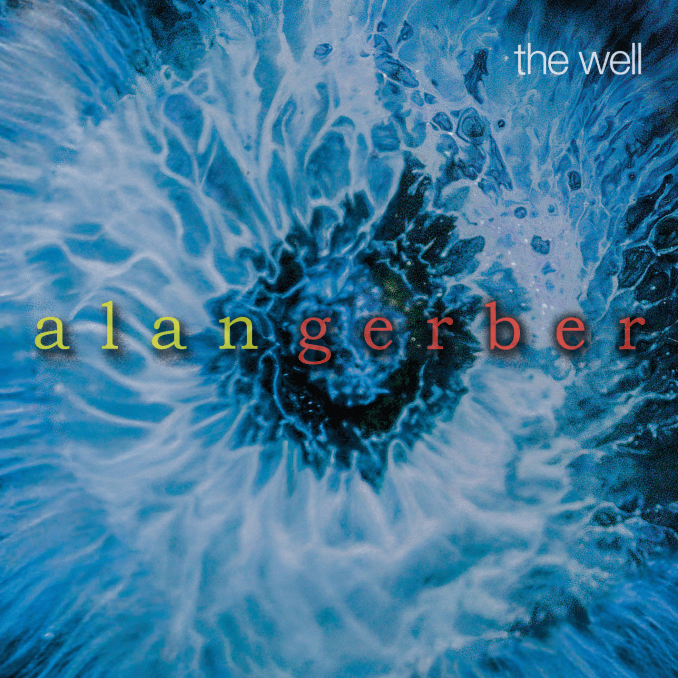
No kidding. So, let’s talk about the songs on this album, The Well. There’s some interesting slide guitar on that. So, where did that song come from?
“I have a writing partner who’s unfortunately deceased now, Rolf Kempf. He wrote Hello Hooray, which was a big hit for Alice Cooper.
And you know we were running together for 50 years? And we co-wrote most of the songs on this album together. And he sent me the lyrics, and then I wrote the music, and we juggled the lyrics back and forth and changed a few things.
And that’s how the song came to be. And then, it’s such an appropriate title for the album because this is an album I dug deep to get to all these places. Yeah, and it’s about growing deep into your creativity.”
Yeah, and listening to the album, you certainly did that. I imagine this one took a while. Are you really quick with this stuff, or did it take some time?
“It took a long time because of Covid, and because actually I was waiting for my son, you know, my son, Eli Gerber, who I co-produced it with.
And he’s playing guitar on the track Over Again. That real shredding, you know? He’s quite a guitarist. He was supposed to do all the guitars on the album, but he’s a physicist. And he’s really been so busy with his research. And he just never could get around to doing it. He wanted to, but he couldn’t. And I waited for him for years.
And then I finally said, listen, I want to finish this album, and I got Danny Weiss from Rhinoceros, who’s also an amazing guitar player, and Danny played on eight songs. He is an absolutely amazing player, you know?”
Had you been in contact with Danny over the years, or did you reconnect for this album?
“Yeah, you know, we did a Rhinoceros reunion. I don’t know, well, I think maybe it was 2013 or 2014. We played the Kitchener Blues Festival in Ontario. It was very cool. Yeah, there are some partnerships, you know, and there are some connections that you have that are just so strong. It was, like, Michael Fonfara. Right, he’s played with me on my last six CDs. Unfortunately, he’s gone. We’re losing too many. He was a great Hammond B3 player. Great, you know, just amazing. A great friend.”
I know that you’re in the Montreal area, but Michael Fonfara was hugely popular in the Toronto area, in that circuit as well. Yeah, uh, so On a Roll. What inspired that song?
“I got the idea. I wrote the music. And I had On A Roll, and then I started fitting some things in, and I wasn’t happy with where it was going. So, I ran it by Rolf. Okay, and I have another friend whom I write with, Patrick Wiggins, who lives in Florida.
He’s out of Tallahassee, Florida. I ran it by both of them, and we came up with it between the three of us. We came up with all these really cool lyrics. It’s a great song. It’s a great positive song, and there’s a lot of darkness on this album, too.
You know, Subjects? It has something to do possibly with the world we’re living in. And this is a beacon of light on a roll.”

(Photo Credit: Luc Robitaille.)
I really like the harmonica playing on that. Are you playing the harmonica?
“That’s the amazing Jim Zeller. We were musical partners for a while. We were a duo here in Quebec.”
I am familiar with that name. Yeah, absolutely. There’s a great sax on Mysterious from the new album.
“Yeah, that’s Dan Martell. He’s incredible. He did all the horn sections, just him with different saxophones, and the parts are just killer. He’s a great player. He’s a great soloist. He’s a brilliant composer of horn sections. He’s just wonderful, you know?”
I find that good sax players are often some of the more melodic players, really. You know, you can generally hum or sing a sax part, and I find that some of the best guitarists actually emulate the sax.
“Yeah. Yeah, me too. Amen, Sax! The saxophone has to be vocal. It’s really like a voice. Saxophone is like a voice that’s like singing.”
Yeah, it certainly is, and, and uh. You know, the really talented players certainly do emulate that, that’s for sure.
“Right from the opening of Put Back My Heart, it grabs you immediately. It’s so super funky and right on.”
Makes you stand up and pay attention, that’s for sure. Right? What about the track from this album called Ghosts?
“Ghosts is my Covid song. Okay, everything was shut down. You drive down the Main Street of your town. All the shops and everything were closed because of Covid. It was like a ghost town. People became like ghosts. No interacting together you know, because they weren’t supposed to. We became like ghosts.
You know, I’m that typical guy. Um, I was a lifelong musician, and during Covid, I thought, what am I going to do? You can’t go outside, you know, you can’t do anything outside of the house. And over the years, I shared the stage with and met a lot of our Legacy artists here in Canada, so I thought I’ll bet you if I called David Henman from April Wine, he’d be home. You know if I called Ronnie King from the Stampeders, he’d be home. We’re all home, so I started this podcast with the idea of trying to give people something to smile about in such a dark time because it was just? Man, it was hard. You know?
I mean, you couldn’t even go to the grocery store. I was almost having panic attacks. You know when somebody stood six inches too close to me. I was, like…”
Oh man, oh yeah, because they didn’t understand it. And so, when you don’t understand something, it’s dangerous. Big fear comes in, absolutely.
“Yeah, yeah, my wife and I were the first COVID cases in the Laurentian Mountains. We’d been visiting our daughter, Hannah, who’s singing with me on this album. We were visiting her. She was doing her Master’s Degree in Paris. And we were visiting there in March. That’s just when the global pandemic hit.
Just when I was starting, we knew there were cases of COVID, but it’s, they said there were only like 10 cases of COVID in all of France, so we figured, you know, we were going to go visit our daughter, and we went, and everybody was sick. And we ended up getting it.
We ended up booking tickets and leaving two days earlier because they were going to close down the country. We just wanted to get home, and as soon as we got home, I started getting symptoms. And then my wife, Robin, started getting symptoms. We were the first victims of COVID here in the Laurentians. And people, you know, were afraid. People didn’t want to see us out on the street. The police would come and make sure you stayed inside. It was, it was very scary.
This album, The Well, you know, I was really needing something to do. I needed my creative outlet, so I was writing all these songs, and I started recording the album.”
If there was a silver lining from Covid, it was all the artistic productivity that came from it. You know, I mean, so many good things came out of it musically. Um, and I know that the first time I played live after they said it was safe, it was something else. We played at this Rib Fest in London, and there were, I think, 14,000 people on site. I don’t know how many were paying attention to me, but man, it was like just being born again, you know, and just having. Like, ah, it was such a breath of fresh air to actually be able to sing and play for people again.
“Oh yeah, I know, I know.”
Yeah, but that said, back to you. There’s some really great stuff on this album, you know. Yeah, it is something else. I know you’re starting to get some spin on the radio, which is always nice. And are you gonna tour to promote this album?
“I have a show coming up at the beginning of August, just right in my town. Beautiful! A beautiful place outside, the Pottery Festival site outside, it’s just an incredible, beautiful place. I’m going to do a show. August 5th. But mostly, I’m working on publicity with Eric Alper. I have lots of interviews. And you know, I figure this is what I’m doing at this moment.”
Yeah, and you’ve got the hardest-working PR guy on the planet on your side.
“Yeah, he’s wonderful. I don’t think he sleeps. You know, I think he just goes 24-7.”
Um, with all that said. Your new single Put Back My Heart is an awesome, awesome tune. I know that a lot of this came from COVID, but was there something specific that inspired you with the idea for this? There’s one line that really got me, uh, ‘like a baby grand from a tower I fell for you, like a baby.’ That’s a great one. I don’t think anybody else would have ever come up with that lyric. You know, that’s. That’s brilliant.
“I wrote most of the lyrics myself. But, but some of the lyrics were with my son Eli, who was too busy to do other guitars, but he was still co-producing with me, and he said he had some great ideas, and like he has a few great lines.
That’s a cool song. Yes, absolutely. Let me tell you how I wrote this. Okay, fortunately, it was not inspired by my own personal experiences. It’s just a situation, isn’t it? It wasn’t my situation, but I just got the idea. This was the end of the Pottery Festival, the big Pottery Festival 2001, pots in God.
I was helping my wife, Robin, take down her pots and bring them to the van, and I was doing wheelbarrow trips, you know, from her table to the van? And I just started getting this song in my head, heard the music, and I started getting all I had lines like I fell for you, like a painter, and I would stop and write some of these lyrics down.
And then I went home, and I finished it really quickly. But it started with a wheelbarrow full of ceramic pots. It’s funny how that can happen.”
I want to go back to Rhinoceros if we can. Yeah, there were three albums, with Elektra, right? How did the band come together in the first place?
“I can tell you my story. I had a girlfriend. The first love of my life. And I was still in Chicago. And I was going to the Chicago Musical College at Roosevelt University. And she was at NYU in New York studying film photography. And when I went to visit her, I always brought an acoustic guitar with me.
She had a friend who works for Variety magazine. And he knew Paul Rothschild, the producer. He produced Janice Joplin’s Pearl, and he produced the Doors. He produced Paul Butterfield’s East Meets West, for example.
And she told him that I was just great. I had great songs. I was a great singer. And the guy from Variety told Paul Rothschild that he heard me play and that I was incredible. I had great songs. I was a great thing. And then he told Katie, and I had an interview that morning.
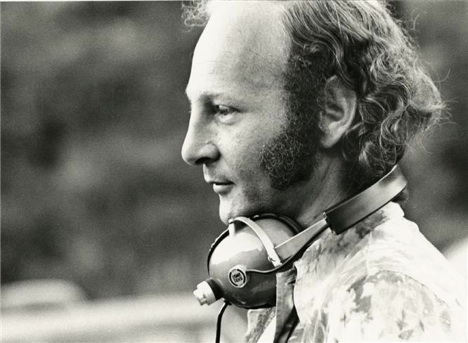
(Pictured: Paul Rothchild.)
I wasn’t a big Doors fan. Okay. I wasn’t that familiar with Paul Rothchild. I went to the Elektra Records office in New York for an interview with him, and I met Paul, and he was this guy that had long hair, you know? You know, hippie, dippy, like me, where I came from in Chicago, who was my whole clan, you know, all my friends. I came from a very 1960s. Hippy dippy environment, and there was Paul, and he was right on.
He could have been my buddy there at least the way he looked. And he was really nice. Before he even heard a song, a single note, we sat and talked for almost an hour, and then he said, let’s hear some songs. And we went into a room.
There’s a piano, and I had my guitar, and I started playing songs, and he loved them, and he kept telling me boy we got to play that again, and he’d call somebody in, and he kept calling people in at the end of this. And we were smoking this blonde Lebanese hash that was like from outer space.
And, and by the end of this thing, I was on the moon to imagine, you know, it was, it was just really nuts, and he said to me, Alan, I want to produce you either as a solo artist or with this super group that we’re putting together at Elektra Records.
And he told me about the super group; they were picking people, and it sounded really cool. I said, well okay, let’s try this super group. And he said, okay, that’s how we’ll do it. And sure enough, afterwards, you know, I was so stoned from the hash, I could barely find my way out of the building.
After that, he called me at home in Chicago, and he was, you know, he had my airplane tickets. And I had to make the decision to give up my 2s deferment in college, you know, it was the Vietnam War, and I had to confirm.
So, I made the decision, and I said, well, I’m going to just do what I want to do. I’m going to follow my dream instead of acting out of fear. I’m going to follow what I want to do, and I did. And I went to LA, and Paul had 14 musicians in his living room. We were passing around the guitar, playing tunes. To make a long story short, it was divided into two groups of, like, seven people. And out of all those people, only three of us remained in the group. Doug Hastings, John Finley, and me.
That was it. Nobody was told to leave. It was cool and casual. Nobody said, you’re done. Get out of here. Everybody just felt everybody left on their own accord, and they found this isn’t for me. So, it was organic in that way. You went in every other way. It was, you know, really put together, but it was organic.
I mean, the people left. And there were three of us left, and we met Danny Weis. He just knocked our socks off, and he was from the Iron Butterfly. It just went from the Iron Butterfly and then Jerry Penrod, a bass player. He was also with the Iron Butterfly.
And he became our bass player. Danny was one of the guitar players. And then we needed a drummer. And we tried Buddy Miles. And we tried Billy Mundi. He was from the Mothers of Invention. You know, Buddy Miles was from the Electric Flag. Yeah. And Michael Fonfara was also from the Electric Flag, and John Finley knew Michael from Jon & Lee and The Checkmates in Toronto.
And, uh, anyway, we got Michael, and we took Billy Mundi, and there it was. And then we were rehearsing. And Elektra Records was calling it Super Group. And finally, I said, listen, you know, I’m talking to Jac Holzman and to Paul Rothchild and I said we can’t call this band Super Group you know. We’re not going to want to walk out on the stage calling ourselves Super Group. I had then and still have to this day a collection of Rhinoceroses. You know, I always loved Rhinos. And I said call it anything else but Super Group.
I said, let’s call this band Rhinoceros. “

(Pictured: Rhinoceros.)
That’s funny. I thought all along, I thought you were just alluding to the fact that they were going to advertise Rhinoceros as a supergroup. But they were actually going to call the band Supergroup? Really? I never really got along with the guys in suits. You know, I was offered a record deal when I was 23. And I turned it down because I never got along with the guys in suits. Things might have happened for me if I had been a little bit more open to what they were offering, but I just felt like they’re always trying to rip me off.
“Well, I got ripped off big time when I was 20 years old, man. Yeah, right, I signed away most of my publishing.”
So, that’s all very interesting, you know, this whole they were going to call it Supergroup and all that. And then, you just kind of blurt it out. Let’s call it Rhinoceros. So, what happened after Rhinoceros?
“I was really disillusioned as you were, with the music business, you know, music and creation and doing shows; it’s been my life. But I was really disillusioned with the music business. I refused all kinds of stuff. I was offered to do all kinds of stuff. I was offered to work with all kinds of people. When people say, how come Alan’s not a big megastar, Robin, my wife, says, because if you saw the list of people he said no to, you would understand.
I was disillusioned with that. And then, before too long, my wife and I moved to Mendocino, California, way up North. It’s like 3 hours north of San Francisco. We lived in the country.
I was shell-shocked after Rhinoceros, and then I started playing gigs.
We moved up to the country, and I was playing again, and then I met somebody in LA who loved my music and wanted to manage me. And he was a wonderful guy, and he was pretty well connected to the music business, and he took me to all the record companies.
These were the days when you could go into the president of the company’s office and play a few tunes. And I played for everybody. I eventually signed with Shelter Records with Danny Cordell and Leon Russell; that was their company.
I signed with him, and I made my Shelter album. It was called Alan Gerber’s Album, and it looked like a photo album with a beautiful cover. Beautiful stuff!
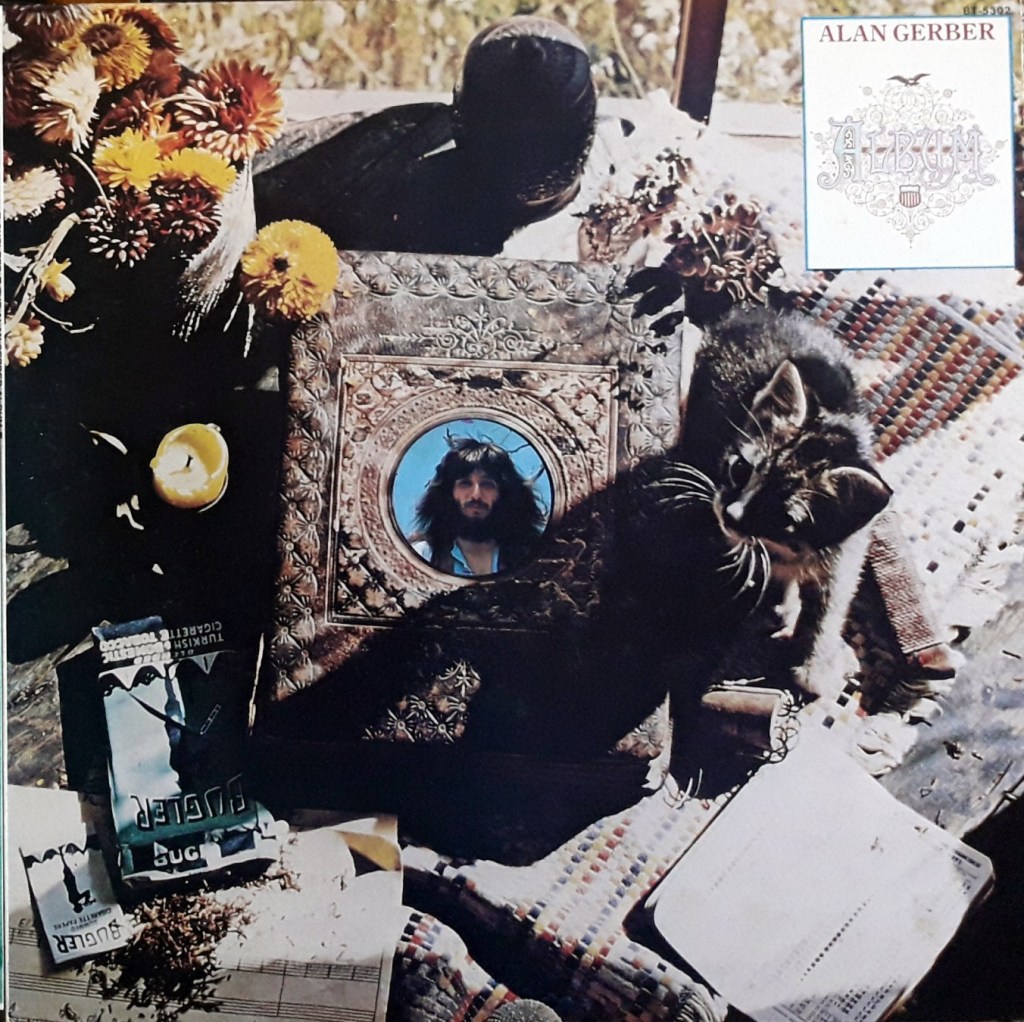
And I did it in Memphis, Tennessee. My band for this project was like Booker T & the MGs band. I had Duck Dunn on bass and Al Jackson on drums. Steve Cropper was engineering. It was incredible. I had the Memphis horns. I had Gloria Jones and the old Raylettes singing with me. I don’t know if you’ve heard any of this. But check it out when you get the chance.
It’s Alan Gerber’s Album on Shelter Records. Very funky, so I did that and then lo and behold, I had business troubles with them.
My single from that album was a big hit on Billboard, Cashbox, and Record World. My album was getting played like crazy on all the FM stations all over the United States and in England.
Anyway, there was no distribution. You couldn’t buy my album anymore. Shelter Records was distributed by Capitol. And they had some disagreements because Danny Cordell was Joe Cocker’s producer. And they thought when they got Leon Russell and Daniel Shelter. They were gonna get Joe Cocker, too. And lo and behold, Joe Cocker signed with A&M.
I believe it was A&M. Anyway, he signed with somebody else other than Capitol Records. And they were pissed, and so the distribution was not very good, and my album wasn’t in the stores. And so, how long are they going to keep playing it on the radio if the album isn’t in the stores?
I was doing live shows with a great group. I had Danny Weis, Michael Fonfara, a great drummer and bass player, and we were doing shows with Leon Russell.
I was doing shows in New York. We were playing at the Bitter End on Bleecker Street in Greenwich Village, and we were held over for an extra week, you know, and everything, but you couldn’t buy the album in New York.
And so finally, I was really pissed, and I told Shelter Records I’m done. I found a lawyer to help me. And they wanted me to make another album for them, and I refused. And we went to court; it was just really unpleasant. You know, and so after that, I really got turned off by the music business, and I started doing my own thing.”
When it becomes a job. Instead of a passion, there has to be a line drawn somewhere. Uh, 13 odd albums, solo albums later. We’re here with The Well, here we are. Yeah, and the track Over Again. That’s the one that your son played guitar on?
“Yeah, he actually- I’ll tell you a story, you know- he wanted to do all the guitars. He had a little window of time, and he started putting together ideas for the song. He put together the idea. And he recorded it at really high quality at 96 kHz using Reaper. It was really well recorded on Reaper.
And, uh. He sent me the idea. He didn’t get to finish it, according to him, but I took what he sent me, and I stuck it in the track. And I said this ain’t no demo. This is not an idea. This is the guitar track, and you listen to it, and there’s no doubt about it.”
It’s brilliant. Yeah, and he comes by it. Honestly, you know, I’m curious now, because you have a son and a daughter who are both top-shelf musicians. Did you encourage that, or did they just kind of find it on their own?
“Well, you know, they grew up with me. And they discovered their love of music on their own. There was a lot of music in the house. We homeschooled the kids. Okay, their schooling would be done in a few hours in the morning, and then they had the rest of the day to discover what it was that turned them on.
And they just started doing music and singing. And my wife, Robin, who I told you is a ceramic artist? She also was a piano teacher, and she taught them a little piano when they were little kids. And they both just really got into music, and they came on the road with me.
For the most part, I was on the road. My wife did most of the homeschooling. She did a brilliant job with our kids, you know? Our son is a physicist now, and our daughter was working for the United Nations, and now she works for the OECD. You know, they’re quite accomplished, and they’re also great musicians, and so they came on the road with me.
It was wonderful because, like I said, Robin did most of the homeschooling. So, this was my chance of being with my kids and sharing something big with them.”

You know, that’s some kind of special magic, I’m sure.
“Well, I’ll tell you, we were playing the Montreal Jazz Festival once. And I had Eli on my right shredding and Hannah on my left singing with me.
And we were playing for like 14,000 people; they were going nuts. People were good, and Eli was doing a guitar solo, and he started playing with his teeth. He got so he turned the guitar; I mean he’s quite a showman. And what a thing to share with your kids!”
There’s some really interesting stuff on this album now, Diablo Square. I imagine being in a gondola in Venice. Yeah, you know?
“I have a 150-year-old button accordion, and that’s what I’m playing on that song, you know? And the clarinet player, Michel Dubeau, gets that sound from outer space.”
Yeah, it’s a really unique song
“Yeah, I’d like to make a video for that song.”
Nice. Money Can’t Save You? I enjoyed that a lot.
“Yeah, well, that was when Michael Fonfara was really ill, and it didn’t look like he was going to be around too much longer. I went to Toronto. I was going there for a wedding, and one night we went out. I went out to supper with Michael and his wife, Adele. And I was asking Michael, what would you like, man? What if I could do something? Let’s do something really cool. And he said he wanted to make another Rhinoceros album.
I said, yeah, we could do that. Everybody throw in a few songs, and we’ll have a great time, and I ran the idea by everybody. And at first, everybody was, yeah, let’s do it. Yeah, and then one by one people backed out. So, I ended up booking the studio myself.
The studio where we recorded all the organ tracks is a little home studio owned by a guy named John Pickering. It’s called the Rhythm Ranch. And I got in touch with John because I used to go there and use Michael for my albums. And John had two Hammond B3s.
One upstairs in his living room and one downstairs in the basement studio. Anyway, I said to the guys, well, listen, let’s just go and record two of my songs.
I said I’ll pay for it. I want to do this with Michael. And so, we got Michael, Danny, John, and me together to do this. We had a really lovely drummer and bass player from Toronto. They’ve played on it. And we recorded it. And that’s Money Can’t Save You.
That was a whole different session. It was the last time I got to record with Michael. And Danny Weis and I really connected during that also.“
It’s, you know, interesting, you know, Michael may have left this mortal plane, but his legacy lives on through the spirit of his music, for sure. And this is a really good example of that, you know, and you can hear the passion, and we’ll never lose that.
“About Michael. I was visiting my aunt in Manhattan. She lives on the 52nd floor of this building in Lincoln Center, you know, I mean, it’s really fancy, and I was coming down in the elevator. We’re staying with her in New York.
And in the elevator, there was Paul Schaefer. And we were talking, and I told him who I was and about Rhinoceros. And he said that Michael Fonfara is his all-time favorite! Paul Schaefer told me that.
And you know when I was recording my Shelter album in Memphis? I had Duck Dunn and Al Jackson, and Steve Cropper. I didn’t use Booker T. I flew Michael Fonfara in for those sessions.”
You know, you had that magical connection, right?
And with that, I ended a wonderful conversation with an amazing musician with a legacy next to none.
Alan Gerber’s new album “The Well” is available at alangerbersongs.com
Look for his songs on YouTube, as well, and subscribe to his channel.
Interview Conducted By Tommy Solo
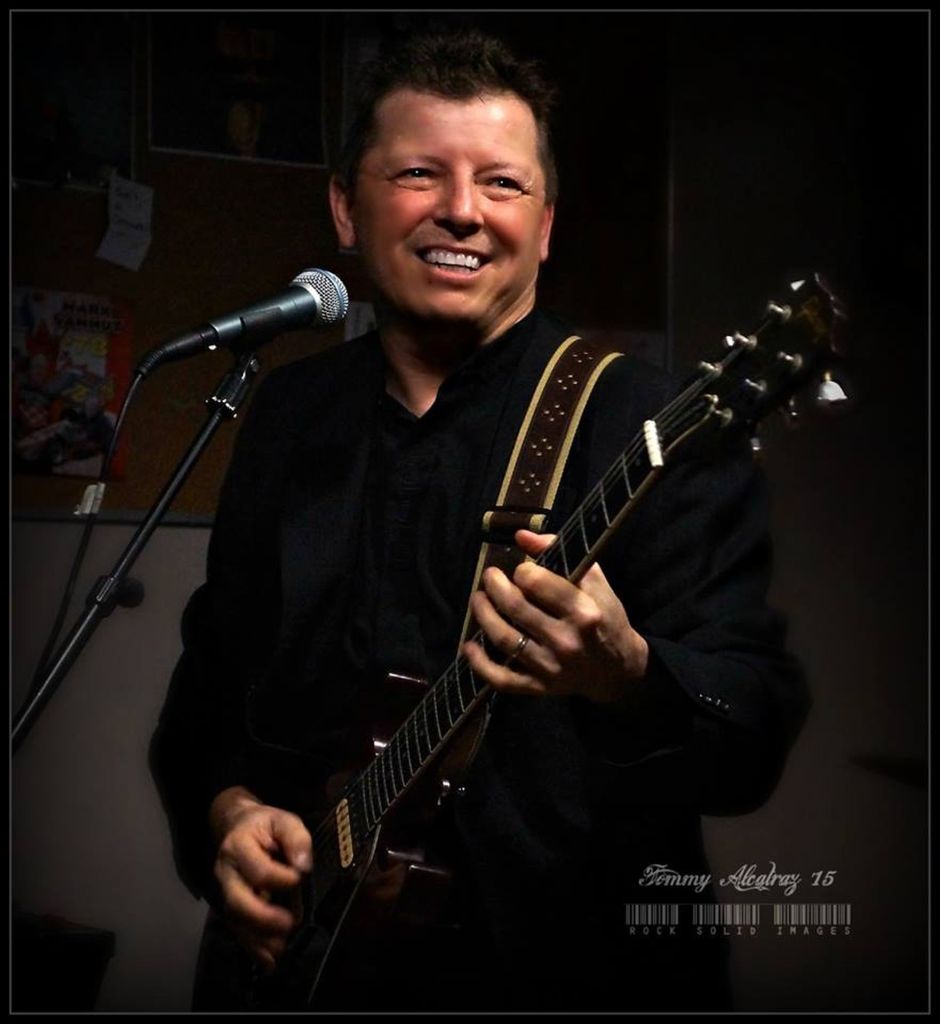
London, Ontario-based singer-songwriter & guitarist Tommy Solo has roots as a long-time SW Ont musician, having traveled across Canada & into the USA as a full-time musician.
In recent years, he has been focused on writing, recording & performing his original brand of classic rock, & sharing experiences with other legacy artists via his podcast, Tommy Solo’s Famous Friends, and on his YouTube channel.

 The Beat Magazine 2025