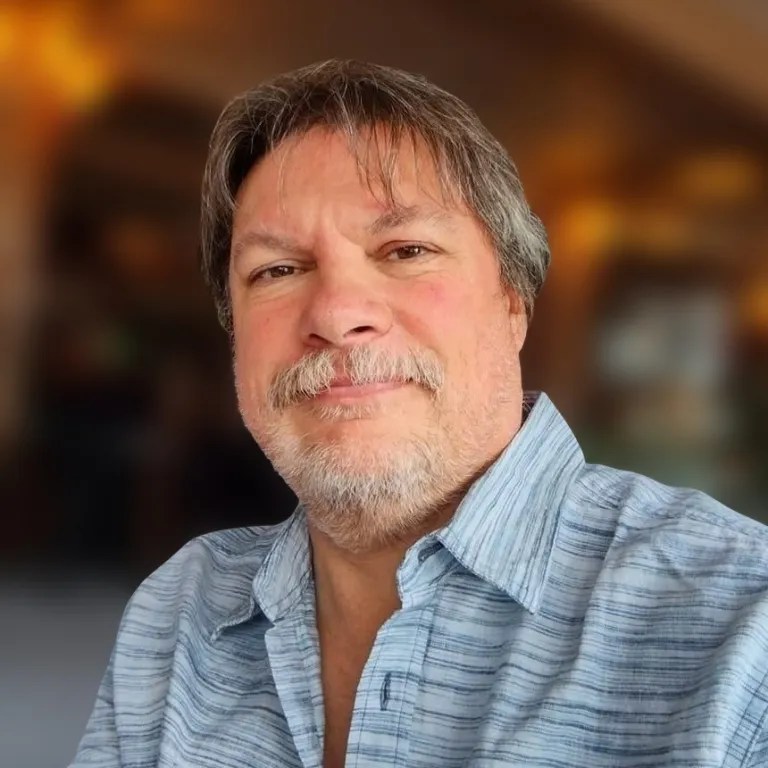
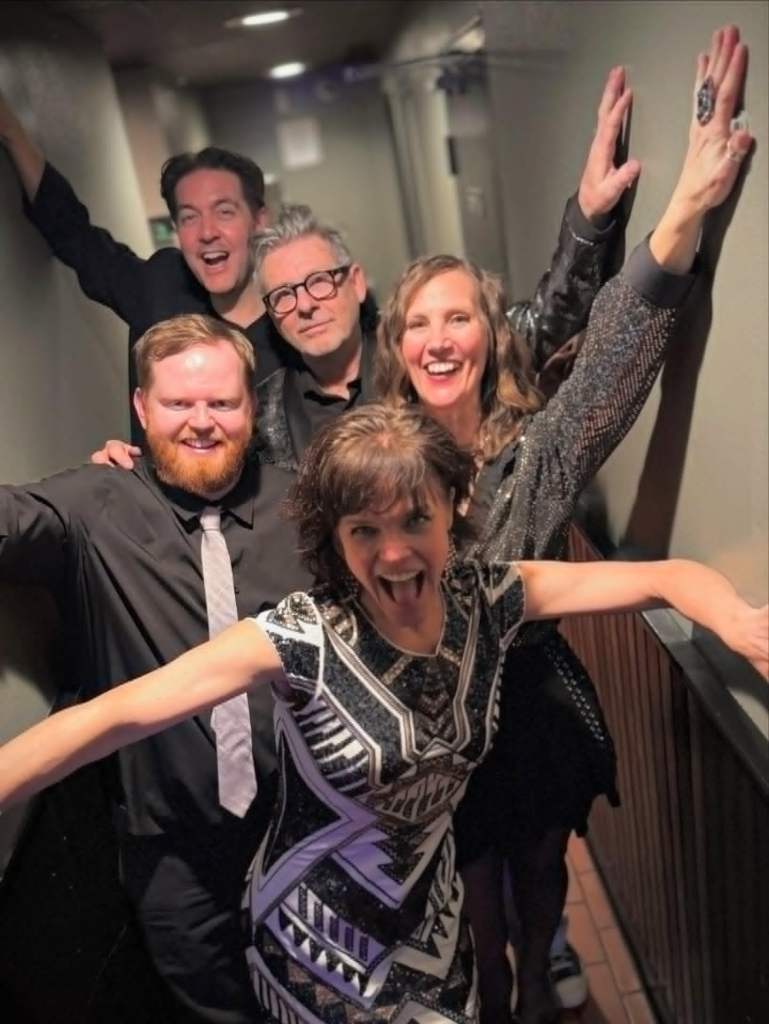
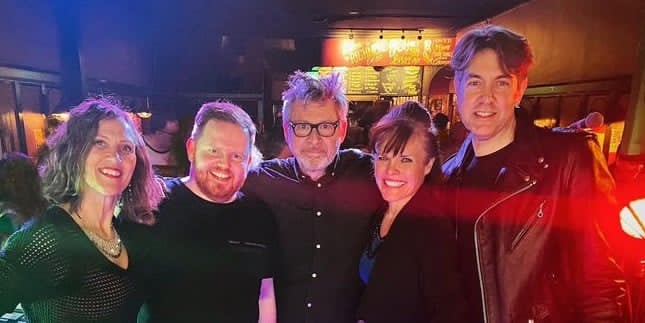
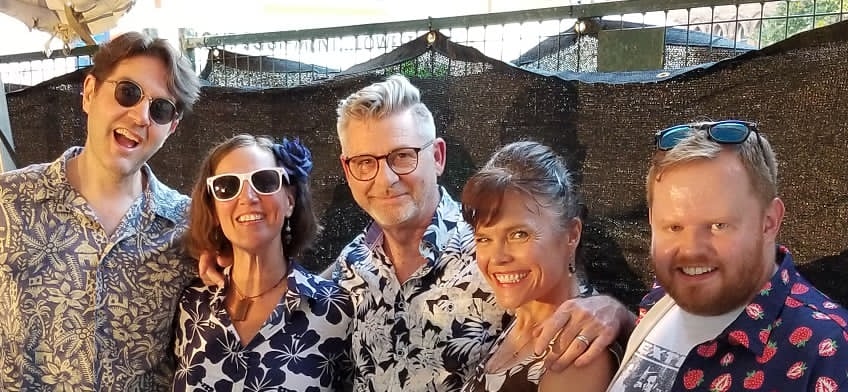
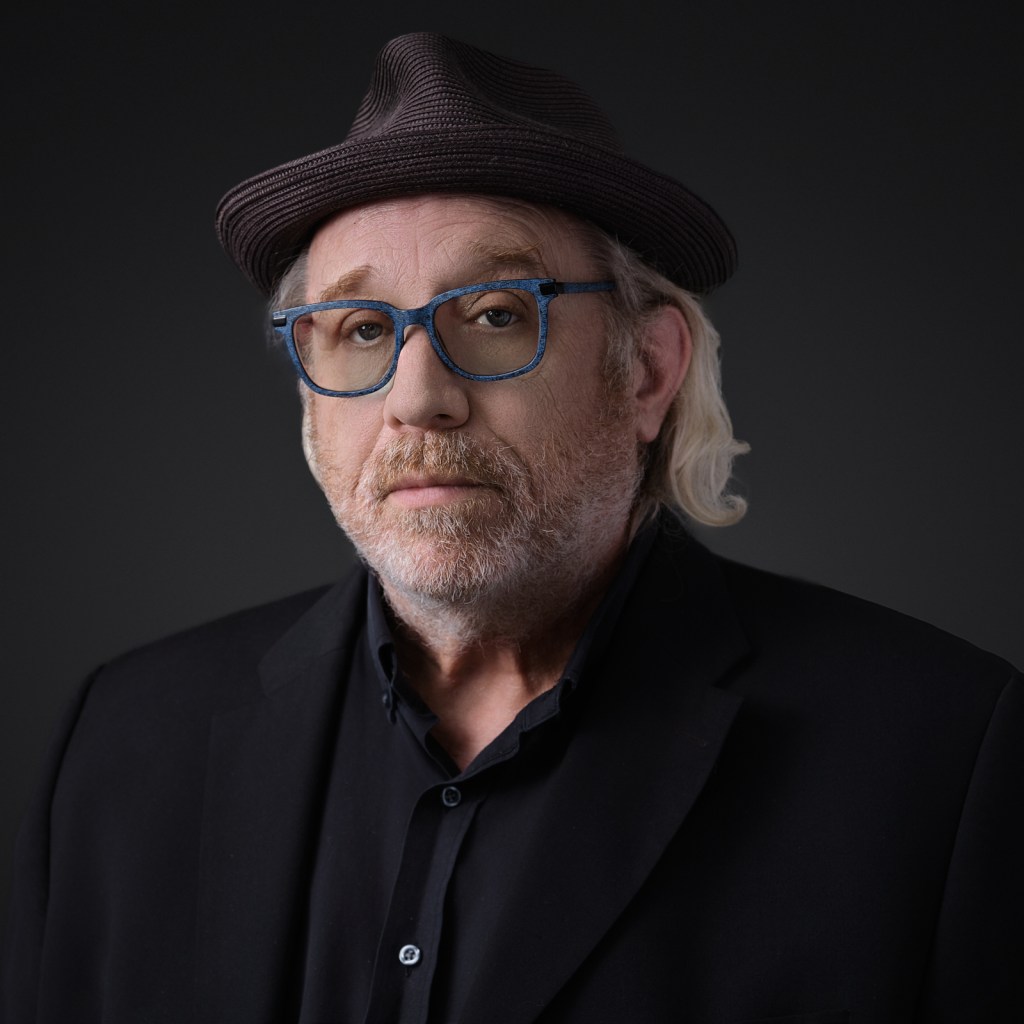
Classic Rock & Blues Legend Alan Gerber of 1960s Supergroup Rhinoceros Goes to The Well.

An Interview with Tommy Solo. Recorded July 23rd from his home in Val-David, Quebec. 

Alan Gerber is most famous for his tenure as lead singer and multi-instrumentalist with the classic psychedelic rock and blues band, Rhinoceros. He has released multiple solo albums, both as a signed and independent artist since then. Having shared stages with Bob Dylan, B.B. King, Van Morrison, Lou Reed, and Janis Joplin, among others, he is a well-respected legacy artist for the ages.

And now, he has a brand new album out called The Well and a new single called Put Back My Heart. On this release, he is reunited with Rhinoceros guitarist Danny Weis, along with the late Michael Fonfara, who recorded his Hammond B3 organ parts for this album prior to his passing.

And this time, it’s also a family affair featuring his daughter Hannah on vocals and his son Eli co-producing and playing some guitar on the album. 

The following is from my recent Interview with Alan. You can watch the Interview on YouTube: https://youtu.be/S2-kVaBII7g?si=HrpGbM48YBJLbMbJ

So, you have a brand new album out. And I kind of lost track of how many solo albums you’ve released. I believe there are over 10 right to date? 

“We’re 13, 14, 15, or something like that, right? “

Yeah. And was one of those in French?

“Well, some of the songs were in French. Okay, okay, I had a single, you know, I had some songs done in French, but most of my stuff is in English, although I’ve lived in Quebec, I believe, like 37 years.”

So, it’s quite the transition from living in Chicago and LA to being in a small town in Quebec, and from what I understand, you’ve become a big part of the community as well. 

“Yeah, I love this community, you know? Like I said, I’m from Chicago. I lived in LA, and I lived in New York. I lived in Vermont. We had a house in the south of France. But this little town of Val-David is where I’ve lived for the longest, for like, 30, 37 years. It’s my longest home.” 

There must be some magic in the air that keeps you there.

“It’s a wonderful town. It’s a small village of between five and six thousand people. There’s so many artists. It’s unbelievable here.” 

You know, there are some hotbeds of talent in small towns. I grew up in North Bay, Ontario, and I’ve lost count of how many top-shelf players we had there, and uh, a good friend who I went to school with was John McGale.

“I’ve played with John”

You played with him? 

“You know, just a little bit. Yeah, I know, John. Yeah, he was a great player.”

He was a great guy, but he’s just one example of some of the awesome talent you can find in a small place. Like where you are in Val-David, and there’s nothing like tapping into some of that talent on occasion.

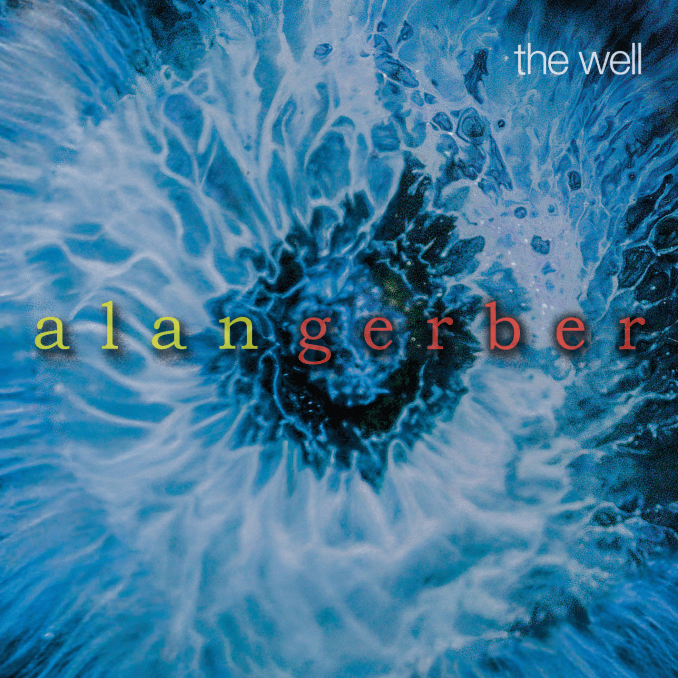
“Well, you know, in this town, there’s The Potters. It’s the biggest Pottery Fest. My wife is a ceramic artist. She’s a potter. In fact, if you look at the cover of the album, The Well, the well is actually the interior of one of her pots photographed, you know? It’s pretty cool, and there are so many ceramic artists here. There are writers. There are poets and painters. It’s an amazing town.” 
No kidding. So, let’s talk about the songs on this album, The Well. There’s some interesting slide guitar on that. So, where did that song come from?

“I have a writing partner who’s unfortunately deceased now, Rolf Kempf. He wrote Hello Hooray, which was a big hit for Alice Cooper.

And you know we were running together for 50 years? And we co-wrote most of the songs on this album together. And he sent me the lyrics, and then I wrote the music, and we juggled the lyrics back and forth and changed a few things.

And that’s how the song came to be. And then, it’s such an appropriate title for the album because this is an album I dug deep to get to all these places. Yeah, and it’s about growing deep into your creativity.”

Yeah, and listening to the album, you certainly did that. I imagine this one took a while. Are you really quick with this stuff, or did it take some time? 

“It took a long time because of Covid, and because actually I was waiting for my son, you know, my son, Eli Gerber, who I co-produced it with.

And he’s playing guitar on the track Over Again. That real shredding, you know? He’s quite a guitarist. He was supposed to do all the guitars on the album, but he’s a physicist. And he’s really been so busy with his research. And he just never could get around to doing it. He wanted to, but he couldn’t. And I waited for him for years. 

And then I finally said, listen, I want to finish this album, and I got Danny Weiss from Rhinoceros, who’s also an amazing guitar player, and Danny played on eight songs. He is an absolutely amazing player, you know?” 

Had you been in contact with Danny over the years, or did you reconnect for this album? 

“Yeah, you know, we did a Rhinoceros reunion. I don’t know, well, I think maybe it was 2013 or 2014. We played the Kitchener Blues Festival in Ontario. It was very cool. Yeah, there are some partnerships, you know, and there are some connections that you have that are just so strong. It was, like, Michael Fonfara. Right, he’s played with me on my last six CDs. Unfortunately, he’s gone. We’re losing too many. He was a great Hammond B3 player. Great, you know, just amazing. A great friend.”

I know that you’re in the Montreal area, but Michael Fonfara was hugely popular in the Toronto area, in that circuit as well. Yeah, uh, so On a Roll. What inspired that song? 

“I got the idea. I wrote the music. And I had On A Roll, and then I started fitting some things in, and I wasn’t happy with where it was going. So, I ran it by Rolf. Okay, and I have another friend whom I write with, Patrick Wiggins, who lives in Florida.

He’s out of Tallahassee, Florida. I ran it by both of them, and we came up with it between the three of us. We came up with all these really cool lyrics. It’s a great song. It’s a great positive song, and there’s a lot of darkness on this album, too.

You know, Subjects? It has something to do possibly with the world we’re living in. And this is a beacon of light on a roll.”
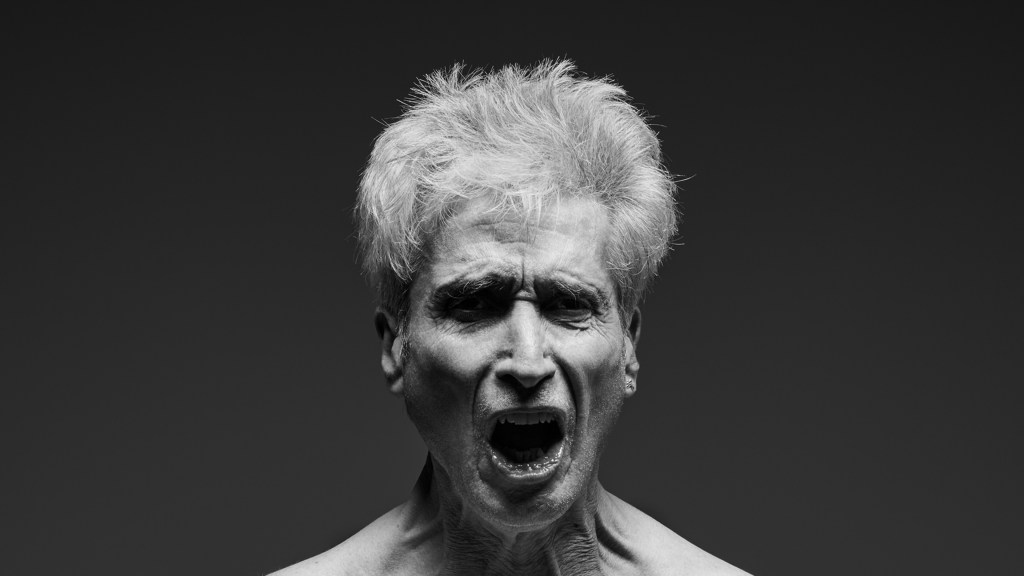
(Photo Credit: Luc Robitaille.)

I really like the harmonica playing on that. Are you playing the harmonica?

“That’s the amazing Jim Zeller. We were musical partners for a while. We were a duo here in Quebec.” 

I am familiar with that name. Yeah, absolutely. There’s a great sax on Mysterious from the new album. 

“Yeah, that’s Dan Martell. He’s incredible. He did all the horn sections, just him with different saxophones, and the parts are just killer. He’s a great player. He’s a great soloist. He’s a brilliant composer of horn sections. He’s just wonderful, you know?” 

I find that good sax players are often some of the more melodic players, really. You know, you can generally hum or sing a sax part, and I find that some of the best guitarists actually emulate the sax. 

“Yeah. Yeah, me too. Amen, Sax! The saxophone has to be vocal. It’s really like a voice. Saxophone is like a voice that’s like singing.”

Yeah, it certainly is, and, and uh. You know, the really talented players certainly do emulate that, that’s for sure.

“Right from the opening of Put Back My Heart, it grabs you immediately. It’s so super funky and right on.” 

Makes you stand up and pay attention, that’s for sure. Right? What about the track from this album called Ghosts?

“Ghosts is my Covid song. Okay, everything was shut down. You drive down the Main Street of your town. All the shops and everything were closed because of Covid. It was like a ghost town. People became like ghosts. No interacting together you know, because they weren’t supposed to. We became like ghosts.

You know, I’m that typical guy. Um, I was a lifelong musician, and during Covid, I thought, what am I going to do? You can’t go outside, you know, you can’t do anything outside of the house. And over the years, I shared the stage with and met a lot of our Legacy artists here in Canada, so I thought I’ll bet you if I called David Henman from April Wine, he’d be home. You know if I called Ronnie King from the Stampeders, he’d be home. We’re all home, so I started this podcast with the idea of trying to give people something to smile about in such a dark time because it was just? Man, it was hard. You know?

I mean, you couldn’t even go to the grocery store. I was almost having panic attacks. You know when somebody stood six inches too close to me. I was, like…”

Oh man, oh yeah, because they didn’t understand it. And so, when you don’t understand something, it’s dangerous. Big fear comes in, absolutely.

“Yeah, yeah, my wife and I were the first COVID cases in the Laurentian Mountains. We’d been visiting our daughter, Hannah, who’s singing with me on this album. We were visiting her. She was doing her Master’s Degree in Paris. And we were visiting there in March. That’s just when the global pandemic hit. 

Just when I was starting, we knew there were cases of COVID, but it’s, they said there were only like 10 cases of COVID in all of France, so we figured, you know, we were going to go visit our daughter, and we went, and everybody was sick. And we ended up getting it.

We ended up booking tickets and leaving two days earlier because they were going to close down the country. We just wanted to get home, and as soon as we got home, I started getting symptoms. And then my wife, Robin, started getting symptoms. We were the first victims of COVID here in the Laurentians. And people, you know, were afraid. People didn’t want to see us out on the street. The police would come and make sure you stayed inside. It was, it was very scary. 

This album, The Well, you know, I was really needing something to do. I needed my creative outlet, so I was writing all these songs, and I started recording the album.”

If there was a silver lining from Covid, it was all the artistic productivity that came from it. You know, I mean, so many good things came out of it musically. Um, and I know that the first time I played live after they said it was safe, it was something else. We played at this Rib Fest in London, and there were, I think, 14,000 people on site. I don’t know how many were paying attention to me, but man, it was like just being born again, you know, and just having. Like, ah, it was such a breath of fresh air to actually be able to sing and play for people again.

“Oh yeah, I know, I know.” 

Yeah, but that said, back to you. There’s some really great stuff on this album, you know. Yeah, it is something else. I know you’re starting to get some spin on the radio, which is always nice. And are you gonna tour to promote this album? 

“I have a show coming up at the beginning of August, just right in my town. Beautiful! A beautiful place outside, the Pottery Festival site outside, it’s just an incredible, beautiful place. I’m going to do a show. August 5th. But mostly, I’m working on publicity with Eric Alper. I have lots of interviews. And you know, I figure this is what I’m doing at this moment.” 

Yeah, and you’ve got the hardest-working PR guy on the planet on your side. 

“Yeah, he’s wonderful. I don’t think he sleeps. You know, I think he just goes 24-7.”

Um, with all that said. Your new single Put Back My Heart is an awesome, awesome tune. I know that a lot of this came from COVID, but was there something specific that inspired you with the idea for this? There’s one line that really got me, uh, ‘like a baby grand from a tower I fell for you, like a baby.’ That’s a great one. I don’t think anybody else would have ever come up with that lyric. You know, that’s. That’s brilliant. 

“I wrote most of the lyrics myself. But, but some of the lyrics were with my son Eli, who was too busy to do other guitars, but he was still co-producing with me, and he said he had some great ideas, and like he has a few great lines.

That’s a cool song. Yes, absolutely. Let me tell you how I wrote this. Okay, fortunately, it was not inspired by my own personal experiences. It’s just a situation, isn’t it? It wasn’t my situation, but I just got the idea. This was the end of the Pottery Festival, the big Pottery Festival 2001, pots in God.

I was helping my wife, Robin, take down her pots and bring them to the van, and I was doing wheelbarrow trips, you know, from her table to the van? And I just started getting this song in my head, heard the music, and I started getting all I had lines like I fell for you, like a painter, and I would stop and write some of these lyrics down.

And then I went home, and I finished it really quickly. But it started with a wheelbarrow full of ceramic pots. It’s funny how that can happen.” 

I want to go back to Rhinoceros if we can. Yeah, there were three albums, with Elektra, right? How did the band come together in the first place? 

“I can tell you my story. I had a girlfriend. The first love of my life. And I was still in Chicago. And I was going to the Chicago Musical College at Roosevelt University. And she was at NYU in New York studying film photography. And when I went to visit her, I always brought an acoustic guitar with me.

She had a friend who works for Variety magazine. And he knew Paul Rothschild, the producer. He produced Janice Joplin’s Pearl, and he produced the Doors. He produced Paul Butterfield’s East Meets West, for example.

And she told him that I was just great. I had great songs. I was a great singer. And the guy from Variety told Paul Rothschild that he heard me play and that I was incredible. I had great songs. I was a great thing. And then he told Katie, and I had an interview that morning.
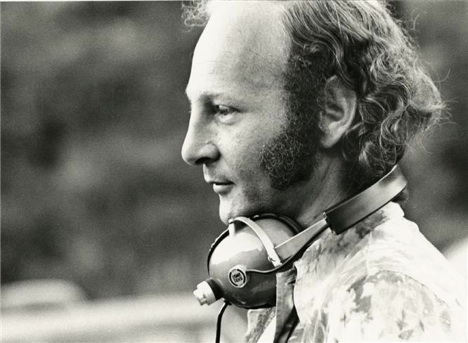
(Pictured: Paul Rothchild.)

I wasn’t a big Doors fan. Okay. I wasn’t that familiar with Paul Rothchild. I went to the Elektra Records office in New York for an interview with him, and I met Paul, and he was this guy that had long hair, you know? You know, hippie, dippy, like me, where I came from in Chicago, who was my whole clan, you know, all my friends. I came from a very 1960s. Hippy dippy environment, and there was Paul, and he was right on.

He could have been my buddy there at least the way he looked. And he was really nice. Before he even heard a song, a single note, we sat and talked for almost an hour, and then he said, let’s hear some songs. And we went into a room.

There’s a piano, and I had my guitar, and I started playing songs, and he loved them, and he kept telling me boy we got to play that again, and he’d call somebody in, and he kept calling people in at the end of this. And we were smoking this blonde Lebanese hash that was like from outer space.

And, and by the end of this thing, I was on the moon to imagine, you know, it was, it was just really nuts, and he said to me, Alan, I want to produce you either as a solo artist or with this super group that we’re putting together at Elektra Records.

And he told me about the super group; they were picking people, and it sounded really cool. I said, well okay, let’s try this super group. And he said, okay, that’s how we’ll do it. And sure enough, afterwards, you know, I was so stoned from the hash, I could barely find my way out of the building.

After that, he called me at home in Chicago, and he was, you know, he had my airplane tickets. And I had to make the decision to give up my 2s deferment in college, you know, it was the Vietnam War, and I had to confirm.

So, I made the decision, and I said, well, I’m going to just do what I want to do. I’m going to follow my dream instead of acting out of fear. I’m going to follow what I want to do, and I did. And I went to LA, and Paul had 14 musicians in his living room. We were passing around the guitar, playing tunes. To make a long story short, it was divided into two groups of, like, seven people. And out of all those people, only three of us remained in the group. Doug Hastings, John Finley, and me.

That was it. Nobody was told to leave. It was cool and casual. Nobody said, you’re done. Get out of here. Everybody just felt everybody left on their own accord, and they found this isn’t for me. So, it was organic in that way. You went in every other way. It was, you know, really put together, but it was organic.

I mean, the people left. And there were three of us left, and we met Danny Weis. He just knocked our socks off, and he was from the Iron Butterfly. It just went from the Iron Butterfly and then Jerry Penrod, a bass player. He was also with the Iron Butterfly. 

And he became our bass player. Danny was one of the guitar players. And then we needed a drummer. And we tried Buddy Miles. And we tried Billy Mundi. He was from the Mothers of Invention. You know, Buddy Miles was from the Electric Flag. Yeah. And Michael Fonfara was also from the Electric Flag, and John Finley knew Michael from Jon & Lee and The Checkmates in Toronto.

And, uh, anyway,  we got Michael, and we took Billy Mundi, and there it was. And then we were rehearsing. And Elektra Records was calling it Super Group. And finally, I said, listen, you know, I’m talking to Jac Holzman and to Paul Rothchild and I said we can’t call this band Super Group you know. We’re not going to want to walk out on the stage calling ourselves Super Group. I had then and still have to this day a collection of Rhinoceroses. You know, I always loved Rhinos. And I said call it anything else but Super Group.

I said, let’s call this band Rhinoceros. “

(Pictured: Rhinoceros.)

That’s funny. I thought all along, I thought you were just alluding to the fact that they were going to advertise Rhinoceros as a supergroup. But they were actually going to call the band Supergroup? Really? I never really got along with the guys in suits. You know, I was offered a record deal when I was 23. And I turned it down because I never got along with the guys in suits. Things might have happened for me if I had been a little bit more open to what they were offering, but I just felt like they’re always trying to rip me off. 

“Well, I got ripped off big time when I was 20 years old, man. Yeah, right, I signed away most of my publishing.” 

So, that’s all very interesting, you know, this whole they were going to call it Supergroup and all that. And then, you just kind of blurt it out. Let’s call it Rhinoceros. So, what happened after Rhinoceros?

“I was really disillusioned as you were, with the music business, you know, music and creation and doing shows; it’s been my life. But I was really disillusioned with the music business. I refused all kinds of stuff. I was offered to do all kinds of stuff. I was offered to work with all kinds of people. When people say, how come Alan’s not a big megastar, Robin, my wife, says, because if you saw the list of people he said no to, you would understand.

I was disillusioned with that. And then, before too long, my wife and I moved to Mendocino, California, way up North. It’s like 3 hours north of San Francisco. We lived in the country.

I was shell-shocked after Rhinoceros, and then I started playing gigs. 

We moved up to the country, and I was playing again, and then I met somebody in LA who loved my music and wanted to manage me. And he was a wonderful guy, and he was pretty well connected to the music business, and he took me to all the record companies. 

These were the days when you could go into the president of the company’s office and play a few tunes. And I played for everybody. I eventually signed with Shelter Records with Danny Cordell and Leon Russell; that was their company.

I signed with him, and I made my Shelter album. It was called Alan Gerber’s Album, and it looked like a photo album with a beautiful cover. Beautiful stuff! 
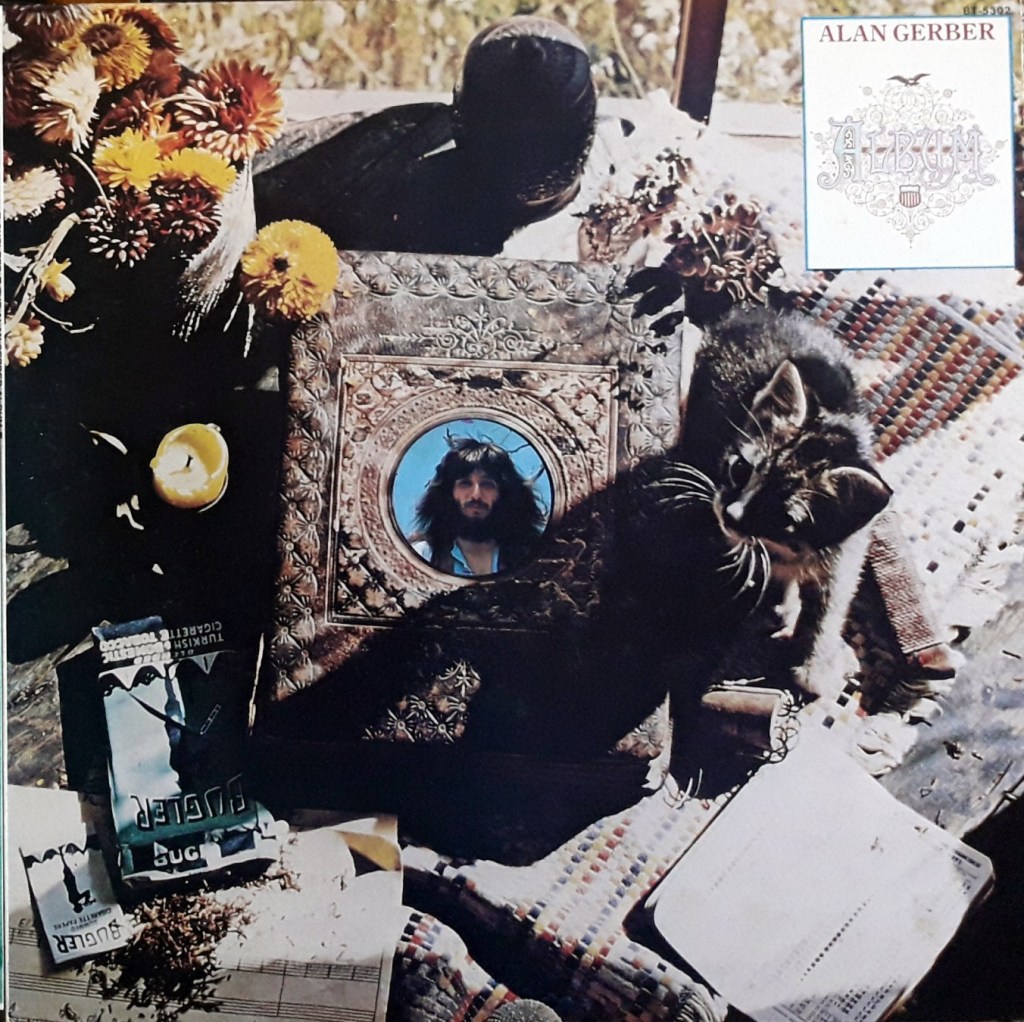
And I did it in Memphis, Tennessee. My band for this project was like Booker T & the MGs band. I had Duck Dunn on bass and Al Jackson on drums. Steve Cropper was engineering. It was incredible. I had the Memphis horns. I had Gloria Jones and the old Raylettes singing with me. I don’t know if you’ve heard any of this. But check it out when you get the chance.

It’s Alan Gerber’s Album on Shelter Records. Very funky, so I did that and then lo and behold, I had business troubles with them.

My single from that album was a big hit on Billboard, Cashbox, and Record World. My album was getting played like crazy on all the FM stations all over the United States and in England. 

Anyway, there was no distribution. You couldn’t buy my album anymore. Shelter Records was distributed by Capitol. And they had some disagreements because Danny Cordell was Joe Cocker’s producer. And they thought when they got Leon Russell and Daniel Shelter. They were gonna get Joe Cocker, too. And lo and behold, Joe Cocker signed with A&M.

I believe it was A&M. Anyway, he signed with somebody else other than Capitol Records. And they were pissed, and so the distribution was not very good, and my album wasn’t in the stores. And so, how long are they going to keep playing it on the radio if the album isn’t in the stores? 

I was doing live shows with a great group. I had Danny Weis, Michael Fonfara, a great drummer and bass player, and we were doing shows with Leon Russell.

I was doing shows in New York. We were playing at the Bitter End on Bleecker Street in Greenwich Village, and we were held over for an extra week, you know, and everything, but you couldn’t buy the album in New York.

And so finally, I was really pissed, and I told Shelter Records I’m done. I found a lawyer to help me. And they wanted me to make another album for them, and I refused. And we went to court; it was just really unpleasant. You know, and so after that, I really got turned off by the music business, and I started doing my own thing.”

When it becomes a job. Instead of a passion, there has to be a line drawn somewhere. Uh, 13 odd albums, solo albums later. We’re here with The Well, here we are. Yeah, and the track Over Again. That’s the one that your son played guitar on?

“Yeah, he actually- I’ll tell you a story, you know- he wanted to do all the guitars. He had a little window of time, and he started putting together ideas for the song. He put together the idea. And he recorded it at really high quality at 96 kHz using Reaper. It was really well recorded on Reaper.

And, uh. He sent me the idea. He didn’t get to finish it, according to him, but I took what he sent me, and I stuck it in the track. And I said this ain’t no demo. This is not an idea. This is the guitar track, and you listen to it, and there’s no doubt about it.”

It’s brilliant. Yeah, and he comes by it. Honestly, you know, I’m curious now, because you have a son and a daughter who are both top-shelf musicians. Did you encourage that, or did they just kind of find it on their own? 

“Well, you know, they grew up with me. And they discovered their love of music on their own. There was a lot of music in the house. We homeschooled the kids. Okay, their schooling would be done in a few hours in the morning, and then they had the rest of the day to discover what it was that turned them on.

And they just started doing music and singing. And my wife, Robin, who I told you is a ceramic artist? She also was a piano teacher, and she taught them a little piano when they were little kids. And they both just really got into music, and they came on the road with me.

For the most part, I was on the road. My wife did most of the homeschooling. She did a brilliant job with our kids, you know? Our son is a physicist now, and our daughter was working for the United Nations, and now she works for the OECD. You know, they’re quite accomplished, and they’re also great musicians, and so they came on the road with me.

It was wonderful because, like I said, Robin did most of the homeschooling. So, this was my chance of being with my kids and sharing something big with them.” 

You know, that’s some kind of special magic, I’m sure. 

“Well, I’ll tell you, we were playing the Montreal Jazz Festival once. And I had Eli on my right shredding and Hannah on my left singing with me.

And we were playing for like 14,000 people; they were going nuts. People were good, and Eli was doing a guitar solo, and he started playing with his teeth. He got so he turned the guitar; I mean he’s quite a showman. And what a thing to share with your kids!”

There’s some really interesting stuff on this album now, Diablo Square. I imagine being in a gondola in Venice. Yeah, you know?

“I have a 150-year-old button accordion, and that’s what I’m playing on that song, you know? And the clarinet player, Michel Dubeau, gets that sound from outer space.”

Yeah, it’s a really unique song 

“Yeah, I’d like to make a video for that song.”

Nice. Money Can’t Save You? I enjoyed that a lot.

“Yeah, well, that was when Michael Fonfara was really ill, and it didn’t look like he was going to be around too much longer. I went to Toronto. I was going there for a wedding, and one night we went out. I went out to supper with Michael and his wife, Adele. And I was asking Michael, what would you like, man? What if I could do something? Let’s do something really cool. And he said he wanted to make another Rhinoceros album.

I said, yeah, we could do that. Everybody throw in a few songs, and we’ll have a great time, and I ran the idea by everybody. And at first, everybody was, yeah, let’s do it. Yeah, and then one by one people backed out. So, I ended up booking the studio myself.

The studio where we recorded all the organ tracks is a little home studio owned by a guy named John Pickering. It’s called the Rhythm Ranch. And I got in touch with John because I used to go there and use Michael for my albums. And John had two Hammond B3s.

One upstairs in his living room and one downstairs in the basement studio. Anyway, I said to the guys, well, listen, let’s just go and record two of my songs.

I said I’ll pay for it. I want to do this with Michael. And so, we got Michael, Danny, John, and me together to do this. We had a really lovely drummer and bass player from Toronto. They’ve played on it. And we recorded it. And that’s Money Can’t Save You.

That was a whole different session. It was the last time I got to record with Michael. And Danny Weis and I really connected during that also.“

It’s, you know, interesting, you know, Michael may have left this mortal plane, but his legacy lives on through the spirit of his music, for sure. And this is a really good example of that, you know, and you can hear the passion, and we’ll never lose that. 

“About Michael. I was visiting my aunt in Manhattan. She lives on the 52nd floor of this building in Lincoln Center, you know, I mean, it’s really fancy, and I was coming down in the elevator. We’re staying with her in New York.

And in the elevator, there was Paul Schaefer. And we were talking, and I told him who I was and about Rhinoceros. And he said that Michael Fonfara is his all-time favorite! Paul Schaefer told me that. 

And you know when I was recording my Shelter album in Memphis? I had Duck Dunn and Al Jackson, and Steve Cropper. I didn’t use Booker T. I flew Michael Fonfara in for those sessions.”

You know, you had that magical connection, right?

And with that, I ended a wonderful conversation with an amazing musician with a legacy next to none.

Alan Gerber’s new album “The Well” is available at  alangerbersongs.com 

Look for his songs on YouTube, as well, and subscribe to his channel.

Interview Conducted By Tommy Solo
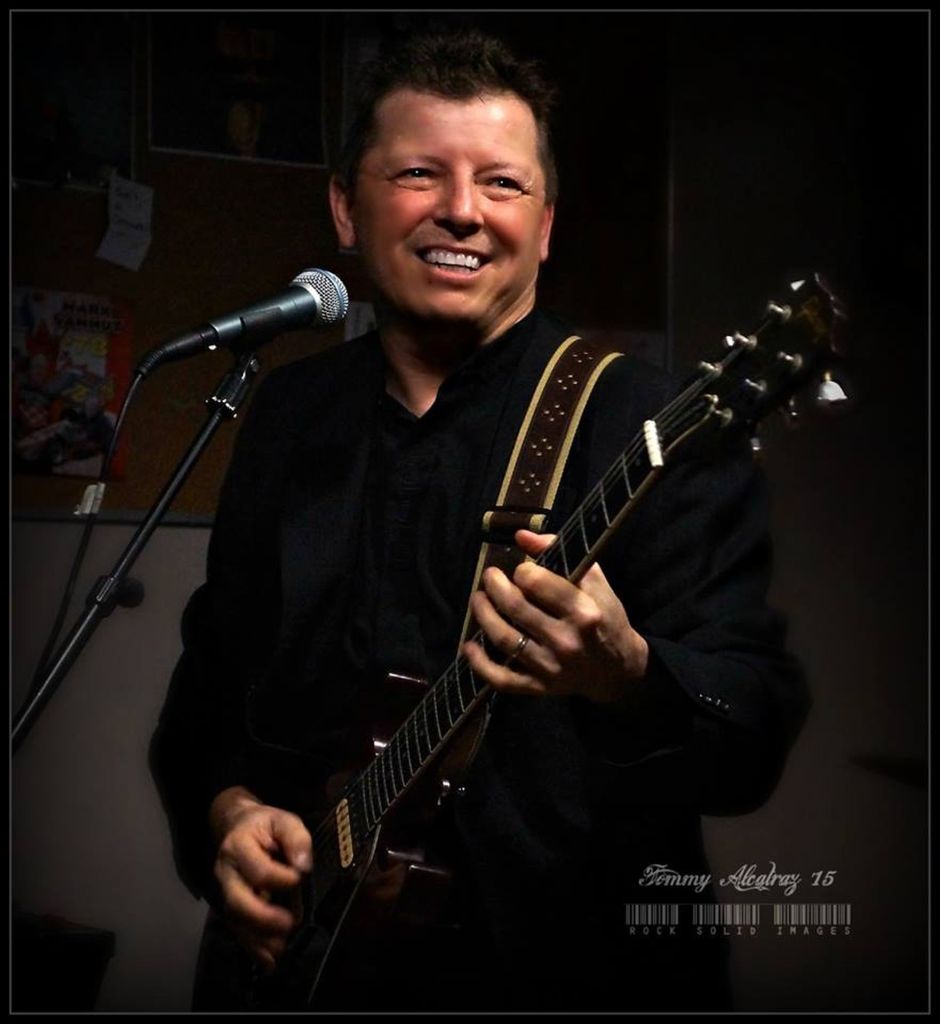
London, Ontario-based singer-songwriter & guitarist Tommy Solo has roots as a long-time SW Ont musician, having traveled across Canada & into the USA as a full-time musician.

In recent years, he has been focused on writing, recording & performing his original brand of classic rock, & sharing experiences with other legacy artists via his podcast, Tommy Solo’s Famous Friends, and on his YouTube channel.  
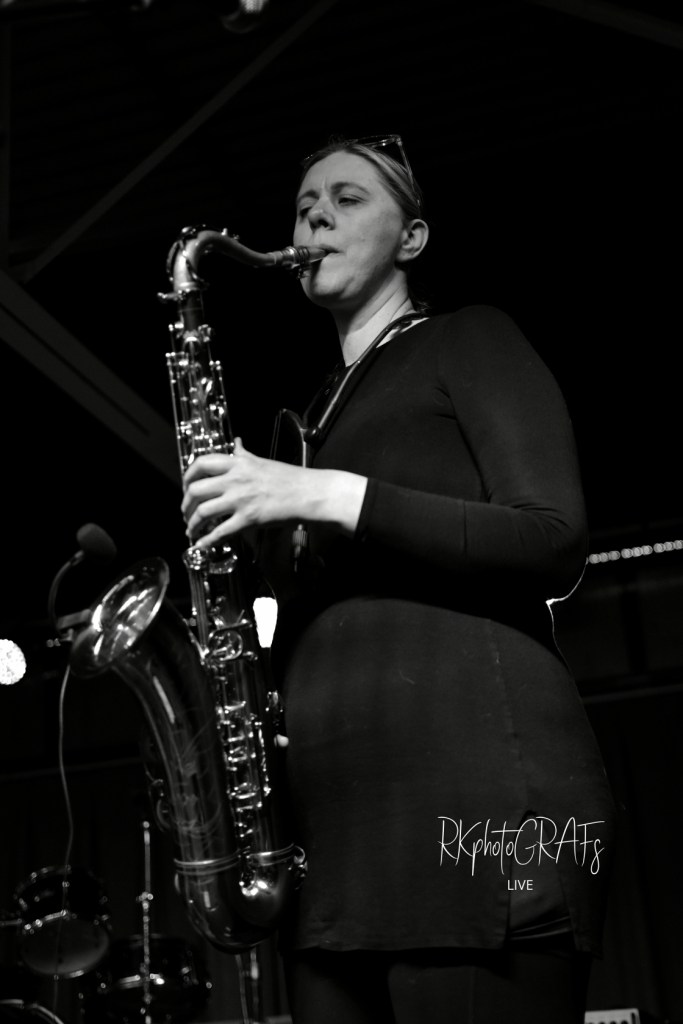
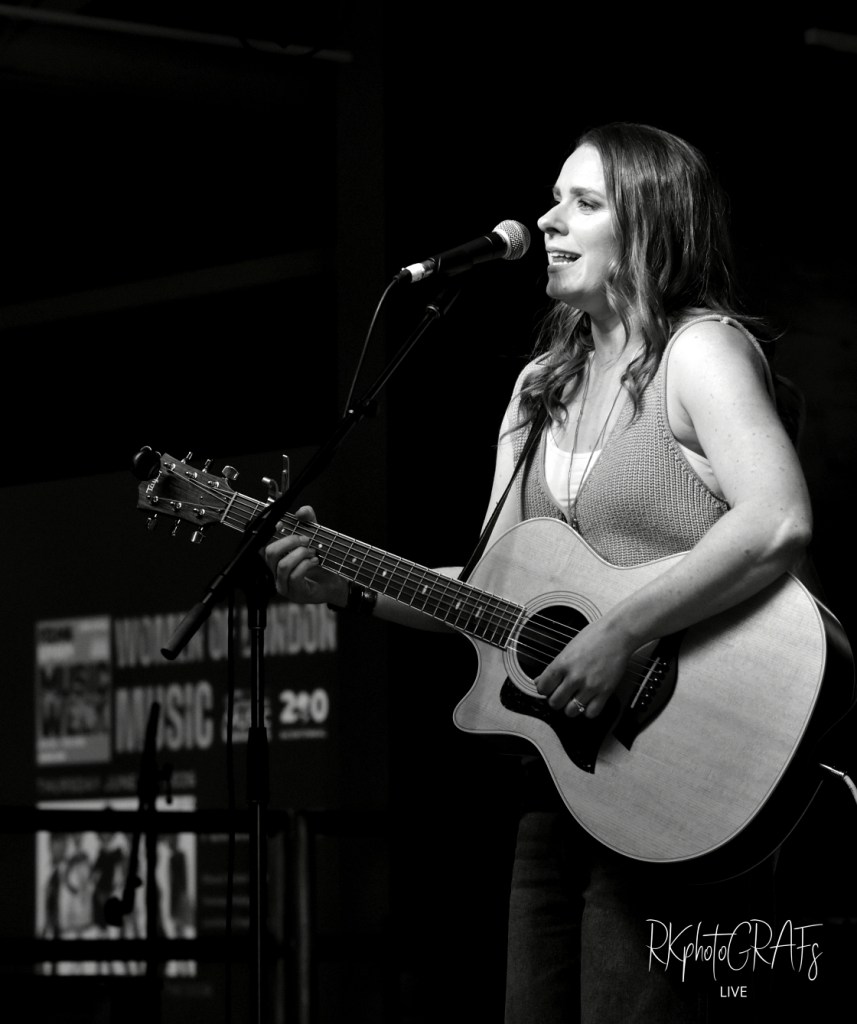
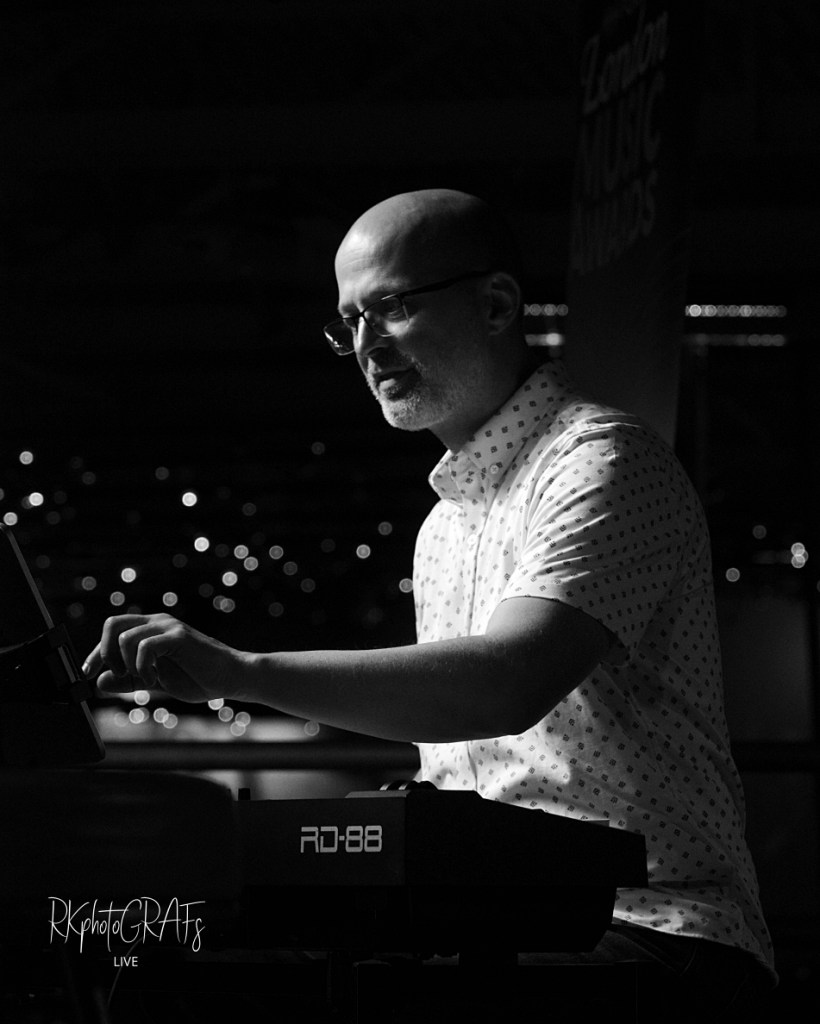
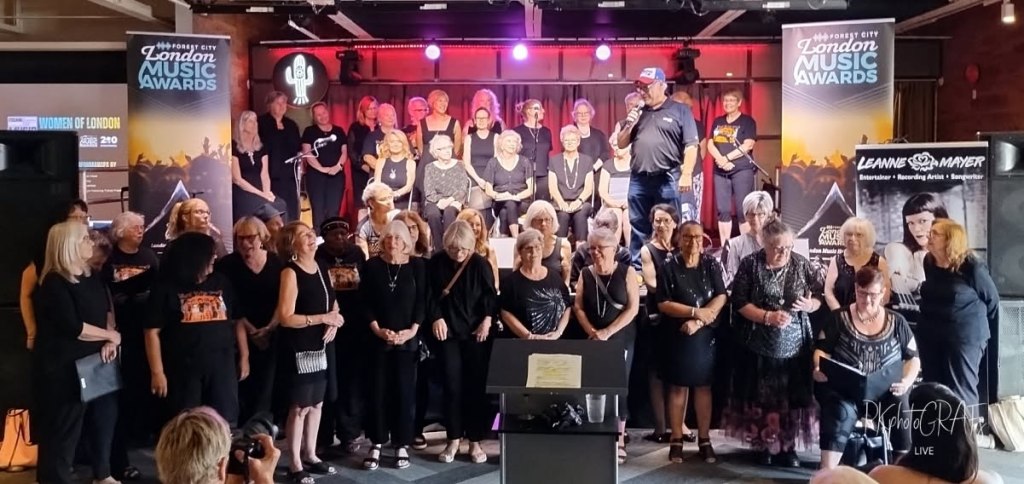
The Local Music Scene Through The Lens of Rudy Graf.

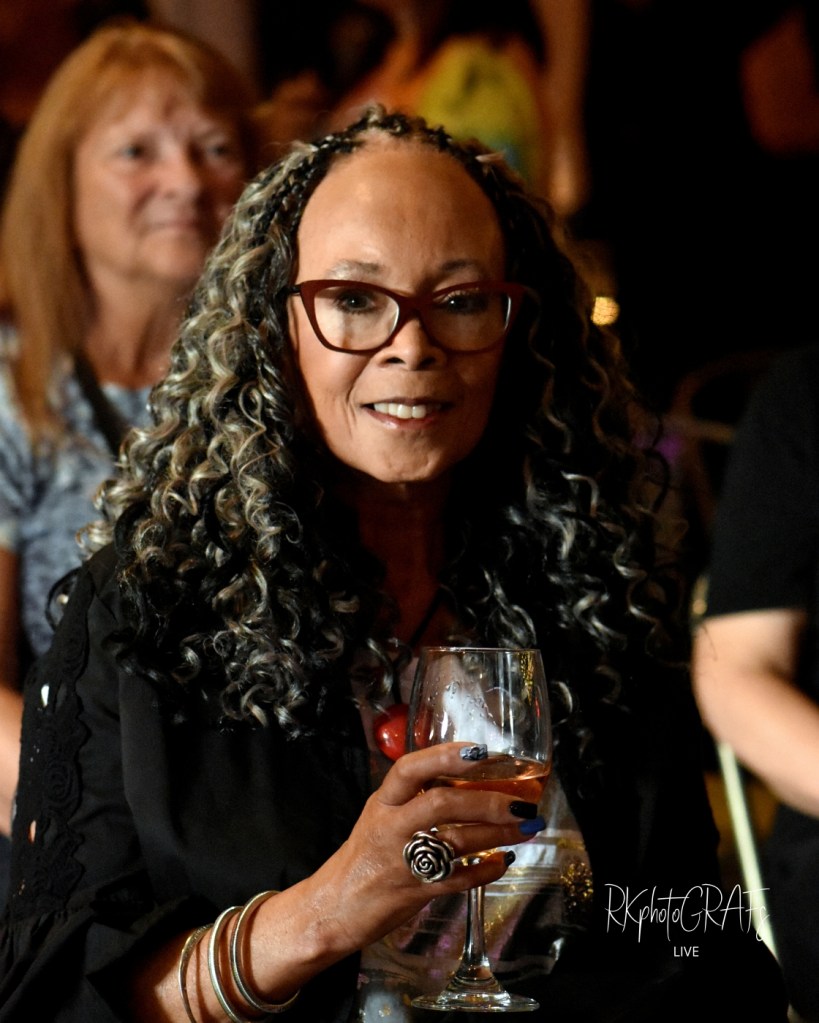
This is the first in a series of recurring photo features on The Beat Magazine 2025 website, which we are calling “The Local Music Scene Through the Lens of Rudy Graf.”

Each photo dump will feature photos Rudy has taken at London-area bars and music events..

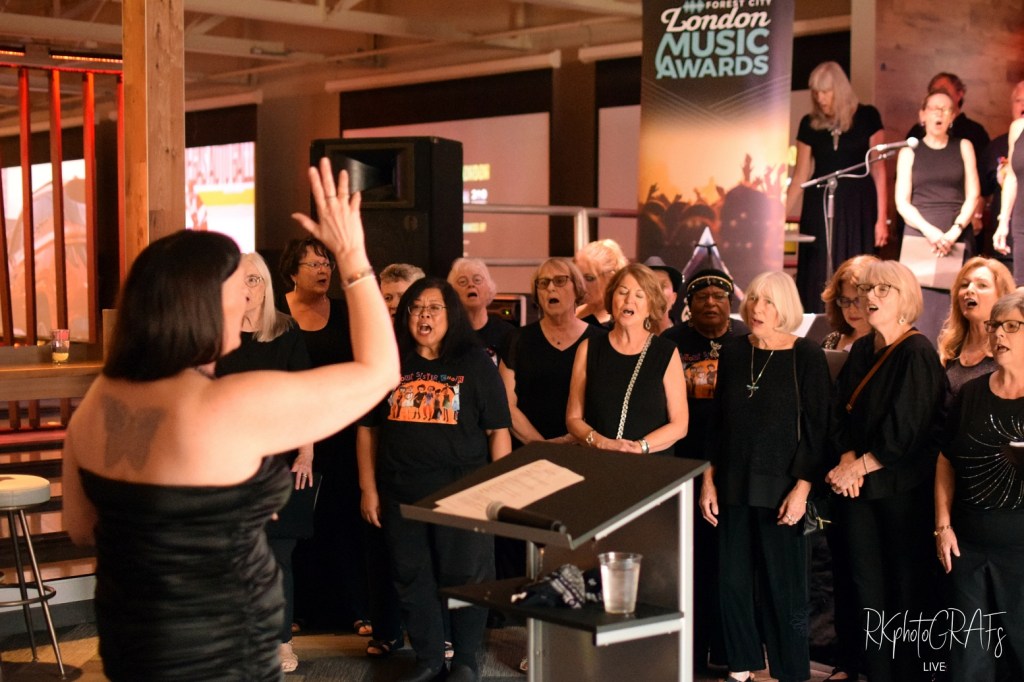
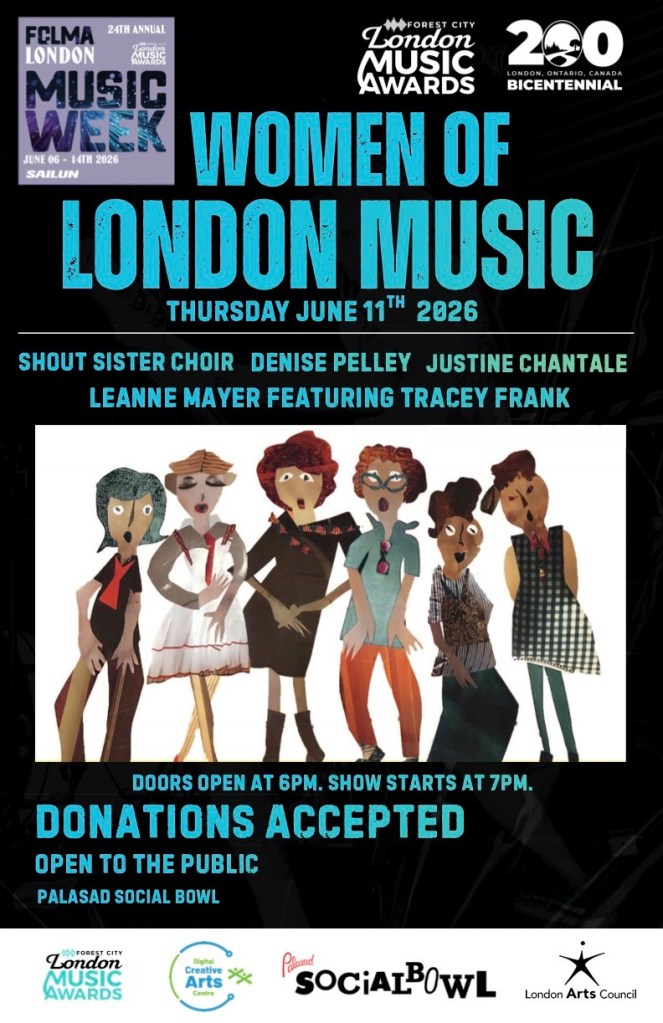
Rudy’s first feature includes pics he took at the Forest City London Music Awards Women Of London Music event on Thursday, June 11, 2026.

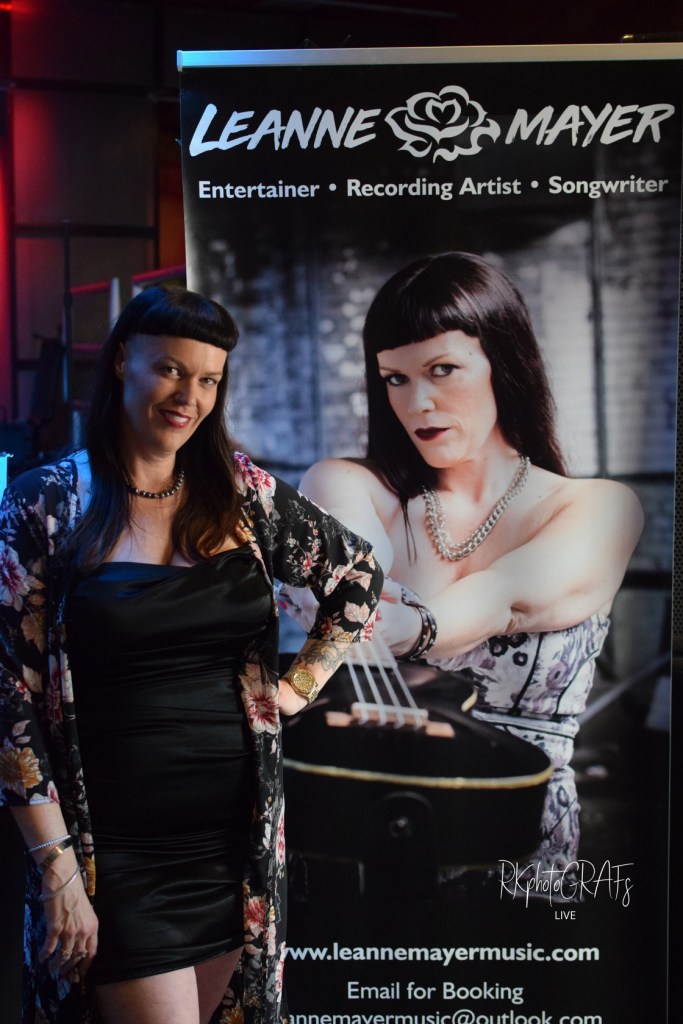
You should recognize many of the artists in the photos, including Denise Pelley, Leanne Mayer, Justine Chantale, Tracey Frank, Nevin Campbell, and the Shout Sister Choir.

All Photos By Rudy Graf.

Rudy Graf is an up-and-coming London photographer who is very involved in the London and area music scene. He previously focused on wildlife pictures, and these photos can be seen at RKphotoGRAFs Nature on Facebook.

Rudy’s first experience taking concert pictures was for the Nashville-based Christian rock band Petra in Toronto and Sarnia in 2024. That same year, he volunteered to take pictures at the Good for the Soll festival in Ingersoll with Helix and Sarah Smith included in the lineup. Brian Vollmer of Helix asked Rudy to photograph the band at Capitol 33 in Delhi and to design the Helix 50th Anniversary Christmas Card.

In 2025-26, Rudy took promotional pictures for Toronto-based bands Always Abba and Toronto the Legacy. 

For the past six months, Rudy has been a fixture at London area bars snapping pictures of bands and performers at jam nights and concerts. You can also find him at festivals and other outdoor events. He’s taken pictures for the local Ren Festival for the past several years. Keep an eye out for Rudy at your next event!

Check out samples of Rudy’s work at his Facebook page RK photo Graf s (1) Facebook

Let us know if you would like Rudy to photograph your band or music event. Contact Richard Young, The Beat Magazine 2025 Publisher & Content Manager, at richardyoung@thebeatmagazine2025.ca.

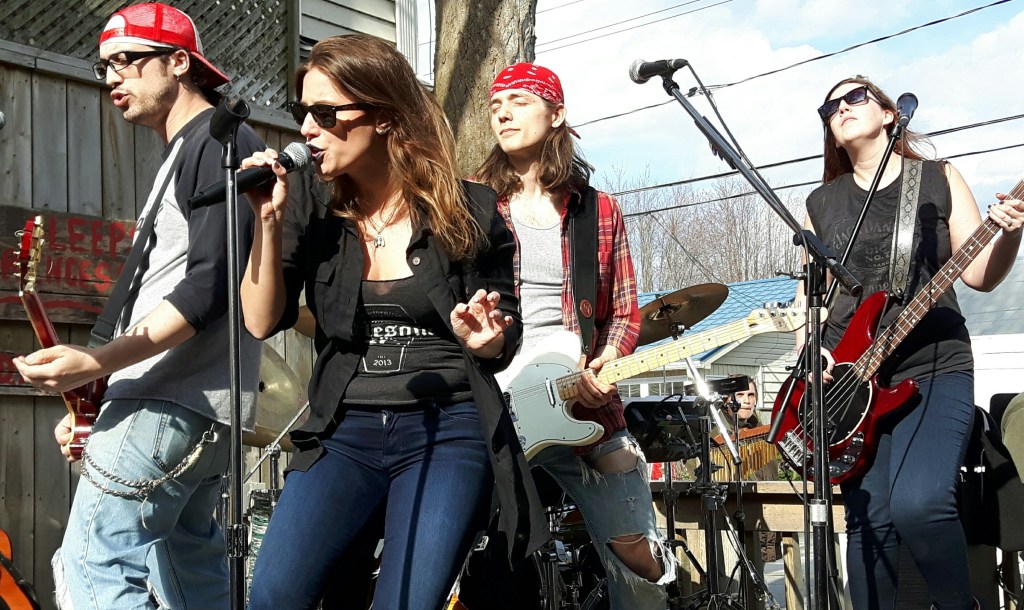
It was a tale of two worlds: London’s Loveless.

By Bob Klanac.

In one world, a band was looking for a new lead singer. In the other, a singer was looking for somewhere to sing.

Specifically, ten years ago, a band called Backline Revival was hosting a YouTube series to audition a new singer. Behind it was Rickie-Lee Houle of Loveless, who organized the series and the search.

“We asked ladies to try out and had two or three rounds of auditions. Long story short, Megan was one of the contestants,” explains Houle.

“And I will not forget when she showed up because we were all searching for our singer and had similar but different ideas of what we were looking for. When Megan sang, we were all thinking ‘this is who we want’.”

In the other world, Megan Schroder was unsure of her abilities, confessing, “I wasn’t very hopeful because I had not sung in a rock and roll band before. The only singing I had really ever done was like in my room as a kid, a bit of musical theater, and karaoke. That was really it.”

“I never fronted a band before, and didn’t really have a lot of confidence in my own rock and roll front woman ability, but I thought, you know, why not give it a shot?”

In Houle’s world, she already knew who she wanted, but life threw both young women a curveball.

Despite having Schroder top of mind, Rickie Lee had to continue with the competition to be true to the goal of the contest. Meanwhile, Schroder got an offer to audition on Broadway.

“I made it through a couple rounds of the competition and then, funny enough, I got a call to audition on Broadway for the show Hedwig and the Angry Inch, which I had recently done as part of the London Fringe Festival”, she explains.

Schroder did get a call back about the play, so she called Houle and told him she had to drop out of the auditions.

“I told them all my focus was going into preparing for this Broadway audition, and in the off chance that I happened to get it, I didn’t want to leave them high and dry,” says Schroder.

“I was certain that they weren’t even really gonna care because I thought I was the weakest link,” Schroder says flatly. “Everyone else had experience. I didn’t know what I was really capable of and thought I was probably in last place anyway, and they’re not even really gonna care.”

As for Houle, “We were devastated” when she got the call from Schroder. But the competition continued, and a winner was chosen.”

“We took a couple of weeks off after we had finished the process, and then everyone got pregnant,” she laughs. “The winning singer got pregnant. The drummer’s girlfriend got pregnant, so we kind of went on hiatus.”

At the time, Houle’s guitar-slinging, soon-to-be husband Nick, was in a band with guitarist Ian Hebert called Bender. They put Backline Revival on the back burner but kept in touch with Megan.

Back in Schroder’s world,  “Rickie Lee got in touch with me and asked to meet up. I didn’t end up getting that part on Broadway, so I was intrigued.”

One meeting later, the core of Loveless was born.

Both Houle and Hebert were looking to leave Bender and wanted a lead singer.

“Ian is super talented, but one thing that he doesn’t love to do is front a band,” Schroder explains. “It’s just not really his thing. So, they wanted to create a band where Ian sings a little but not as the lead singer.”

After a skinsman shuffle, the newly named Loveless ended up with their forever drummer, Warren Stinson, and got down to work.

Having eschewed original material ala Backline Revival, the idea behind Loveless was basically 70s and 80s rock music. What made Loveless stand out among an endless list of similar-themed cover bands was their youth. They were young and played these songs not with a rote note-by-note recitation of de facto classics but rather with the raging wonder of young guns trying out these gems for the first time.

They sounded fresh, a rarity among cover bands. And they came by their freshness honestly. They all grew up with these songs.

“Much Music was always on when I was a kid,” recalls Schroder. “I remember being in kindergarten and my mom took out her old record player and 45s and as a super young kid, I would go through that box full of British Invasion stuff.”

“I was always really into the oldies, and then I just continued to really love it, you know.”

As the Schroder household went, also went the Houle abode.

“My dad always says he plays a mean radio,” chuckles Houle.

“We had sort of a thing where every weekend we would go up to the third floor, and I would get to pick out an album that I wanted to listen to, and he would tell me about it, and I’d hear about when it first came out, when he waited in line, to pick it up at Sam’s and just getting little mini music lessons.

“We would get into like a whole bunch of bands, even Loveless doesn’t play because they’re like a little more obscure, like The MC5 or Frigid Pink, Michael Jackson, the old Chess Records stuff, and Little Feat’s Waiting for Columbus album.”

As for what’s next for Loveless, it’s truly up to the band. They all have side projects and other musical outlets, and because of that, the band remains excited and vital.

“We all support each other,” says Houle. “It’s also good that we come back to the band with renewed energy, too. We are always so appreciative of what we have when we come back.”

“We’re all really good friends. Like, we all really genuinely like each other,” Schroder enthuses.

“So, like when we’re having fun and goofing off on stage, it’s all real. None of it is fake, because we’re just like five friends who are hanging out and having a good time together. And just, yeah, loving it.”

You can catch Loveless at the Pierside Pub in Port Stanley: Sunday, August 2 and September 6.

Follow Loveless on Facebook (6) Facebook

By Bob Klanac

Bob Klanac is a London-based music journalist who has penned hundreds of reviews and interviews. He was a juror for the Polaris Music Prize, a member of the Slaight Family Polaris Heritage Prize Jury, and a Juno Awards juror. Bob has also penned two books, Promo Man about London’s late music legend Nick Panaseiko and Shooting Stars, Telling Tales, about photographer to the stars photo-journalist John Rowlands.

(Photo Credit: Paul Lambert.)

It started with the Velvet Underground: London’s Betamaxx

By Bob Klanac

(Betamaxx Members, Left to Right: Jaq Inglis, drums, Sookie Mei, bass, backing vocals, Mark Ordas, guitar, backing vocals, Kathy Quayle, vocals, Simon Goodwin, keyboard, vocals.)

About six years ago, a friend of Simon Goodwin gave him a nudge with the idea of starting a Velvet Underground cover band.

Fresh out of the London theatre scene, Goodwin shrugged and started putting together what became Venus in Furs. It was fun, but after a few jam sessions, they put the band on hold. Soon after, an invitation to play at a friend’s summer party brought them back together.

A funny thing happened at the party. The crowd loved them. And the band was wowed by the response.

“I was surprised,” Goodwin laughs. “We just played some private parties, but we were just goofing around.”

It was all just goofing around until Goodwin and others in the band realized they had something.

Bassist Sookie Mei recalls that at some point, “We were just like, jamming in someone’s basement and then decided to try and make it go as a band. And we ended up expanding the repertoire to be more 70s and 80s stuff.”

Goodwin adds that “It’s a lot of work to go through from pulling together some songs for a party to being able to do a full night’s material in a bar.”

(Photo Credit: Paul Latorre.)

But work they did, going from a year as a four-piece to a five-piece before adding trained theatre performer Kathy Quayle as their frontwoman. As a singer, Quayle is incandescent, her limbs flying in time to the music with every moment rehearsed and every moment real. She is the visual lynchpin that, to borrow a quip from The Big Lebowski, ties the band together.

Before Quayle grabbed the lead microphone, Goodwin admits, “It was kind of difficult for me to be the only singer to carry out the whole thing.”

“So, having Kathy come and take a bit of a share of the vocals? It’s awesome, she’s awesome. And everyone loves her.”

Mei doubles down on what Quayle brought to the band. “It’s great to have a front woman who’s not behind an instrument, you know, who’s engaged more with the audience. And she’s dynamic, and great to look at, you know?”

So now they had a band, but given that their repertoire had drifted from its Velvets roots, they had to come up with a different name. They had started with Venus in Furs as their nom de plume, but the focus had shifted, and they needed to find another name to hang on their shingle.

Mei recalls they came up with a ton of band names, and all of them were taken already.

“We were trying to think of something that conveyed the 80s, with a nostalgic feel, but also cool. So, we decided on Betamaxx with the extra X.”

“That was one of the ones we thought wasn’t taken, but then it turned out there’s actually a DJ out of Poland and a band in Southern California that had the same name!”

Mei laughs and adds, “So we’re just not original, which is fitting for a cover band!”

Betamaxx’s focus on 80’s music wasn’t accidental. Not entirely.

Goodwin admits, “I kind of pushed it that way.”

“Well, because we were doing, like, late 70s, early 80s songs, I kind of said, well, let’s, let’s do a new wave thing because there’s no one else really doing it. I looked around, and there was only one other band covering that niche.”

“Besides, it was the music of our youth for the most part. And the band very happily went along with it.”

So, with a set list of three, the newly dubbed Betamaxx set out to do some gigging around town.

“I think the first was the Richmond Hotel about three or four years ago,” recalls Goodwin, “and we’ve just kind of grown since then.”

Goodwin understates things a tad. Betamaxx shows at the Richmond are wonderfully intimate, with a roiling crowd of dancers pushing the edge of the dance floor until even those at the crowded tables are bouncing along with the relentless beat.

“Yeah, I am surprised,” admits Goodwin. “It’s lovely, you know. We just kind of, you know, found a niche as I suggested, and uh, you know, there’s a lot of people that are in our kind of age range.”

Betamaxx is a generational rallying call, a gathering of the tribes, people who have their lives back after some years of establishing a career or family.

The band explores big hits by The Cure, the B-52s, and obscure one-hit wonders by Alphaville (Forever Young) and Peter Schilling (Major Tom), former 80s earworms that hit the nostalgia note before they hit the cerebellum. You all know these songs, whether as an obsessive fan or just having been an 80s kid.

Mei agrees, adding, “I believe people love the music of their youth, and the 80s were a huge decade for music. People of all ages seem to enjoy 80s music.”

“We’ve got people our age and older who love it. We’ve even got young 20-somethings who are into Betamaxx, and it’s the 80s music that is the key. The second thing is, we’ve got a really great band.”

According to Goodwin, it’s not just a coincidence that they’ve grown as a band. It’s also an attention to detail that he’s pushed on the band.

“We work really hard to sound like the recordings, the original recordings, because I think people really respond to that quality. I think that helps.”

Mei notes that their success has been recognized in a somewhat tangible fashion, given that Betamaxx snapped up the Best Cover Band honours at last year’s Forest City London Music Awards.

“Yeah,” she says sheepishly, “we’ve definitely risen up to  London greatness!”

Mei muses, “You know, it’s wonderful to look out into the audience and see people from all different walks of life. You know, we’ve got young people, we’ve got various people identifying with different genders, and you know, working class, white collar workers, or whatever.”

As for what’s next, Goodwin concedes that with the band all having day jobs, it’s really more about the fun than the money.

“People have asked us if we’d like to go to Windsor or wherever, but we’re not really interested,” he says flatly.

“We just kind of take gigs of convenience or anything we feel like we want to play.”

This summer, those gigs include Pride London’s mainstage, Ribfest and an upcoming slot at Old South’s Wortley Roadhouse.

“We’re also doing a Hamilton Road block party and something for the Forest City Music London awards as well,” Goodwin explains. “So, we’ve got a lot of little kind of showcase shows like that over the summer. And that’s right up our alley. That’s exactly the kind of stuff we want to do.”

Upcoming Betamaxx Shows:

July 4:   Wortley Roadhouse, 9pm-1am

July 18: Hamilton Rd Block Party, 2-3pm

July 19: Pride Festival, Victoria Park, (Date and time TBD)

July 31: Ribfest, Victoria Park, 7:30-9pm

Sept 26:Richmond Tavern, 3-6pm

Follow Betamaxx on Facebook https://www.facebook.com/share/1BTKY5MTRv/

By Bob Klanac

Bob Klanac is a London-based music journalist who has penned hundreds of reviews and interviews. He was a juror for the Polaris Music Prize, a member of the Slaight Family Polaris Heritage Prize Jury and a Juno Awards juror. Bob has also penned two books, Promo Man about London’s late music legend Nick Panaseiko and Shooting Stars, Telling Tales, about photographer to the stars photo-journalist John Rowlands.

London’s Jones Family receives Forest City London Music Awards Lifetime Achievement Award.

by Richard Young

On Wednesday, May 21, 2026, the 24th annual Forest City London Music Awards (FCLMA) announced this year’s inductees into the non-profit organization’s Hall of Fame and Lifetime Achievement categories.

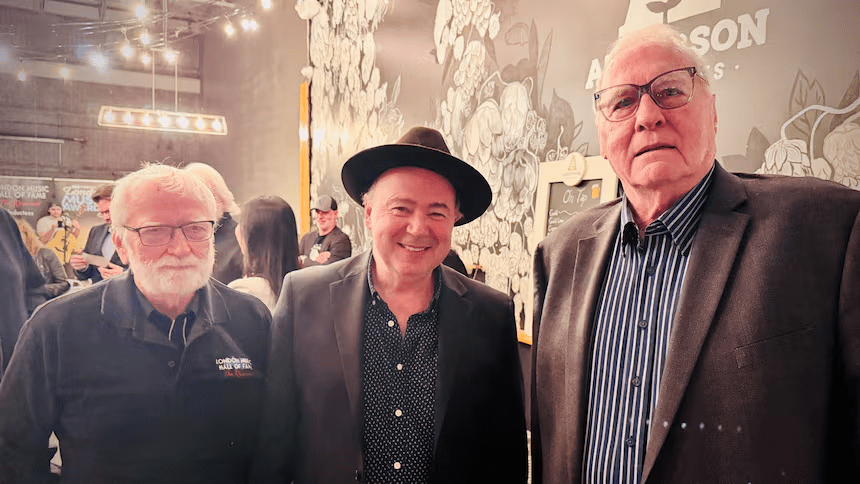
(Pictured: Fred Smith, Ted Leonard, and Don Jones. Photo Credit: Jack Sutton/CBC.)

This year’s honourees are blues guitarist Ted Leonard, who was inducted into the Hall of Fame, long-time CHRW-FM Hardcore Country host Fred Smith, and the Jones Family, London entertainment pioneers and entrepreneurs, who received Lifetime Achievement Awards.

FCLMA Hall of Fame recognition is granted to individuals who have a long-standing connection to London and area, and who have demonstrated an outstanding career in music and have made a significant impact on the local, national, and/or international community. To be considered, the nominees must have started in the music industry at least 20 years ago.

The Lifetime Achievement Award is presented to an individual (or individuals) who has been an outstanding contributor to the London and area music community over many years and who has inspired others to contribute to the London area’s music community in an impactful manner. 

The Jones Family received a Lifetime Achievement Award for their long-time contributions to the London Music scene, which began with the building of Wonderland (Summer) Gardens, London’s famed entertainment venue, in 1935, and continues today with the Jones Entertainment Group, which continues to build on that legacy through touring productions, festivals, and large-scale live experiences.

To be sure, it is an honour well-deserved and long overdue.

Coming on the heels of the Lifetime Achievement Award is the unveiling of commemorative Interpretive Signage recognizing and celebrating Wonderland Gardens’ contribution to London’s music scene on Sunday, June 21, at 1:30 pm, at Springbank Gardens, before the first Springbank Gardens Summer concert at 2:00 pm.

The Interpretive Signage unveiling is a joint project of the London Public Library’s Historic Sites Committee (of which the author is a member) and the City of London Culture Office.

____________________________________________________________

In the following article, brothers Chuck Jr. and Don Jones share their memories of operating Wonderland Gardens during its heyday in the 1950s and 1960s. (Source: Interview with brothers Chuck and Don Jones, December 11, 2023.)

Younger brother Don Jones was tasked with booking the entertainment at age 14. He remembers booking an up-and-coming artist named Alice Cooper for $500 in 1967.

“I took care of booking Bob Seger one time, who came with his band, equipment and all, in a cube van and slept in the parking lot,” recalls Don.

Don had a talent for this and continued booking the entertainment there until the mid-1970s, getting to know and becoming friends with musicians from across the country and the U.S. He has kept many of them as long-time friends to this day.

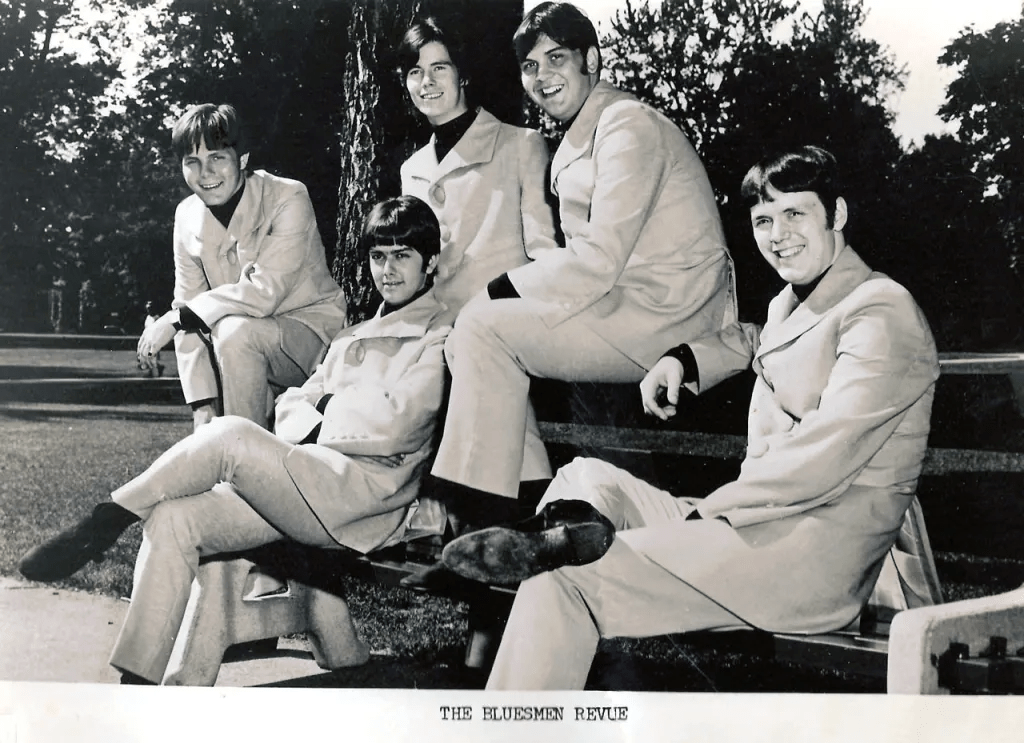
Prominent local musical groups, including Johnny Downs, Ted Pudney, Lionel Thornton, and Neil McKay, performed at Wonderland Gardens in the venue’s early years. Later, local acts included the Hawthorne Good Times Band, led by John Hotson, which participated in twenty-five consecutive New Year’s Eve celebrations. Other local acts included The Bluesmen Revue, A Small Experience, The New Set, and many others.

(Pictured: The Bluesmen Revue.)

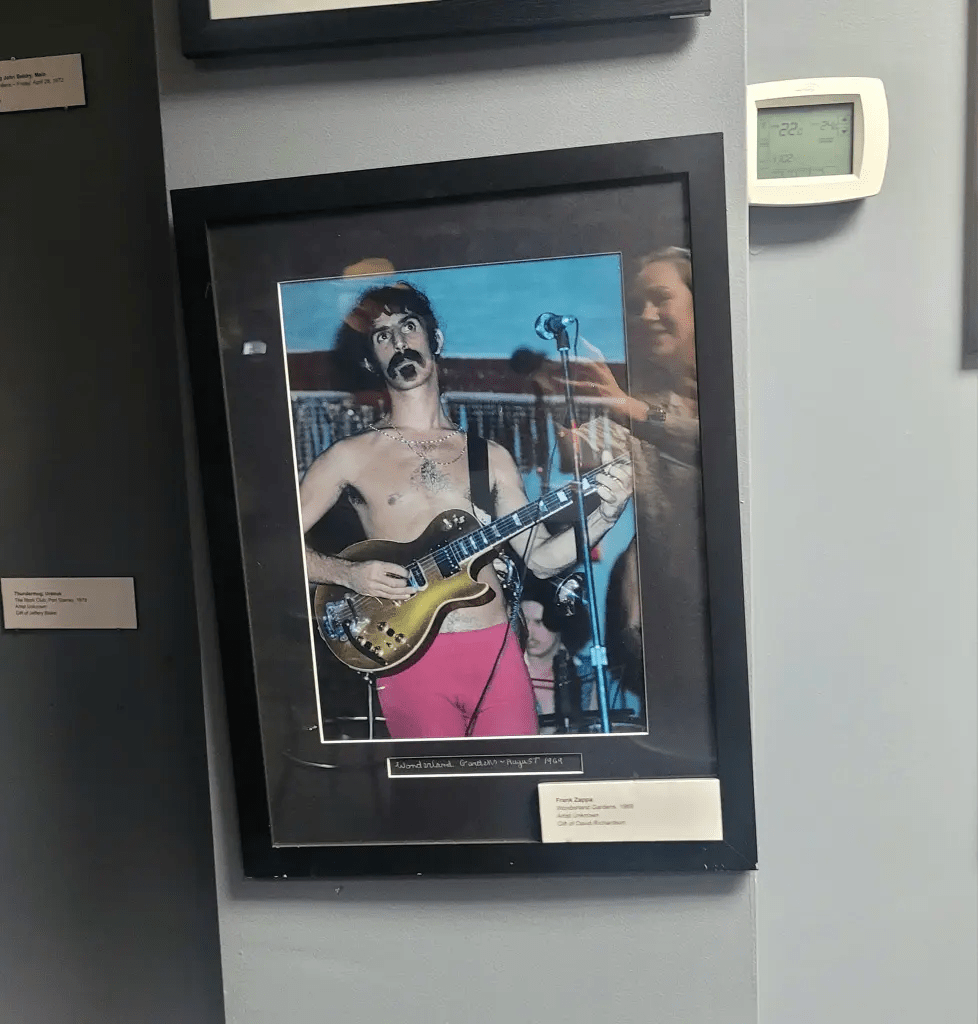
As musical preferences shifted over time, Wonderland stood as one of the few local vestiges of the big band era. By 1956, the once-gravel driveway leading to the attraction from Springbank Drive had transformed into Wonderland Side Road. The venue continued to host headline acts such as Roy Orbison, Chuck Berry, and Sly and the Family Stone. The Jones brothers remember when Wonderland hosted a two-day Pop Festival featuring Frank Zappa and the Mothers of Invention in August 1969.

(Pictured: Frank Zappa performs at Wonderland Gardens, August 1969.)

Chuck can finally put to rest the rumour that Zappa engaged in water skiing on the polluted Thames River.

“This did happen, I was the one driving the boat!” he jokes.

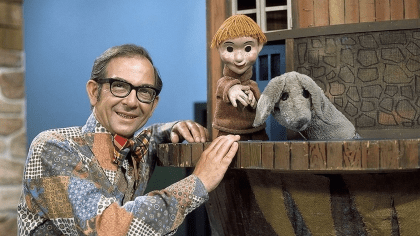
In 1982, Don met CBC children’s icon Mr. Dressup (Ernie Coombs), and together they embarked on a twenty-year journey of touring success. Don and Ernie developed a steadfast friendship that continued long after their touring stopped. Following Ernie’s retirement, these two best friends could still be found on the golf course each year, raising funds for Peter Gzowski’s Literacy Foundation.

(Pictured: Ernie “Mr. Dressup” Coombs.)

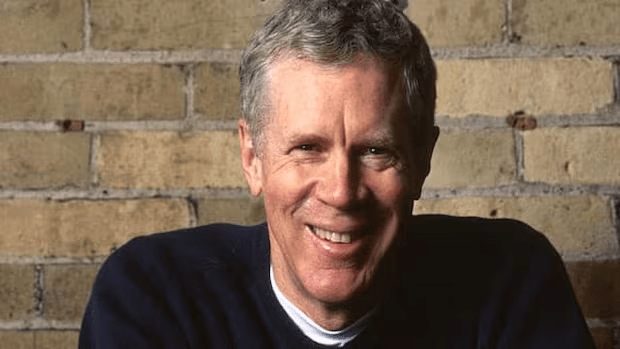
From 1999 onwards, Don’s primary focus was on the late Stuart McLean, CBC Radio host and best-selling author. Together, they covered Canada coast to coast and the northern United States, playing over 50 live shows each year with The Vinyl Cafe.

(Pictured: Stuart McLean.)

The talent kept pouring in, and Wonderland Gardens, in its heyday, was the venue where bands wanted to play.

“I would often reach out to entertainers who were playing in Detroit and catch them on their way to Toronto,” recalls Don.

Sadly, Charles Sr passed away in 1971. In the mid-1970s, Don left to continue with his music promotion business and started Don Jones Entertainment, which remains a powerhouse in the industry to this day.

By 1974, Chuck realized that to keep up with the times, the facility needed to get into the food business. He decided to open up the facility with its 1000-person capacity for company conferences, proms, parties, and fundraising events. He carefully vetted the companies that wanted to rent out the space to ensure that they were solid, upstanding businesses.

Initially, local catering companies would provide the food for these events until Chuck realized that he wanted to expand and offer the food directly.

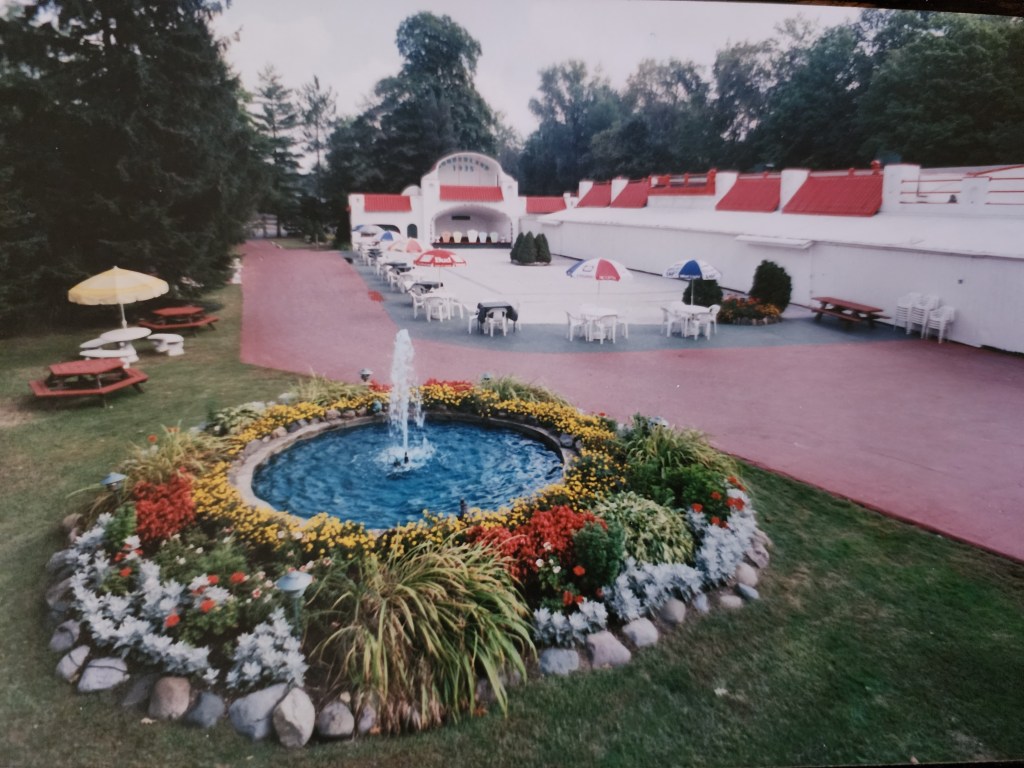
(Pictured: Riverview Restaurant.)

“I also realized that to remain competitive, we needed to license the facility,” says Chuck. “In 1984, we opened the fully licensed Riverview Restaurant with a one-hundred-person capacity inside and one-hundred-person capacity outside. The restaurant was renowned for its great food, great service, and stunning backdrop looking over the Thames River.” 

Wonderland Gardens and the Riverview Restaurant were closed in January 2004 after the City of London failed to negotiate a reasonable new lease for the property. The last evening was a New Year’s Eve celebration with the local band, Hawthorne, playing to a sold-out crowd.

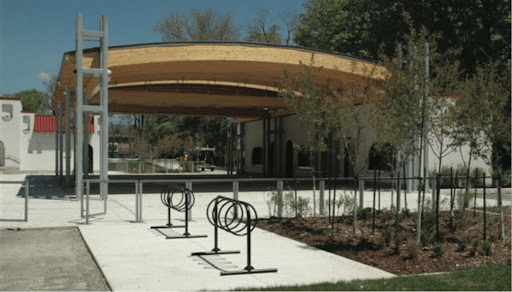
Unfortunately, Wonderland Gardens burned down in 2005, and the empty hall remained empty until June 8, 2008, when the City of London opened Springbank Gardens, featuring a renovated bandshell and the Guy Lombardo Pavilion, an arched pine and cedar building resembling the original ballroom. Today, the venue hosts summer music events and private functions.

(Pictured: The Guy Lombardo Pavilion, Sprigbank Gardens.)

Today, the two Jones brothers are mostly retired and enjoy family time. Chuck and his wife, Bea, are avid birders and house sixteen colonies of the endangered Purple Martin birds. Don and his wife Linda enjoy spending time with their four kids and eleven grandchildren. Don enjoys cooking and is known to make delicious soups and roasts that he generously drops off to family and neighbours.

Don’s sons, Brad and Greg, are successfully running the Jones Entertainment Group, offering a one-stop service to the entertainment business. Locally, they have successfully filled Harris Park with 50,000 fans each year for the past nineteen years for the local charity fundraiser, Rock The Park.

Don and Chuck Jones have vivid memories of Wonderland Gardens and the bands that performed there.

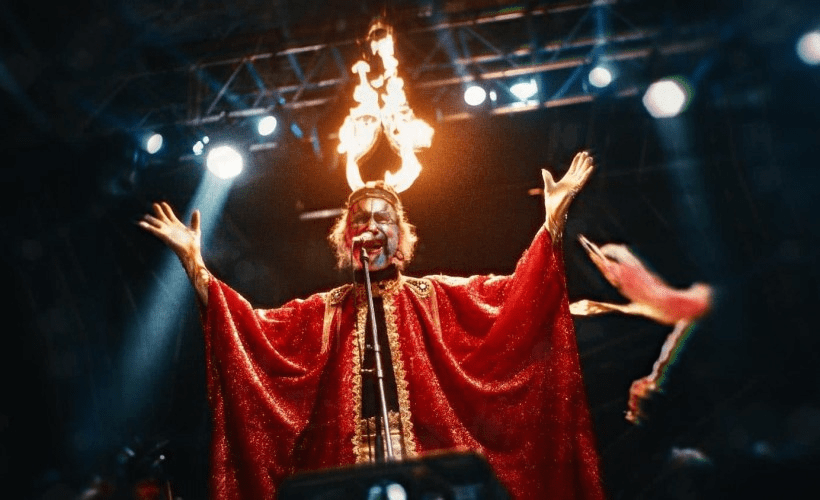
One such memory includes the time that the popular British band The Crazy World of Arthur Brown was booked to play one evening at Wonderland Gardens in 1969. The day before Brown was scheduled to perform, Don received a phone call from the band’s manager informing him that the whole band had quit, and the eccentric and outlandish band leader was on his own. Don flew him in from New York and chartered a plane from Toronto to London to get him to the venue on time.

(Pictured: The Crazy World of Arthur Brown.)

“He was without his band, his stage gear, and his signature flaming head costume. I quickly improvised. The opening band knew all the songs and agreed to step in for Arthur,” Don recalls. “I found a lampshade, stuffed it full of cotton balls, soaked it in lighter fluid, and duct-taped it to his head. As he stepped onstage, the cotton balls were lit, and Arthur’s outlandish entrance was restored. Unfortunately, the flaming head didn’t have protection for his head, and it was quickly doused after singeing his hair. There was a burn on the stage floor after that concert!”

By Richard Young, Publisher & Content Manager, The Beat Magazine 2025

Richard Young is a retired History teacher who taught with the Thames Valley District School Board for thirty years. Richard published The Beat Magazine, an independent print arts magazine, from 2009 to 2013. In 2025, he revived the magazine as an online publication. He is currently a member of the London Public Library Historic Sites Committee.

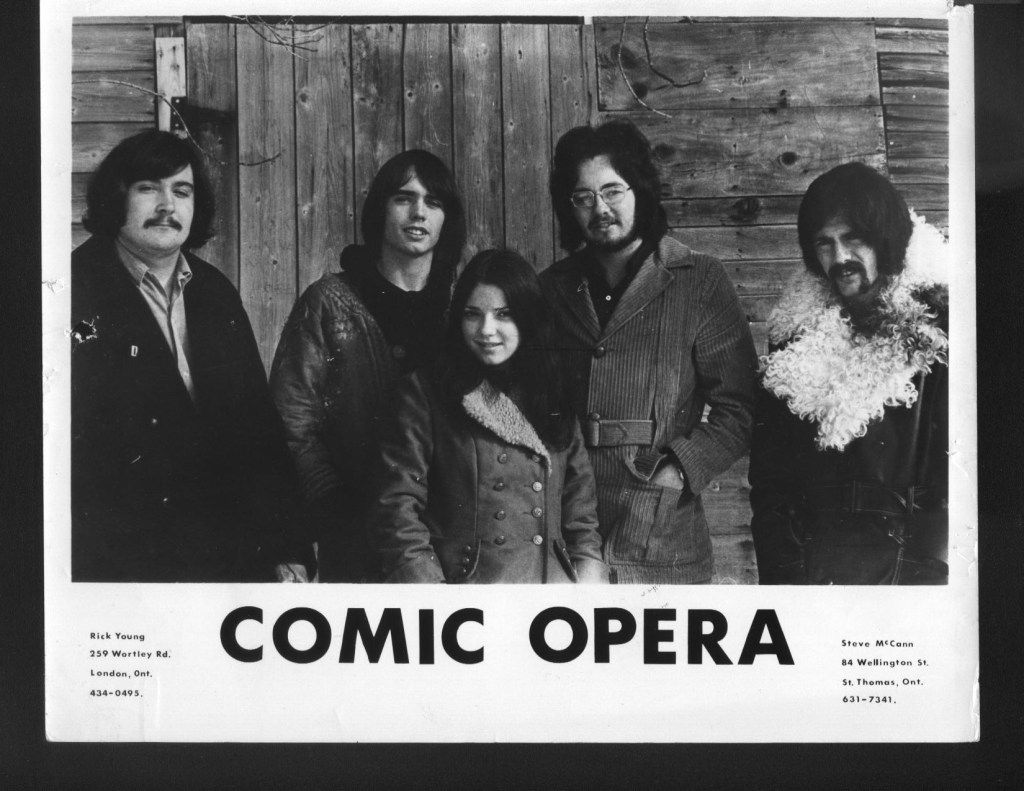
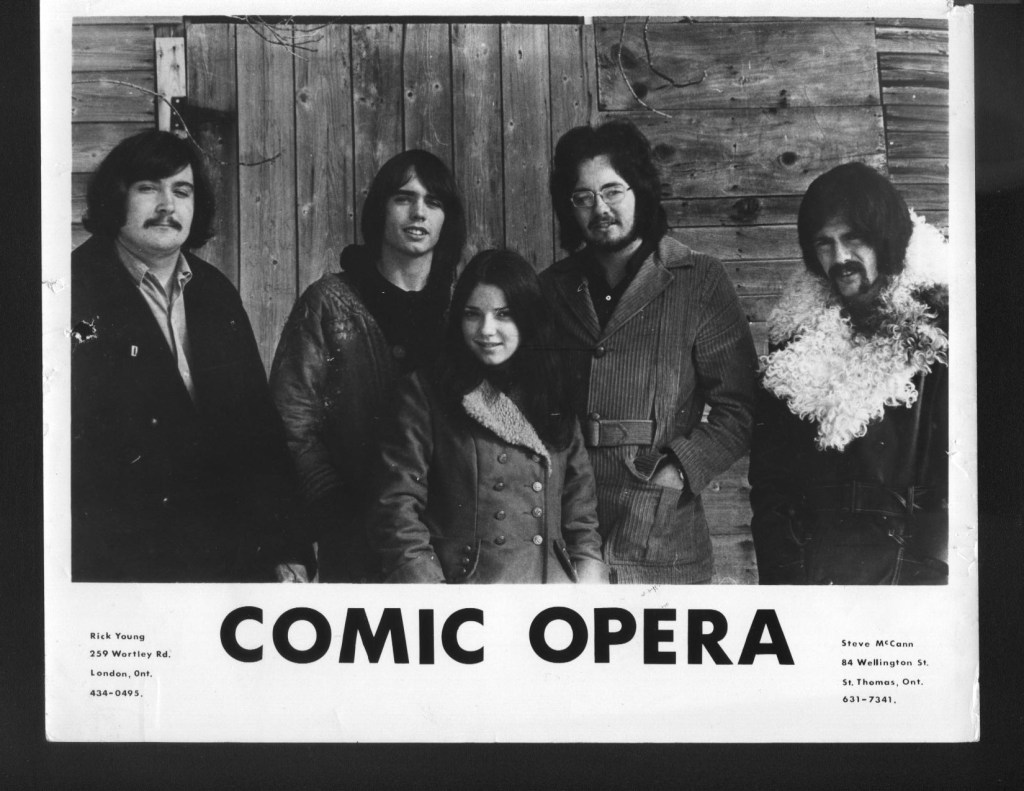
His band, The Comic Opera, played at Wonderland Gardens numerous times in the late 1960s and early 1970s. He has many fond memories of the venue.

http://www.thebeatmagazine2025.ca

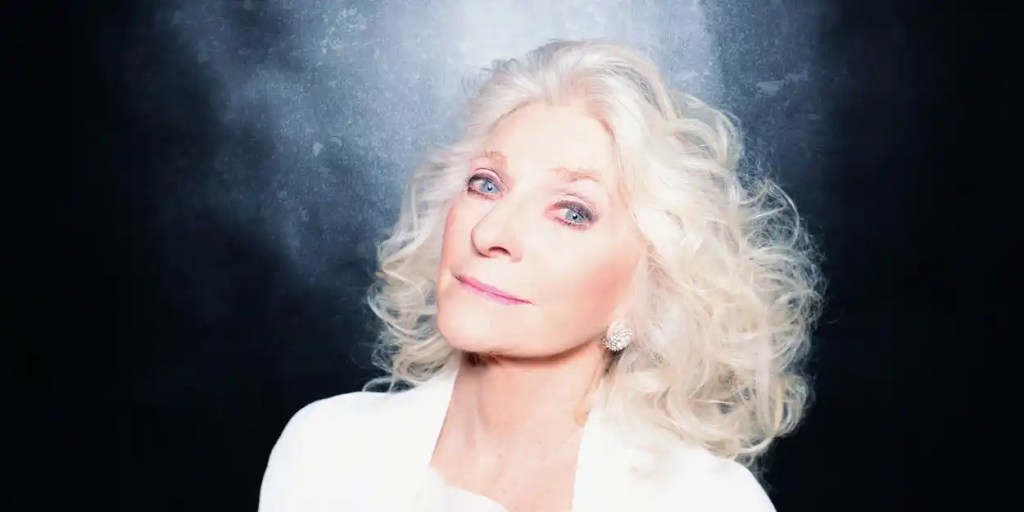
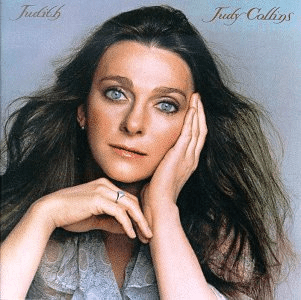
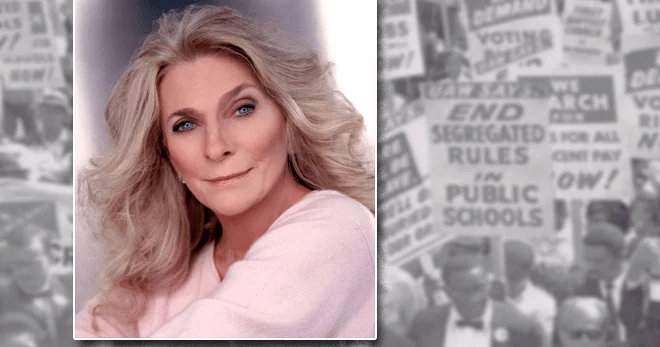
Judy Collins brings her “Sweet Judy Blue Eyes” Farewell Tour to The Aeolian on Monday, May 25.

With files provided by The Aeolian Hall.

American singer-songwriter and musician Judy Collins brings her “Sweet Judy Blue Eyes” Farewell Tour to The Aeolian on Monday, May 25.

With a career spanning nearly seven decades, the Academy Award-nominated documentary director and Grammy Award-winning recording artist is known for her eclectic taste in the material she records, which has included folk music, country, show tunes, pop music, rock and roll, and standards.

Collins has inspired audiences for more than five decades with her luminous voice, deeply personal songwriting, and lifelong commitment to social activism. Emerging during the folk revival of the 1960s, she became a defining voice of a generation confronting social and environmental injustice. Today, her legacy spans more than 55 albums and continues to influence new audiences.

Collins is celebrated for her imaginative interpretations of traditional and contemporary folk songs as well as her own poetic compositions. Her recording of “Both Sides Now” by Joni Mitchell from the 1967 album Wildflowers was inducted into the Grammy Hall of Fame, while her rendition of “Send in the Clowns” from A Little Night Music by Stephen Sondheim won Song of the Year at the 1975 Grammy Awards. Over the years, she has earned multiple top-ten hits and gold- and platinum-selling albums, and her influence has been celebrated by artists including Rufus Wainwright, Dolly Parton, Joan Baez, and Leonard Cohen.

Originally a classical piano prodigy performing works such as the “Concerto for Two Pianos”, Collins shifted toward folk music after discovering the songs of Woody Guthrie and Pete Seeger. Her 1961 debut album, A Maid of Constant Sorrow, launched a long partnership with Elektra Records and helped establish her as a key tastemaker in the Greenwich Village folk scene, where she championed emerging songwriters including Cohen, Mitchell, and Randy Newman.

Still prolific, Collins continues to record and tour internationally. Recent projects include the collaborative albums Silver Skies Blue with Ari Hest and Winter Stories with Jonas Fjeld and Chatham County Line. An author, filmmaker, and activist for organizations such as UNICEF, she also speaks widely on mental health and recovery.

A true Renaissance artist, Judy Collins continues to create music of hope and healing while mentoring new talent and inspiring audiences around the world.

Judy Collins has inspired audiences with sublime vocals, boldly vulnerable songwriting, personal life triumphs, and a firm commitment to social activism. In the 1960s, she evoked both the idealism and steely determination of a generation united against social and environmental injustices.  

Five decades later, her luminescent presence shines brightly as new generations bask in the glow of her iconic 55-album body of work, and heed inspiration from her spiritual discipline to thrive in the music industry for half a century.

This is one show you won’t want to miss!

Tickets available at Judy Collins

#TBT – Remembering Wonderland Gardens and The Pop Festival of August 1969.

by Richard Young

Author’s Note: Since this story was published in The Byron Villager a few years back, I was commissioned by the City of London Culture Office to prepare an Interpretive Sign that visually tells the history of Wonderland Gardens from 1935 to its rebirth as Springbank Gardens. The plaque will be unveiled on Sunday, June 21, at 1:30 pm at The Guy Lombardo Pavilion in Springbank Gardens.

Mention the name Wonderland Gardens today, and most Londoners will probably respond, “Wonderland what”?

The site of the legendary dance hall, which burned down in 2005, is now called Springbank Gardens, and all that remains of the original venue is the outdoor bandshell.

(Original Outdoor Bandstand)

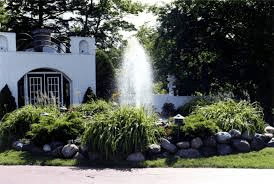
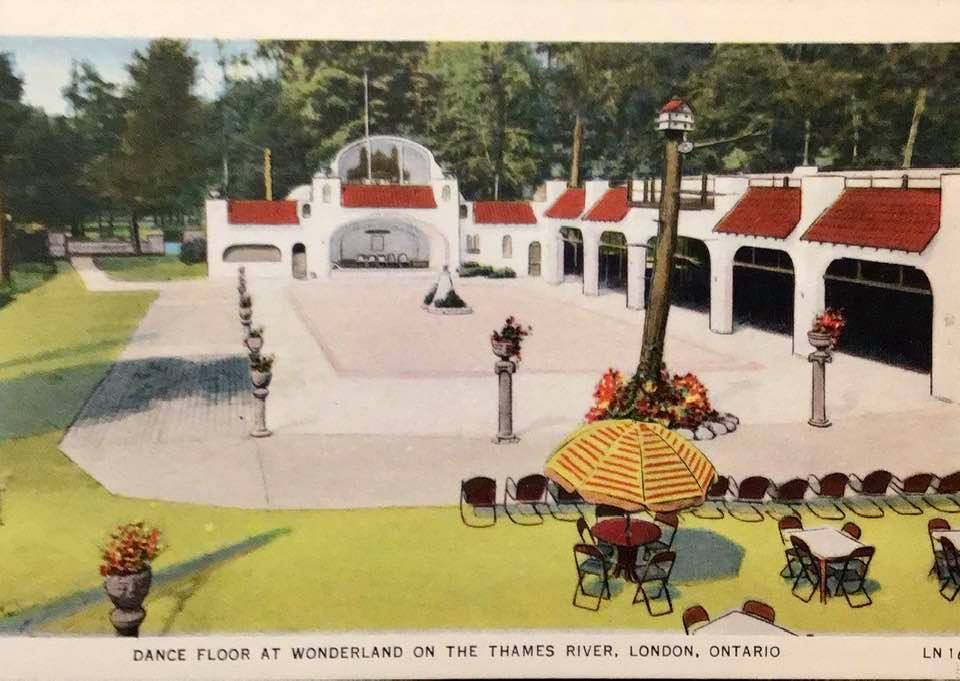
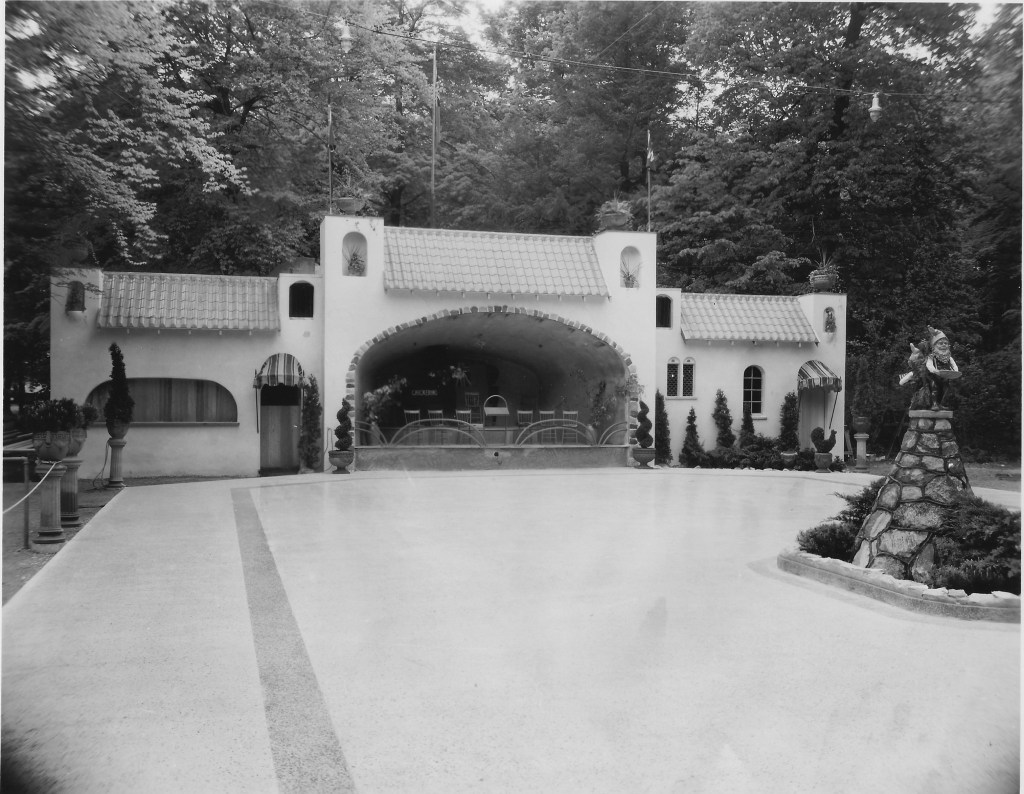
The story of Wonderland Gardens begins in the early 1930s, when Charles Jones signed a long-term lease for a small lot in Westminster Township, adjacent to the Thames River. His plan was to build a series of gardens, fountains, woods, ponds, and footpaths, including a luxurious swimming pool, all surrounding a 550-square-metre, open-air dance floor with a bandstand and Spanish Colonial-style pavilion.

(Wonderland Pool.)

Wonderland Summer Gardens opened on May 24, 1935, featuring Mickey McDougall and His 10-Piece Orchestra. It quickly became one of the city’s hot spots. Big Bands like Guy Lombardo and his Royal Canadians and those led by Glenn Miller, the Dorsey brothers, and local musicians like Johnny Downs and Lionel Thornton all graced the venue’s bandshell. Generations of Londoners danced and canoodled under the stars on the venue’s open-air dance floor.

A covered pavilion was built in 1941, and in 1959 it was fully enclosed and insulated to serve as a ballroom, enabling the venue to remain open year-round.

(Mickey McDougall and His 10-Piece Band opened Wonderland on May 24, 1935.)

As the decades passed and musical tastes changed, the venerable dance hall changed with the times. By the 1960s, Wonderland was London’s favourite concert/dance hall for the thousands of London area Boomers who flocked there to see major acts like Sly and the Family Stone, Deep Purple, The Mandala, Grant Smith and the Power, and many others too numerous to list.

(Grant Smith.)

Wonderland was also a jumping-off point for local bands like The Bluesmen Revue, A Small Experience, The New Set, and The Comic Opera, who mostly opened for the headliners.

For the late John Sharpe, The New Set’s former drummer, Wonderland held a special place in his musical career.

“A group could play any number of teen towns or private events, but everyone knew you had not really ‘made it’ until you played Wonderland,” recalled John. “It was a magical place that attracted hundreds of teens to its weekly rock ‘n’ roll shows, so every group in the area wanted in on the action.”

Jim Chapman, former bassist for The Bluesmen Revue, a very popular London R&B group, remembers headlining at Wonderland many times.

“The room had excellent acoustics both on the stage and in the hall. In those days, that was the exception rather than the norm,” Jim recalls. “And it had one of the smallest dressing rooms I ever saw in a venue that size. How the multi-person big bands ever managed to get their people dressed for a gig I cannot imagine!”

Ken Thorne, of A Small Experience, another London band that regularly played Wonderland, remembers the venue’s dressing rooms, too.

“The original dressing room walls were scrawled with the signatures of many of the artists who performed there. Whenever we played there, we used to try and find the new additions while waiting to go on stage,” says Ken.

On August 13 – 14, 1969, Wonderland hosted a two-day Pop Festival featuring Frank Zappa and the Mothers of Invention, Alice Cooper, Cat Mother & The All Night News Boys, George Olliver & The Natural Gas, and others for the whopping price of $7.00! The event preceded the much larger Woodstock Music Festival that took place in New York State, August 15 – 18.

Apparently, Zappa was asked why he wasn’t playing Woodstock. His reply? “Because we don’t want to.”

Rumour had it that after his set, Zappa waterskied on the heavily polluted Thames River, which flowed behind Wonderland! The rumour was recently confirmed during an interview I did with Chuck Jones.

As the years progressed, touring acts moved to other venues in town, and Wonderland became more of a location for special events like company parties, conventions, rallies, and receptions.

“In its final days, the City of London had an active interest in Wonderland, but the council would not invest the money needed to refurbish it and keep it a top live performance venue,” Jim laments. “When Wonderland burned down, there was a lot of talk that something political and fishy had gone on, though I have no way of knowing if that was the case. Like many people, when I heard news of the fire, I shed a tear for all the great days and memories gone by.”

So next time you pedal or walk through Springbank Gardens, take a pause to see if you can hear some of the strains of great music that was once played on the site.

by Richard Young

Richard Young is a retired History teacher who taught with the Thames Valley District School Board for thirty years. Richard published The Beat Magazine, an independent print arts magazine, from 2009 to 2013. In 2025, he revived the magazine as an online publication. He is currently a member of the London Public Library Historic Sites Committee.

http://www.thebeatmagazine2025.ca

Snaggle with the Ali Brothers at Storm Stayed Brewery.

Reviewed by J. Bruce Parker

(Photo Credit: J. Bruce Parker.)

All hail the rise of craft beer brewing! The feared rival to the big guns of Labatt and Molson, which once ruled the Canadian brewing industry for over a century, has dug deep roots throughout the province, with a handful of fine breweries taking up residence in London.

My local is Storm Stayed on Wharncliffe Road, approaching its eighth year in 2026.

Like most craft breweries, Storm Stayed engages its community with a wide variety of events, ranging from a mom and kids time to the music of opera. And do I need I advise you that there is beer available for those of a certain age?

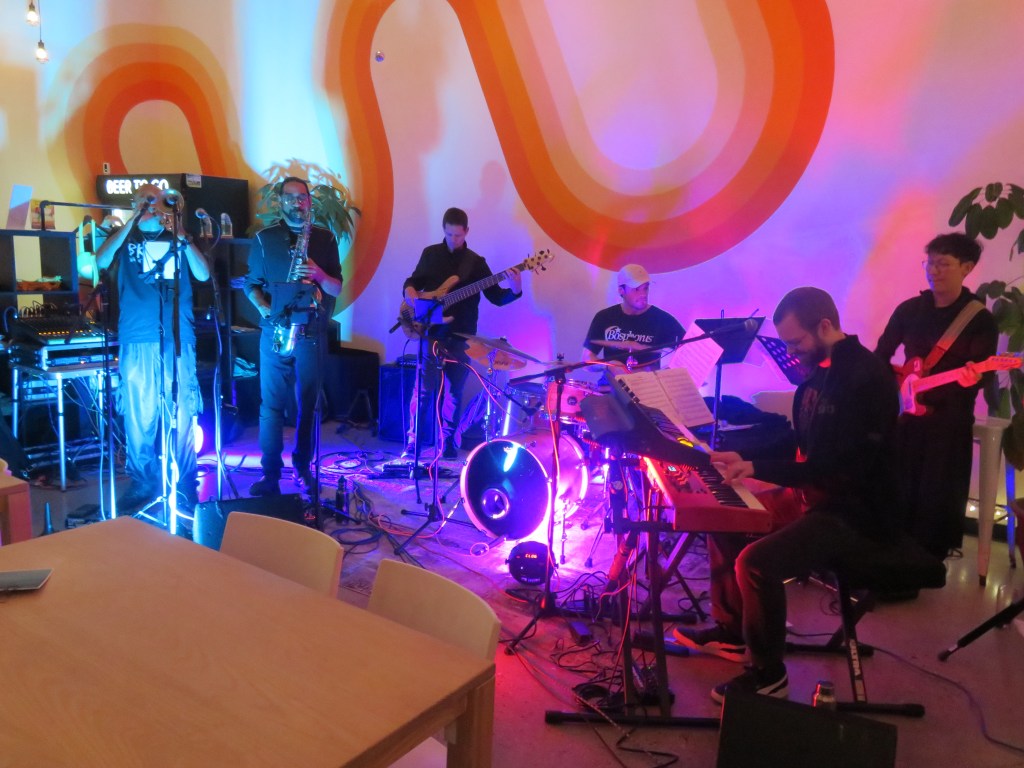
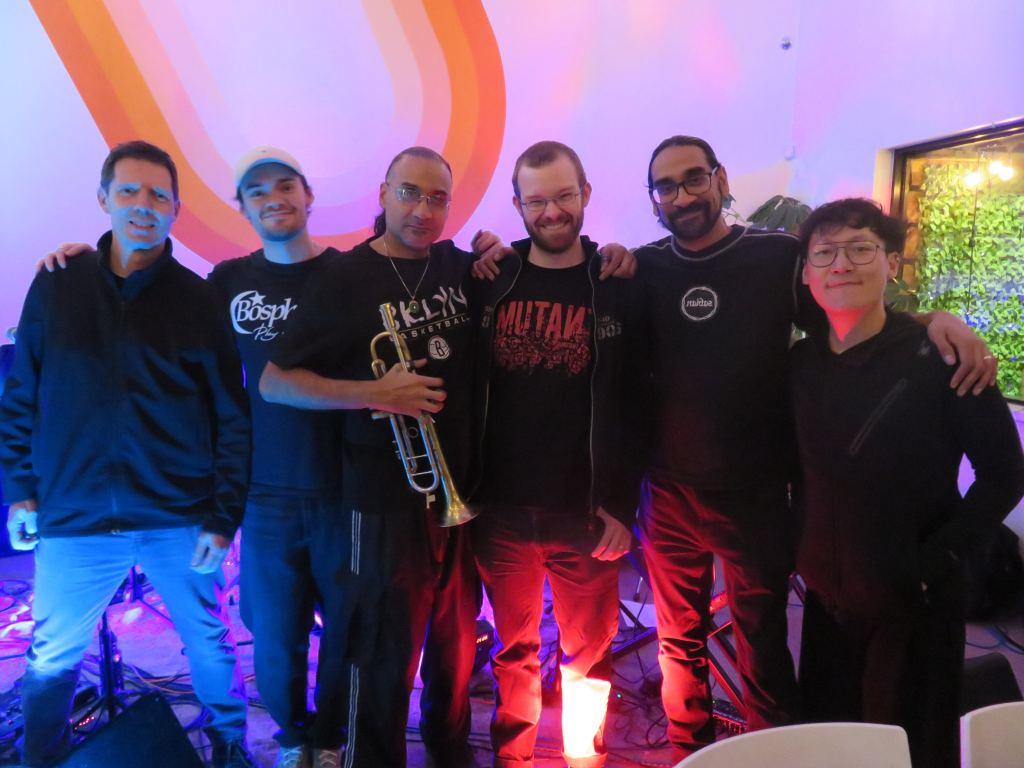
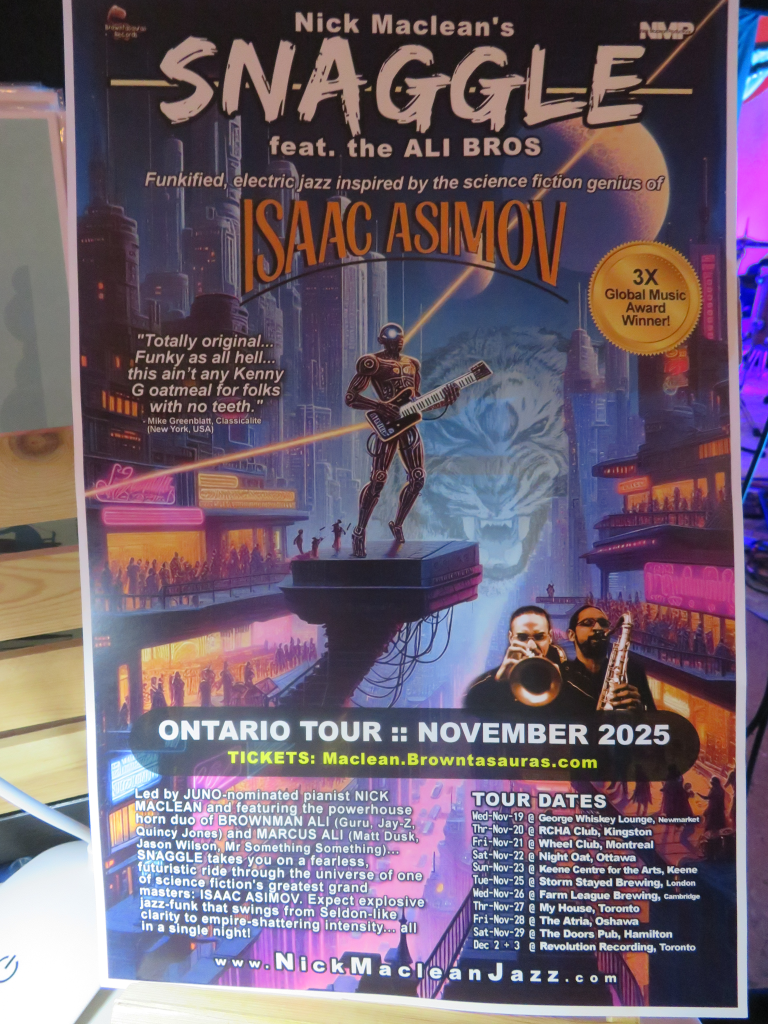
Snaggle, a six-piece jazz fusion band from Toronto, took up residence on November 25; their second engagement at Storm Stayed within the last twelve months.

They have been defined as a “cross between Miles Davis and Rage Against The Machine” with a nod to American jazz fusion band Snarky Puppy.

In the words of band leader, keyboardist Nick Maclean, “expect performances swinging between moments of quiet clarity to cataclysmic bursts of energy, worthy of a crumbling galactic empire.”

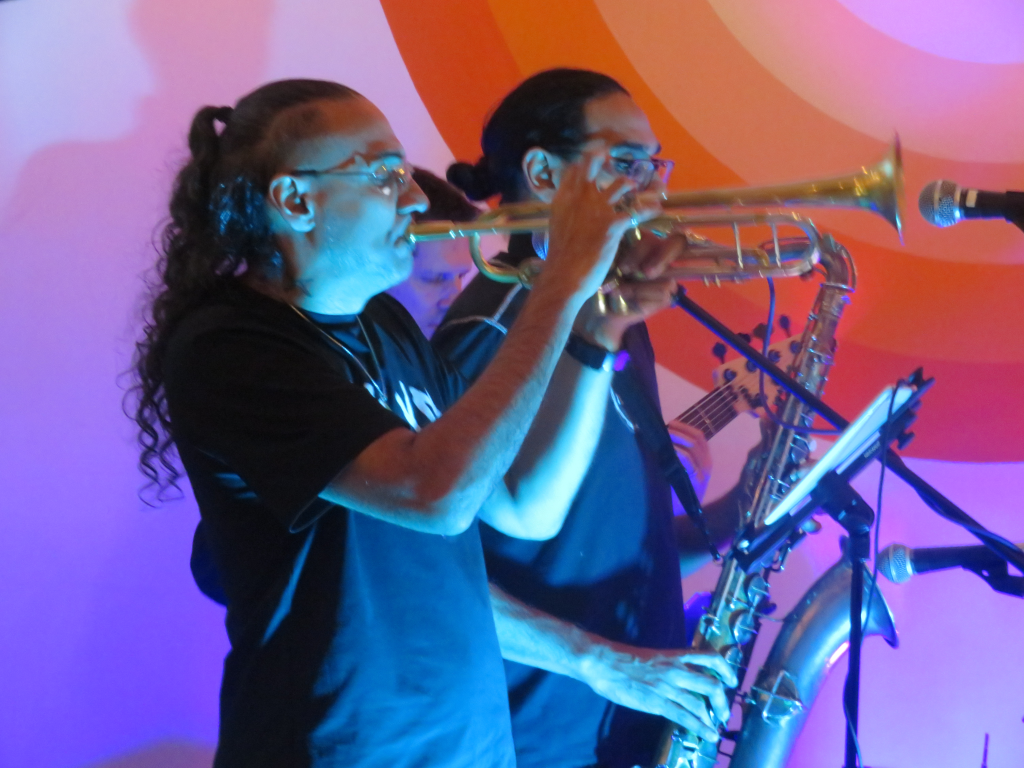
Adding to that attack of a ‘galactic empire’ is Jay Yoo on electric guitar, Matt Gruebner on bass, and Adam Mansfield on drums. Fronting the entire musical onslaught are the Ali brothers, Brownman on trumpet and Marcus on tenor saxophone.

So, what is it like for musical siblings to perform and record together? Marcus Ali tells me, “He’s five years older than me, so I was in high school when he was in university. We played tunes around the house, but by the time I got out of high school, we were starting to gig together and eventually began getting calls to play as a ‘horn section.’ We grew up listening to the same music, so we have an instant connection.”

Marcus adds, “We are anomalies in our family. Our parents were math and science teachers. They moved to Canada from Trinidad as my Dad saw the future and wanted to work with computers. We grew up in a house that was full of music. Dad listened to a lot of classical and calypso and loved Baroque music. My mother loved Sarah Vaughn, Nancy Wilson, Joe Williams and Count Basie, so we had all of that music ringing in our ears.”

So, here’s to parents!

(Photo Credit: J. Bruce Parker.)

It was also the ether of the Canadian airwaves permeating the Ali household, specifically station CJRT FM, which offered the music of Moe Koffman and the Boss Brass. The brothers absorbed it all.

Band leader, Nick Maclean, began as a music student at Humber College. In his fourth year, he was required to create a recording project and the essence of ‘Snaggle’ was born in 2012. Over time, the band has evolved and expanded. Nick refers to the current lineup as his “dream team” wound up tight with a “ton of synergy.”  And it shows!

Nick tells me, “Inspiration was from my grandfather. He wasn’t a musician, but he introduced me to jazz. He introduced me to Louis Armstrong, Fats Waller, Glenn Miller, Duke Ellington and Count Basie. My high school years were filled by listening to all that. When I got to Humber, I discovered more modern jazz bands which directly affected the sound of Snaggle like Weather Report, Brecker Brothers, electric era Miles Davis, Return to Forever and the Mahavishnu Orchestra. One of my big touch stones is Herbie Hancock.”

(Photo Credit: J. Bruce Parker.)

Now there is a musical pedigree!

Describing them as an ‘up-tempo jazz fusion band’ does not do them justice. Tight? Like a Ludwig drumhead! They do not proceed with caution, but rather digging a groove and working it like a coal mine.

Composer, arranger, producer of Browntasauras Records and trumpet player, Brownman Ali embraces the work of the electric Miles Davis era. He is a protégé of the mighty Randy Brecker, who referred to him as “One of the next great voices in the new generation of  jazz improvisers.”  Adding to the natural sonics of the saxophone, Brownman often incorporates the Boss ME-50, a pedal unit designed for electric guitars. With the added effects of modulation, reverb, echo and delay, his sound becomes stratospheric.

Guitarist Jay Loo does not get lost in this brass onslaught. He cuts through cleanly, given ample opportunity to stretch out his skill and musical legs on his Fender.

In the rhythm section, Matt Gruebner on five-string bass initiated several songs, bringing his melodic sound to the forefront.

Rounding out the rhythm section, drummer Adam Mansfield holds it all together. No drum solos, just great timekeeping, locking it all in.

On this tour, the music is inspired by the writings of American science fiction author, Issac Asimov. So, without hearing a note, I am a bit lost. Outside of ‘Star Trek’ and its many incarnations, I am not a huge science fiction fan. The only Asimov book that I own is his guide to the works of Shakespeare. Yes, he actually did write that.

Nick Maclean tells me he was introduced to the writings of Issac Asimov by Brownman. Being a science fiction fan, he connected immediately and eventually read all fifteen novels of Asimov’s ‘Foundation Universe.’ The huge anthology tells the future of humanity and the rise and fall of the human galactic empire.

Nick explains, “Things Asimov was writing about in the 1950s, we are starting to deal with now, especially the rise of AI. I find it all an incredible and fruitful source of inspiration for composition. So, all of the compositions that we are playing on this tour and that we will be recording are inspired by places, people, events, and ideas from those 15 novels”.

The song, ‘Twilight of Civilization,’ begins as a plaintive call from Brownman’s trumpet. It quickly grows into an aggressive pedestrian strut, backing down somewhat when brother Marcus brings in the voice of his tenor. It rumbles along, very tough, very urban, but surprisingly, very softly, reminiscent   of the theme of loneliness and marginalization of American composer Aaron Copland’s ‘Quiet City.’

‘Lonely Man Robot’ seems to summon the tenderness of Chet Baker’s trumpet with Nick carefully meandering on his Rhodes keyboard in quiet contemplation.

Science fiction, like jazz, can be considered a niche genre. Both have fans which are vast and loyal but tend to scamper into the sanctity of darkness when illuminated. So maybe it makes sense to blend the two. I mulled over this notion while studying and forgetting the sequence order of my beer flight.

Their two sets were made up of entirely original material: no covers.

Snaggle, at this stage in their musical evolution and on this tour, retains the essence of jazz fusion from the 1970s and, with the help of Issac Asimov, propels it into the next century. Their sound is big, bold, engaging, and tough as nails.

For more information about Snaggle, visit https://nicholasmaclean.com/snaggle

Follow Snaggle on Facebook https://www.facebook.com/snagglemusic/

For more information about Storm Stayed Brewery, visit https://stormstayed.com/

Reviewed by J. Bruce Parker

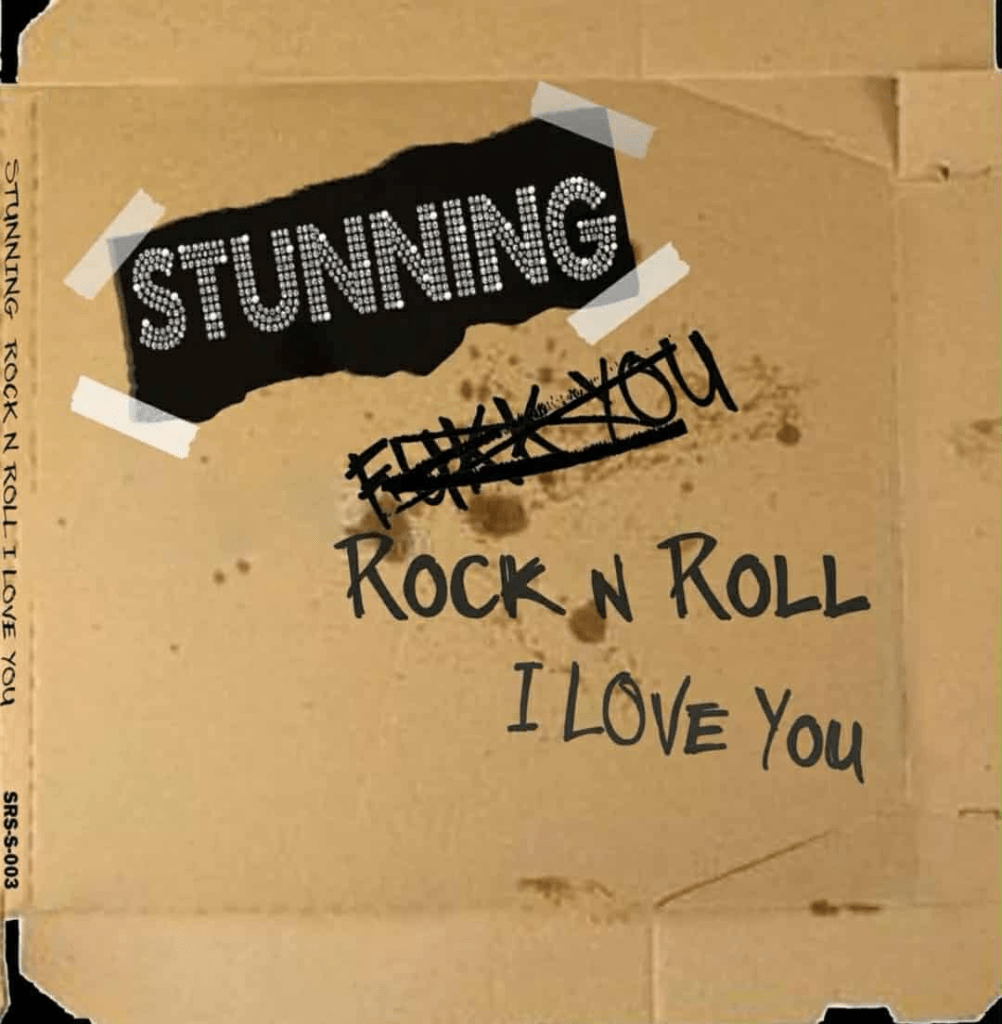
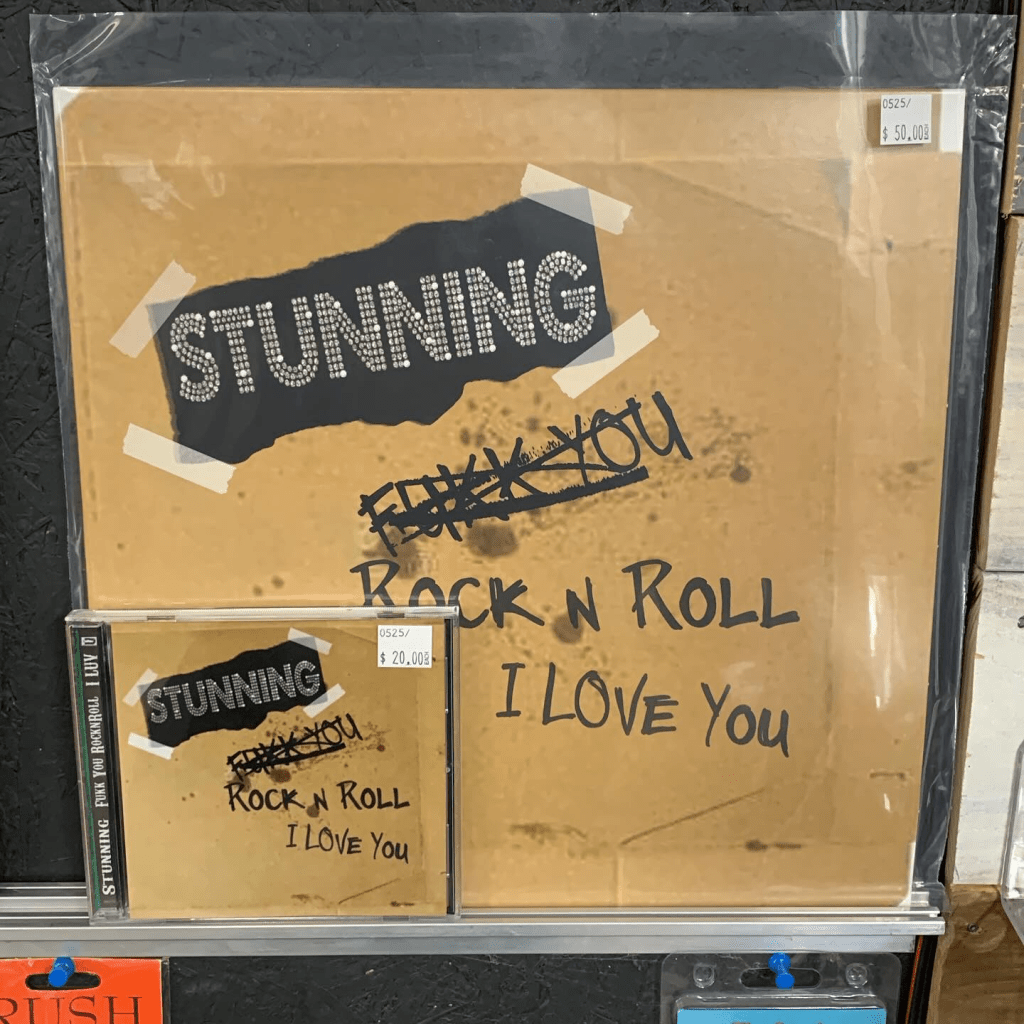
Stunning – Fukk you Rock n Roll, I love you.

Reviewed by Ian Gifford.

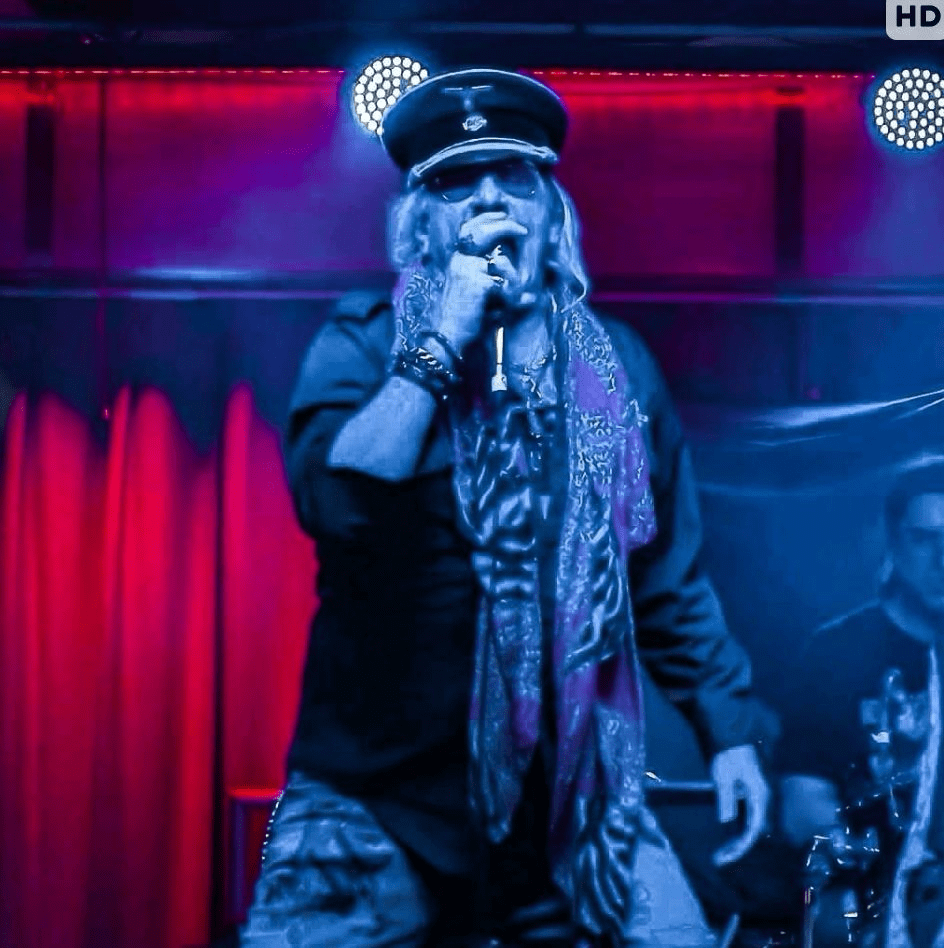
Every single city around Canada has people/bands that you can consider “Canadian Rock Royalty”. Sarnia has MaxWebster/Kim Mitchell, Hamilton has Tom Wilson/Junkhouse and Teenage Head, Toronto has RUSH/Rheostatics/Triumph, Vancouver has Bryan Adams/54-40/Bif Naked, and London has Demics, Helix and 63 Monroe! As mentioned in previous reviews, I am a local sound engineer, so I have gotten to work with just about every local musician at some point, and the one artist that has always left me awestruck was Scott Bentley, aka “Steven R Stunning” of ’63 Monroe.

Mr. Bentley was the former manager and/or owner of three great London Venues, Key West, Big Bobs and the Electric Banana (the latter being where I got to see Seattle band “Hole” and meet Courtney Love et al) and he was also the creator of the “What’s the Poop Awards” which at best was a tongue in cheek look at the “best” London had to offer in entertainment. Every time I worked with ’63 Monroe, I was impressed by Steve Stunning’s towering presence, sometimes partially dressed in drag; they were the reigning kings (queens?) of Glam Punk, born of the 70s with one foot always firmly planted there.

(Pictured: Scott Bentley, aka “Steven R Stunning” of ’63 Monroe.)

So now in 2025, I was asked to review the LP by Scott Bentley’s latest project, “Stunning”. At first glance, it’s a supergroup of London area musicians including the aforementioned S.R.S., plus rock solid drummer Brad Lavard (Twin Fin, ’63 Monroe), the low-slingin bassist extraordinaire Oscar Macedo (Rizdales, Rumblebees, Burnt Reynolds) and on guitar duties there’s Tim Thompson (Ugly Stepsisters, ’63 Monroe, Aces Wild) and Paul Sguazzin (Freekshow, Before the Damned), with all joining in on vocals throughout.

On deeper exploration of their debut album “Fukk you Rock n Roll, I love you”, this album is a total love letter to the late 70s groups that revolutionized music at the time. All over this record are little nods to power pop, punk rock, glam rock, and then some straight garage rock, paying tribute indirectly to bands like Iggy and The Stooges (who actually gets a mention in one song), Sex Pistols, Ramones, Cheap Trick, MC5, The Cars and New York Dolls with an added tribute to the King of Rock and Roll himself, Elvis A Presley (“Elvis” on side 3)!

This album is super fun. It’s something I could hear the cast from “That 70’s Show” spinning in the basement after getting colossally stoned and ordering too much pizza! A bunch of kids sitting on the floor, records scattered about and the scrapes and scratches on one cover from where the last hash joint was twisted up, with everybody looking and feeling cool. But this is not the 70s, and the musicians on this album are far from being kids, most of them having raised kids now, though it doesn’t slow down their ability or willingness to ROCK THE F*** OUT!

The musicianship is phenomenal, and Steven R Stunning himself, the band’s namesake, has not lost a bit in his voice over the years. As I mentioned earlier, he towers as a “6’3” mean ole rocknroll (sic) machine” and carries a larger than life presence on the stage. I’ve seen all of these guys somewhere at some time in the past, and I know them to be monster players in whatever units they were in. As Stunning, they bring together all of the best parts of their time in the other bands and add it to what may be akin to a big old rock and roll melting pot.

I like all of these songs; they are mostly fun romps to party to, though some with serious themes of revolution and making change in the world. A standout for me is Loaded and Lonely, which features the voice of Tara (aka Mrs Stunning) dropping the line “Whatever!” which oozes with sarcastic sass! It’s essentially a pop-punk version of Billie Eilish’s now-iconic “DUH!”. Because I know Tara and knew her voice, I accidentally spit out my drink laughing when I first heard it. It’s a fun song overall.

Two cover songs also made their way onto this album in the form of the Ginger Wildheart & Courtney Love collab called “Honour” and UK’s “The Subways” banger “Rock n Roll Queen”.

The other big highlight for me is the excellent album closer and title track “Fukk You Rock n Roll, I love you”. The song is pretty much about kids with a dream to make rock and roll an integral part of their lives, doing whatever is necessary to be around it. It’s a tribute to all of the shows thrown together with several bands to share the wealth of an audience, the little venues that dared to welcome punk rock onto their stages for the first time, the vans that took them from city to city breaking down constantly, the fans that showed up and made it all worthwhile and even a little shot at the classic grumpy sound guy character. That’s all neatly packed into this one little song.

Listen to “Fukk You Rock n Roll, I love you” here: https://youtu.be/u2TxpKzkXN8?si=G1H8rNZSPIyk0q4U

This album is a solid offering at 18 tracks over 2 LPs, one of which is a picture disc of a Pepperoni pizza! Just over an hour of total play time, which is best listened to very loud!

This Rock and Roll adventure gets 5 out of 5 on the pizza slice scale. To quote Steven R. from “Night Eater”: “Live fast, Rock Hard and don’t let those bastards grind you down!”

Follow Steven R Stunning on Facebook https://www.facebook.com/steven.r.stunning

Follow Steven R Stunning on Instagram https://www.instagram.com/stunningsrb/

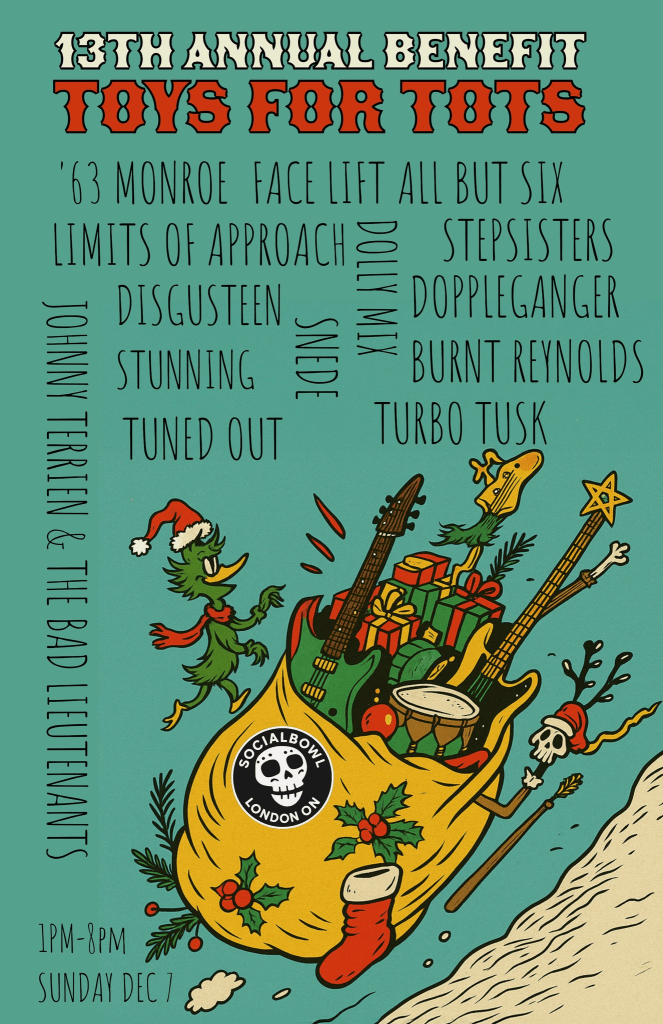
NOTE: On Sunday, December 7th, the Palasad Socialbowl will come alive with the 13th Annual 63 Monroe Toys for Tots extravaganza. This benefit concert will feature 13 of London’s premier Punk and Rock n Roll acts.

Reviewed by Ian Gifford

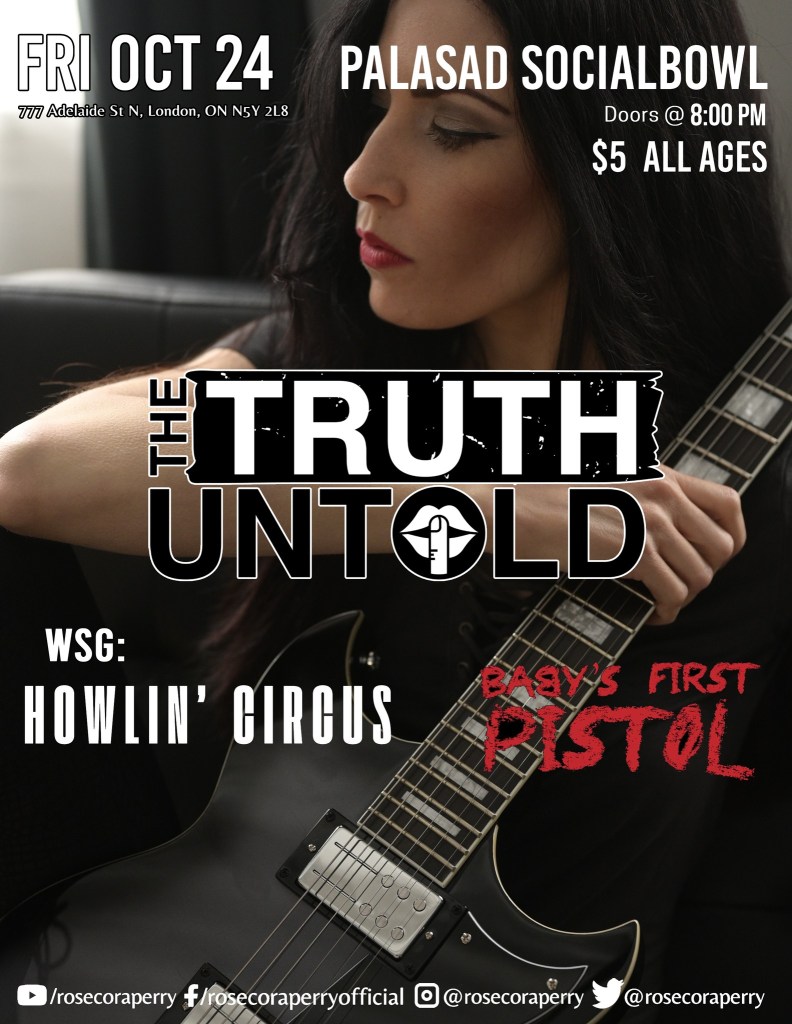
London Rocker Rose Cora Perry returns home October 24th at the Palasad Socialbowl

by Richard Young

London rocker Rose Cora Perry returns home for a gig at the Palasad Socialbowl on October 24. The Beat Magazine 2025 spoke with Rose in between gigs during her international tour about her developmental years in London and her life as a musician on the road.

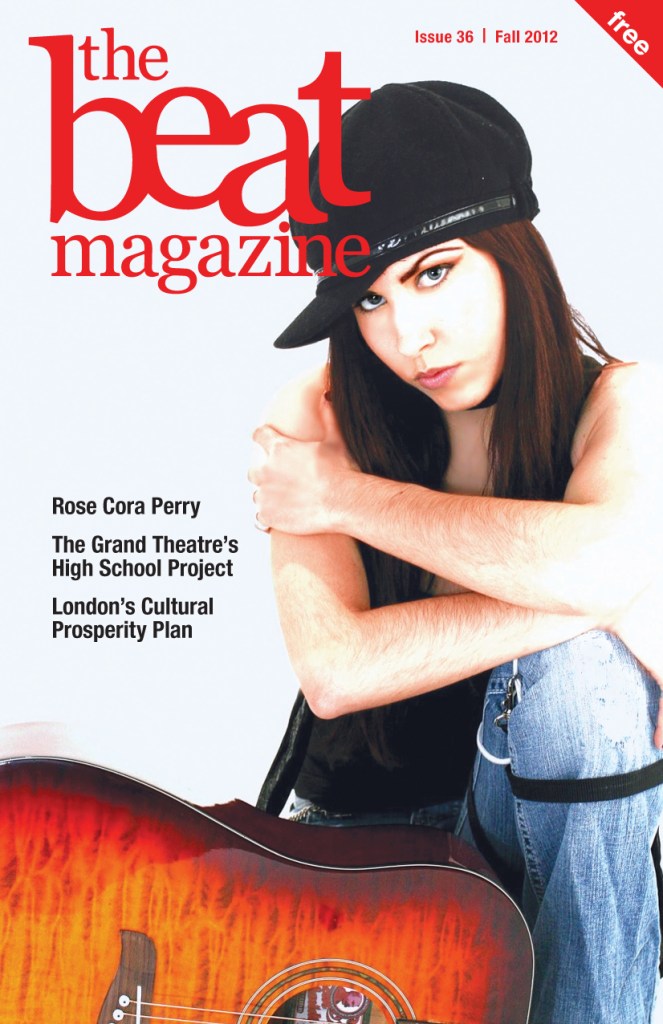
The Beat Magazine featured a cover story, Driven to Succeed, about Rose Cora Perry in its Fall 2012 issue.

At that time, author Bob Klanac described Rose as a “snarky punk-popper” who also modeled, wrote, acted,  and hosted her own Rogers TV show entitled London Driven, a program that profiled the city’s young entrepreneurs. She was also working on an album.

A lot of water has run under the bridge since that story was published. These days, Rose fronts and tours internationally with her band, The Truth Untold.

The Beat Magazine 2025 caught up with Rose before her homecoming gig at London’s Palasad Socialbowl on Friday, October 24.

It would appear she’s still Driven to Succeed!

Q. It’s been a while since we last talked, years even. What have you been up to in the intervening years since then?

Only over a decade, but who’s counting?! Allow me to summarize. I hosted a couple of TV shows, acted in some short films, released a second solo album and toured as a singer/songwriter, wrote some columns that got published in multiple media outlets and achieved acclaim, emceed some amazing mental health awareness-raising events…and most recently I’m back where I belong: on stage fronting a rock’n’roll band called The Truth Untold.

Q. You certainly have been busy! Let our readers know a little bit about Rose Cora Perry, the musician and person. Where were you born? How old are you? How long have you lived in London?

I’m a born and raised Londoner – specifically a proud Byronite. And you should know it’s impolite to ever ask a woman her age.

Q. Was yours a musical home? Did you have any professional training, or are you self-taught? Could you tell me about your early musical endeavours as a child and teenager?

I love ‘em, but my parents have zero musical ability. They are both phenoms in their own right, however, as incredibly successful athletes and entrepreneurs.

My father is an insurance broker/financial advisor, and former World Powerlifting Champion, and my mother is a fitness trainer/guru and former Bodybuilder. I probably should’ve grown up to become an Olympian with their genetics, but alas became a depressed teenager and turned to rock to deal with my angst.

My late brother, however, was a tremendously talented natural musician who could pick up just about anything by ear – his presence growing up definitely influenced my musicality. This was supplemented by the fact that my parents, early on, recognized I liked being the centre of attention and on stage, and promptly enrolled me in classical vocal training, which I studied diligently for over a decade. When I was 15, I founded my first rock band.

Although I studied voice and theory through the Royal Conservatory, achieving my grade seven and grade two, respectively, I am an entirely self-taught guitarist, so much so that I actually invented my own tablature for the purposes of writing songs.

Q. Do you remember the moment when you decided that music was going to be a big part of your life? How long have you been playing music professionally? Do you consider yourself a full-time or part-time musician?

I don’t think I “decided” to “make” music a part of my life so much as I was “given” a gift that I don’t take for granted. There have been many times throughout my music career when I’ve felt defeated and beaten down, but then the muse once again strikes.

Any musician will tell you, you cannot simply “turn off” being a musician; it is a part of who you are intrinsically, a part of your identity.

Even if I wanted to give up touring, for example, songs just come to me – I have no control over that ability. Most of the time, I consider it a blessing…unless it’s 2:00 am and I’m really fucking tired. LOL. In those cases, it’s a bit of a curse.

However, I believe each of us is given very special gifts to share with the world, and the universe blessed me with the gift of music.

I consider myself a professional musician and gig in accordance with having a work/life balance. I have been fronting bands in a professional capacity since I was a teenager.

Q. Other than vocals, do you play any other instruments?

I do! I am well-known for my rhythm guitar prowess as a down-stroking queen. I also rock the lower clef on bass and have written/recorded bass on several albums.

Q. What have your musical influences been over the years?
Songwriting-wise, I adore Alanis and Chris Cornell. My biggest influence as far as style is irrefutably Veruca Salt.

However, I have diverse tastes, and on any given day, you might catch me listening to big band/swing, metal, or pop – it just depends on my mood.

Q. Tell me about the various groups and musicians you have played with since you started playing professionally. Who are you currently playing with?

High school years: HER. Cofounded with the late Trish Doan on lead guitar. She later went on to rock bass as a beloved member of Kittie. I was the frontwoman, songwriter, and rhythm guitarist. To write and release an album with this band, I practiced six hours a day for six months on guitar, until my fingers bled, and I could competently sing and play at the same time. True story!

College years: Anti-Hero. We got signed to a major label, played some notable festivals in Canada and the US. Got to perform at Warped Tour the year that Joan Jett headlined and hang with her backstage. Swoon!

Again, I was the frontwoman, songwriter, and rhythm guitarist. Fun fact. While in the studio recording our hit single, “Unpretty”, I learned on the spot how to palm-mute; a technique which has become integral to my playing style.

Post-college: Released two solo albums in the singer/songwriter vein. Toured briefly, armed only with an acoustic guitar. HATED it. I decided to form a band again because I missed distortion and being obnoxious.

Present Day: The proud frontwoman, singer, songwriter, and rhythm guitarist for award-winning rock quartet, The Truth Untold.

(Pictured: The Truth Untold L-R, John-William Kostecki, Steven Skrtich, Rose Cora Perry, and Jessie Taynton)

Q. Tell me a little bit about any recordings you have made in your career.

HER: Straight from the Loft (album)

Anti-Hero: Unpretty (album)

Rose Cora Perry: Feisty (demo), Off Of the Pages (album), and Onto the Floor (album)

The Truth Untold: Other Side of the Story (EP) and One Thing Left to Say (EP)

The Truth Untold is currently in the studio recording a brand new EP entitled Phoenix Rising. We’re super stoked about the new music we’ve been working on and excited to have collaborated as a band on this project.

Listen to The Truth Untold’s new single, Excuses:

Q. What projects are you currently pursuing? Do you have any gigs coming up in the next month or two you would like our readers to know about?

We are winding down our summer tour, which started in May of this year, and among its highlights were Hills & Hollers Music Festival (Pennsylvania), Fun Fourth (North Carolina), Skatepark Fest (Ohio), headlining Strummerfest (Waterloo), and opening for Big Sugar at this year’s Taste of Edmonton (Alberta).

We’re super excited to be having a homecoming of sorts on Friday, October 24, at the Palasad Socialbowl. This will be the first London gig we’ve had in two years! The last time we played locally, we opened for The Killjoys at the same killer venue.

This time around, we’re sharing the bill with Howlin’ Circle and Baby’s First Pistol. All ages are welcome. It’s a $5 cover and doors open at 8:00 pm.

Q. In addition to your musical endeavours, are you involved with any other arts organizations or activities in the London community?

I’m part of several fun meetup groups that take part in everything from hiking to board games. You’ll also see me, of course, attending concerts supporting my fellow locals.

Q. What do you do for fun/leisure when you’re not performing and/or recording?

Apparently, attempt to be witty while answering interview questions. Just kidding! I love action movies, rollerblading, and drag racing my Camaro – not necessarily in that order.

Q. Is there anything else you think our readers should know about RCP the musician and RCP the individual?

If there is, it’s probably well-documented on my website www.rosecoraperry.com, but if anyone has a burning question for me, they are absolutely always welcome to reach out.

I love connecting with fellow musicians and fans, and I appreciate all of you wonderful people for reading this fun interview.

Q. Just one last question. Do you ever smile in your promo pics?

Why would I do something silly like that when I have such a glorious, sultry pout?

For more information about Rose Cora Perry, visit https://www.rosecoraperry.com/

Follow Rose on Facebook https://www.facebook.com/rosecoraperry

Follow Rose on Instagram https://www.instagram.com/rosecoraperry/

For more information about The Truth Untold, visit https://www.thetruthuntold.ca/

Follow The Truth Untold on Facebook https://www.facebook.com/rosecoraperryofficial

Photo Credits: Mystery Man Photography.