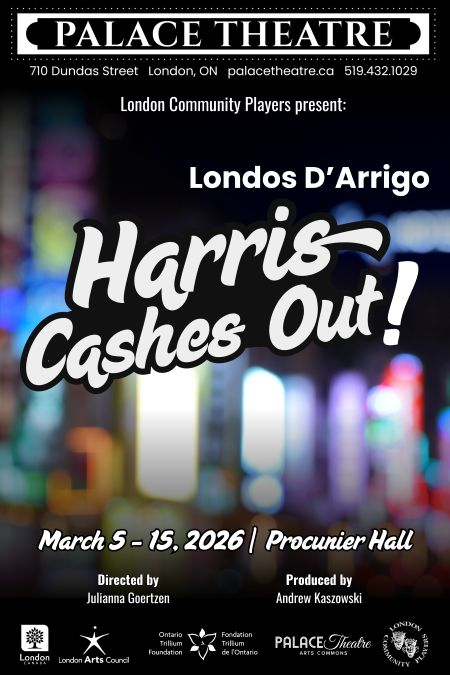
London Community Players’ production of Harris Cashes Out! plays on the Procunier Hall stage at the Palace Theatre from March 5 – 15. Director Julianna Goertzen talks about the production in this Q&A interview with Richard Young.
Q. What is the basic premise of Harris Cashes Out? Could you provide a brief plot synopsis?
Harris Wellborn is an old, washed-up Broadway musical writer who didn’t make much money in theatre. After his wife passed away, he fell into despair, and his sister, Maggie, moved him against his will to Baltimore to be closer to her. She arranged for an eccentric dog walker, Kim, to check on him and his health, but Kim and her boyfriend, Jason, had other plans to take advantage of Harris and his musical writing past. It’s a comedy about relationships and the things that happen when very different people are in proximity to one another.
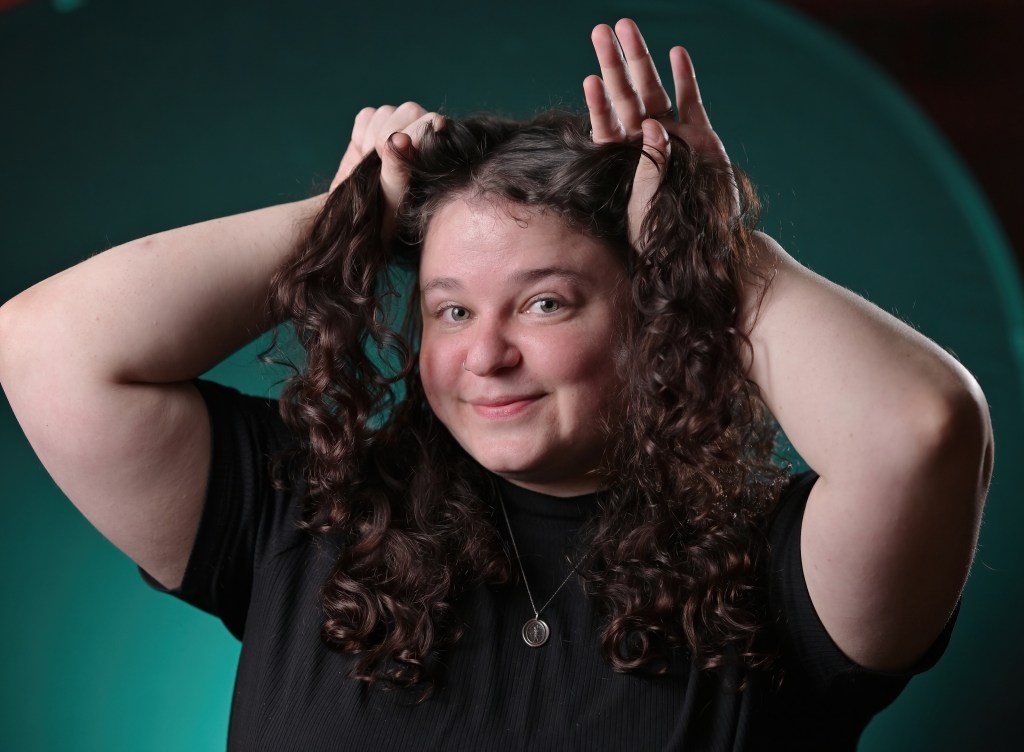
(Pictured: Harris Cashes Out! Director, Julianna Goertzen. Photo: Ross Davidson.)
Q. The description on the Palace Theatre website indicates that the play has a Broadway theme. Does it include any musical numbers?
The only musical numbers it includes are the little ‘soft-shoe humming’ songs that Harris (played by Tim Bourgard) makes up on stage every performance. You may also recognize famous musical numbers played during the intermission and changes in scenes.
(Pictured: Tim Bourgard as Harris Wellborn. Photo by Ross Davidson.)
Q. Why did you choose the Procunier Hall stage as opposed to the larger Palace Theatre stage?
With a play like Harris Cashes Out!, I believe it would be more appropriate for a smaller venue like Procunier Hall to hold. With only four actors and a simple rundown apartment set, you’re right up close to the action and can hear the quiet, sensitive scenes that you might not catch with a big stage.
Q. Can you tell me about the playwright Londos D’Arrigo? I understand he’s Canadian and from around these parts. What other noteworthy plays has he written?
Londos was born, raised, and currently resides in Toronto. We have the privilege of having him coming to see our production of Harris Cashes Out! and we are very excited. Londos says that Harris Cashes Out! is a favourite of his. Other comedic plays he has written include Spreading it Around, which the London Community Players produced in 2009 at the Palace Theatre. He has also written a play called Vicki’s Back!, which sounds very similar to Harris Cashes Out!, written with a female lead in ‘show biz’.
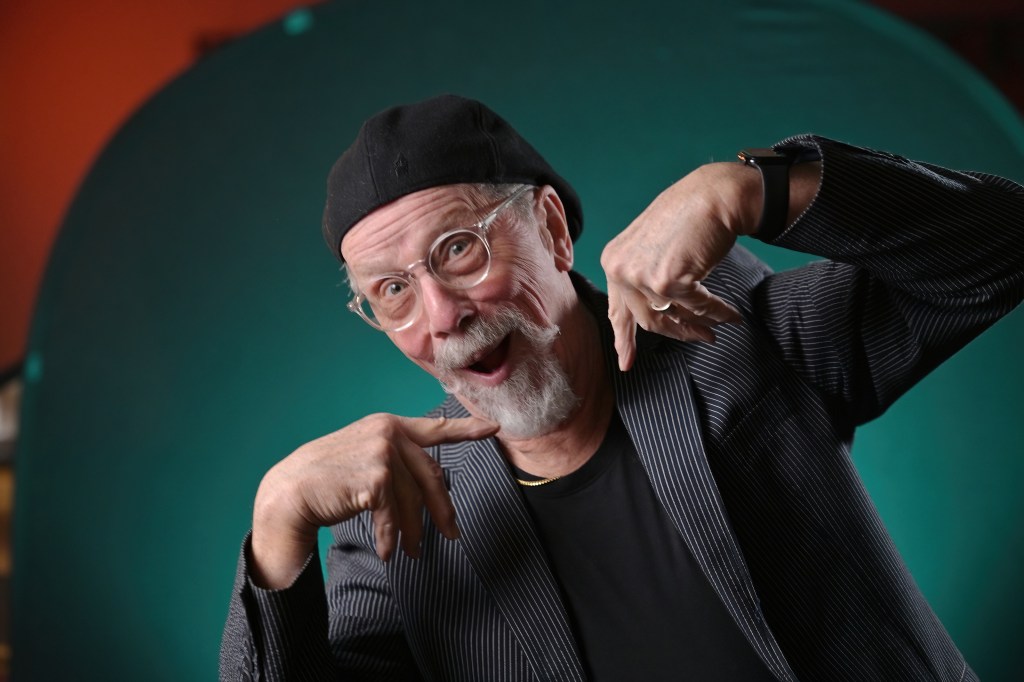
(Pictured: Playwright Londos D’Arrigo.)
Q. Can you tell me something about yourself in terms of your involvement in community theatre, things such as other plays you have directed, produced or starred in?
I have always been involved in theatre from a young age. Most of my theatrical career was with Aylmer Community Theatre (ACT). In 2007, I started out as a makeup artist and dresser for those quick changes backstage. My acting debut on ACT’s stage was a comedy called Not Now Darling by Ray Cooney and John Chapman, where I played Sue Lawson. I was required to act drunk and walk around in my underwear on stage. Since then, I have been a part of many productions, whether as a stagehand or stage manager. My specific role was not of primary importance; what mattered most was that the cast and crew enjoyed a positive experience while producing the show. I have only directed two one-act shows with ACT in the past, so this is also my first full-length show.
In regard to my London community theatre experience, this is my directorial debut. A year ago, I was on the Palace Theatre stage as Dorothy Foxton in Murdered to Death, a comedy by Peter Gordon; before that, I was Dorothy in Stepping Out by Richard Harris in 2009.
(Pictured: Vivien King-Sherwood as Maggie Bellows. Photo by Ross Davidson.)
Q. What challenges have you encountered bringing this play to the Procunier Hall stage?
I have experienced very few challenges with bringing Harris Cashes Out! to Procunier, although the set and lighting crew may disagree since a set like this hasn’t been built in Procunier Hall for as long as anyone can remember. The biggest challenge about the play is the part of Harris. Harris’ lines amount to 50% of the dialogue. Tim Bourgard, who plays Harris, has been working very hard to recall every word, blocking, prop, and costume piece. The other actors have been very helpful and encouraging to Tim as we make our way through rehearsals.
(Pictured: Sam Didi as Jason Sernach. Photo by Ross Davidson)
Q. Is there anything else you think our readers should know about LCP’s production of Harris Cashes Out!?
This family-friendly show is full of laughs for all ages. Come out and enjoy live theatre up close and personal in Procunier Hall at the Palace Theatre. You won’t regret it.
(Pictured: Kim Sutton as Jasmine Gunkel. Photo by Ross Davidson.)
CAST & CREW: HARRIS CASHES OUT!
Director
Julianna Goertzen
Stage Manager
Alex Goertzen
Producer
Andrew Kaszowski
Assistant Stage Manager
Andrea Stevens
Light Design
Andrew Kaszowski
Sound Design
Alex Goertzen
Costumes
Julianna Goertzen & MJ Walzak
Props
Colin Arthur
Intimacy Coordinator
James Noonan
Set Build Lead
David Long
Harris Wellborn
Tim Bourgard
Maggie Bellows
Vivien King-Sherwood
Kim Sutton
Jasmine Gunkel
Jason Sernach
Sam Didi
IF YOU GO:
What: London Community Players present Harris Cashes Out!
When:Thursday, March 5 – 7:30 pm Friday, March 6 – 7:30 pm Saturday, March 7 – 7:30 pm Sunday, March 8 – 2:00 pm Thursday, March 12 – 7:30 pm Friday, March 13 – 7:30 pm Saturday, March 14 – 2:00 pm Sunday, March 15 – 2:00 pm
If you have a story idea or would like to become a Volunteer Writer for The Beat Magazine, you can reach Richard at richardyoung@thebeatmagazine2025.ca
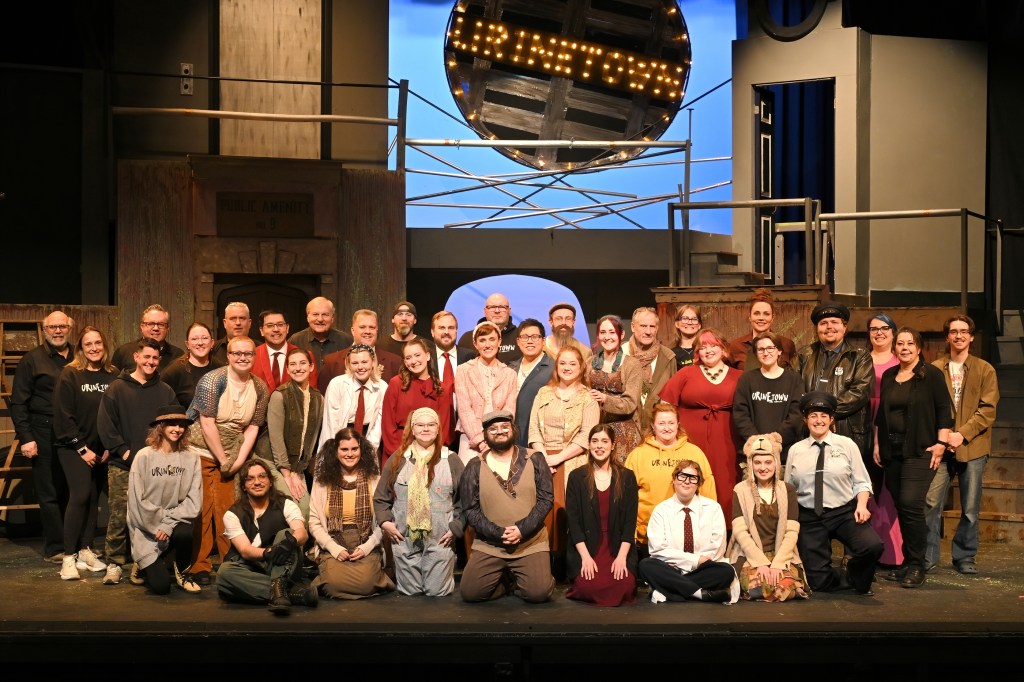
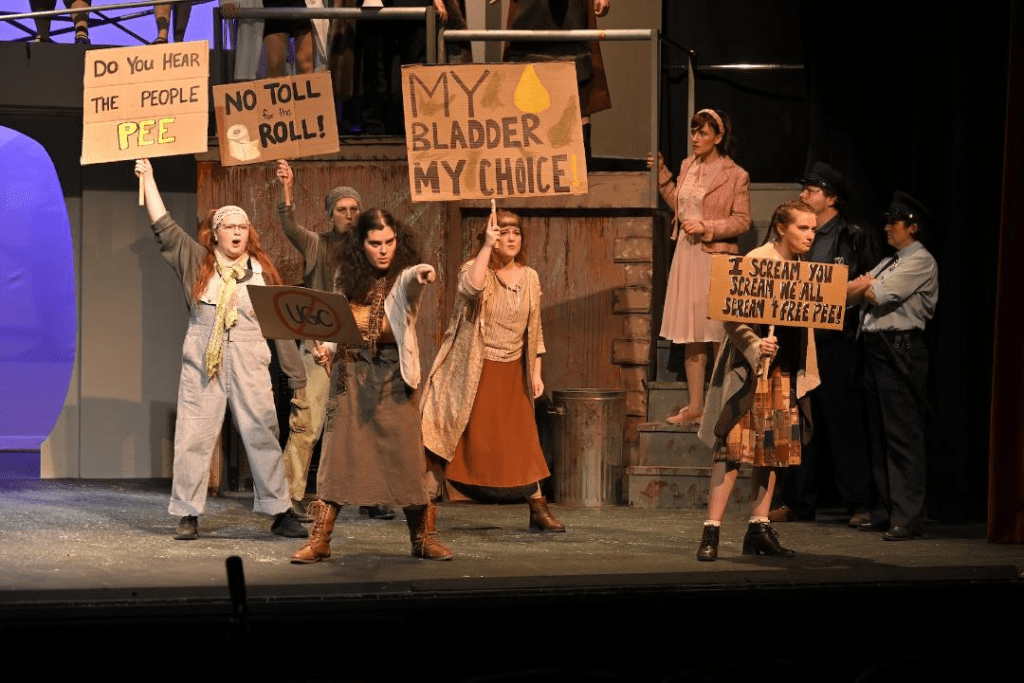
(Cast and Crew of Urinetown: The Musical. Photo Credit: Ross Davidson)
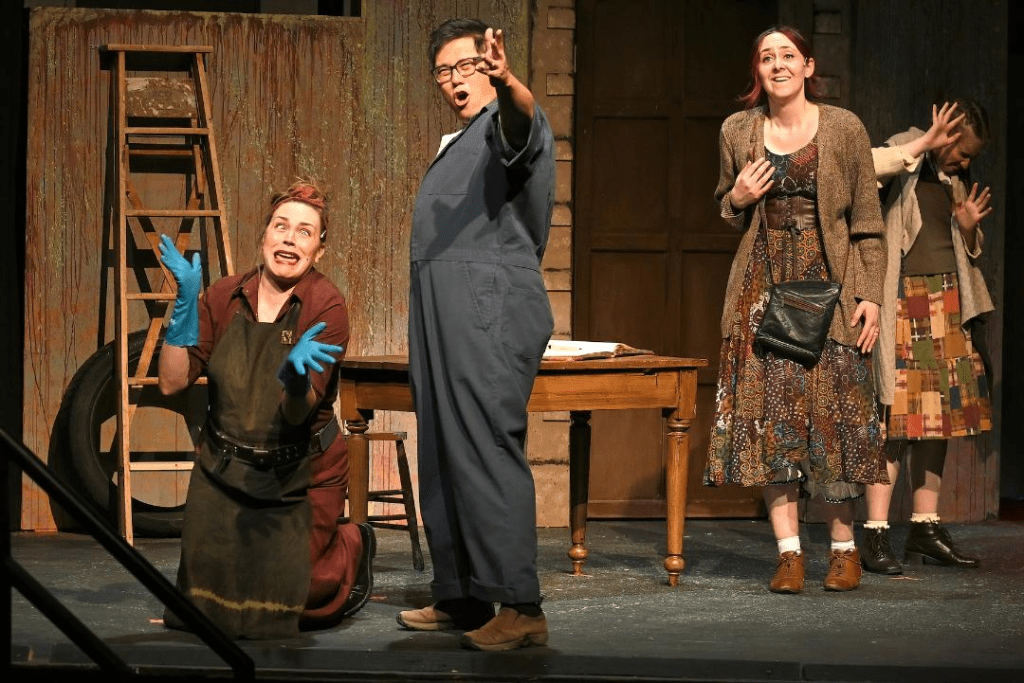
Community theatre can sometimes surprise you. Occasionally, it can even rival (or surpass!) professional productions in artistry, ambition, and execution. That was unquestionably the case with this remarkable staging of Urinetown: The Musical at the Palace Theatre.
Directed by Sydney Brockway, produced by Ceris Thomas, and featuring an orchestra under the leadership of Steven Morley, this production demonstrated a level of talent that felt genuinely world-class, and all the more impressive given its community theatre setting.
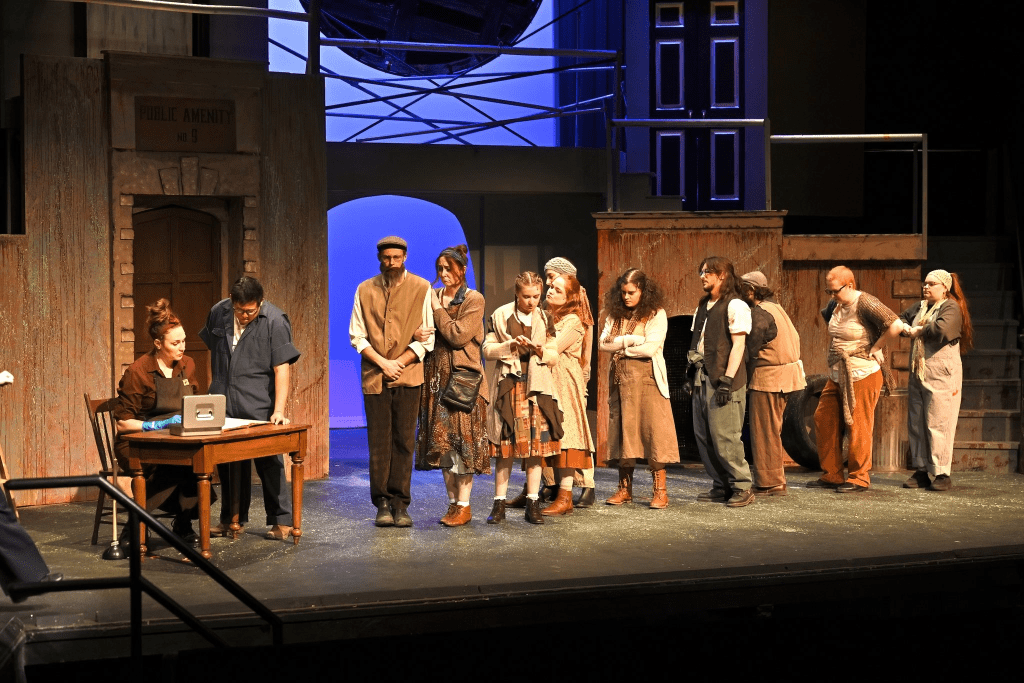
For those unfamiliar with the show, Urinetown is far more than its intentionally provocative title suggests. The musical is a sharp political satire that explores themes of corporate greed, environmental crisis, class inequality, and the consequences of unchecked capitalism. Set in a dystopian future where water scarcity has led to the privatization of public amenities — including toilets — the story examines power, resistance, and the moral ambiguities of revolution. At the same time, it quite cleverly parodies the conventions of musical theatre itself by breaking the fourth wall and inviting audiences to question not only the characters’ motives, but their own assumptions about justice and heroism.
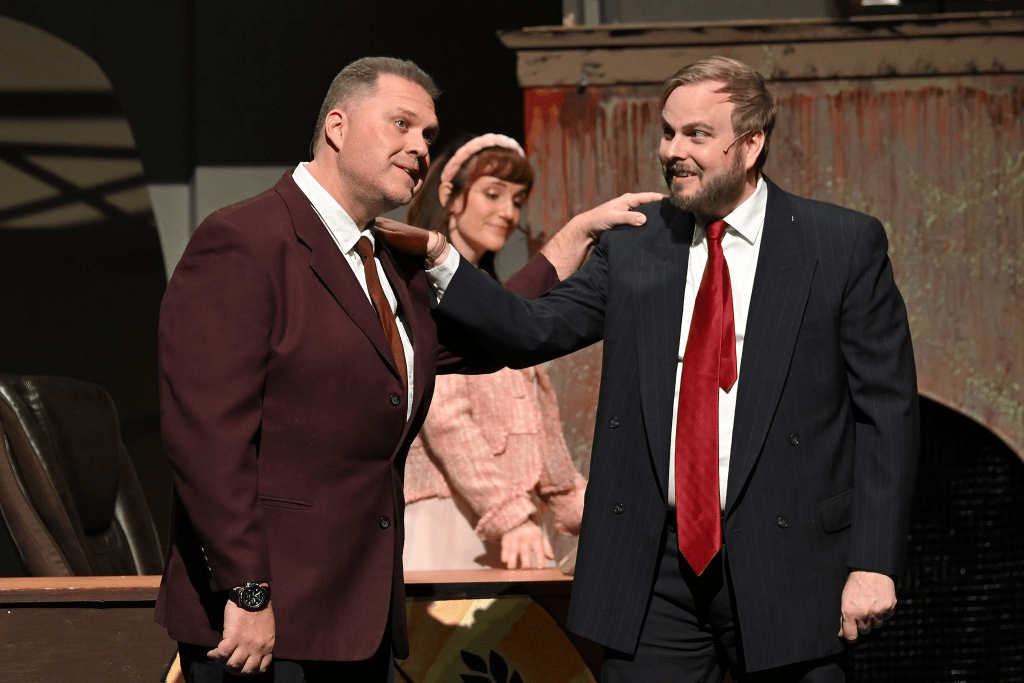
(Pictured: Jesslyn Hodgson as Hope Cladwell, Sean Brennan as Caldwell B. Cladwell, and Ensemble members. Photo Credit: Ross Davidson.)
Balancing humour with social commentary is no easy task, yet this production navigated both with intelligence and confidence. Notably, the company also extended these themes beyond the stage through direct outreach to unhoused members of the surrounding community. An effort that meaningfully deepened the production’s social resonance.
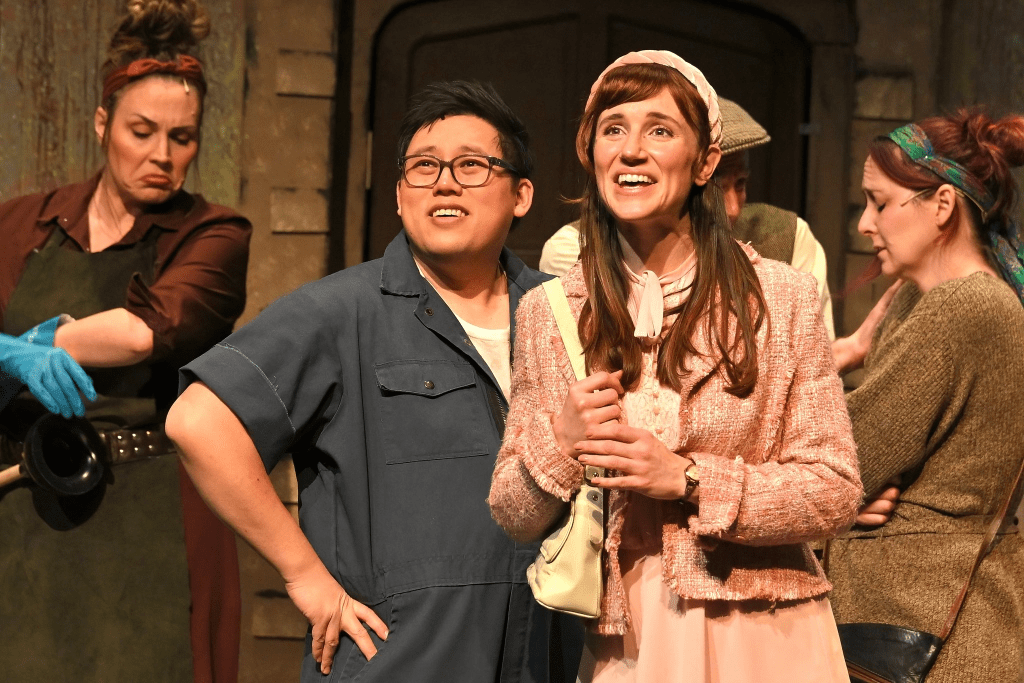
(Pictured: Laura Williams as Penelope Pennywise, Henry Truong as Bobby Strong, and Allison Gold as Ma Strong. Photo Credit: Ross Davidson.)
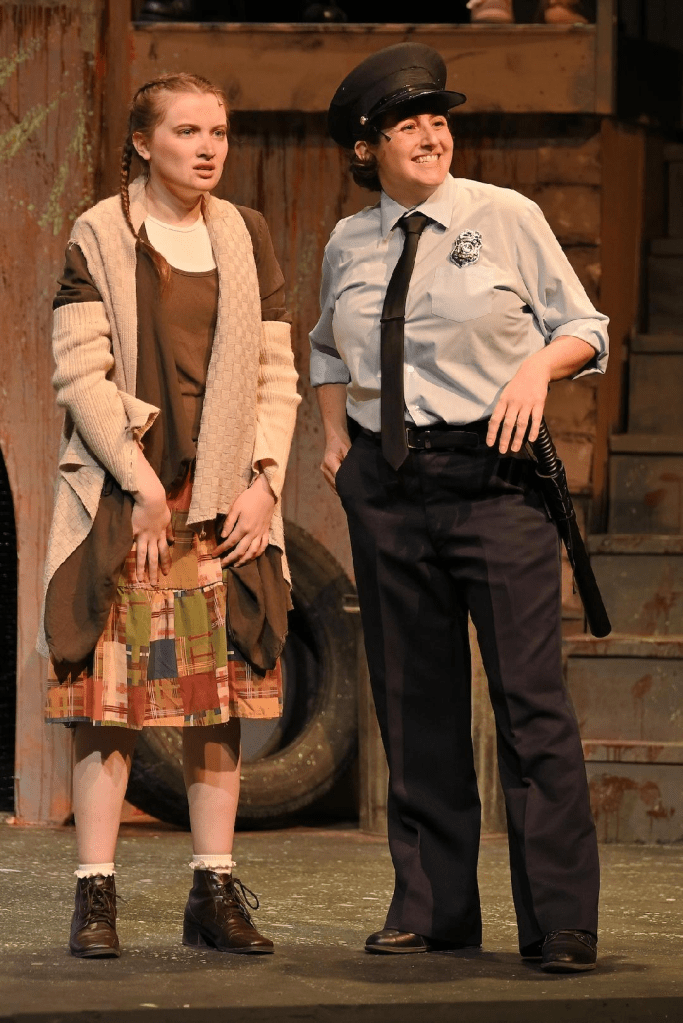
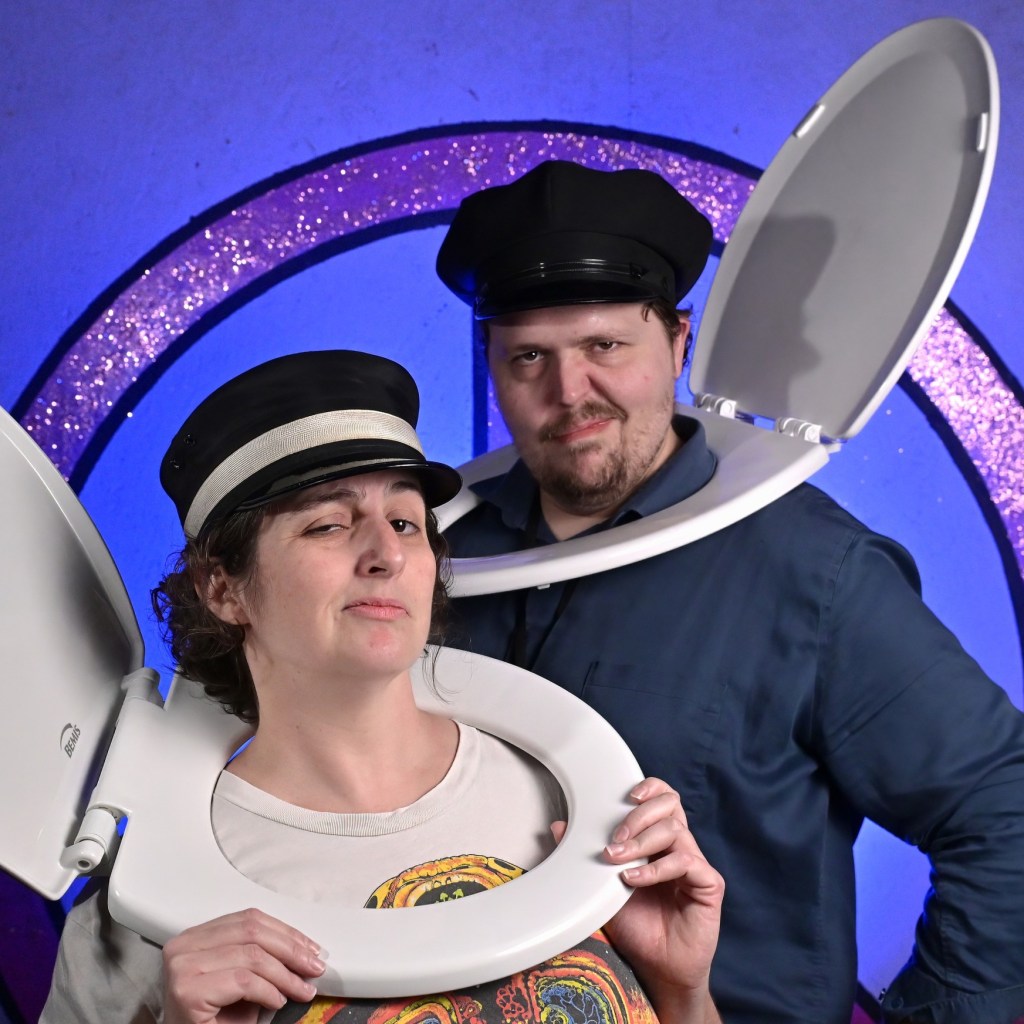
The performances were uniformly exceptional. Kate Sepi delivered a commanding and charismatic Officer Lockstock, serving as both narrator and participant with clarity, presence, and authority. Henry Truong, as Bobby Strong, brought both emotional sincerity and vocal strength to the role, grounding the story’s central conflict with authenticity. Jesslyn Hodgson as Hope Cladwell possessed a vocal quality that elevated every musical moment she touched. Sean Brennan delivered a captivating and hilarious Caldwell B. Cladwell, creating a villain whose presence was magnetic and layered. His performance (for me) stood comfortably alongside work seen on much larger and better-funded stages. Rae Ryder as Little Sally offered memorable nuance and charm, embodying the show’s self-aware humour with skill.
(Pictured: Rae Ryder as Little Sally and Kate Sepi as Officer Lockstock. Photo Credit: Ross Davidson.)
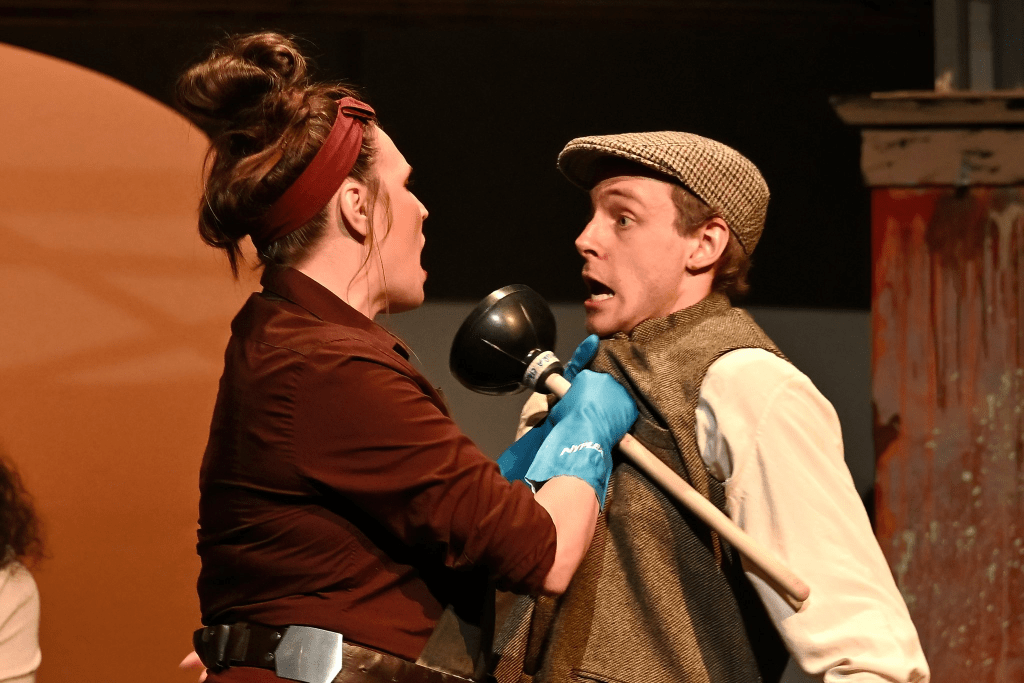
A particularly extraordinary moment behind the scenes became one of the evening’s most impressive achievements: Penelope Pennywise, normally played by Laura Williams, was unexpectedly performed on opening night by director Sydney Brockway herself due to illness. Had there not been a notice in the lobby advising of the opening night change, audiences would never have known. It was a nearly seamless, truly confident, and fully realized performance, and a testament to Brockway’s professionalism and depth of preparation. However, it is my understanding that, as commendable as Sydney’s performance was, Laura’s performance is one not to be missed, which is why I will be making a return trip to see Penelope Pennywise in her other form, once Laura is cleared to return.
(Pictured: Sydney Brockway, Urinetown Director/Choreographer.Photo Credit: Ross Davidson.)
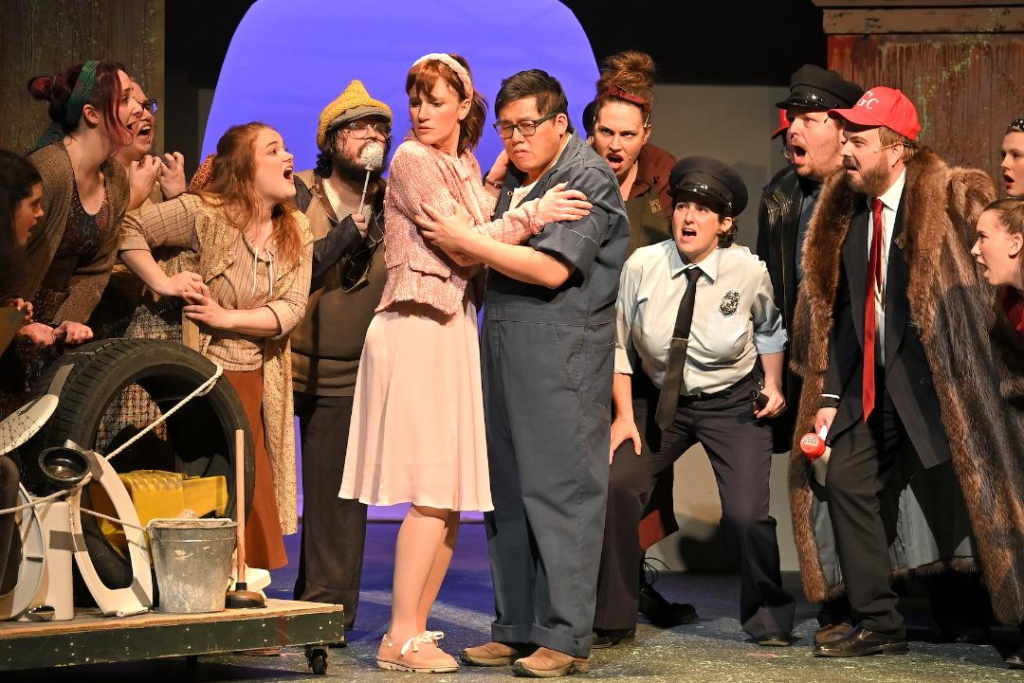
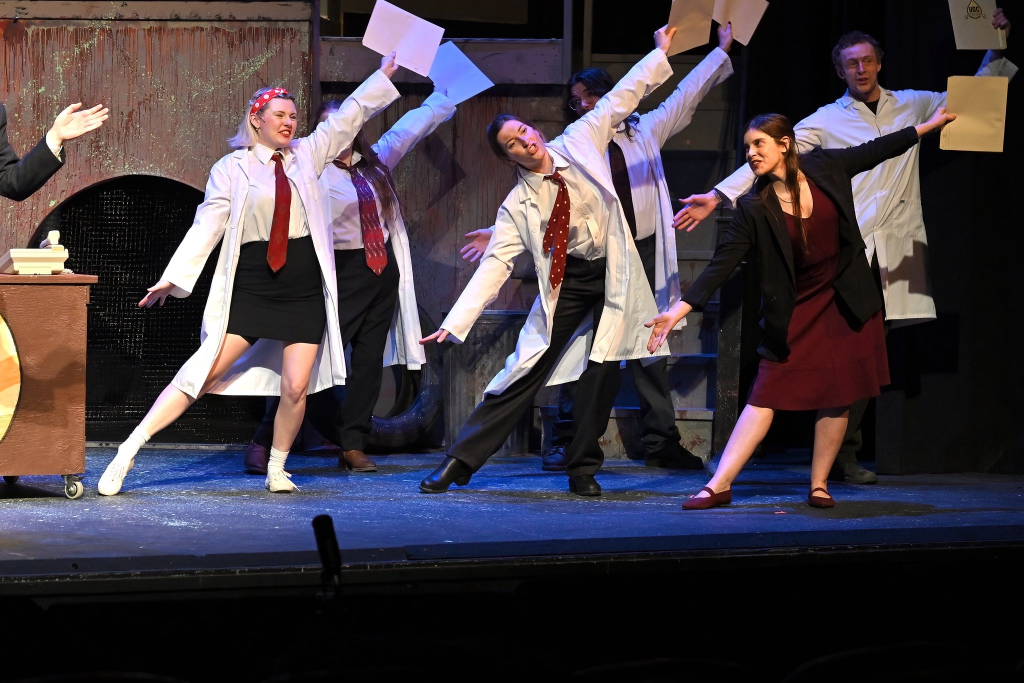
Equally impressive was the ensemble. There was not a weak link in the company, and truly, there are no small roles in this production. Each cast member is to be commended for delivering an exceptional performance, owning every line and every beat. The choreography was executed with precision, energy, and commitment, and the cast functioned as a cohesive storytelling unit throughout. At various points in the evening, nearly every ensemble member captured attention, which is a hallmark of strong direction and engaged performers.
(Pictured: Urinetown Ensemble Members. Photo Credit: Ross Davidson.)
The design elements further strengthened the production. Costumes by the team of Tannis Daoust, Chloe Scripnick, and Chatham Vy were thoughtfully conceived, particularly in their use of colour to distinguish social groups: the impoverished citizens versus the corporate faction. The costume choices enhanced the visual storytelling clearly and effectively. Combined with the set, props, lighting, and musical direction, the overall aesthetic achieved a level of polish that elevated the entire production.
(Pictured: Foreground Jesslyn Hodgson as Hope Cladwell and Henry Truong as Bobby Strong. Photo Credit: Ross Davidson.)
What elevates this production even further is the company’s commitment to connecting the show’s themes with the lived realities of the surrounding community. Members of the cast shared that during the rehearsal process, they felt a responsibility to recognize and engage with unhoused individuals living in the neighbourhood around the theatre. They responded not only with awareness but with action, providing food and basic necessities during the rehearsals and the run of the production. This effort was also acknowledged in a cast note included in the program, which read:
“Urinetown the Musical is about access, power, and what happens when basic human needs are controlled by systems rather than compassion. Producing this show in a neighbourhood where these questions are not abstract, but lived, reminds us that theatre doesn’t exist in a vacuum. We acknowledge the people in our community who are navigating housing insecurity, poverty, and barriers to care, and we affirm their dignity and humanity. We invite audiences to laugh, think, and leave asking bigger questions about how communities choose to care for one another.”
(Photo Credit: Ross Davidson.)
This initiative demonstrated a meaningful alignment between art and empathy, reinforcing the social relevance of the production beyond the stage itself. And this, for me, is the longstanding purpose of the arts. To merge art and real life, and to showcase the stories that make us human.
If there were any critique to be offered, it would be that the orchestra occasionally overpowered the vocals in certain moments. However, this was a relatively minor issue within an otherwise outstanding musical presentation.
Ultimately, this production of Urinetown exemplifies what community theatre can accomplish when passion, talent, and leadership align. It was bold, intelligent, and thoroughly entertaining. It is a production that not only delighted audience members but also invited them to reflect on timely social questions. Productions of this calibre are something any arts community should be proud to claim. This show deserves full audiences for the rest of its run. Please, plan to see this production and tell your friends.
As always, please support the arts. Keep storytelling alive.
IF YOU GO:
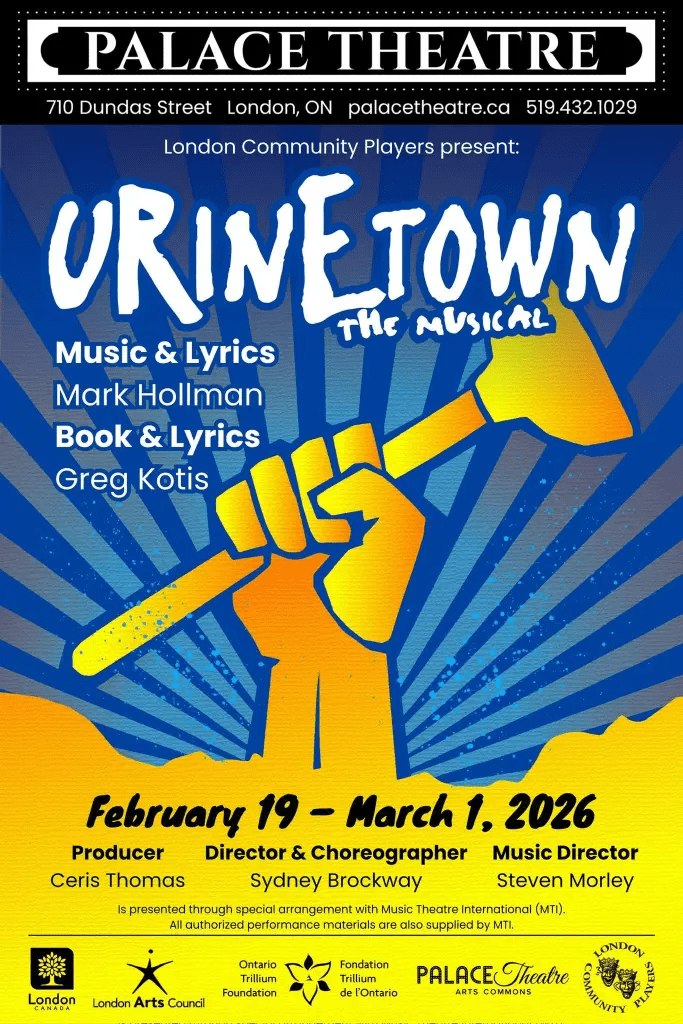
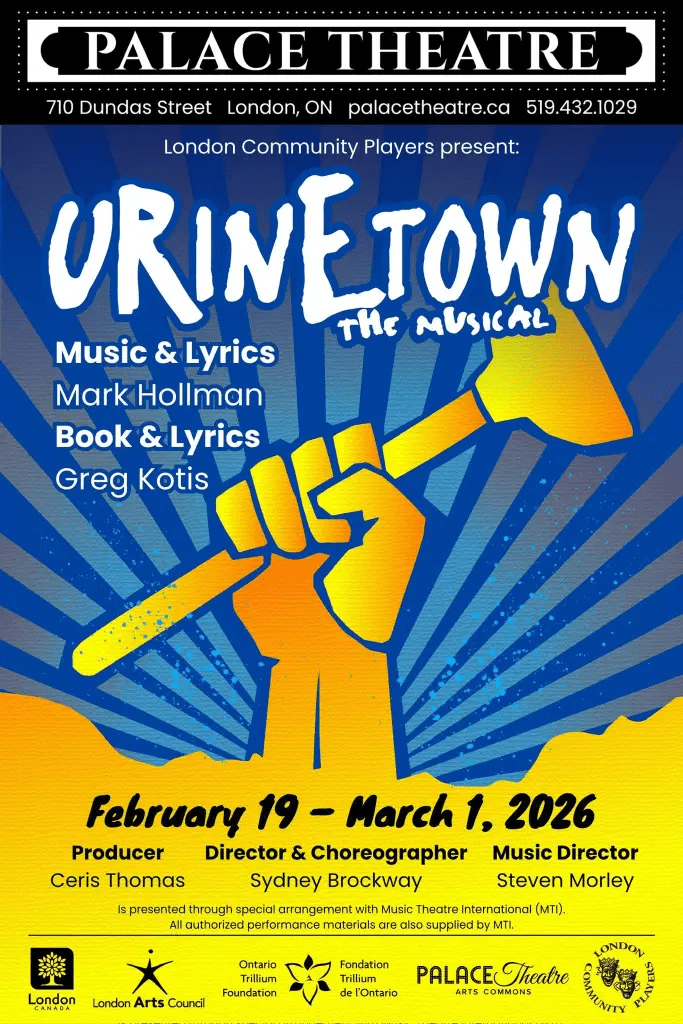
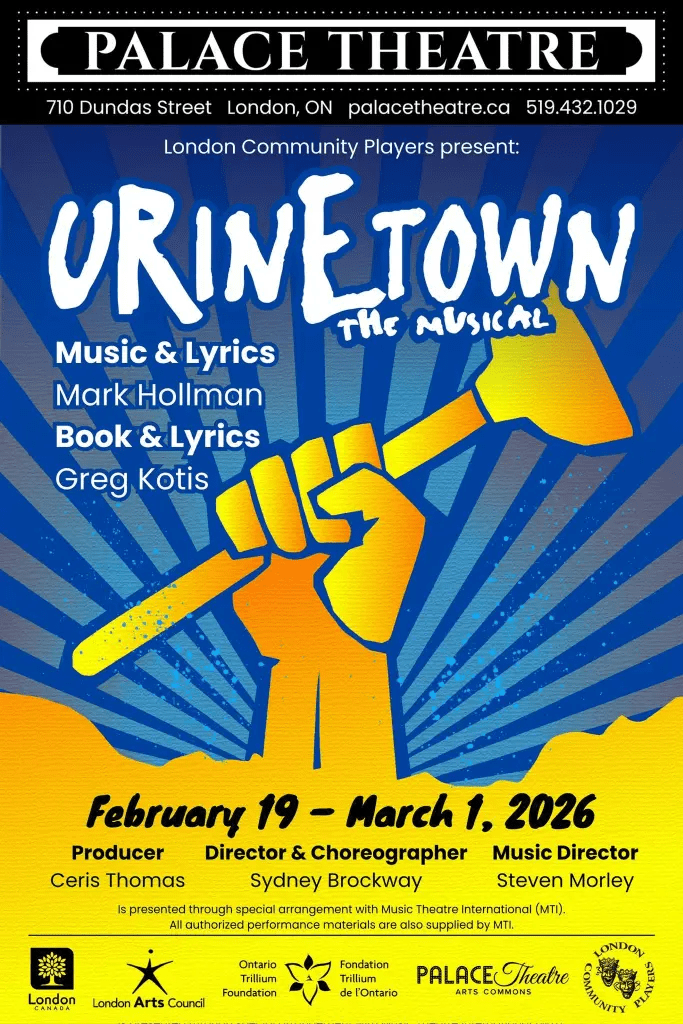
What: Urinetown: The Musical with Music and Lyrics by Mark Hollman, Book and Lyrics by Greg Kotis
When: February 19th to March 1st, 2026
Where: The David Long Stage at the Palace Theatre, 710 Dundas Street, London, Ontario.
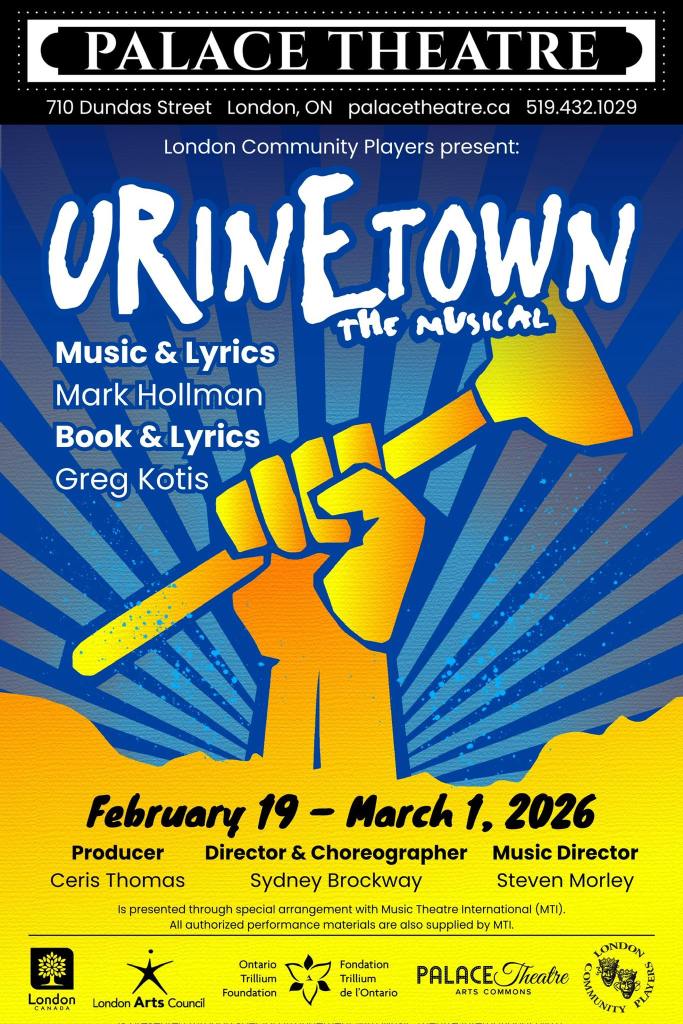
Producer Ceris Thomas explains the meaning of the title Urinetown in this exchange with Beat Magazine Publisher Richard Young. Urinetown: The Musical plays at the Palace Theatre from February 19 to March 1.
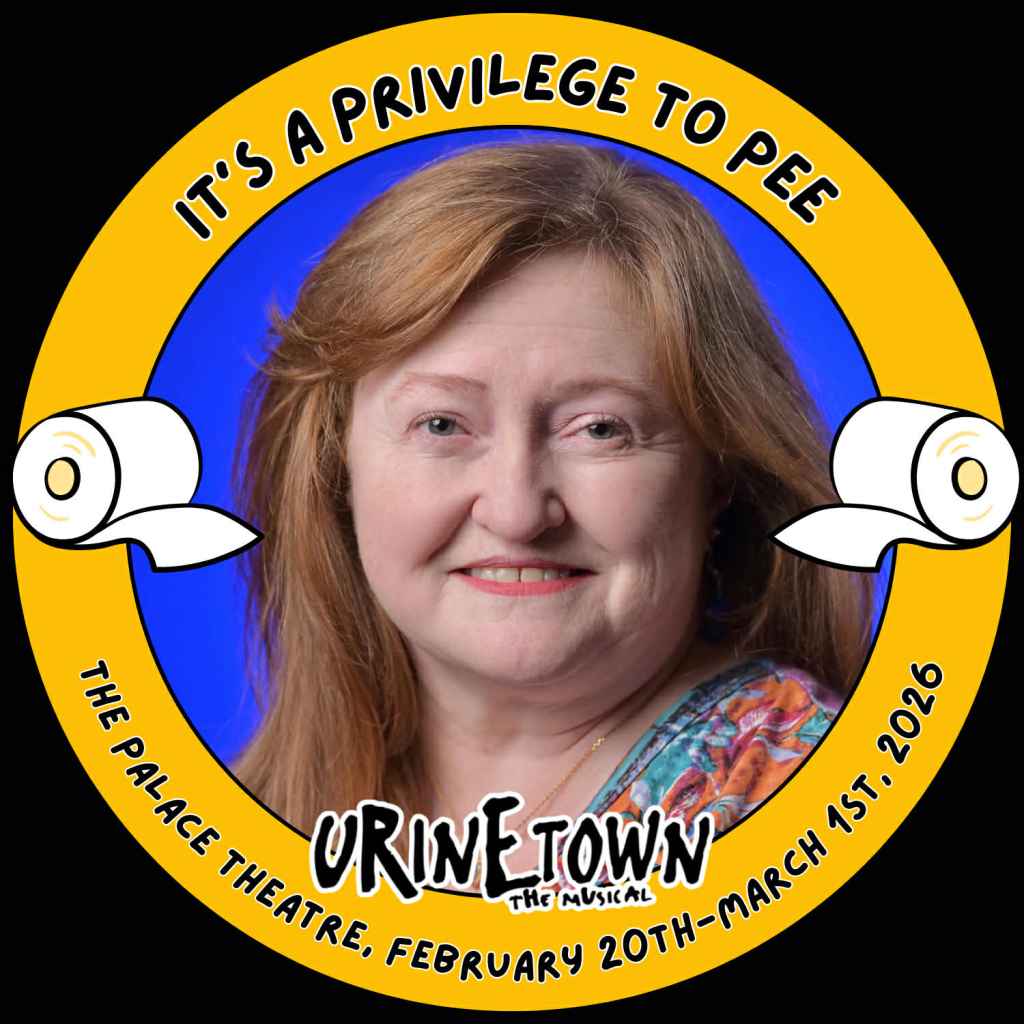
(Pictured: Ceris Thomas. Photo Credit: Ross Davidson.)
“Urinetown: The Musicalis notoriously hard to describe, which is probably why so many explanations feel incomplete or confusing. Honestly, if it had a different title, people might find it easier to just shrug and say, “Sure—let’s go see this thing.”
At its core, Urinetown is a dystopian satire that imagines a world so devastated by water shortages that bathrooms no longer exist in private homes. To manage the crisis, business and government join forces and arrive at a “solution”: the public must pay to pee. It’s an intentionally oversimplified take on a massive environmental issue, designed to get the audience quickly and clearly into the world of the show.
As with many well-meaning systems in a capitalist society, the opportunity to profit from an unavoidable human need quickly curdles into greed and manipulation. That’s where we meet the people of Urinetown—some desperate to survive, others perfectly comfortable in their assumed wealth and eager to raise the fees even higher.
The absurdity, poignancy, and laugh-out-loud comedy come from how the story is told. One of the creators’ most delightful choices is the musical’s constant tribute to classic Broadway shows. One song clearly channels Fiddler on the Roof; the next explodes with unmistakable West Side Story energy. The first time I heard it, I actually laughed out loud in my car.
If you’ve ever seen a musical—any musical—you’ll catch the references and giggle along. And if you’re someone who doesn’t usually like musicals? This show lovingly invites you to laugh at all the ones your mom dragged you to see.”
IF YOU GO:
What: London Community Players present Urinetown: The Musical
When: February 19 to March 1, 2026
Where: David Long Stage, Palace Theatre, 710 Dundas St., London, ON
London Community Players’ production of Urinetown: The Musical opens this week at the Palace Theatre. What follows is a Q&A Interview with the play’s producer, Ceris Thomas, conducted by Richard Young.
(Pictured: Laura Williams as Penelope Pennywise, Henry Truong as Bobby Strong, Jesslyn Hodgson as Hope Cladwell, and Allison Gold as Josephine “Ma” Strong. Photo Credit: Ross Davidson.)
Q. The description of Urinetown: The Musical found on the Palace Theatre website reads: “In a dystopia ruled by drought and corporate greed, public toilets are the law— and rebellion smells suspiciously like revolution. Equal parts absurd, poignant, and laugh-out-loud funny, Urinetown skewers capitalism, power, and musical theatre itself.” Could you break that down for our readers?
Urinetown: The Musicalis notoriously hard to describe, which is probably why so many explanations feel incomplete or confusing. Honestly, if it had a different title, people might find it easier to just shrug and say, “Sure—let’s go see this thing.”
At its core, Urinetown is a dystopian satire that imagines a world so devastated by water shortages that bathrooms no longer exist in private homes. To manage the crisis, business and government join forces and arrive at a “solution”: the public must pay to pee. It’s an intentionally oversimplified take on a massive environmental issue, designed to get the audience quickly and clearly into the world of the show.
As with many well-meaning systems in a capitalist society, the opportunity to profit from an unavoidable human need quickly curdles into greed and manipulation. That’s where we meet the people of Urinetown—some desperate to survive, others perfectly comfortable in their assumed wealth and eager to raise the fees even higher.
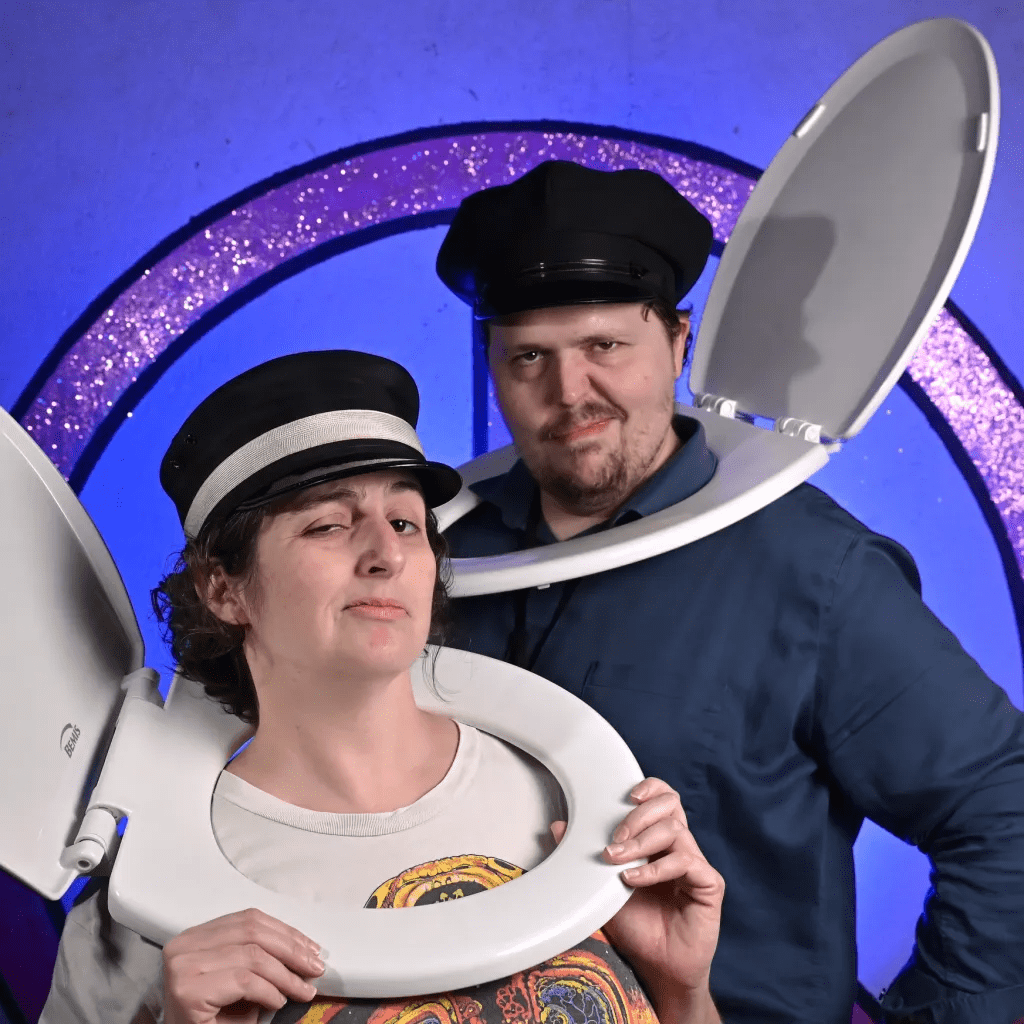
(Pictured: Kate Sepi as Officer Lockstock and Luke Bainbridge as Officer Barrel. Photo Credit: Ross Davidson.)
The absurdity, poignancy, and laugh-out-loud comedy come from how the story is told. One of the creators’ most delightful choices is the musical’s constant tribute to classic Broadway shows. One song clearly channels Fiddler on the Roof; the next explodes with unmistakable West Side Story energy. The first time I heard it, I actually laughed out loud in my car.
If you’ve ever seen a musical—any musical—you’ll catch the references and giggle along. And if you’re someone who doesn’t usually like musicals? This show lovingly invites you to laugh at all the ones your mom dragged you to see.
(Pictured: Ceris Thomas, Producer of Urinetown: The Musical.)
Q. It also reads: “No one is safe. Not even the audience. Bring your sense of humour — and your spare change,” implying audience members will be expected to participate in some way. Will they?
The fourth wall is very much broken in this production. Officer Lockstock serves as the show’s narrator, frequently conversing with Little Sally, a member of the “poor” who isn’t afraid to challenge Lockstock’s interpretation of events. Beyond that, the audience needs only to bring a sense of humour and a willingness to laugh out loud at the shenanigans of the players.
(Pictured: Ryan Starkweather as Senator Fipp, Jesslyn Hodgson as Hope Cladwell, and Sean Brennan as Caldwell B. Cladwell. Photo Credit: Ross Davidson.)
Q. Can you provide a brief Synopsis of the play?
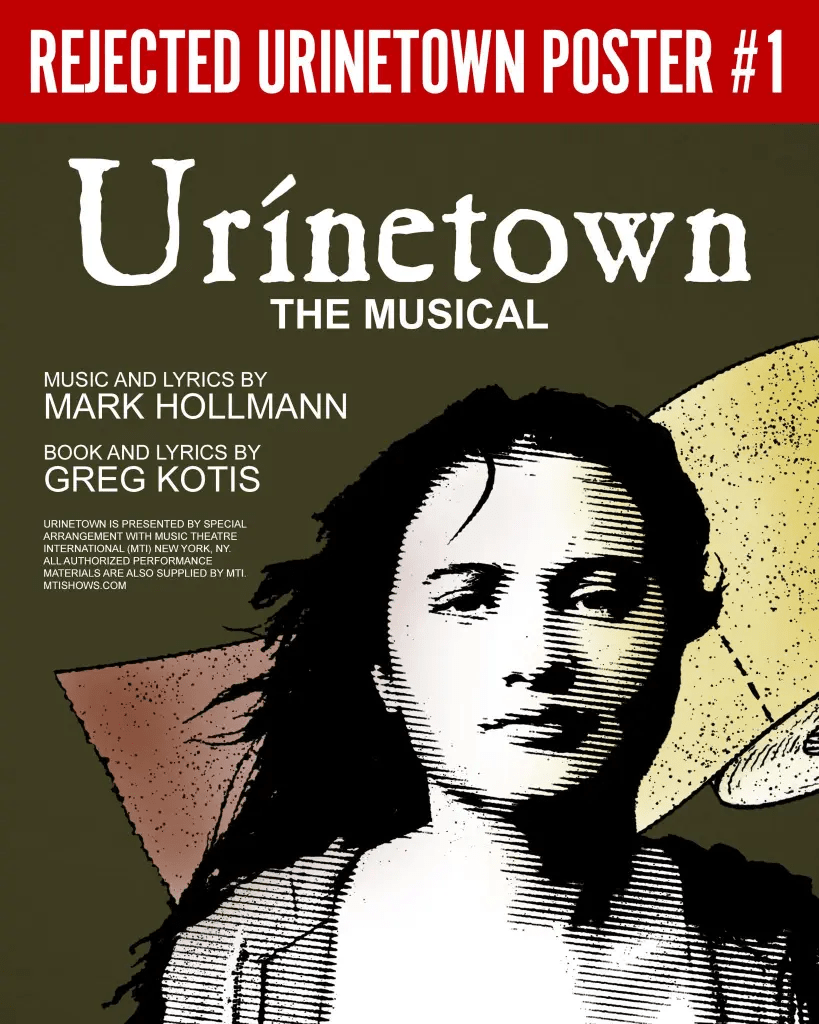
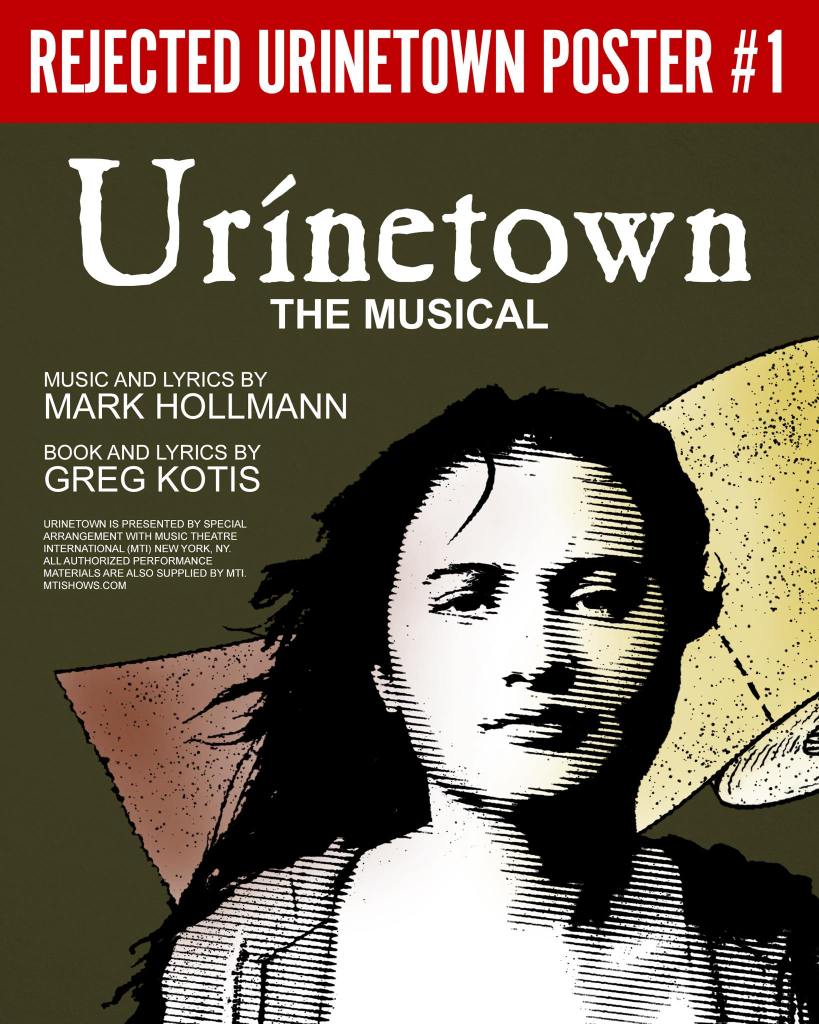
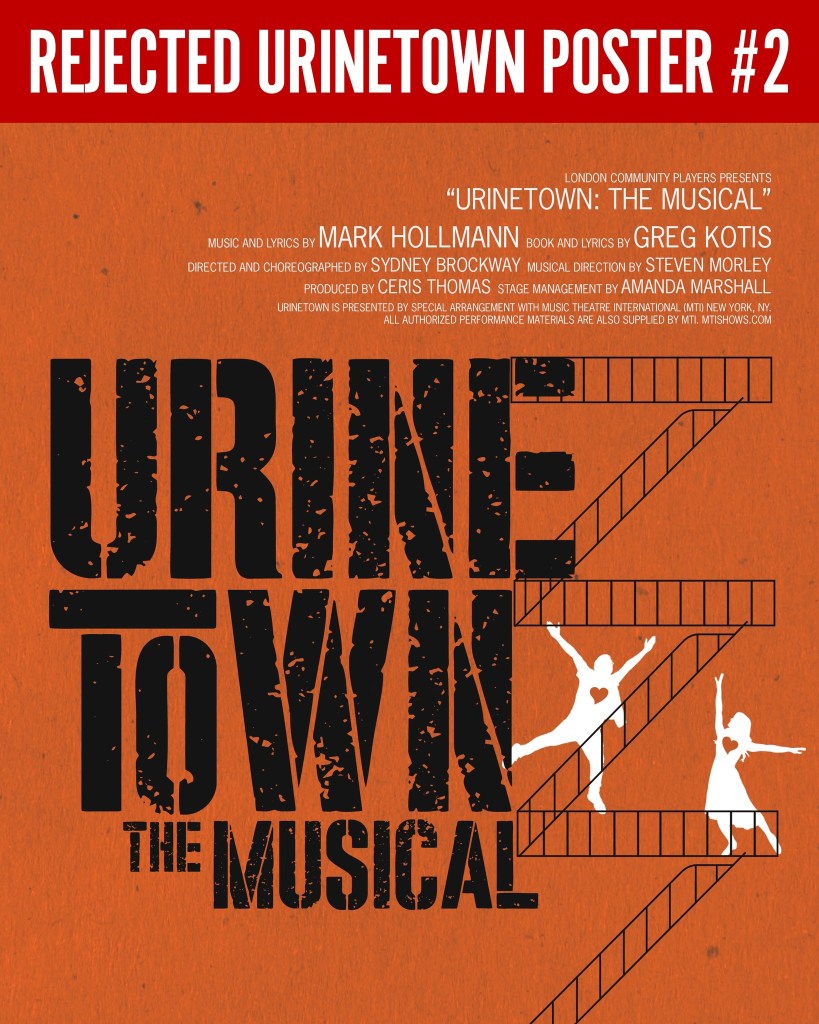
Our parody poster series—riffing on Les Misérables, West Side Story, The Producers, Wicked, and more—wasn’t just a marketing gimmick. It was a visual clue to the DNA of Urinetown itself. The show gleefully borrows familiar musical theatre tropes and iconic structures, reshaping them to tell its own absurd and pointed story.
At its heart, Urinetown gives us all the classics: a villain who controls the money, the police, and the government; a hero who controls nothing but works hard and dreams of a better future; and a beautiful daughter of the villain who becomes the catalyst for change when our hero falls instantly in love. His life is upended, his resolve hardens, and he sets out to fix a broken world—for love, for justice, and for the people he cares about.
What follows are the choices made by the citizens of Urinetown, and the consequences that come with them. It’s familiar, it’s twisted, it’s self-aware—and all of it is driven by music that is relentlessly fun.
(Pictured: Urinetown Les Misérables parody poster.)
Q. Do any of the play’s satirical situations and themes have local relevance?
Yes—and the relevance is immediate and unavoidable. The neighbourhood surrounding our theatre is routinely ignored by municipal leadership. The parking lot outside our doors has no public bathroom, and as a result, it becomes the only option for people who have nowhere else to go. That reality mirrors Urinetown so closely that it feels less like satire and more like lived experience.
In Urinetown, the poor are criminalized for existing. They are punished for meeting basic human needs, while those in power remain insulated from the consequences of their decisions. That dynamic is playing out here as well. When audiences say they are “afraid” to come to this area, that fear reflects the same distance and neglect that allow these conditions to persist.
We believe that is exactly why it is important to come. Showing up matters. Being present in this neighbourhood matters. Urinetown asks us to look at who we ignore, who we punish, and who we choose to care about—and invites audiences to step into a space that deserves attention, investment, and humanity.
Coming to this neighbourhood—choosing to be present, to witness, to engage—is not something to be afraid of. It’s something that matters. Urinetown asks us who we ignore, who we punish, and who we decide is worth showing up for. In this case, the question doesn’t end when the curtain comes down.
Q. Will the audience recognize any of the play’s musical numbers?
Even if audiences don’t know the specific musical numbers themselves, they will absolutely recognize what those songs are paying homage to. Urinetown is filled with stylistic tributes to iconic musicals—there are clear nods to Fiddler on the Roof and West Side Story, as well as The Fantasticks, among others. The familiarity isn’t about recognizing a tune, but about recognizing the style, which makes the jokes land and the storytelling even richer for theatre-literate audiences—while still being fun and accessible for everyone else.
Q. What challenges have you encountered bringing this play to the Palace Theatre stage?
The journey to bringing Urinetown to the Palace Theatre has been both unexpected and incredibly rewarding. London Community Players originally had a different production planned for this slot, but when royalties became unavailable, we had to pivot quickly. That shift led me to reach out to a talented artist I knew from other shows, and I was thrilled when she agreed to join us on the David Long Stage.
Choosing Urinetown turned out to be an inspired fit. There is a deep pool of artists in London who have been eager for the chance to tackle this show, and the auditions reflected that excitement. We welcomed many new performers into the room, which always brings fresh energy to a production. Rehearsals have been collaborative, joyful, and full of discovery.
As with any show, the real problem-solving began once we moved onto the stage. Urinetown asks us to create several locations within a single city, and the David Long Stage offers limited wing space. Rather than seeing that as a limitation, our team embraced it as a creative opportunity—finding smart, imaginative ways to build a complete world that could live in one place. As a first-time set designer, after taking a course in Stratford last summer, I’ve been supported by an incredible crew. I’m learning that a set is never truly finished; it simply reaches the moment where it’s ready to welcome an audience.
(Pictured: Leah Exley, Christine Varga, Luba Skyba, Nicholas McConnell, Amelia Armstrong, Matt deKort – Urine Good Company Employees. Photo Credit: Ross Davidson.)
Q. Your marketing/social media campaign for Urinetown has been nothing short of brilliant. Could you give a shout-out to those individuals responsible for it?
Thank you! We really appreciate your kind words and that you’ve been following our campaign.
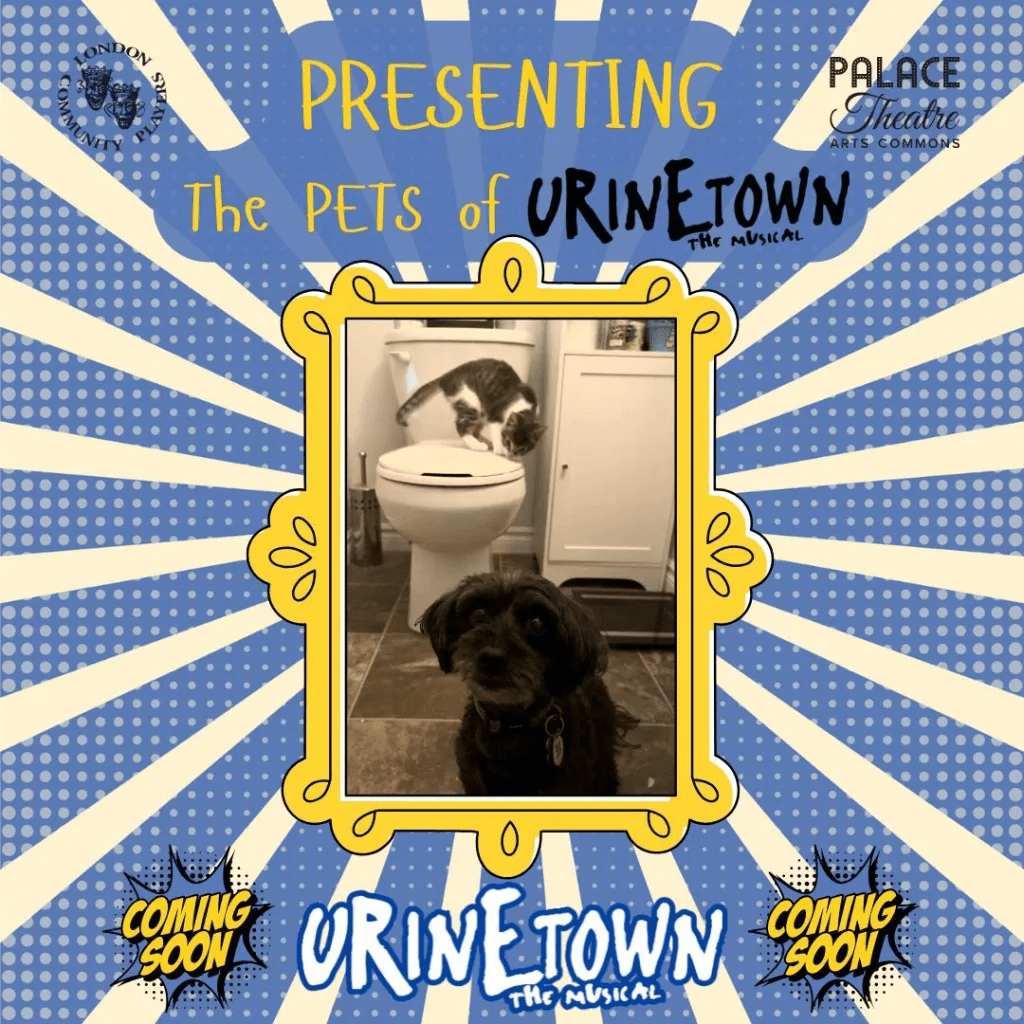
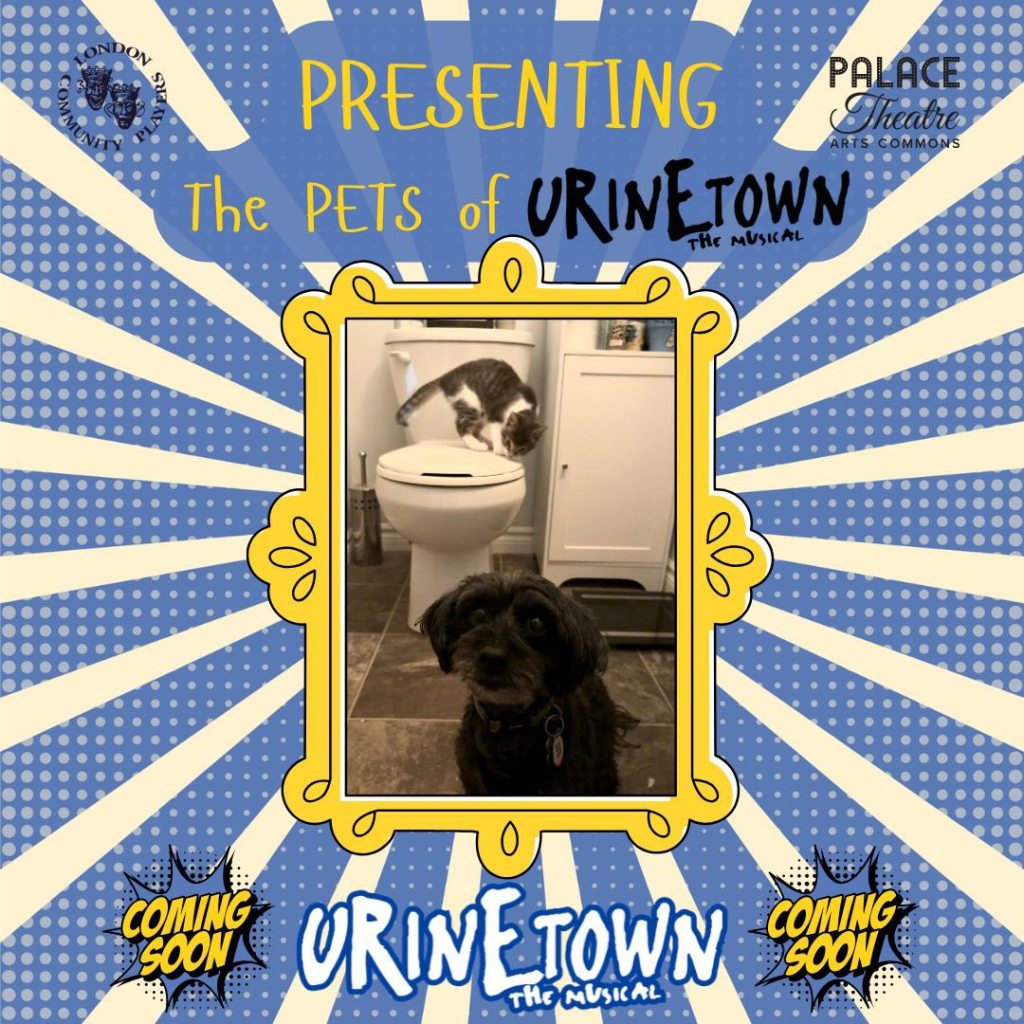
The “Pets of Urinetown” came about naturally because so many of our cast members have pets. Sharing stories and photos of their furry friends was a fun, comfortable way for the cast to connect—and I thought it would be a gentle, playful way to spark interest in the show.
(Pictured: Pets of Urinetown poster.)
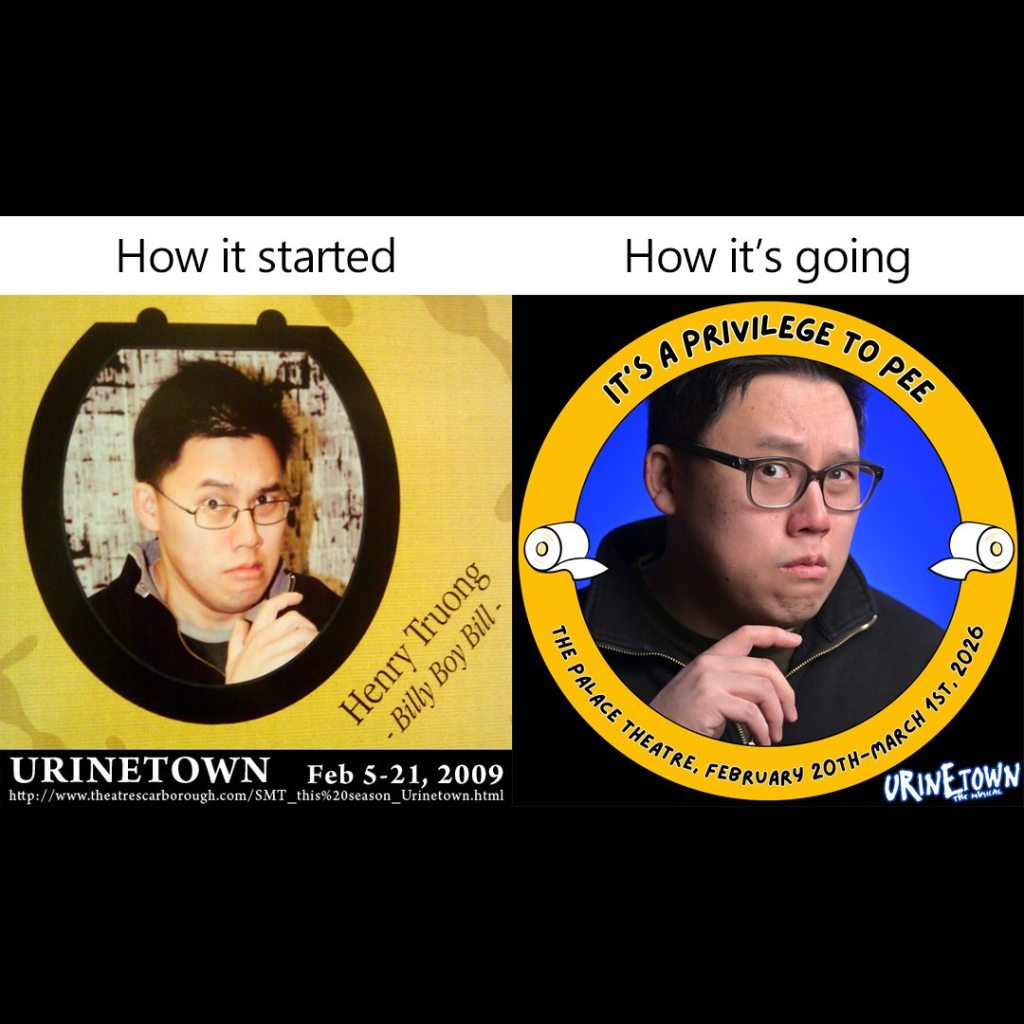
The poster campaign, on the other hand, was entirely the brainchild of the brilliant Henry Truong, who also plays Bobby Strong, our hero. Henry came up with the imagery, collaborated with others to bring the visuals to life, and even wrote all the copy. It was a truly inspired creative effort.
Urinetown gives so many ways to engage with the material, from the music to the story to the little touches we’ve created for social media. I think that’s why people who love this show really, really love it—and our team’s creativity has made sharing that love so much fun.
Q. Is there anything else you think our readers should know about LCP’s production of Urinetown?
One thing to know: it’s not here long! Urinetown runs for just eight performances, from Thursday, February 19th through Sunday, March 1st. Both Sunday shows are matinees, and the second Saturday also offers a matinee to give those who might feel less comfortable in the area another chance to attend. That Saturday matinee will also be adjudicated for the WODL festival, with a public adjudication immediately following the performance for anyone who wants to stay and watch.
For peace of mind, LCP provides security at all of our productions, with patrolled entrances and monitored parking. And as a bonus, parking behind the theatre is now free at all times.
Don’t miss it—once it’s gone, it’s gone!
(Laura Williams as Penelope Pennywise and Matt deKort as Old Man Strong. Photo Credit: Ross Davidson.)
CREATIVE TEAM
Producer – Ceris Thomas
Director – Sydney Brockway
Stage Manager – Amanda Marshall
Musical Director – Steven Morley
Lighting Designer – Indrani Mahadeo
Sound Designer – Quinton Esquega
Costume Designer – Tannis Daoust
Costume Assistant – Chaaya Vy
Costume Assistant – Chloe Scripnick
Sound Operator – Doug Deschenes
Lighting Operator – Jenny Katkov
Assistant Stage Manager – Larissa Bartlett
Assistant Stage Manager – Jess Bohan
CAST
Kate Sepi – Officer Lockstock
Luke Bainbridge – Officer Barrel
Rae Ryder – Little Sally
Henry Truong – Bobby Strong
Jesslyn Hodgson – Hope
Laura Williams – Pennywise
Sean Brennan – Cladwell
Ryan Starkweather – Fipp
David Lu – McQueen
Cassandra “Cass” Allen – Mrs. M/Boy Cop #1
Skyler Gallagher – Dr. B/Cop
Jade Rogers – Secretary/Cop
Nicholas McConnell – Hotblades Harry/Boy Cop #3
Antonia Sidiropoulos – Little Becky Two Shoes/Cop
Matt deKort – Old Man Strong/Ensemble
Allison Gold – Josephine “Ma” Strong/Cop
Jennifer Groulx – Tiny Tom/Boy Cop #2
Christine Varga – Soupy Sue/Cop
Dustin Freeman – Robbie the Stockfish/Cop
Luba Skyba – Billy Boy Bill/Cop
Charlotte “Charlie” Camrass – Rebel Poor/Girl Cop #1
Amelia Armstrong – Ensemble
Leah Exley – Ensemble
IF YOU GO:
What: London Community Players present Urinetown: The Musical
When: February 19 to March 1, 2026
Where: David Long Stage, Palace Theatre, 710 Dundas St., London, ON
Prepared with files provided by the Grand Theatre.
The lives and music of French songbird Edith Piaf and Hollywood leading lady Marlene Dietrich are set to dazzle London audiences when Piaf/Dietrich A Legendary Affair takes the stage at the Grand Theatre.
Audiences will experience all the glitz and glamour of mid-century fame in America, all the passion and tragedy of great love affairs, and an epic set list of beloved, powerful hit songs including “La vie en rose”, “Milord”, and “Lili Marlene” in this all-new production of Erin Shield’s adaptation, directed by Grand Theatre Artistic Director Rachel Peake.
(Pictured: Grand Theatre Artistic Director, Rachel Peake.)
“What I love about this story, told originally through the imaginations of German Daniel Große Boymann and Austrian Thomas Kahry, and adapted for our stage by the endlessly talented Canadian Erin Shields, is that it uses music, conflict, and language to transport us,” says Peake. “Prior to reading this play, I had no idea that these two icons even knew one another. They seem so different – Piaf wearing her heart on her sleeve and her pain in public, while Dietrich hid everything behind a mask of glamour. But friendship is funny that way, attraction is funny that way.”
Marlene Dietrich was Hollywood’s femme fatale throughout the 30s and 40s, and the name on everyone’s lips. Edith Piaf, the French chanteuse, had soared to stardom in her home country and would soon intoxicate the rest of the world with her raw, powerful songs of love and longing.
The two women were born fifteen years and 1,000 kilometres apart and found their way to both fame and each other. By the time they met, Marlene had a string of leading roles and was one of the highest-paid talents in show business. A young Edith had been singing on the streets of Paris to support herself and had written the song that would make her famous, “La vie en rose.”
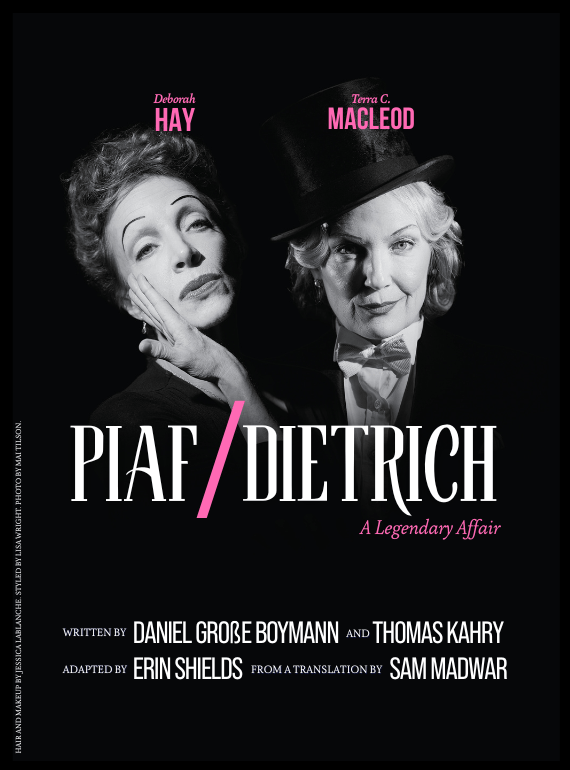
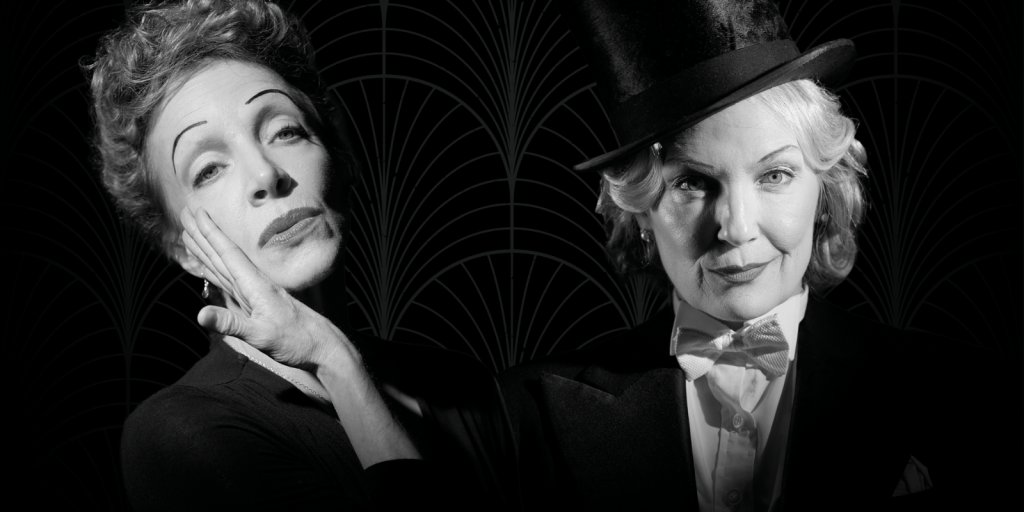
(Pictured: Deborah Hay as Edith Piaf and Terra C. MacLeod as Marlene Dietrich. Photo Credit: Mai Tilson.)
Their first meeting and the lifelong, tumultuous relationship that followed are the story that unfolds on stage. Audiences will be excited to see Londoner and notable Canadian theatre talent Deborah Hay, transformed into Edith Piaf and making a much-anticipated return to the Grand after her stand-out performances in Fall On Your Knees and Mary Poppins in previous seasons. Having dazzled the world from Broadway to the West End as Chicago’s Velma Kelly, Terra C. MacLeod steps into the top hat and tuxedo tails of the smouldering Marlene Dietrich in her Grand Theatre debut.
(Pictured: Karen Burthwright.)
The cast also features Karen Burthwright and Eric Craig, both with Broadway credits to their names. In fact, they have even performed together as members of the original Broadway cast of Tony Award-nominated Paradise Square. In Piaf/Dietrich, these two Canadian stars will play all of the men and women, lovers and hecklers, muses and rivals, who make up the worlds of the two showbiz legends.
(Pictured: Eric Craig.)
CREATIVE TEAM
Rachel Peake – Director
Mary Ancheta – Music Director
Genny Sermonia – Choreographer
Lorenzo Savoini – Set Designer
Ming Wong – Costume Designer
Michelle Ramsay – Lighting Designer
Emily Porter – Sound Designer
Nicole Wilson – Assistant Director
Siobhan Richardson – Intimacy Director
Phyllis Cohen – Dialect Coach
Suzanne McArthur – Stage Manager
Melissa Cameron – Assistant Stage Manager
Gina Woodward – Apprentice Stage Manager
CAST
Karen Burthwright – Supporting Female
Eric Craig – Supporting Male
Deborah Hay – Edith Piaf
Terra C. MacLeod – Marlene Dietrich
Orchestra
Mary Ancheta – Conductor / Keyboard
Erik Larson – Bass
Céline Murray – Violin
Dave Robilliard – Drums.
IF YOU GO:
What: Piaf/DietrichA Legendary Affair.By Daniel Große Boymann and Thomas Kahry. Adapted by Erin Shields from a translation by Sam Madwar.
When: February 17 to March 7, 2026.
Where: Spriet Stage at the Grand Theatre, 471 Richmond St. London, ON.
What follows is a Q&A Interview with Ceris Thomas, producer of London Community Players’ production of Urinetown: The Musical, playing at the Palace Theatre from February 19 to March 1.
Q. The description of Urinetown: The Musical found on the Palace Theatre website reads: “In a dystopia ruled by drought and corporate greed, public toilets are the law— and rebellion smells suspiciously like revolution. Equal parts absurd, poignant, and laugh-out-loud funny, Urinetown skewers capitalism, power, and musical theatre itself.” Could you break that down for our readers?
(Pictured: Ceris Thomas, Producer of Urinetown: The Musical.)
Urinetown: The Musicalis notoriously hard to describe, which is probably why so many explanations feel incomplete or confusing. Honestly, if it had a different title, people might find it easier to just shrug and say, “Sure—let’s go see this thing.”
At its core, Urinetown is a dystopian satire that imagines a world so devastated by water shortages that bathrooms no longer exist in private homes. To manage the crisis, business and government join forces and arrive at a “solution”: the public must pay to pee. It’s an intentionally oversimplified take on a massive environmental issue, designed to get the audience quickly and clearly into the world of the show.
As with many well-meaning systems in a capitalist society, the opportunity to profit from an unavoidable human need quickly curdles into greed and manipulation. That’s where we meet the people of Urinetown—some desperate to survive, others perfectly comfortable in their assumed wealth and eager to raise the fees even higher.
Pictured: Urinetown’s Officer Lockstock (Kate Sepi), accompanied by Officer Barrel (Luke Bainbridge). Photo Credit: Ross Davidson.)
The absurdity, poignancy, and laugh-out-loud comedy come from how the story is told. One of the creators’ most delightful choices is the musical’s constant tribute to classic Broadway shows. One song clearly channels Fiddler on the Roof; the next explodes with unmistakable West Side Story energy. The first time I heard it, I actually laughed out loud in my car.
If you’ve ever seen a musical—any musical—you’ll catch the references and giggle along. And if you’re someone who doesn’t usually like musicals? This show lovingly invites you to laugh at all the ones your mom dragged you to see.
Q. It also reads: “No one is safe. Not even the audience. Bring your sense of humour — and your spare change,” implying audience members will be expected to participate in some way. Will they?
The fourth wall is very much broken in this production. Officer Lockstock serves as the show’s narrator, frequently conversing with Little Sally, a member of the “poor” who isn’t afraid to challenge Lockstock’s interpretation of events. Beyond that, the audience needs only to bring a sense of humour and a willingness to laugh out loud at the shenanigans of the players.
(Pictured: Urinetown Les Misérables parody poster.)
Q. Can you provide a brief Synopsis of the play?
Our parody poster series—riffing on Les Misérables, West Side Story, The Producers, Wicked, and more—wasn’t just a marketing gimmick. It was a visual clue to the DNA of Urinetown itself. The show gleefully borrows familiar musical theatre tropes and iconic structures, reshaping them to tell its own absurd and pointed story.
At its heart, Urinetown gives us all the classics: a villain who controls the money, the police, and the government; a hero who controls nothing but works hard and dreams of a better future; and a beautiful daughter of the villain who becomes the catalyst for change when our hero falls instantly in love. His life is upended, his resolve hardens, and he sets out to fix a broken world—for love, for justice, and for the people he cares about.
What follows are the choices made by the citizens of Urinetown, and the consequences that come with them. It’s familiar, it’s twisted, it’s self-aware—and all of it is driven by music that is relentlessly fun.
(Pictured: Urinetown West Side Story parody poster.)
Q. Do any of the play’s satirical situations and themes have local relevance?
Yes—and the relevance is immediate and unavoidable. The neighbourhood surrounding our theatre is routinely ignored by municipal leadership. The parking lot outside our doors has no public bathroom, and as a result, it becomes the only option for people who have nowhere else to go. That reality mirrors Urinetown so closely that it feels less like satire and more like lived experience.
In Urinetown, the poor are criminalized for existing. They are punished for meeting basic human needs, while those in power remain insulated from the consequences of their decisions. That dynamic is playing out here as well. When audiences say they are “afraid” to come to this area, that fear reflects the same distance and neglect that allow these conditions to persist.
We believe that is exactly why it is important to come. Showing up matters. Being present in this neighbourhood matters. Urinetown asks us to look at who we ignore, who we punish, and who we choose to care about—and invites audiences to step into a space that deserves attention, investment, and humanity.
Coming to this neighbourhood—choosing to be present, to witness, to engage—is not something to be afraid of. It’s something that matters. Urinetown asks us who we ignore, who we punish, and who we decide is worth showing up for. In this case, the question doesn’t end when the curtain comes down.
Q. Will the audience recognize any of the play’s musical numbers?
Even if audiences don’t know the specific musical numbers themselves, they will absolutely recognize what those songs are paying homage to. Urinetown is filled with stylistic tributes to iconic musicals—there are clear nods to Fiddler on the Roof and West Side Story, as well as The Fantasticks, among others. The familiarity isn’t about recognizing a tune, but about recognizing the style, which makes the jokes land and the storytelling even richer for theatre-literate audiences—while still being fun and accessible for everyone else.
Q. What challenges have you encountered bringing this play to the Palace Theatre stage?
The journey to bringing Urinetown to the Palace Theatre has been both unexpected and incredibly rewarding. London Community Players originally had a different production planned for this slot, but when royalties became unavailable, we had to pivot quickly. That shift led me to reach out to a talented artist I knew from other shows, and I was thrilled when she agreed to join us on the David Long Stage.
Choosing Urinetown turned out to be an inspired fit. There is a deep pool of artists in London who have been eager for the chance to tackle this show, and the auditions reflected that excitement. We welcomed many new performers into the room, which always brings fresh energy to a production. Rehearsals have been collaborative, joyful, and full of discovery.
As with any show, the real problem-solving began once we moved onto the stage. Urinetown asks us to create several locations within a single city, and the David Long Stage offers limited wing space. Rather than seeing that as a limitation, our team embraced it as a creative opportunity—finding smart, imaginative ways to build a complete world that could live in one place. As a first-time set designer, after taking a course in Stratford last summer, I’ve been supported by an incredible crew. I’m learning that a set is never truly finished; it simply reaches the moment where it’s ready to welcome an audience.
Q. Your marketing/social media campaign for Urinetown has been nothing short of brilliant. Could you give a shout-out to those individuals responsible for it?
Thank you! We really appreciate your kind words and that you’ve been following our campaign.
(Pictured: Pets of Urinetown poster.)
The “Pets of Urinetown” came about naturally because so many of our cast members have pets. Sharing stories and photos of their furry friends was a fun, comfortable way for the cast to connect—and I thought it would be a gentle, playful way to spark interest in the show.
The poster campaign, on the other hand, was entirely the brainchild of the brilliant Henry Truong, who also plays Bobby Strong, our hero. Henry came up with the imagery, collaborated with others to bring the visuals to life, and even wrote all the copy. It was a truly inspired creative effort.
Urinetown gives so many ways to engage with the material, from the music to the story to the little touches we’ve created for social media. I think that’s why people who love this show really, really love it—and our team’s creativity has made sharing that love so much fun.
Q. Is there anything else you think our readers should know about LCP’s production of Urinetown?
One thing to know: it’s not here long! Urinetown runs for just eight performances, from Thursday, February 19th through Sunday, March 1st. Both Sunday shows are matinees, and the second Saturday also offers a matinee to give those who might feel less comfortable in the area another chance to attend. That Saturday matinee will also be adjudicated for the WODL festival, with a public adjudication immediately following the performance for anyone who wants to stay and watch.
For peace of mind, LCP provides security at all of our productions, with patrolled entrances and monitored parking. And as a bonus, parking behind the theatre is now free at all times.
Don’t miss it—once it’s gone, it’s gone!
CREATIVE TEAM
Producer – Ceris Thomas
Director – Sydney Brockway
Stage Manager – Amanda Marshall
Musical Director – Steven Morley
Lighting Designer – Indrani Mahadeo
Sound Designer – Quinton Esquega
Costume Designer – Tannis Daoust
Costume Assistant – Chaaya Vy
Costume Assistant – Chloe Scripnick
Sound Operator – Doug Deschenes
Lighting Operator – Jenny Katkov
Assistant Stage Manager – Larissa Bartlett
Assistant Stage Manager – Jess Bohan
CAST
Kate Sepi – Officer Lockstock
Luke Bainbridge – Officer Barrel
Rae Ryder – Little Sally
Henry Truong – Bobby Strong
Jesslyn Hodgson – Hope
Laura Williams – Pennywise
Sean Brennan – Cladwell
Ryan Starkweather – Fipp
David Lu – McQueen
Cassandra “Cass” Allen – Mrs. M/Boy Cop #1
Skyler Gallagher – Dr. B/Cop
Jade Rogers – Secretary/Cop
Nicholas McConnell – Hotblades Harry/Boy Cop #3
Antonia Sidiropoulos – Little Becky Two Shoes/Cop
Matt deKort – Old Man Strong/Ensemble
Allison Gold – Josephine “Ma” Strong/Cop
Jennifer Groulx – Tiny Tom/Boy Cop #2
Christine Varga – Soupy Sue/Cop
Dustin Freeman – Robbie the Stockfish/Cop
Luba Skyba – Billy Boy Bill/Cop
Charlotte “Charlie” Camrass – Rebel Poor/Girl Cop #1
Amelia Armstrong – Ensemble
Leah Exley – Ensemble
IF YOU GO:
What: London Community Players present Urinetown: The Musical
When: February 19 to March 1, 2026
Where: David Long Stage, Palace Theatre, 710 Dundas St., London, ON
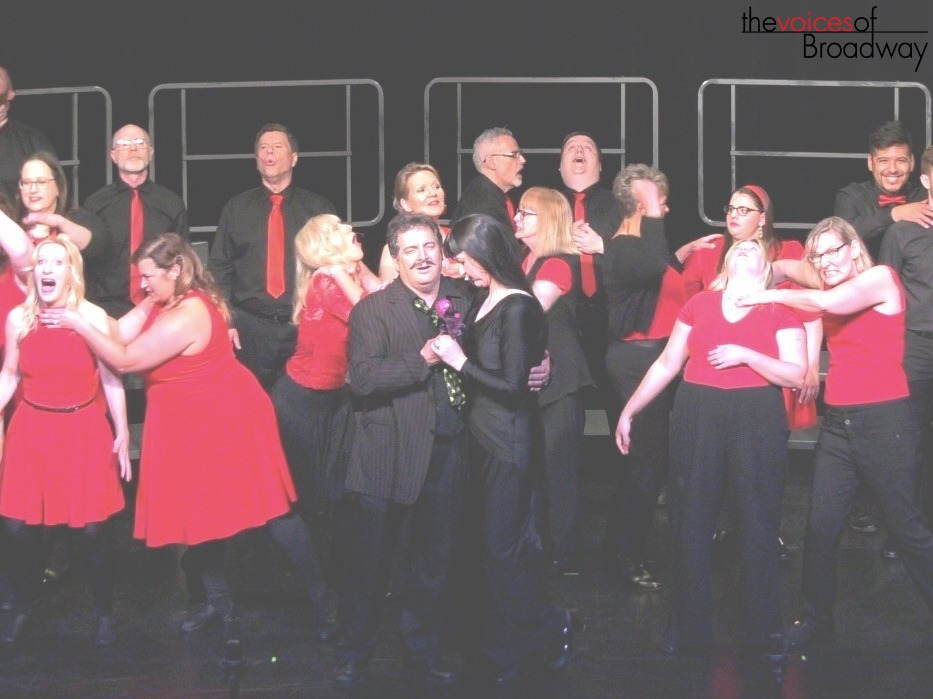
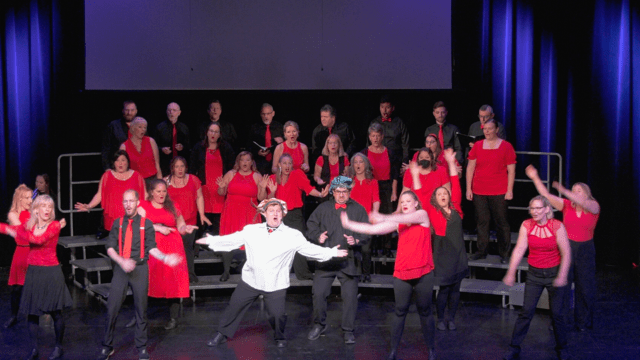
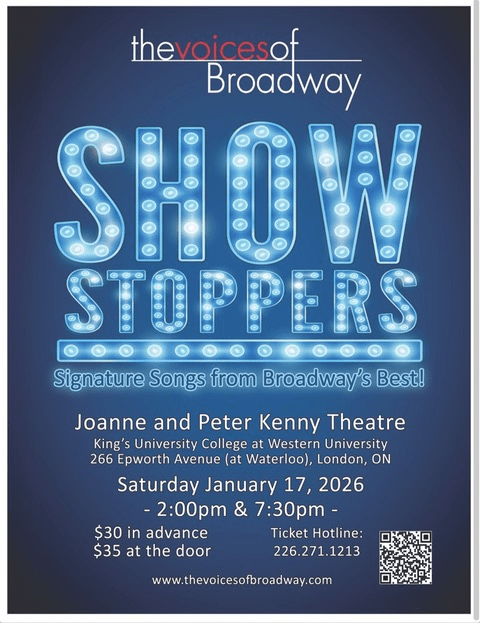
The Voices of Broadway Show Choir has been entertaining London area audiences since 2013. The Beat Magazine conducted the following Q&A Session with Artistic/Musical Director Julie Pietrangelo in advance of the choir’s Show Stoppers concert on January 17 at the Joanne and Peter Kenny Theatre at King’s College. The Interview has been edited for clarity.
(Pictured: The Voices of Broadway Show Choir Artistic/Musical Director Julie Pietrangelo.)
Q. When was the choir founded? By whom, and why? How did the name The Voices of Broadway Show Choir come about?
We were founded in 2013. I wanted to start a show choir and talked to several people whom I led as singers before, and they were with me. So, we got together and figured out how to make it work. We brainstormed names, put them on a board, and voted. By process of elimination, we decided upon the name The Voices of Broadway Show Choir.
Q. What sets your group apart from the other London area choirs?
I think the fact that we’re a show choir. I don’t think there’s any other show choir in London, per se. We don’t just stand on risers and sing holding music. Our shows include acting and dancing. It’s just bigger.
Q. Who are the facilitators/administrators of the choir? Backgrounds? Does the choir have a Board of Directors?
We do not have a board of directors. We have what we call the lead team of four people who are elected by the membership. They look after all the administration and running of the choir and so on. I’m heavily involved and sit on the lead team as well.
Q. Does the choir have a Mission or Statement of Purpose?
We are a non-professional show choir with high standards and high entertainment value. Our mission is to present a well-balanced program of traditional choral singing, along with choreography, staging, costumes, special effects, and props.
Q. How many members does the choir have at this time? Can you give me some details about the range of experience, backgrounds, and ages of choir members?
Right now, we have twenty-four members, but we have had as many as forty. We take people from all walks of life. We have people who have music degrees and have taken voice lessons. We also have people who have never sung in a choir before. Choir members must be eighteen years of age. We have had members in their eighties.
Q. How does one become a member of The Voices of Broadway Show Choir?
We have an audition process. Candidates are asked to bring a prepared song and do a vocal audition. I test the range and their sight-reading ability and decide from that. They also go through an interview process. We do a dance assessment, although candidates aren’t rejected if they have zero dance experience or limited abilities.
Q. Could you give me an idea of the choir’s repertoire?
Our repertoire is all drawn from Broadway musicals.
Q. Does the choir perform in one venue or move around?
We do two shows a year. In January, we perform at the Joanna and Peter Kenny Theatre at Western’s King’s College. And in the spring, in either May or June, depending on available dates, we hold our year-end show at Wolf Performance Hall.
Q. Can you give our readers an idea of what to expect if they attend your January 17th Show Stoppers concert?
Show Stoppers presents many of Broadway’s most famous songs. Audience members will know a lot of the music and the shows that they come from. The concert is highly entertaining, and it just has that whole element of familiarity.
Q. Is there anything else you think readers should know about The Voices of Broadway Show Choir?
We’re always looking for new members. In fact, we have auditions on January 21st. People can register for those at any time now. And, of course, we’re always available for hire. We have a public website where people can find out more information about the choir and look at some of our past performances. We’re always looking for sponsors, too. If you are interested in becoming a sponsor, we offer several benefits. Information about how to become a sponsor can be found on our website.
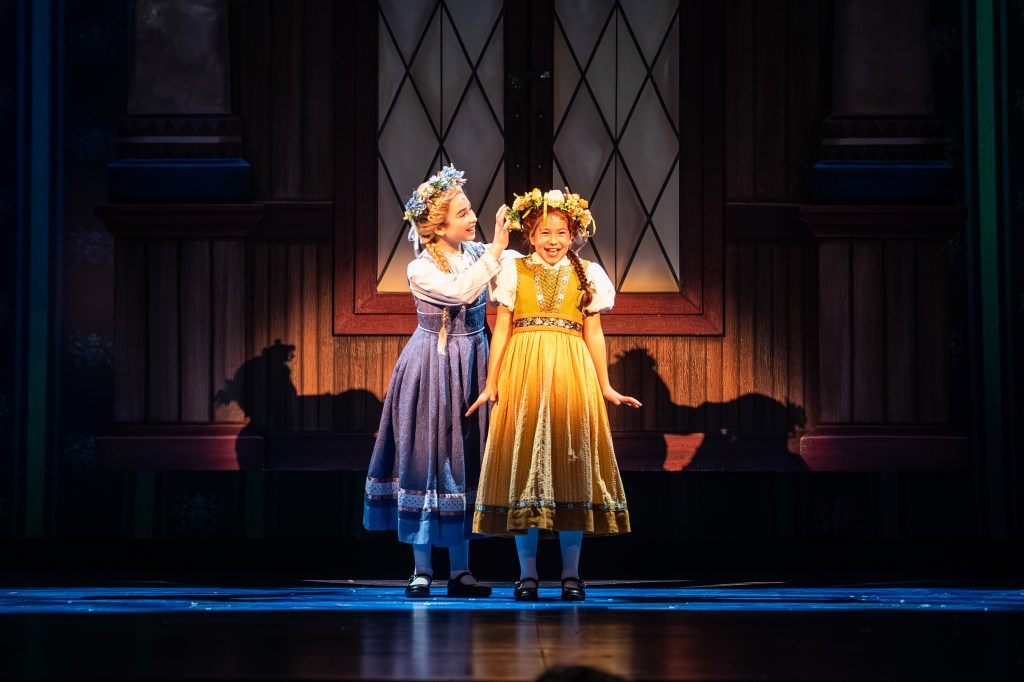
The Grand Theatre’s production of Disney’s Frozen: The Broadway Musical is nothing short of magical. A dazzling, heart-warming spectacle that captivated everyone in the audience, from the youngest fans seeing their heroes come to life to the adults who found themselves swept up in the enchantment.
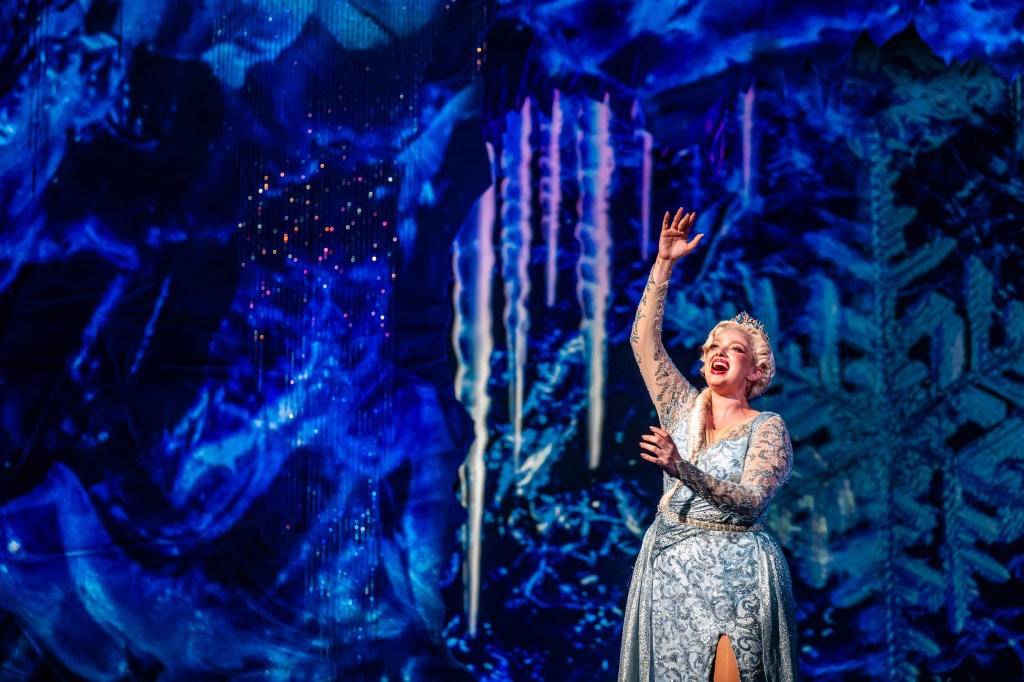
Cory Sincennes’ set and costume design is a triumph of imagination and stagecraft. Using layered curtains, striking silhouettes, and dynamic lighting, Sincennes creates a constantly shifting world that feels both storybook and cinematic. The special effects, particularly those used to portray Elsa’s powers, were breathtaking, earning genuine gasps and cheers throughout the performance.
(Pictured: Kelly Holiff as Elsa. Photo by Dahlia Katz.)
Chariz Faulmino (Anna) and Kelly Holiff (Elsa) lead the cast with powerhouse performances that honour the beloved characters while adding emotional depth and nuance. Their younger counterparts, Harmony Holder as Young Anna and Kylie Prouty as Young Elsa, shine with remarkable poise and authenticity, laying a strong emotional foundation for the story. (NOTE: Harmony Holder and Kylie Prouty alternate with Oakan Oyafuso and Alba Evora Weiler in the roles of Young Anna and Young Elsa.)
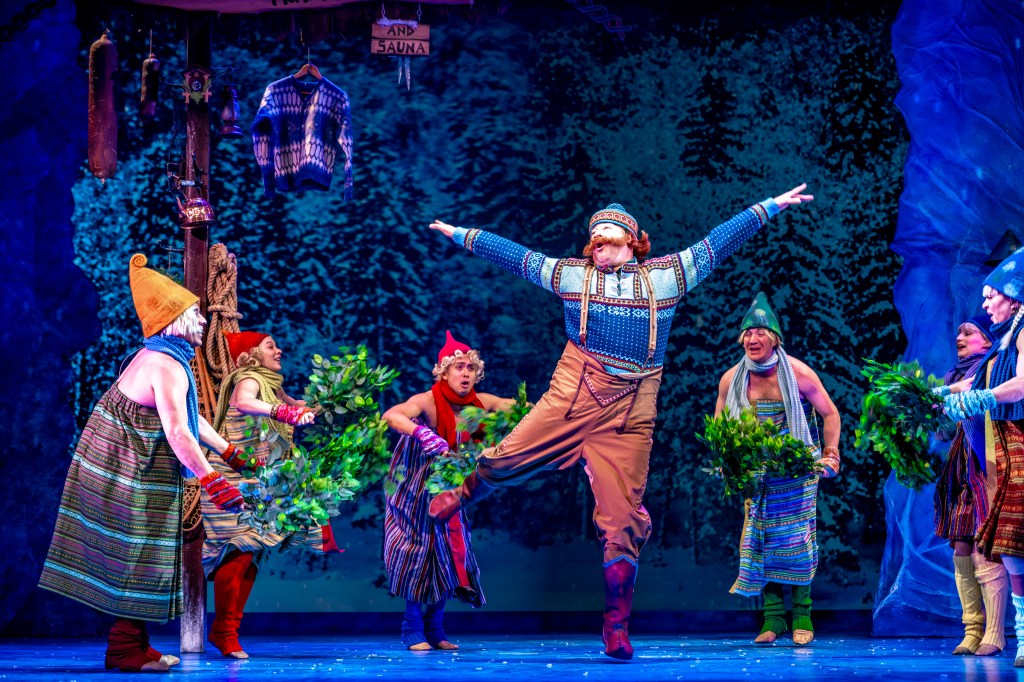
Mark Sinongco is fabulous as Kristoff, bringing warmth, sincerity, and just the right amount of rugged charm to the beloved ice harvester. Izad Etemadi’s brilliant puppetry brings Olaf to life with humour and heart, while Richard Lee Hsi’s physicality makes Sven feel truly larger than life. Lee Siegel is an undeniable crowd-pleaser as Oaken, and his lead in the Act II opener “Hygge” had the entire house roaring with laughter. The number was clearly a fan favourite, kicking off the second act with a joyous, cheeky burst of energy.
(Director Rachel Peake talks about Disney’s Frozen: The Broadway Musical in this video clip.)
Under the inspired direction of Rachel Peake, the production flows with clarity, humour, and heart. Ainsley Hillyard’s choreography infuses each number with vibrant energy, and the ensemble executes every step and vocal line with grace, precision, and infectious enthusiasm.
Adding to the magic was the audience itself: tiny Annas and Elsas sparkling in their costumes, singing along with their favourite songs, their excitement lighting up the theatre. And it wasn’t just the children. Many adults joined in softly singing the iconic melodies, proving that Frozen’s charm spans generations.
(Pictured: Frozen. Photo by Dahlia Katz.)
The Grand Theatre’s Frozen is a spectacular journey that celebrates the power of love, courage, and sisterhood. It’s visually stunning, musically thrilling, and emotionally resonant. A production that truly brings the magic of Arendelle to London.
In the spirit of love and generosity, the Grand Theatre is also collecting monetary donations for the London Food Bank. Audience members are encouraged to bring their loonies, toonies, or any amount they wish to contribute to warm hearts—and bellies—during this season of giving. Donations can be made in cash, by card, or by scanning a QR code in the lobby. Please give generously.
IF YOU GO:
What:Disney’s Frozen:The Broadway Musical, presented by The Grand Theatre Where: Spriet Stage at the Grand Theatre When: November 18th to January 4th, 2026 Tickets:Disney’s Frozen | The Grand Theatre
Watch the Official Trailer for Disney’s Frozen:
Disney’s Frozen: The Broadway Musical reviewed by Jo-Anne Bishop
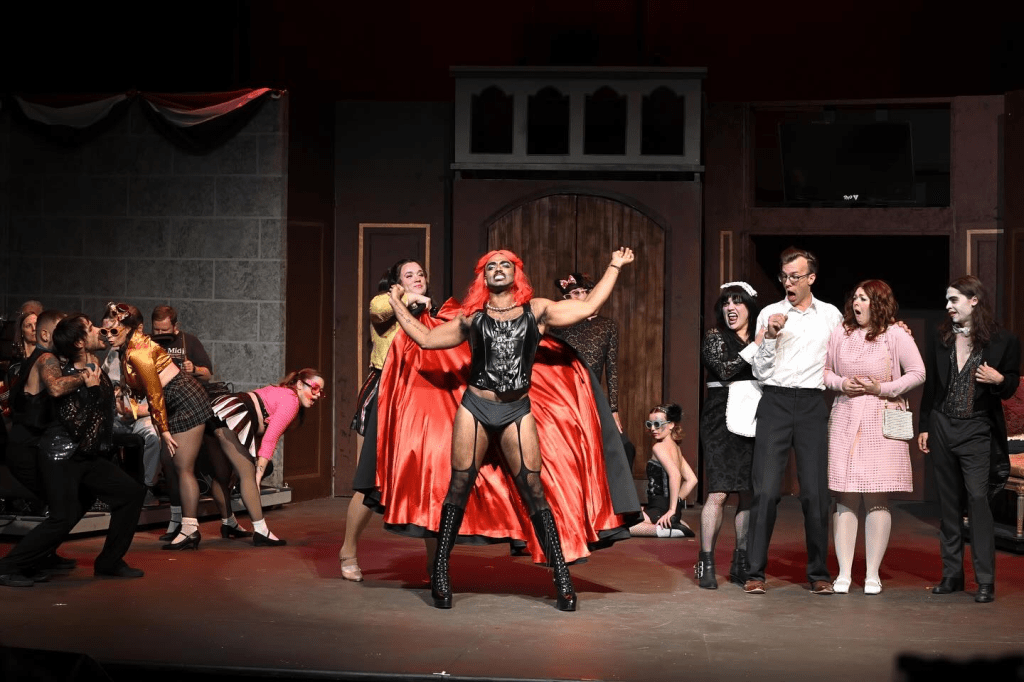
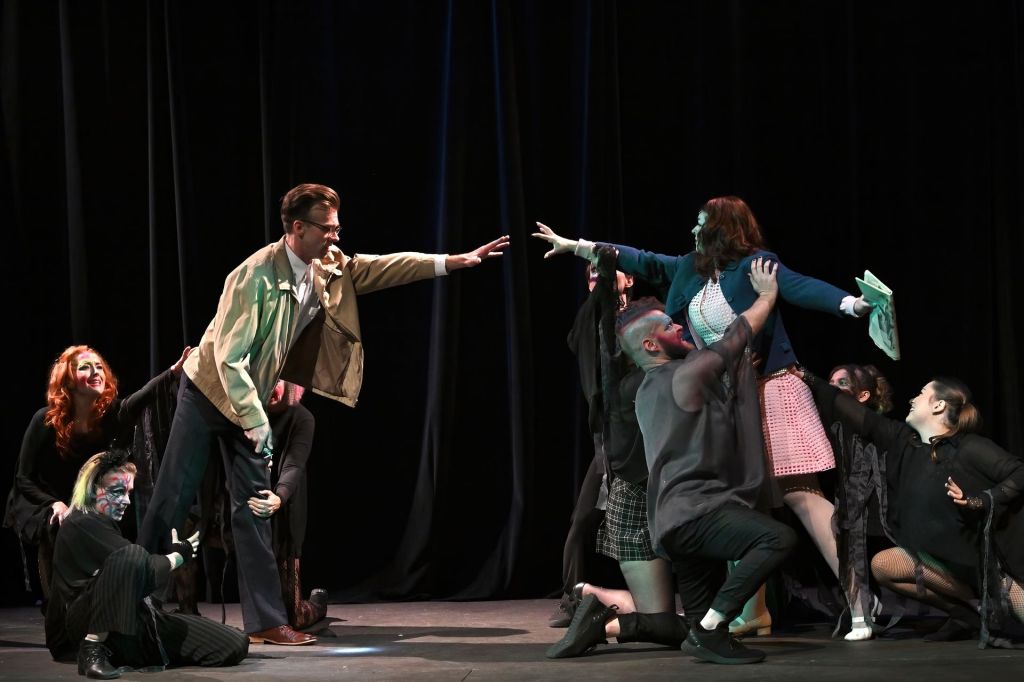
(Pictured: Shaidon Woods in full costume and makeup as Dr. Frank-N-Furter, and other cast members in The Rocky Horror Show. Photo Credit: Ross Davidson)
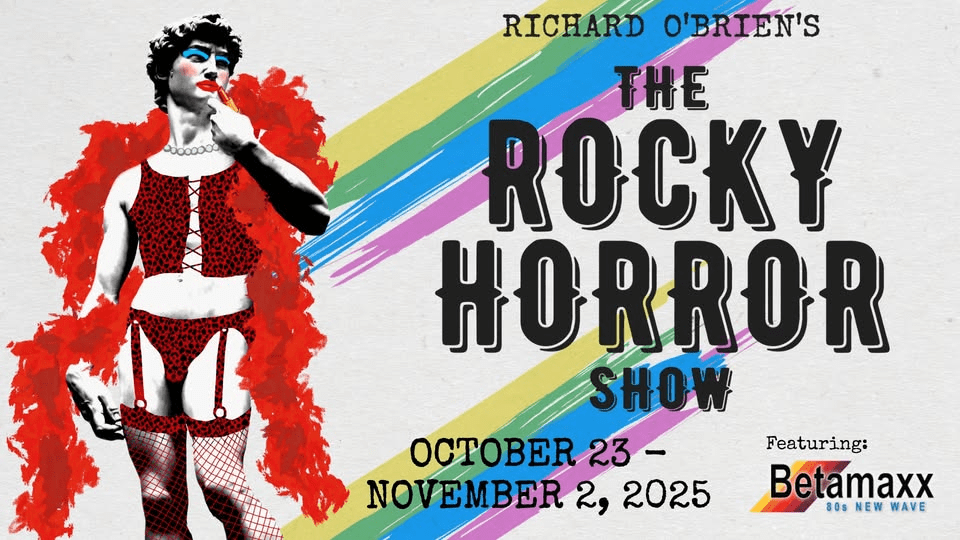
The Infuse Productions/Palace Theatre co-production of The Rocky Horror Showis a bold, electrifying spectacle that bursts with energy, confidence, and campy fun from start to finish. Under the inspired direction of Mel Stewart (in her directorial debut, no less) the show hits every outrageous note with style and precision. Stewart’s leadership brings cohesion to the chaos, celebrating the spirit of the cult classic while adding a fresh, local flair that absolutely dazzles.
The choreography throughout is nothing short of outstanding. Crisp, creative, and packed with personality. Every movement feels deliberate and dynamic, perfectly suited to the show’s eccentric energy.
David Long’s minimalist set design is both practical and imaginative. Built to accommodate a live band on stage, it provides the perfect backdrop without ever detracting from the vibrant costumes or the incredible performances that command the audience’s attention.
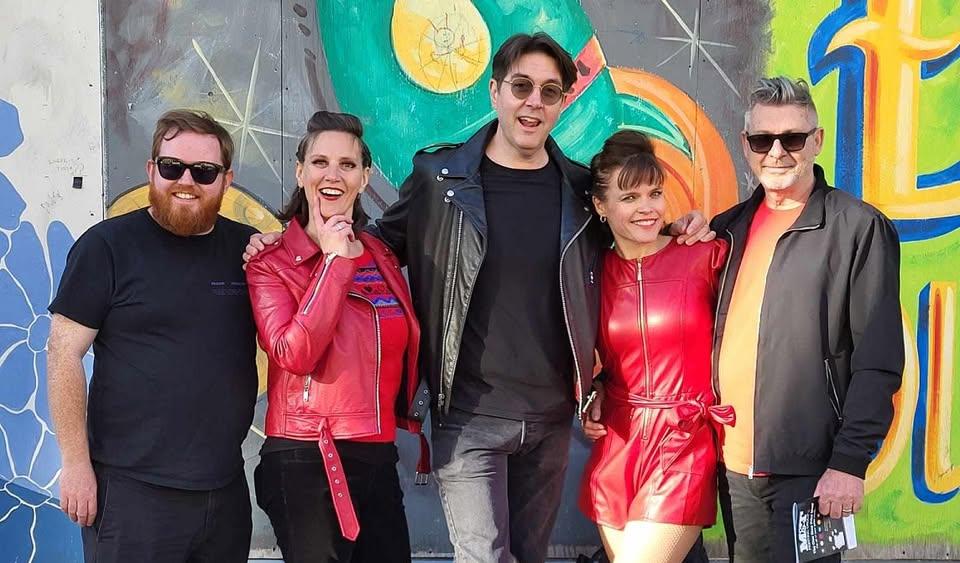
(Pictured: Betamaxx)
The live band, Betamaxx, deserves special mention. Their tight, polished sound drives the entire show with precision and power. Every cue lands perfectly, every riff energizes the room. Positioned on stage, they manage to be a visible part of the world without ever intruding on the action, which is a testament to both their musicianship and the thoughtful staging.
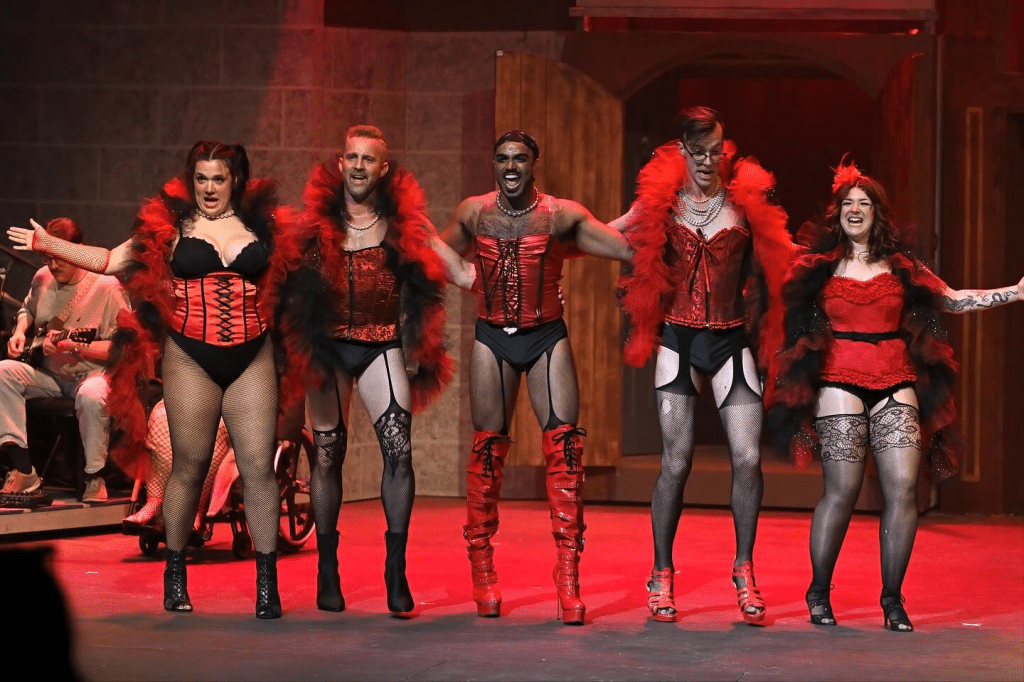
(Pictured: The Rocky Horror Show Cast Members. Photo Credit: Ross Davidson)
Casting for this production is simply spot-on. Each performer seems born for their role. Shaidon Woods (Frank N. Furter) and Brendon Ainscow (Rocky) lead spectacularly, heating up the theatre with their charisma and—let’s call a spade a spade—incredibly toned physiques.
(Pictured: Jared Brown as Brad and McKenna Langdon as Janet. Photo Credit: Ross Davidson)
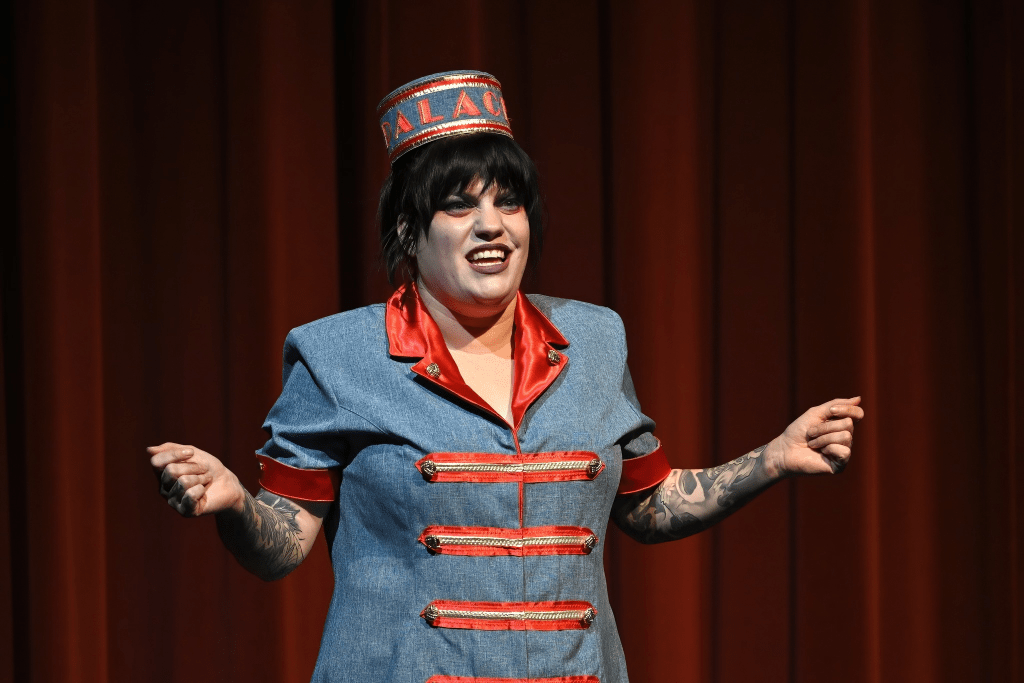
Jared Brown (Brad), McKenna Langdon (Janet), Sarah Dennison (Columbia), Aidan Coutts (Riff Raff), and Jenn Marino (Magenta) all deliver outstanding performances, with vocal talent well above typical community theatre calibre. Their voices soar. Sometimes sultry, sometimes raw, always captivating. And of course, the chorus rounds out the cast wonderfully, never missing a beat.
(Pictured: Jenn Marino as Magenta. Photo Credit: Ross Davidson)
Part of what makes The Rocky Horror Show such an unforgettable experience is its infamous audience participation. At the Palace, this tradition is embraced wholeheartedly. It’s wild, raucous, and loud—perhaps too loud for some tastes—but it’s an essential part of the cult phenomenon. As one audience member aptly shouted, “It’s just a jump to the left!” Indeed, the crowd is as much a part of the show as the cast.
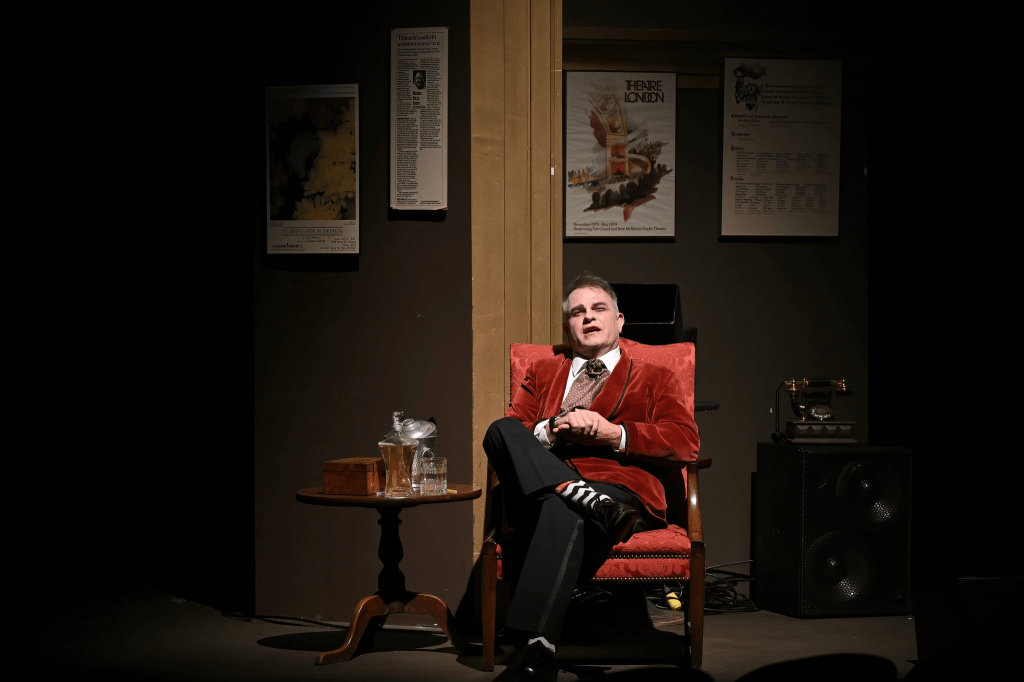
At times, Jeff Werkmeister’s performance as the Narrator was momentarily drowned out by the audience’s enthusiasm, but he handled it with wit and ease, working the crowd masterfully and keeping the energy high. His effortless breaking of the fourth wall mirrored Frank N. Furter’s gleeful command of the same device, pulling the audience ever deeper into the madness.
(Pictured: Jeff Werkmeister as The Narrator. Photo Credit: Ross Davidson)
The bravery of the cast cannot go unmentioned. This is a show that demands vulnerability, often performed in little more than underwear, yet the actors deliver with total confidence. Their comfort and commitment make their performances all the more believable, powerful, and liberating to watch.
Overall, The Rocky Horror Show at the Palace Theatre is a fantastic, fearless production that’s both outrageous and artful. It’s community theatre at its most daring, bursting with talent, energy, and unapologetic fun. Whether you’re a longtime “Rocky” fan or a first-timer, you’re in for a wild ride. And a word of advice, if you’re a newcomer: wear pearls—you may need to clutch them.
If You Go:
What:The Rocky Horror Show Where: Palace Theatre Arts Commons, 710 Dundas St, London, Ontario When: Thursday, October 30 – 7:30 pm, Friday, October 31 – 7:30 pm, Saturday, November 1 – 2:00 pm and 7:30 pm, Sunday, November 2 – 2:00 pm Tickets: Palace Theatre Arts Commons | London ON Community Theatre Adults: $38 – Deluxe ticket with party supplies – $43 Students/Seniors (55+): $36 – Deluxe ticket with party supplies – $41 Youth (under 18): $23 – Deluxe ticket with party supplies – $28
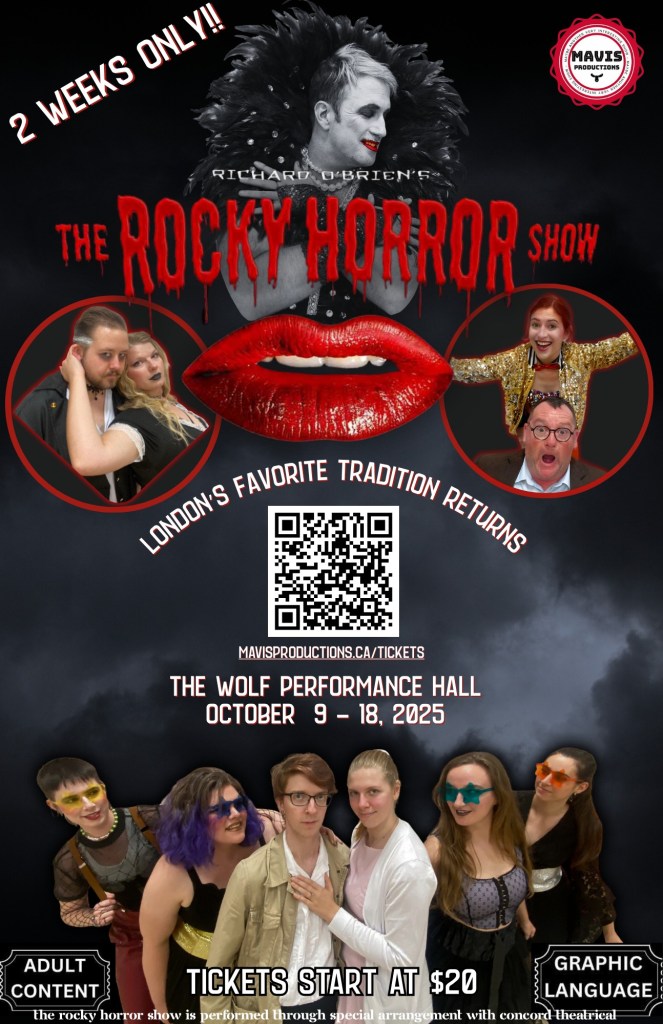
The Rocky Horror Show LIVE musical returns to London to celebrate 50 years of the film you love, THE ROCKY HORROR PICTURE SHOW.
The show opens on Thursday, October 9, and runs through October 18 at the Wolf Performance Hall.
For four incredible years, Mavis Productions has made this moment an October tradition — a night when audiences throw the rules out the window, shout every line, and become part of something bigger than a show.
It’s not just a performance — it’s a celebration.
The music. The madness. The magic.
Every beat, every laugh, every sparkle of glitter is pure Rocky Horror energy. This is your call to let go, dress up, and feel alive.
Because this isn’t just theatre… this is Rocky Horror. Don’t dream it — BE IT.
In this cult classic, sweethearts Brad and Janet, stuck with a flat tire during a storm, discover the eerie mansion of Dr. Frank-N-Furter. As their innocence is lost, Brad and Janet meet a houseful of wild characters, including a rocking biker and a creepy butler. Through elaborate dances and rock songs, Frank-N-Furter unveils his latest creation: a muscular man named “Rocky.”
Filled with all the classic songs and audience participation that made the film so much fun for over 50 years, all of it comes to life on the stage. So bring your costumes and all your scripts and be ready for a night of absolute pleasure. Whether you come out for our new 2 pm afternoon shows, our classic 7 pm shows, or midnight shows, we know you will shiver with antici…pation!!
If You Go:
What: Mavis Productions presents The Rocky Horror Show 50th Anniversary
When: October 9 – October 18.
Where: Wolf Performance Hall, 251 Dundas St., London, ON






















 The Beat Magazine 2025