Mrs. Krishnan’s Party Cooks Up Community at The Grand

Reviewed by Charlotte MacDonald

(Mrs. Krishnan’s Party. Photo: Dahlia Katz.)

Walking into Mrs. Krishnan’s Party at The Grand Theatre’s Auburn Stage, I had no idea what to expect.

After being handed a piece of paper captioned “Wallflower,” I was greeted by a vibrantly clothed man, grinning from ear to ear, welcoming audience members and directing us to our seats.

Inside the theatre, chairs were set up around the perimeter of the room, all facing inwards to a table with a single countertop burner in the centre, and a platform draped in patterned sheets stood toward the back, where actors could enter and exit. Hanging from the ceiling and around the walls were garlands of red flowers, and boxes, presumably containing inventory overflowing from Mrs. Krishnan’s shop, gathered around the edges of the room.

From the stage set up alone, I knew this wasn’t going to be a typical performance – and I was right.

To start the show was the same colourfully dressed man from earlier, played by Justin Rogers, performing as James (or self-proclaimed DJ Jimmy J), Mrs. Krishnan’s boisterous and energetic boarder.
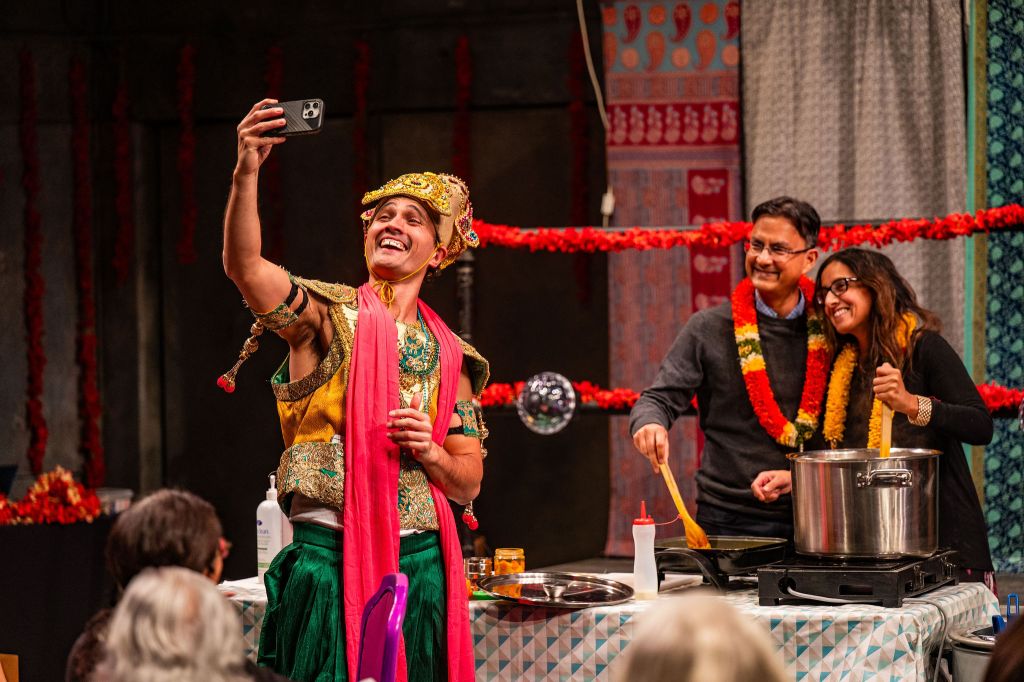
(Pictured: Justin Rogers as DJ Jimmy J and audience members. Photo: Dahlia Katz.)

He explained to the audience that it was a day of celebration and that we were invited to join in the festivities of the annual Hindu harvest festival, Onam. The catch? Mrs. Krishnan doesn’t know that all 100+ of us are in the back of her shop and ready for a party.

Within minutes, James had brightly coloured scarves passed around for every audience member to wear, quickly painting the room in vibrant oranges, yellows, greens and pinks. He then began to play loud, energetic music, inviting people to clap, get on their feet, put their hands in the air and start the party.

It dawned on me like the sun that I had unknowingly placed myself at the epicentre of internal conflict for every introverted arts lover: interactive theatre.

Safe to say, as an introvert, I was terrified of what I had just gotten myself into. On the other hand, as a theatre fan with a job to accomplish, I knew what I had to do, and so, despite my natural aversion to high-intensity social settings, I swallowed my fear and surrendered.

The story is set into motion by the eponymous Mrs. Krishnan, an Indian immigrant mother and widow who runs Krishnan’s Dairy, and awaits her son’s return home to celebrate Onam, played by Kalyani Nagarajan. She makes her entrance with a literal bang, as she stumbles in the dark offstage after James turns the lights off in an attempt to surprise her with the abundance of strangers gathered in the backroom of her shop.

(Pictured: Kalyani Nagarajan as Mrs. Krishnan. Photo: Ankita Singh.)

After the audience yells “surprise!” Mrs. Krishnan is in serious shock at the sight of all of us, appearing timid, reserved and mildly furious with her boarder. While her strict, regimented demeanour remains present throughout much of the show, it isn’t long before her quirky, unapologetic and playful side begins to emerge as she grows more comfortable with the visitors in her shop.

A key component of this performance is its reliance on audience interaction. Both Rogers and Nagarajan constantly defer to the audience to decorate the unfolding story, and at times even invite them on stage to assist in cooking the Dahl for the party. Among these audience members of my show were Tom, a six-foot-four man who took it upon himself to help Mrs. Krishnan open the canned tomatoes — prompting her to repeatedly complain that James should be more like him — Kevin from the back row, whose name resulted in loud cries of “KEVIN!” from Mrs. Krishnan in a playful Home Alone reference and, my personal favourite, the little boy sweeping the fallen rice off the floor while laughing at every moment.
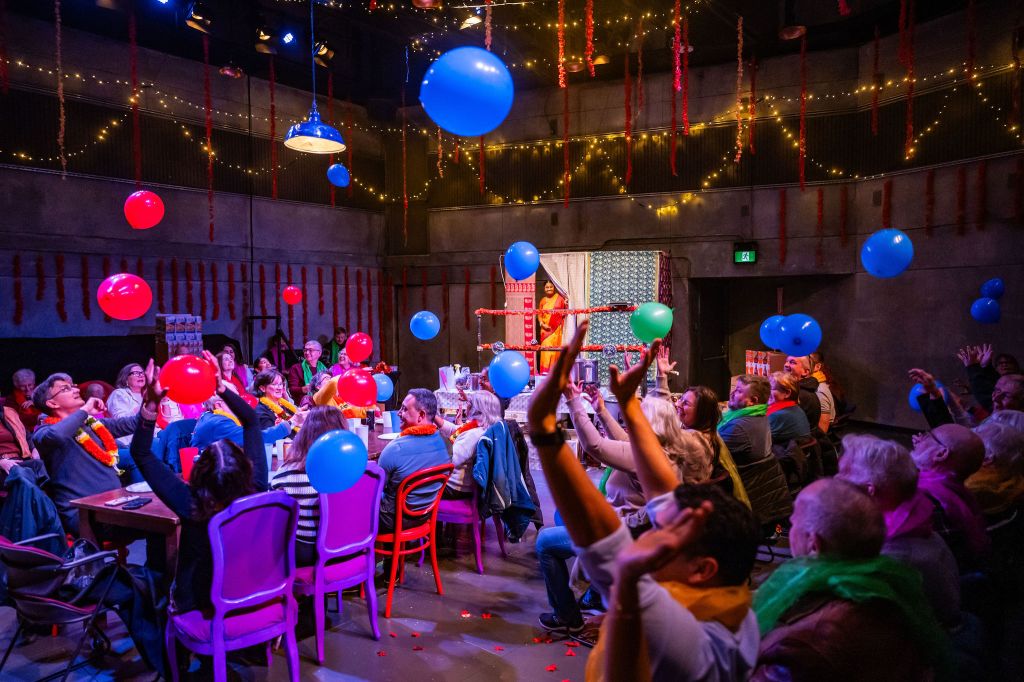
(Pictured: Audience Members, Mrs. Krishan’s Party. Photo: Dahlia Katz.)

While I knew this was a theatre performance, at times it felt more like watching a stand-up comedy set from performers who had mastered the art of crowd work, effortlessly rolling with every joke and unexpected moment. What made it even more unique was the knowledge that no two performances would ever unfold in quite the same way.

As artistic director of The Grand, Rachel Peake explains, “Immersive theatre removes the division between audience and stage — calling on the audience to meet the experience with all five senses, and clearly articulating that each performance is unique, influenced by the particular confluence of people on any given day.”

(Pictured: Rachel Peake, Artistic Director, The Grand Theatre.)

The constant humour present throughout the performance also made the more serious moments land with greater weight by contrast. I appreciated that the story allowed for its characters to be more than simply funny, revealing them as people searching for meaning in a world where happiness is not always easy to find.

This becomes even more layered when the reality of cultural displacement is considered, making Mrs. Krishnan representative of more than just herself.

In an interview with me after the performance, Nagarajan explained, “She is every migrant struggling to find their place in their community, battling with her son, battling with this idea of duty versus choice and freedom…I think that’s why a lot of the Indian community here identifies with her. They go like, ‘I know who that person is, and I want to call my mum,’ or ‘I am that mum.’”

Once the show concluded, to celebrate the party and the community forged over the last 80 minutes, the actors served the dahl made throughout the performance to the audience.

In the end, as apprehensive as I was in the beginning, I’m glad I stayed to feel part of a performance meant to bring people of different backgrounds together in a shared celebration. Saturated in humour, doused in conflict, and marinated in community, Mrs. Krishnan’s Party was a reminder that even in the midst of chaos, we can choose to celebrate anyway.

What: The Grand Theatre presents Mrs. Krishnan’s Party.

When: February 25 – March 7, 2026.

March 5, 2026 | 7:30pm

March 6, 2026 | 8:00pm

March 7, 2026 | 2:00pm

March 7, 2026 | 8:00pm

Where: Grand Theatre, 471 Richmond Street, London, ON.

Tickets: Tickets can be purchased online at grandtheatre.com, by phoning the Box Office at 519.672.8800, or by visiting the Box Office in person at 471 Richmond Street (weekdays from 9:00 a.m. to 5:00 p.m., and Saturdays from 11:00 a.m. to 3:00 p.m.).

Reviewed by Charlotte MacDonald
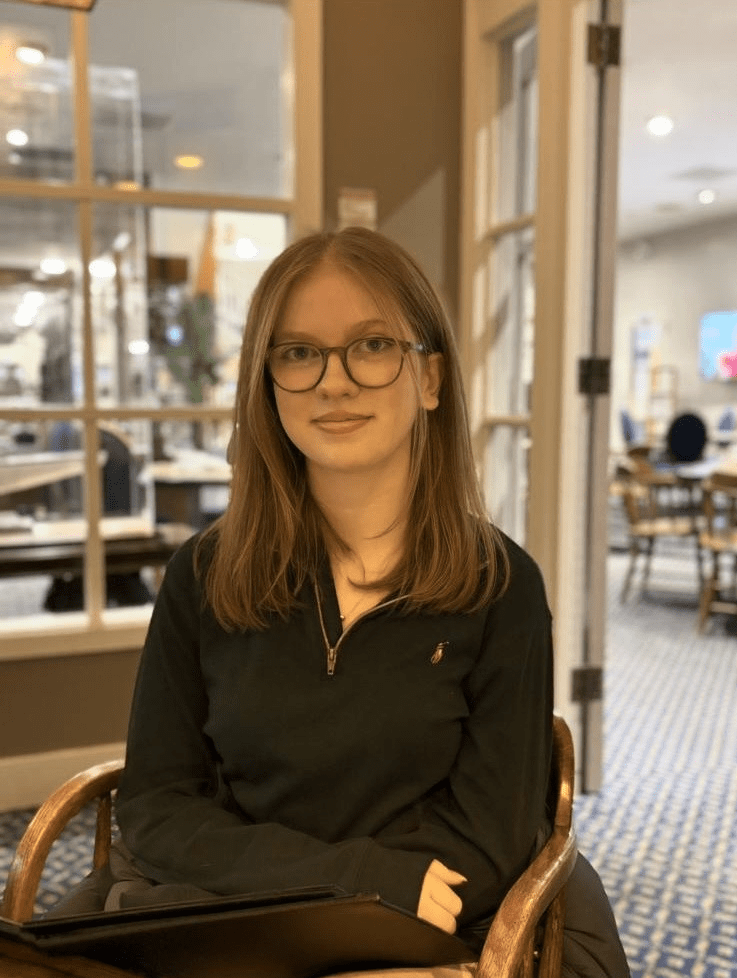
Charlotte MacDonald is a Creative Writing and History student at Western University. She currently writes about theatre, pop culture, and campus life for The Western Gazette, works as a Digital Intern at The Walrus, and hosts a radio show at Radio Western. Growing up in Toronto, theatre has always been a staple part of Charlotte’s life, and she has come to greatly enjoy engaging and contributing to the theatre community through her writing.
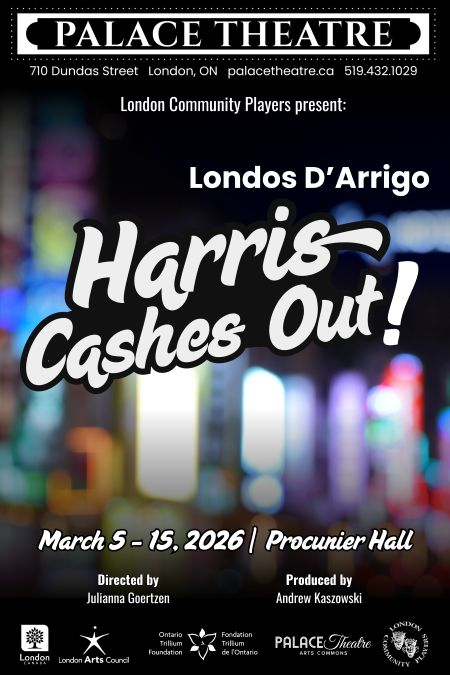

Q&A With Julianna Goertzen, Director of Harris Cashes Out!

London Community Players’ production of Harris Cashes Out! plays on the Procunier Hall stage at the Palace Theatre from March 5 – 15. Director Julianna Goertzen talks about the production in this Q&A interview with Richard Young.

Q. What is the basic premise of Harris Cashes Out? Could you provide a brief plot synopsis?

Harris Wellborn is an old, washed-up Broadway musical writer who didn’t make much money in theatre. After his wife passed away, he fell into despair, and his sister, Maggie, moved him against his will to Baltimore to be closer to her. She arranged for an eccentric dog walker, Kim, to check on him and his health, but Kim and her boyfriend, Jason, had other plans to take advantage of Harris and his musical writing past. It’s a comedy about relationships and the things that happen when very different people are in proximity to one another.

(Pictured: Harris Cashes Out! Director, Julianna Goertzen. Photo: Ross Davidson.)

Q. The description on the Palace Theatre website indicates that the play has a Broadway theme. Does it include any musical numbers?

The only musical numbers it includes are the little ‘soft-shoe humming’ songs that Harris (played by Tim Bourgard) makes up on stage every performance. You may also recognize famous musical numbers played during the intermission and changes in scenes.

(Pictured: Tim Bourgard as Harris Wellborn. Photo by Ross Davidson.)

Q. Why did you choose the Procunier Hall stage as opposed to the larger Palace Theatre stage?

With a play like Harris Cashes Out!, I believe it would be more appropriate for a smaller venue like Procunier Hall to hold. With only four actors and a simple rundown apartment set, you’re right up close to the action and can hear the quiet, sensitive scenes that you might not catch with a big stage.

Q. Can you tell me about the playwright Londos D’Arrigo? I understand he’s Canadian and from around these parts. What other noteworthy plays has he written?

Londos was born, raised, and currently resides in Toronto. We have the privilege of having him coming to see our production of Harris Cashes Out! and we are very excited. Londos says that Harris Cashes Out! is a favourite of his. Other comedic plays he has written include Spreading it Around, which the London Community Players produced in 2009 at the Palace Theatre. He has also written a play called Vicki’s Back!, which sounds very similar to Harris Cashes Out!, written with a female lead in ‘show biz’.

(Pictured: Playwright Londos D’Arrigo.)

Q. Can you tell me something about yourself in terms of your involvement in community theatre, things such as other plays you have directed, produced or starred in?

I have always been involved in theatre from a young age. Most of my theatrical career was with Aylmer Community Theatre (ACT). In 2007, I started out as a makeup artist and dresser for those quick changes backstage. My acting debut on ACT’s stage was a comedy called Not Now Darling by Ray Cooney and John Chapman, where I played Sue Lawson. I was required to act drunk and walk around in my underwear on stage. Since then, I have been a part of many productions, whether as a stagehand or stage manager. My specific role was not of primary importance; what mattered most was that the cast and crew enjoyed a positive experience while producing the show.  I have only directed two one-act shows with ACT in the past, so this is also my first full-length show.

In regard to my London community theatre experience, this is my directorial debut. A year ago, I was on the Palace Theatre stage as Dorothy Foxton in Murdered to Death, a comedy by Peter Gordon; before that, I was Dorothy in Stepping Out by Richard Harris in 2009. 

(Pictured: Vivien King-Sherwood as Maggie Bellows. Photo by Ross Davidson.)

Q. What challenges have you encountered bringing this play to the Procunier Hall stage? 

I have experienced very few challenges with bringing Harris Cashes Out! to Procunier, although the set and lighting crew may disagree since a set like this hasn’t been built in Procunier Hall for as long as anyone can remember. The biggest challenge about the play is the part of Harris. Harris’ lines amount to 50% of the dialogue. Tim Bourgard, who plays Harris, has been working very hard to recall every word, blocking, prop, and costume piece. The other actors have been very helpful and encouraging to Tim as we make our way through rehearsals.

(Pictured: Sam Didi as Jason Sernach. Photo by Ross Davidson)

Q. Is there anything else you think our readers should know about LCP’s production of Harris Cashes Out!?

This family-friendly show is full of laughs for all ages. Come out and enjoy live theatre up close and personal in Procunier Hall at the Palace Theatre. You won’t regret it.

(Pictured: Kim Sutton as Jasmine Gunkel. Photo by Ross Davidson.)

CAST & CREW: HARRIS CASHES OUT!

DirectorJulianna Goertzen
Stage ManagerAlex Goertzen
ProducerAndrew Kaszowski
Assistant Stage ManagerAndrea Stevens
Light DesignAndrew Kaszowski
Sound DesignAlex Goertzen
CostumesJulianna Goertzen & MJ Walzak
PropsColin Arthur
Intimacy CoordinatorJames Noonan
Set Build LeadDavid Long
Harris WellbornTim Bourgard
Maggie BellowsVivien King-Sherwood
Kim SuttonJasmine Gunkel
Jason SernachSam Didi

IF YOU GO:

What: London Community Players present Harris Cashes Out!

When: Thursday, March 5 – 7:30 pm
Friday, March 6 – 7:30 pm
Saturday, March 7 – 7:30 pm
Sunday, March 8 – 2:00 pm
Thursday, March 12 – 7:30 pm
Friday, March 13 – 7:30 pm
Saturday, March 14 – 2:00 pm
Sunday, March 15 – 2:00 pm

Where: Palace Theatre, 710 Dundas St, London, ON.

Tickets: https://mytickets.palacetheatre.ca/eventperformances.asp?evt=526

For more information about the Palace Theatre, visit https://palacetheatre.ca/

Follow the Palace Theatre on Instagram https://www.instagram.com/atthepalace/

Interview conducted by Richard Young

If you have a story idea or would like to become a Volunteer Writer for The Beat Magazine, you can reach Richard at richardyoung@thebeatmagazine2025.ca

“It’s a Privilege to Pee!” Brilliant and Thought-Provoking: Urinetown Shines at the Palace Theatre

By Jo-Anne Bishop

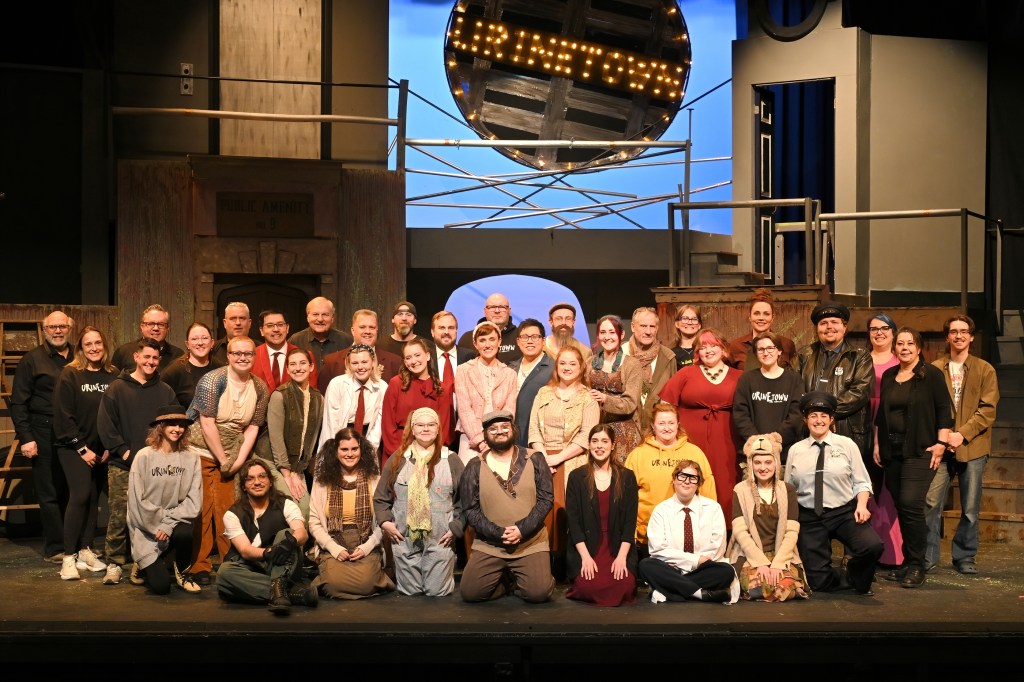
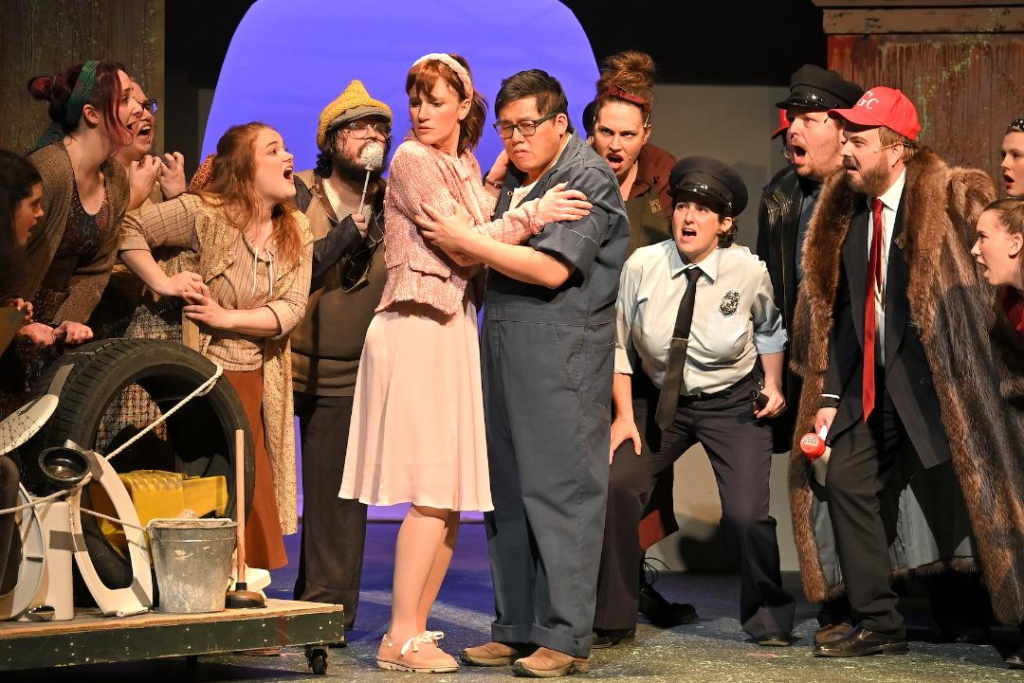
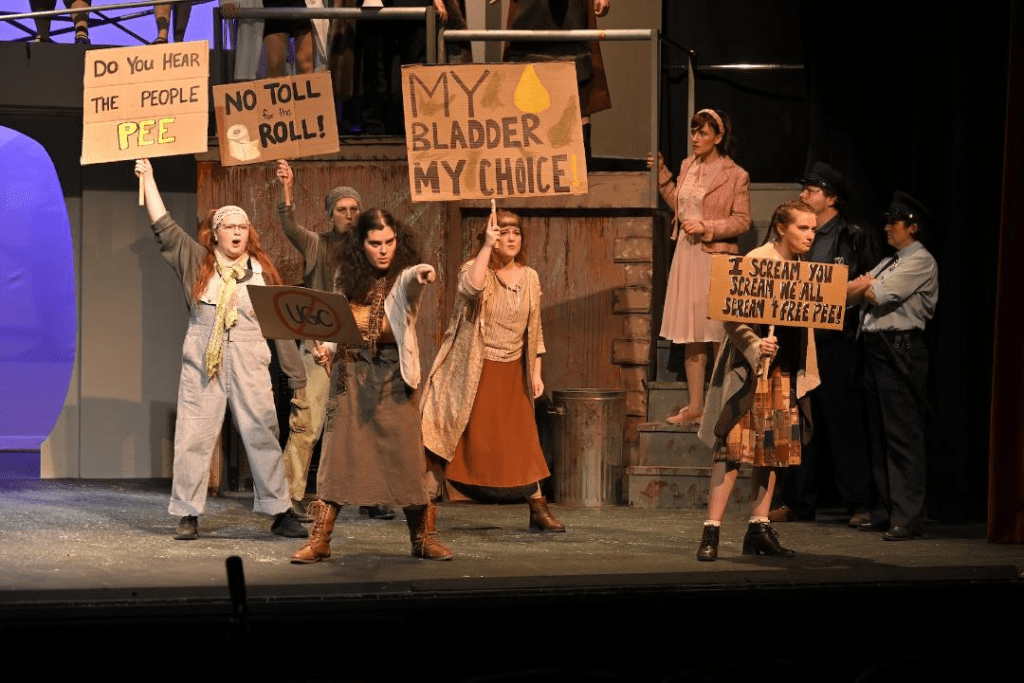
(Cast and Crew of Urinetown: The Musical. Photo Credit: Ross Davidson)

Community theatre can sometimes surprise you. Occasionally, it can even rival (or surpass!) professional productions in artistry, ambition, and execution. That was unquestionably the case with this remarkable staging of Urinetown: The Musical at the Palace Theatre.

Directed by Sydney Brockway, produced by Ceris Thomas, and featuring an orchestra under the leadership of Steven Morley, this production demonstrated a level of talent that felt genuinely world-class, and all the more impressive given its community theatre setting.
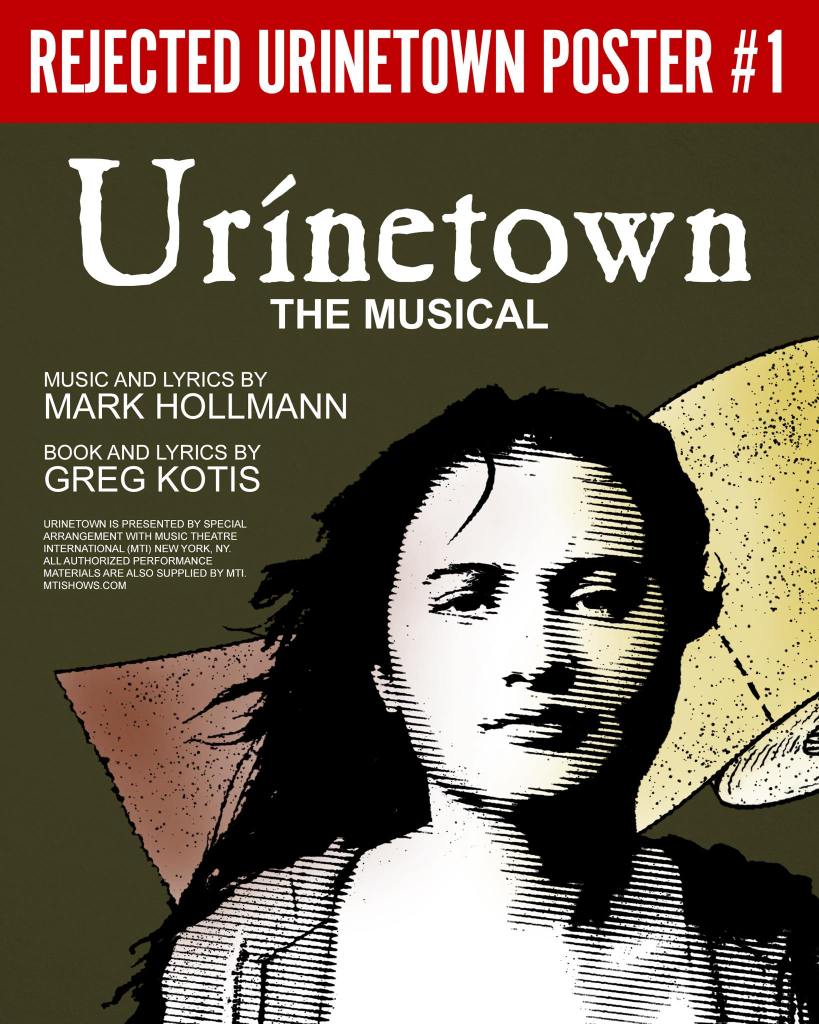
For those unfamiliar with the show, Urinetown is far more than its intentionally provocative title suggests. The musical is a sharp political satire that explores themes of corporate greed, environmental crisis, class inequality, and the consequences of unchecked capitalism. Set in a dystopian future where water scarcity has led to the privatization of public amenities — including toilets — the story examines power, resistance, and the moral ambiguities of revolution. At the same time, it quite cleverly parodies the conventions of musical theatre itself by breaking the fourth wall and inviting audiences to question not only the characters’ motives, but their own assumptions about justice and heroism.

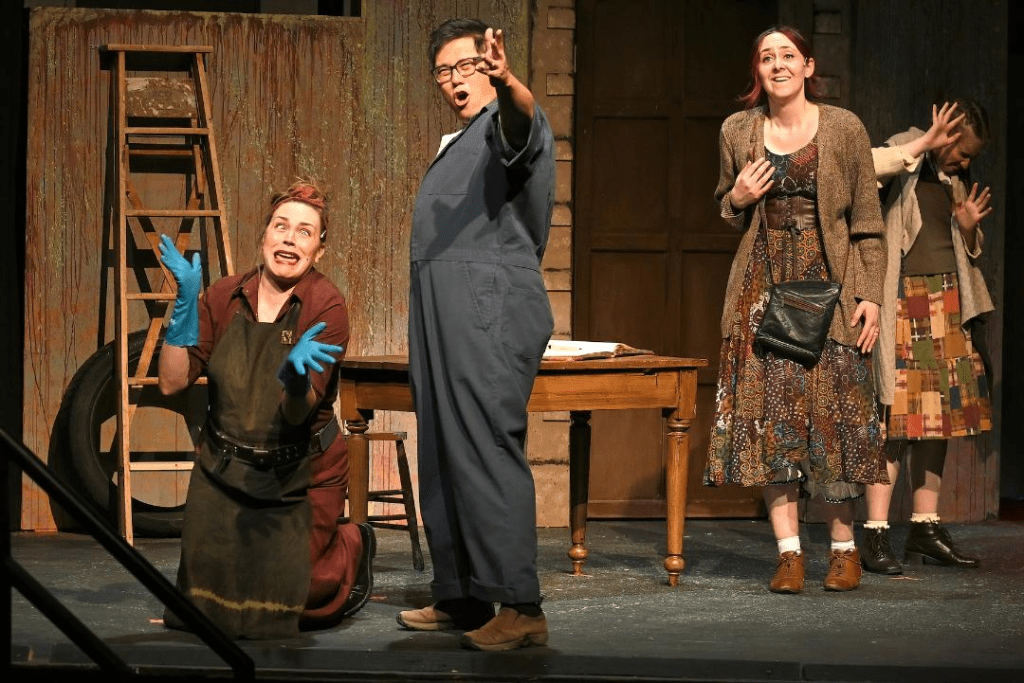
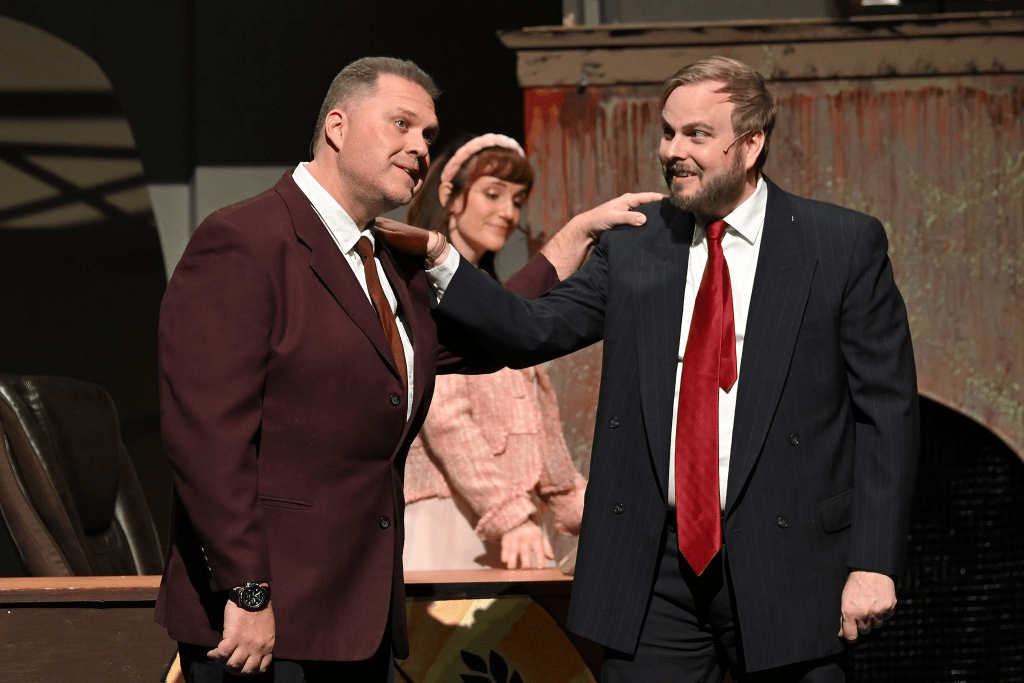
(Pictured: Jesslyn Hodgson as Hope Cladwell, Sean Brennan as Caldwell B. Cladwell, and Ensemble members. Photo Credit: Ross Davidson.)

Balancing humour with social commentary is no easy task, yet this production navigated both with intelligence and confidence. Notably, the company also extended these themes beyond the stage through direct outreach to unhoused members of the surrounding community. An effort that meaningfully deepened the production’s social resonance.

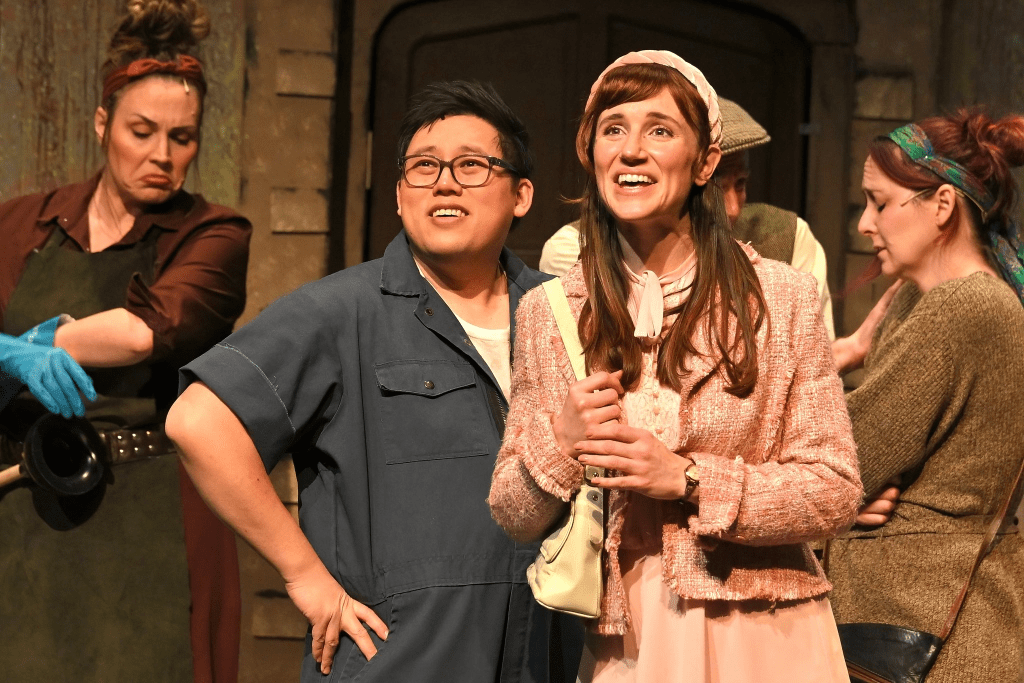
(Pictured: Laura Williams as Penelope Pennywise, Henry Truong as Bobby Strong, and Allison Gold as Ma Strong. Photo Credit: Ross Davidson.)

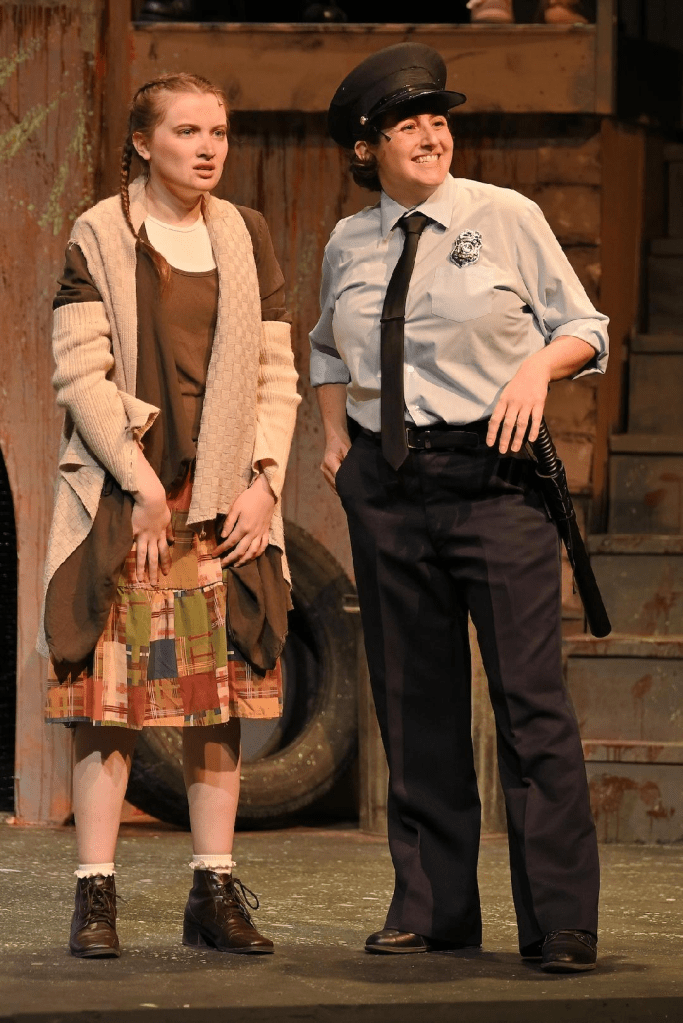
The performances were uniformly exceptional. Kate Sepi delivered a commanding and charismatic Officer Lockstock, serving as both narrator and participant with clarity, presence, and authority. Henry Truong, as Bobby Strong, brought both emotional sincerity and vocal strength to the role, grounding the story’s central conflict with authenticity. Jesslyn Hodgson as Hope Cladwell possessed a vocal quality that elevated every musical moment she touched. Sean Brennan delivered a captivating and hilarious Caldwell B. Cladwell, creating a villain whose presence was magnetic and layered. His performance (for me) stood comfortably alongside work seen on much larger and better-funded stages. Rae Ryder as Little Sally offered memorable nuance and charm, embodying the show’s self-aware humour with skill.

(Pictured: Rae Ryder as Little Sally and Kate Sepi as Officer Lockstock. Photo Credit: Ross Davidson.)

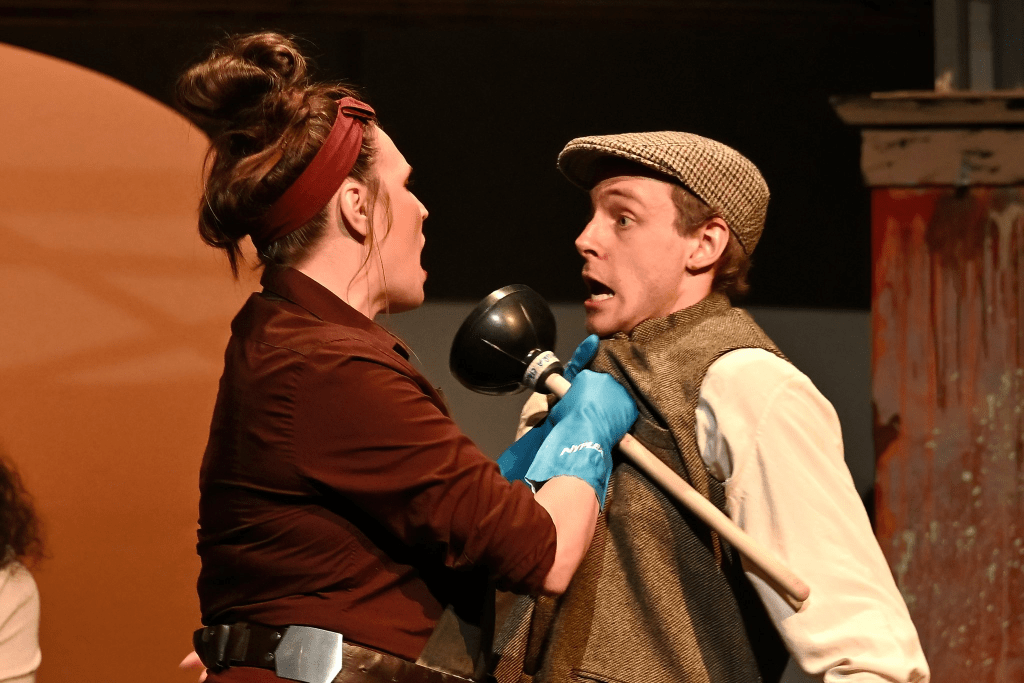
A particularly extraordinary moment behind the scenes became one of the evening’s most impressive achievements: Penelope Pennywise, normally played by Laura Williams, was unexpectedly performed on opening night by director Sydney Brockway herself due to illness. Had there not been a notice in the lobby advising of the opening night change, audiences would never have known. It was a nearly seamless, truly confident, and fully realized performance, and a testament to Brockway’s professionalism and depth of preparation. However, it is my understanding that, as commendable as Sydney’s performance was, Laura’s performance is one not to be missed, which is why I will be making a return trip to see Penelope Pennywise in her other form, once Laura is cleared to return.

(Pictured: Sydney Brockway, Urinetown Director/Choreographer. Photo Credit: Ross Davidson.)

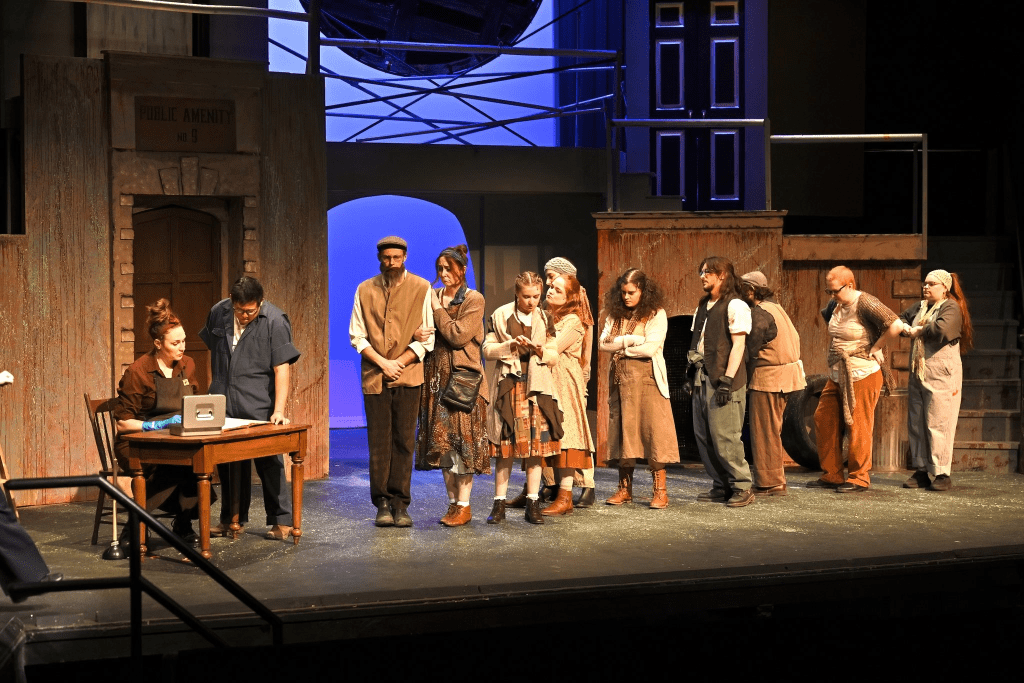
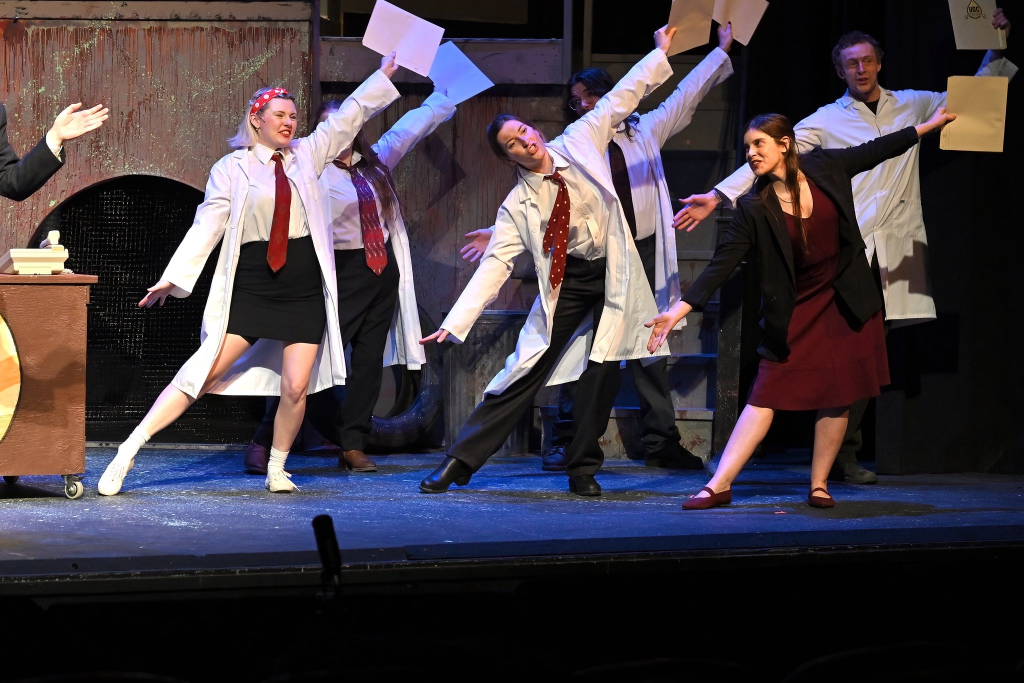
Equally impressive was the ensemble. There was not a weak link in the company, and truly, there are no small roles in this production. Each cast member is to be commended for delivering an exceptional performance, owning every line and every beat. The choreography was executed with precision, energy, and commitment, and the cast functioned as a cohesive storytelling unit throughout. At various points in the evening, nearly every ensemble member captured attention, which is a hallmark of strong direction and engaged performers.

(Pictured: Urinetown Ensemble Members. Photo Credit: Ross Davidson.)

The design elements further strengthened the production. Costumes by the team of Tannis Daoust, Chloe Scripnick, and Chatham Vy were thoughtfully conceived, particularly in their use of colour to distinguish social groups: the impoverished citizens versus the corporate faction. The costume choices enhanced the visual storytelling clearly and effectively. Combined with the set, props, lighting, and musical direction, the overall aesthetic achieved a level of polish that elevated the entire production.

(Pictured: Foreground Jesslyn Hodgson as Hope Cladwell and Henry Truong as Bobby Strong. Photo Credit: Ross Davidson.)

What elevates this production even further is the company’s commitment to connecting the show’s themes with the lived realities of the surrounding community. Members of the cast shared that during the rehearsal process, they felt a responsibility to recognize and engage with unhoused individuals living in the neighbourhood around the theatre. They responded not only with awareness but with action, providing food and basic necessities during the rehearsals and the run of the production. This effort was also acknowledged in a cast note included in the program, which read:

“Urinetown the Musical is about access, power, and what happens when basic human needs are controlled by systems rather than compassion. Producing this show in a neighbourhood where these questions are not abstract, but lived, reminds us that theatre doesn’t exist in a vacuum. We acknowledge the people in our community who are navigating housing insecurity, poverty, and barriers to care, and we affirm their dignity and humanity. We invite audiences to laugh, think, and leave asking bigger questions about how communities choose to care for one another.”

(Photo Credit: Ross Davidson.)

This initiative demonstrated a meaningful alignment between art and empathy, reinforcing the social relevance of the production beyond the stage itself. And this, for me, is the longstanding purpose of the arts. To merge art and real life, and to showcase the stories that make us human.

If there were any critique to be offered, it would be that the orchestra occasionally overpowered the vocals in certain moments. However, this was a relatively minor issue within an otherwise outstanding musical presentation.

Ultimately, this production of Urinetown exemplifies what community theatre can accomplish when passion, talent, and leadership align. It was bold, intelligent, and thoroughly entertaining. It is a production that not only delighted audience members but also invited them to reflect on timely social questions. Productions of this calibre are something any arts community should be proud to claim. This show deserves full audiences for the rest of its run. Please, plan to see this production and tell your friends.
As always, please support the arts. Keep storytelling alive.

IF YOU GO:

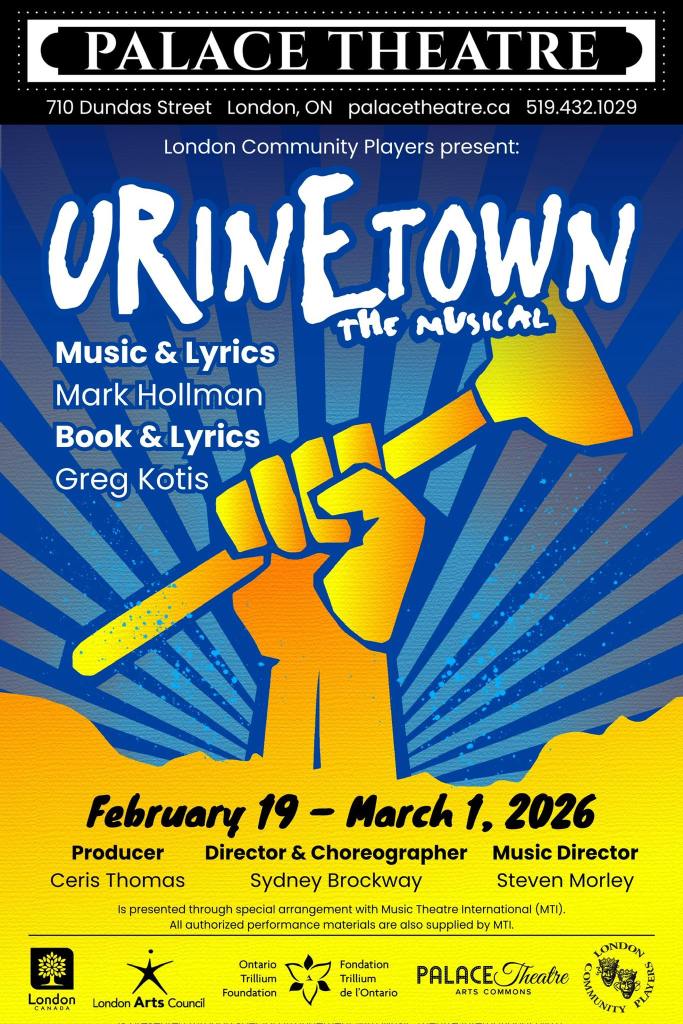
What: Urinetown: The Musical with Music and Lyrics by Mark Hollman, Book and Lyrics by Greg Kotis

When: February 19th to March 1st, 2026

Where: The David Long Stage at the Palace Theatre, 710 Dundas Street, London, Ontario.

Tickets: $23 (students) – $38  Tickets | Urinetown: The Musical | The Palace Theatre Arts Commons

Reviewed by Jo-Anne Bishop

Urinetown – What’s in a name?

Producer Ceris Thomas explains the meaning of the title Urinetown in this exchange with Beat Magazine Publisher Richard Young. Urinetown: The Musical plays at the Palace Theatre from February 19 to March 1.

(Pictured: Ceris Thomas. Photo Credit: Ross Davidson.)

Urinetown: The Musical is notoriously hard to describe, which is probably why so many explanations feel incomplete or confusing. Honestly, if it had a different title, people might find it easier to just shrug and say, “Sure—let’s go see this thing.”
At its core, Urinetown is a dystopian satire that imagines a world so devastated by water shortages that bathrooms no longer exist in private homes. To manage the crisis, business and government join forces and arrive at a “solution”: the public must pay to pee. It’s an intentionally oversimplified take on a massive environmental issue, designed to get the audience quickly and clearly into the world of the show.

As with many well-meaning systems in a capitalist society, the opportunity to profit from an unavoidable human need quickly curdles into greed and manipulation. That’s where we meet the people of Urinetown—some desperate to survive, others perfectly comfortable in their assumed wealth and eager to raise the fees even higher.

The absurdity, poignancy, and laugh-out-loud comedy come from how the story is told. One of the creators’ most delightful choices is the musical’s constant tribute to classic Broadway shows. One song clearly channels Fiddler on the Roof; the next explodes with unmistakable West Side Story energy. The first time I heard it, I actually laughed out loud in my car.

If you’ve ever seen a musical—any musical—you’ll catch the references and giggle along. And if you’re someone who doesn’t usually like musicals? This show lovingly invites you to laugh at all the ones your mom dragged you to see.”

IF YOU GO:

What: London Community Players present Urinetown: The Musical

When: February 19 to March 1, 2026

Where: David Long Stage, Palace Theatre, 710 Dundas St., London, ON

Tickets: Adults: $38,  Students/Seniors (55+): $36, Youth (under 18): $23, Preview: $28 (fees included). https://mytickets.palacetheatre.ca/eventperformances.asp?evt=514

To learn more about Urinetown: The Musical and the Palace Theatre, visit https://palacetheatre.ca/

Follow the Place Theatre on Facebook https://www.facebook.com/atthepalacetheatre and Instagram https://www.instagram.com/atthepalace/

London Community Players’ Urinetown: The Musical opens February 19

London Community Players’ production of Urinetown: The Musical opens this week at the Palace Theatre. What follows is a Q&A Interview with the play’s producer, Ceris Thomas, conducted by Richard Young.

(Pictured: Laura Williams as Penelope Pennywise, Henry Truong as Bobby Strong, Jesslyn Hodgson as Hope Cladwell, and Allison Gold as Josephine “Ma” Strong. Photo Credit: Ross Davidson.)

Q. The description of Urinetown: The Musical found on the Palace Theatre website reads: “In a dystopia ruled by drought and corporate greed, public toilets are the law— and rebellion smells suspiciously like revolution. Equal parts absurd, poignant, and laugh-out-loud funny, Urinetown skewers capitalism, power, and musical theatre itself.” Could you break that down for our readers?

Urinetown: The Musical is notoriously hard to describe, which is probably why so many explanations feel incomplete or confusing. Honestly, if it had a different title, people might find it easier to just shrug and say, “Sure—let’s go see this thing.”

At its core, Urinetown is a dystopian satire that imagines a world so devastated by water shortages that bathrooms no longer exist in private homes. To manage the crisis, business and government join forces and arrive at a “solution”: the public must pay to pee. It’s an intentionally oversimplified take on a massive environmental issue, designed to get the audience quickly and clearly into the world of the show.

As with many well-meaning systems in a capitalist society, the opportunity to profit from an unavoidable human need quickly curdles into greed and manipulation. That’s where we meet the people of Urinetown—some desperate to survive, others perfectly comfortable in their assumed wealth and eager to raise the fees even higher.

(Pictured: Kate Sepi as Officer Lockstock and Luke Bainbridge as Officer Barrel. Photo Credit: Ross Davidson.)

The absurdity, poignancy, and laugh-out-loud comedy come from how the story is told. One of the creators’ most delightful choices is the musical’s constant tribute to classic Broadway shows. One song clearly channels Fiddler on the Roof; the next explodes with unmistakable West Side Story energy. The first time I heard it, I actually laughed out loud in my car.

If you’ve ever seen a musical—any musical—you’ll catch the references and giggle along. And if you’re someone who doesn’t usually like musicals? This show lovingly invites you to laugh at all the ones your mom dragged you to see.

(Pictured: Ceris Thomas, Producer of Urinetown: The Musical.)

Q. It also reads: “No one is safe. Not even the audience. Bring your sense of humour — and your spare change,” implying audience members will be expected to participate in some way. Will they? 

The fourth wall is very much broken in this production. Officer Lockstock serves as the show’s narrator, frequently conversing with Little Sally, a member of the “poor” who isn’t afraid to challenge Lockstock’s interpretation of events. Beyond that, the audience needs only to bring a sense of humour and a willingness to laugh out loud at the shenanigans of the players.

(Pictured: Ryan Starkweather as Senator Fipp, Jesslyn Hodgson as Hope Cladwell, and Sean Brennan as Caldwell B. Cladwell. Photo Credit: Ross Davidson.)

Q. Can you provide a brief Synopsis of the play? 

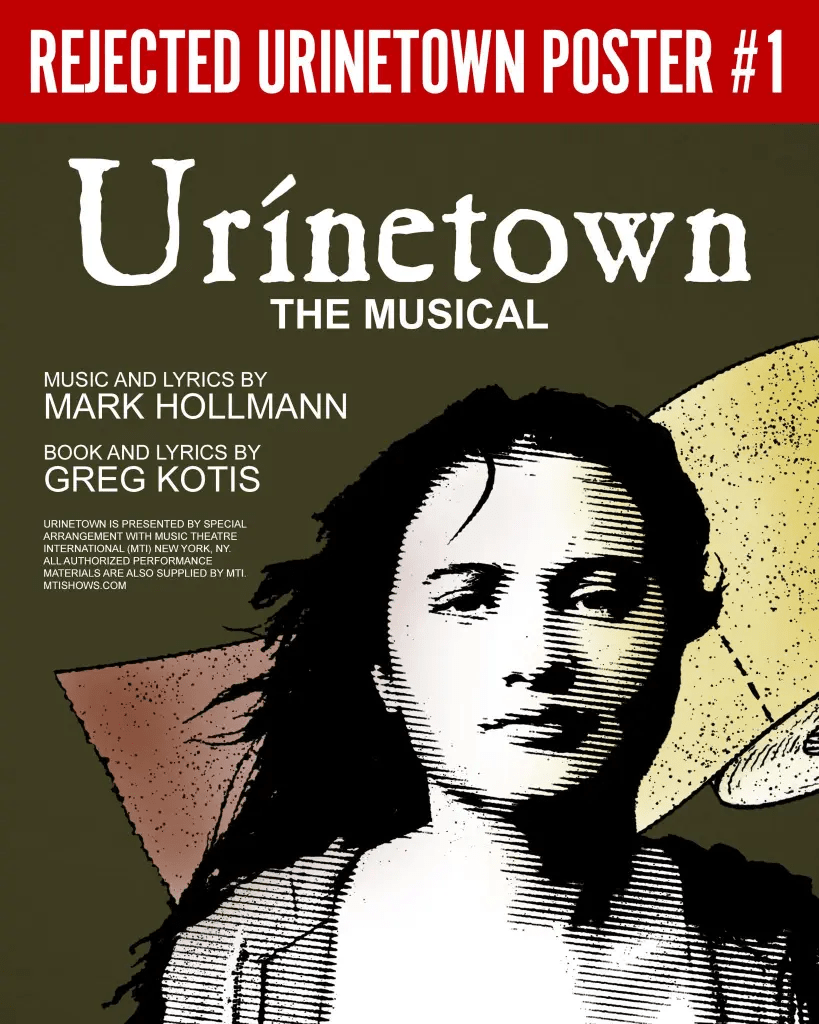
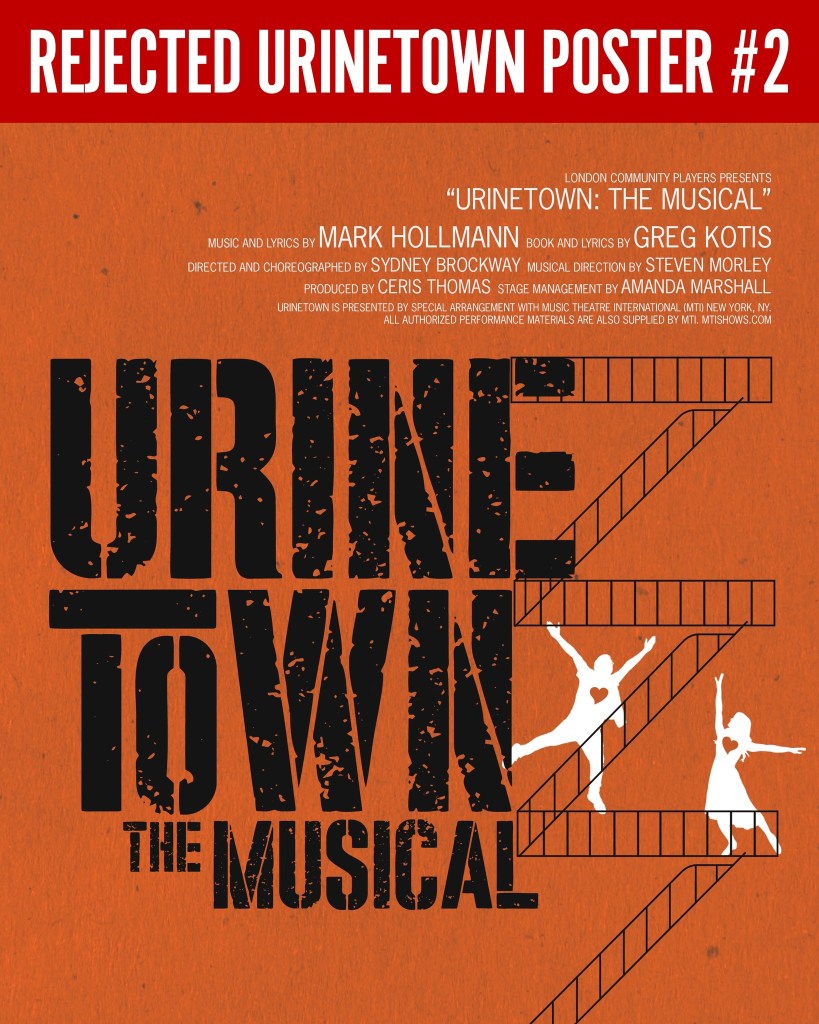
Our parody poster series—riffing on Les MisérablesWest Side StoryThe ProducersWicked, and more—wasn’t just a marketing gimmick. It was a visual clue to the DNA of Urinetown itself. The show gleefully borrows familiar musical theatre tropes and iconic structures, reshaping them to tell its own absurd and pointed story.

At its heart, Urinetown gives us all the classics: a villain who controls the money, the police, and the government; a hero who controls nothing but works hard and dreams of a better future; and a beautiful daughter of the villain who becomes the catalyst for change when our hero falls instantly in love. His life is upended, his resolve hardens, and he sets out to fix a broken world—for love, for justice, and for the people he cares about.

What follows are the choices made by the citizens of Urinetown, and the consequences that come with them. It’s familiar, it’s twisted, it’s self-aware—and all of it is driven by music that is relentlessly fun.

(Pictured: Urinetown Les Misérables parody poster.)

Q. Do any of the play’s satirical situations and themes have local relevance? 

Yes—and the relevance is immediate and unavoidable. The neighbourhood surrounding our theatre is routinely ignored by municipal leadership. The parking lot outside our doors has no public bathroom, and as a result, it becomes the only option for people who have nowhere else to go. That reality mirrors Urinetown so closely that it feels less like satire and more like lived experience.

In Urinetown, the poor are criminalized for existing. They are punished for meeting basic human needs, while those in power remain insulated from the consequences of their decisions. That dynamic is playing out here as well. When audiences say they are “afraid” to come to this area, that fear reflects the same distance and neglect that allow these conditions to persist.

We believe that is exactly why it is important to come. Showing up matters. Being present in this neighbourhood matters. Urinetown asks us to look at who we ignore, who we punish, and who we choose to care about—and invites audiences to step into a space that deserves attention, investment, and humanity.

Coming to this neighbourhood—choosing to be present, to witness, to engage—is not something to be afraid of. It’s something that matters. Urinetown asks us who we ignore, who we punish, and who we decide is worth showing up for. In this case, the question doesn’t end when the curtain comes down.

Q. Will the audience recognize any of the play’s musical numbers? 

Even if audiences don’t know the specific musical numbers themselves, they will absolutely recognize what those songs are paying homage to. Urinetown is filled with stylistic tributes to iconic musicals—there are clear nods to Fiddler on the Roof and West Side Story, as well as The Fantasticks, among others. The familiarity isn’t about recognizing a tune, but about recognizing the style, which makes the jokes land and the storytelling even richer for theatre-literate audiences—while still being fun and accessible for everyone else.

Q. What challenges have you encountered bringing this play to the Palace Theatre stage? 

The journey to bringing Urinetown to the Palace Theatre has been both unexpected and incredibly rewarding. London Community Players originally had a different production planned for this slot, but when royalties became unavailable, we had to pivot quickly. That shift led me to reach out to a talented artist I knew from other shows, and I was thrilled when she agreed to join us on the David Long Stage.

Choosing Urinetown turned out to be an inspired fit. There is a deep pool of artists in London who have been eager for the chance to tackle this show, and the auditions reflected that excitement. We welcomed many new performers into the room, which always brings fresh energy to a production. Rehearsals have been collaborative, joyful, and full of discovery.

As with any show, the real problem-solving began once we moved onto the stage. Urinetown asks us to create several locations within a single city, and the David Long Stage offers limited wing space. Rather than seeing that as a limitation, our team embraced it as a creative opportunity—finding smart, imaginative ways to build a complete world that could live in one place. As a first-time set designer, after taking a course in Stratford last summer, I’ve been supported by an incredible crew. I’m learning that a set is never truly finished; it simply reaches the moment where it’s ready to welcome an audience.

(Pictured: Leah Exley, Christine Varga, Luba Skyba, Nicholas McConnell, Amelia Armstrong, Matt deKort – Urine Good Company Employees. Photo Credit: Ross Davidson.)

Q. Your marketing/social media campaign for Urinetown has been nothing short of brilliant. Could you give a shout-out to those individuals responsible for it?

Thank you! We really appreciate your kind words and that you’ve been following our campaign.

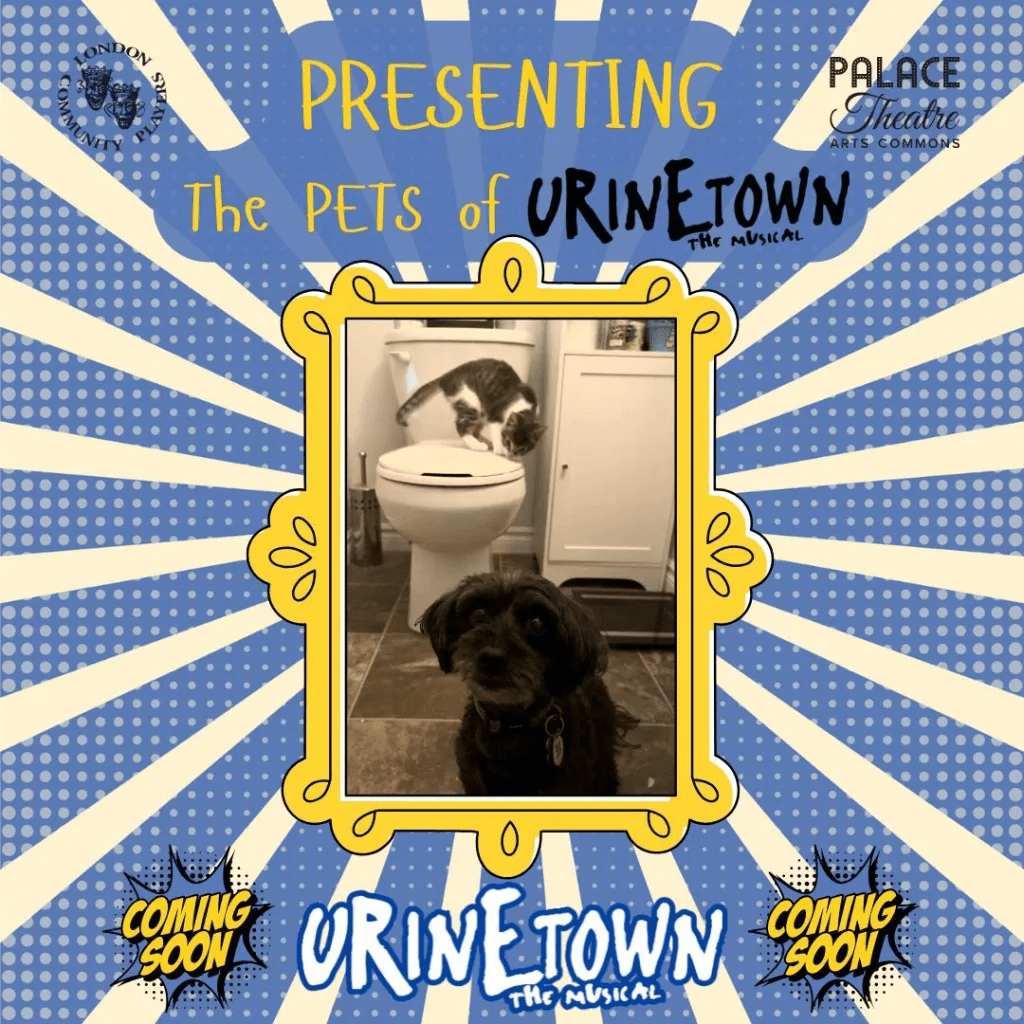
The “Pets of Urinetown” came about naturally because so many of our cast members have pets. Sharing stories and photos of their furry friends was a fun, comfortable way for the cast to connect—and I thought it would be a gentle, playful way to spark interest in the show.

(Pictured: Pets of Urinetown poster.)

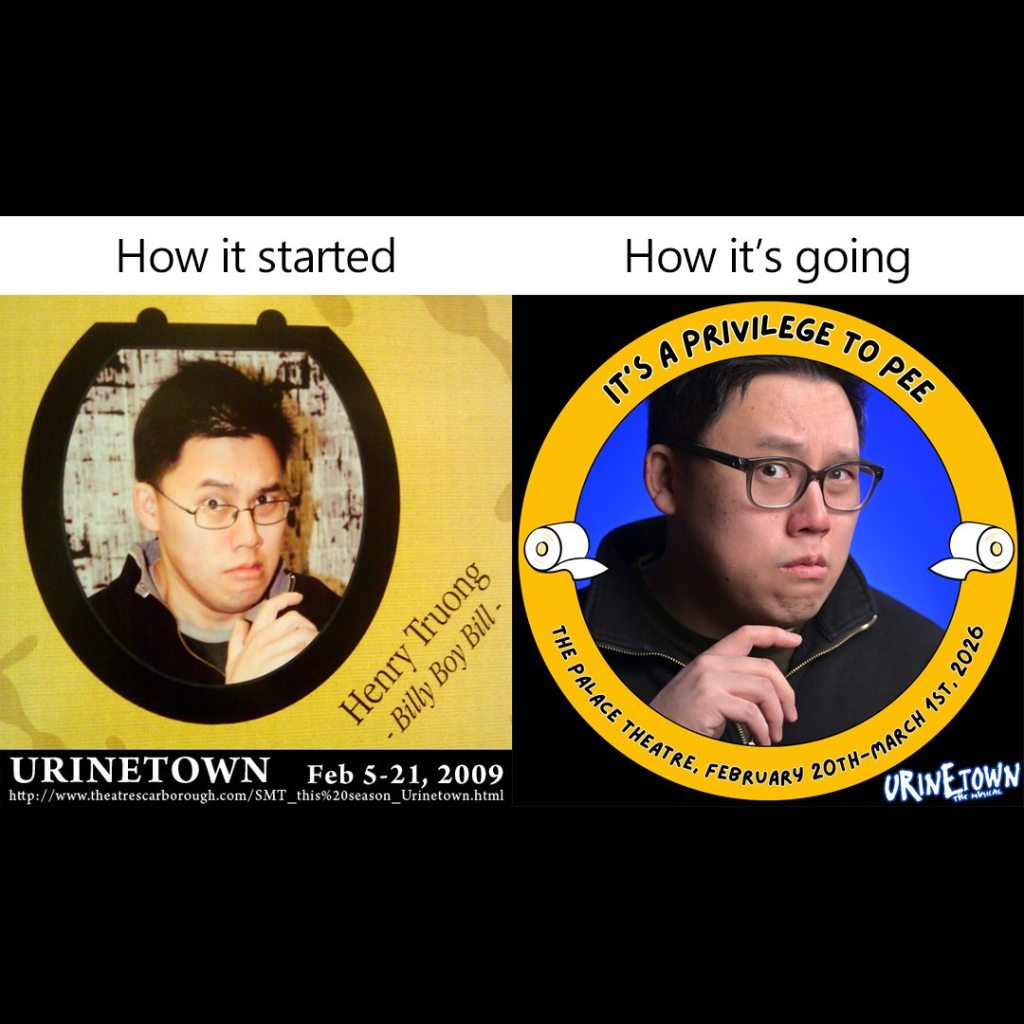
The poster campaign, on the other hand, was entirely the brainchild of the brilliant Henry Truong, who also plays Bobby Strong, our hero. Henry came up with the imagery, collaborated with others to bring the visuals to life, and even wrote all the copy. It was a truly inspired creative effort.

Urinetown gives so many ways to engage with the material, from the music to the story to the little touches we’ve created for social media. I think that’s why people who love this show really, really love it—and our team’s creativity has made sharing that love so much fun.

Q. Is there anything else you think our readers should know about LCP’s production of Urinetown? 

One thing to know: it’s not here long! Urinetown runs for just eight performances, from Thursday, February 19th through Sunday, March 1st. Both Sunday shows are matinees, and the second Saturday also offers a matinee to give those who might feel less comfortable in the area another chance to attend. That Saturday matinee will also be adjudicated for the WODL festival, with a public adjudication immediately following the performance for anyone who wants to stay and watch.

For peace of mind, LCP provides security at all of our productions, with patrolled entrances and monitored parking. And as a bonus, parking behind the theatre is now free at all times.

Don’t miss it—once it’s gone, it’s gone!

(Laura Williams as Penelope Pennywise and Matt deKort as Old Man Strong. Photo Credit: Ross Davidson.)

CREATIVE TEAM

Producer – Ceris Thomas

Director – Sydney Brockway

Stage Manager – Amanda Marshall

Musical Director – Steven Morley

Lighting Designer – Indrani Mahadeo

Sound Designer – Quinton Esquega

Costume Designer – Tannis Daoust

Costume Assistant – Chaaya Vy

Costume Assistant – Chloe Scripnick

Sound Operator – Doug Deschenes

Lighting Operator – Jenny Katkov

Assistant Stage Manager – Larissa Bartlett

Assistant Stage Manager – Jess Bohan

CAST

Kate Sepi – Officer Lockstock

Luke Bainbridge – Officer Barrel

Rae Ryder – Little Sally

Henry Truong – Bobby Strong

Jesslyn Hodgson – Hope

Laura Williams – Pennywise

Sean Brennan – Cladwell

Ryan Starkweather – Fipp

David Lu – McQueen

Cassandra “Cass” Allen – Mrs. M/Boy Cop #1

Skyler Gallagher – Dr. B/Cop

Jade Rogers – Secretary/Cop

Nicholas McConnell – Hotblades Harry/Boy Cop #3

Antonia Sidiropoulos – Little Becky Two Shoes/Cop

Matt deKort – Old Man Strong/Ensemble

Allison Gold – Josephine “Ma” Strong/Cop

Jennifer Groulx – Tiny Tom/Boy Cop #2

Christine Varga – Soupy Sue/Cop

Dustin Freeman – Robbie the Stockfish/Cop

Luba Skyba – Billy Boy Bill/Cop

Charlotte “Charlie” Camrass – Rebel Poor/Girl Cop #1

Amelia Armstrong – Ensemble

Leah Exley – Ensemble

IF YOU GO:

What: London Community Players present Urinetown: The Musical

When: February 19 to March 1, 2026

Where: David Long Stage, Palace Theatre, 710 Dundas St., London, ON

Tickets: Adults: $38,  Students/Seniors (55+): $36, Youth (under 18): $23, Preview: $28 (fees included). https://mytickets.palacetheatre.ca/eventperformances.asp?evt=514

To learn more about Urinetown: The Musical and the Palace Theatre, visit https://palacetheatre.ca/

Follow the Place Theatre on Facebook https://www.facebook.com/atthepalacetheatre and Instagram https://www.instagram.com/atthepalace/

Q&A Interview with Ceris Thomas conducted by Richard Young

Q&A with Ceris Thomas, Producer of London Community Players’ Urinetown: The Musical.

What follows is a Q&A Interview with Ceris Thomas, producer of London Community Players’ production of Urinetown: The Musical, playing at the Palace Theatre from February 19 to March 1.

Q. The description of Urinetown: The Musical found on the Palace Theatre website reads: “In a dystopia ruled by drought and corporate greed, public toilets are the law— and rebellion smells suspiciously like revolution. Equal parts absurd, poignant, and laugh-out-loud funny, Urinetown skewers capitalism, power, and musical theatre itself.” Could you break that down for our readers?

(Pictured: Ceris Thomas, Producer of Urinetown: The Musical.)

Urinetown: The Musical is notoriously hard to describe, which is probably why so many explanations feel incomplete or confusing. Honestly, if it had a different title, people might find it easier to just shrug and say, “Sure—let’s go see this thing.”

At its core, Urinetown is a dystopian satire that imagines a world so devastated by water shortages that bathrooms no longer exist in private homes. To manage the crisis, business and government join forces and arrive at a “solution”: the public must pay to pee. It’s an intentionally oversimplified take on a massive environmental issue, designed to get the audience quickly and clearly into the world of the show.

As with many well-meaning systems in a capitalist society, the opportunity to profit from an unavoidable human need quickly curdles into greed and manipulation. That’s where we meet the people of Urinetown—some desperate to survive, others perfectly comfortable in their assumed wealth and eager to raise the fees even higher.

Pictured: Urinetown’s Officer Lockstock (Kate Sepi), accompanied by Officer Barrel (Luke Bainbridge). Photo Credit: Ross Davidson.)

The absurdity, poignancy, and laugh-out-loud comedy come from how the story is told. One of the creators’ most delightful choices is the musical’s constant tribute to classic Broadway shows. One song clearly channels Fiddler on the Roof; the next explodes with unmistakable West Side Story energy. The first time I heard it, I actually laughed out loud in my car.

If you’ve ever seen a musical—any musical—you’ll catch the references and giggle along. And if you’re someone who doesn’t usually like musicals? This show lovingly invites you to laugh at all the ones your mom dragged you to see.

Q. It also reads: “No one is safe. Not even the audience. Bring your sense of humour — and your spare change,” implying audience members will be expected to participate in some way. Will they? 

The fourth wall is very much broken in this production. Officer Lockstock serves as the show’s narrator, frequently conversing with Little Sally, a member of the “poor” who isn’t afraid to challenge Lockstock’s interpretation of events. Beyond that, the audience needs only to bring a sense of humour and a willingness to laugh out loud at the shenanigans of the players.

(Pictured: Urinetown Les Misérables parody poster.)

Q. Can you provide a brief Synopsis of the play? 

Our parody poster series—riffing on Les Misérables, West Side Story, The Producers, Wicked, and more—wasn’t just a marketing gimmick. It was a visual clue to the DNA of Urinetown itself. The show gleefully borrows familiar musical theatre tropes and iconic structures, reshaping them to tell its own absurd and pointed story.

At its heart, Urinetown gives us all the classics: a villain who controls the money, the police, and the government; a hero who controls nothing but works hard and dreams of a better future; and a beautiful daughter of the villain who becomes the catalyst for change when our hero falls instantly in love. His life is upended, his resolve hardens, and he sets out to fix a broken world—for love, for justice, and for the people he cares about.

What follows are the choices made by the citizens of Urinetown, and the consequences that come with them. It’s familiar, it’s twisted, it’s self-aware—and all of it is driven by music that is relentlessly fun.

(Pictured: Urinetown West Side Story parody poster.)

Q. Do any of the play’s satirical situations and themes have local relevance? 

Yes—and the relevance is immediate and unavoidable. The neighbourhood surrounding our theatre is routinely ignored by municipal leadership. The parking lot outside our doors has no public bathroom, and as a result, it becomes the only option for people who have nowhere else to go. That reality mirrors Urinetown so closely that it feels less like satire and more like lived experience.

In Urinetown, the poor are criminalized for existing. They are punished for meeting basic human needs, while those in power remain insulated from the consequences of their decisions. That dynamic is playing out here as well. When audiences say they are “afraid” to come to this area, that fear reflects the same distance and neglect that allow these conditions to persist.

We believe that is exactly why it is important to come. Showing up matters. Being present in this neighbourhood matters. Urinetown asks us to look at who we ignore, who we punish, and who we choose to care about—and invites audiences to step into a space that deserves attention, investment, and humanity.

Coming to this neighbourhood—choosing to be present, to witness, to engage—is not something to be afraid of. It’s something that matters. Urinetown asks us who we ignore, who we punish, and who we decide is worth showing up for. In this case, the question doesn’t end when the curtain comes down.

Q. Will the audience recognize any of the play’s musical numbers? 

Even if audiences don’t know the specific musical numbers themselves, they will absolutely recognize what those songs are paying homage to. Urinetown is filled with stylistic tributes to iconic musicals—there are clear nods to Fiddler on the Roof and West Side Story, as well as The Fantasticks, among others. The familiarity isn’t about recognizing a tune, but about recognizing the style, which makes the jokes land and the storytelling even richer for theatre-literate audiences—while still being fun and accessible for everyone else.

Q. What challenges have you encountered bringing this play to the Palace Theatre stage? 

The journey to bringing Urinetown to the Palace Theatre has been both unexpected and incredibly rewarding. London Community Players originally had a different production planned for this slot, but when royalties became unavailable, we had to pivot quickly. That shift led me to reach out to a talented artist I knew from other shows, and I was thrilled when she agreed to join us on the David Long Stage.

Choosing Urinetown turned out to be an inspired fit. There is a deep pool of artists in London who have been eager for the chance to tackle this show, and the auditions reflected that excitement. We welcomed many new performers into the room, which always brings fresh energy to a production. Rehearsals have been collaborative, joyful, and full of discovery.

As with any show, the real problem-solving began once we moved onto the stage. Urinetown asks us to create several locations within a single city, and the David Long Stage offers limited wing space. Rather than seeing that as a limitation, our team embraced it as a creative opportunity—finding smart, imaginative ways to build a complete world that could live in one place. As a first-time set designer, after taking a course in Stratford last summer, I’ve been supported by an incredible crew. I’m learning that a set is never truly finished; it simply reaches the moment where it’s ready to welcome an audience.

Q. Your marketing/social media campaign for Urinetown has been nothing short of brilliant. Could you give a shout-out to those individuals responsible for it?

Thank you! We really appreciate your kind words and that you’ve been following our campaign.

(Pictured: Pets of Urinetown poster.)

The “Pets of Urinetown” came about naturally because so many of our cast members have pets. Sharing stories and photos of their furry friends was a fun, comfortable way for the cast to connect—and I thought it would be a gentle, playful way to spark interest in the show.

The poster campaign, on the other hand, was entirely the brainchild of the brilliant Henry Truong, who also plays Bobby Strong, our hero. Henry came up with the imagery, collaborated with others to bring the visuals to life, and even wrote all the copy. It was a truly inspired creative effort.

Urinetown gives so many ways to engage with the material, from the music to the story to the little touches we’ve created for social media. I think that’s why people who love this show really, really love it—and our team’s creativity has made sharing that love so much fun.

Q. Is there anything else you think our readers should know about LCP’s production of Urinetown? 

One thing to know: it’s not here long! Urinetown runs for just eight performances, from Thursday, February 19th through Sunday, March 1st. Both Sunday shows are matinees, and the second Saturday also offers a matinee to give those who might feel less comfortable in the area another chance to attend. That Saturday matinee will also be adjudicated for the WODL festival, with a public adjudication immediately following the performance for anyone who wants to stay and watch.

For peace of mind, LCP provides security at all of our productions, with patrolled entrances and monitored parking. And as a bonus, parking behind the theatre is now free at all times.

Don’t miss it—once it’s gone, it’s gone!

CREATIVE TEAM

Producer – Ceris Thomas

Director – Sydney Brockway

Stage Manager – Amanda Marshall

Musical Director – Steven Morley

Lighting Designer – Indrani Mahadeo

Sound Designer – Quinton Esquega

Costume Designer – Tannis Daoust

Costume Assistant – Chaaya Vy

Costume Assistant – Chloe Scripnick

Sound Operator – Doug Deschenes

Lighting Operator – Jenny Katkov

Assistant Stage Manager – Larissa Bartlett

Assistant Stage Manager – Jess Bohan

CAST

Kate Sepi – Officer Lockstock

Luke Bainbridge – Officer Barrel

Rae Ryder – Little Sally

Henry Truong – Bobby Strong

Jesslyn Hodgson – Hope

Laura Williams – Pennywise

Sean Brennan – Cladwell

Ryan Starkweather – Fipp

David Lu – McQueen

Cassandra “Cass” Allen – Mrs. M/Boy Cop #1

Skyler Gallagher – Dr. B/Cop

Jade Rogers – Secretary/Cop

Nicholas McConnell – Hotblades Harry/Boy Cop #3

Antonia Sidiropoulos – Little Becky Two Shoes/Cop

Matt deKort – Old Man Strong/Ensemble

Allison Gold – Josephine “Ma” Strong/Cop

Jennifer Groulx – Tiny Tom/Boy Cop #2

Christine Varga – Soupy Sue/Cop

Dustin Freeman – Robbie the Stockfish/Cop

Luba Skyba – Billy Boy Bill/Cop

Charlotte “Charlie” Camrass – Rebel Poor/Girl Cop #1

Amelia Armstrong – Ensemble

Leah Exley – Ensemble

IF YOU GO:

What: London Community Players present Urinetown: The Musical

When: February 19 to March 1, 2026

Where: David Long Stage, Palace Theatre, 710 Dundas St., London, ON

Tickets: Adults: $38,  Students/Seniors (55+): $36, Youth (under 18): $23, Preview: $28 (fees included). https://mytickets.palacetheatre.ca/eventperformances.asp?evt=514

To learn more about Urinetown: The Musical and the Palace Theatre, visit https://palacetheatre.ca/

Follow the Place Theatre on Facebook https://www.facebook.com/atthepalacetheatre and Instagram https://www.instagram.com/atthepalace/

Q&A Interview with Ceris Thomas conducted by Richard Young

School of Rock announced as 2026 Grand Theatre High School Project

Prepared with files provided by the Grand Theatre

The Grand Theatre is thrilled to announce that School of Rock will be the 2026 Grand Theatre High School Project. In a company first, London and area’s most talented young artists will be rocking out on stage, playing live music – in addition to the familiar performance and production roles typically part of a Grand Theatre High School Project production. Applications to join the student company are now open and close on March 30, 2026.

Based on the 2003 hit movie starring Jack Black (Tenacious D, A Minecraft Movie) and written by Mike White (The White LotusSchool of Rock), the production features all of the movie’s contagious anthems as well as fourteen new original songs by none other than Andrew Lloyd Webber (Jesus Christ Superstar, Cats, The Phantom of the Opera).

School of Rock is a fun, high-energy show and a chance for high school students to be playing instruments right on the stage, which is an exciting first for the Grand Theatre High School Project,” shares Rachel Peake, Grand Theatre Artistic Director. “It’s a show about the strength of young people and about how your individuality – your weirdness – is your strength.”

(Pictured: Rachel Peake, Grand Theatre Artistic Director. Photo Credit: Dahlia Katz.)

The Grand Theatre High School Project returns for its 28th year, providing London and area high school students with education and training in the working environment of a professional theatre, at no cost to the participants. From September 22 through October 3, 2026, the Spriet Stage will transform into the super rockin’ world of Dewey Finn – and London’s talented teens will be his star pupils playing music live on stage, creating and running various production elements that bring the show to life.

School of Rock tells the story of Dewey Finn, a wannabe rockstar with no band, no job, and if he can’t make rent, no place to live – and possibly no best friend. Ready to try anything, he poses as a substitute teacher and takes a gig teaching fifth grade at Horace Green Prep. Demerits and grades aren’t his thing, but the noble quest to win a local Battle of the Bands brings this unlikely band of students and teacher together for the sake of rock glory – and extra credit.

To helm this year’s High School Project, award-winning Director Lezlie Wade returns to the Grand Theatre to bring this league of would-be rock legends to greatness. Wade previously directed Dream a Little Dream at the Grand Theatre in 2014/15and has directed at the Stratford Festival, Shaw Festival, Theatre Aquarius, Musical Stage Co., and beyond. Her production of Spamalot ranks as one of the longest-running shows in Stratford Festival history.

(Pictured: Lezlie Wade, Director, School of Rock.)

“With the help of a down-on-his-luck guitarist, School of Rock is the inspirational musical that transforms a class of straight-A students into a mind-blowing rock band, unlocking their inner rebels,” shares Wade.

Wade is joined by Matthew Atkins as Music Director, who audiences will recognize as the Artistic Director of the London Gospel Collective and as the Music Director of Disney’s Newsies at the Grand Theatre last year.

(Pictured: Matthew Atkins, Music Director, School of Rock.)

Choreographer Julius Sermonia (Broadway, Stratford, Shaw) also joins the production, in a much-anticipated return to the Grand Theatre (Beauty and the Beast, Pig, Charlie and the Chocolate Factory, and last season’s smash-hit Waitress).

(Pictured: Julius Sermonia, Choreographer, School of Rock.)

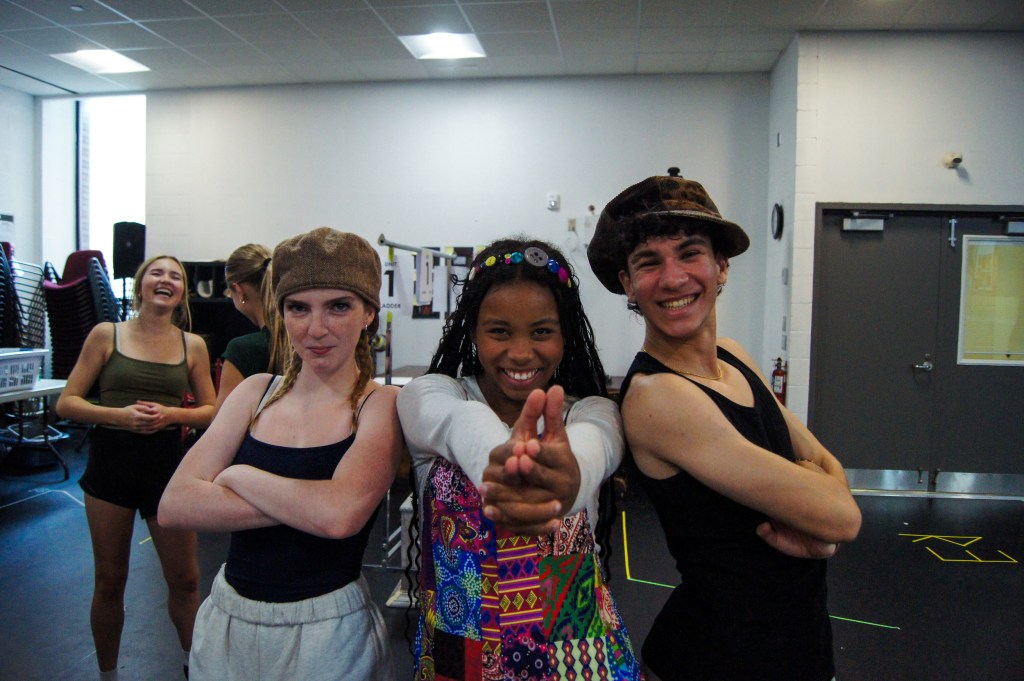
The Grand Theatre is looking for students to join the show’s company in acting, singing, music, and production roles. Students interested in production roles may apply to work in one of several areas, including stage management, props, wardrobe, scenic art, carpentry, sound, and marketing. The program has historically created opportunities for up to 80 student participants.

(Pictured: Lyla Worrall, Solarah Rose, and Hayden Baertsoen from Disney’s Newsies, September 2025. Photo Credit: Jordan Peter.)

HOW TO GET INVOLVED

The Grand Theatre invites London and area high school students to apply for the 2026 Grand Theatre High School Project. The project is open to any high school student from the London region who will be enrolled in high school in the fall of 2026 or participating in homeschooling.

For more information on how to apply to be part of the 2026 Grand Theatre High School Project, visit https://www.grandtheatre.com/participate-high-school-project.

Applications will close at 9 a.m. on March 30, 2026. Interested students are encouraged to apply now or register for a free information session to learn more.

Closer: Love Laid Bare at Procunier Hall

by Jo-Anne Bishop

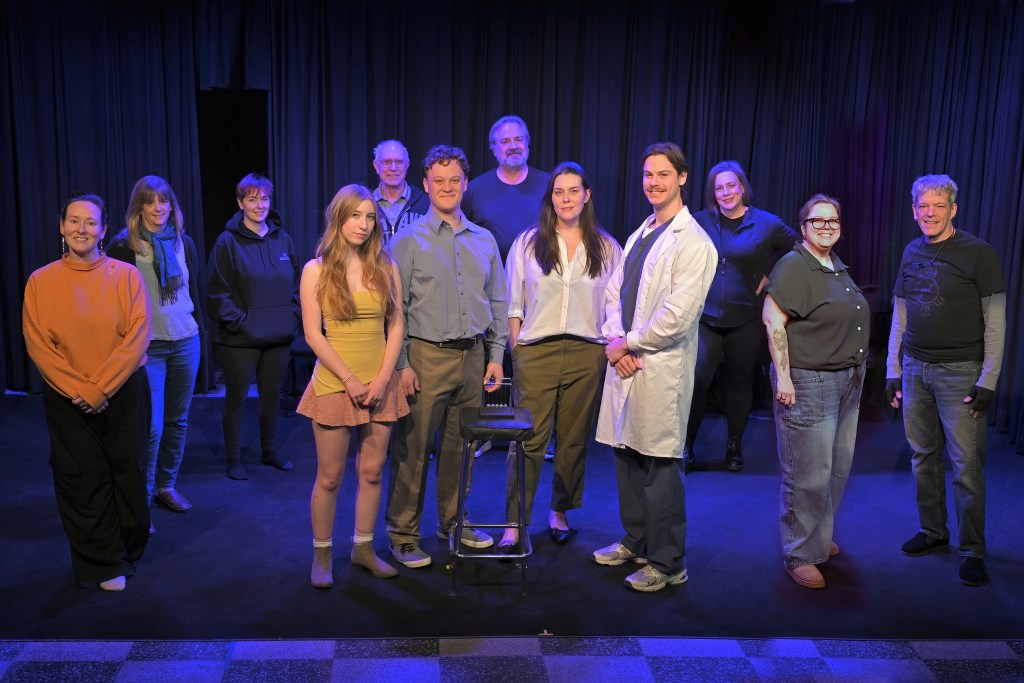
(Pictured: Cast & Crew of Closer. Photo Credit: Ross Davidson.)

There are moments early in Closer when you may find yourself wondering where it’s all going. Patrick Marber’s provocative examination of love, desire, and emotional brutality opens at a measured pace, and I’ll admit that at first, I wasn’t convinced. The stripped-down staging and deliberate slowness made me question whether this production would land for me at all. But somewhere around the midpoint of the first act, something shifted, and from there on, I was completely engrossed.

Directed by Dave Semple and produced by Andrea Bennett, Closer unfolds in the small black box space at the Palace Theatre’s Procunier Hall, placing the audience uncomfortably close to the emotional wreckage on stage. Starring Noah Englmann as Dan, Scarlett Allen as Alice, Alex Pinter as Larry, and Meghan Brown as Anna, the production strips away nearly everything except the actors themselves and ultimately proves it doesn’t need anything more.

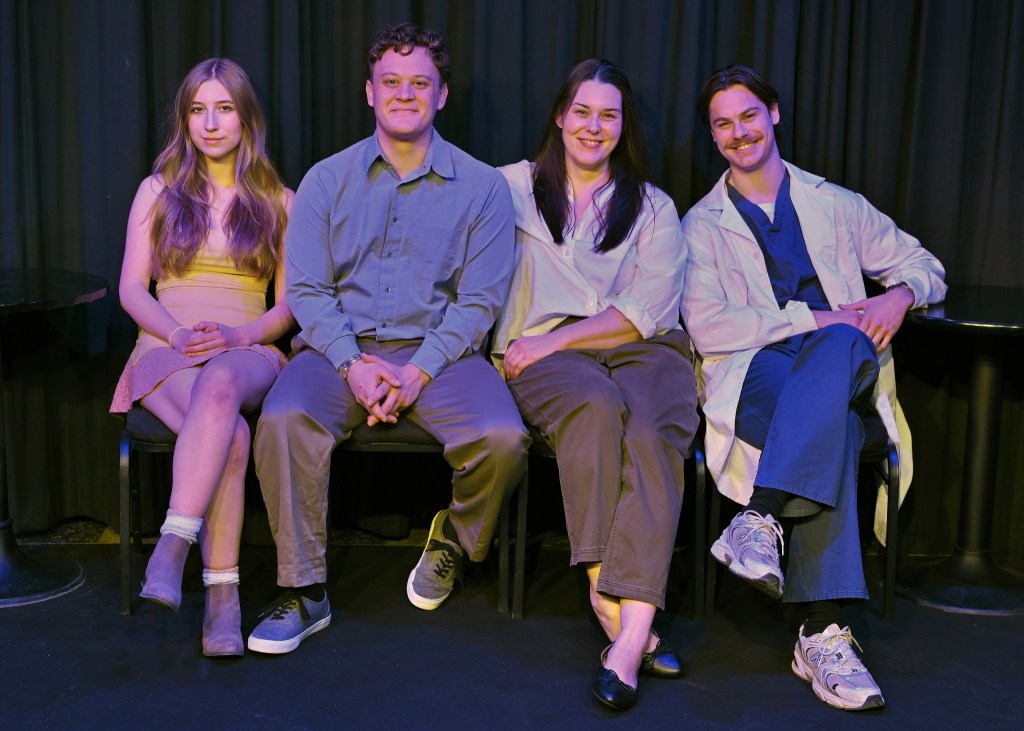
(Pictured: Closer Cast – Scarlett Allen, Noah Englmann, Meghan Brown, and Alex Pinter. Photo Credit: Ross Davidson.)

The performances across the board are deeply believable, but special recognition must go to the two female roles. Scarlett Allen gives a brave, uncompromising performance as Alice. Allen gives herself fully to the role, including moments of near-total nudity that could easily feel gratuitous or awkward in lesser hands. Instead, she owns the space with absolute confidence. Never hesitant, never insecure. Her fearlessness makes Alice feel raw, real, and emotionally dangerous, which is exactly what the role demands.

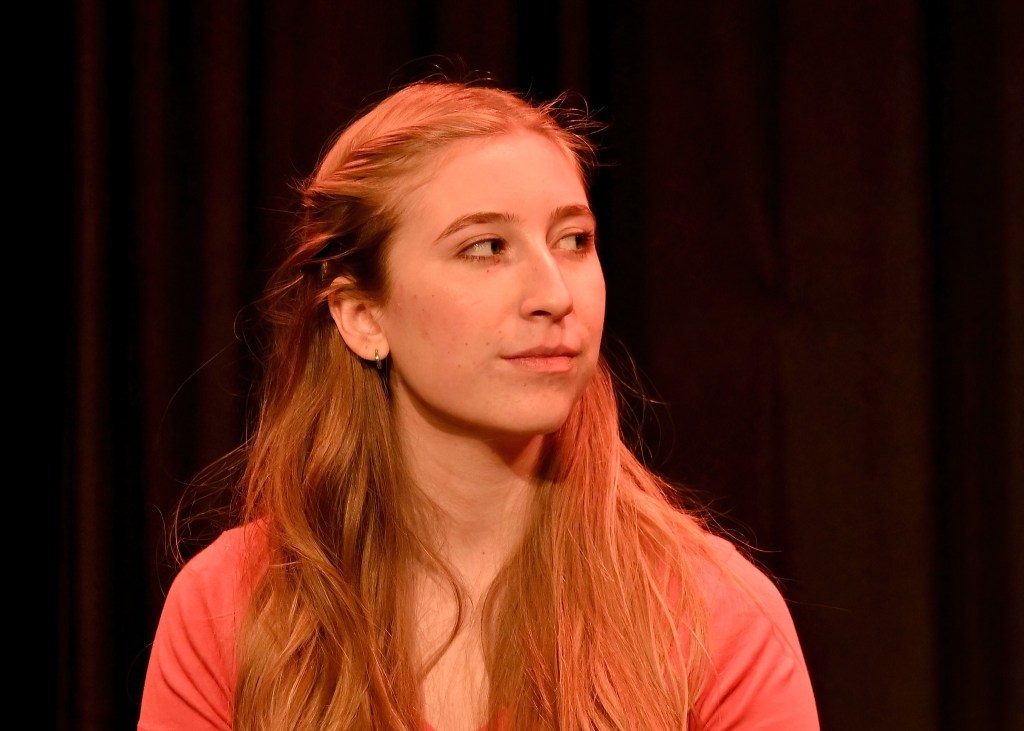
(Pictured: Scarlett Allen as Alice. Photo Credit: Ross Davidson.)

Meghan Brown’s Anna is equally compelling, offering a performance layered with vulnerability, restraint, and quiet devastation. I found myself hanging on her every word and movement, forgetting for a moment that this was a play and not a moment of voyeurism. Together, Allen and Brown anchor the production with emotional authenticity, elevating every scene they’re in. While Englmann and Pinter deliver strong, grounded performances as Dan and Larry, it’s the women who truly drive the emotional core of the play.

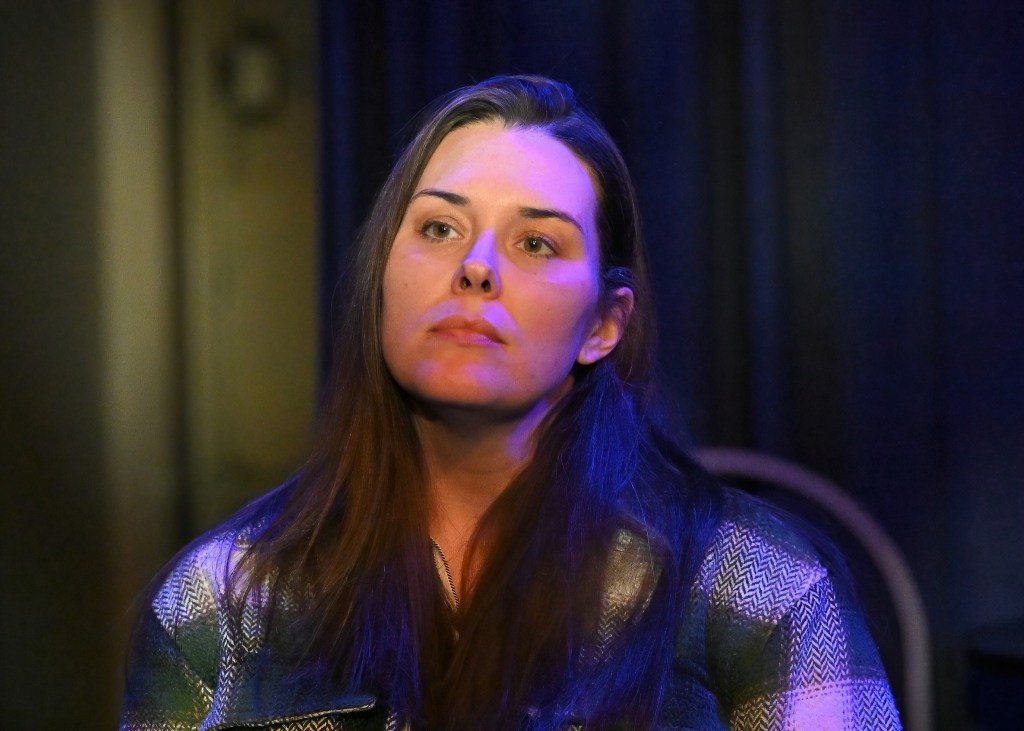
(Pictured: Meghan Brown as Anna. Photo Credit: Ross Davidson.)

Closer is, at its heart, an unflinching look at relationships and the many contradictions of love. I grew up on the verse “love is patient, love is kind,” but this play reminds us that love can also be messy, cruel, obsessive, and brutal. Marber doesn’t soften any of it, and this production leans fully into those truths. Love here is exposed for all its ugliness and beauty, its tenderness and violence, and the result in this production is as uncomfortable as it is compelling.

The program describes the show as “stripped down, grown up, and not for the faint of heart,” with a strong viewer discretion warning—and that description is absolutely accurate. This is not a play for anyone inclined to clutch their pearls. If explicit language, sexual frankness, or emotional cruelty make you uncomfortable, this likely isn’t the show for you. But if you’re willing to sit with a little bit of discomfort, Closer will reward you with a powerful exploration of love, loss, and heartbreak.

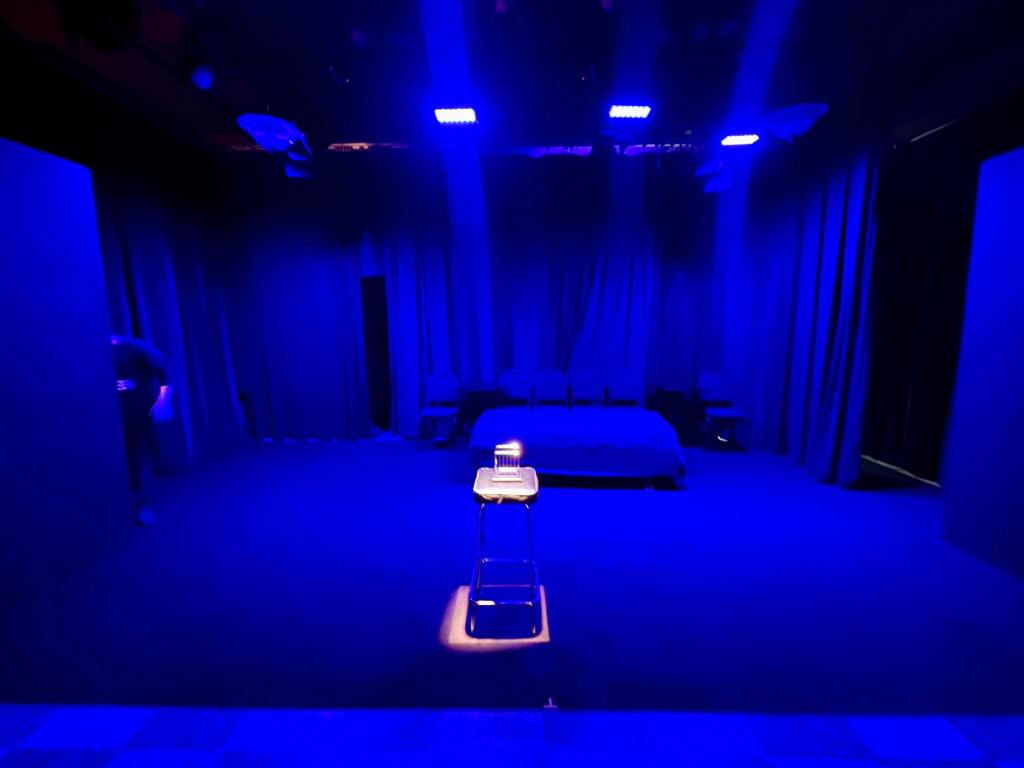
One of my initial hesitations was the minimalist staging. There are no traditional props and only sound effects and physical suggestion. At first, I found myself distracted, wondering why actual props weren’t used at all. But as the play progressed, it became clear: they don’t need them. The actors are the props. Their physicality, timing, and emotional commitment are so precise that you stop noticing what’s missing. Your focus narrows entirely to the characters and their unravelling relationships, which is exactly where it should be.

(Pictured: Set of Closer. Photo Credit: Ross Davidson.)

By the end of the two-hour production, the bare stage feels not like a limitation but a strength. The production is perfectly staged and brilliantly acted, proving that when performances are this strong, nothing else is necessary.

Despite my early doubts, I left thoroughly impressed and genuinely moved. Closer is challenging, bold, and beautifully performed. If you’re looking for theatre that doesn’t shy away from taking emotional risks, do yourself a favour and catch this production before it closes on February 15th.

IF YOU GO:

What: Closer, by Patrick Marber

When: February 5th-15th, 2026

Where: Procunier Hall at the Palace Theatre, 710 Dundas St, London Ontario

Tickets: $30-33, 2024-2025 Shows – Palace Theatre  RECOMMENDED 18+

Reviewed by Jo-Anne Bishop

Big Laughs, Honest Moments, and Stories We All Recognize: St. Marys Community Players 2026 Season

Prepared with Files from the St. Marys Community Players.

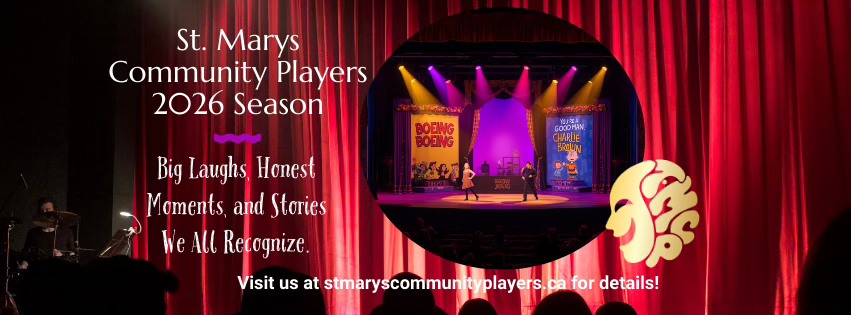
St. Marys Community Players have announced their 2026 Season Lineup: Marc Camoletti’s BOEING BOEING and the beloved Peanuts Musical You’re a Good Man, Charlie Brown.

“Our 52nd season lineup of productions will offer a vibrant pairing of plays that celebrates the full spectrum of theatrical joy—combining the dizzying precision of a classic farce with the warmth, wit, and gentle introspection of a beloved musical,” says Greg George, the company’s Marketing and Communications coordinator.

BOEING BOEING: A High-Flying Comedy.

Opening the 2026 season in April, the St. Marys Community Players present the delightful farce that has captivated audiences worldwide. Written by Marc Camoletti and translated by Beverley Cross and Francis Evans, this fast-paced production chronicles the misadventures of Bernard, a swinging bachelor in 1960s Paris. Bernard’s elaborate scheme of juggling three fiancées – all airline hostesses with staggered layovers – takes a turbulent turn, threatening to send his plans crashing.

Directed by Ralph Small and produced by Stephen Brockwell and Read Paxton, BOEING BOEING features door-slamming, smart dialogue, and hilarious situations, guaranteeing nonstop laughter and entertainment.

Performance Dates:

April 24 to May 9, 2026, Town Hall Theatre, St. Marys, ON.

You’re a Good Man, Charlie Brown: A Musical for All Ages.

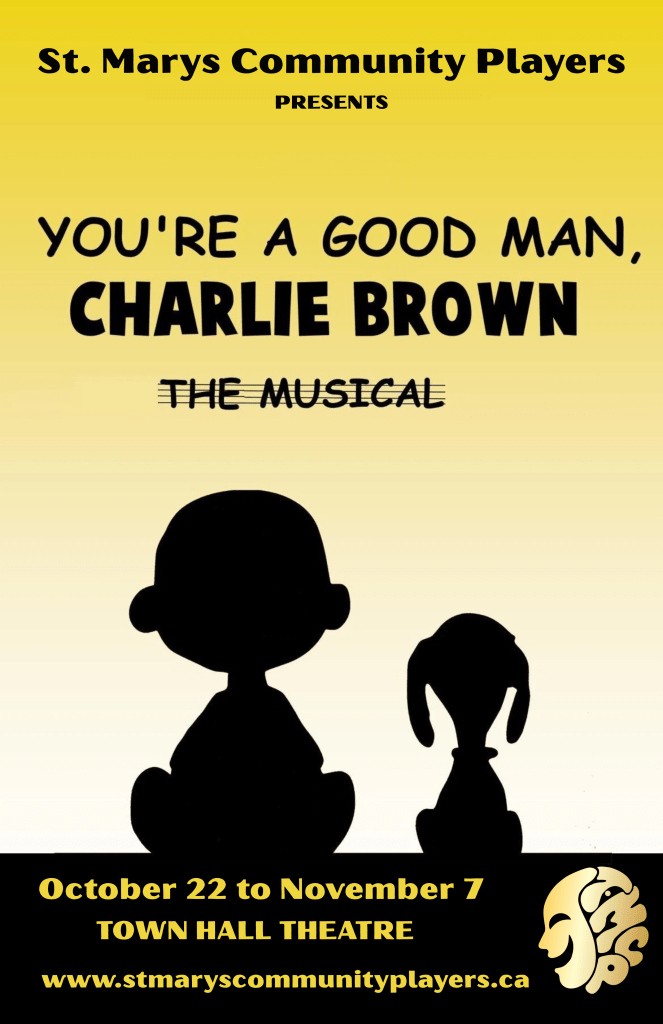
Happiness is great musical theatre. With charm, wit and heart, You’re A Good Man, Charlie Brown explores life through the eyes of Charlie Brown and his friends in the Peanuts gang. This revue of songs and vignettes, based on the beloved Charles Schulz comic strip, captures childhood worries, quiet hopes, and the universal desire to belong and be understood. Musical numbers include “My Blanket and Me,” “The Kite,” “The Baseball Game,” “Little Known Facts,” “Suppertime” and “Happiness.” Guaranteed to please audiences of all ages.

Performance Dates: 

October 22 to November 7, Town Hall Theatre, St. Marys, ON.

Tickets for the 2026 Season are available through the St. Marys Community Players website www.stmaryscommunityplayers.ca beginning in early March or locally at Troyer’s Spices in Downtown St. Marys, 110 Queen St. E. Phone: (226) 661-8777.

Follow the St. Marys Community Players on Facebook https://www.facebook.com/StMarysCommunityPlayers and on Instagram https://www.instagram.com/st.maryscommunityplayers/

A closer look at Closer at the Procunier Hall, February 5 to 15.

Previewed by J. Bruce Parker

In a recent conversation I had with London playwright, Jason Rip, he stated that he writes plays for “the precious few who prefer their theatre to be hard-hitting social commentary instead of song and dance.”

Actor/director Dave Semple mentioned to me in an interview last year that he likes “stories that are dark and have a good depth of substance to them.”

So, what is theatre to a viewing audience?

Should its goal be to enlighten or enrich? Do you prefer leaving a theatrical performance with a smile and a sense of contentment rather than feeling troubled by what you just saw on stage? What are the limits of theatrical performances? What should be performed and spoken on stage?

Dave Semple is directing Patrick Marber’s Closer, which will be performed on the Procunier Hall stage at the Palace Theatre from February 5 to 15. Marber’s play offers a lens into the rawness of the human psyche as it defines love, trust, and betrayal.

Getting a whiff of the oncoming production, The London Free Press warned the viewing audience that the play, “may feature nude actors and scenes depicting sexuality, spurring the addition of an intimacy coach to the crew.” Is press like this a help or a hindrance?

I recently had the opportunity to view a rehearsal and talk with the cast and crew.

Dave Semple, with over forty years of experience as a drama teacher, actor, and director, explained why he wanted to undertake such a project.

“I don’t think there are always happy endings in lives and relationships, and I wanted to direct a play which was representative of something real, not the usual perfect relationships and happy endings that we usually see in theatre.”

He adds, ‘Despite the characters’ flaws and how they treat each other, what we want you to discover is that there are moments of redemption for all of them. We tried to build that into the story. The play is about the mistakes we make in relationships. Everyone says that they are looking for love, but ‘love’ for everyone is different.”

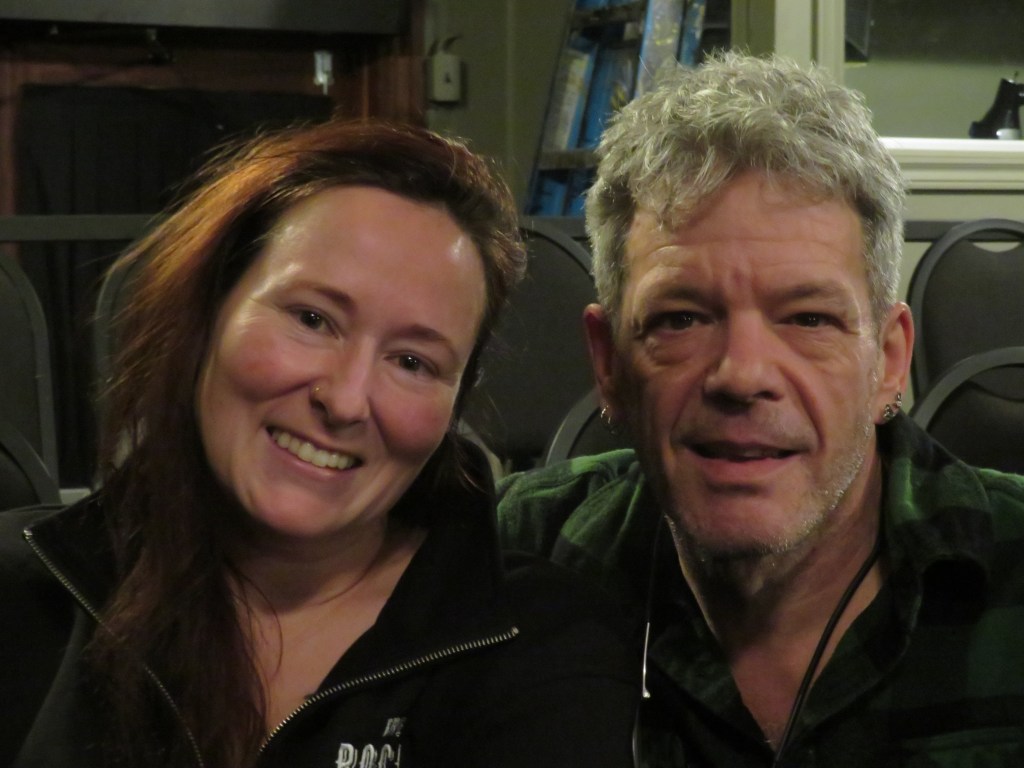
(Pictured: Sarah Taylor and Dave Semple. Photo Credit: J. Bruce Parker.)

Semple is assisted by Sarah Taylor, a teacher and actress who was brought in as an “Intimacy Director” for the production.

I must admit, this role in a theatre production is new to me, so a quick Google search helped define it. Better yet, I asked Sarah to interpret her role.

“The role of Intimacy Director has been around for some time, but certainly more prominent than it used to be. It is someone who handles sensitive stage moments; things that may need finesse or support. The director sees the big picture, but the Intimacy Director partners with the director to be the bridge between them and the actors,” she says. “We have to look at the actor’s comfort and what the director wants the actor to do in terms of intimacy, understanding the actors’ boundaries and finding a way to honour both. I can be the voice of the actor and still have a relationship with the director to make sure that their vision is maintained.”

I asked Sarah what she wants the audience to walk away with at the play’s end.

“I want the audience to experience vulnerability,” says Sarah. “There is a vulnerability in this play that sees humanity in a 360-degree view. I really believe this is something important for the audience to engage with.”

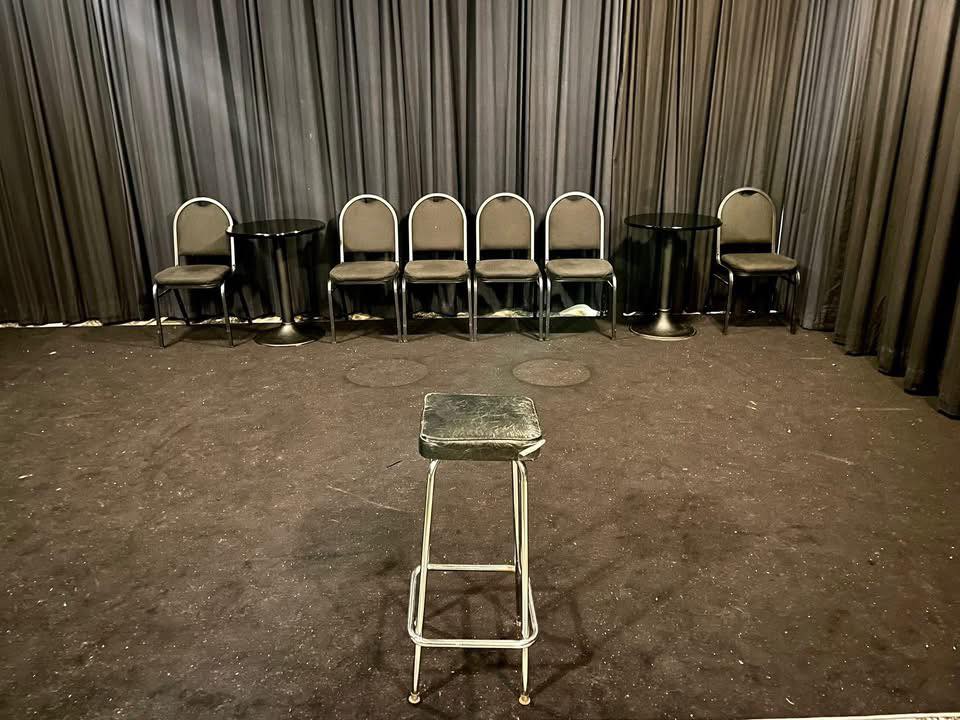
(Pictured: Set of Closer. Photo Credit: Palace Theatre.)

The production is laid out on a sparse set. Just a black curtain as a backdrop and a few chairs centre stage. With only four actors performing, dialogue has to propel the story deeply and compellingly.

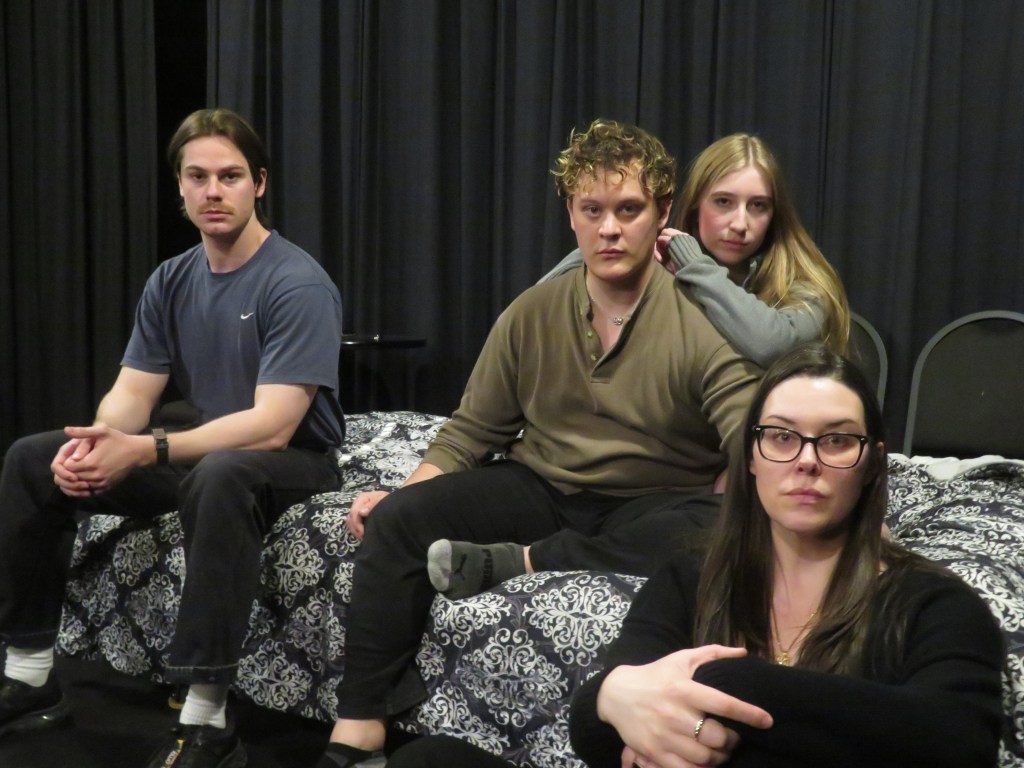
Semple has carefully assembled his cast with the likes of Alex Pinter (Larry), Meghan Brown (Anna), Noah Englmann (Dan), and Scarlett Allen (Alice).

(Pictured: Cast of Closer – Alex Pinter, Noah Englmann, Scarlett Allen, and Meghan Brown. Photo Credit:J. Bruce Parker.)

I asked each actor to define their character:

Alex (Larry) – “My character is generally an honest person, but I think he is driven. Larry wants to have good, constant sex, but he mistakes sex for love.”

Meghan (Anna) – “Anna is someone who thinks she has her life together and thinks she knows what she want but she tends to self-sabotage. She is not comfortable with being comfortable, especially with love, and this is where desire takes over.”

Noah (Dan) – “His incessant need for the truth gets in the way of love. At the end of the play, I don’t think Dan believes in love. In my presentation of Dan, he doesn’t question his belief in love at the end of the play. He keeps seeing the pattern happening over and over, and he is starting to waver in his belief in love.”

Scarlett (Alice) – “I am empathic towards Alice. The story is about people looking for connections, and this is all she wants, and in searching for it, she is always pushing people away. She tries to make herself into something people want, so she totally makes herself up. She likes to create a persona, and that is probably why she becomes a stripper.”

Closer brings together four people whose lives collide, intertwine and subsequently collapse. The mood is edgy, with dialogue that is muscular, tough, and brutal. There is a blurred line between love and lust, and sex is used as currency as well as a form of deception and vengeance.

Larry tells us, “What’s so great about the truth? Try lying for a change. It’s the currency of the world.”

Alice reiterates by saying, “Lying is the most fun a girl can have without taking her clothes off.”  

There is humour in this story, but it’s brief and fragmented and never diffuses the ongoing tension between the characters.

Closer holds up a mirror to the audience in portraying the bold, honest and unsavoury aspects of relationships. It is the right fit for Procunier Hall and the right fit for those who appreciate a more visceral form of theatre.

IF YOU GO:

What: Patrick Marber’s Closer, directed by Dave Semple.

Where: Procunier Hall at the Palace Theatre, 710 Dundas St., London, ON.

When: February 5-15, 2026.

Tickets: Adults: $33, Students/Seniors (55+): $30, Preview: $22 (fees included). https://mytickets.palacetheatre.ca/eventperformances.asp?evt=525

Note: Contains explicit sexual content, strong language, and mature themes. THIS SHOW IS RECOMMENDED FOR 18+ ONLY.

(Closer Cast. Photo Credit: Palace Theatre.)

Previewed by J. Bruce Parker