Help! I don’t know what to write about the London Symphonia Concert on February 14th

Previewed by Daina Janitis

My first problem is the fabulous team that works for, loves, and supports London Symphonia. Look at their website – https://www.londonsymphonia.ca/event/love-and-romance-denise-pelley, where you’ll find everything you wanted to know – and more – about the creator of the program and the soloists.

And then it’s Black History Month, and here we are in Canada creating a musical program featuring two black soloists. Haven’t we heard that our more powerful neighbour has done away with DEI – and isn’t it embarrassing that we still toe the line for that acronym? And is it pointless virtue signalling that seems to praise London for being aware of our People of Colour?
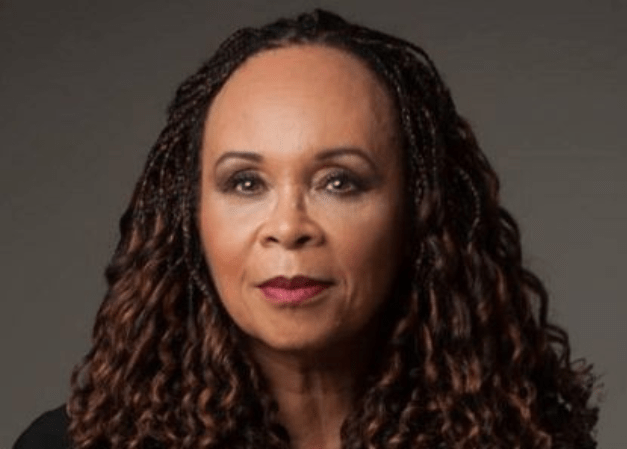
(Pictured: London vocalist Denise Pelley.)

And, finally, am I being condescending to point out the achievements of our program originator and soloists as though Londoners needed educating about them? We know about Scott Good’s composing career, we know about Denise Pelley’s medals and her opening for Aretha Franklin, and her YM-YWCA Woman of Distinction award. If we’ve been to Stratford in the last 16 years, we know that Roy Lewis is a 16-year veteran of the Festival stage.

But here’s the thing, and it’s raw right now. I admit to everyone that I have too much time, doubt and fear on my hands right now to ignore the horrors of authoritarianism, ignorance, and greed that are happening in our neighbourhood. At 80, I’m not going to run for office, but I want to reveal that London’s live art music scene has been my harbour of hope.

Sitting in those Met pews – no cushion, I get the cheaper seats – and watching the faces of our Symphonia musicians and their featured guests renews hope. The evidence of their work and commitment, and the joy they show in bringing them to us in live performance, is something that no recording can do. I multiply the effect by chatting to strangers beside me, to students at the reception (who can attend for FREE, for God’s sake) and hugging the performers afterwards (very few have pushed me off). Those are gifts I never expected to receive in life.

Because we are in the presence of souls who have battled racism and every kind of insidious discrimination, have given up lucrative jobs for their art, and have honed their talents to the utmost just for US. Bearing witness to their courage as well as their art makes US better!

(Conductor Scott Good and guest artist Denise Pelley share their insights into the upcoming February 14th performance.)

Do you know that Denise Pelley has inspired young people in Junior Achievement for 19 years, has performed at the Grand in musicals, and has travelled to Sudan twelve times to establish a music and arts camp for 400 kids? Did you know that her son, Jason Edmonds, was killed in a road rage accident, and she created a Foundation to tell young people about that rage as one of the many dangers facing them?

Did you know that Roy Lewis is from the UK, came to Canada, and founded the Obsidian Theatre  (focusing on Black Canadian stories) – as well as painting, sculpting, teaching Elizabethan Literature at several universities, and co-founding “Shakespeare in the Rough”? His poetry tackles the death of love, the struggle for understanding, and redemption in the face of grief.

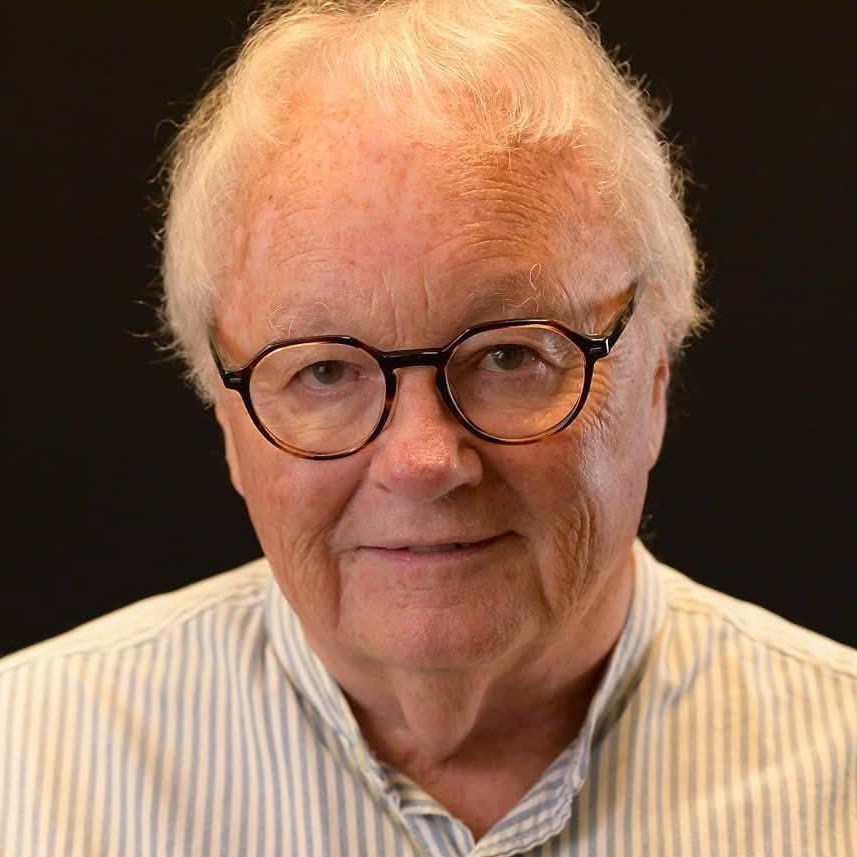
(Pictured: Roy Lewis, Poet and Narrator)

Conductor Scott Good is not Black, but he’s a genius of music with a soul that encompasses the rhythms, aspirations, and hopes of all humanity. I can only hope that London hears more of his oratorios, symphonies, jazz masterpieces and chamber music. He is a creator of music and of bridges that support our shared humanity.

Being in the very presence of artists like this is a privilege and a healing.
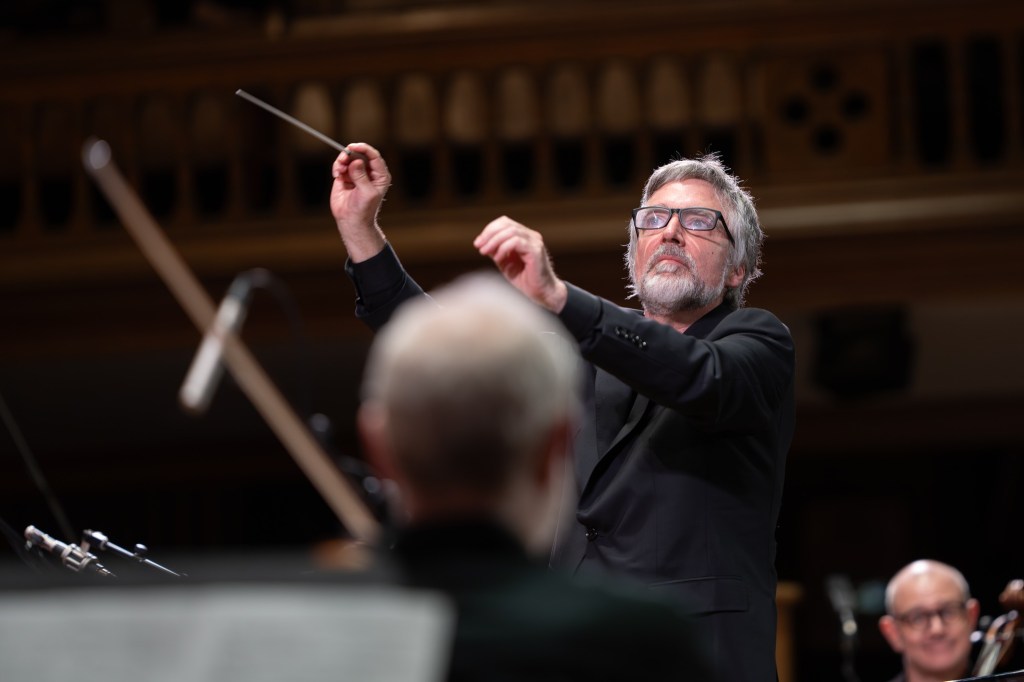
(Pictured: London Symphonia Conductor, Scott Good.)

I can only ask you to read, before you attend the concert, the words of an American poet, Joseph Fasano, whose word-compositions are as powerful as the music of our London performers this weekend:
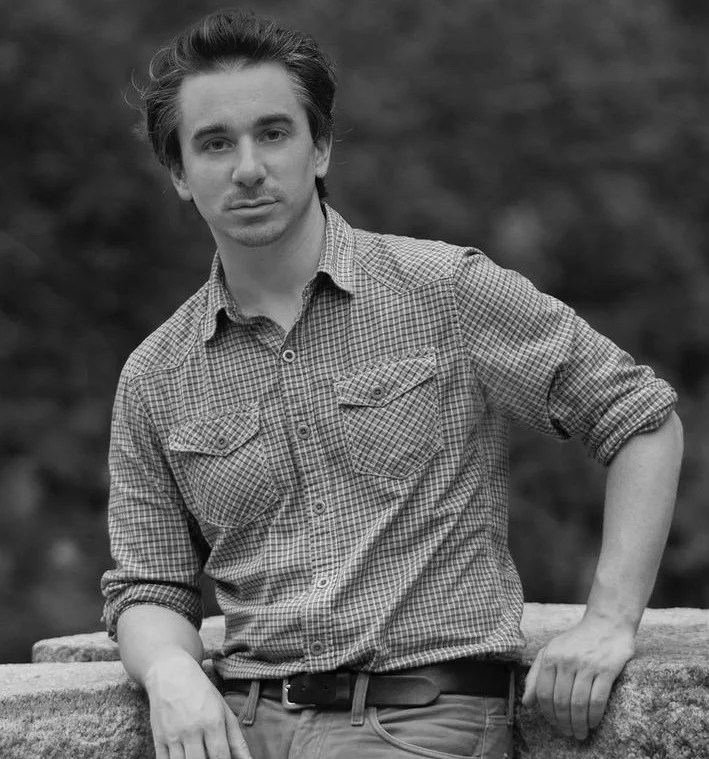
(Pictured: American poet and novelist, Joseph Fasano.)

“How does Authoritarianism happen? It starts slowly, in slogans and small acts. It starts in the eroding of decency and empathy.

 It starts with a “Leader” undermining faith in any “Truth,” the deliberate disorientation of the citizen’s mind.

And then? It stirs in the heart of the common man, whose world has become too complex for him. He looks around and finds a world that is frightful, complicated, new. He sees his falling bank account. He loses his job. New media bombards him with changes he cannot understand. He despairs. He is filled with an unnameable terror.

When he can take the fear no longer, he abandons his reason. He hands his mind over to a Leader—a Fü*rer, a Chairman, a Figure He Never Had—who promises to simplify his thoughts, his feelings, his life; to tell him the one, concocted, state-sponsored Truth he wants to hear. And that Leader will do exactly that.

Authoritarianism, therefore, thrives on the one-sided mind: the individual, and ultimately the group, that has become alienated from, or has repressed, a part of itself, usually in an attempt to avoid feeling what it is terrified to feel. The one-sided person seeks to control the ways in which others express themselves, and he does so for precisely this reason: he unconsciously envies those who can feel what he cannot feel.

Authoritarianism always begins with a reductive philosophy that despises empathy, that views tenderness as a weakness, that seeks to police how others love. Dostoevsky once wrote that hell is nothing other than the state of being unable to love. Authoritarianism is nothing but the small mind’s fear of the myriad beauties of this world. Even as its rulers acquire material wealth, they wish to deprive the world of the spiritual riches they cannot have.

Thus, as a movement, the ultimate unconscious wish of Authoritarianism is always destruction, self-destruction, s*icide. It longs for stillness, not growth; its nationalistic fervor is a not-so-hidden desire to be alienated, to sever its bonds with other nations and peoples. It ends as H*tler did in Berlin: alone, isolated, taking everyone with it into the dark.

It is predicated, always, on a false nostalgia: a longing for an ideal, imagined past. Its slogans are vague enough to inflame the fantasies of the one-sided mind be great again, blame others, your life is hard because of Someone Else. Most catastrophically, then, the one-sided mind projects its repressed half (its shadow or its tenderness, its darkness or its heart) into this Other, and seeks to oppress it, then ultimately to destroy it. Genocide, tyranny, oppression: these are acts of the fractured, one-sided mind, afraid of encountering and experiencing the other side, the other opinion, the Great Other, in whose presence it would be challenged to face the whole of what it means to be human.

Art, mystery, poetry, education: these things reconnect us to our wholeness, to the varied voices within us. When we act from that grace, that state of openness, of listening, of synthesis and integration, we practice the lost arts, the arts that all power structures inherently desire to devalue and repress empathy, compassion, creativity, love.

Where is the wise way between societal extremes? Where is the movement that supports the worker, the common citizen, without stoking his deepest fears and using them to divide society and conquer it? Where is the form of government that wishes for its citizen to be whole?

A fractured, one-sided mind is a mind that can be controlled, sold reductive narratives, induced to want and to purchase any artificial fulfillment. A whole mind, even a mind that strives for impossible wholeness, is free. And that is why real, radical wholeness is a threat to the status quo, to tyranny, to propaganda.

As is art. As is grace. As is empathy. And that is why love, radical love, common love, even in the darkness between two bodies, is a revolution that can bring kings to their knees.”

— Joseph Fasano

IF YOU GO:

What: London Symphonia presents Love and Romance with Denise Pelley.

When: Saturday, February 14, at 7:30pm.

Where: Metropolitan United Church, 468 Wellington Street, London, ON.

Tickets: Online at https://ci.ovationtix.com/36746/production/1248187?performanceId=11679476

For more information about this concert and London Symphonia, visit https://www.londonsymphonia.ca/

Follow London Symphonia on Facebook https://www.facebook.com/londonsymphonia and Instagram https://www.instagram.com/london_symphonia/

Here’s a recent Facebook post about the concert by conductor Scott Good, shared with his permission:

“Dear friends,

On February 14 at 7:30 PM at Metropolitan United (London, ON), I’ll be joined by my colleagues at London Symphonia, R&B/Jazz vocalist Denise Pelley, and poet/actor Roy Lewis to present Love and Romance.

Yes — it’s Valentine’s Day, and we are going deep!

The seed for this concert was planted almost two years ago when I noticed Valentine’s Day landing on a Saturday evening. As a concert designer, I love an occasion — a focal point that shapes an evening’s arc. Valentine’s Day is ideal: music across all styles is saturated with romantic passion, longing, joy, and vulnerability. It’s an excuse for genres to mix and make sense together, and for audiences to encounter both the familiar and the unexpected. I like to think of occasion concerts as community-oriented — something many can enjoy.

I knew early on the program had to include Mahler’s Adagietto from his Fifth Symphony. I remember the first time I heard it; I’ve never known a piece of music to evoke the sensation of a loving, gentle touch quite like it. Later, I learned it was written as a love letter to his wife. It had to be here.

Around that time, I had recently worked with Denise at the Forest City London Music Awards, where we presented Stevie Wonder’s You and I. It went beautifully. Denise brings such generosity and depth to performance, and the song – with its tender, yet vulnerable lyric – aligns perfectly with this theme. The following year we returned with You Don’t Know Me, this time with horns, strings, and rhythm section. That collaboration allowed me to shape the orchestration around her expressive vocal language, and it became clear we had the beginnings of something larger.

Roy’s role in guiding the evening through poetry and poetic prose became unexpectedly profound. After a remarkable performance with Symphonia last year, he joined us with poems written specifically for Valentine’s Day — fourteen of them. As I read through his work, I realized something deeper was at play: these poems weren’t only about love found, but love lost. With great love comes great grief, and the concert gradually reshaped itself around that truth.

Nine of Roy’s poems ultimately frame the program, each leading into a song or instrumental work — the pain of Cupid’s arrows illustrated by Ellington’s Good Morning Heartache, a thrilling glance explored in Bacharach’s The Look of Love, the electricity of being with the one you adore caressed by Carmichael’s The Nearness of You. Instrumental moments include Ravel’s sensuously flirty “Pantomime” from Daphnis et Chloé, featuring Laura Chambers on flute, and the king of romance, Barry White’s orchestral hit Love’s Theme.

As the concert turns toward loss and reflection, we arrive at Autumn Leaves, performed without rhythm section, just orchestra and voice – followed by an up-tempo moment of melancholy in an orchestral rendering of Radiohead’s Weird Fishes I created for the concert, a song that aptly describes, through driving rhythm, evocative chords, and a spacious yet unrelenting melody, a feeling of loss and the difficulty of moving on.

We close with Here’s to Life, in the Shirley Horn arrangement — a true bucket-list piece for Denise, and the perfect sentiment to end the evening:

“May all your storms be weathered.

And all that’s good gets better.

Here’s to life, here’s to love, here’s to you.”

With solos from Nevin Campbell, Joe Phillips, Rob Stone, and Shawn Spicer, and an orchestra navigating classical lyricism, jazz harmony, and blues grit, + original arrangements alongside renditions made classic by Ella Fitzgerald, Dianna Krall, and Matt Monro, this promises to be a rich, emotionally charged night of music. Join us if you can!”

Previewed by Daina Janitis
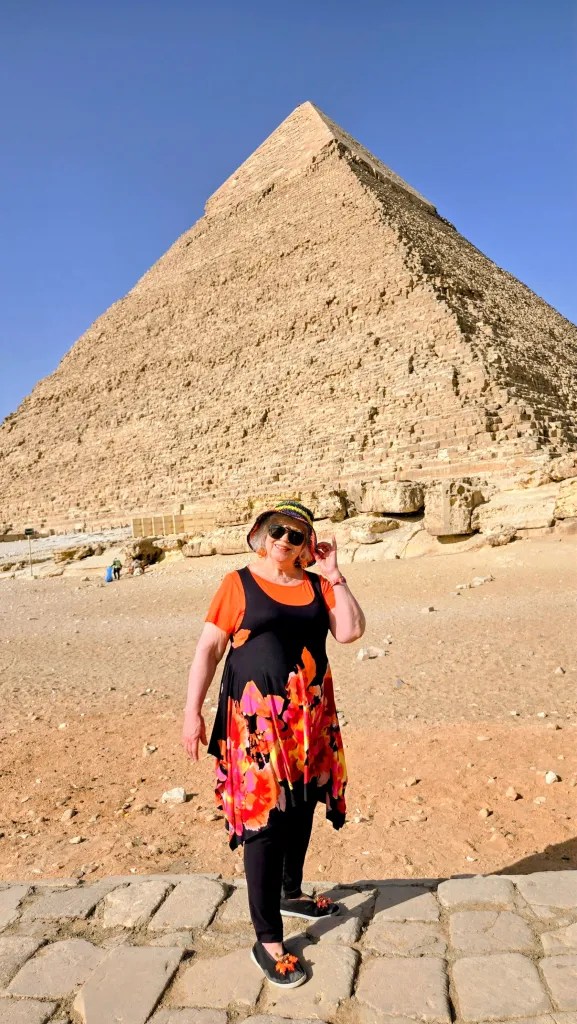
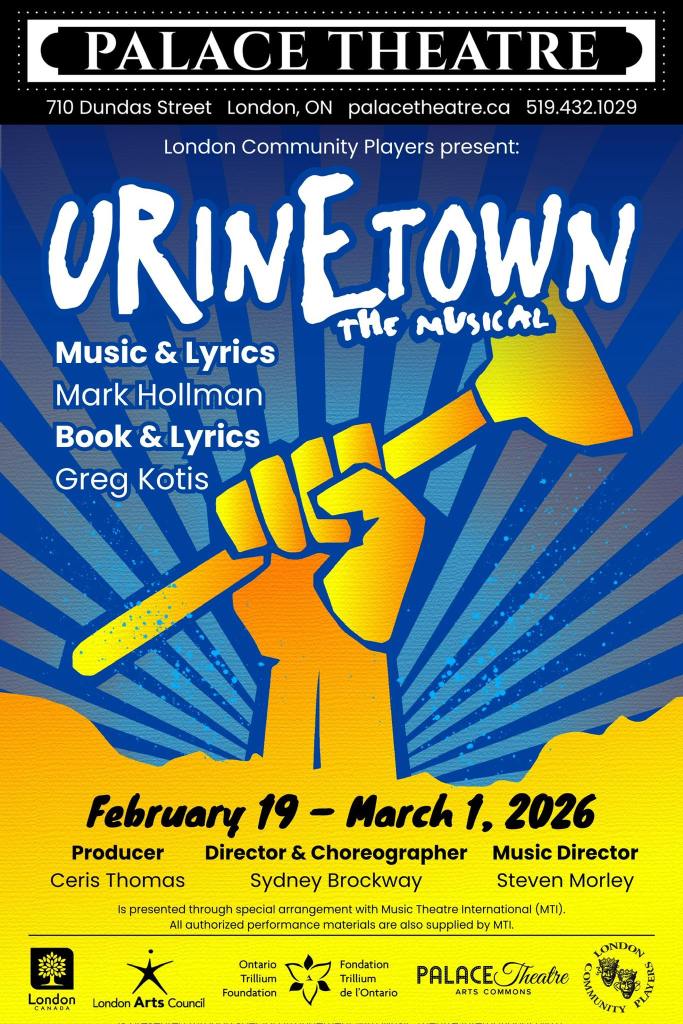
Q&A with Ceris Thomas, Producer of London Community Players’ Urinetown: The Musical.

What follows is a Q&A Interview with Ceris Thomas, producer of London Community Players’ production of Urinetown: The Musical, playing at the Palace Theatre from February 19 to March 1.

Q. The description of Urinetown: The Musical found on the Palace Theatre website reads: “In a dystopia ruled by drought and corporate greed, public toilets are the law— and rebellion smells suspiciously like revolution. Equal parts absurd, poignant, and laugh-out-loud funny, Urinetown skewers capitalism, power, and musical theatre itself.” Could you break that down for our readers?

(Pictured: Ceris Thomas, Producer of Urinetown: The Musical.)

Urinetown: The Musical is notoriously hard to describe, which is probably why so many explanations feel incomplete or confusing. Honestly, if it had a different title, people might find it easier to just shrug and say, “Sure—let’s go see this thing.”

At its core, Urinetown is a dystopian satire that imagines a world so devastated by water shortages that bathrooms no longer exist in private homes. To manage the crisis, business and government join forces and arrive at a “solution”: the public must pay to pee. It’s an intentionally oversimplified take on a massive environmental issue, designed to get the audience quickly and clearly into the world of the show.

As with many well-meaning systems in a capitalist society, the opportunity to profit from an unavoidable human need quickly curdles into greed and manipulation. That’s where we meet the people of Urinetown—some desperate to survive, others perfectly comfortable in their assumed wealth and eager to raise the fees even higher.

Pictured: Urinetown’s Officer Lockstock (Kate Sepi), accompanied by Officer Barrel (Luke Bainbridge). Photo Credit: Ross Davidson.)

The absurdity, poignancy, and laugh-out-loud comedy come from how the story is told. One of the creators’ most delightful choices is the musical’s constant tribute to classic Broadway shows. One song clearly channels Fiddler on the Roof; the next explodes with unmistakable West Side Story energy. The first time I heard it, I actually laughed out loud in my car.

If you’ve ever seen a musical—any musical—you’ll catch the references and giggle along. And if you’re someone who doesn’t usually like musicals? This show lovingly invites you to laugh at all the ones your mom dragged you to see.

Q. It also reads: “No one is safe. Not even the audience. Bring your sense of humour — and your spare change,” implying audience members will be expected to participate in some way. Will they? 

The fourth wall is very much broken in this production. Officer Lockstock serves as the show’s narrator, frequently conversing with Little Sally, a member of the “poor” who isn’t afraid to challenge Lockstock’s interpretation of events. Beyond that, the audience needs only to bring a sense of humour and a willingness to laugh out loud at the shenanigans of the players.

(Pictured: Urinetown Les Misérables parody poster.)

Q. Can you provide a brief Synopsis of the play? 

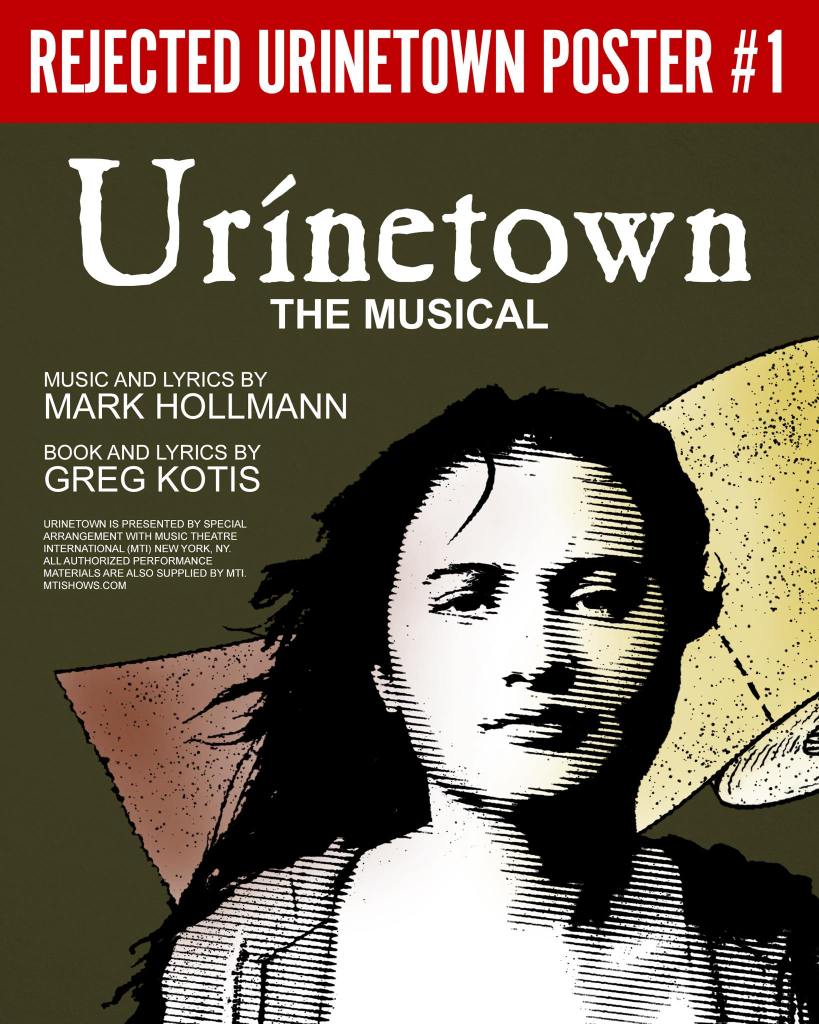
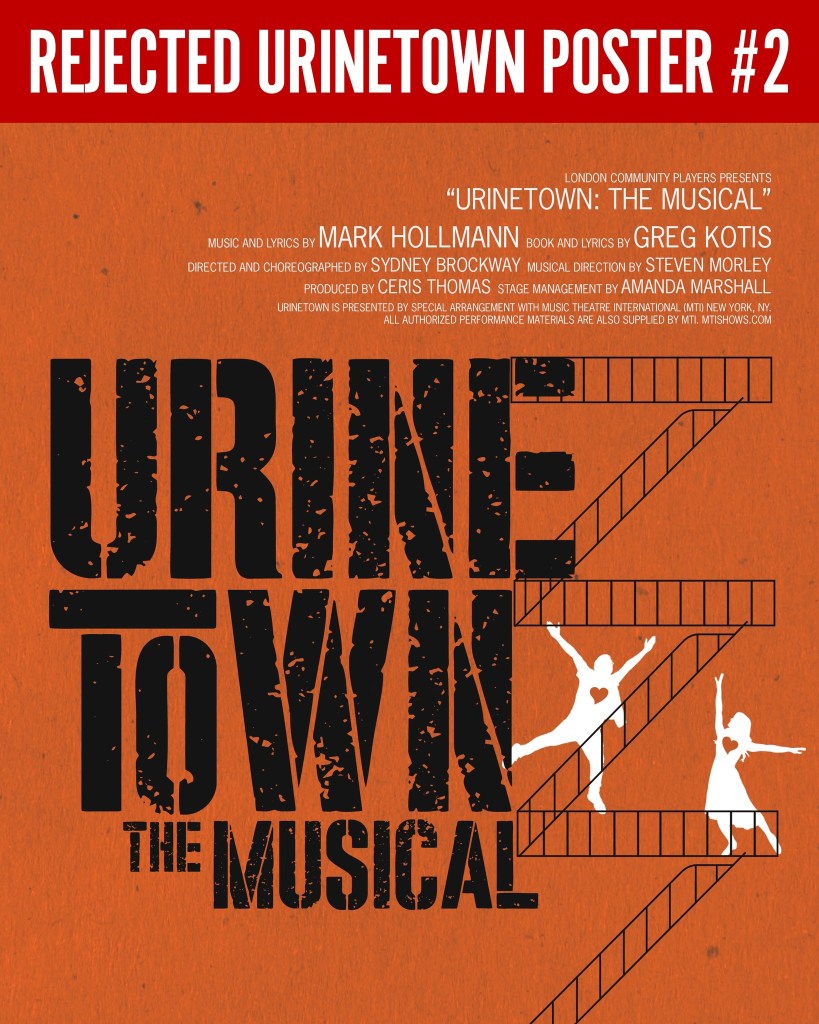
Our parody poster series—riffing on Les Misérables, West Side Story, The Producers, Wicked, and more—wasn’t just a marketing gimmick. It was a visual clue to the DNA of Urinetown itself. The show gleefully borrows familiar musical theatre tropes and iconic structures, reshaping them to tell its own absurd and pointed story.

At its heart, Urinetown gives us all the classics: a villain who controls the money, the police, and the government; a hero who controls nothing but works hard and dreams of a better future; and a beautiful daughter of the villain who becomes the catalyst for change when our hero falls instantly in love. His life is upended, his resolve hardens, and he sets out to fix a broken world—for love, for justice, and for the people he cares about.

What follows are the choices made by the citizens of Urinetown, and the consequences that come with them. It’s familiar, it’s twisted, it’s self-aware—and all of it is driven by music that is relentlessly fun.

(Pictured: Urinetown West Side Story parody poster.)

Q. Do any of the play’s satirical situations and themes have local relevance? 

Yes—and the relevance is immediate and unavoidable. The neighbourhood surrounding our theatre is routinely ignored by municipal leadership. The parking lot outside our doors has no public bathroom, and as a result, it becomes the only option for people who have nowhere else to go. That reality mirrors Urinetown so closely that it feels less like satire and more like lived experience.

In Urinetown, the poor are criminalized for existing. They are punished for meeting basic human needs, while those in power remain insulated from the consequences of their decisions. That dynamic is playing out here as well. When audiences say they are “afraid” to come to this area, that fear reflects the same distance and neglect that allow these conditions to persist.

We believe that is exactly why it is important to come. Showing up matters. Being present in this neighbourhood matters. Urinetown asks us to look at who we ignore, who we punish, and who we choose to care about—and invites audiences to step into a space that deserves attention, investment, and humanity.

Coming to this neighbourhood—choosing to be present, to witness, to engage—is not something to be afraid of. It’s something that matters. Urinetown asks us who we ignore, who we punish, and who we decide is worth showing up for. In this case, the question doesn’t end when the curtain comes down.

Q. Will the audience recognize any of the play’s musical numbers? 

Even if audiences don’t know the specific musical numbers themselves, they will absolutely recognize what those songs are paying homage to. Urinetown is filled with stylistic tributes to iconic musicals—there are clear nods to Fiddler on the Roof and West Side Story, as well as The Fantasticks, among others. The familiarity isn’t about recognizing a tune, but about recognizing the style, which makes the jokes land and the storytelling even richer for theatre-literate audiences—while still being fun and accessible for everyone else.

Q. What challenges have you encountered bringing this play to the Palace Theatre stage? 

The journey to bringing Urinetown to the Palace Theatre has been both unexpected and incredibly rewarding. London Community Players originally had a different production planned for this slot, but when royalties became unavailable, we had to pivot quickly. That shift led me to reach out to a talented artist I knew from other shows, and I was thrilled when she agreed to join us on the David Long Stage.

Choosing Urinetown turned out to be an inspired fit. There is a deep pool of artists in London who have been eager for the chance to tackle this show, and the auditions reflected that excitement. We welcomed many new performers into the room, which always brings fresh energy to a production. Rehearsals have been collaborative, joyful, and full of discovery.

As with any show, the real problem-solving began once we moved onto the stage. Urinetown asks us to create several locations within a single city, and the David Long Stage offers limited wing space. Rather than seeing that as a limitation, our team embraced it as a creative opportunity—finding smart, imaginative ways to build a complete world that could live in one place. As a first-time set designer, after taking a course in Stratford last summer, I’ve been supported by an incredible crew. I’m learning that a set is never truly finished; it simply reaches the moment where it’s ready to welcome an audience.

Q. Your marketing/social media campaign for Urinetown has been nothing short of brilliant. Could you give a shout-out to those individuals responsible for it?

Thank you! We really appreciate your kind words and that you’ve been following our campaign.

(Pictured: Pets of Urinetown poster.)

The “Pets of Urinetown” came about naturally because so many of our cast members have pets. Sharing stories and photos of their furry friends was a fun, comfortable way for the cast to connect—and I thought it would be a gentle, playful way to spark interest in the show.

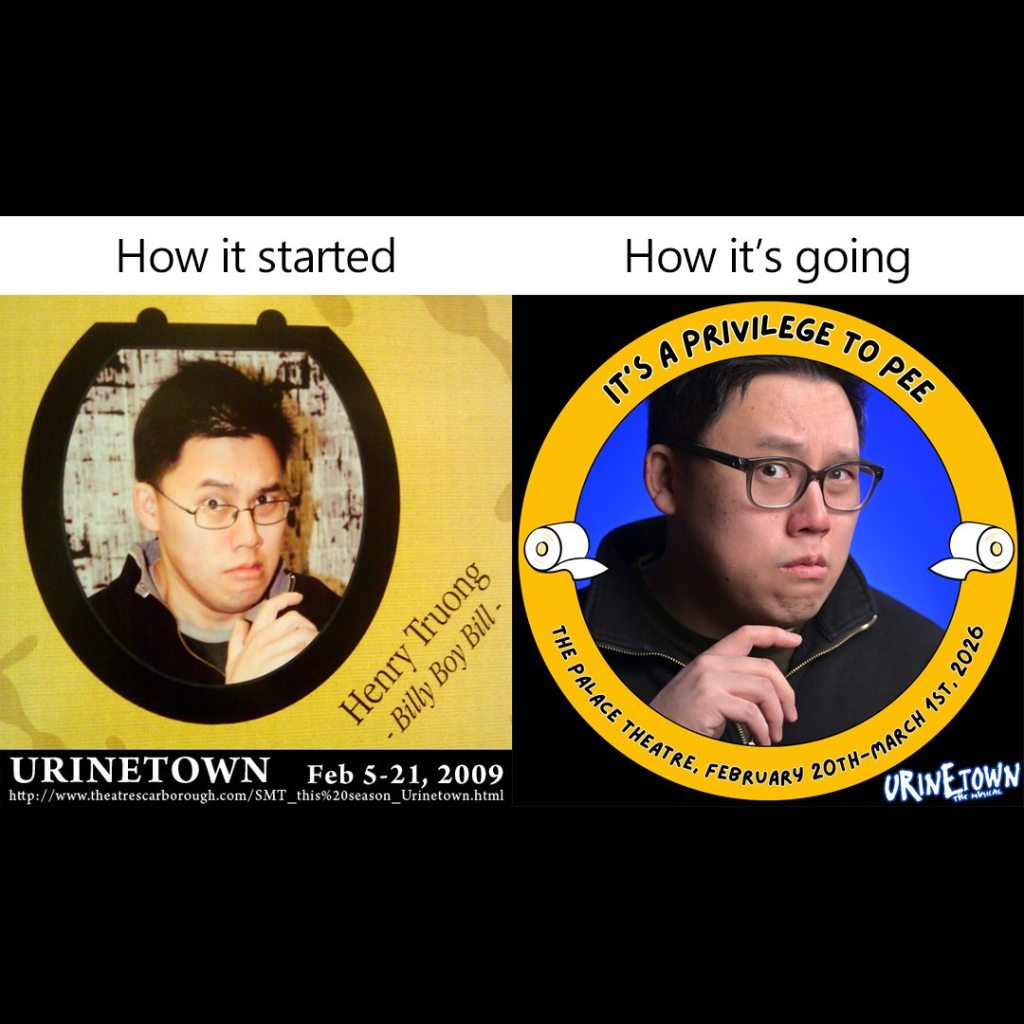
The poster campaign, on the other hand, was entirely the brainchild of the brilliant Henry Truong, who also plays Bobby Strong, our hero. Henry came up with the imagery, collaborated with others to bring the visuals to life, and even wrote all the copy. It was a truly inspired creative effort.

Urinetown gives so many ways to engage with the material, from the music to the story to the little touches we’ve created for social media. I think that’s why people who love this show really, really love it—and our team’s creativity has made sharing that love so much fun.

Q. Is there anything else you think our readers should know about LCP’s production of Urinetown? 

One thing to know: it’s not here long! Urinetown runs for just eight performances, from Thursday, February 19th through Sunday, March 1st. Both Sunday shows are matinees, and the second Saturday also offers a matinee to give those who might feel less comfortable in the area another chance to attend. That Saturday matinee will also be adjudicated for the WODL festival, with a public adjudication immediately following the performance for anyone who wants to stay and watch.

For peace of mind, LCP provides security at all of our productions, with patrolled entrances and monitored parking. And as a bonus, parking behind the theatre is now free at all times.

Don’t miss it—once it’s gone, it’s gone!

CREATIVE TEAM

Producer – Ceris Thomas

Director – Sydney Brockway

Stage Manager – Amanda Marshall

Musical Director – Steven Morley

Lighting Designer – Indrani Mahadeo

Sound Designer – Quinton Esquega

Costume Designer – Tannis Daoust

Costume Assistant – Chaaya Vy

Costume Assistant – Chloe Scripnick

Sound Operator – Doug Deschenes

Lighting Operator – Jenny Katkov

Assistant Stage Manager – Larissa Bartlett

Assistant Stage Manager – Jess Bohan

CAST

Kate Sepi – Officer Lockstock

Luke Bainbridge – Officer Barrel

Rae Ryder – Little Sally

Henry Truong – Bobby Strong

Jesslyn Hodgson – Hope

Laura Williams – Pennywise

Sean Brennan – Cladwell

Ryan Starkweather – Fipp

David Lu – McQueen

Cassandra “Cass” Allen – Mrs. M/Boy Cop #1

Skyler Gallagher – Dr. B/Cop

Jade Rogers – Secretary/Cop

Nicholas McConnell – Hotblades Harry/Boy Cop #3

Antonia Sidiropoulos – Little Becky Two Shoes/Cop

Matt deKort – Old Man Strong/Ensemble

Allison Gold – Josephine “Ma” Strong/Cop

Jennifer Groulx – Tiny Tom/Boy Cop #2

Christine Varga – Soupy Sue/Cop

Dustin Freeman – Robbie the Stockfish/Cop

Luba Skyba – Billy Boy Bill/Cop

Charlotte “Charlie” Camrass – Rebel Poor/Girl Cop #1

Amelia Armstrong – Ensemble

Leah Exley – Ensemble

IF YOU GO:

What: London Community Players present Urinetown: The Musical

When: February 19 to March 1, 2026

Where: David Long Stage, Palace Theatre, 710 Dundas St., London, ON

Tickets: Adults: $38,  Students/Seniors (55+): $36, Youth (under 18): $23, Preview: $28 (fees included). https://mytickets.palacetheatre.ca/eventperformances.asp?evt=514

To learn more about Urinetown: The Musical and the Palace Theatre, visit https://palacetheatre.ca/

Follow the Place Theatre on Facebook https://www.facebook.com/atthepalacetheatre and Instagram https://www.instagram.com/atthepalace/

Q&A Interview with Ceris Thomas conducted by Richard Young

Heart and Soul: Angela Hardy and Robert Ruby

by Beth Stewart

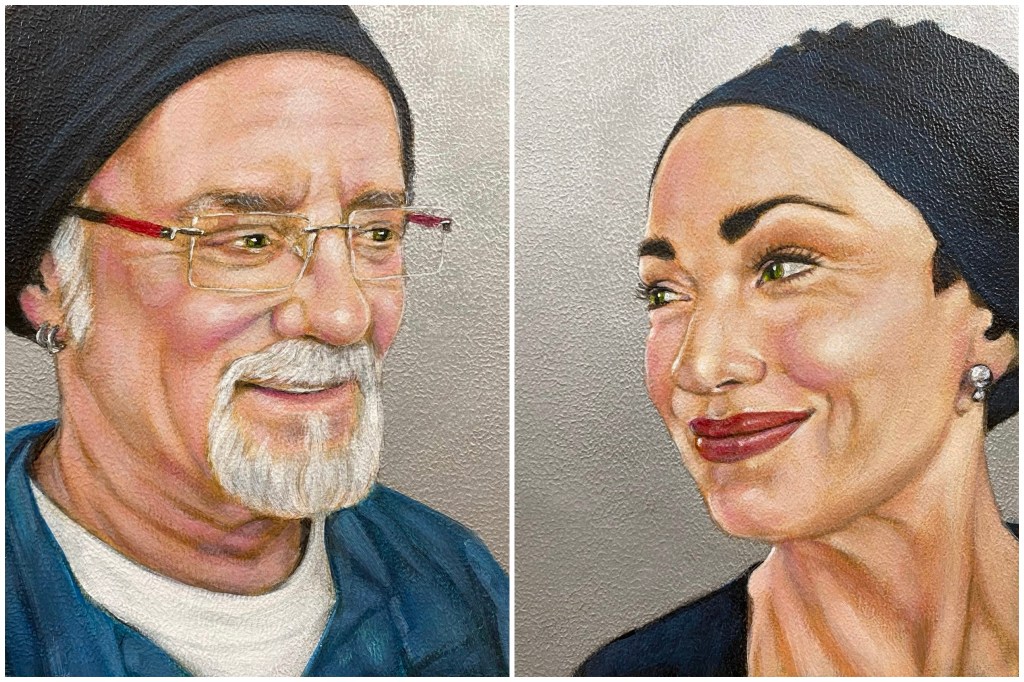
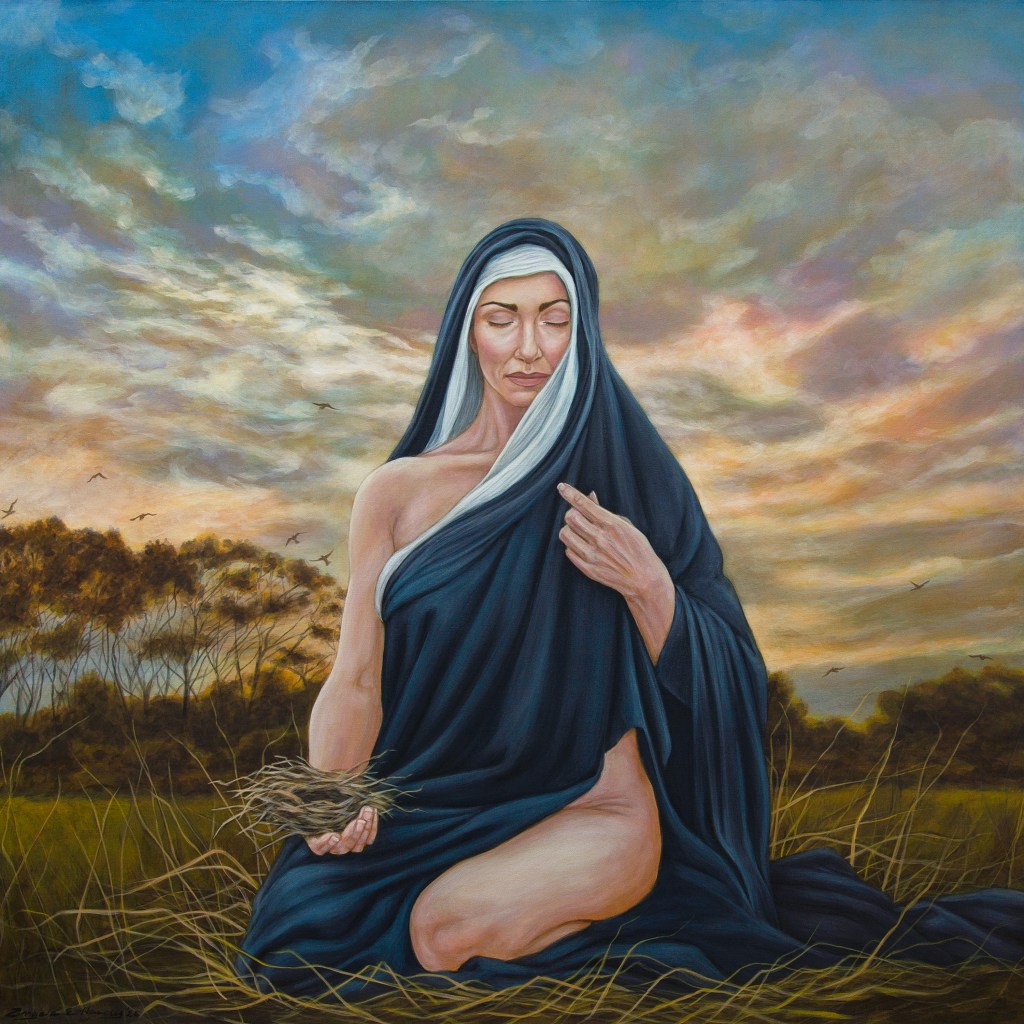
(Pictured: Angela Hardy, “Artists in Love”, acrylic with metallic background on two 6-by-8-inch panels.)

Angela Hardy hails from Labrador; Robert Ruby was born in Kitchener. The odds of them ever meeting were slim to begin with. That they met and fell in love, is serendipitous.

The two visual artists now live and work together in St. Thomas, Ontario. It is a relationship forged in happenstance and fired by a passion for art.

Angela Hardy has worked and trained in most mediums, but primarily considers herself an acrylic painter. Her art is firmly rooted in realism with a healthy dollop of impressionism. She has a deep love of colour and light.

While she paints multiple subjects, including birds, blossoms, landscapes, and skyscapes, she always circles back to figurative and portrait work. Overall, her subjects embrace beauty, love, and strength.

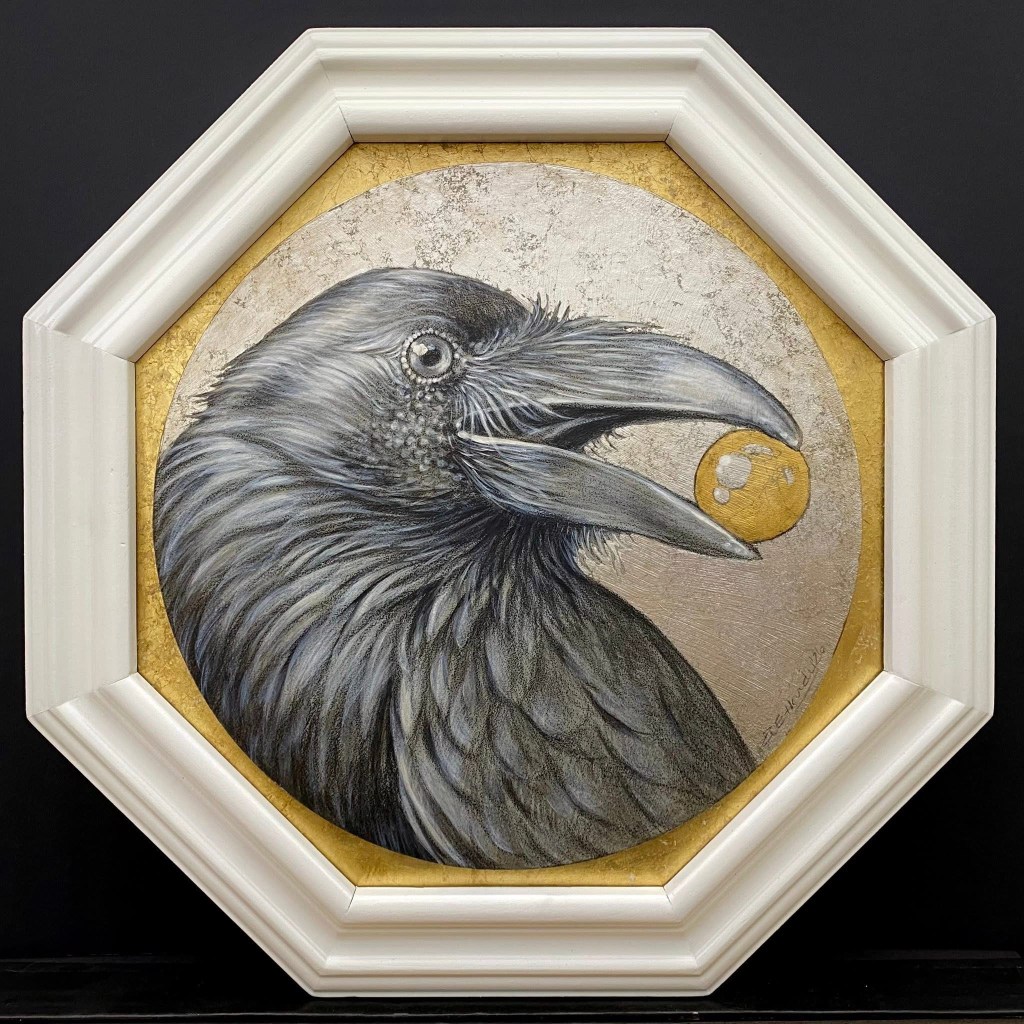
(Pictured: Angela Hardy, “The Keeper”, grease pencil, acrylic paint, silver and gold leaf on a 10-inch round panel with a 14-inch refinished wood octagon frame.)

Over the last few years, Hardy has leaned hard into her passion for art history and the symbolism and decorative elements of the Medieval, Renaissance and Art Nouveau periods.

The desire to draw and paint has always been a part of Hardy’s life. It was first nurtured by her mother, and then she was fortunate enough to attend West Viking College in Newfoundland and the Nova Scotia College of Art and Design in Nova Scotia.

A little over 10 years ago, Angela Hardy moved to Ontario.

Robert Ruby graduated from the Fine Art Environmental program at Fanshawe College. He, too, has worked in a variety of mediums, but has always gravitated towards assemblage, art that brings together disparate elements – often everyday objects, scavenged or bought – to form a new whole.

The act of assemblage can be seen as a rebellion against art in the traditional sense, and this, says Ruby, makes “intent and narrative” a crucial element of the medium.

Ruby embraces Kurt Schwitters’ philosophy that there is “no reason why used tram tickets, bits of driftwood, buttons and old junk from attics and rubbish heaps should not serve well as materials for paintings.”

It is appropriate that much of his work with its congregation of materials resembles altar pieces, reliquaries or shrines, as he too seeks to protect and respectfully display objects and ephemera.

Ruby is an acquired brain injury (ABI) survivor, which impacts his life and art. There was a long period of time, fourteen years to be exact, during which he attempted to deal with it on his own. He finally sought help.

It was not long after this that he met Angela Hardy, who was giving a talk on art in Port Dover.

He says, “Because of her, on October 5th, 2015, my world changed.”

She says, “Life took a turn I could have never dreamed.”

They quickly discovered how their interests aligned, but for nearly a year, they stayed in the friend-only zone.

“We both knew that we belonged together. We did then, and we still do,” admits Ruby. His assemblage, “Help is on its Way,” is a tribute to Hardy.

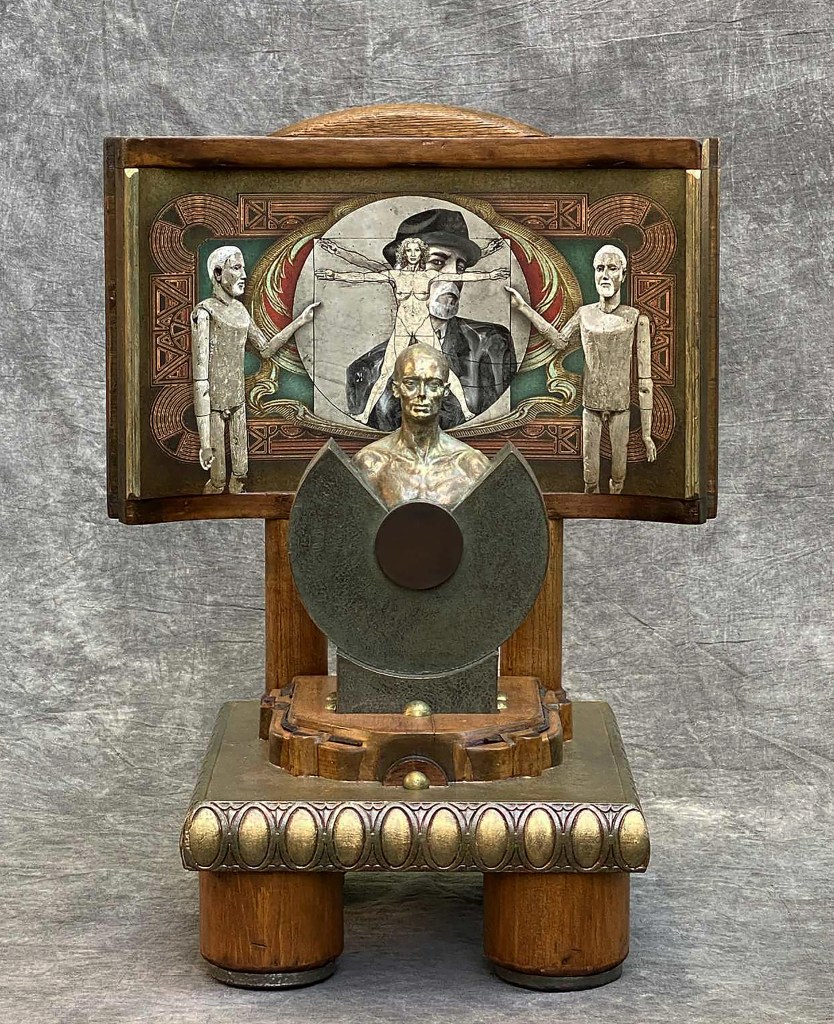
(Pictured: Robert Ruby, “Help is on its Way”, mixed media, 42 by 20 by 9 inches, 2022. This piece is part of a body of work that speaks to the challenges, confusion and frustration that often surround an Acquired Brain Injury.)

Angela Hardy and Robert Ruby’s home is also their workspace, so the two are almost constantly together. Both agree they wouldn’t have it any other way.

Ruby says, “Our physical space, the studio, tells a story. What’s in it? Paint palettes and drippings, brushes, tea cups, gears, tools, clocks, canvases, grease pencils, parchment paper, books, easels, paintings and assemblages. It’s a mirror in which I see my dear one, Angela Elizabeth Marie, every day.”

Hardy adds, “There’s never a shortage of romantic gestures or discussions on life and love. We have both lived full lives previous to ‘us’ and that helps drive us to not want to waste the time we have together.”

Since meeting, the two have enjoyed successes and met challenges.

In 2018, one of Hardy’s pieces was accepted into the Salon de la Société Nationale des Beaux Arts (SNBA), Carrousel du Louvre à Paris. In 2019, she was awarded a silver medal for painting at the Arts Sciences Lettres, Paris. Then, life took a couple of unexpected detours.

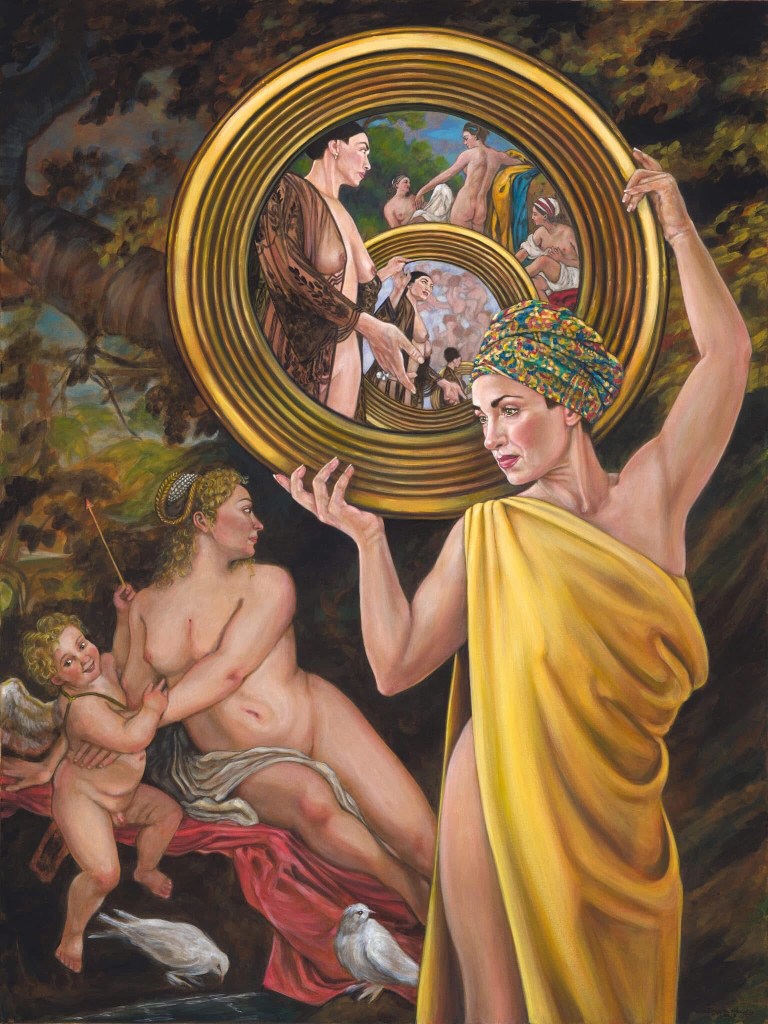
(Angela Hardy’s acrylic on canvas 30 by 40 inch “Venus Within” was shown at the SNBA, Salon de la Société Nationale des Beaux Arts, Carousel de Louvre in 2018.)

The first was the pandemic. The uncertainty made it hard for Hardy to dive back into the body of work – the “Indestructible Women” series – she had begun before her time in France.

Then, in 2021, her mother, Hardy’s guiding force, became ill with Alzheimer’s. Hardy returned to Labrador, where she stayed for eleven months caring for her mother while battling the Newfoundland healthcare system for her mother’s right to stay in Labrador.

Says Hardy, “Watching my mother decline changed how I see the world.” It drove home the importance of living fully. She concluded, “Art isn’t just for when we have time or feel the inspiration, it is a powerful tool to help us in difficult times … when we create for ourselves, we also serve others by giving their minds, imaginations, and emotions a place to linger.”

Her mother passed away in December 2022. Hardy says, “Without my partner, my Robert, his support and love, I don’t think I would have made it through it at all or find my way during and after.”

(Pictured: Angela Hardy, “Sanctuary of Safe and Sound” (part of the ongoing “Indestructible Women” series), acrylic on canvas, 48 by 48 inches.)

In 2023, Ruby had a 22-piece solo show at the St. Thomas-Elgin Public Art Centre (STEPAC). “The Mechanics of Meaning” explored his experience navigating life with an ABI. Much of the work was assemblage art, and the melding of old and new materials in this project can be seen as a metaphor for Ruby’s old self meeting and melding with his new self.

(Pictured: Robert Ruby, “Three Out Of Five Ain’t Bad”, mixed media, 12 by 24 by 10 inches, 2023.)

Since then, Ruby has been working on pieces that address the issue of aging, with his most recent piece titled “Assisted Living no. 01”. In addition, he has been working on a series about society’s treatment of women. One of the finished pieces in this series is “White Picket Fence,” which is fashioned after Margaret Atwood’s Handmaids.

Four of his assemblages are currently on display at Frankingstyle Art Gallery on Talbot Street in St Thomas.

(Robert Ruby’s “Declaration No 01” is subtitled “Before Every Vitruvian Man There’s a Vitruvian Woman”.)

In their time together, Angela Hardy and Robert Ruby have never run short of creativity. Says Hardy, “If anything, this collaboration of love and creativity keeps growing. Our day-to-day revolves around the art we make.”

London photographer Paul Lambert says, “Angela and Robert are a testament to the beauty of connection. Angela and Robert remind us that being ‘artists in love’ isn’t just about sharing a creative life — it’s about living as co-creators of something bigger than themselves.”

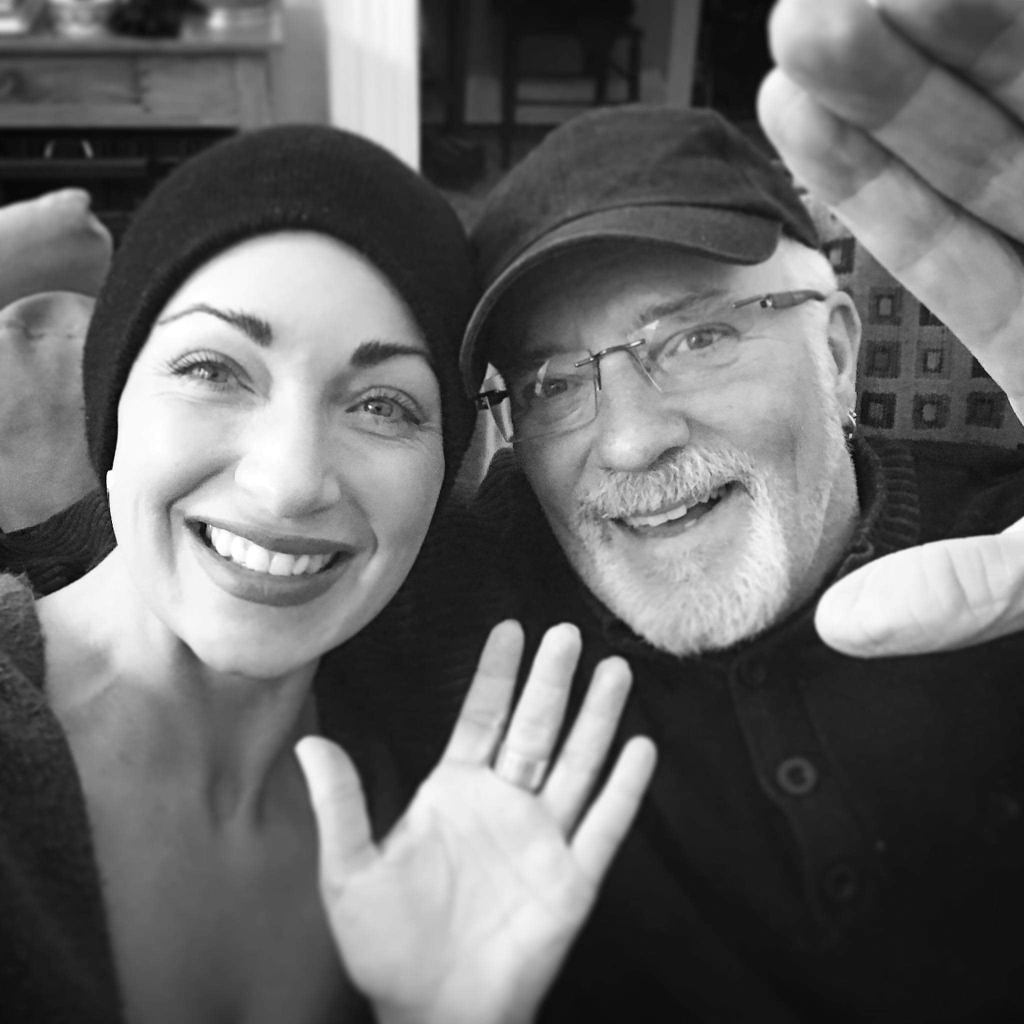
(Pictured: Angela Hardy and Robert Ruby. Photograph by Robert Ruby.)

For more information on Angela Hardy and Robert Ruby, visit:

http://www.angelahardyfineart.com/

http://www.facebook.com/angelahardyfineart

Instagram: @ang2art

http://www.robertrubyfineart.com

By Beth Stewart

Web: https://bethstewart.ca/

School of Rock announced as 2026 Grand Theatre High School Project

Prepared with files provided by the Grand Theatre

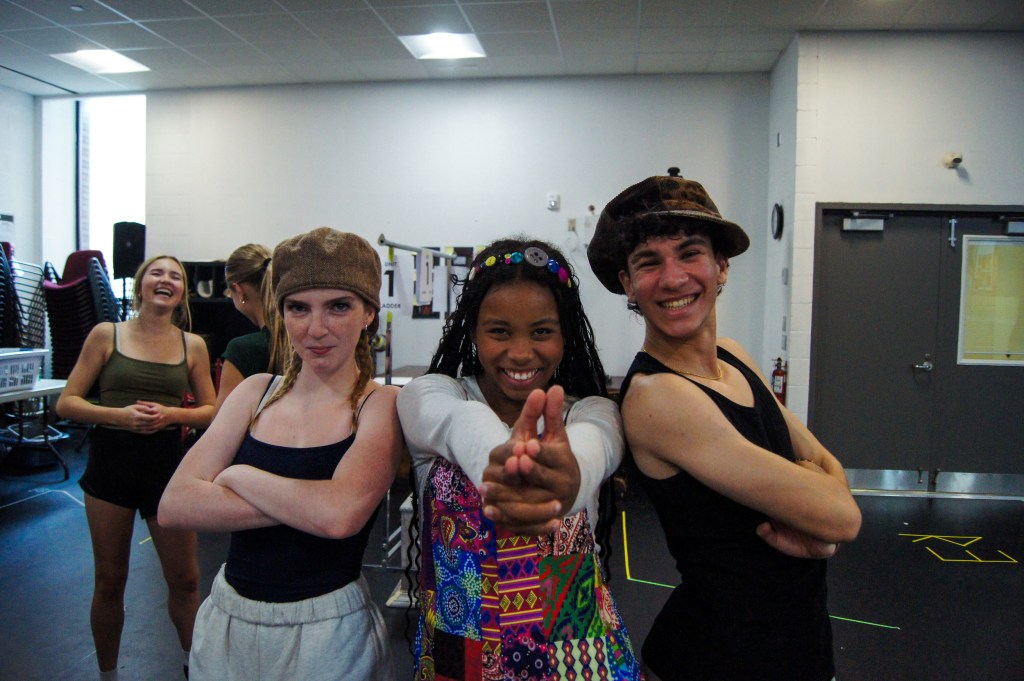
The Grand Theatre is thrilled to announce that School of Rock will be the 2026 Grand Theatre High School Project. In a company first, London and area’s most talented young artists will be rocking out on stage, playing live music – in addition to the familiar performance and production roles typically part of a Grand Theatre High School Project production. Applications to join the student company are now open and close on March 30, 2026.

Based on the 2003 hit movie starring Jack Black (Tenacious D, A Minecraft Movie) and written by Mike White (The White LotusSchool of Rock), the production features all of the movie’s contagious anthems as well as fourteen new original songs by none other than Andrew Lloyd Webber (Jesus Christ Superstar, Cats, The Phantom of the Opera).

School of Rock is a fun, high-energy show and a chance for high school students to be playing instruments right on the stage, which is an exciting first for the Grand Theatre High School Project,” shares Rachel Peake, Grand Theatre Artistic Director. “It’s a show about the strength of young people and about how your individuality – your weirdness – is your strength.”

(Pictured: Rachel Peake, Grand Theatre Artistic Director. Photo Credit: Dahlia Katz.)

The Grand Theatre High School Project returns for its 28th year, providing London and area high school students with education and training in the working environment of a professional theatre, at no cost to the participants. From September 22 through October 3, 2026, the Spriet Stage will transform into the super rockin’ world of Dewey Finn – and London’s talented teens will be his star pupils playing music live on stage, creating and running various production elements that bring the show to life.

School of Rock tells the story of Dewey Finn, a wannabe rockstar with no band, no job, and if he can’t make rent, no place to live – and possibly no best friend. Ready to try anything, he poses as a substitute teacher and takes a gig teaching fifth grade at Horace Green Prep. Demerits and grades aren’t his thing, but the noble quest to win a local Battle of the Bands brings this unlikely band of students and teacher together for the sake of rock glory – and extra credit.

To helm this year’s High School Project, award-winning Director Lezlie Wade returns to the Grand Theatre to bring this league of would-be rock legends to greatness. Wade previously directed Dream a Little Dream at the Grand Theatre in 2014/15and has directed at the Stratford Festival, Shaw Festival, Theatre Aquarius, Musical Stage Co., and beyond. Her production of Spamalot ranks as one of the longest-running shows in Stratford Festival history.

(Pictured: Lezlie Wade, Director, School of Rock.)

“With the help of a down-on-his-luck guitarist, School of Rock is the inspirational musical that transforms a class of straight-A students into a mind-blowing rock band, unlocking their inner rebels,” shares Wade.

Wade is joined by Matthew Atkins as Music Director, who audiences will recognize as the Artistic Director of the London Gospel Collective and as the Music Director of Disney’s Newsies at the Grand Theatre last year.

(Pictured: Matthew Atkins, Music Director, School of Rock.)

Choreographer Julius Sermonia (Broadway, Stratford, Shaw) also joins the production, in a much-anticipated return to the Grand Theatre (Beauty and the Beast, Pig, Charlie and the Chocolate Factory, and last season’s smash-hit Waitress).

(Pictured: Julius Sermonia, Choreographer, School of Rock.)

The Grand Theatre is looking for students to join the show’s company in acting, singing, music, and production roles. Students interested in production roles may apply to work in one of several areas, including stage management, props, wardrobe, scenic art, carpentry, sound, and marketing. The program has historically created opportunities for up to 80 student participants.

(Pictured: Lyla Worrall, Solarah Rose, and Hayden Baertsoen from Disney’s Newsies, September 2025. Photo Credit: Jordan Peter.)

HOW TO GET INVOLVED

The Grand Theatre invites London and area high school students to apply for the 2026 Grand Theatre High School Project. The project is open to any high school student from the London region who will be enrolled in high school in the fall of 2026 or participating in homeschooling.

For more information on how to apply to be part of the 2026 Grand Theatre High School Project, visit https://www.grandtheatre.com/participate-high-school-project.

Applications will close at 9 a.m. on March 30, 2026. Interested students are encouraged to apply now or register for a free information session to learn more.

Closer: Love Laid Bare at Procunier Hall

by Jo-Anne Bishop

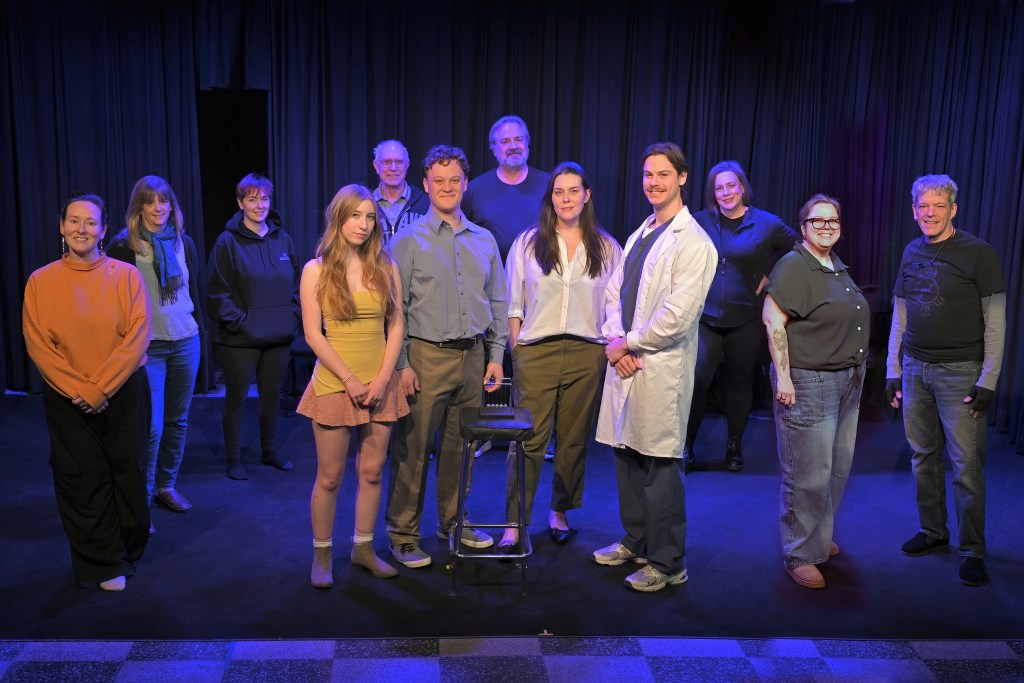
(Pictured: Cast & Crew of Closer. Photo Credit: Ross Davidson.)

There are moments early in Closer when you may find yourself wondering where it’s all going. Patrick Marber’s provocative examination of love, desire, and emotional brutality opens at a measured pace, and I’ll admit that at first, I wasn’t convinced. The stripped-down staging and deliberate slowness made me question whether this production would land for me at all. But somewhere around the midpoint of the first act, something shifted, and from there on, I was completely engrossed.

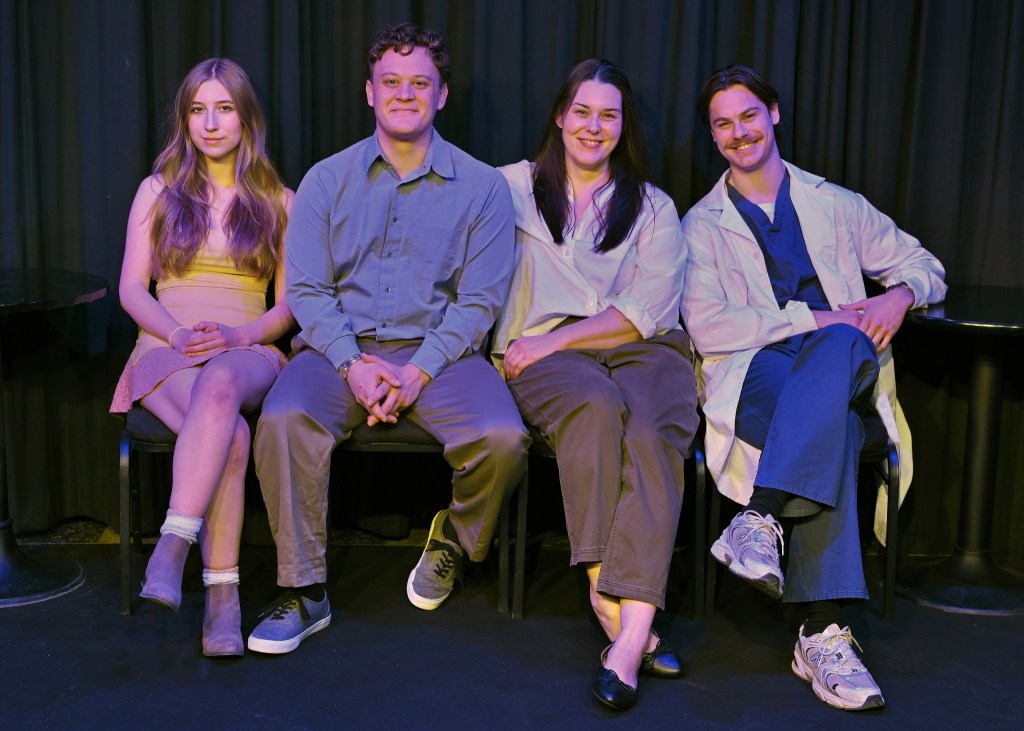
Directed by Dave Semple and produced by Andrea Bennett, Closer unfolds in the small black box space at the Palace Theatre’s Procunier Hall, placing the audience uncomfortably close to the emotional wreckage on stage. Starring Noah Englmann as Dan, Scarlett Allen as Alice, Alex Pinter as Larry, and Meghan Brown as Anna, the production strips away nearly everything except the actors themselves and ultimately proves it doesn’t need anything more.

(Pictured: Closer Cast – Scarlett Allen, Noah Englmann, Meghan Brown, and Alex Pinter. Photo Credit: Ross Davidson.)

The performances across the board are deeply believable, but special recognition must go to the two female roles. Scarlett Allen gives a brave, uncompromising performance as Alice. Allen gives herself fully to the role, including moments of near-total nudity that could easily feel gratuitous or awkward in lesser hands. Instead, she owns the space with absolute confidence. Never hesitant, never insecure. Her fearlessness makes Alice feel raw, real, and emotionally dangerous, which is exactly what the role demands.

(Pictured: Scarlett Allen as Alice. Photo Credit: Ross Davidson.)

Meghan Brown’s Anna is equally compelling, offering a performance layered with vulnerability, restraint, and quiet devastation. I found myself hanging on her every word and movement, forgetting for a moment that this was a play and not a moment of voyeurism. Together, Allen and Brown anchor the production with emotional authenticity, elevating every scene they’re in. While Englmann and Pinter deliver strong, grounded performances as Dan and Larry, it’s the women who truly drive the emotional core of the play.

(Pictured: Meghan Brown as Anna. Photo Credit: Ross Davidson.)

Closer is, at its heart, an unflinching look at relationships and the many contradictions of love. I grew up on the verse “love is patient, love is kind,” but this play reminds us that love can also be messy, cruel, obsessive, and brutal. Marber doesn’t soften any of it, and this production leans fully into those truths. Love here is exposed for all its ugliness and beauty, its tenderness and violence, and the result in this production is as uncomfortable as it is compelling.

The program describes the show as “stripped down, grown up, and not for the faint of heart,” with a strong viewer discretion warning—and that description is absolutely accurate. This is not a play for anyone inclined to clutch their pearls. If explicit language, sexual frankness, or emotional cruelty make you uncomfortable, this likely isn’t the show for you. But if you’re willing to sit with a little bit of discomfort, Closer will reward you with a powerful exploration of love, loss, and heartbreak.

One of my initial hesitations was the minimalist staging. There are no traditional props and only sound effects and physical suggestion. At first, I found myself distracted, wondering why actual props weren’t used at all. But as the play progressed, it became clear: they don’t need them. The actors are the props. Their physicality, timing, and emotional commitment are so precise that you stop noticing what’s missing. Your focus narrows entirely to the characters and their unravelling relationships, which is exactly where it should be.

(Pictured: Set of Closer. Photo Credit: Ross Davidson.)

By the end of the two-hour production, the bare stage feels not like a limitation but a strength. The production is perfectly staged and brilliantly acted, proving that when performances are this strong, nothing else is necessary.

Despite my early doubts, I left thoroughly impressed and genuinely moved. Closer is challenging, bold, and beautifully performed. If you’re looking for theatre that doesn’t shy away from taking emotional risks, do yourself a favour and catch this production before it closes on February 15th.

IF YOU GO:

What: Closer, by Patrick Marber

When: February 5th-15th, 2026

Where: Procunier Hall at the Palace Theatre, 710 Dundas St, London Ontario

Tickets: $30-33, 2024-2025 Shows – Palace Theatre  RECOMMENDED 18+

Reviewed by Jo-Anne Bishop

Bows Up, Canada! When have you been called upon to protect Canadian unity? And when have you been able to do it by attending a concert?

Previewed by Daina Janitis
On the eve of the 1980 referendum, (PET) Pierre Eliott Trudeau (not PP, that’s for sure) reminded Canadians that they were facing a tipping point:  “We must now establish the basic principles, the basic values and beliefs which hold us together as Canadians so that beyond our regional loyalties there is a way of life and a system of values which make us proud of the country that has given us such freedom and such immeasurable joy.”

A quarter-century later, it’s not Quebec making secession noises- it’s Alberta. But if you seize the opportunity to be in the presence of some Alberta talent – certain to bring you immeasurable joy – maybe you can be part of some Canadian culture that keeps Canada together for another twenty-five years.

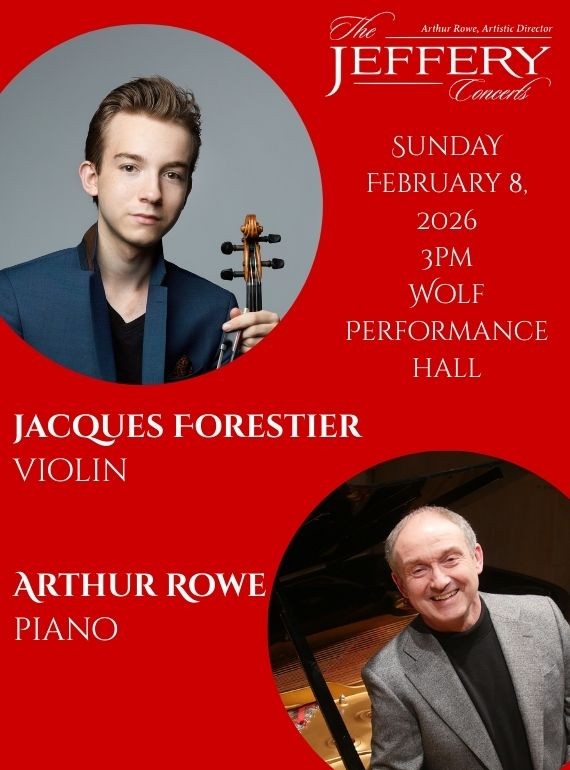
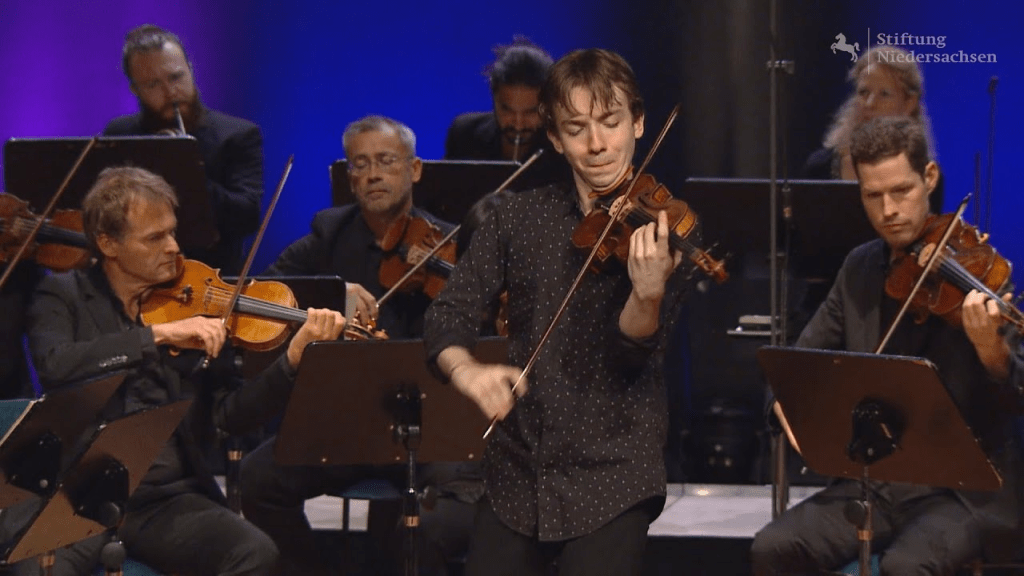
The Jeffery Concerts on Sunday, February 8, at the Wolf Performance Hall, at a comfortable 3:00 in the afternoon, features two icons of Canadian music – the young violinist Jacques Forestier and seasoned pianist Arthur Rowe. The CBC has already included Jacques in its “Top 30 Hot Canadian Classical Musicians under 30” – and Arthur is …uh …slightly older and already loved by London audiences.

So, who is this Forestier chap? I was about to credit his musical vibe to Montreal – but he’s an Alberta kid, born in Edmonton in 2004 and already starting to learn the violin at age TWO. By the age of 11, he made his debut with the Edmonton Symphony at the Winspear Centre – and remains one of their favourite soloists. I’ll place-name-drop a bit:  He’s been at the Curtis Institute on full scholarship since 2022, picked up some pointers at the Mount Royal Conservatory, and been a student-artist at Juilliard.

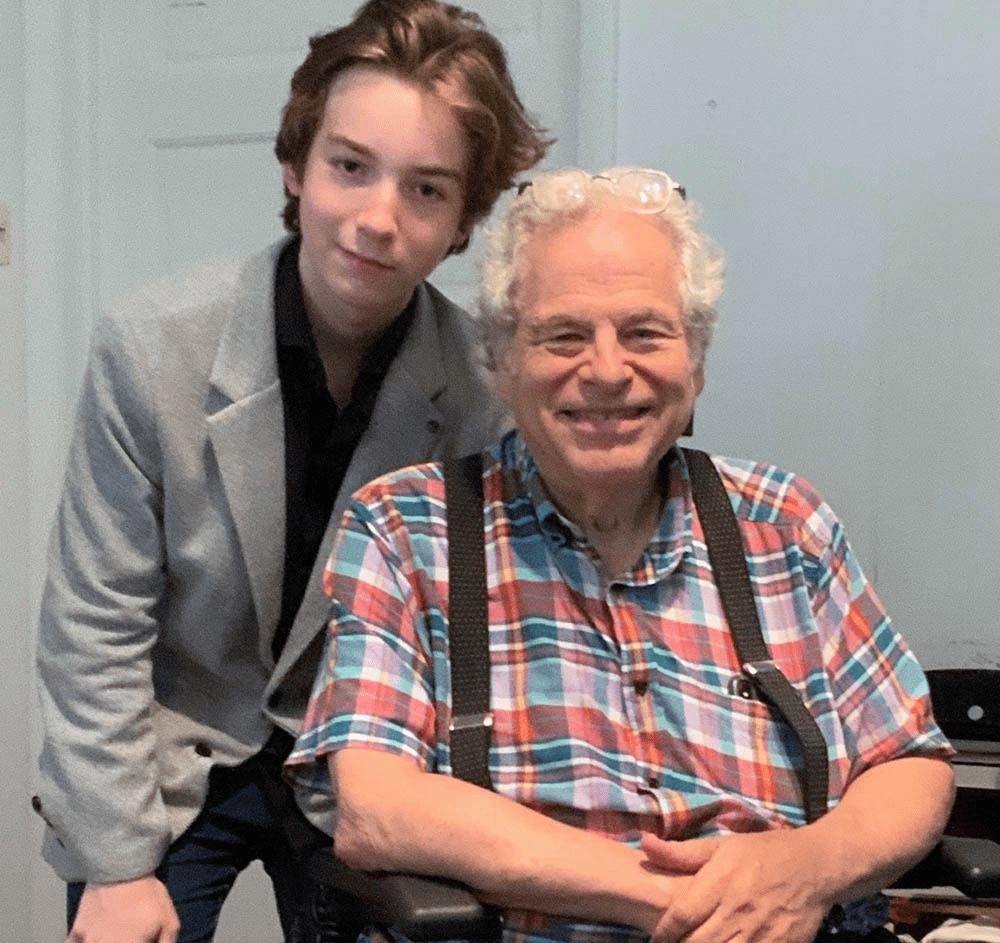
(Pictured: Jacques Forestier with violinist Itzhak Perlman.)

His parents’ home in Edmonton must be bursting with prizes ~

  • From the “Olympics” of violinists, the 2018 Yehudi Menuhin International in Geneva (the only Canadian to qualify)
  • A multitude of medals from major competitions in Canada
  • Winner of the Joseph Joachim Violin Competition in Germany

And Arthur? He’s my age.

Just kidding. He’s also a world-class talent, Professor and Inspiration Manager at The University of Victoria. But BC is not seceding, so you can be nice to him after the concert- no need to go overboard.

(Pictured: Pianist Arthur Rowe.)

And if you’re new to this classical music thing – and you don’t want to appear like a thickie-thickie dumb-dumb in front of the mates on either side of you – here are a few elitist phrases you can share about the program.

When the Dvorak Sonata in G Major begins, you can ask, “That sounds familiar. Didn’t that performance win Jacques the Joachim competition?” or “I can hear the influence of Dvorak’s American sojourn, can’t you?” Or, “It’s all I can do to keep from humming along with those Bohemian folk melodies.” Don’t forget to mention it’s “intimate and dazzling – I’m going to hold my breath for all 18 minutes of it”

As for the Brahms Sonata in A Major, try this: “Isn’t it amazing- that young man received the Joachim prize – and Brahms actually wrote this sonata for his FRIEND, Joseph Joachim.” (Chuckle warmly at this point). Or involve your seatmate with “I can hardly wait for the Allegro Grazioso of the finale- those Hungarian dance rhythms make me want to kick my red leather boots while holding a perfect squat.”

If you’re not confident in the Strauss Sonata in E-flat Major, you can express relief that Strauss was in his post-Wagnerian phase. You can say, “This is going to be a thrilling capstone for this recital” and poke him or her in the ribs when you hear the “stormy passion” of the Allegro molto appassionato. Or you can just sigh deeply when the final Allegro begins, recognizing aloud the “dazzling runs and double-stops.” Don’t ask me what double-stops are. Google it.

Each of the sonatas Jacques and Arthur are performing is considered a gem of late nineteenth-century Romanticism. Perhaps you can only play them brilliantly when you are young and brilliant.

Don’t miss this opportunity to bear witness to the early career of a Canadian phenomenon. And tell him after the concert that you don’t want a Canada without Jacques Forestier – and Alberta- in it.

IF YOU GO:

What: The Jeffery Concerts presents violinist Jacques Forestier and pianist Arthur Rowe.

When: Sunday, February 8, 3:00pm.

Where: Wolf Performance Hall, 251 Dundas Street, London, ON.

Tickets: Online: https://www.grandtheatre.com/event/jacques-forestier-and-arthur-rowe

By phone: 519-672-8800

In person: 471 Richmond Street, London, ON

At the Door: Credit Card, Debit Card, or Cash.

For more information, visit https://www.jefferyconcerts.com/season2526/index.html

Previewed by Daina Janitis
The Artistry of Notion, at Westland Gallery until February 28.

Reviewed by Beth Stewart

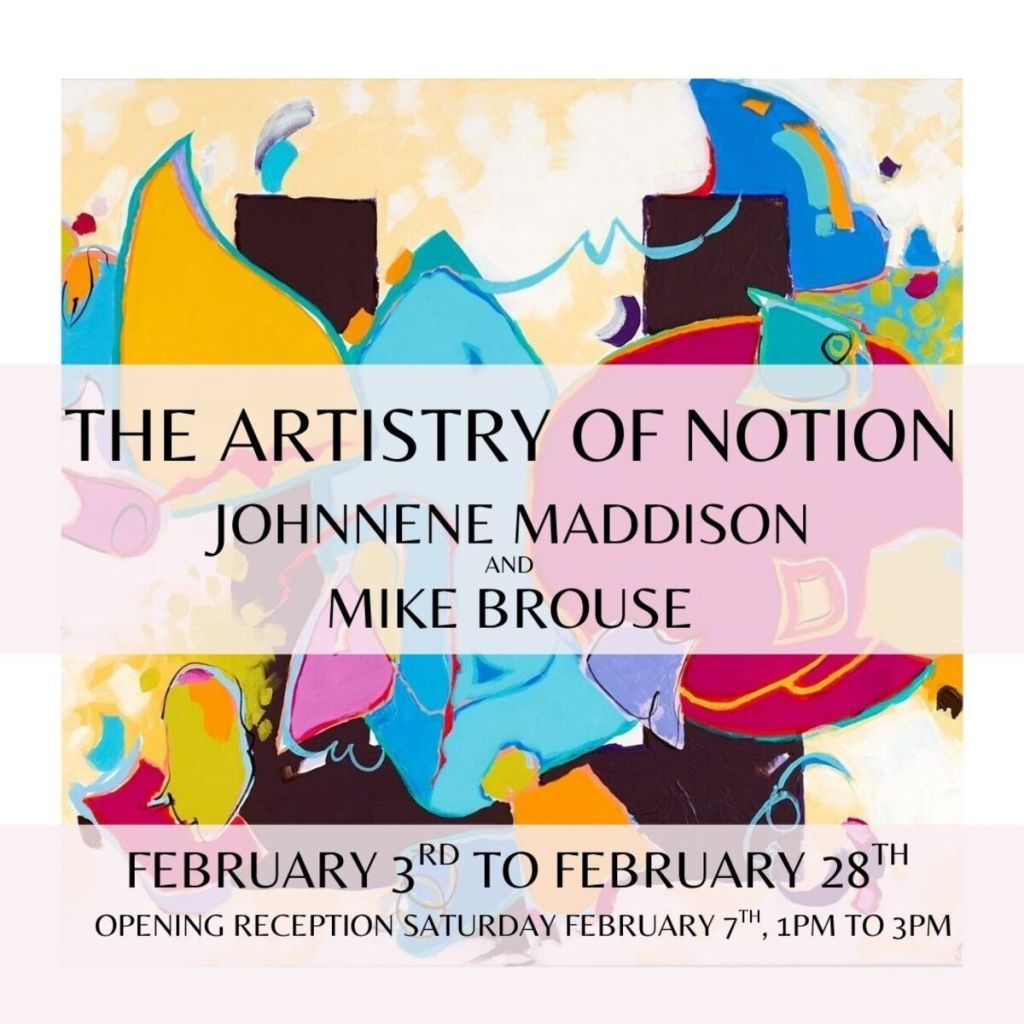
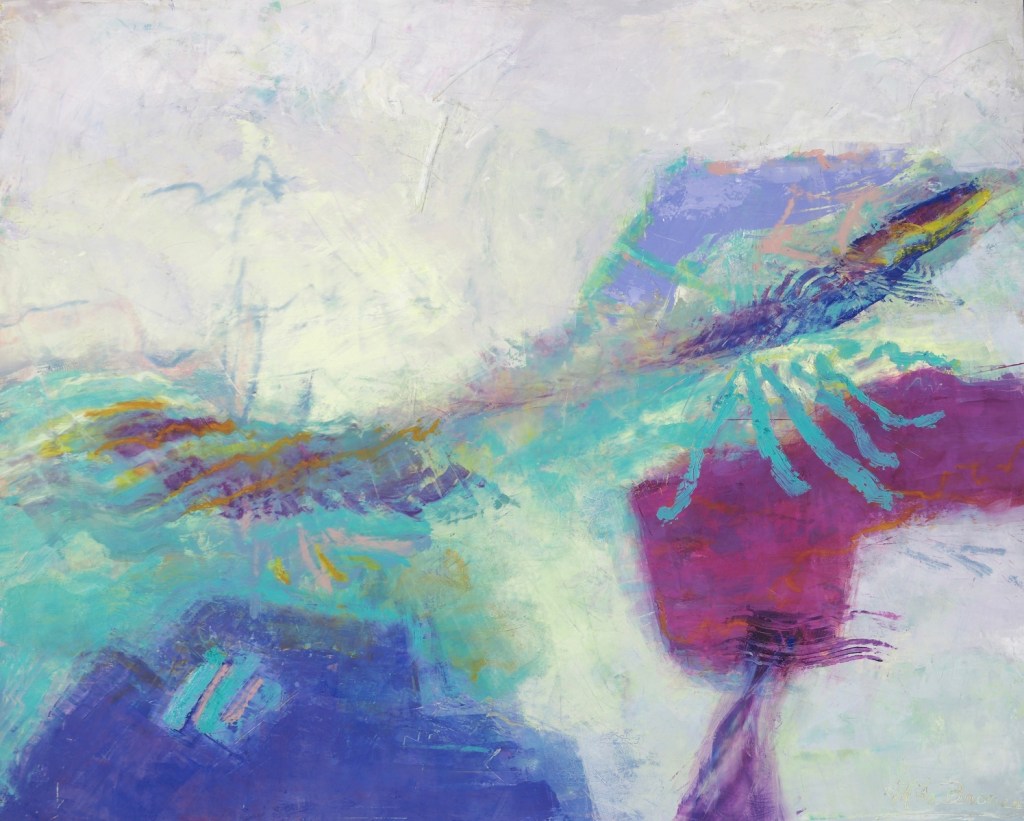
The Artistry of Notion exhibition at Westland Gallery celebrates the work and friendship of Johnnene Maddison and Mike Brouse. It includes fifteen of Maddison’s colourful abstractions, as well as three of her small hand-stitched gems, and fifteen of Brouse’s expressionistic pieces.

Maddison’s acrylic-on-canvas paintings fill the front gallery, while Brouse’s oils are spread throughout the rear gallery.

Johnnene Maddison’s delightful pieces preserve small points in time in paint and form.

In her artist statement, she writes about how her subject matter and choice of media has evolved over the years from mixed media work about women – their rights, their history, their challenges – to single-media acrylic paintings that are gestural and immediate.

This work is personal yet also presents Maddison’s experiences as universal truths.

The pieces burst with colour and carefully constructed forms. While the pieces stand on their own, the titles guide the viewer’s observations and direct their thoughts.

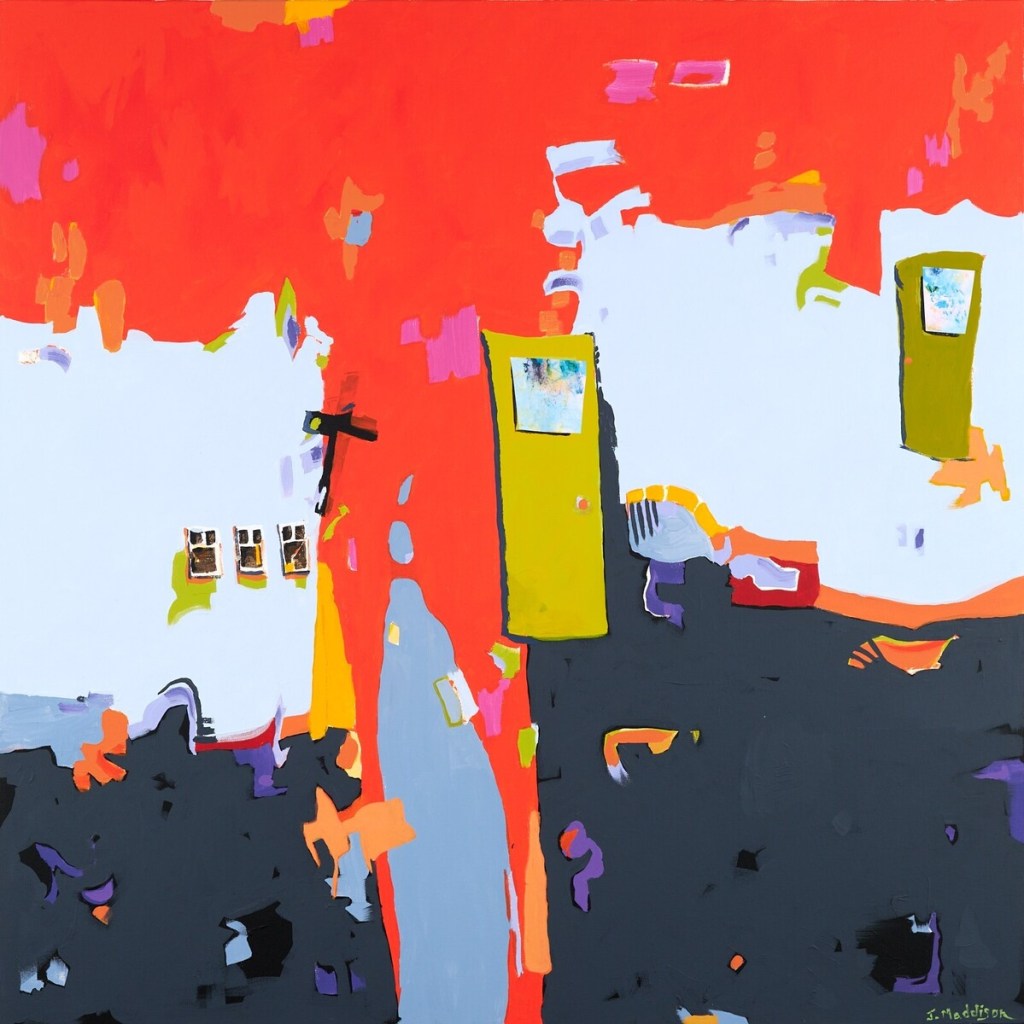
(Pictured: Johnnene Maddison, “Doors and Windows”, acrylic on canvas, 36 by 36 inches.)

Her 36-by-36-inch acrylic on canvas “Doors and Windows” rightfully occupies the front window. The subject can be enjoyed as is, but can also be seen as a representation of transitional thresholds.

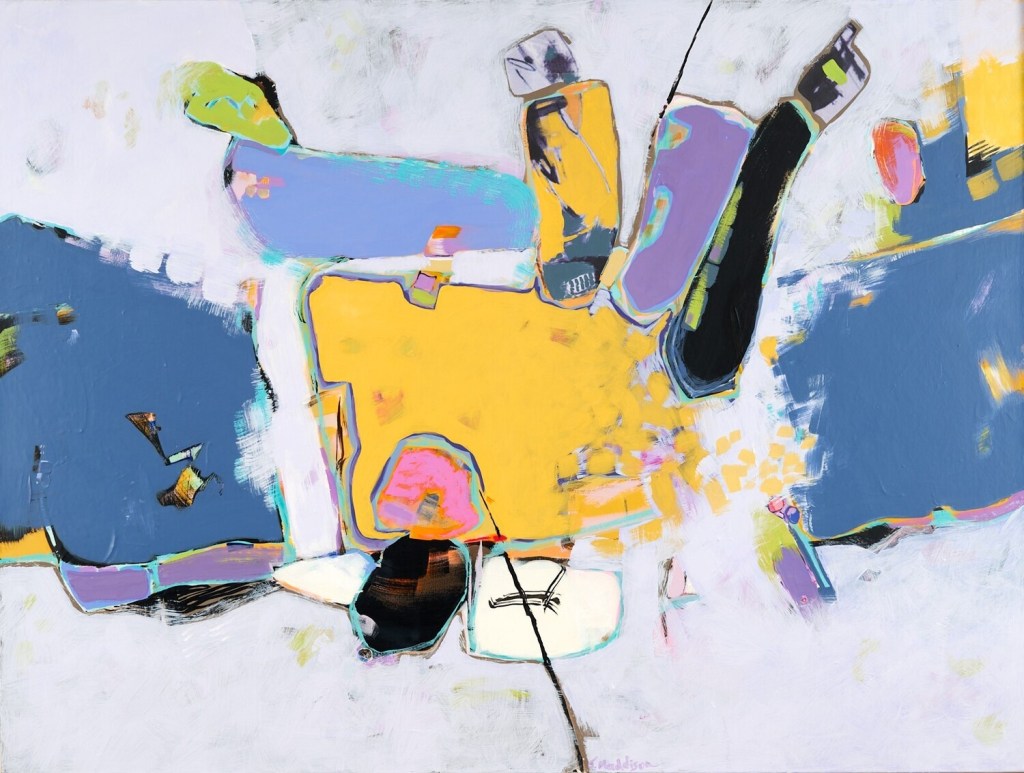
(Pictured: Johnnene Maddison, “Wandering in My Mind”, acrylic on canvas. 30 by 40 inches.

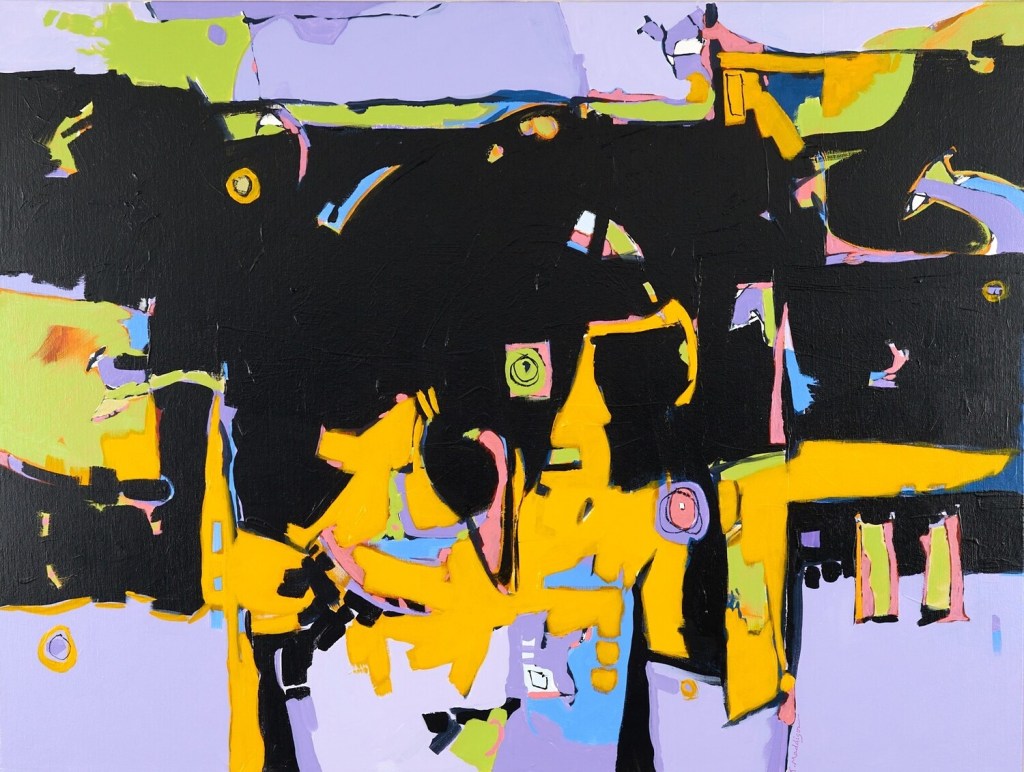
Upon entering the gallery, her 30-by-40-inch acrylic on canvas, “Wandering in My Mind”, graces the left wall with its cadmium yellow centre clamouring for attention. Another eye-catcher, her 30-by-40-inch acrylic titled “Crazy Trip”, hangs on the back wall. Both embrace angular forms that straddle a line between staticity and busyness.

(Pictured: Johnnene Maddison, “Crazy Trip”, acrylic on canvas, 30 by 40 inches.)

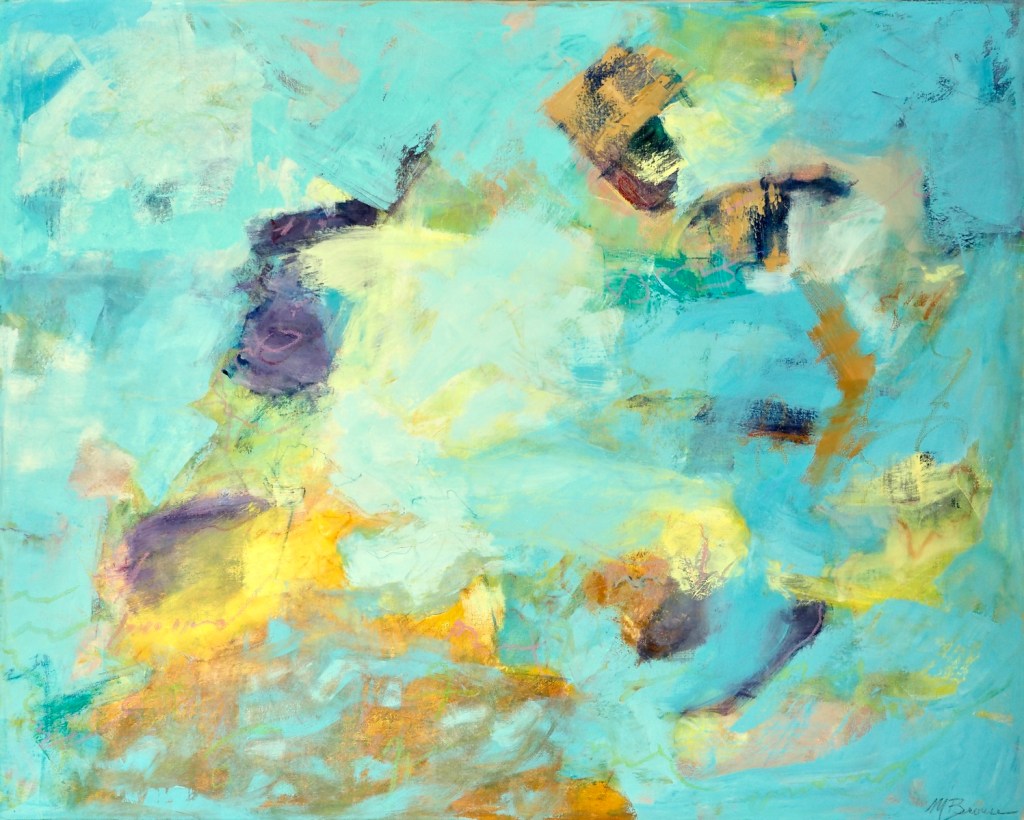
While Maddison boasts a well-established artistic career, Michael Brouse came late to art after taking a class just before retirement. Around 2010, he began painting landscapes, but says he soon became “excited about the distortions caused by waves on reflections [and] segued into expressive abstraction”.

He cites Maddison and American expressionist painter Krista Harris, whose work is rooted in the natural world, as having influenced his work.

His works have an ethereal quality. As with Maddison’s work, titles are important

His layered, scratched, and scraped surfaces suggest landforms and figures, yet these remain elusive. His brushwork is ragged and energetic.

To Brouse, a notion as reflected in the title of this show refers to “an intuition, a feeling, imagination.” Fitting, as his expressive application of paint on a canvas conveys memory and dreams.

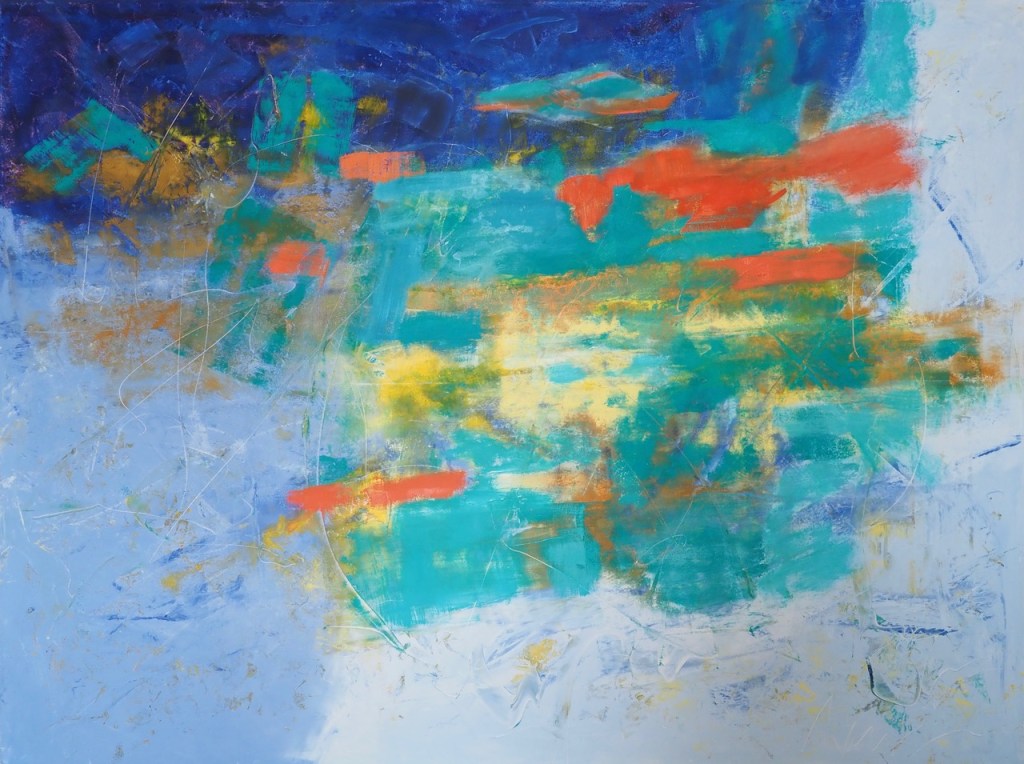
(Pictured: Michael Brouse, “Stillness”, oil on canvas, 36 by 48 inches.)

For example, he says his oil on canvas “Stillness”, which hangs on the left wall with its pops of orange, captures a vivid feeling from his childhood. It is one he has also marked with a poem: “Barefoot I stepped/ on to a cold winter floor/ as a child, touched by the/ radiant magic of a breaking morn./ My secret treasure stored away/ in the stillness.”

(Pictured: Michael Brouse, “North Shore”, oil on panel, 24 by 30 inches.)

On the right wall, Brouse’s 24-by-30-inch “North Shore” is next to the 32-by-40-inch “Notion”. While the subject of “North Shore” remains slippery, it contains forms that come tantalizingly close to representational, making it all the more intriguing.

One can assume its neighbour, “Notion”, is the source of the show’s title.

(Pictured: Michael Brouse, “Notion”, oil on canvas, 32 by 40 inches.)

IF YOU GO:

What: The Artistry of Notion featuring works by Johnnene Maddison and Mike Brouse.

When: February 3 to February 28. Opening Reception on Saturday, February 7, from 1:00 to 3:00pm.

Where: Westland Gallery, 156 Wortley Road, London, ON,

For more information, visit: https://westlandgallery.ca/

Reviewed by Beth Stewart

The Manor Park Afternoon Post: Reviving the Golden Age of Radio with a contemporary local touch.

by J. Bruce Parker

There was a time before the internet, before computers, and even before television, when a form of electricity would send waves of energy into your home, in a pleasant, comforting voice. This was radio, and it changed how people were informed and entertained. 

The Golden Age of Radio was dominant between the 1930s and the 1950s, before the advent of television eventually kicked the radio signal to the curb.

It was a time when the airwaves were bristling with the voices of musical stars, comedians, singers, classical concerts, soap operas, quiz shows, and storytellers. When U.S. President Franklin D. Roosevelt spoke to the American people in the broadcast of his ‘Fireside Chats’, which ran from 1933 to 1944.                                                               

One of the most popular radio programs of recent years was A Prairie Home Companion, which ran from 1974 to 2016, hosted by Garrison Keiler. It was rural, it was gentle, it was kind and comforting, and most of all, it was entertaining.

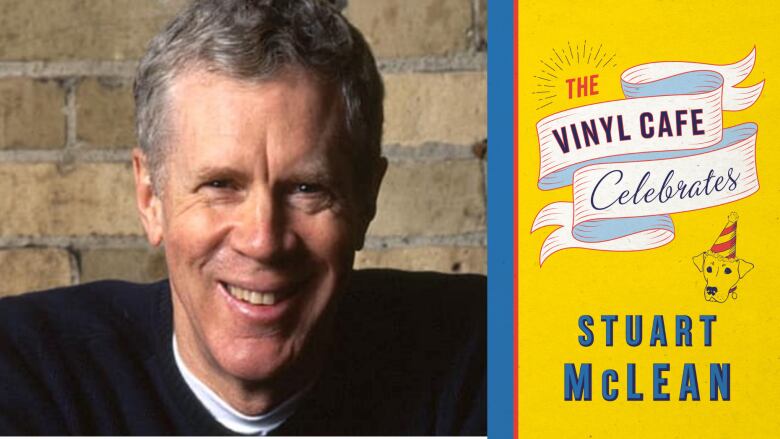
The style and tone of the show was carried on by our own CBC Radio in the mid-1990s by the weekly Vinyl Café, hosted by the late Stuart McLean. It ran on the local airwaves from 1994 until 2015.

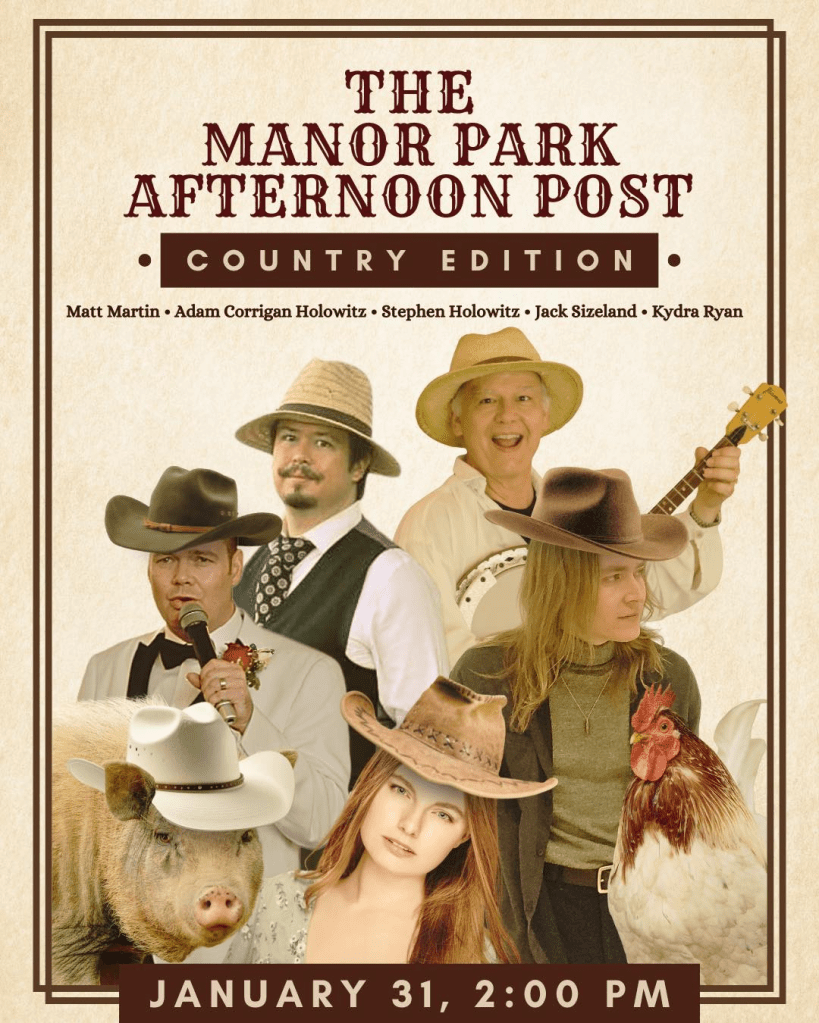
Founding Artistic Director of AlvegoRoot Theatre, Adam Corrigan Holowitz, assisted by Associate Artistic Director Kydra Ryan, has carried on the spirit of this grand tradition with his own version of the classic radio variety show.

The Manor Park Afternoon Post Country Edition was presented at Manor Park Memorial Hall on the most brilliant but bitterly cold last day of January. It was the twenty-second installment of this collaboration between Corrigan Holowitz and Ryan.

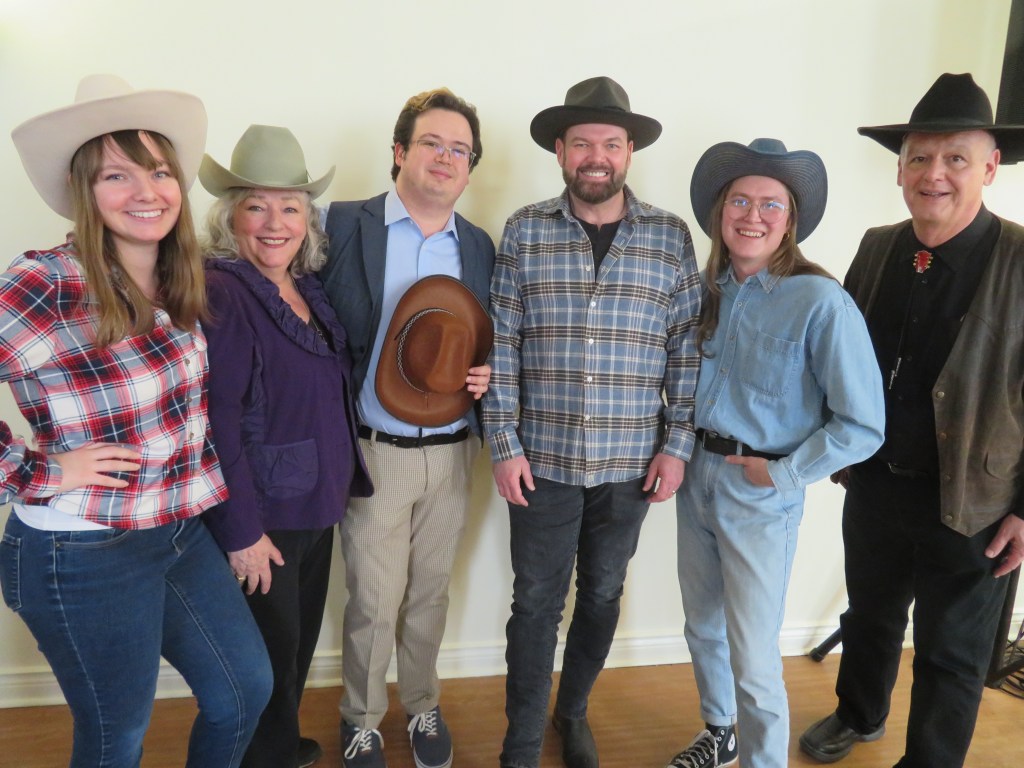
(Pictured: Manor Park Afternoon Post Country Edition Cast, Kydra Ryan, Deborah Mitchell, Adam Corrigan Holowitz, Matt Martin, Jack Sizeland, and Stephen Holowitz. Photo Credit: J. Bruce Parker.)

In a conversation before the one-off performance, Adam defined the event:

“It is a performance in the classic style of a variety show. There is music, comedy in the form of original radio sketches, and there are stories about Manor Park and London, all done in the vein of the great American storytelling”.

“It is inspired by both Vinyl Café and The Prairie Home Companion, but it takes its inspiration from a broader tradition of radio variety shows. This goes back to the times of Fred Allen, Fibber McGee and Molly, as well as Canadian storytellers Stephen Leacock and W.O. Mitchell.”

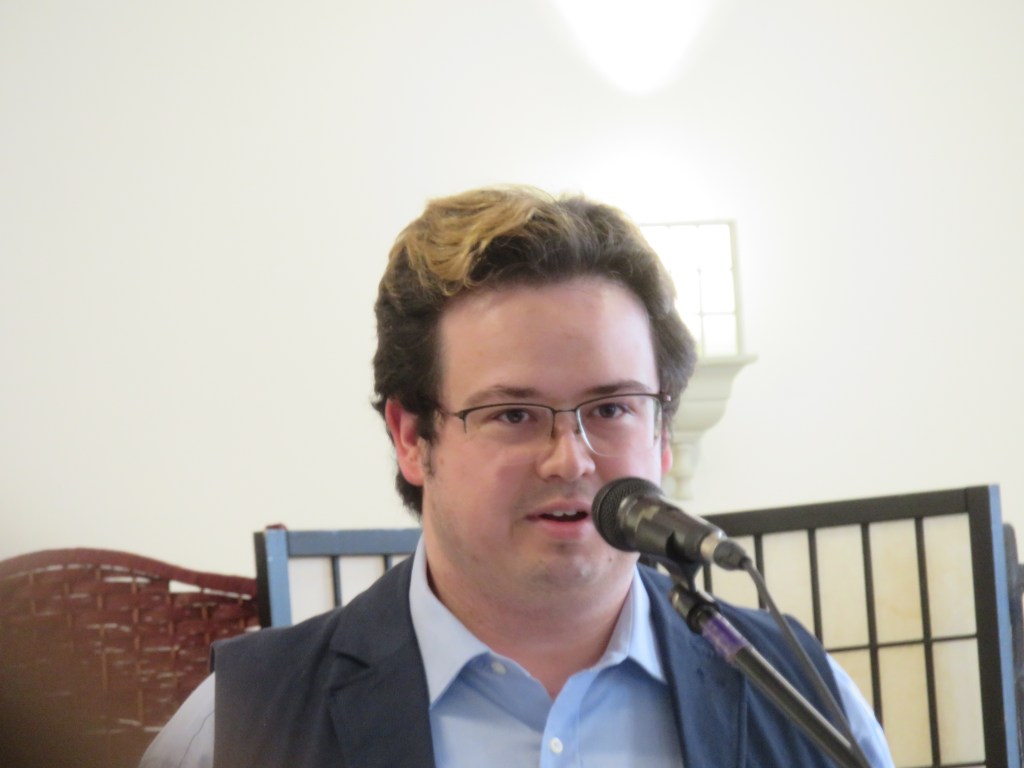
(Pictured: Adam Corrigan Holowitz. Photo Credit: J. Bruce Parker.)

“There are three basic ingredients of flavour we incorporate into our shows. The music is gorgeous and top-tier; the stories are gentle with a broad view of the neighbourhood, and then there are the sketches, which can be salty and sarcastic with a bite to them. When Kydra and I write the sketches, there is topical stuff, but I am always interested in how you can push a comedy concept,” he adds.

So how does this kind of entertainment stay relevant?

“It gets to something that we are drawn to. It’s about stories, it’s about people coming together, it’s about discovering music, literature and poetry,” says Adam.

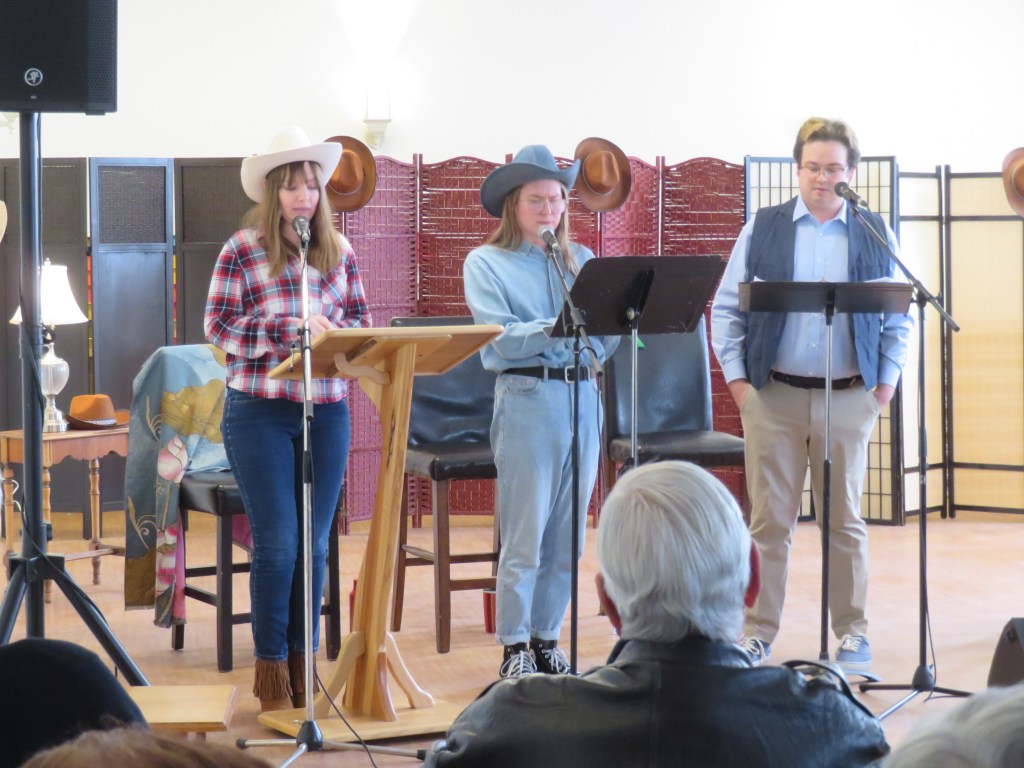
As the congenial host, Adam was joined by co-creator Kydra Ryan, Jack Sizeland, Matt Martin, Deborah Mitchell, and musical director and keyboardist Stephen Holowitz on this cold January afternoon.

(Pictured: Kydra Ryan, Jack Sizeland, and Adam Corrigan Holowitz. Photo Credit: J. Bruce Parker.)

While borrowing from the formats of both Vinyl Café and Prairie Home Companion, Adam and Kydra gather up the stuff of living in Manor Park, keeping their original stories very close to home.

We witness a walkabout around Manor Park in the voices of ‘Nephew Jefferson’ and ‘Aunt Julie’ describing their exploits and meanderings, one being an ongoing dumpster fire in the neighbourhood.

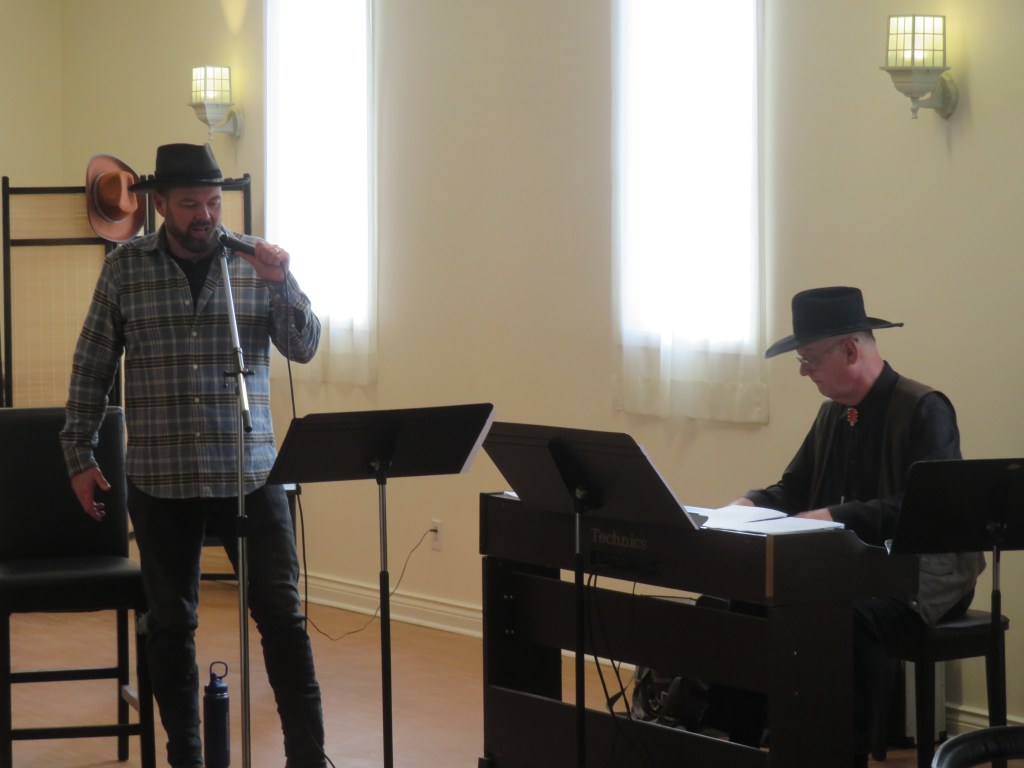
Matt Martin, in his rich baritone, weaves his interpretations of the songs of Merle Haggard, Willie Nelson, and Elvis between the stories.

Local actress Deborah Mitchell dons the character of “Louella Brulais”, a gossip columnist, scraping her claws across the unfortunate few who get into her crosshairs.

We have ghost stories told by actual ghosts, unhappy with their representation in film.

Framing the entire performance was the keyboard work of musical director Stephen Holowitz, whose carefully crafted accompaniment set the musical tone which propelled the event.

(Pictured: Matt Martin and Stephen Holowitz. Photo Credit: J. Bruce Parker.)

Adam Corrigan Holowitz and Kydra Ryan have gathered the best of classic live radio, reviving it with their creative talents and presenting a warm, energetic, and touching event of song and storytelling. It was joyful, well-crafted, and above all, fun.

The ongoing success of The Manor Park Afternoon Post has a follow-up on March 14.

Don’t miss it!

By J. Bruce Parker.

Ingersoll Theatre of Performing Arts presents Daniel MacIvor’s BINGO, March 6-15.

Prepared with Files from ITOPA

ITOPA is thrilled to present BINGO by acclaimed Canadian playwright Daniel MacIvor — a sharp, darkly funny, and deeply human look at what happens when the past refuses to stay buried.

Five former classmates reunite for one unforgettable night for their 30th high-school reunion. For some, it’s a welcome return home. For others, a reluctant obligation. And a few, they never really left at all. As the evening unfolds and the drinks keep coming, old friendships are rekindled, memories resurface, and laughter gives way to revelation. What begins as nostalgia slowly turns into something far more dangerous — as long-held resentments and darkest secrets finally come to light.

“BINGO is a night of theatre that will make you laugh, cringe, and maybe rethink your own high-school reunion.”

IF YOU GO:

What: ITOPA presents Daniel McIvor’s BINGO. Directed by Vix Ledgley, produced by Rebecca McNall, and stage managed by. Adam Tanton

When: March 6, 7, 8, 12, 13, 14,15. Showtime: 7:30 PM. Matinee Performances: 2:00 pm.

Where: Ingersoll Theatre of Performing Arts, 88 Thames Street South, Ingersoll, ON.

Tickets: Online at https://app.arts-people.com/?show=282904 By Phone 519-485-3070. Adult $26.00 Senior (65+) $24.00 Student (12+) $22.00 Student (12-) $10.00.

To learn more about ITOPA, visit  https://www.itopa.ca/. Follow ITOPA on Facebook https://www.facebook.com/ingersolltheatre and Instagram https://www.instagram.com/ingersolltheatre/

Big Laughs, Honest Moments, and Stories We All Recognize: St. Marys Community Players 2026 Season

Prepared with Files from the St. Marys Community Players.

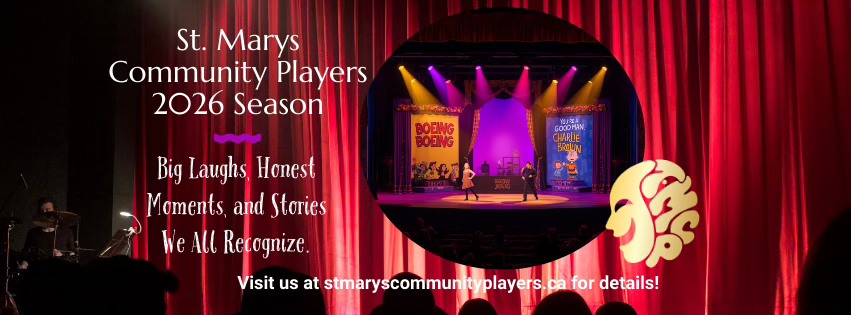
St. Marys Community Players have announced their 2026 Season Lineup: Marc Camoletti’s BOEING BOEING and the beloved Peanuts Musical You’re a Good Man, Charlie Brown.

“Our 52nd season lineup of productions will offer a vibrant pairing of plays that celebrates the full spectrum of theatrical joy—combining the dizzying precision of a classic farce with the warmth, wit, and gentle introspection of a beloved musical,” says Greg George, the company’s Marketing and Communications coordinator.

BOEING BOEING: A High-Flying Comedy.

Opening the 2026 season in April, the St. Marys Community Players present the delightful farce that has captivated audiences worldwide. Written by Marc Camoletti and translated by Beverley Cross and Francis Evans, this fast-paced production chronicles the misadventures of Bernard, a swinging bachelor in 1960s Paris. Bernard’s elaborate scheme of juggling three fiancées – all airline hostesses with staggered layovers – takes a turbulent turn, threatening to send his plans crashing.

Directed by Ralph Small and produced by Stephen Brockwell and Read Paxton, BOEING BOEING features door-slamming, smart dialogue, and hilarious situations, guaranteeing nonstop laughter and entertainment.

Performance Dates:

April 24 to May 9, 2026, Town Hall Theatre, St. Marys, ON.

You’re a Good Man, Charlie Brown: A Musical for All Ages.

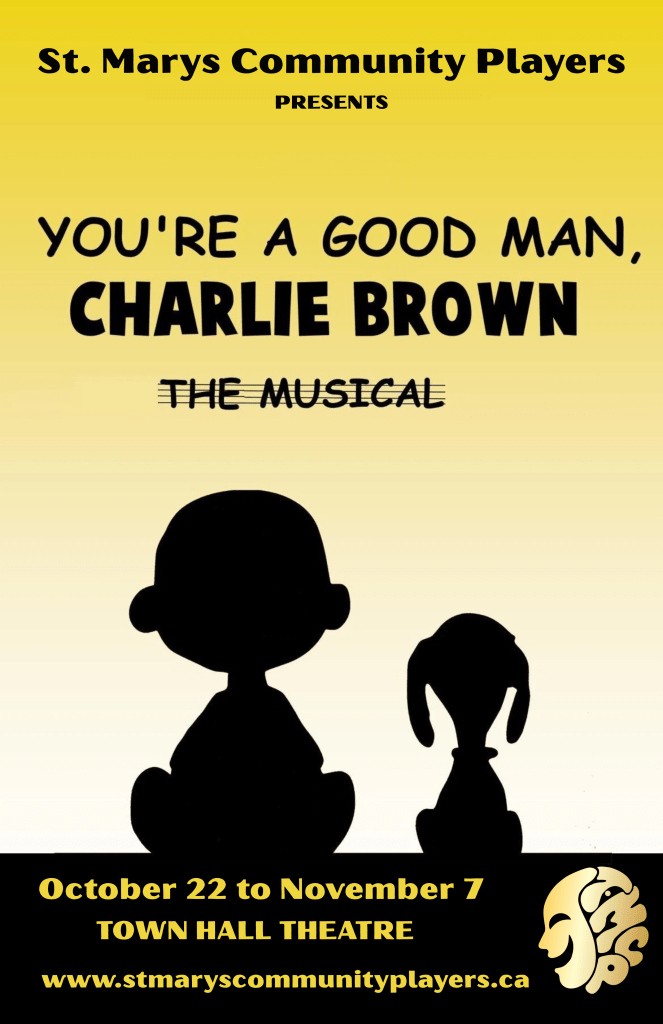
Happiness is great musical theatre. With charm, wit and heart, You’re A Good Man, Charlie Brown explores life through the eyes of Charlie Brown and his friends in the Peanuts gang. This revue of songs and vignettes, based on the beloved Charles Schulz comic strip, captures childhood worries, quiet hopes, and the universal desire to belong and be understood. Musical numbers include “My Blanket and Me,” “The Kite,” “The Baseball Game,” “Little Known Facts,” “Suppertime” and “Happiness.” Guaranteed to please audiences of all ages.

Performance Dates: 

October 22 to November 7, Town Hall Theatre, St. Marys, ON.

Tickets for the 2026 Season are available through the St. Marys Community Players website www.stmaryscommunityplayers.ca beginning in early March or locally at Troyer’s Spices in Downtown St. Marys, 110 Queen St. E. Phone: (226) 661-8777.

Follow the St. Marys Community Players on Facebook https://www.facebook.com/StMarysCommunityPlayers and on Instagram https://www.instagram.com/st.maryscommunityplayers/